
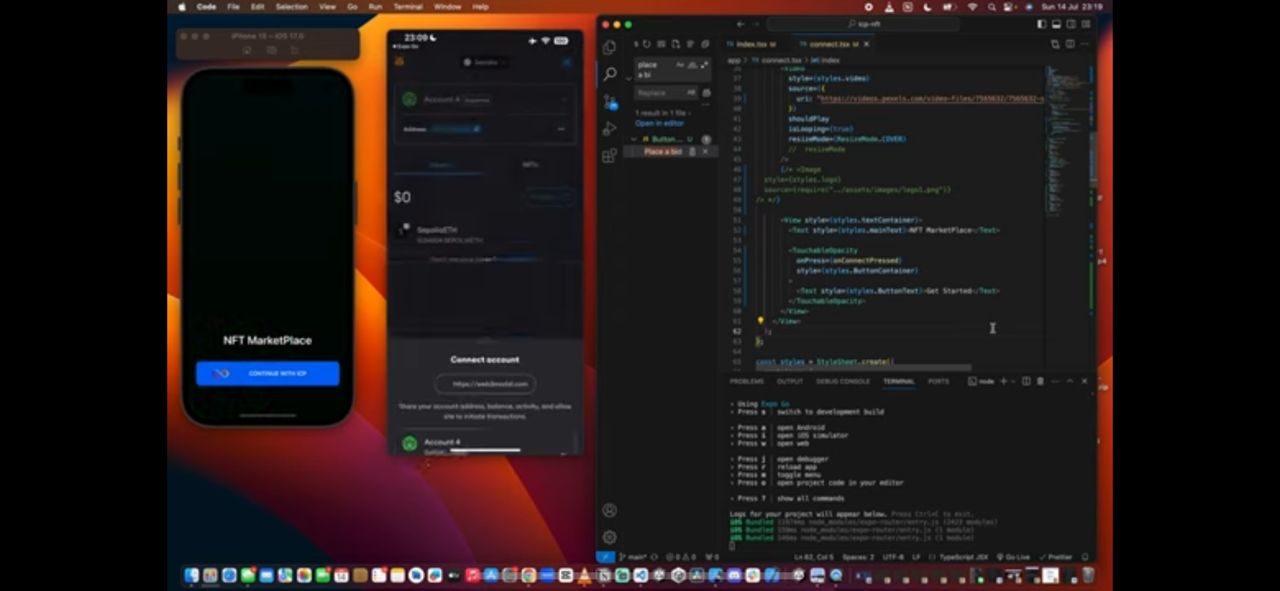
NFT Marketplace is a modern platform where users can buy and sell non-fungible tokens (NFTs) easily and securely. By harnessing blockchain technology, the marketplace ensures that transactions are secure and ownership of digital assets is authentic. To enhance security and streamline payments, we have integrated Internet Computer Protocol (ICP) for user authentication and payment processing.
The idea for NFT Marketplace came from observing the explosive growth and potential of NFTs in the digital world. Seeing how digital art, collectibles, and virtual goods were gaining popularity, I wanted to create a platform that was accessible to everyone, whether they were new to NFTs or seasoned collectors. My aim was to build a marketplace that combined security, efficiency, and a great user experience.
Working on this project was a deep dive into the world of blockchain and digital assets. I learned a lot about:
- How smart contracts work and their role in secure transactions.
- The technical details of NFT standards like ERC-721 and ERC-1155.
- The critical importance of secure user authentication and payment systems.
- How to integrate frontend and backend systems for a seamless user experience.
Using ICP for authentication and payments also taught me a lot about decentralized protocols and how they can enhance security and trust.
How I Built the Project
Planning and Design *. I defined the project's scope and detailed the requirements. *. I created wireframes and mockups to visualize the user interface. *. I designed a database schema to manage user data, NFTs, and transactions effectively.
Frontend Development *. I used React to build a dynamic and responsive user interface. *. I styled the app using Tailwind CSS and Bootstrap for a modern look. *. I implemented TypeScript to ensure the code was robust and maintainable.
Backend Development *. I set up a Node.js server with Express to handle API requests. *. I used MongoDB for storing user data and NFT metadata. *. I developed and deployed smart contracts using Solidity on the Ethereum blockchain.
ICP Integration *. I implemented ICP for secure user authentication. *. I integrated ICP to handle payment processing seamlessly.
Testing and Deployment *. I conducted thorough testing to find and fix bugs. *. I used Jest for unit and integration testing. *. I deployed the application on a cloud platform to ensure scalability and reliability.
Challenges Faced: Blockchain Integration: Ensuring the security of smart contracts was a major challenge. I spent a lot of time designing and auditing the contracts to avoid vulnerabilities. User Authentication: Implementing ICP for authentication required understanding the protocol deeply and ensuring a smooth user experience. Scalability: As the platform grew, I had to optimize both the frontend and backend to handle a large number of transactions and users. User Experience: Designing an intuitive interface for users who might be new to NFTs and blockchain technology required multiple iterations and a lot of user feedback.
Conclusion: Building the NFT Marketplace has been an incredibly rewarding experience. It allowed me to delve into the exciting world of blockchain technology and create a platform that empowers users to engage with the growing NFT ecosystem. The challenges I faced and the lessons I learned have not only improved my technical skills but also deepened my appreciation for the potential of decentralized applications. I look forward to continuing to improve the platform and adding new features to provide the best possible experience for our users.
Built With
- icp
- native<
- react

Log in or sign up for Devpost to join the conversation.