-
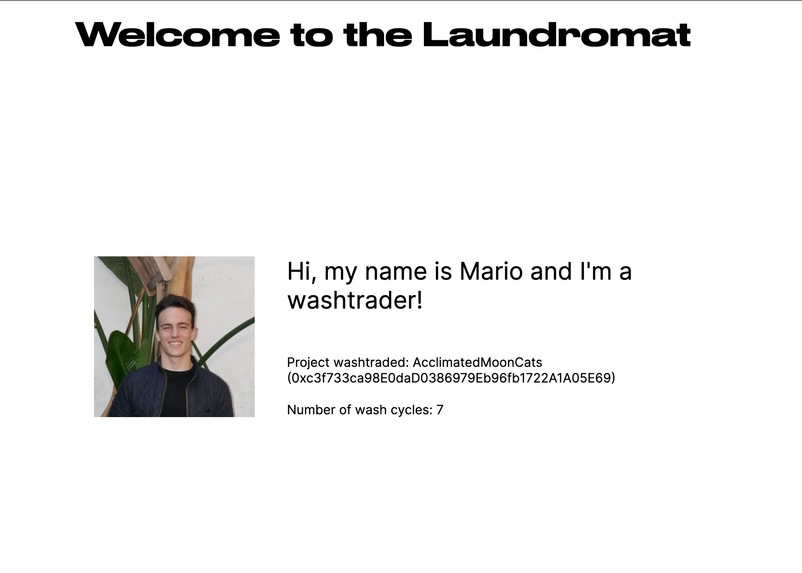
Landing site
-
Logo
Inspiration
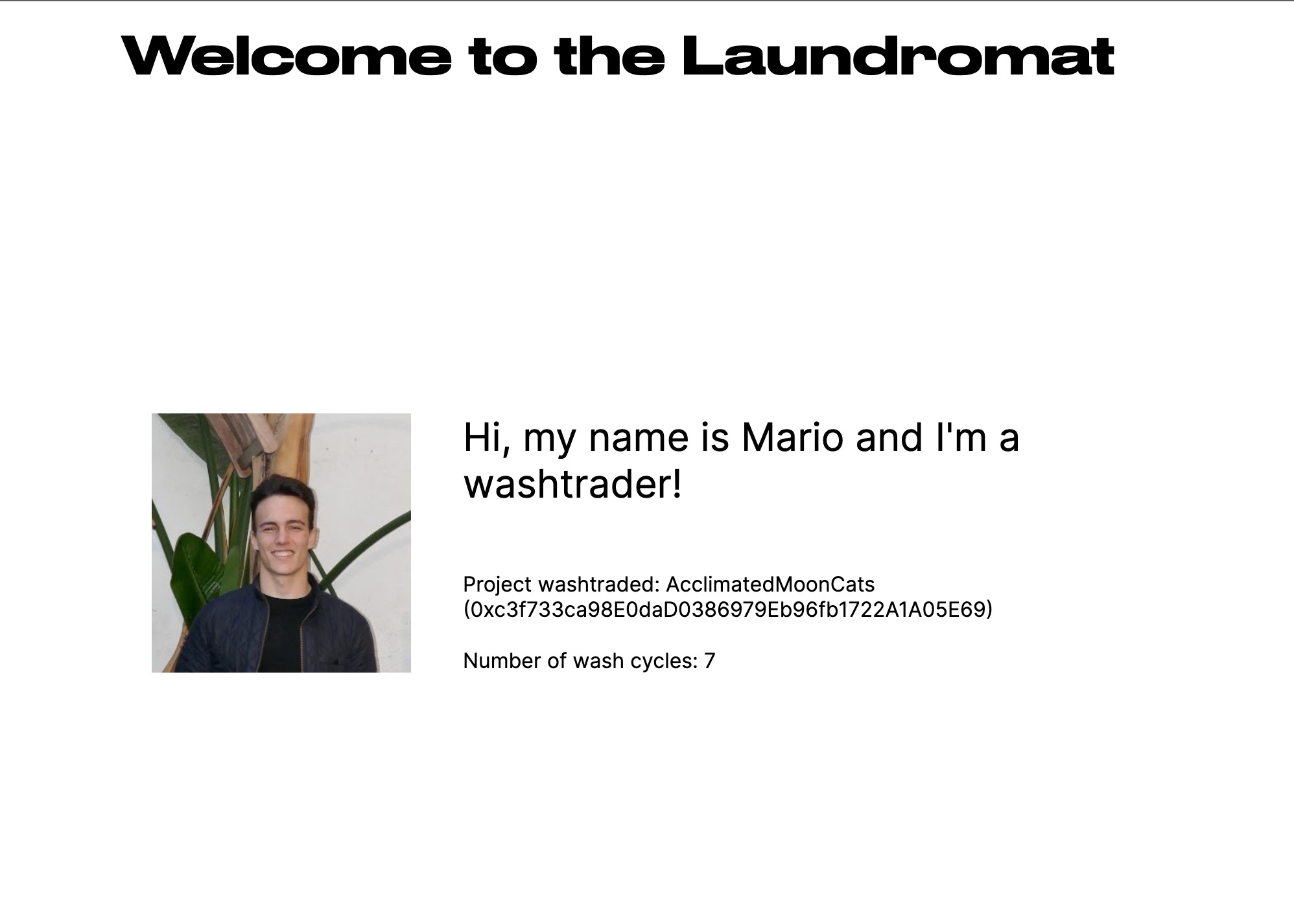
Around 43.3% of NFT users are victims of NFT fraud. To prevent this and benefit society, we created a publicly available website, nftlaundromat.tech, where you can see and track NFT fraudsters. This way, NFT fraudsters will hesitate to commit fraud in the future as they know they would be publicly shamed. Thus, healthier NFT space would be created.
What it does
It pulls the publicly available data from NFT wallets and extracts all the users who committed wash trading or rug pulling. We identified the fraudsters using the machine learning graph theory algorithm we developed based on past research papers. To clarify, rug pulling is a scam promoting a crypto token via social media. After the price has been driven up, the scammer sells, and the price generally falls to zero. On the other hand, wash trading is dishonest to drive up the price of NFTs by the buyer and seller. The buyer and seller can sell the piece back and forth to drive the cost but only publicly report the first sale. The money and NFT are returned to the original seller in the following exchange. Users can go to our website, read about each fraudster, and then shame the fraudster's social account with a simple click on the button.
How we built it
We first read research papers on NFT rug pulling and wash trading. After, that we improved the algorithm by shifting the identification of the fraudsters into graph theory. We extracted the data using SQL queries from the transpose.io. After extracting the data, we ran our algorithm to identify all the fraudsters. We store the data in Firebase, and show it to the users in front-end using JS.
Challenges we ran into
There is a very little research in the space of NFT rug pulling and wash trading. It took us few hours to improve the algorithm and to improve the accuracy of existing algorithms for the identification. Algorithms written in research papers were unclear, and not working. To develop our algorithms, we first had to optimize finding all the cycles in the graph, and then identifiying what does fall within the standard deviation.
Accomplishments that we're proud of
Teamwork and team energy was up to the maximum level, which helped us developed the project. Diversity of the whole team and different backgrounds played a huge role in our accomplishment. In just 36 hours, we managed to improve the algorithm from the research that took a few years. Furthermore, each part of the team had to deal with the parts of the project that were not the most comfortable parts for them, which helped us learn a lot.
What we learned
We learned that we can definitely continue to build and deploy this project fully. There are so many externalities that need to be taken into account to achieve perfect accuracy score. We learned that APIs are not that easy to integrate into the application, and that graph theory come in handy so often.
What's next for NFT Laundromat
The next steps are: -> Improve UI/UX -> Identify more externalities and add them into the algorithm -> Train the algorithm through machine learning to tweak the parameters -> Market the product to reach wider audience
Built With
- canva
- firebase
- javascript
- json
- python
- scikit-learn
- sql
- transpose.io


Log in or sign up for Devpost to join the conversation.