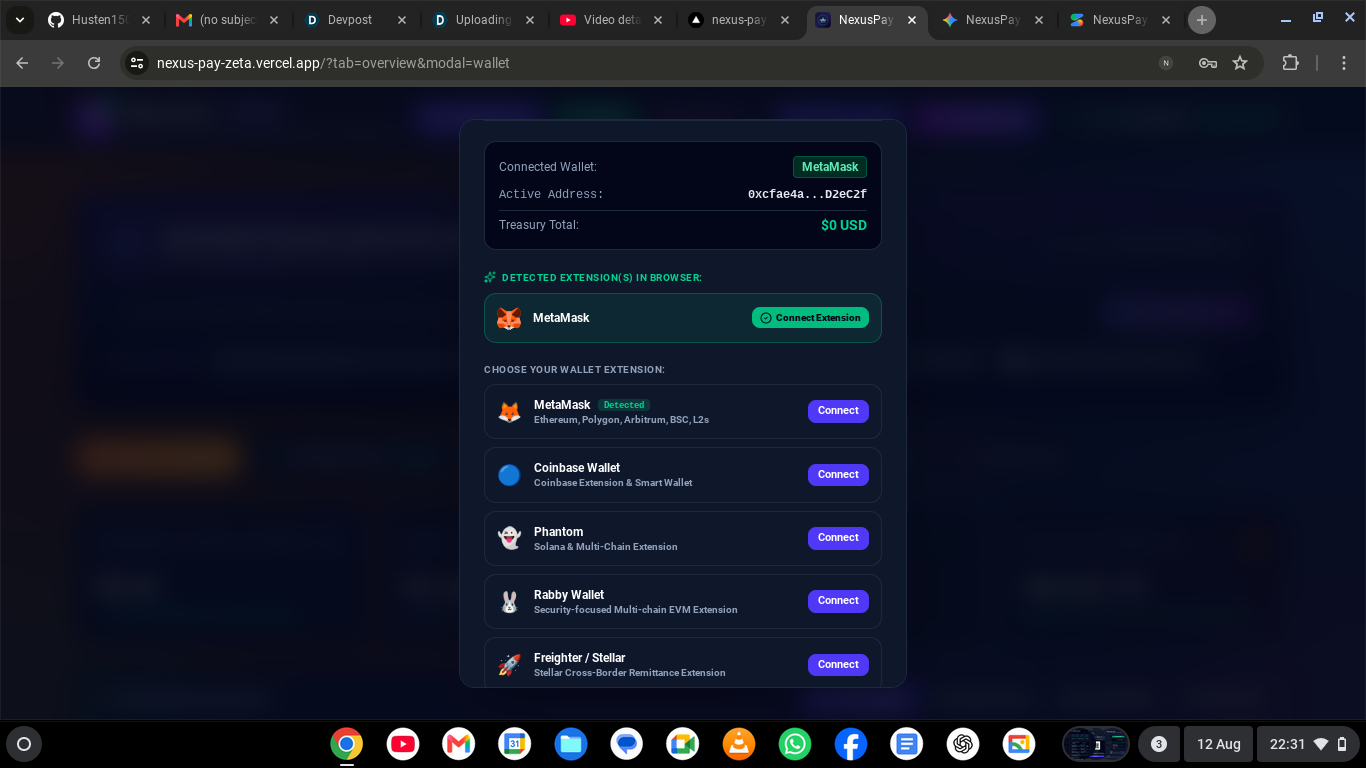
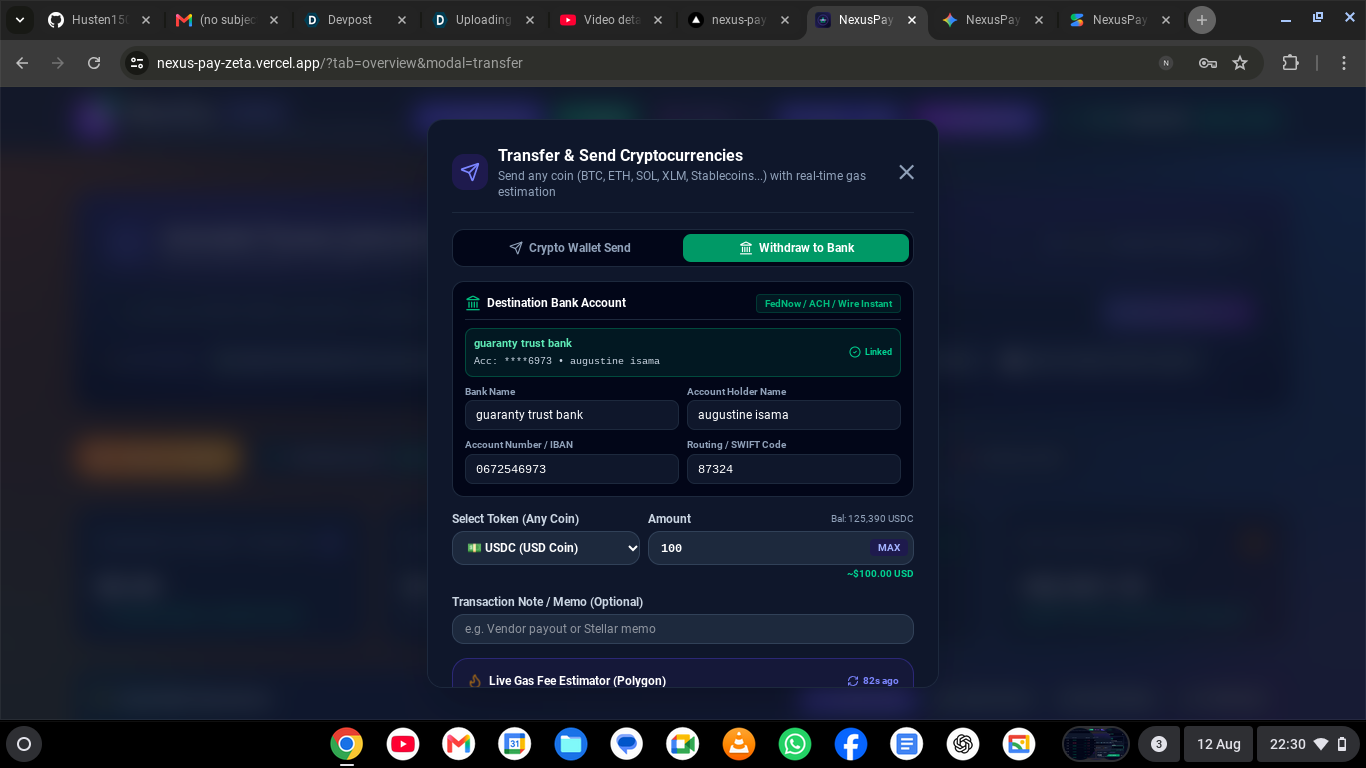
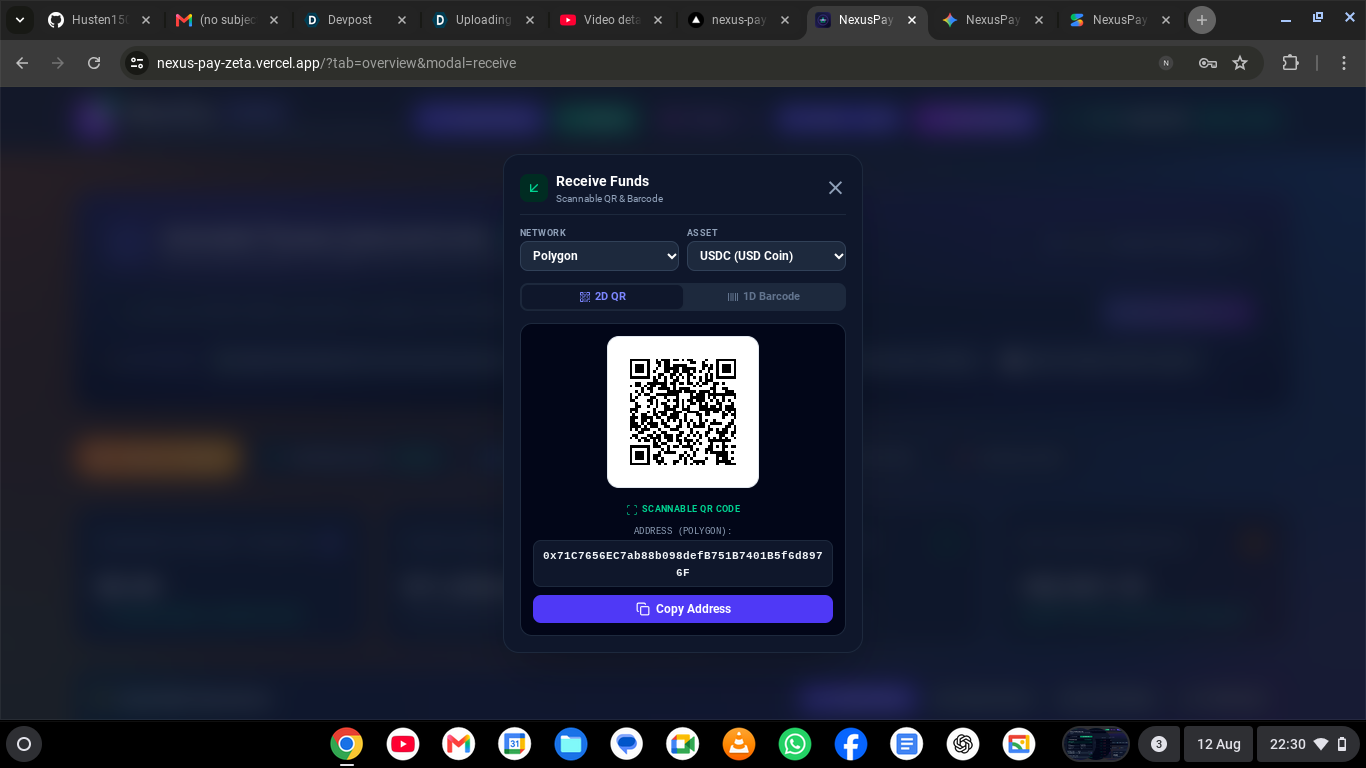
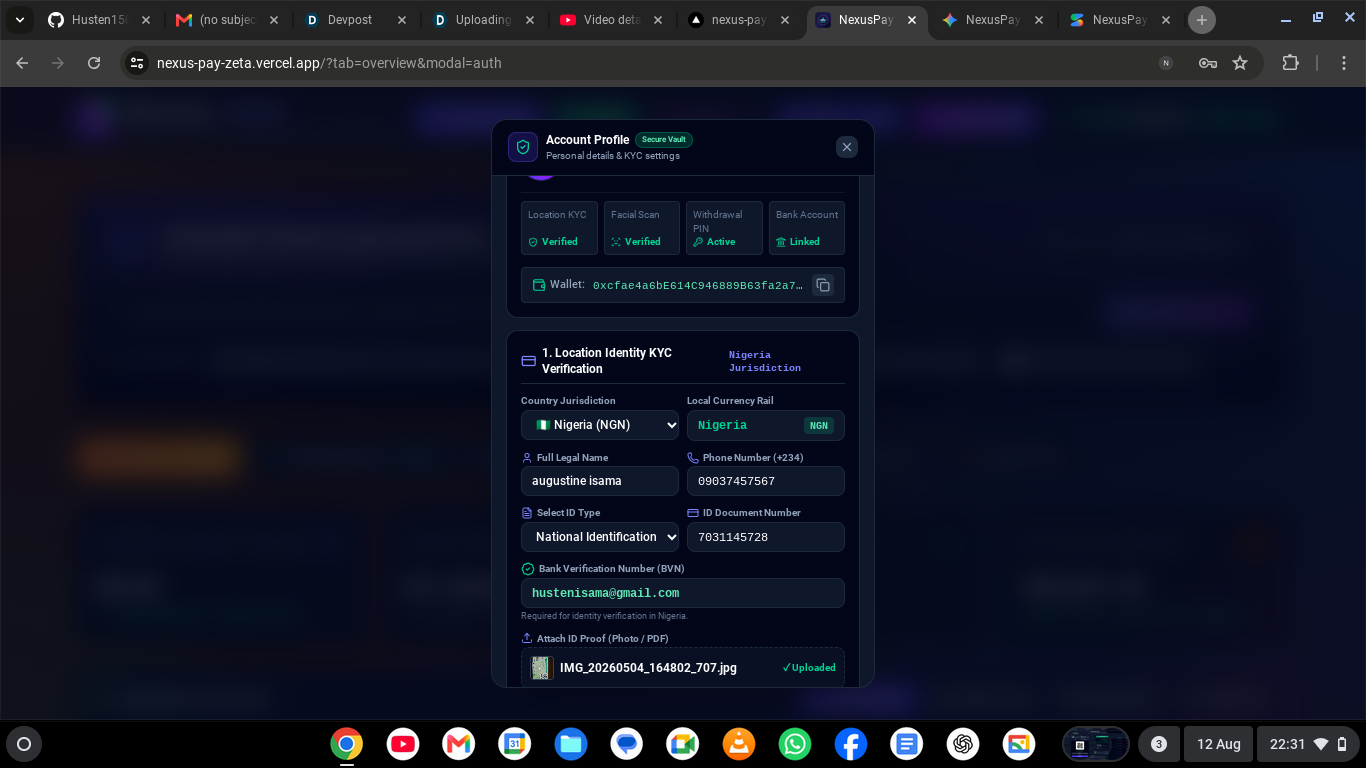
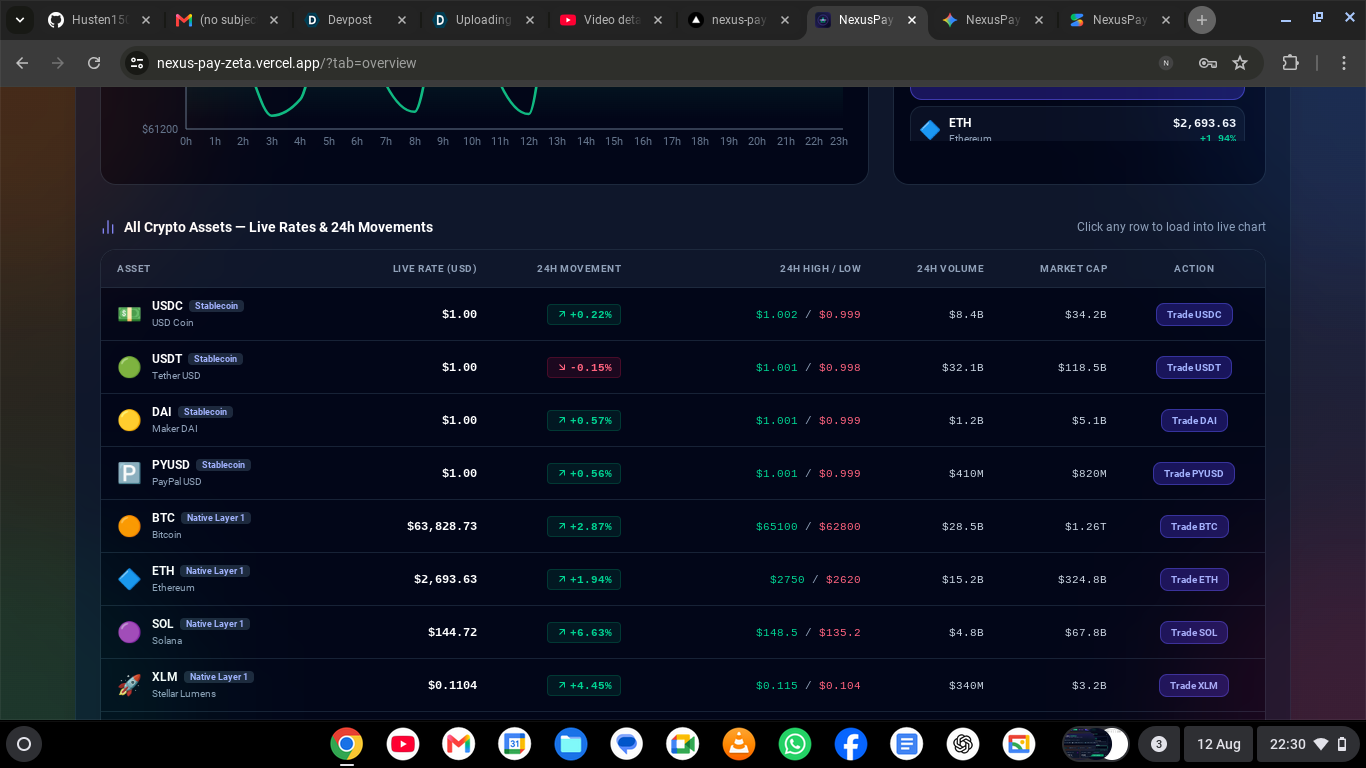
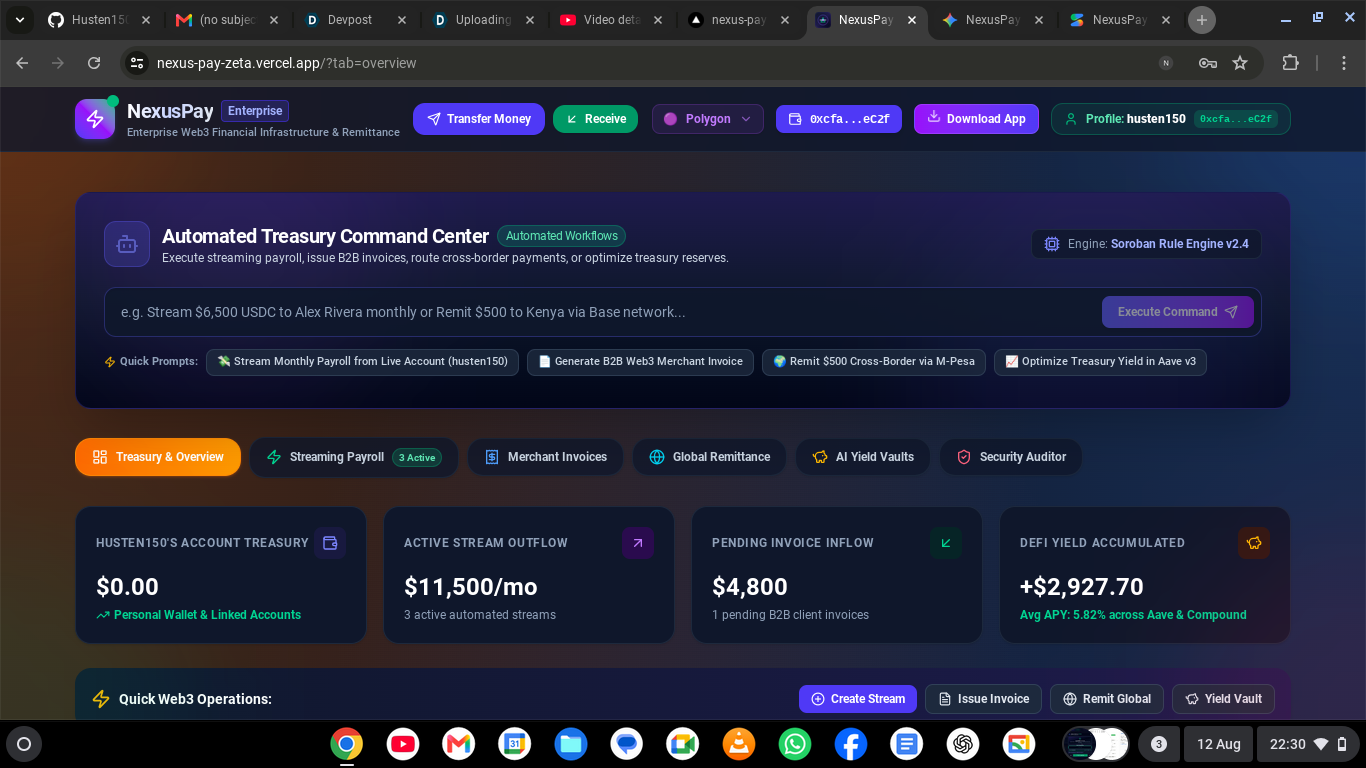
Inspiration: Traditional cross-border payments and digital finance solutions are plagued by high friction, delayed settlement times, expensive transaction fees, and poor interoperability between decentralized protocols and fiat rails. While Web3 infrastructure offers rapid, low-cost settlement, everyday users and businesses face major UX hurdles when interacting with blockchain networks.
NexusPay was born out of the vision to bridge this gap—creating a fast, unified, and intuitive financial gateway that abstracts away blockchain complexity. By combining modern account abstraction, multi-asset routing, and seamless payment processing, NexusPay makes sending and receiving payments across borders as simple as sending an instant text message.
What it does: NexusPay is an end-to-end payment and transaction protocol designed for real-time financial settlement. Key functionalities include:
Seamless Multi-Asset Transfers: Send and receive digital assets, stablecoins, and fiat-pegged tokens instantly with minimal transaction fees.
Smart Account Abstraction: Eliminates seed-phrase anxiety and complex wallet management, enabling social recovery and streamlined login flows.
Unified Payment Gateways & QR Code Rail: Enables merchants to accept instant digital payments via QR codes or direct links without managing multi-currency infrastructure.
Real-time Settlement & Tracking: Tracks pending and finalized transactions on-chain with low latency and visual transaction status indicators.
Developer-Friendly Integration: Modular contract architecture and flexible web integration tools allowing third-party services to plug into NexusPay payment flows effortlessly.
How we built it: NexusPay was built with a security-first, high-performance architecture across the frontend, backend, and smart contract layers:
Smart Contracts & Blockchain Engine: Designed modular smart contract suites (using Rust/Soroban/Solidity) focusing on secure asset routing, gas efficiency, automated fee management, and permissioned access control.
Frontend Application: Built using React / Next.js with TypeScript, Tailwind CSS, and modern UI primitives to ensure a clean, responsive mobile and desktop dashboard.
State Management & Web3 Connectivity: Integrated Web3 provider kits (e.g., Stellar Wallet Kit / Wagmi) to handle wallet connections, transaction signing, and real-time state synchronization seamlessly.
Backend Services & APIs: Node.js/Express service layer powered by database integration (MongoDB/PostgreSQL) to index transaction history, handle webhook notifications, and cache state for rapid UI rendering.
Automated CI/CD & Testing: Configured automated GitHub Actions workflows for contract compilation, unit test suits, linting, and automated staging deployments.
Challenges we ran into: Transaction Friction & UX Optimization: Balancing strict security requirements (signature verification, gas limits, and nonce tracking) with an ultra-fast, user-friendly payment UX required multiple iterations on async wallet handling and loading state feedback.
Cross-Environment State Synchronization: Ensuring real-time confirmation status between on-chain network state and database indexers without introducing latency or race conditions during peak network load.
Multi-Wallet Support: Handling diverse wallet providers with varying connection behaviors and payload standards required building resilient adapter layers and graceful error handling fallback routes.
Accomplishments that we're proud of: Sub-Second UX Latency: Successfully optimized wallet interactions and state fetching so users experience real-time payment updates.
Zero-Complexity Wallet Onboarding: Designed an interface where non-technical users can perform end-to-end digital transactions without needing deep blockchain expertise.
Modular Codebase: Maintained high code quality with automated CI/CD pipelines, strict typing, and decoupled frontend/backend services built for scale.
What we learned: DX Directly Impacts UX: Clean component abstraction and structured state management directly reduced edge-case transaction failures on the client side.
Security at the Architecture Layer: Implementing role-based controls and access gating early prevented major refactoring when adding administrative upgrade paths and fund management pools.
Feedback Loops Matter: Designing simple visual indicators (success checkmarks, auto-dismiss toast alerts, fee breakdowns) dramatically improved user confidence during value transfers.
What's next for NexusPay: Fiat On/Off-Ramp Integration: Partnering with regional payment providers to enable direct bank transfers and local mobile money deposits/withdrawals.
Merchant SDK & Point-of-Sale (PoS) Widgets: Developing lightweight NPM packages and embeddable web widgets so online merchants can accept NexusPay in under 5 minutes.
Recurring & Automated Payments: Adding scheduled payment smart contract modules for subscription management and automated payroll distributions.
Cross-Chain Bridge Routing: Expanding asset support to enable seamless cross-chain swaps during transaction execution without multi-step user manual transfers.

Log in or sign up for Devpost to join the conversation.