-
-
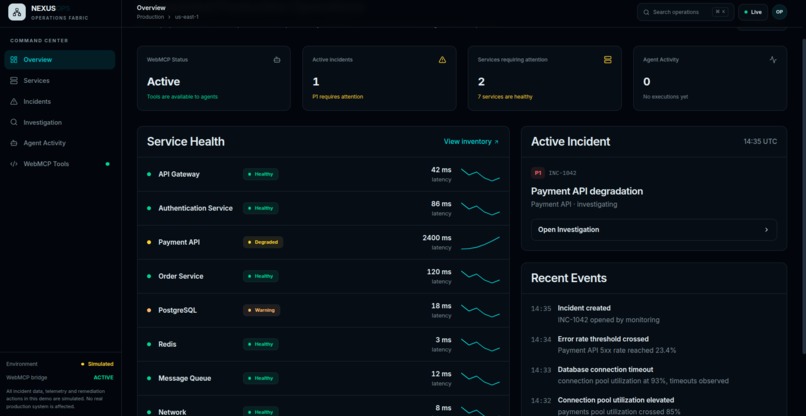
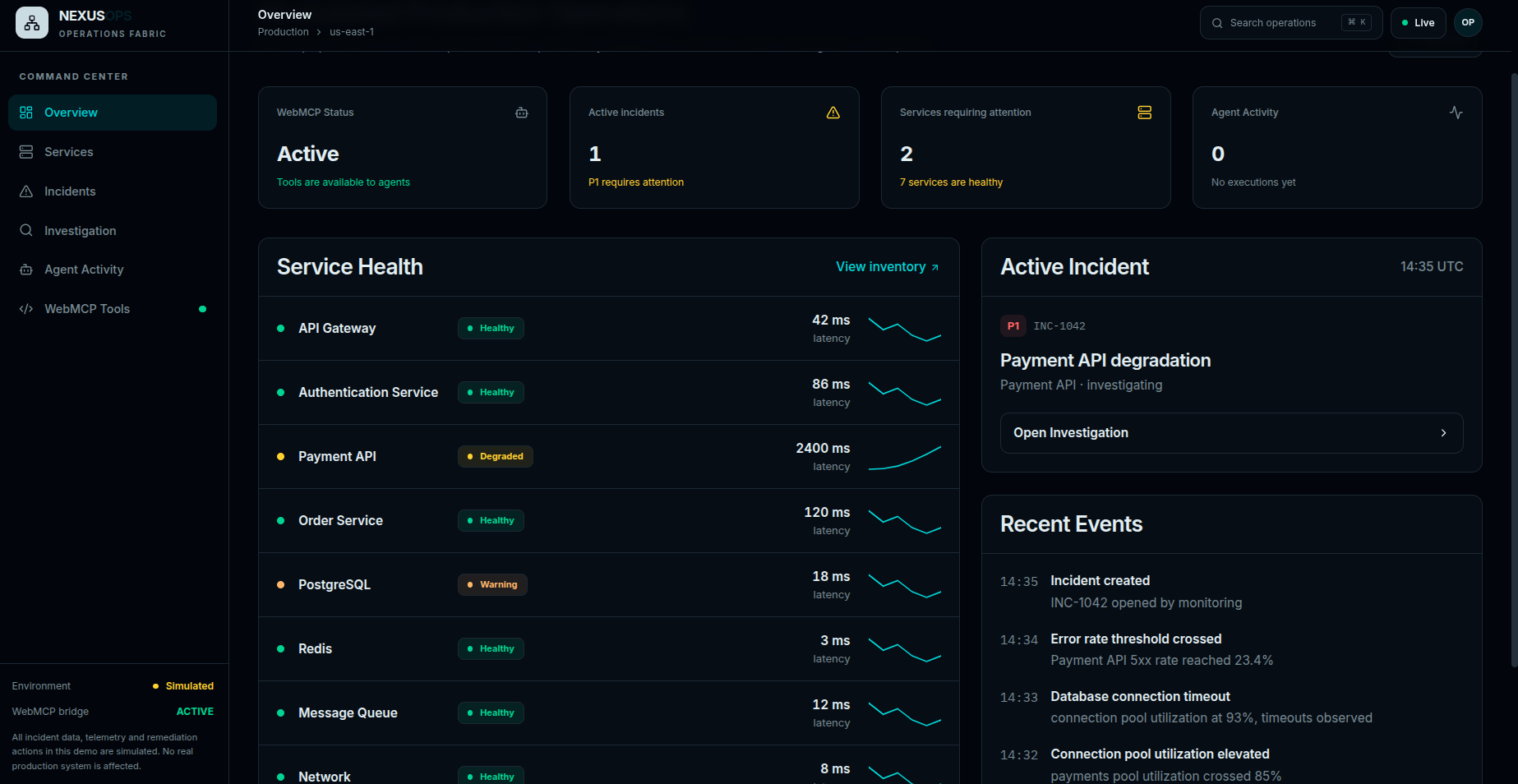
Home page - monitoring dashboard
-
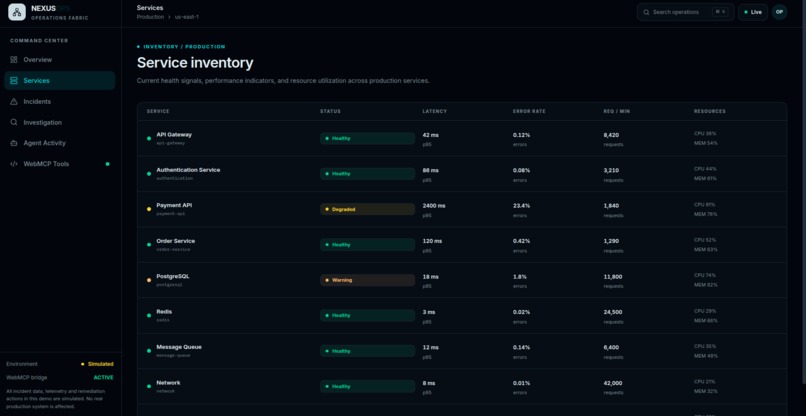
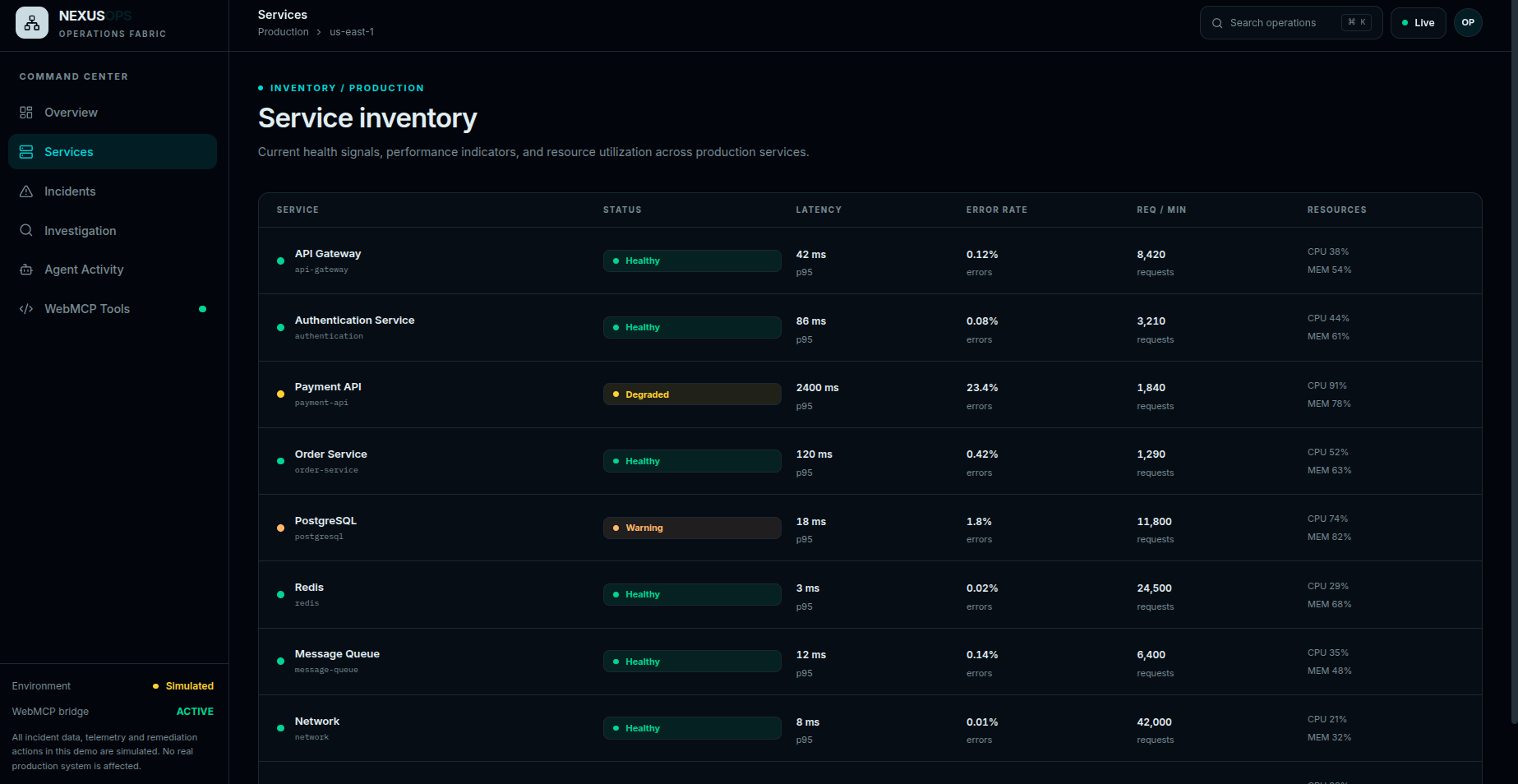
Service dashboard
-
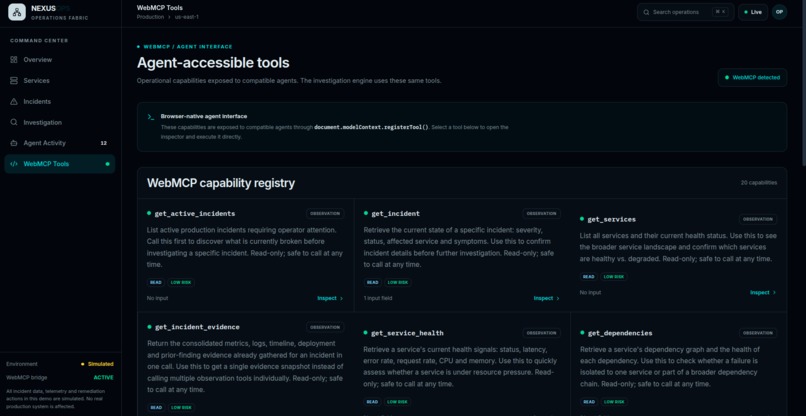
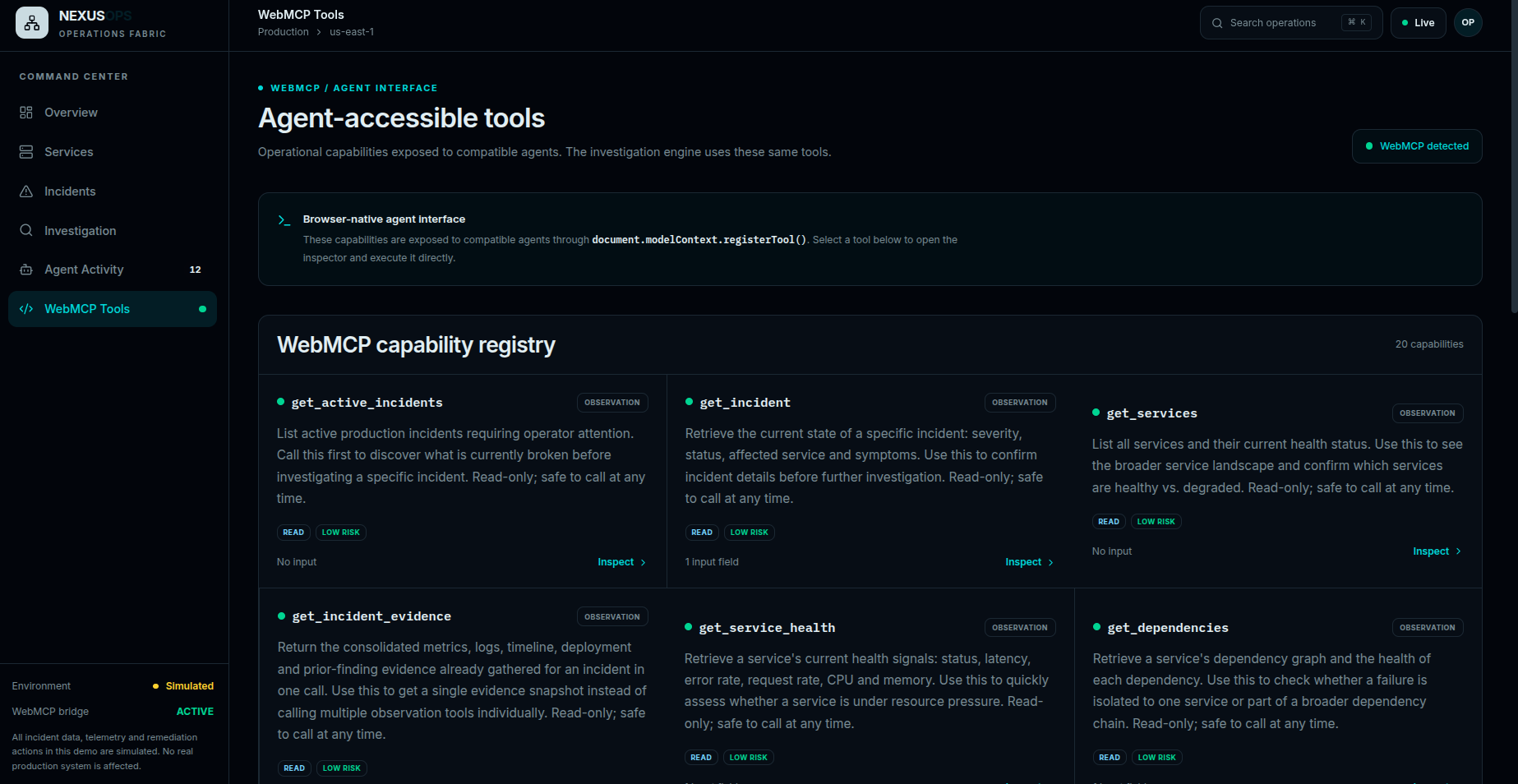
Try it out - webmcp
-
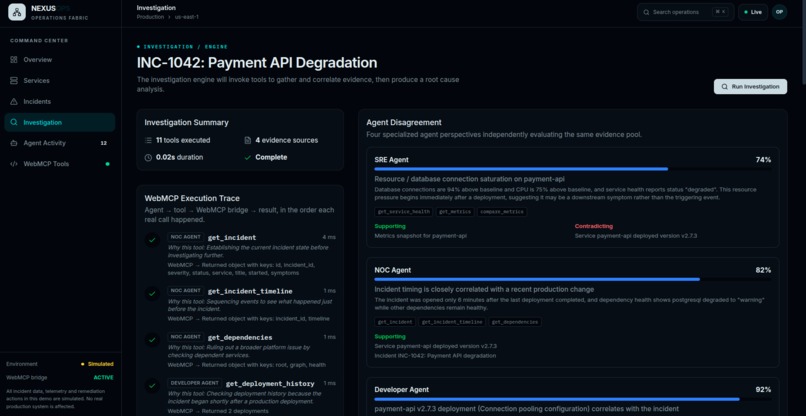
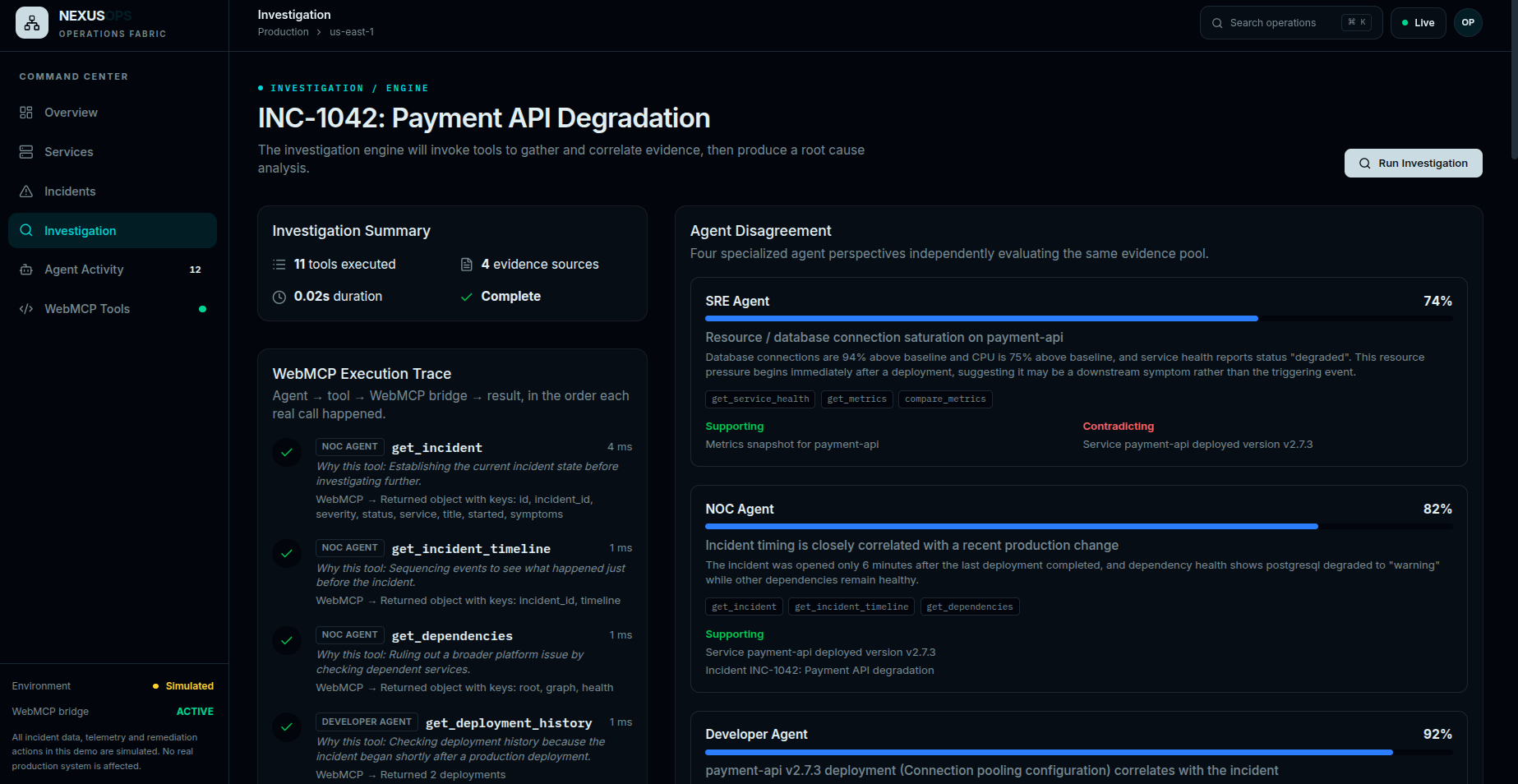
Actual investigation with WebMcp
Inspiration
Incident response is often stuck between two extremes: humans doing everything manually, or automation acting without enough context and control. We built NexusOps to explore a safer middle ground where agents investigate operational incidents, compare evidence, and recommend actions while humans remain responsible for approval.
What it does
WebMCP makes this possible directly inside the website. NexusOps exposes operational tools that compatible agents can discover and call, while the human operator sees the same evidence, reasoning, activity trace, and safety boundaries.
How we built it
NexusOps is an agent-native operations control plane for investigating production incidents. It exposes 20 WebMCP tools covering observation, investigation, recommendations, human approval, remediation, and verification.
For the simulated incident INC-1042, specialized SRE, NOC, Developer, and SOC perspectives inspect different evidence sources. They form independent hypotheses, identify supporting and conflicting evidence, and allow an Incident Commander to arbitrate the disagreement. The environment is intentionally simulated. Metrics, logs, services, deployments, and remediation state are deterministic demo data. No real production system is monitored or changed.
Challenges I ran into
I ran into challenge when I was not familiar with WebMCP at all before starting working on project. Also was lacking of AI credits to actually develop the app in 3-4 days.
Accomplishments that I am proud of
NexusOps exposes 20 genuine WebMCP tools through document.modelContext.registerTool(), allowing compatible agents to discover and call operational capabilities directly from the website. I built a complete incident workflow covering observation, investigation, multi-agent analysis, disagreement, Incident Commander arbitration, human approval, controlled remediation, and verification. The SRE, NOC, Developer, and SOC perspectives use different evidence sources and produce deterministic, explainable conclusions from the same operational data. I also added a schema-driven Tool Inspector, evidence and causal-chain views, risk and approval metadata, shared execution tracing, and an audit activity feed.
What I learnedx
First of all, understood concepts of webmcp and its usage. I learned that WebMCP is most valuable when agents can use the same tools and page state as the human operator instead of interacting through a separate hidden integration. I learned that agent assistance must be paired with clear safety boundaries, especially when tools can change operational state. I also learned that specialized agent perspectives are more useful than a single generic assistant because different roles can focus on different evidence and reach different conclusions.
What's next for NexusOps
The next step is to connect the same WebMCP control-plane pattern to real observability and incident-management systems while preserving human approval for high-risk actions. Future versions could support additional incident types, organization-specific tools, richer agent arbitration, and persistent audit history. The current priority is validating the live WebMCP experience in Chrome and compatible agent environments, then using that feedback to improve reliability and real-world integrations.
Built With
- claude
- codex
- github
- next.js
- react
- typescript
- vercel
- webmcp

Log in or sign up for Devpost to join the conversation.