
Inspiration
What it does
How we built it
Challenges we ran into
Accomplishments that we're proud of
What we learned
What's next for NexusGuard by NeuralNexus
🌟 Inspiration
With UPI transactions crossing 10 billion monthly in India, fraud cases are skyrocketing—yet most detection systems are either too slow, inaccurate, or completely opaque. Users receive vague "transaction failed" messages without understanding why. We wanted to build something that not only catches fraud with high accuracy but also explains itself to users, bridging the trust gap in digital payments. The idea for NexusGuard was born from the need to make AI-powered security both intelligent and human-friendly. ⚙️ What it does
NexusGuard is an end‑to‑end fraud detection platform that:
Analyzes sequences of 10 consecutive transactions per user using a 1D CNN to detect behavioral anomalies.

Blocks high‑risk transactions in <200ms with 99.2% accuracy.

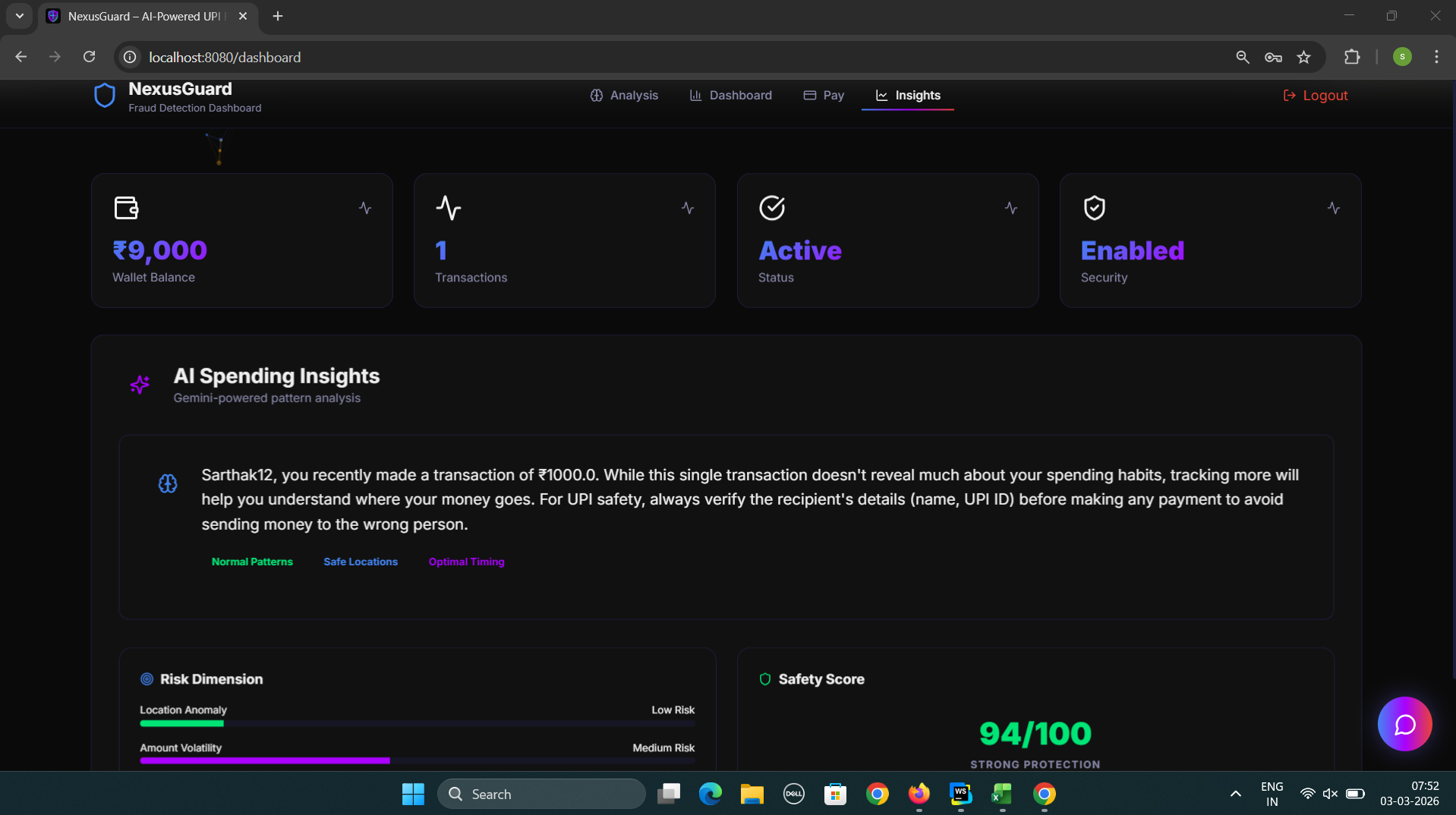
Generates natural‑language explanations via Google Gemini for every blocked transaction (e.g., “Unusually high amount at 3 AM from a new location”).

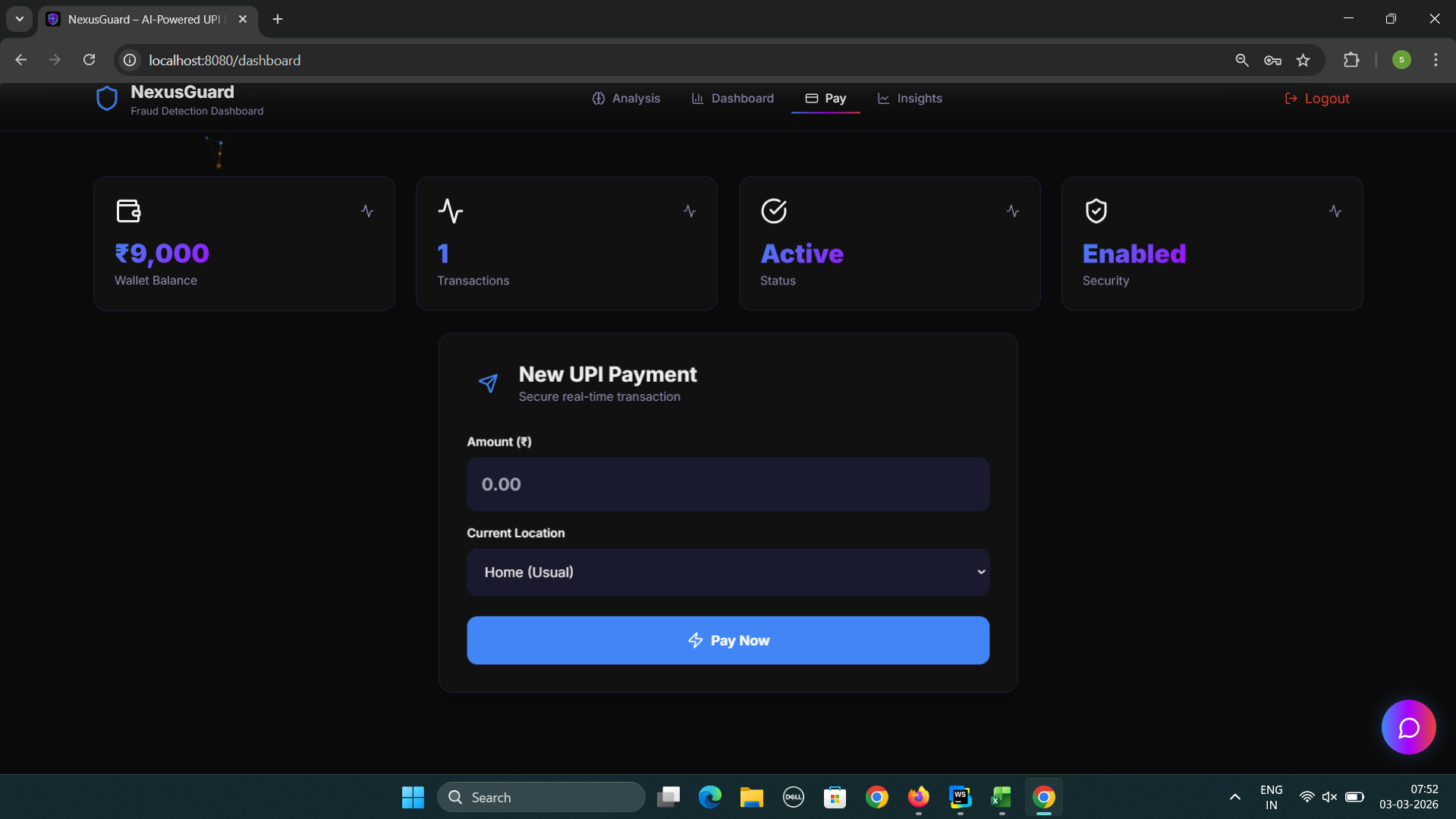
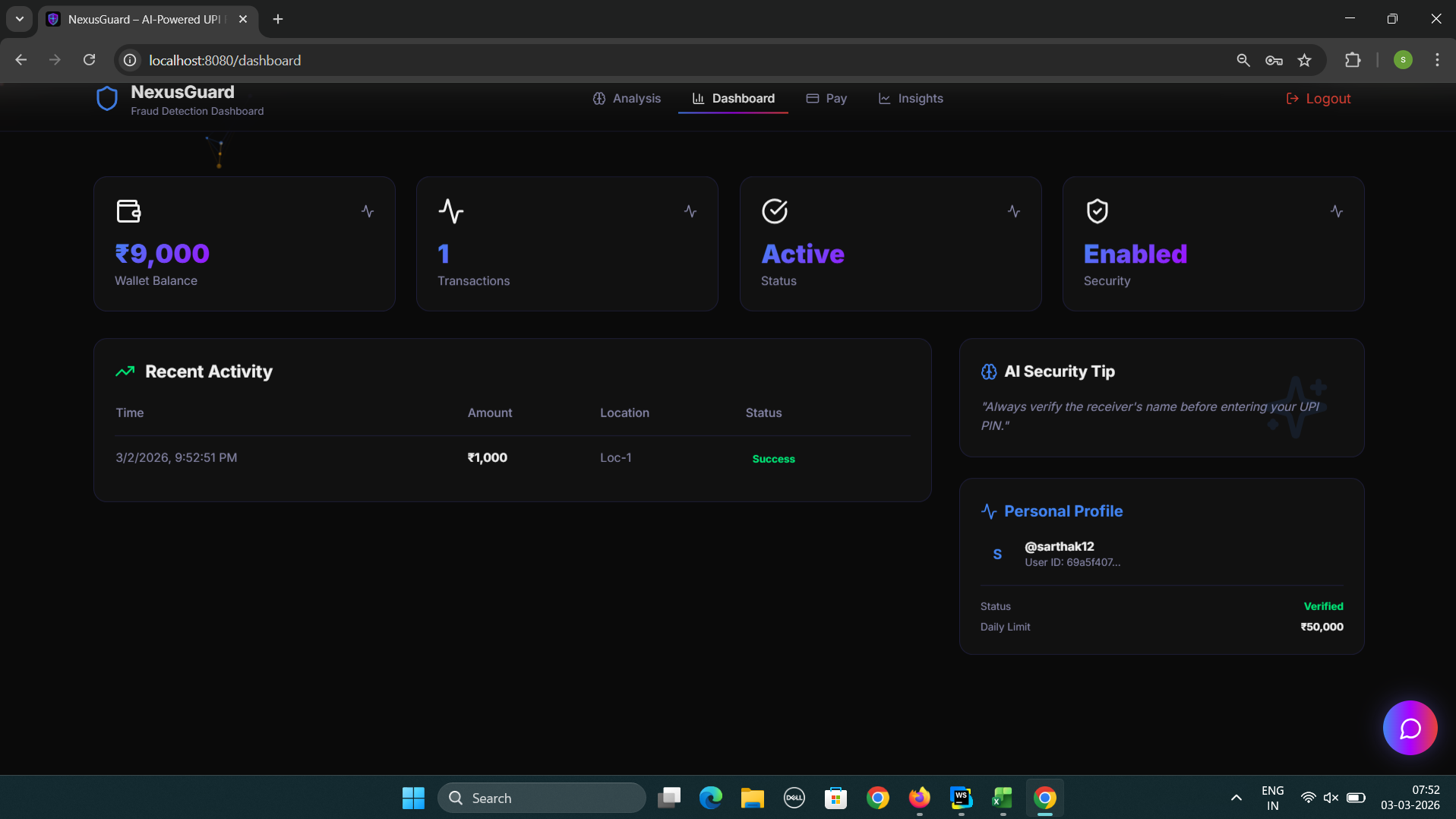
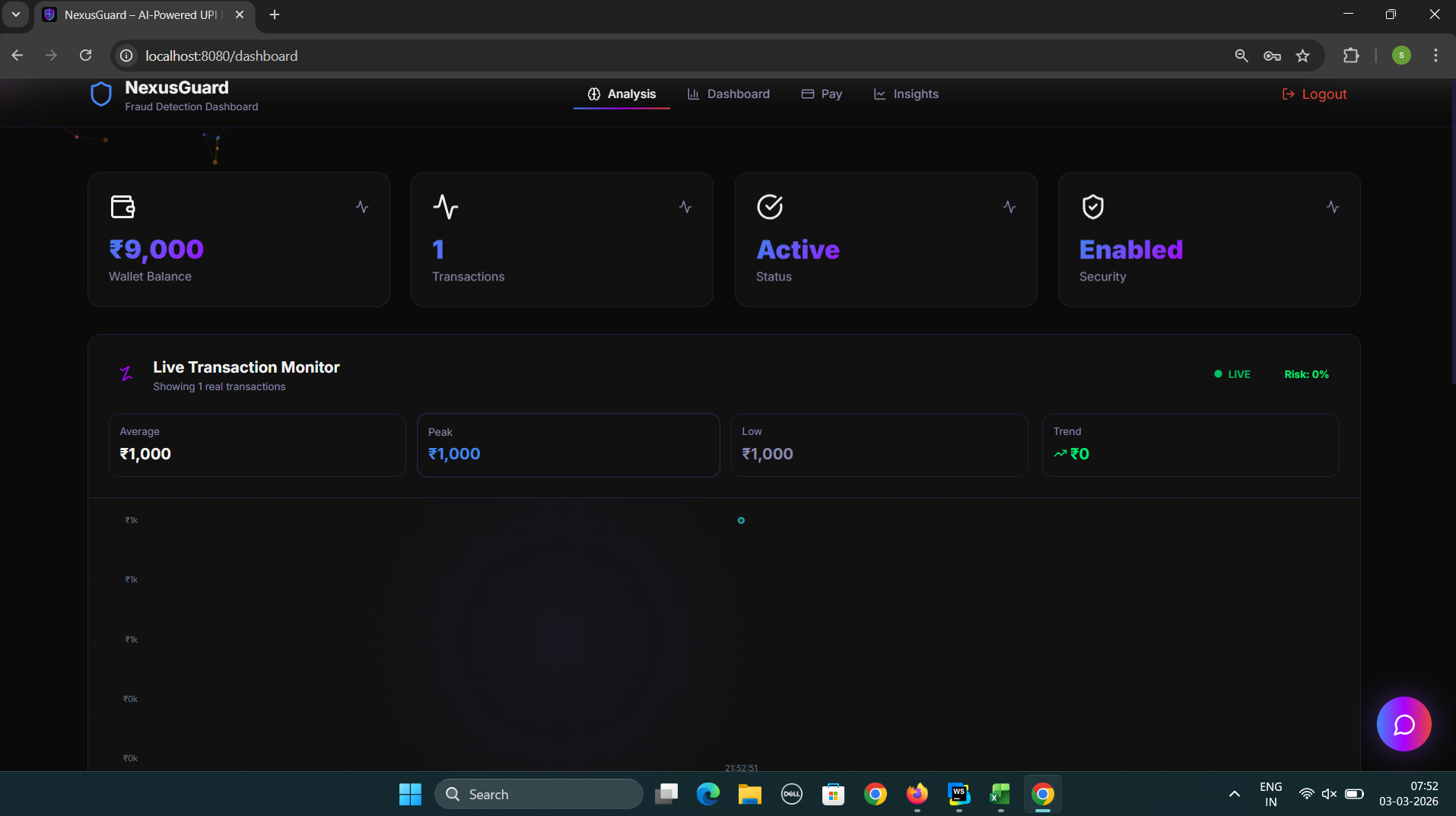
Provides a user dashboard to view transaction history and balance.

Offers an admin panel to review all flagged transactions with AI explanations.

Features a stunning midnight‑black UI with gradient accents, smooth animations, and a cursor‑reactive background.
🛠️ How we built it
Backend: Flask (Python) with RESTful architecture.

Database: MongoDB for flexible storage of users and transactions.

Machine Learning: TensorFlow/Keras 1D CNN trained on 2 million+ synthetic transactions (features: amount, hour, time gap, location).

Explainability: Google Gemini API integrated with custom prompts using user profile and recent transaction context.

Frontend: HTML/CSS/JS with IntersectionObserver animations, CSS variables for cursor effects, and Google Fonts (Inter).

Dataset Generation: Custom Python script using numpy/pandas to create realistic fraud patterns.
🧗 Challenges we ran into
Sequence preparation: Ensuring live transaction sequences matched training data format exactly was tricky—we solved it by building a robust prepare_sequence utility.

Real‑time prediction latency: Optimized model inference and MongoDB queries to stay under 200ms.

Gemini prompt engineering: Crafting prompts that consistently produce concise, accurate, and friendly explanations required multiple iterations.

Cursor‑reactive background: Implementing a smooth, performant spotlight effect without lag took creative use of CSS custom properties and throttled event listeners.

Balancing fraud rate: Tuning the 0.7 threshold to minimize false positives while catching real fraud.
🏆 Accomplishments that we're proud of
Successfully integrated deep learning + generative AI into a seamless production‑ready app.

Achieved <200ms inference time even with sequence preprocessing.

Built a stunning, professional UI that feels futuristic and trustworthy.

Created a scalable synthetic data generator that can produce millions of realistic transactions.

Designed an explainable AI system that users actually understand and trust.

The cursor‑reactive background became a conversation starter during demos!
📚 What we learned
Sequence‑based models (1D CNNs) are surprisingly effective for fraud detection when you engineer the right features.

Generative AI can turn a black‑box model into a transparent, user‑friendly tool.

MongoDB’s flexibility is perfect for projects where the data schema may evolve.

Frontend animations and micro‑interactions significantly enhance user trust and engagement.

Real‑world fraud patterns are complex—synthetic data must be carefully designed to mimic them.
🚀 What's next for NexusGuard by NeuralNexus
Live deployment on cloud (AWS/GCP) with auto‑scaling.

Real bank API integration to test with sandbox environments.

LSTM/Transformer models for even better sequence understanding.

Mobile app (React Native) with push notifications for flagged transactions.

Multi‑language Gemini explanations (Hindi, Tamil, etc.) for Indian users.

Anomaly explanation dashboard for banks to analyse fraud trends.

Open‑sourcing the dataset generator to help the community build better fraud detectors.
Built With
- css-frameworks:-flask
- html
- javascript
- numpy
- scikit-learn
- tech-stack-languages:-python
- tensorflow/keras-database:-mongodb-(with-pymongo)-ai-services:-google-gemini-api-libraries:-pandas
- tqdm

Log in or sign up for Devpost to join the conversation.