-
-
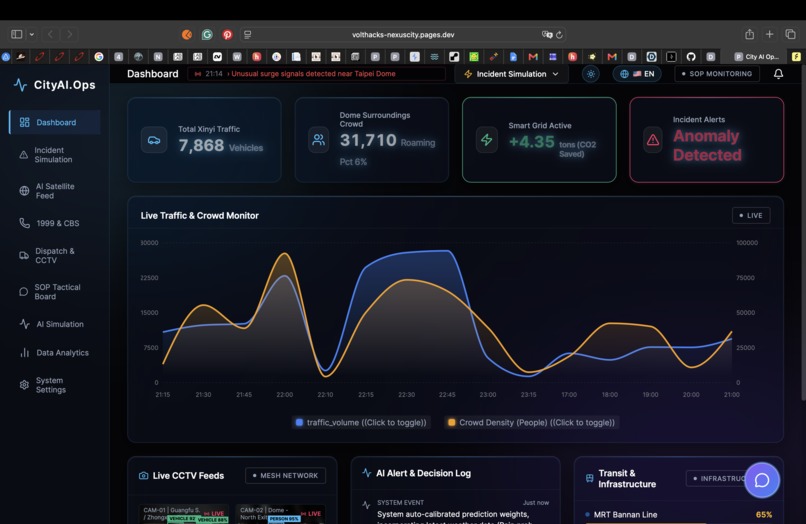
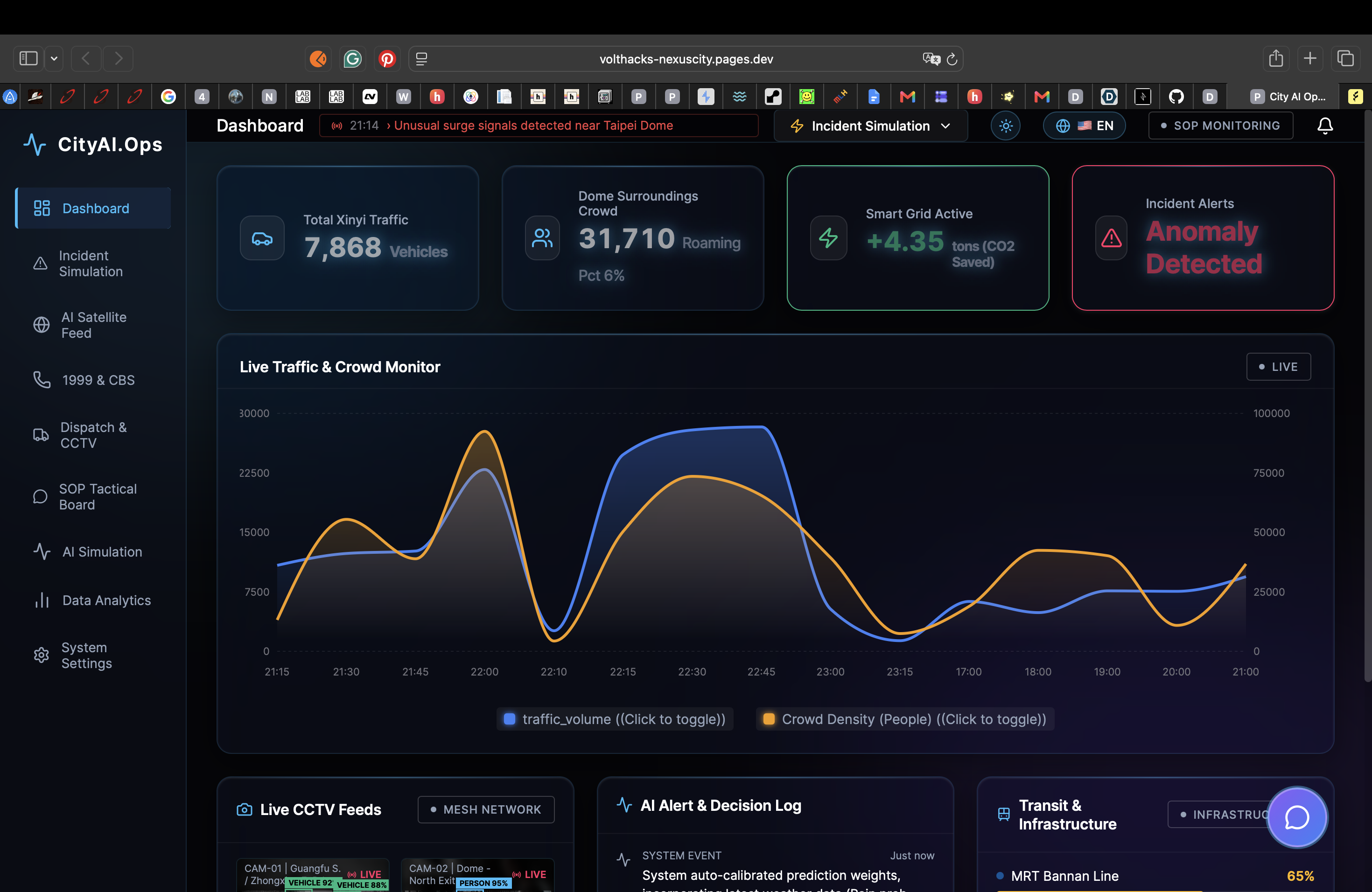
Dashboard
-
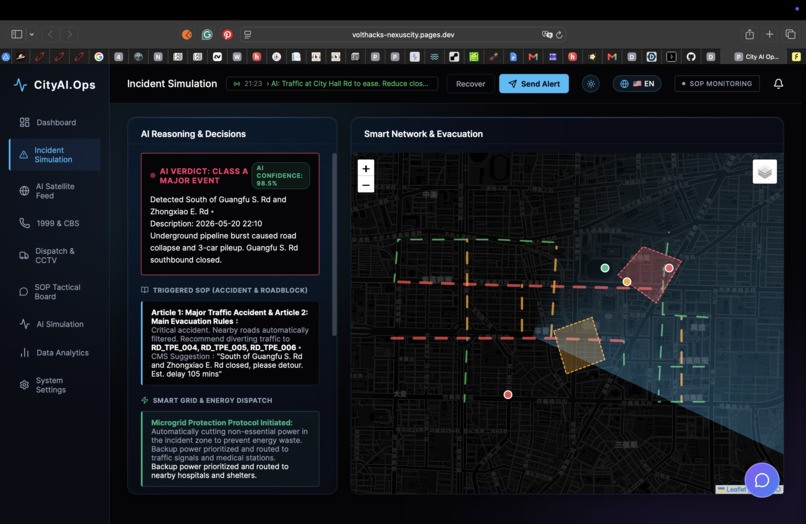
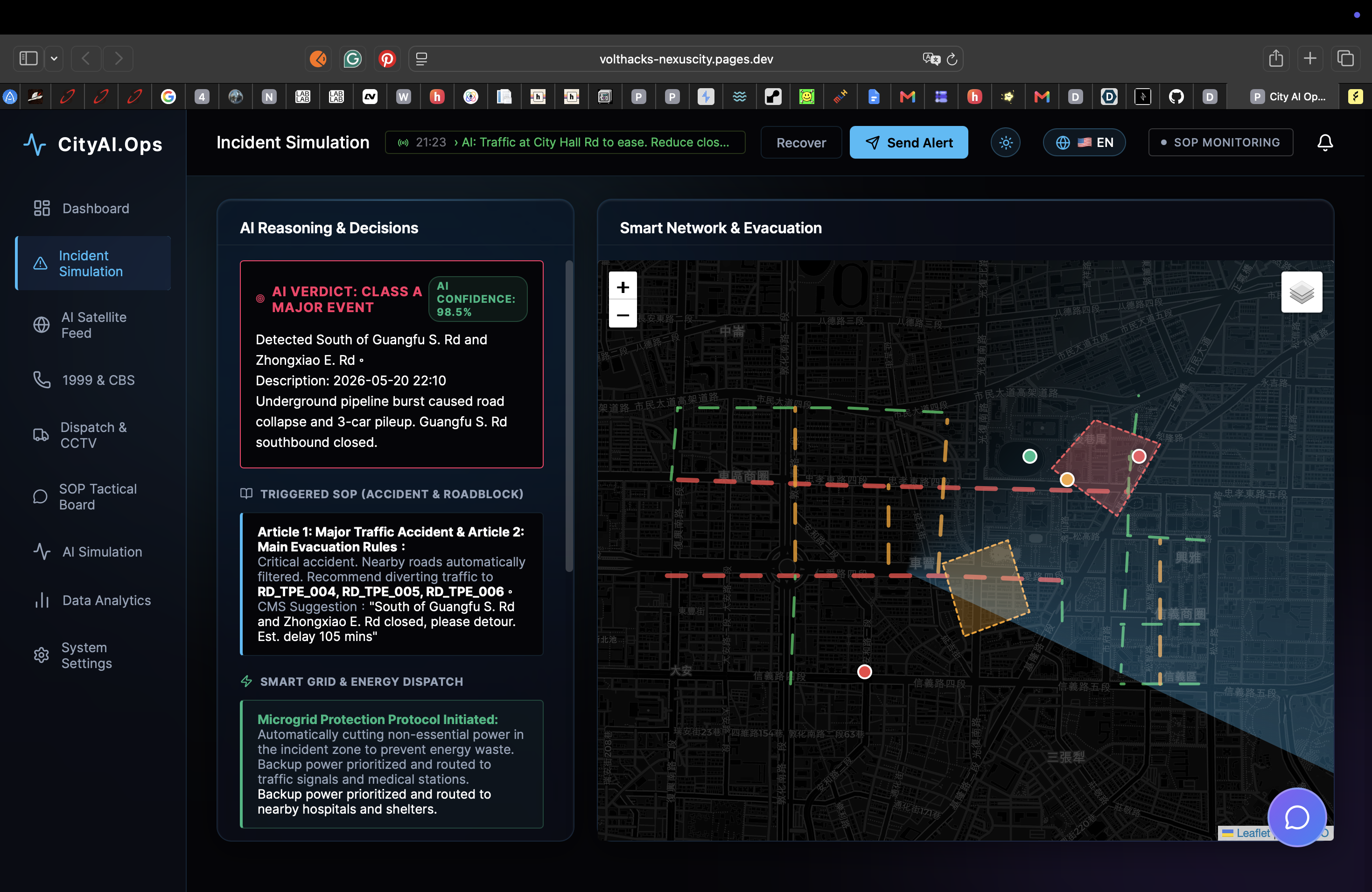
Incident Simulation
-
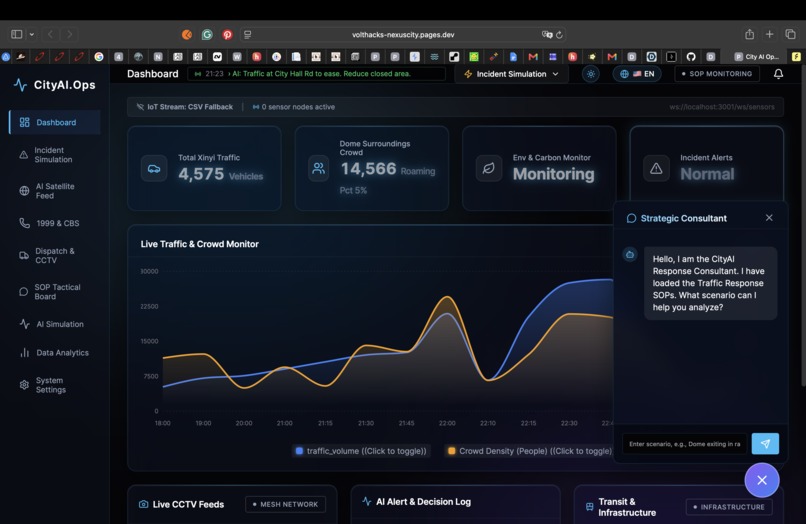
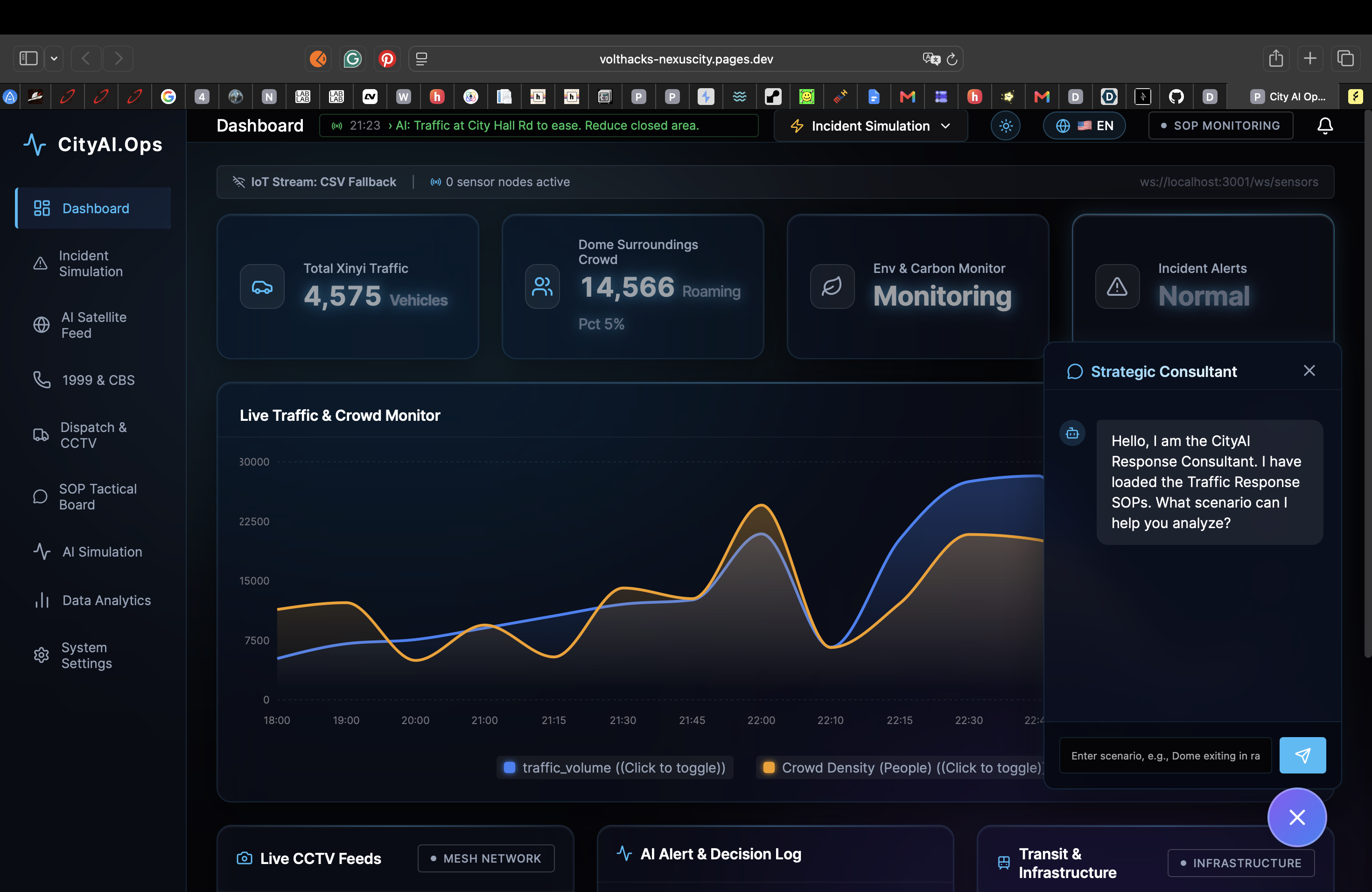
ai chat
-
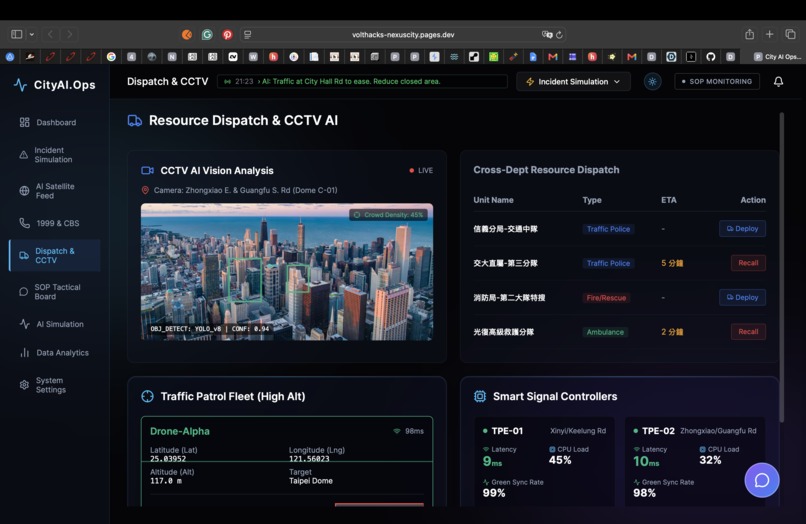
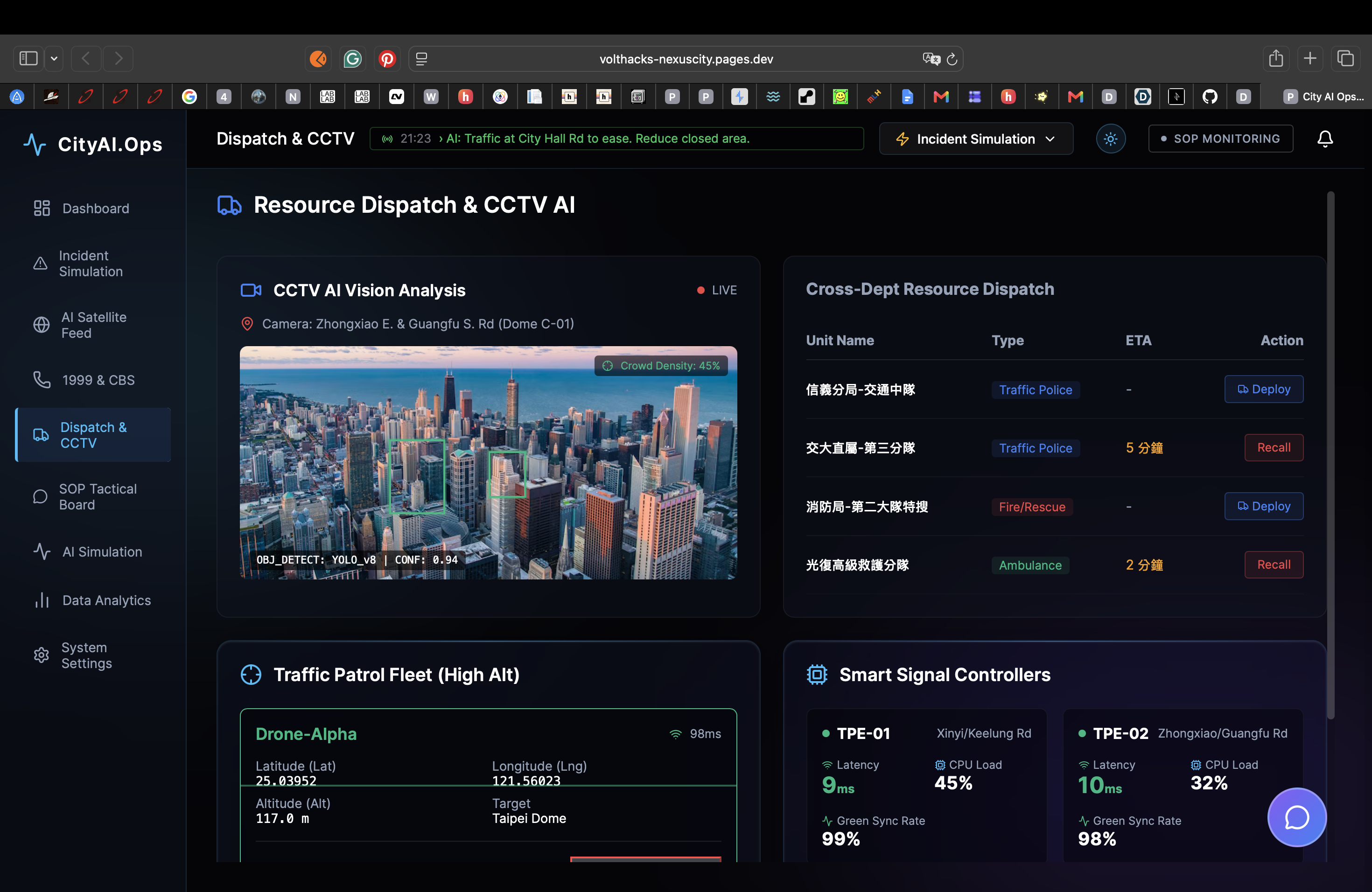
Dispatch & CCTV
NexusCity
AI-Driven Proactive Smart City Incident Response VoltHacks 2026 Submission
Inspiration
Megacities face compounding crises daily. A simple traffic accident during a storm can cascade into gridlock, delayed ambulances, and isolated power outages. Existing city management dashboards are purely reactive—they show operators that a crisis is happening, but leave the complex, multi-sector coordination (traffic, medical, energy) to slow human manual processes.
We realized that by fusing IoT edge sensor networks with Generative AI, we could transform urban incident response from a reactive monitoring state to a proactive, automated dispatch system.
What it does
NexusCity is an AI orchestrator that sits on top of a city's IoT infrastructure. It acts as the central brain for urban crisis management:
- IoT Data Ingestion: It ingests real-time telemetry via WebSockets from edge devices (traffic flow sensors, microgrid power meters, and air quality trackers).
- Generative AI Consultant: When a multi-variable emergency strikes, our LLM-powered engine instantly matches the scenario with municipal Standard Operating Procedures (SOPs).
- Automated Cross-Sector Dispatch: Instead of isolated responses, NexusCity synchronizes actions like rerouting traffic lights, instructing microgrids, and dispatching SMS alerts via Twilio.
🛠️ How we built it
- Cloud Infrastructure: Hosted on Cloudflare Pages for lightning-fast edge delivery, with a Node.js/Express backend handling WebSocket streams.
- IoT Integration: We engineered a live WebSocket streaming service that simulates 7 physical sensor nodes reporting real-time telemetry and anomaly detection.
- AI Engine: Powered by Google Gemini 1.5 Flash, with Featherless.ai seamlessly integrated as a robust LLM fallback mechanism to ensure 100% uptime during crises.
- Frontend Dashboard: A React + Vite Digital Twin interface providing real-time data visualization.
Challenges we ran into
Integrating diverse live IoT data streams (traffic vs. energy) into a unified state for the frontend was challenging. Furthermore, ensuring the Generative AI engine didn't "hallucinate" emergency responses required strict guardrails and prompt engineering based on real-world SOPs.
Accomplishments that we're proud of
- Successfully bridging the gap between abstract LLM reasoning and real-time IoT data streams.
- Building a robust LLM fallback chain (Gemini → Featherless.ai) to guarantee system reliability.
- Translating complex physical infrastructure logic into an intuitive, zero-latency React dashboard.
What's next for NexusCity
- Direct Edge AI Deployment: Pushing Small Language Models (SLMs) directly to edge IoT gateways.
- Telecom Integration: Expanding our Twilio integration to support massive Cell Broadcast Systems (CBS) for city-wide evacuation routing.
Built With
- cloudflare
- featherless.ai
- gemini
- iot
- node.js
- react
- twilio
- websockets

Log in or sign up for Devpost to join the conversation.