-
-
1
-
2
-
4
-
7
-
6
-
3
-
5
-
8
Inspiration
We recognized that many financial institutions and power users still rely on heavyweight, native desktop applications for security, performance, and complex data handling. Inspired by the need for modern UX in this space, we chose to architect Nexusbank—a high-performance, native desktop loan tracker designed from the ground up in C++, but with a user experience rivaling modern web apps.
What It Does (The Planned Application)
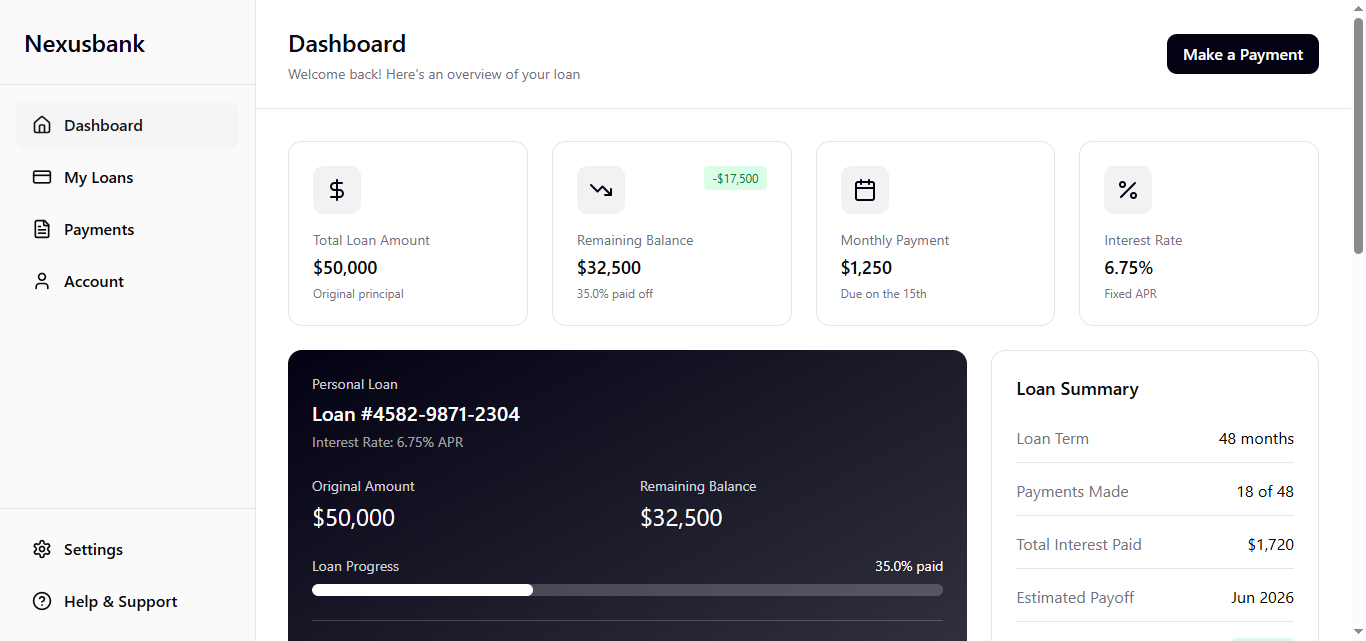
Nexusbank is designed to be a secure, offline-capable desktop application for detailed loan portfolio management. The designed system will:
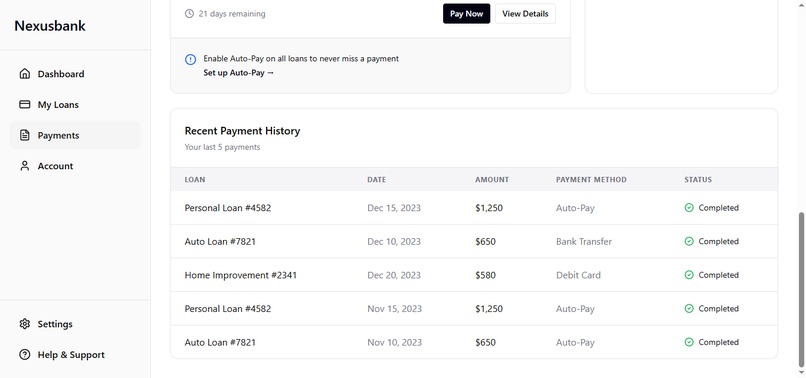
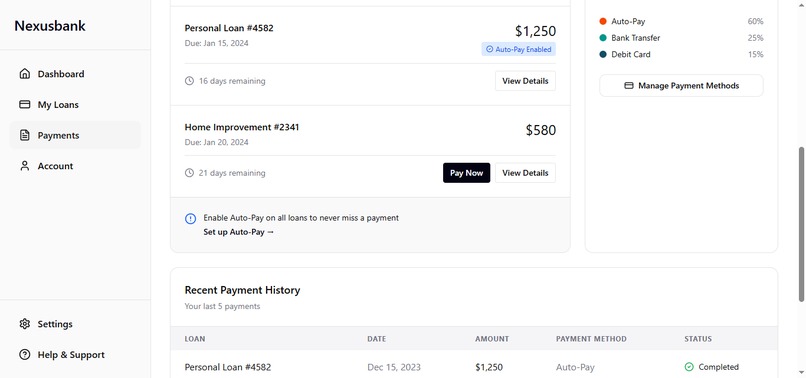
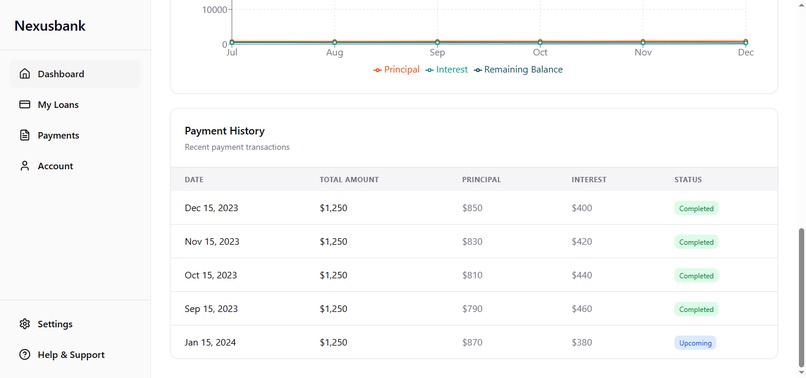
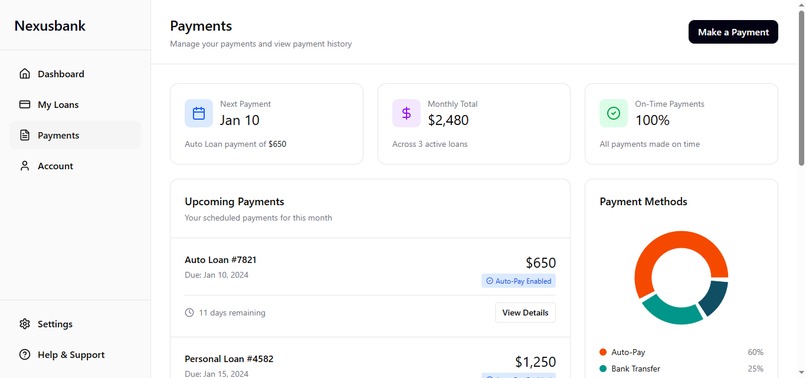
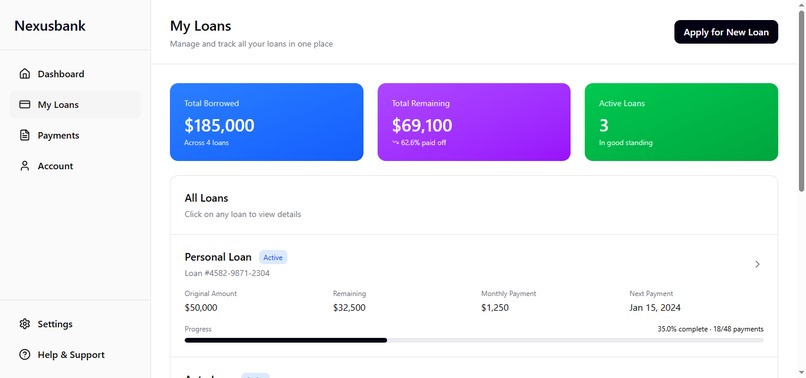
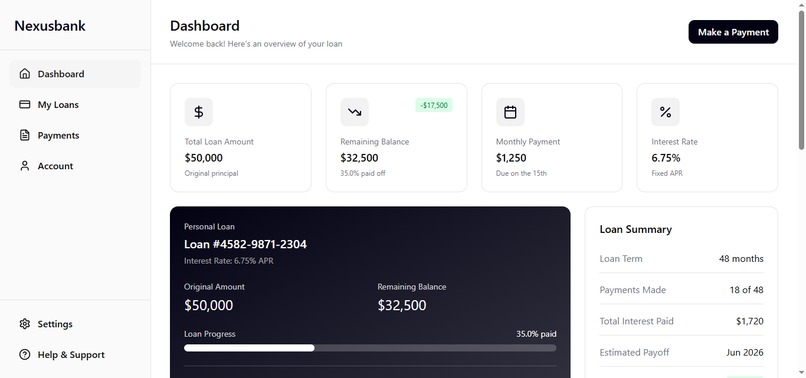
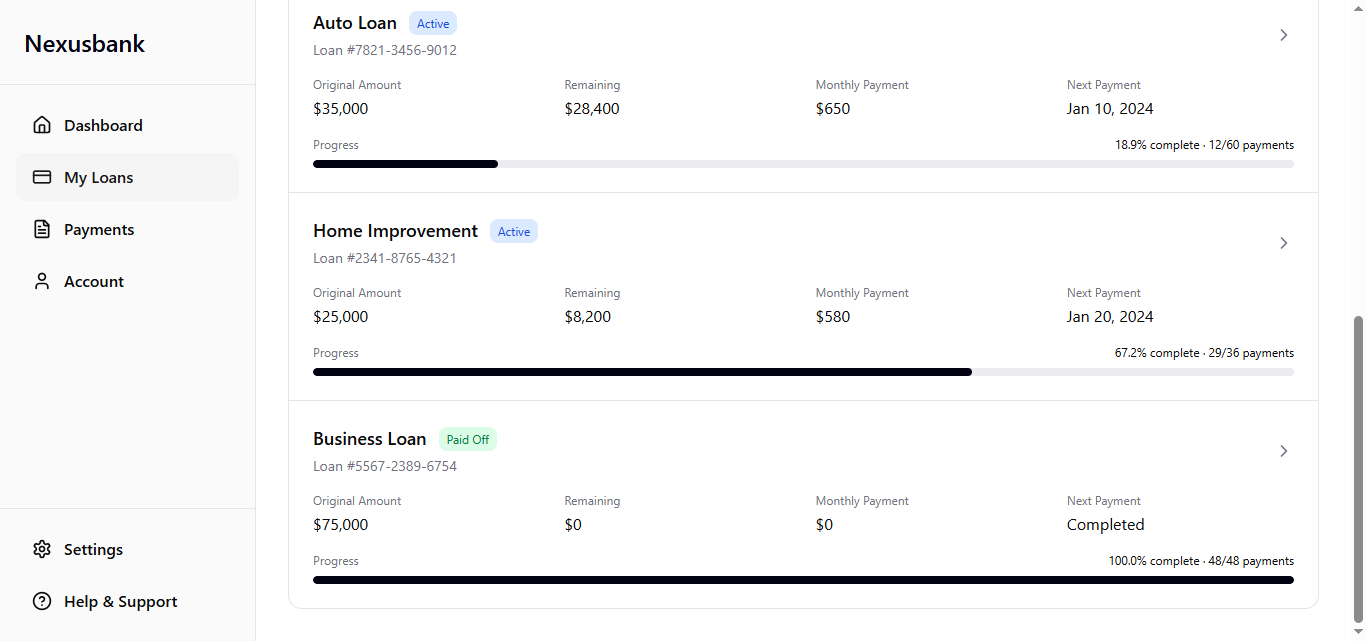
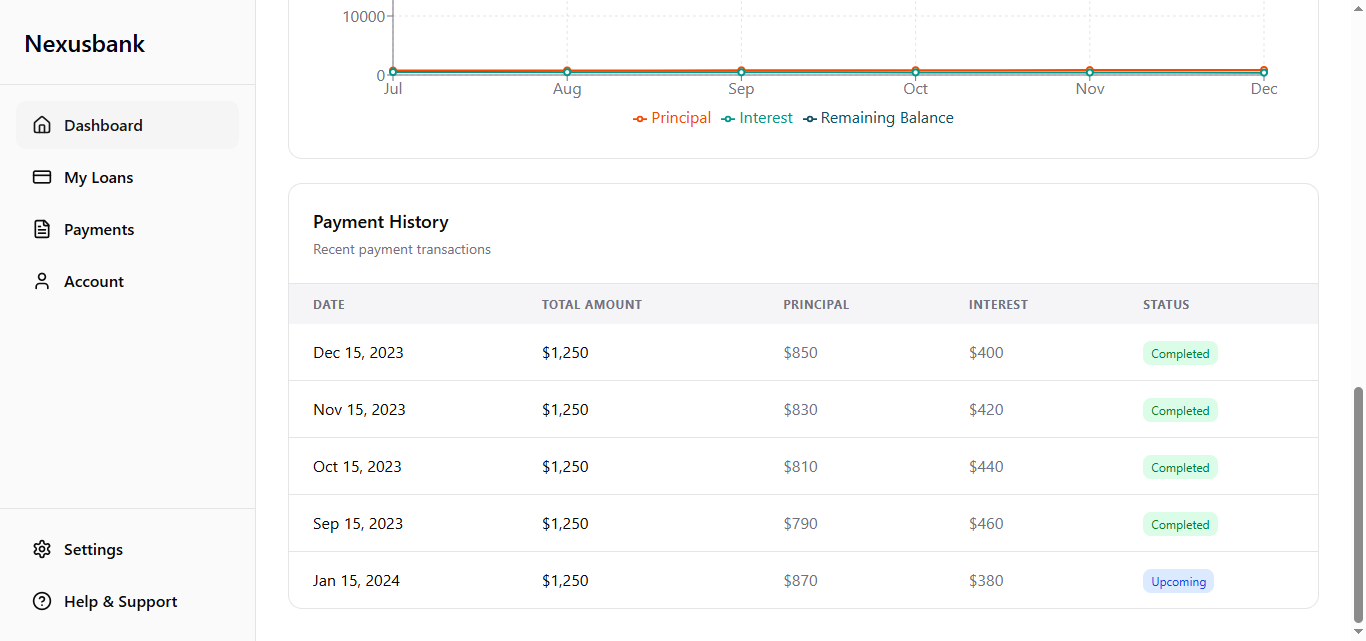
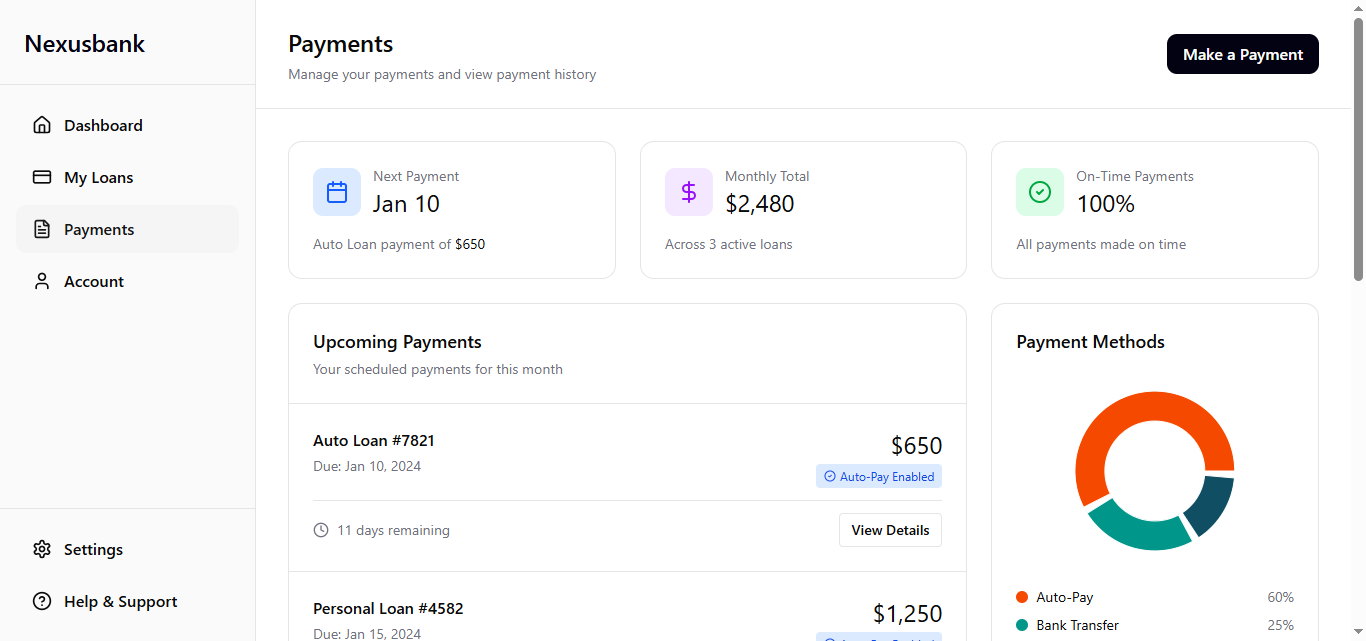
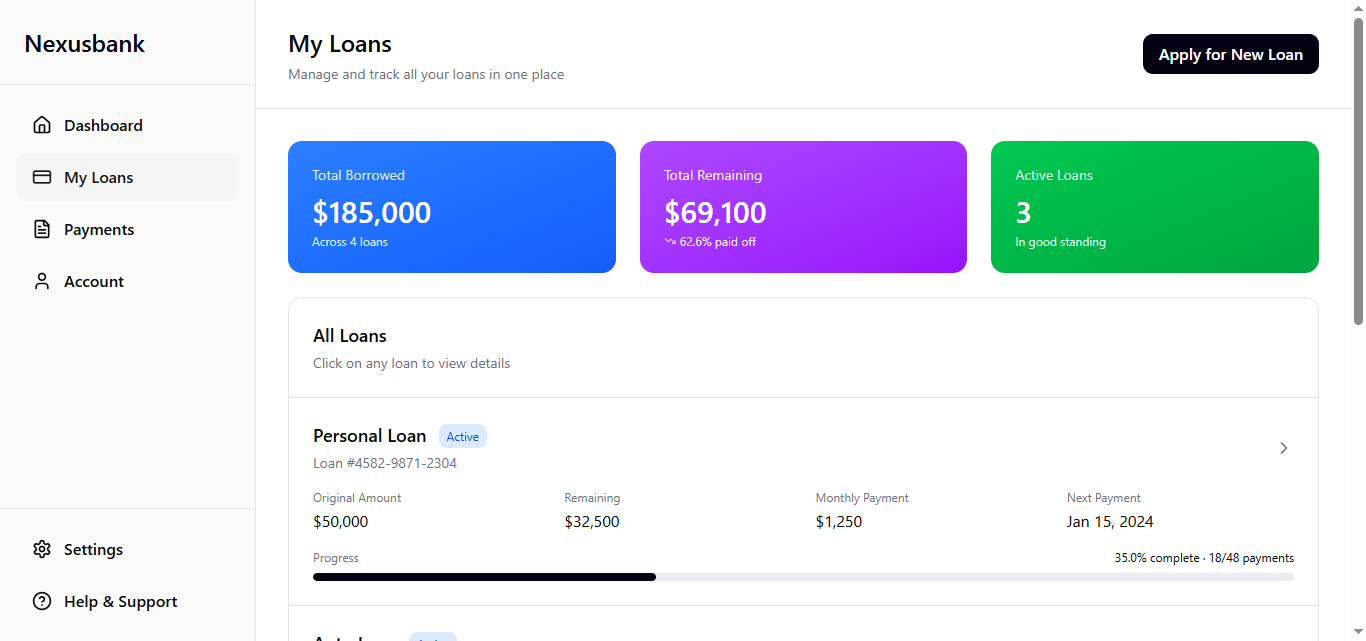
- Provide a main dashboard with summary widgets for total debt, upcoming payments, and loan health.
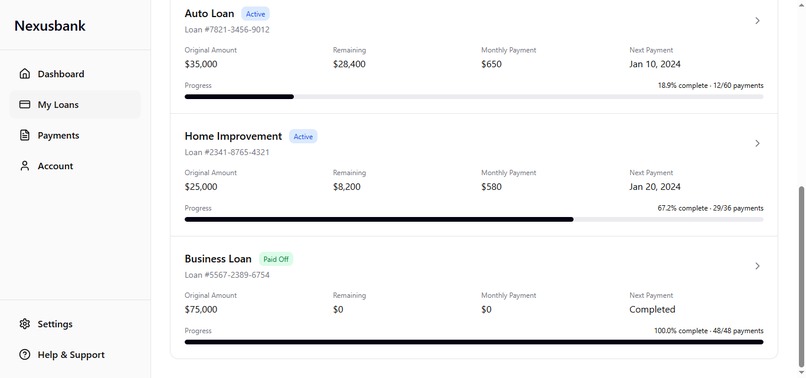
- Feature a detailed loan ledger with amortization schedules, payment history, and adjustable variables (e.g., early payment simulation).
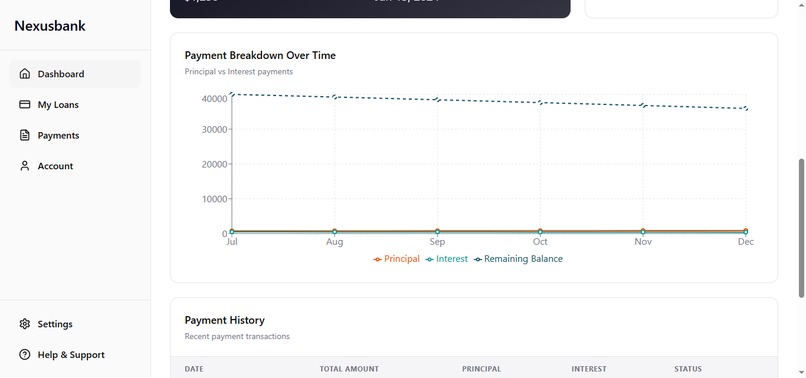
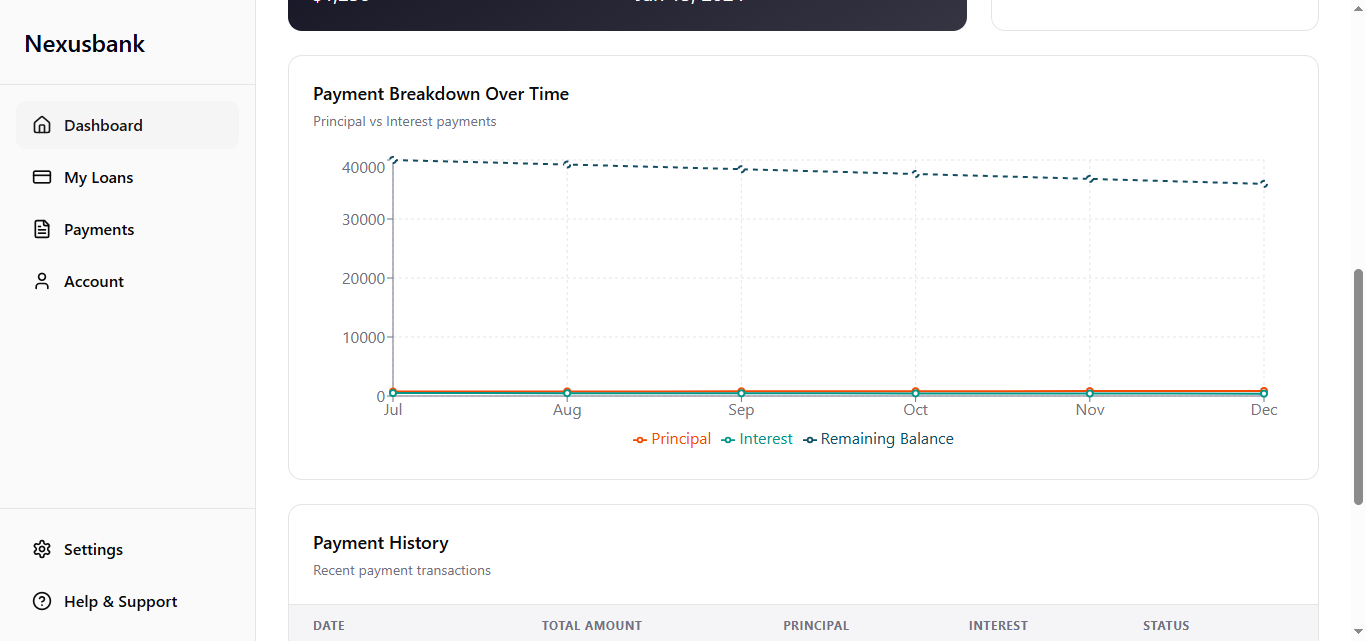
- Generate visual reports (charts for interest vs. principal, payoff timeline).
- Handle data import/export (CSV, PDF statements) with local-first data storage.
How We Built It (The Design & Plan)
This project is a complete pre-development blueprint. We built the foundation for the future C++ application.
High-Fidelity Wireframes & UX Flow (Figma):
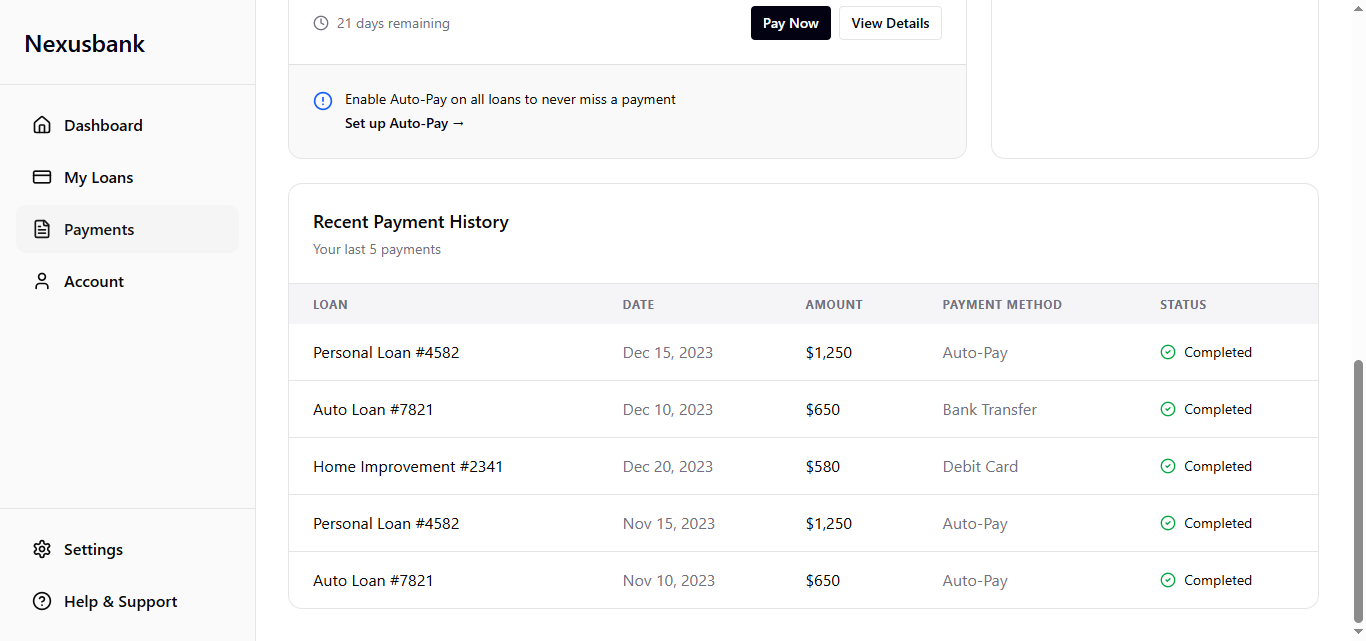
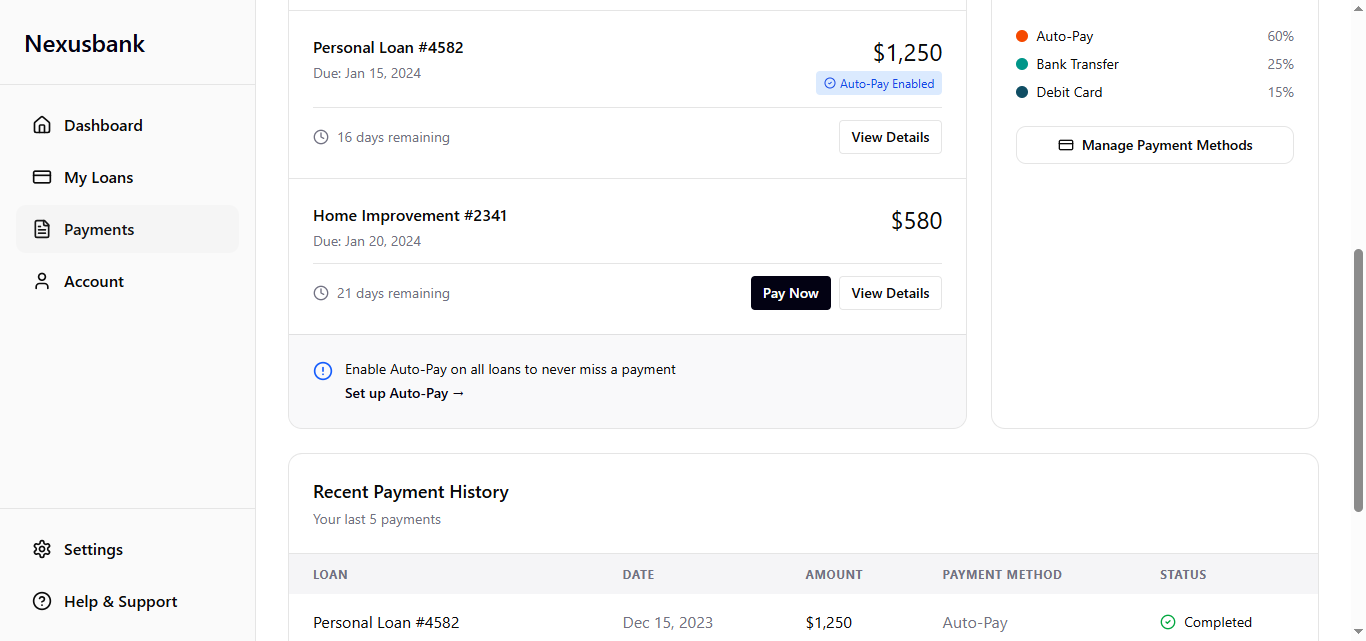
- Created pixel-perfect, interactive prototypes for every core screen (Login, Dashboard, Loan Detail, Analytics, Settings).
- Defined the complete user journey for tracking a loan, making a payment entry, and generating a report.
- Established the visual design language: typography, color scheme (for clarity and accessibility), iconography, and a component library (buttons, data grids, input fields) tailored for a desktop windowing environment.
Technical Architecture Specification:
- Frontend (UI Layer): Designed for implementation using a C++ GUI framework (e.g., Qt, wxWidgets, or ImGui). The Figma components are direct specifications for the custom widgets to be built.
- Backend (Logic Layer): Architected the core C++ classes:
-
Loanclass (with principal, rate, term, payment schedule). -
Portfoliomanager class to handle multiple loans. -
AmortizationCalculatorengine for all financial math. -
LocalRepositoryfor data persistence (SQLite database schema was designed).
-
- System Design: Planned the Model-View-Controller (MVC) or Model-View-ViewModel (MVVM) pattern to cleanly separate the UI (View) from the business logic (Model).
Challenges We Ran Into
- Designing for a Native Desktop Paradigm: Unlike web design, we had to consider native menus (File, Edit, View), window resizing behavior, dialog modals, and system integration, which Figma allowed us to prototype effectively.
- Translating Visual Design to C++ Widgets: Planning how the Figma components (shadows, gradients, layouts) would be implemented in a framework like Qt, which has its own styling system (QSS), required careful mapping.
- Architecting for Performance & Offline Use: Structuring the data models and storage layer to ensure fast filtering, sorting of large loan histories, and reliable offline operation was a key design challenge.
Accomplishments That We're Proud Of
- Production-Ready Design Deliverables: We produced a comprehensive Figma file that serves as a single source of truth for all UI/UX, drastically reducing development ambiguity.
- Cohesive Technical Vision: Successfully bridging the gap between a modern UI/UX design and a robust C++ application architecture. We have a clear roadmap from "pretty pictures" to a functioning binary.
- Track Alignment: We focused deeply on the "loan tracking" problem, ensuring every design decision and architectural component serves the core goal of clarity, automation, and user control over financial data.
What We Learned
- The critical importance of designing the data model first before the UI; the loan amortization logic dictated many interface needs.
- How desktop application design differs in user expectation and interaction patterns from mobile or web.
- The value of creating a detailed style guide and component library in Figma to ensure development consistency and speed in the future C++ implementation phase.
What's Next for Nexusbank
- Development Kick-off: Begin C++ coding using the Qt framework, translating the Figma designs directly into code.
- Core Module Implementation: Prioritize building the
LoanandCalculatorengine, followed by the SQLite integration. - UI Implementation: Systematically build the window and widget classes as per the design specifications.
- Alpha Testing: Create a functional prototype for internal testing of the amortization logic and basic data entry.
- Future Features: Design extensions for secure cloud sync, API connections to financial institutions, and advanced forecasting models.
Built With
- figma

Log in or sign up for Devpost to join the conversation.