💡 Inspiration
Enterprise support is broken. Every incoming ticket requires a human to manually read, classify, and route it — before anyone even starts solving the actual problem. Inventory, budgets, HR, and customer data live in disconnected silos. Response quality depends entirely on which agent picks up the ticket.
We asked: what if AI could handle the entire support backbone — autonomously?
🔨 What We Built
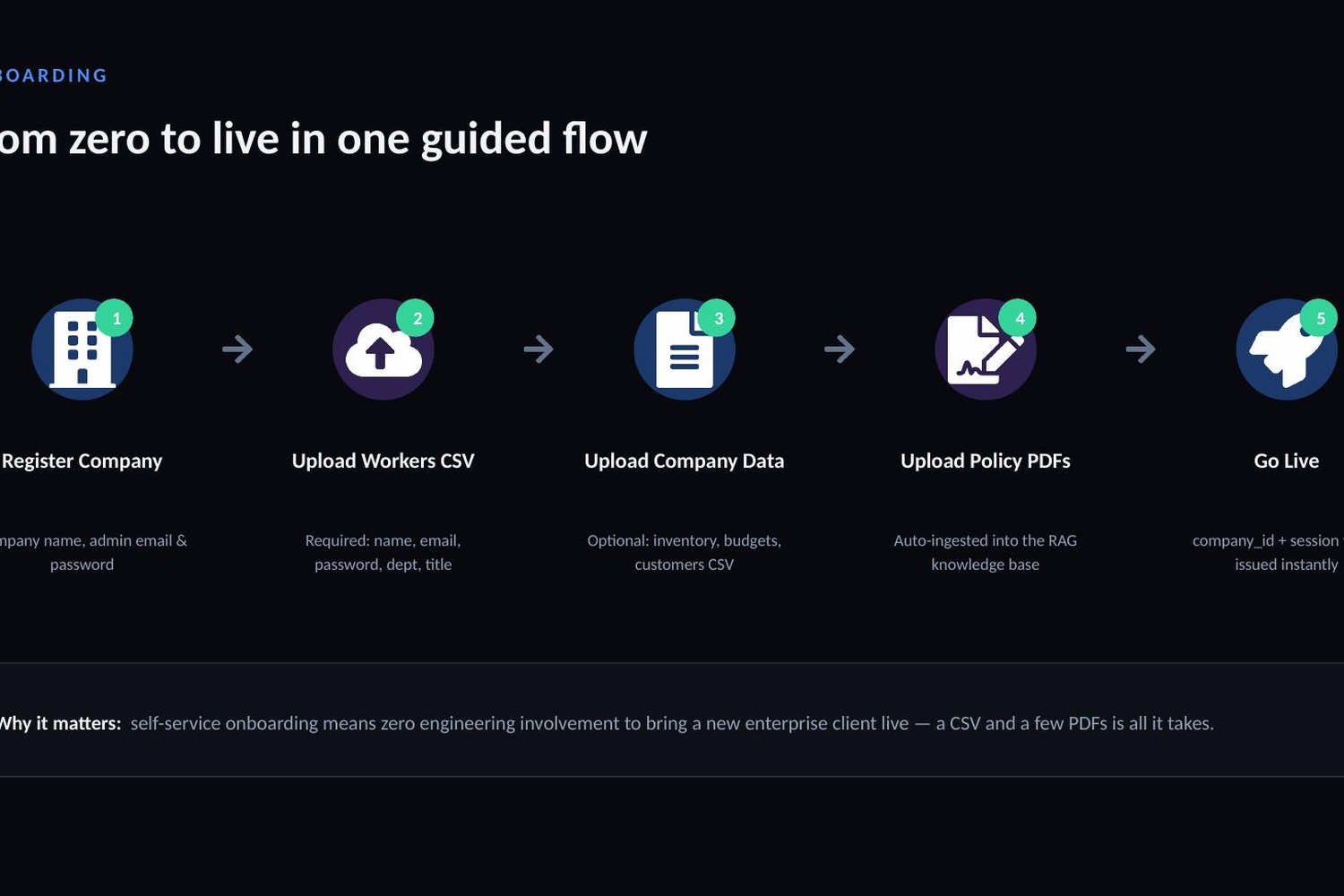
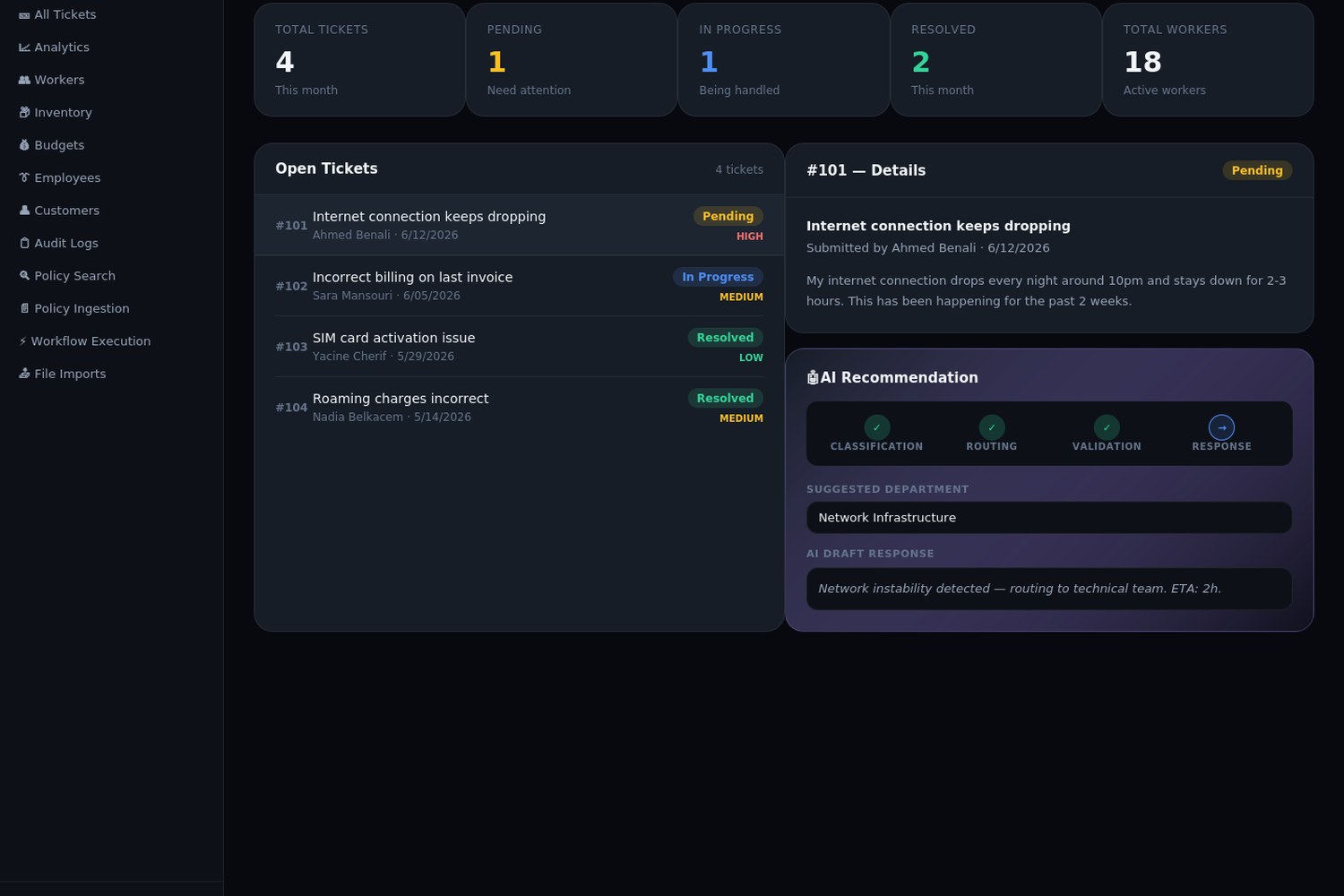
NexusAI is a multi-tenant enterprise support orchestration platform powered by a 4-agent LangGraph pipeline. Companies self-onboard by uploading a CSV of workers and PDF policies — and within minutes, every support ticket is automatically classified, routed to the right department, validated against company policy, and resolved with an AI-drafted response.
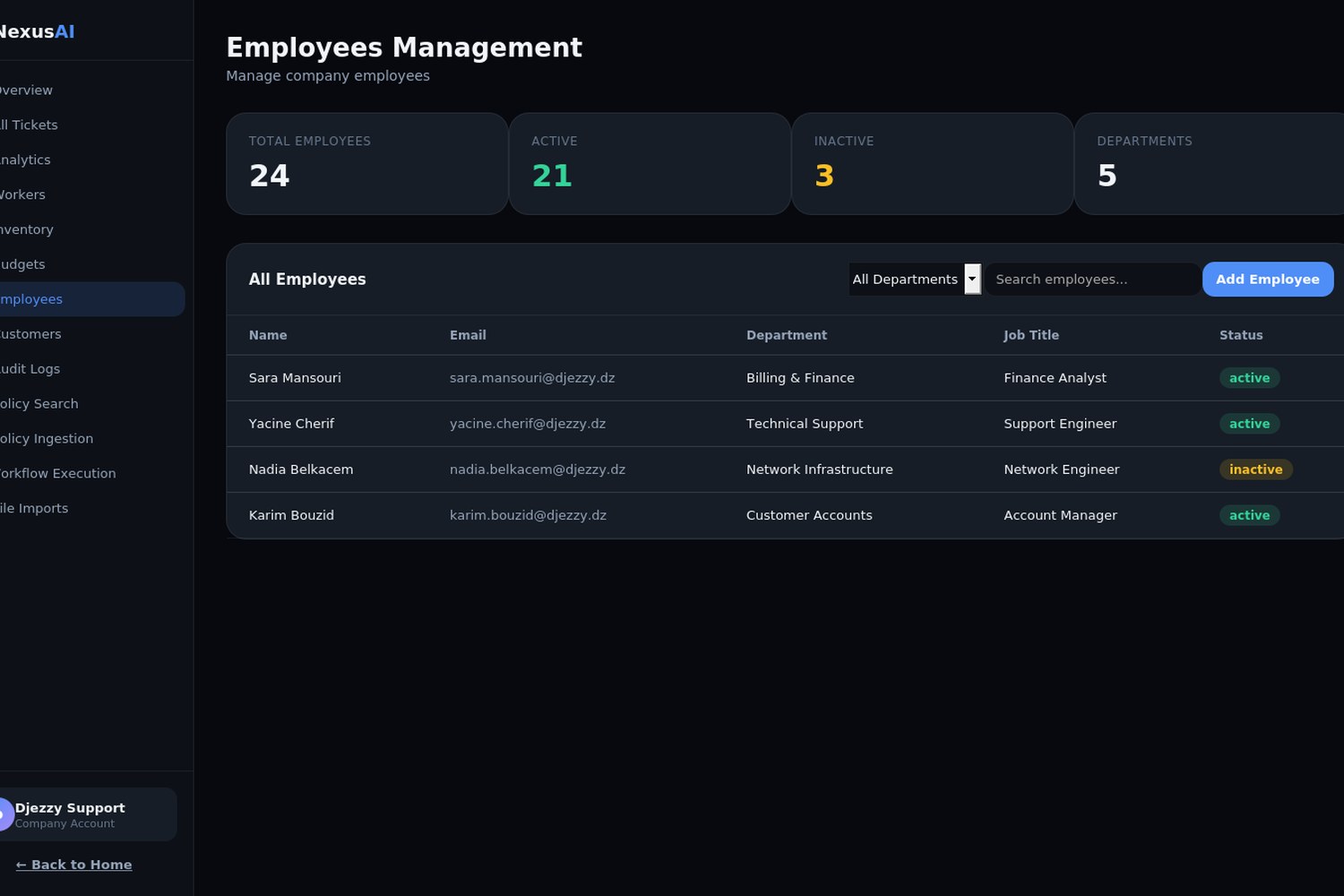
The platform serves 7 departments: Finance, HR, Operations, IT, Legal, Sales, and Customer Support — all from one unified dashboard.
⚙️ How We Built It
Frontend
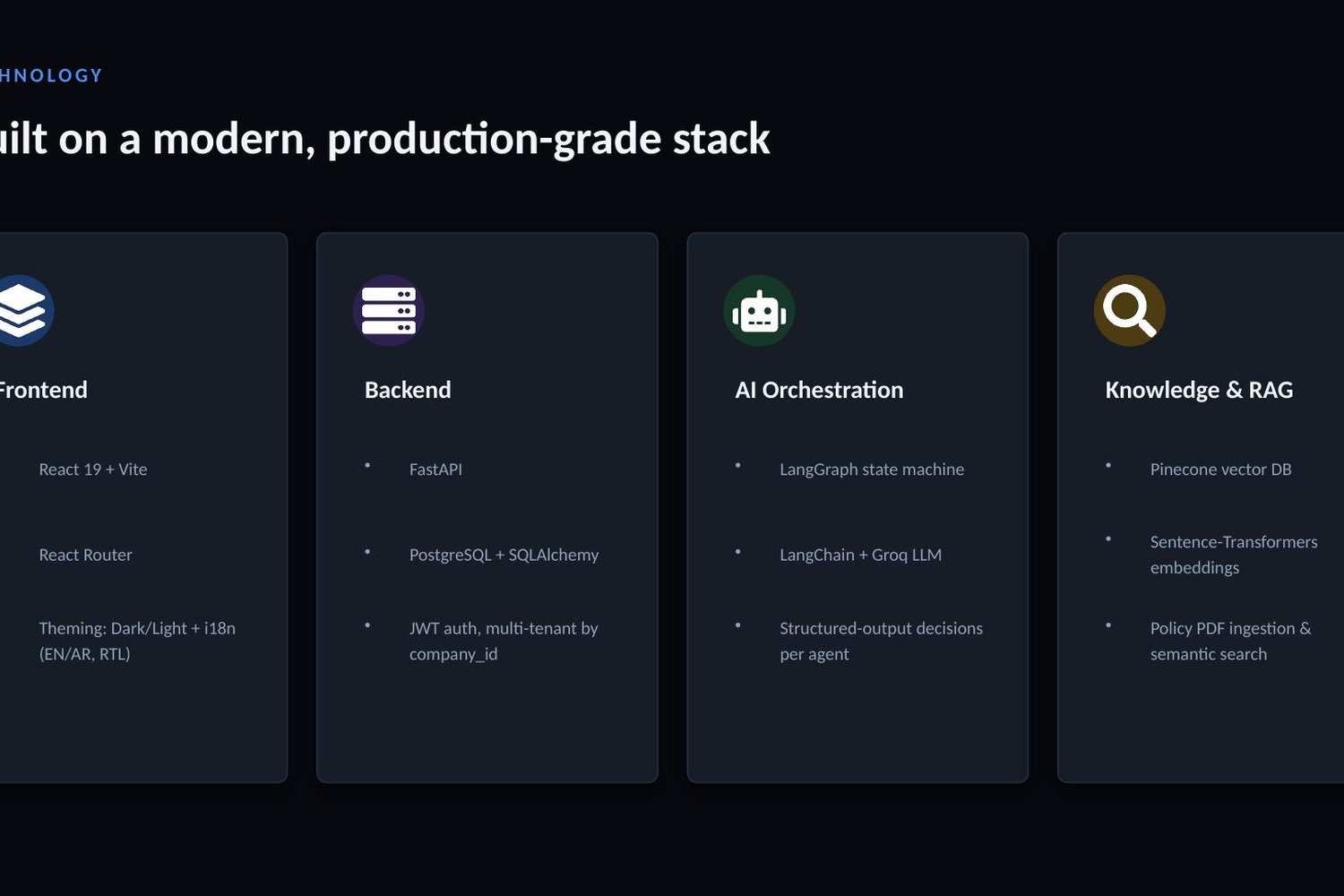
- React 19 + Vite — 19 screens with full dark/light theming and bilingual support (EN/AR with RTL)
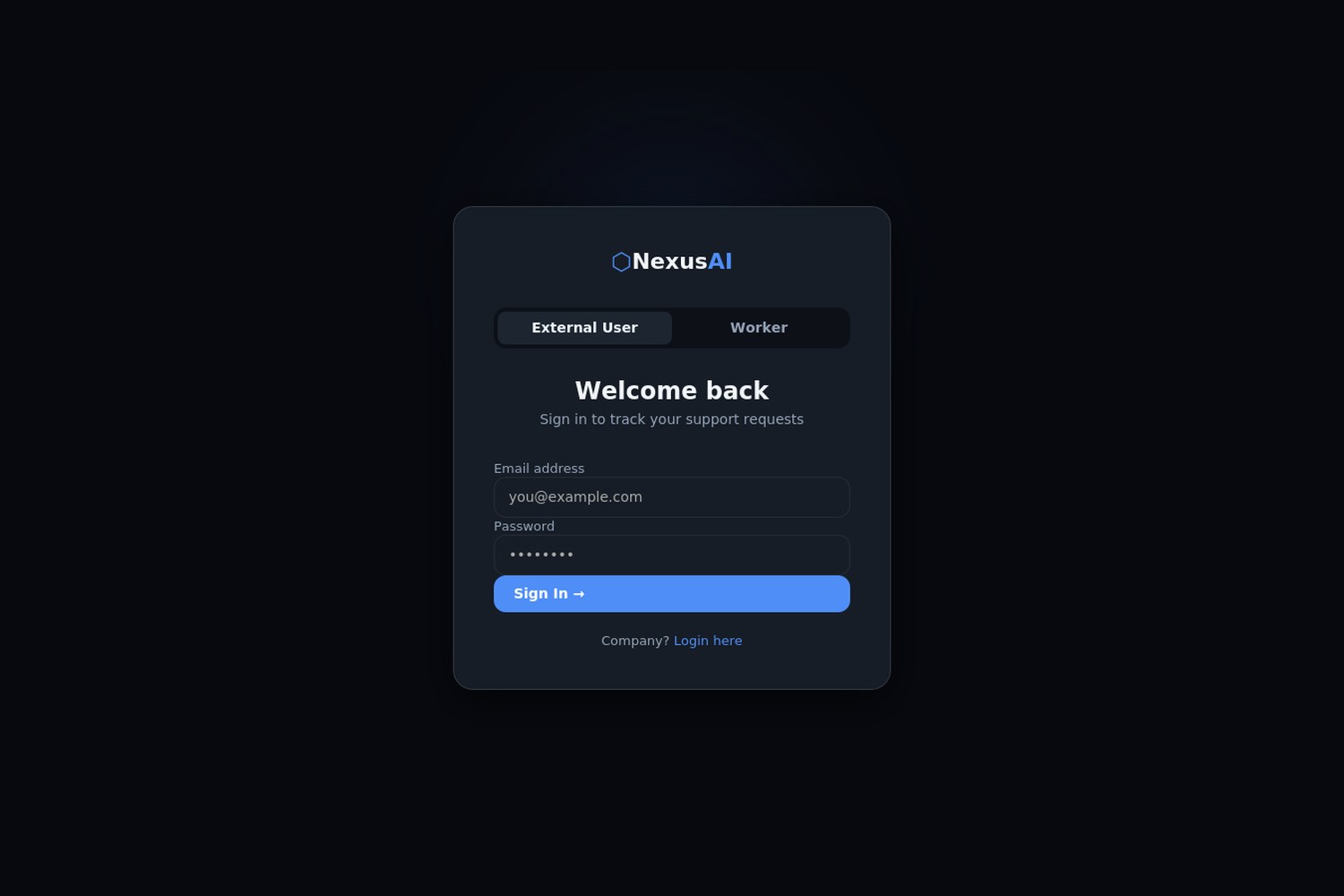
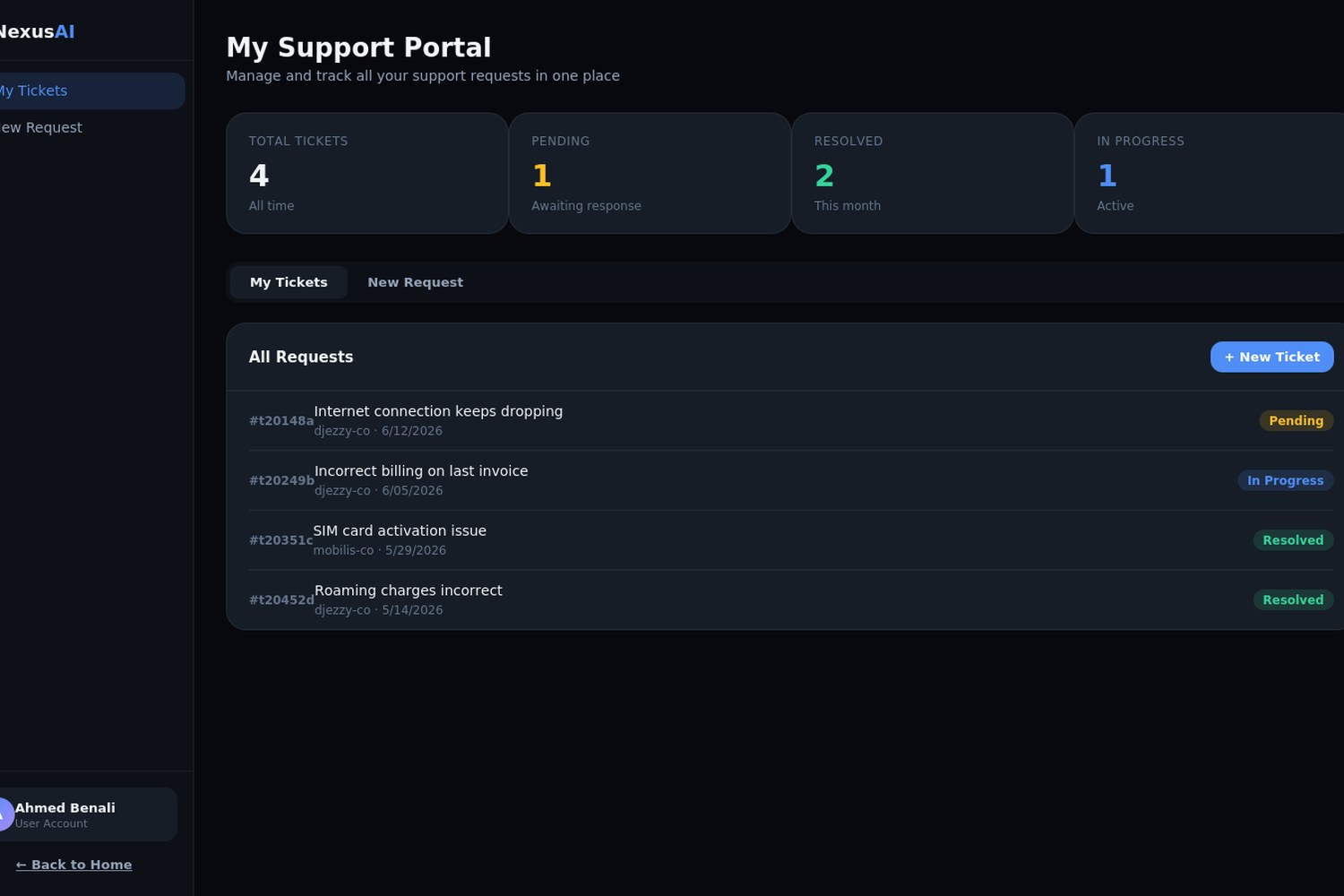
- Role-based portals: External Users, Workers, and Companies each have their own dedicated dashboard
Backend
- FastAPI + PostgreSQL + SQLAlchemy — fully REST-backed, JWT-secured, scoped per
company_id - Multi-tenant architecture: one backend serves unlimited companies in complete isolation
AI Orchestration — the core
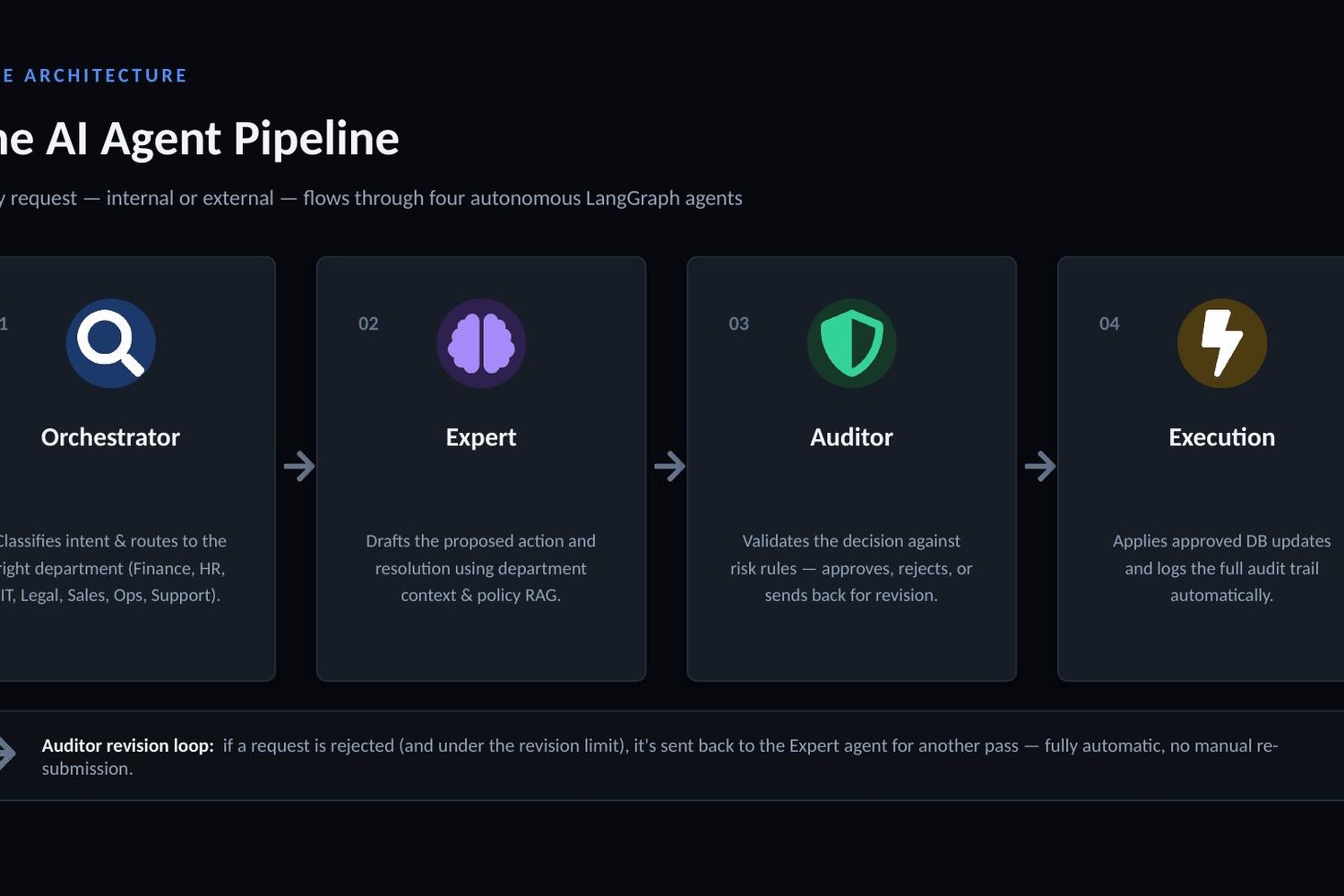
We built a LangGraph state machine with 4 autonomous agents:
| Agent | Role |
|---|---|
| 🔍 Orchestrator | Classifies intent & routes to the correct department |
| 🧠 Expert | Drafts the proposed resolution using department context |
| 🛡️ Auditor | Validates the decision against company policy & risk rules |
| ⚡ Execution | Applies approved DB updates & writes the full audit trail |
If the Auditor rejects a response, it automatically loops back to the Expert for revision — no human re-submission needed.
Knowledge & RAG
- Pinecone vector database + Sentence-Transformers embeddings
- Companies upload policy PDFs that are auto-ingested and searchable via semantic RAG
- The Expert agent queries this knowledge base in real-time to ground every response in company policy
🚧 Challenges We Faced
- Designing the revision loop between Expert and Auditor without infinite cycles — we implemented a configurable max-revision limit with graceful fallback
- Multi-tenant data isolation — ensuring each company's workers, tickets, inventory, and policies are completely scoped and never cross-contaminated
- Structured LLM output — getting the LangGraph agents to return consistent, parseable JSON decisions reliably across all 7 department types
- Self-service onboarding UX — making a CSV/PDF upload flow feel simple enough that a non-technical admin can get a company live in under 5 minutes
📚 What We Learned
- LangGraph's state machine model is extremely well-suited for multi-step decision pipelines with conditional branching
- RAG quality depends heavily on chunking strategy — we iterated significantly on PDF ingestion to improve retrieval relevance
- Building for multi-tenancy from day one (not as an afterthought) saves enormous refactoring later
🚀 What's Next
- Per-department analytics dashboards and SLA tracking
- Slack / Email / WhatsApp channel integrations
- Public API for third-party CRM connections
Built With
- fastapi
- groq
- langchain
- langgraph
- pinecone
- postgresql
- python
- react
- sentence-transformers
- sqlalchemy
- vite

Log in or sign up for Devpost to join the conversation.