-
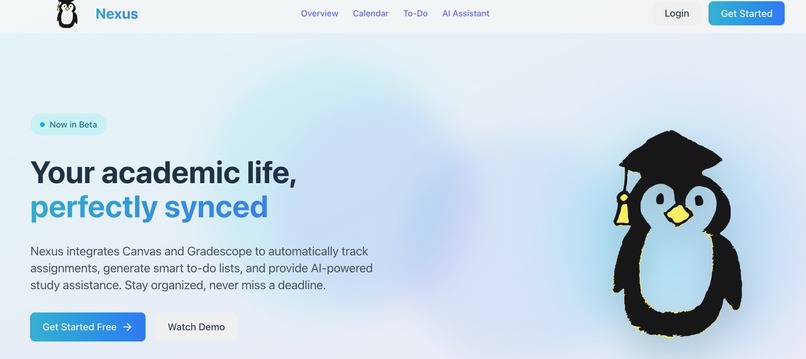
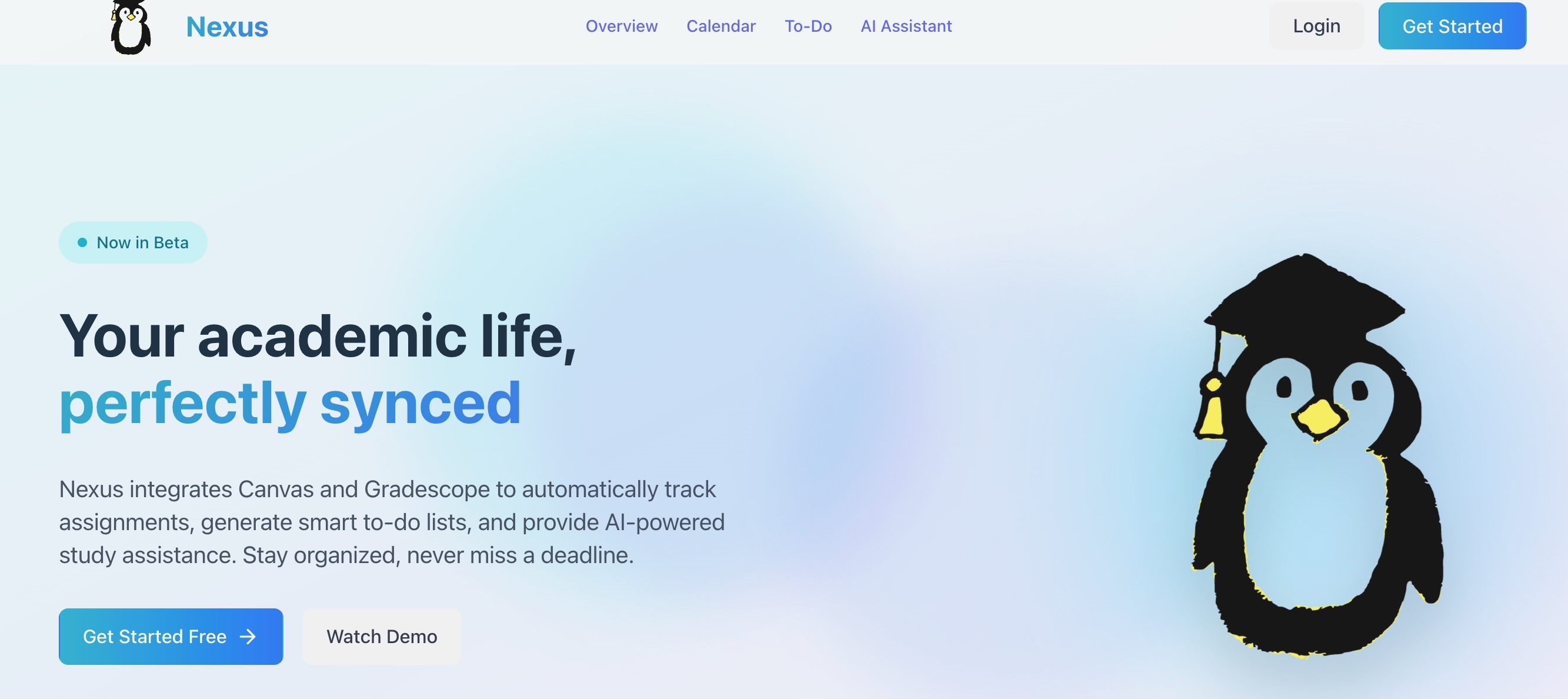
Our home landing page
-
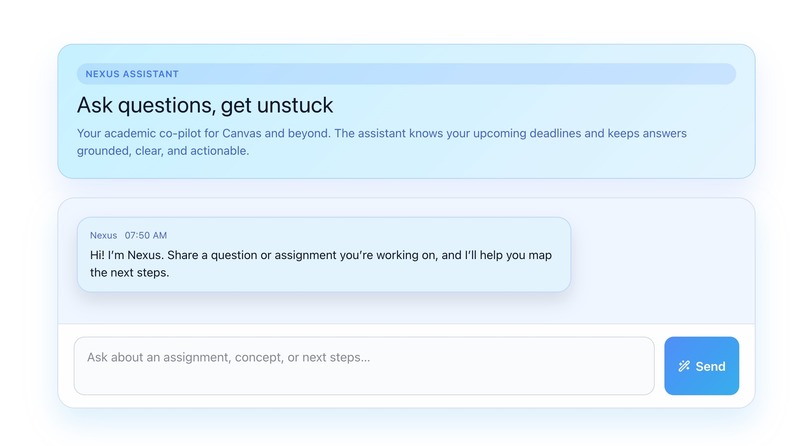
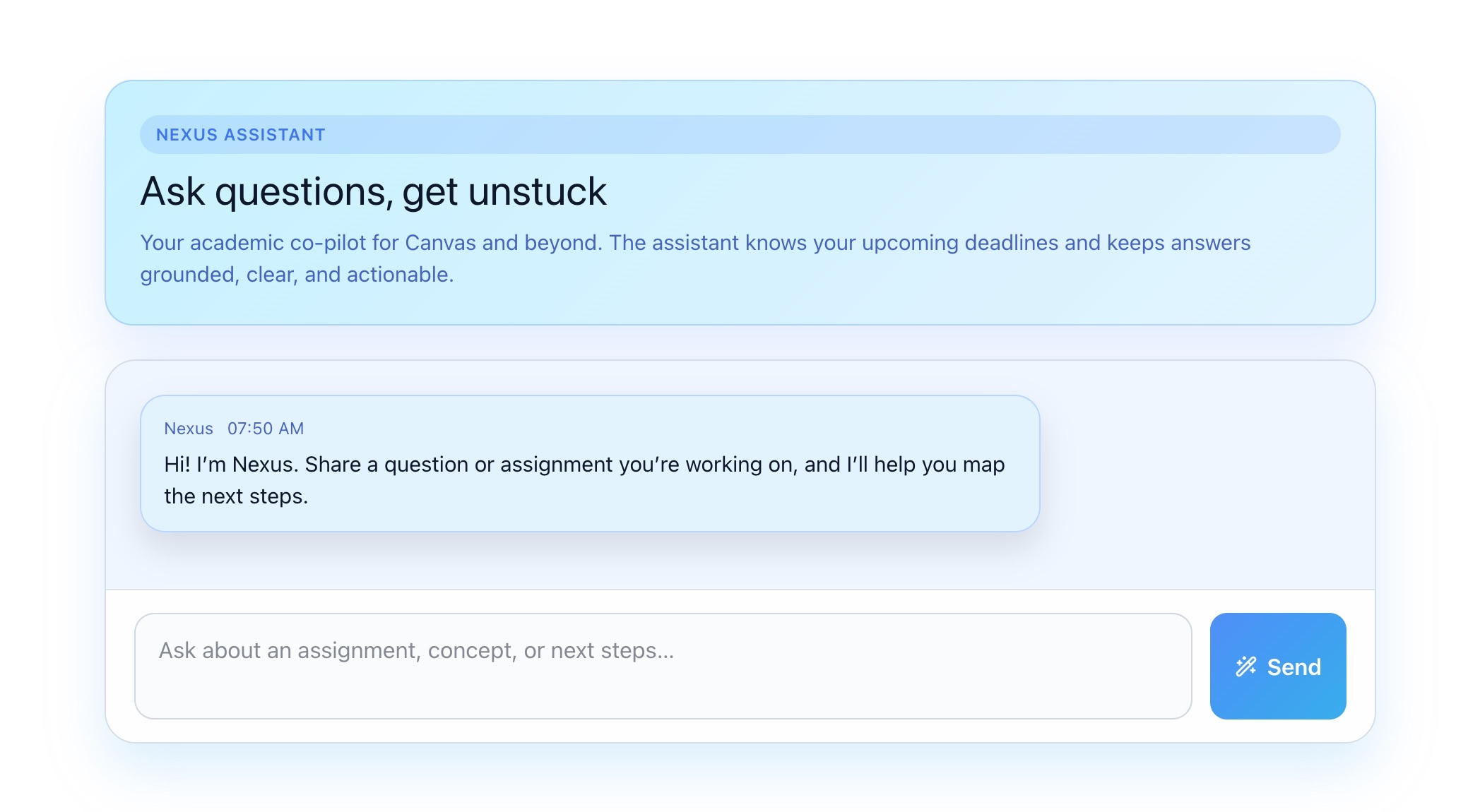
Your personalized AI assistant helps you stay on top of tasks and deadlines
-
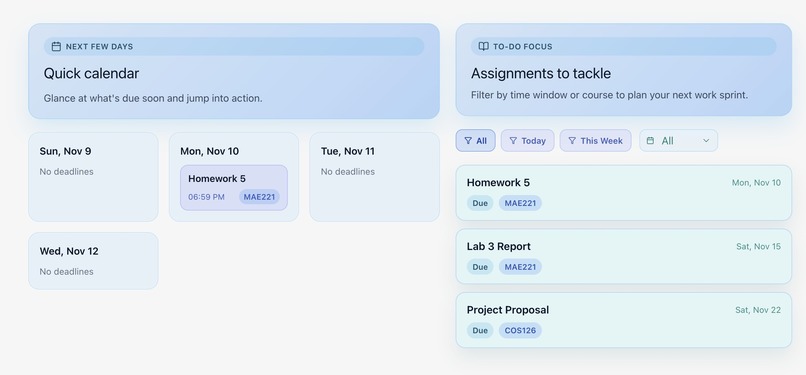
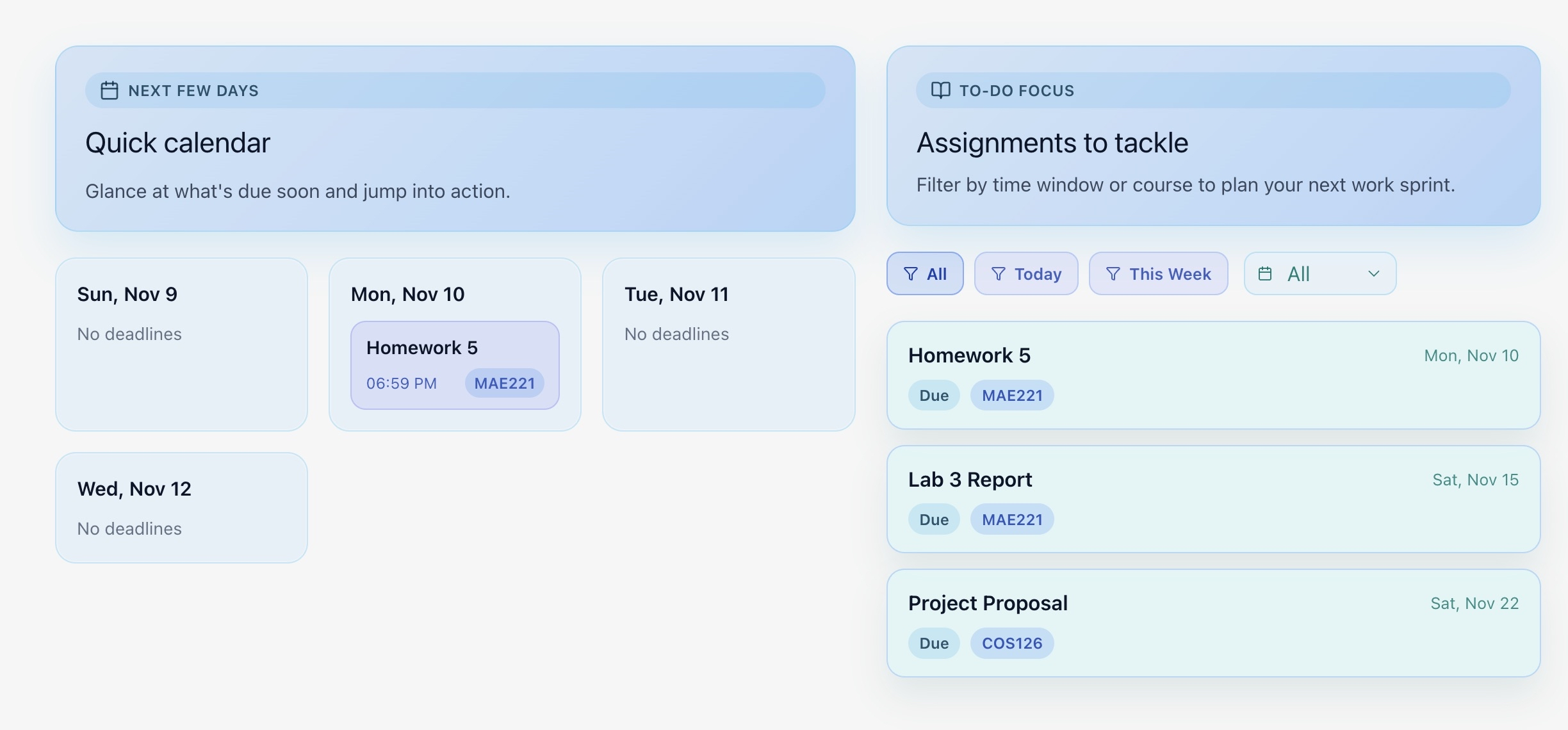
See what needs to be done with your at-a-glance to-do list
-
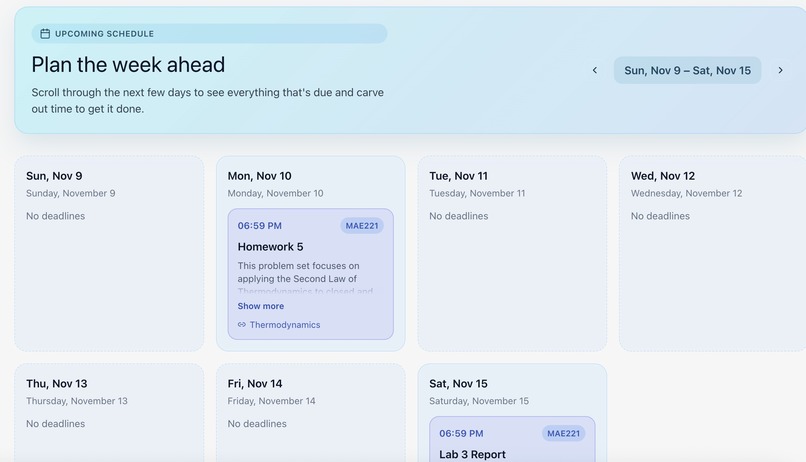
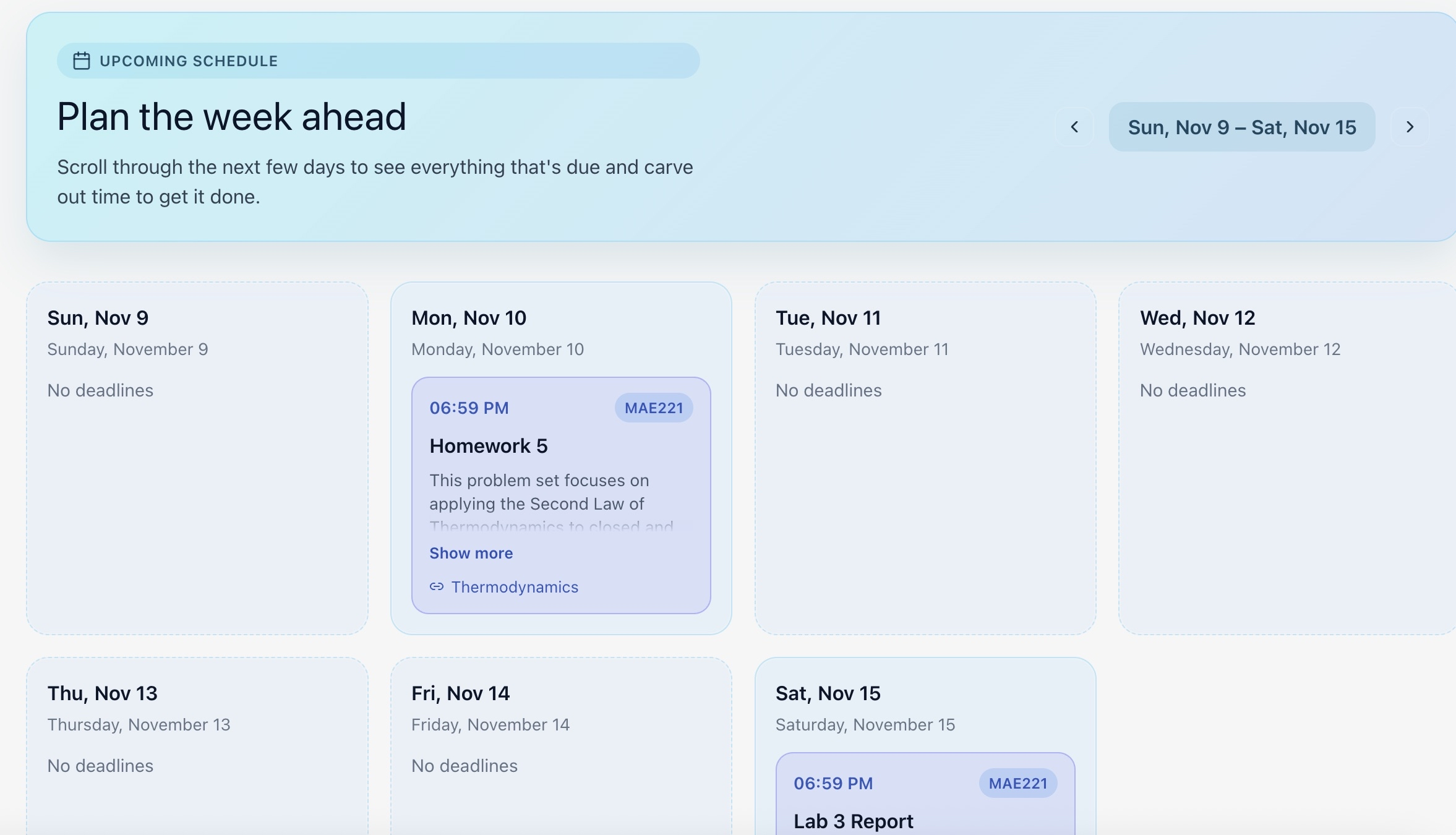
View upcoming assignments for the week
Inspiration
As students, we know how frustrating it can be to juggle assignments across multiple platforms, where some professors post on Gradescope and others on Canvas, making deadlines easily get lost. Keeping track of everything can be time-consuming and stressful, especially for students who lack access to personalized academic planning tools. Nexus was created to level the playing field by bringing everything together in one place, helping every student stay organized and focused on learning.
What it does
Nexus unifies academic platforms into a single, smart dashboard. It automatically pulls assignment information from sources like Canvas and Gradescope (using mock data for now), organizes it into an interactive calendar and to-do list, and provides AI-generated summaries of assignments for quick understanding. Nexus aims to streamline academic management and make success more accessible to all students.
How we built it
We built Nexus using React, Supabase for backend data handling and authentication, and Tailwind CSS for a sleek, responsive interface. Our prototype uses mock assignment data to simulate Canvas and Gradescope inputs, with future integration planned through their official APIs. The front end includes an animated “Nexus-style” background, a frosted-glass navigation bar, and an integrated AI chatbot to assist with organization.
Challenges we ran into
Our biggest challenge was dealing with API limitations. We first discovered that Canvas already allowed Google Calendar integration, which forced us to rethink our original concept. Then we struggled with authentication setup and later realized that the Gradescope API is restricted to verified universities, meaning we couldn’t access real assignment data. After also running into Canvas API connection issues, we pivoted to using mock data through Supabase to demonstrate our intended functionality. A last-minute challenge we ran into was trouble with calling the OpenAI chatbot through our API.
Accomplishments that we're proud of
We’re proud of how quickly we adapted and pivoted our idea while maintaining our vision. We successfully built a clean, modern interface with working login/authorization using Supabase, integrated mock academic data, and designed an intuitive user experience that captures what a real, unified platform could look like. Our project reflects creativity, resilience, and strong teamwork, and offers a strong prototype from which many improvements can be made.
What we learned
We learned how to navigate real-world API constraints, handle user authentication securely, and design user interfaces that balance functionality with aesthetics. We also learned the importance of flexibility — that pivoting early and building strong mock foundations can keep a project moving even when technical barriers arise.
What's next for Nexus
Next, we plan to move toward full integration with Canvas and Gradescope APIs as access becomes available. We also aim to expand Nexus’s AI features, enabling automated assignment categorization, smart reminders, and personalized study recommendations. Ultimately, we hope to turn Nexus into a universal platform that helps all students stay organized, informed, and empowered in their education.
Built With
- css
- github
- gradescope
- html
- instructure-canvas
- javascript
- json
- node.js
- npm
- orchids.app
- react
- supabase
- tailwind-css
- typescript
- visual-studio


Log in or sign up for Devpost to join the conversation.