-
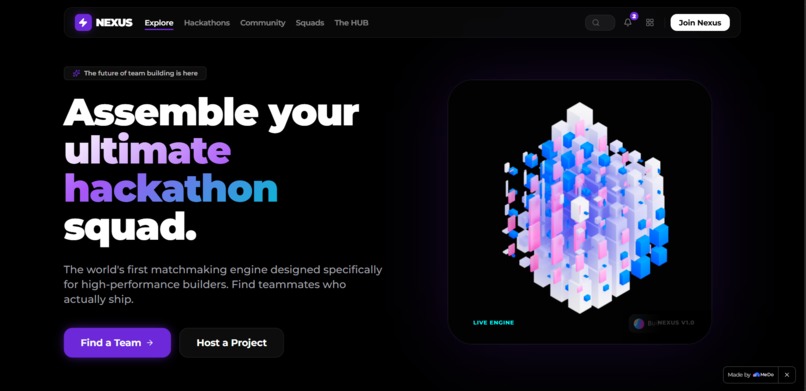
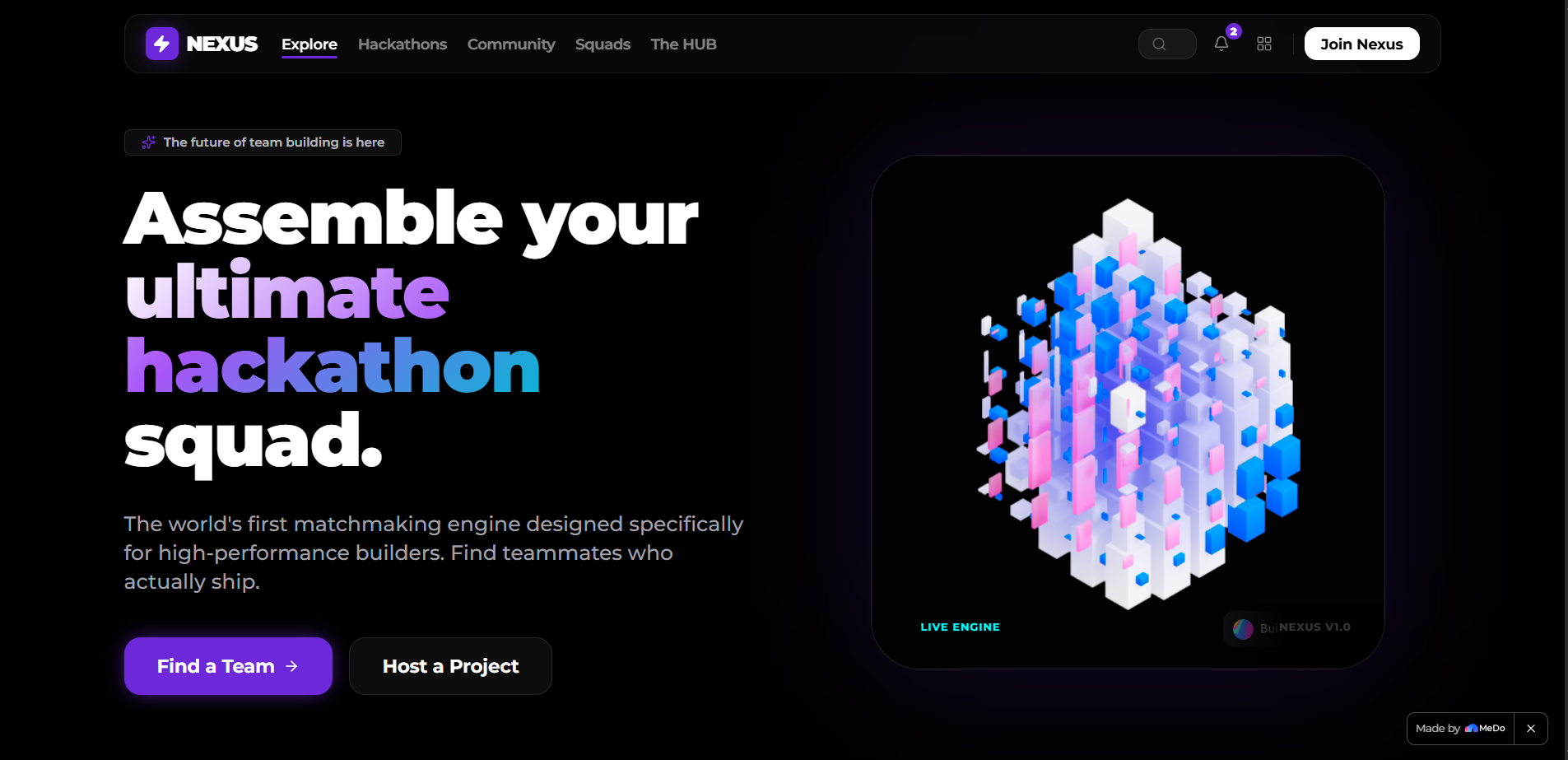
This is the Landing page /Home Page of Our Application
-
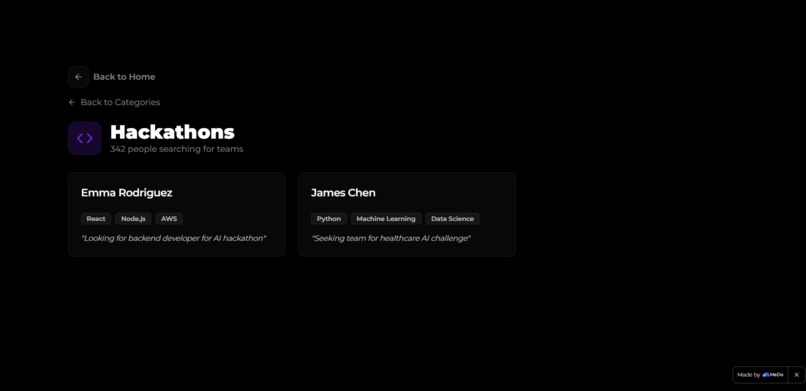
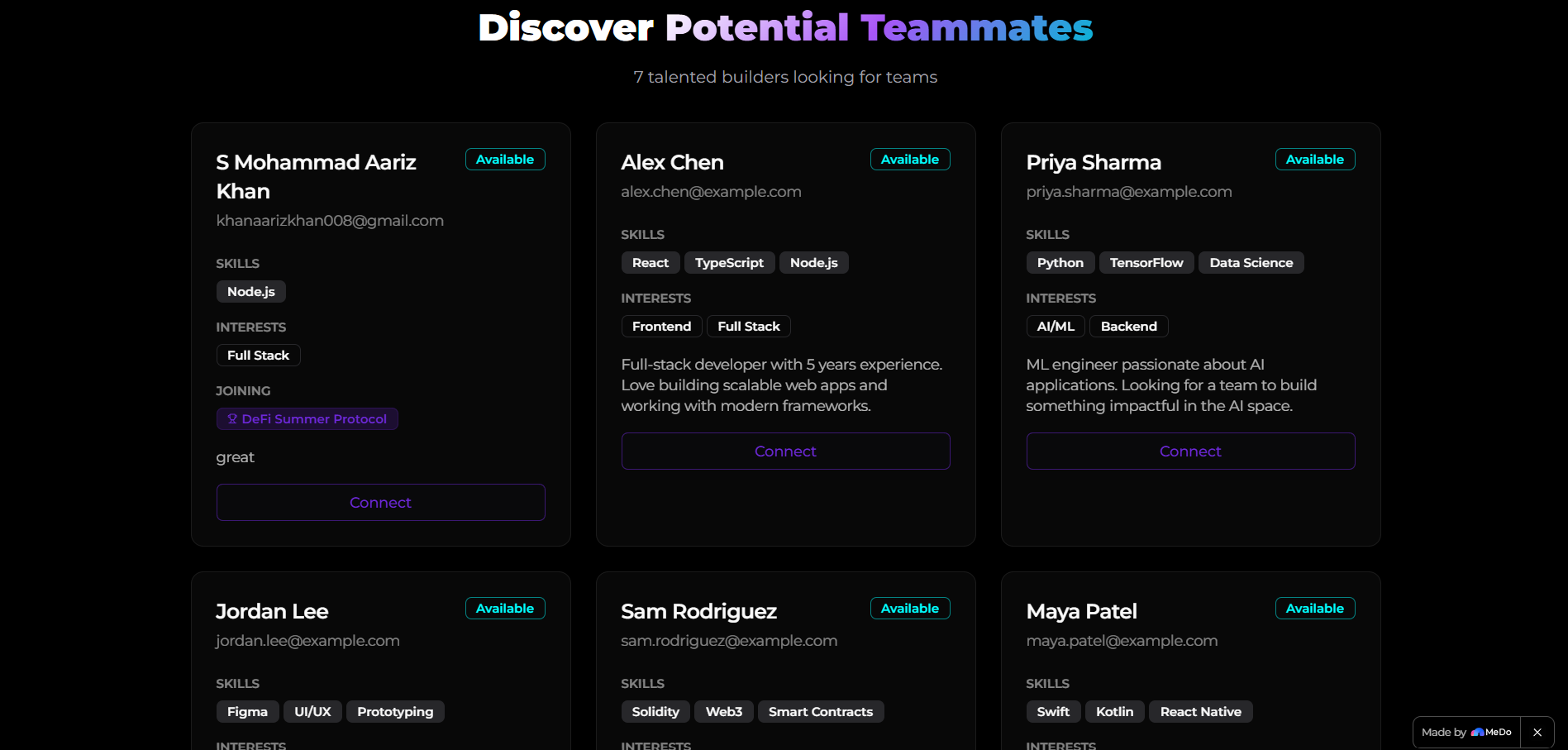
if there is already a team you can see its members and contact them
-
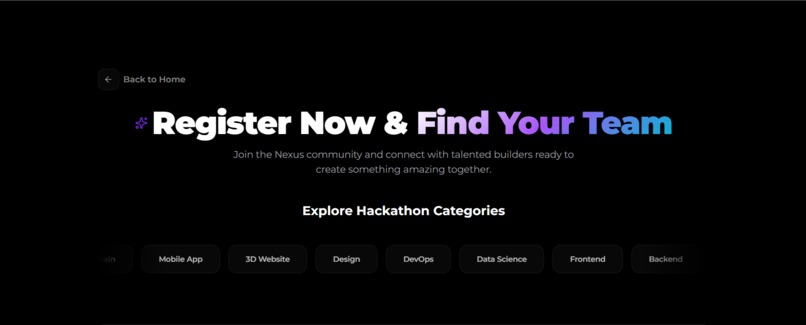
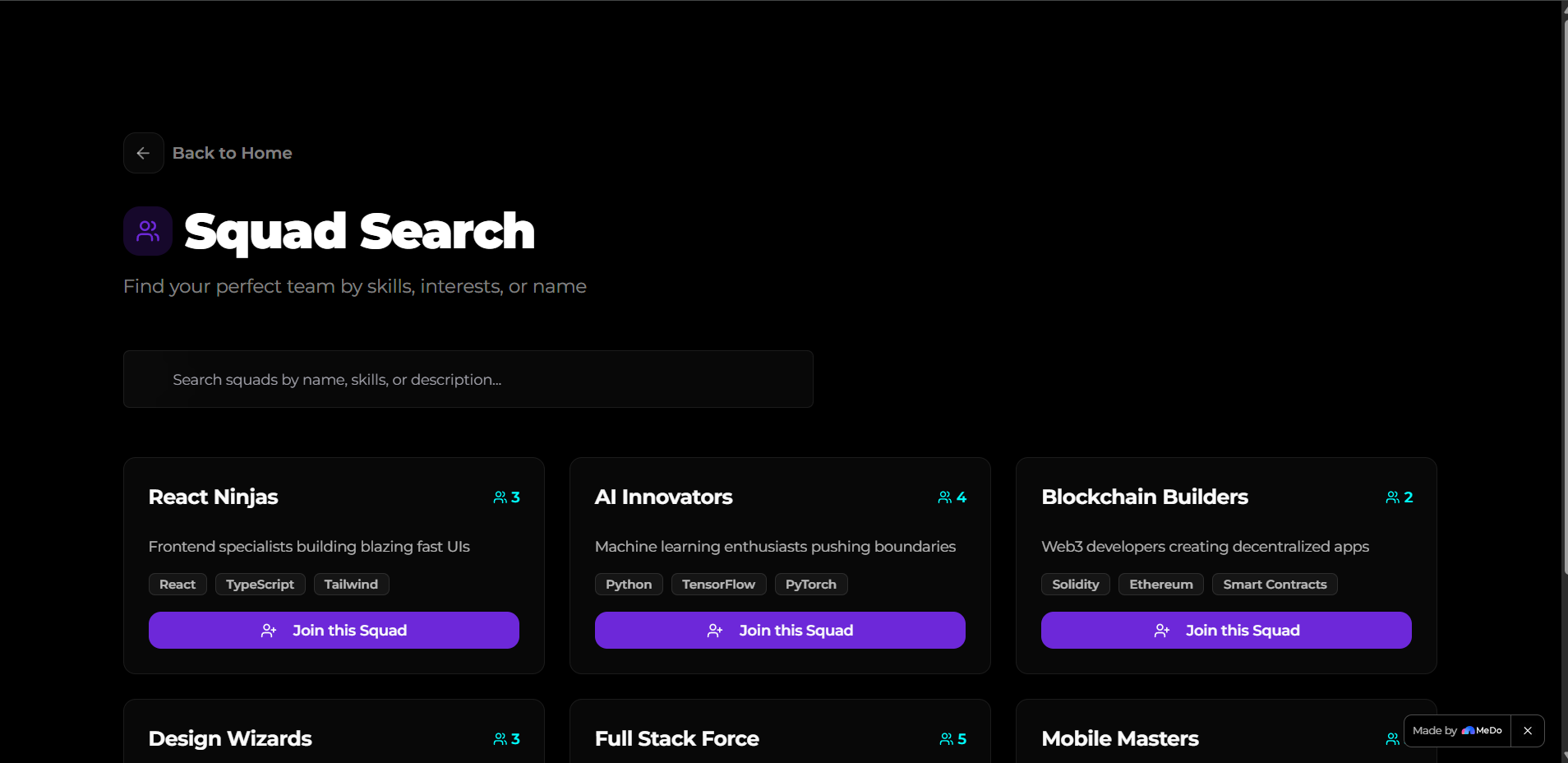
On Clicking Find your team Button you will be redirected to this page where you can find team which have vacancy
-
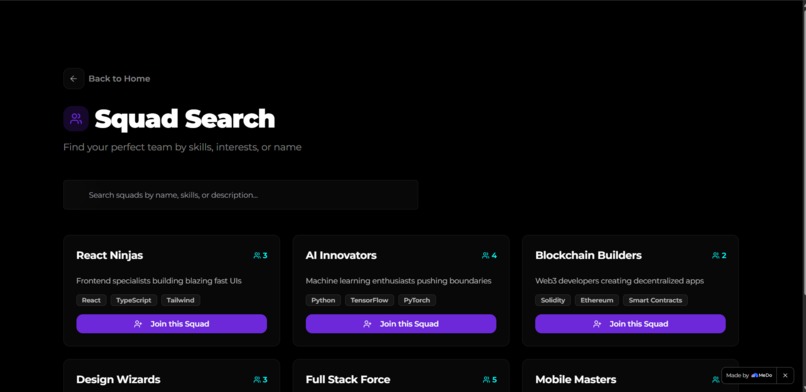
We can search already existing team and join if we want and can check their recent update from there
-
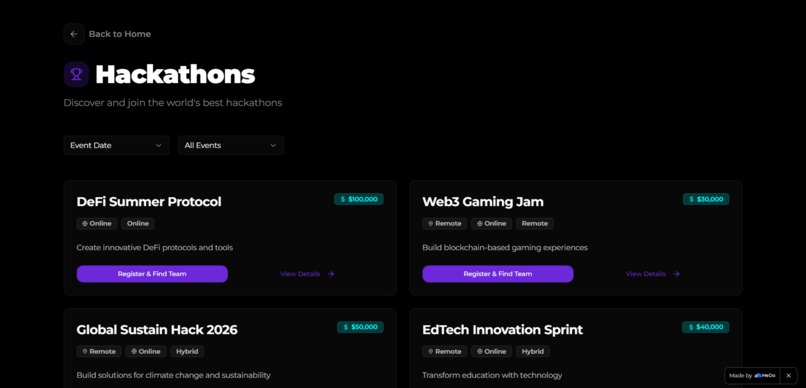
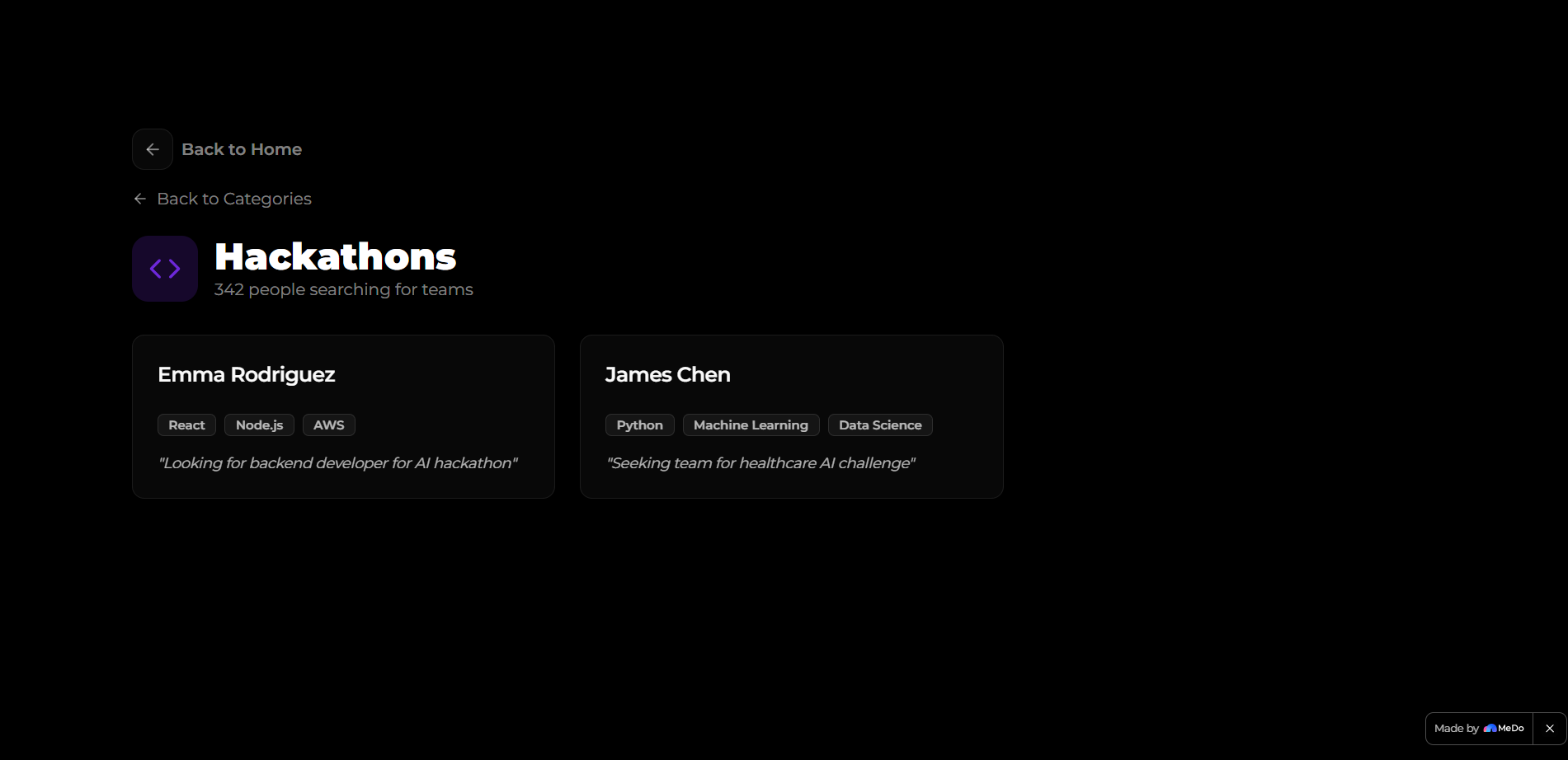
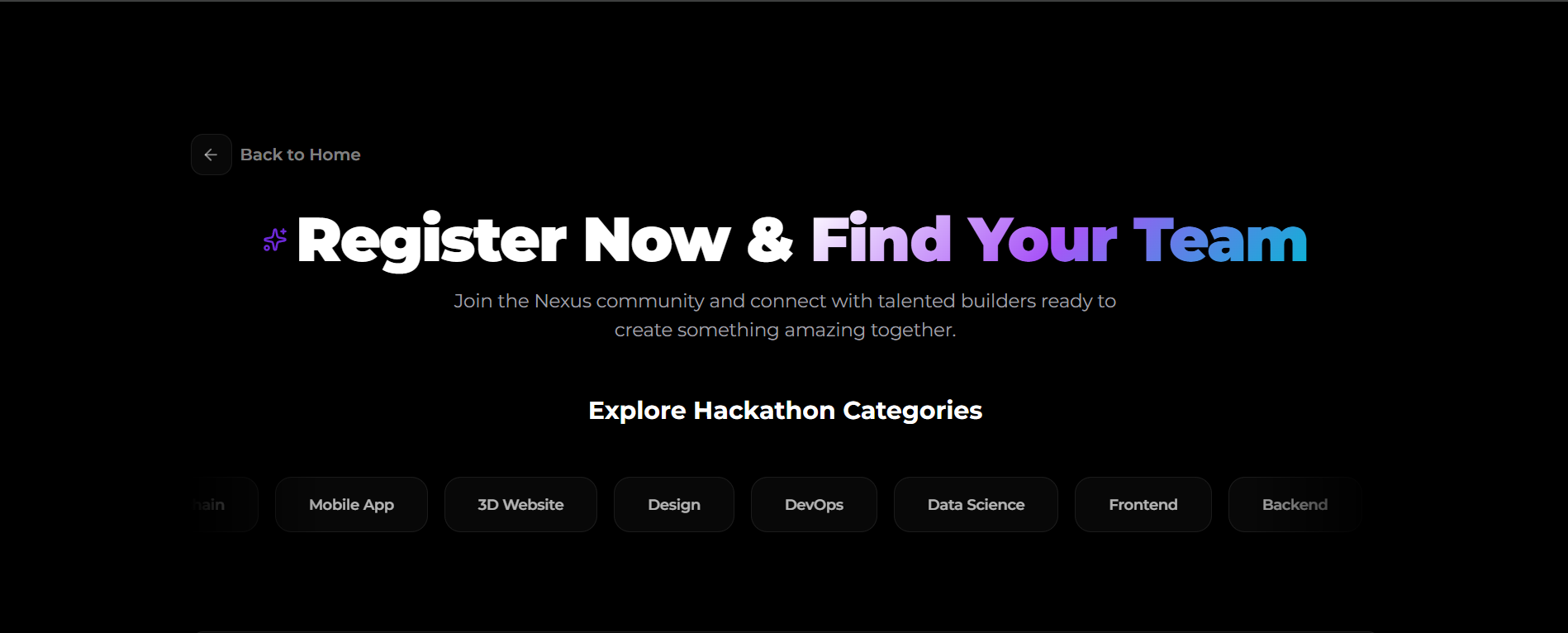
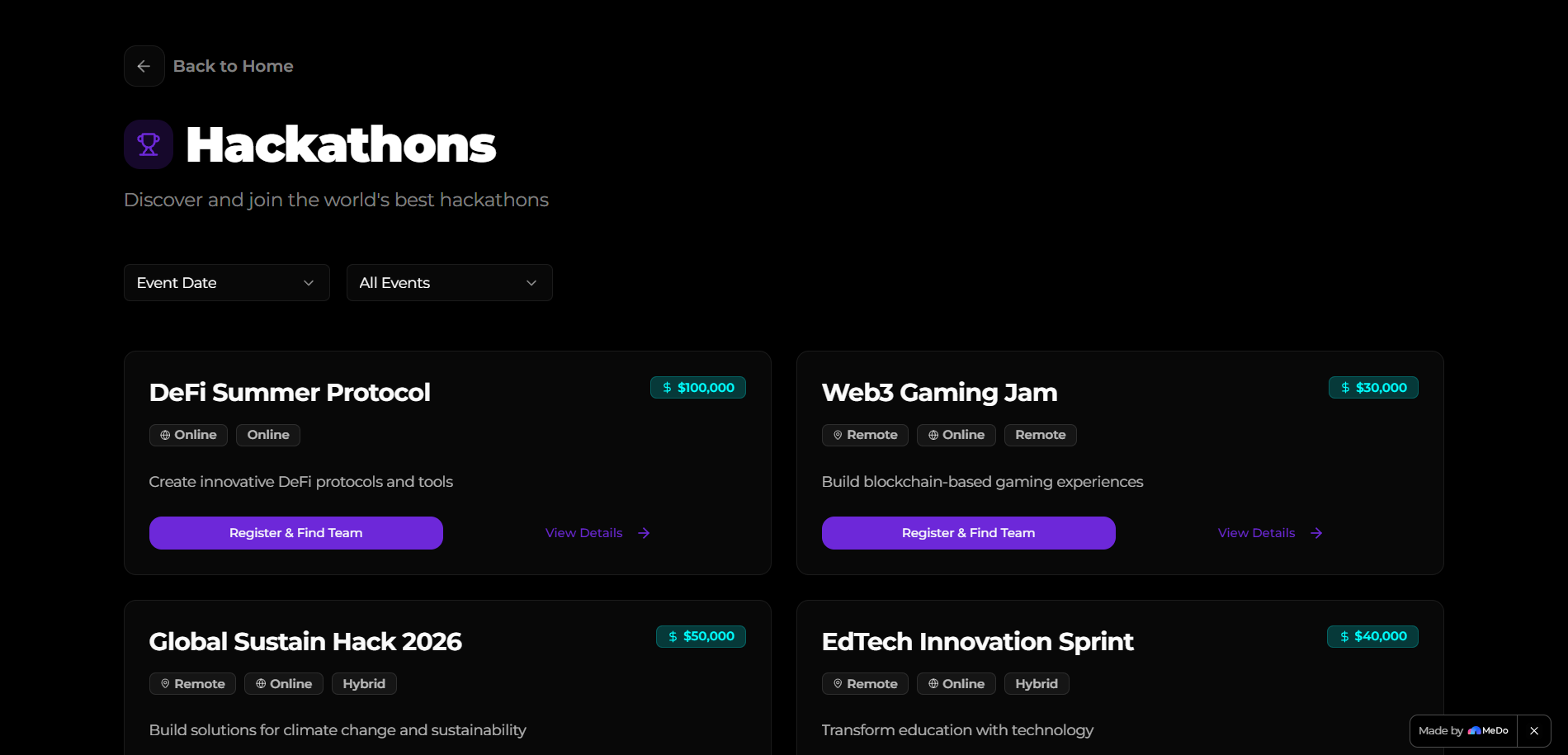
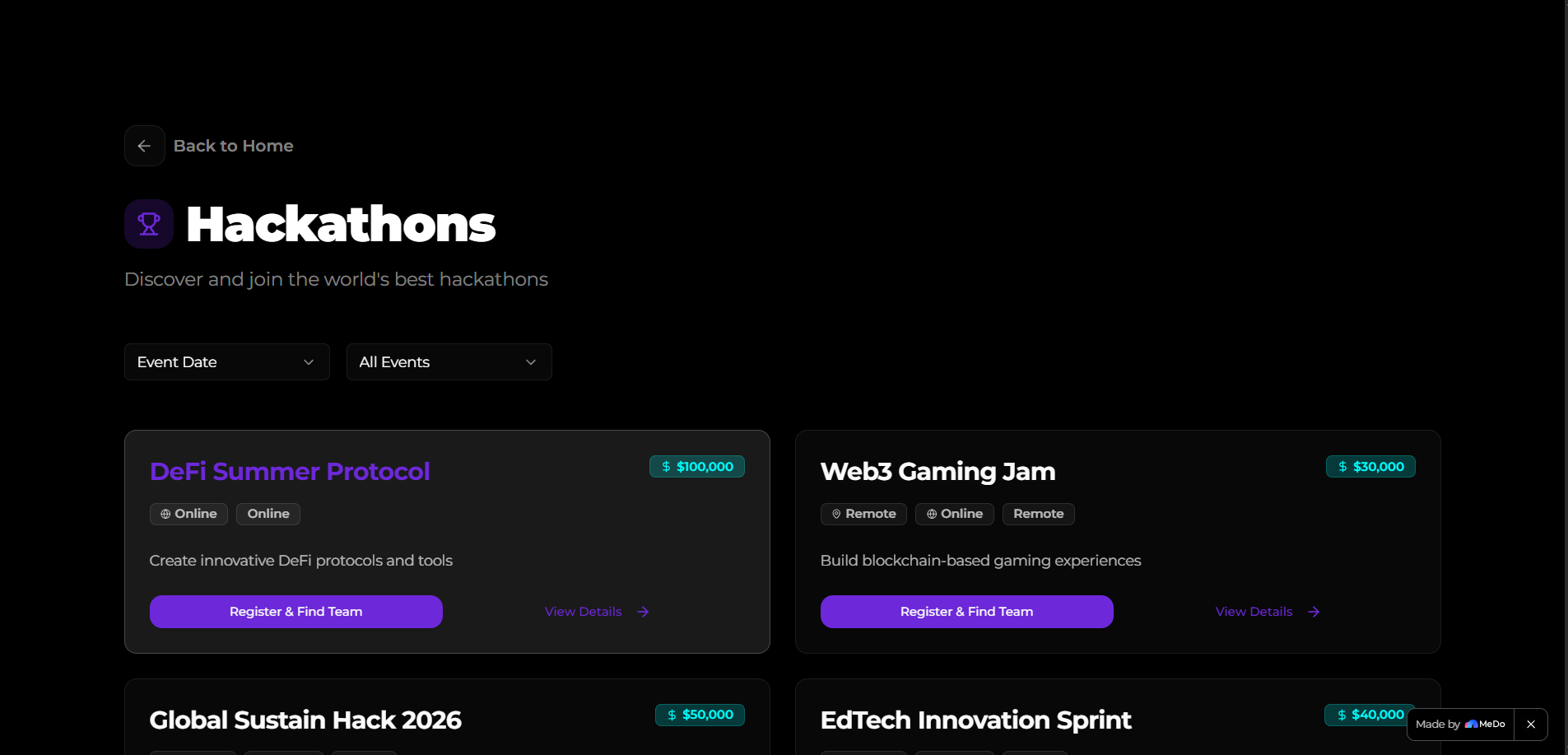
The next Page is Hackathon page where you can see price pool and also can register your team there if you don't have a team you can get it
-
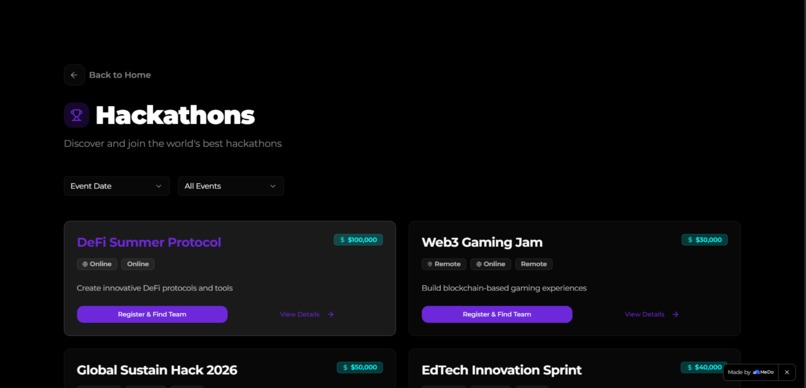
The next pag
-
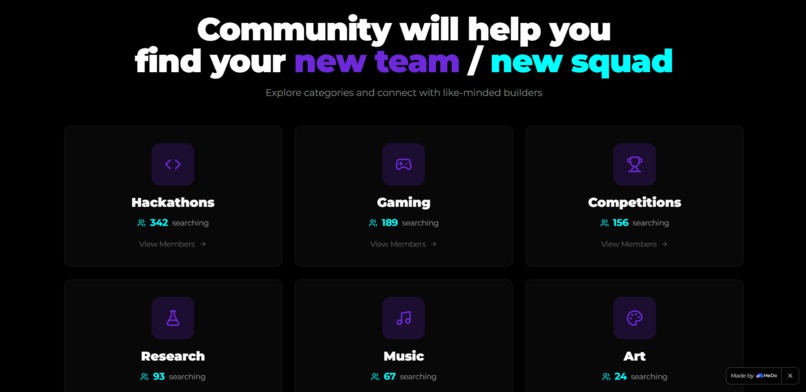
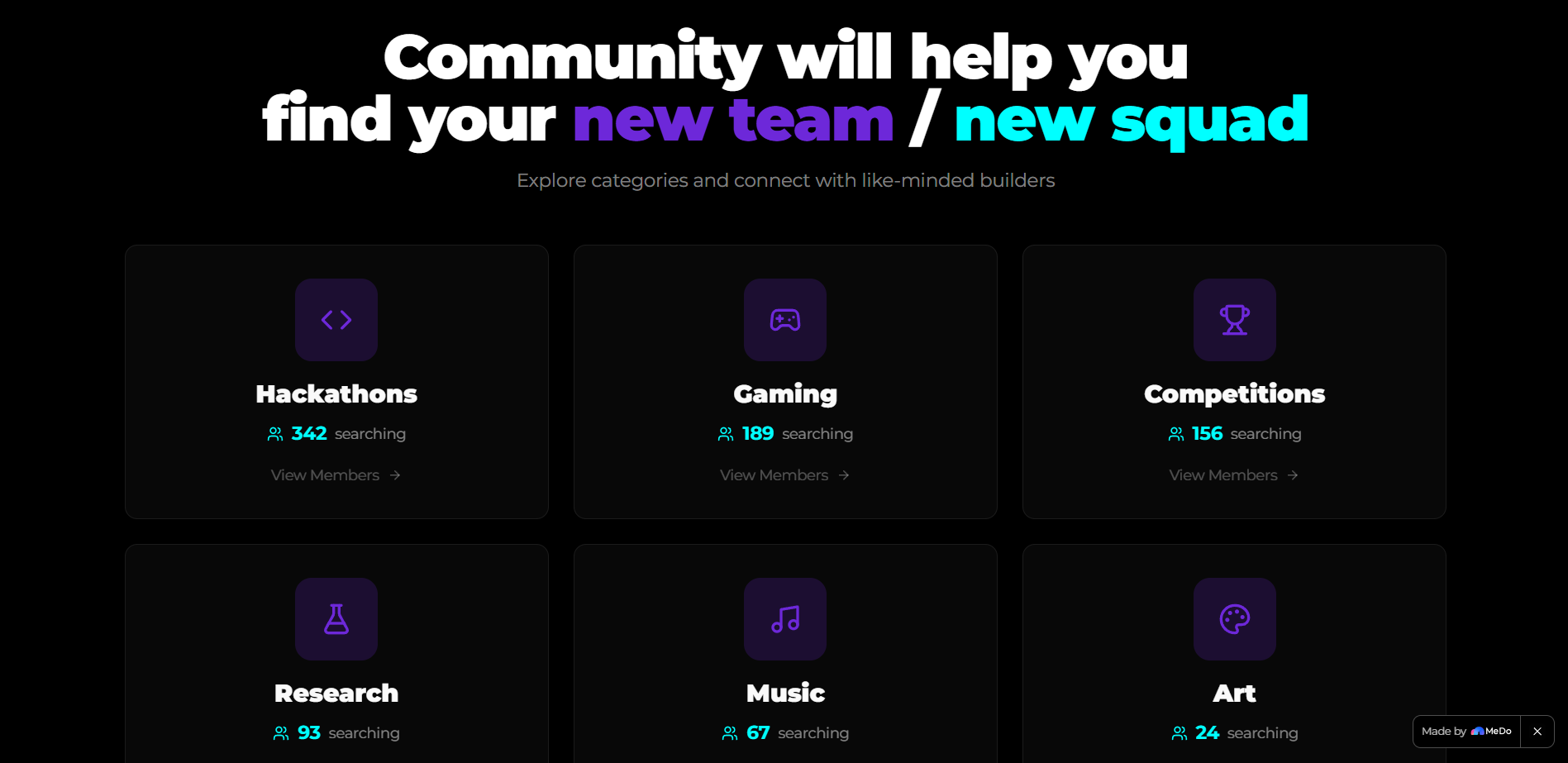
Community is a place where like minds get together and they can make a great team
-
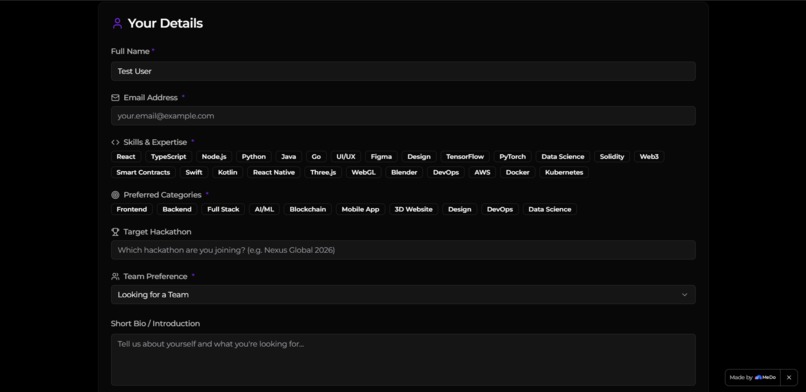
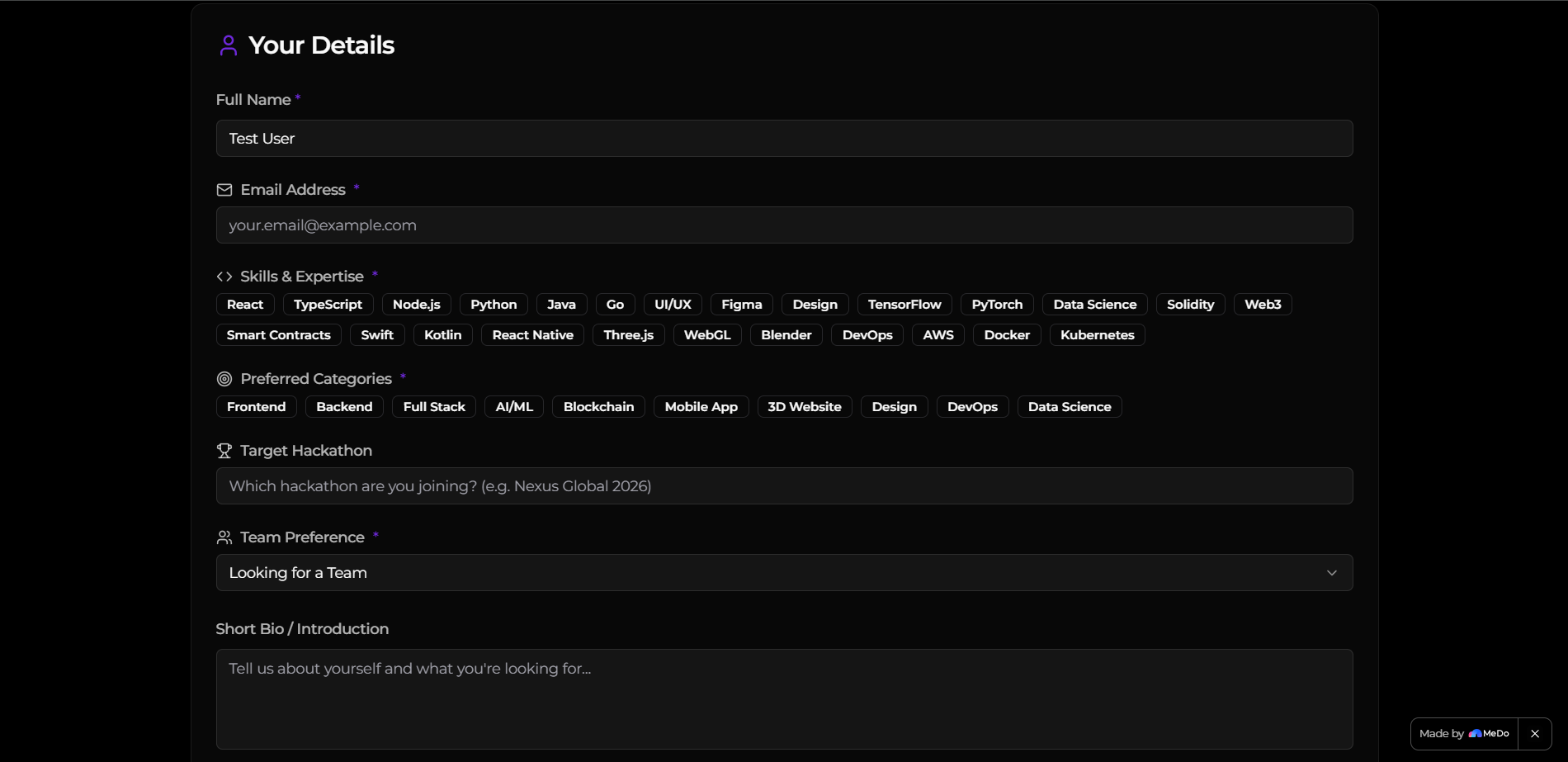
when we scroll a little we will find this form which will ask users info to register as a member the teams which want member can get here
-
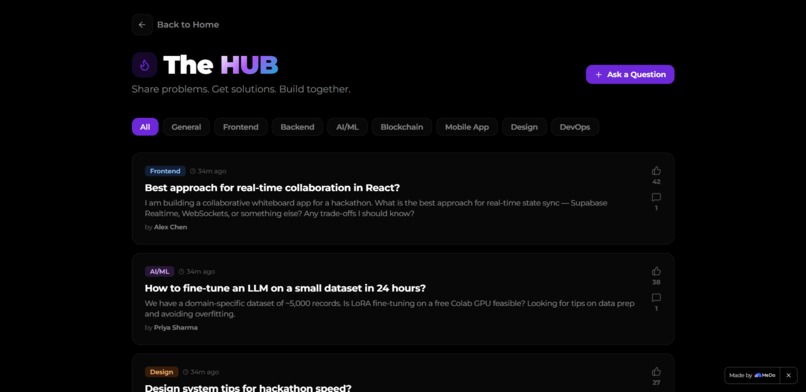
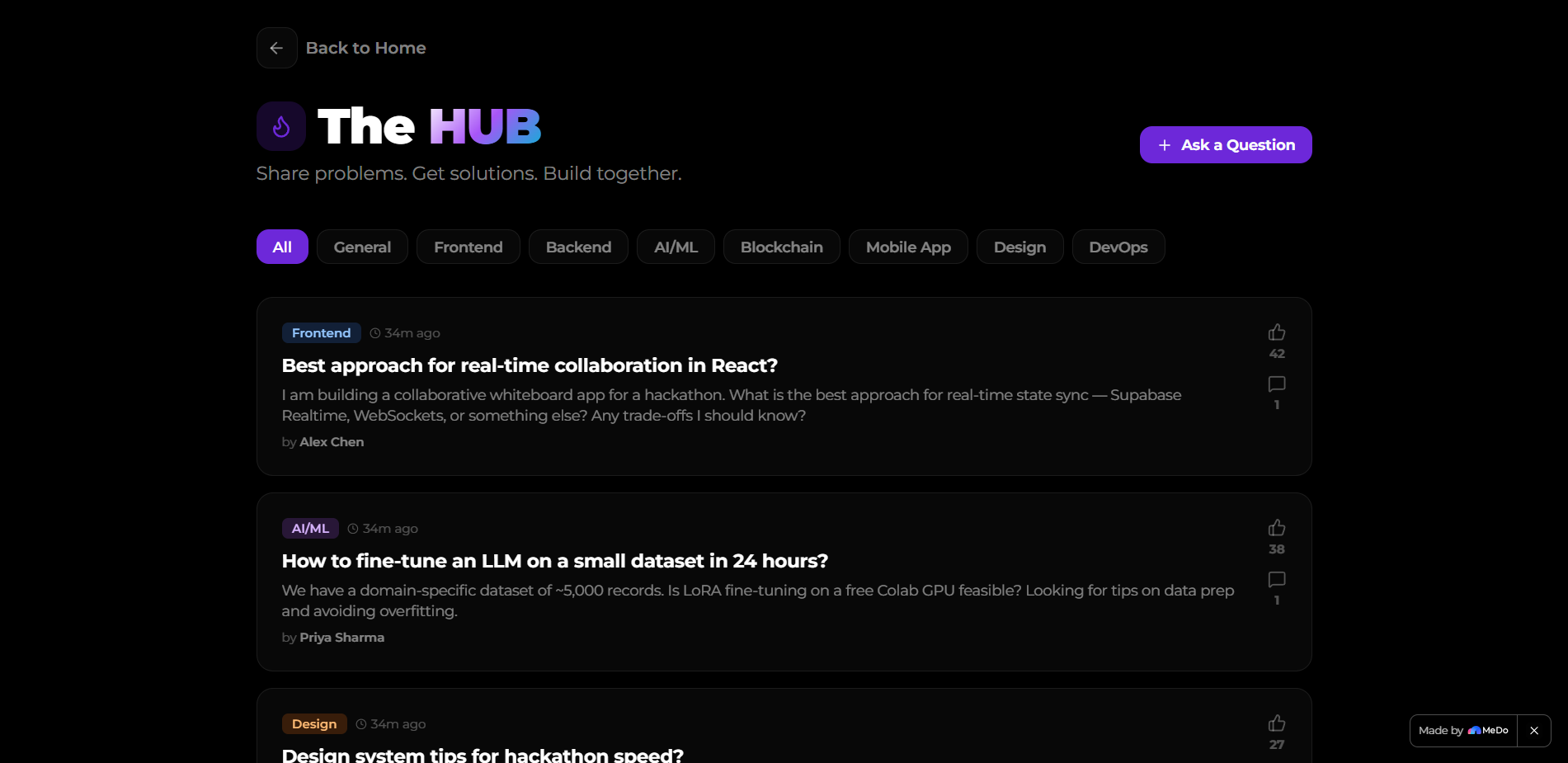
The Hub — a space where users can post problems, technical doubts, or project challenges and people can provide solutions and guidance.
-
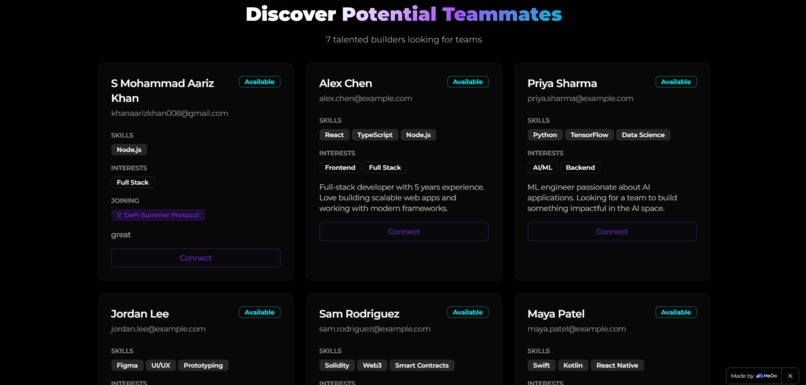
After that we will find already existing teams which if you are interested can join
Inspiration
The idea for Nexus came from a personal problem we constantly faced during hackathons and team events. Many times, we wanted to participate in competitions and build projects, but we couldn’t find the right teammates in time. Some people had ideas but no developers, while others had skills but no team to join. Because of this, we often missed opportunities simply because there was no proper platform to connect builders quickly.
We realized that team formation in colleges and hackathons still happens randomly through WhatsApp groups, Discord servers, or personal circles, which leaves many talented people unnoticed. That inspired us to build Nexus — a platform where developers, designers, and creators can easily discover teammates, join squads, collaborate on projects, and even solve technical problems together through The Hub.
What it does
Nexus is a hackathon team-building platform that helps developers, designers, and creators find the perfect squad. Users can explore hackathons, discover teammates based on skills, search for squads, and join communities built around shared interests.
We also introduced The Hub — a collaborative space where users can post development problems, technical doubts, or project challenges, and community members can provide solutions and guidance in real time.
How we built it
We built Nexus using MeDo AI to rapidly design, structure, and develop the platform experience. The goal was to create a modern, animation-heavy collaboration platform while keeping the development process fast and scalable.
Tech Stack(used by Medo As i explained in Prompt) Next.js TypeScript Tailwind CSS Framer Motion Lucide React Spline 3D Supabase
Using MeDo AI helped us accelerate UI generation, component structuring, and frontend workflows, allowing us to focus more on product experience, animations, and feature integration.
We used:
Tailwind CSS for the futuristic glass morphism UI Framer Motion for smooth animations and scroll effects Spline 3D for the interactive hero section Supabase for backend storage and data handling Lucide React for clean modern icons Next.js + TypeScript for scalable frontend architecture
The platform was built with a modular component-based structure to ensure responsiveness, maintainability, and future scalability.
Challenges we ran into
One of the biggest challenges was balancing heavy animations with performance. Combining glassmorphism, motion effects, and 3D elements without making the experience laggy required careful optimization.
Another challenge was designing the scroll-based animation section where the text moves dynamically with the viewport while syncing with content transitions.
We also had to think carefully about creating a clean and intuitive UX despite having multiple interconnected features like hackathons, squads, communities, and The Hub.
Accomplishments that we're proud of
Building a visually immersive futuristic UI with smooth animations Creating an all-in-one collaboration ecosystem instead of just another hackathon listing platform Designing The Hub feature to encourage community-driven problem solving Developing a fully responsive experience across devices
What we learned
Through Nexus, we learned how important user experience is in community-driven platforms. A polished interface can significantly improve engagement and interaction.
We also gained deeper experience in:
1)Advanced frontend animations 2)Responsive bento-grid layouts 3)State management in large UI systems 4)Performance optimization for animation-heavy applications 5)Designing scalable product architecture
What's next for Nexus - The Team Builder
We plan to evolve Nexus into a complete collaboration ecosystem for builders.
1)Upcoming Features 2)Real-time team chat 3)AI-powered teammate recommendations 4)Skill-based matchmaking algorithms 5)Live hackathon collaboration rooms 6)Project showcase portfolios 7)Verified profiles and reputation systems 8)Real-time problem discussions in The Hub 9)Mobile application support
Built With
- css
- framer-motion
- lucide
- medo
- nextjs
- react
- spline
- tailwind
- typescript


Log in or sign up for Devpost to join the conversation.