-
-
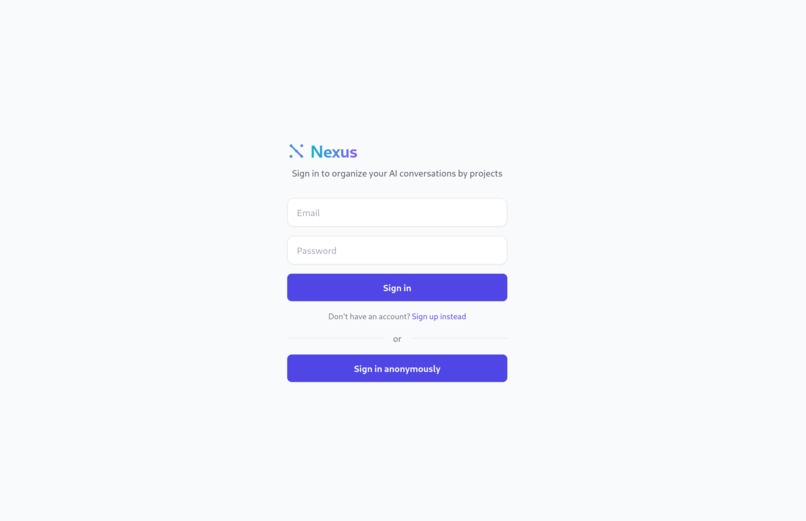
Login screen
-
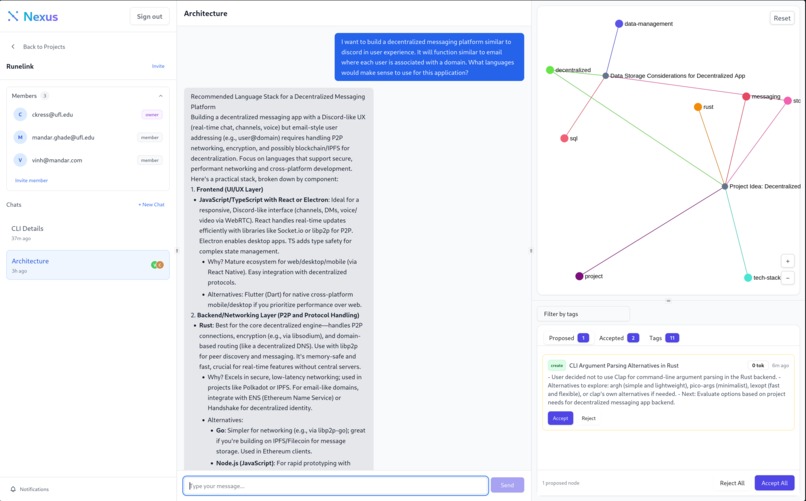
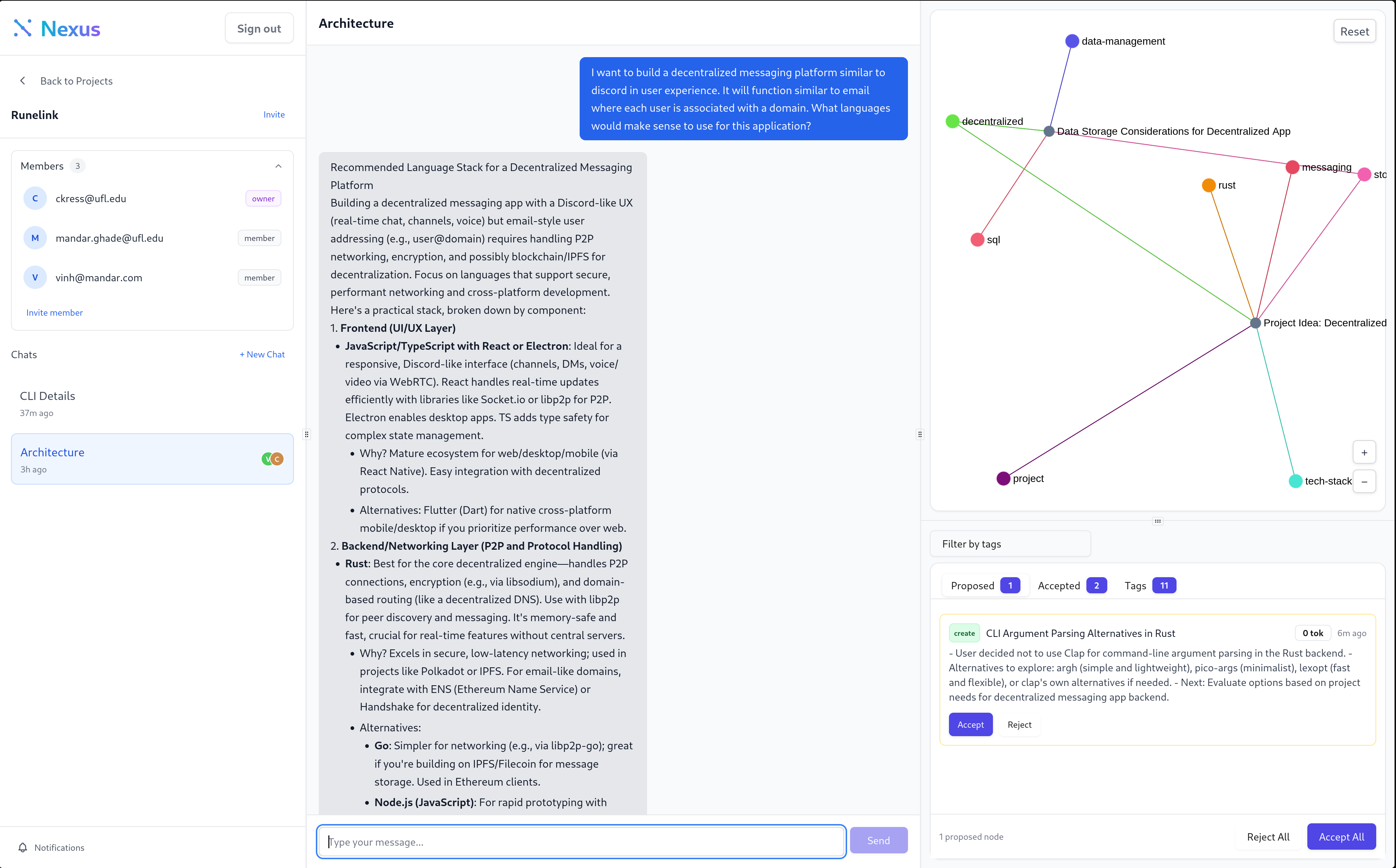
Project interface
Inspiration
Our topic is something we were genuinely interested in as we all find it to be personally useful. We have been frustrated with managing AI chat context as well as not having good systems for sharing that context with team members. Usually, we have to manually ask the chatbot to make a summary and then paste that into other communication platforms like Discord. This copied context quickly gets out of date as previous chats are expanded and plans are refined.
What it does
Nexus solves these issues by giving users more control over chat context and collaboration. Instead of AI conversations becoming bloated and unmanageable, users can accept or reject context updates, edit stored context manually, and create multiple chat threads within a project. This keeps important information accessible while avoiding excessively long threads that slow down inference, increase cost, and bury relevant details under noise.
How we built it
We built Nexus with a modern stack: React + TypeScript + TailwindCSS on the frontend, and Convex as our backend/database for real-time data syncing. Convex was especially powerful, letting us all work simultaneously on separate project features (knowledge graph, chat messages, project management) while handling database migrations and sync automatically. This allowed for smooth collaboration with minimal interruptions.
Challenges we ran into
We faced some challenges setting up new libraries and also ran into obscure git issues that slowed us down. Managing graph rendering and real-time chat synchronization was also non-trivial. Fortunately, Convex handled much of the heavy lifting for database and live collaboration, which helped us keep moving forward.
Accomplishments that we're proud of
We’re proud that we ended up with a functional product that we all would actually use ourselves. It integrates live chat, context management, graph visualization, and project organization into one cohesive experience. Despite the technical challenges, we created something that genuinely solves a problem for us.
What we learned
We learned how powerful good developer tools (like Convex) can be in rapidly prototyping collaborative, real-time applications. We also learned a lot about integrating graph visualization tools (Sigma.js + ForceAtlas2) into a React workflow, as well as managing context intelligently for conversational AI.
What's next for Nexus
We’re planning to keep building and refining Nexus because it’s something we actually want to rely on daily. Our roadmap includes expanding role-based permissions, improving semantic linking in the graph, and polishing the collaborative experience further. You can already try it out at nexus-osc-minihack.netlify.app.
Built With
- convex
- forceatlas2
- graphology
- lucide-icons
- netlify
- react
- react-markdown
- remark-gfm
- shadcn/ui
- sigma.js
- sonner
- tailwindcss
- typescript

Log in or sign up for Devpost to join the conversation.