-
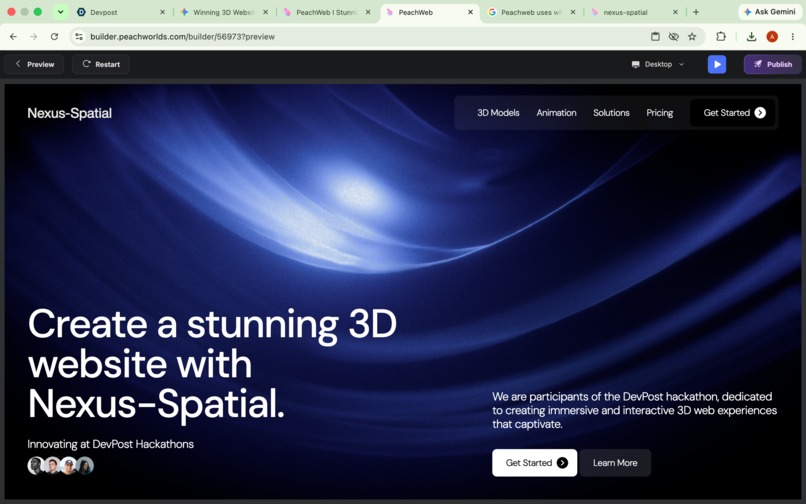
Image-1
-
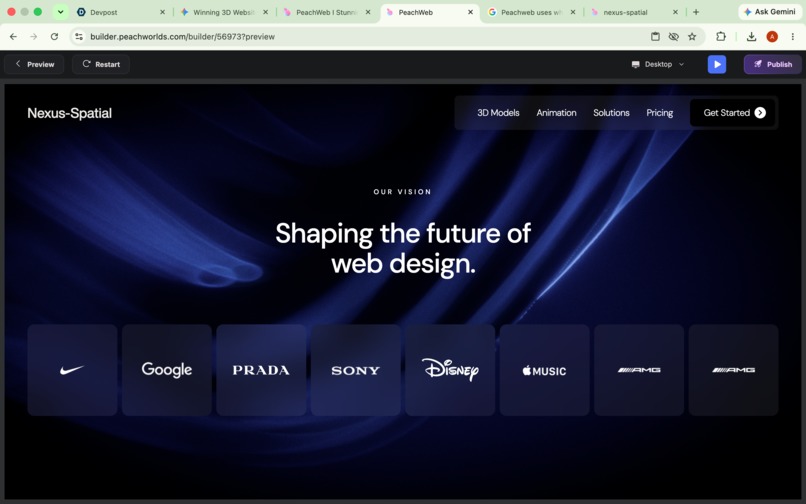
Image-2
-
Image-3
-
Image-4
-
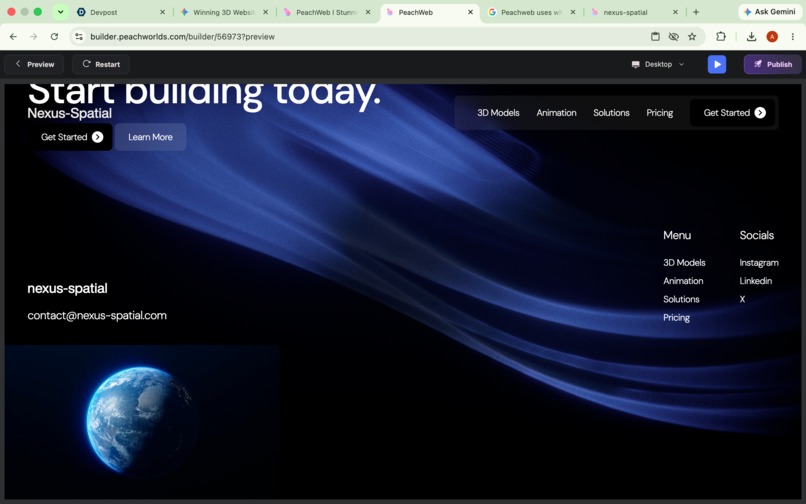
Image-5
-

Image-6
-
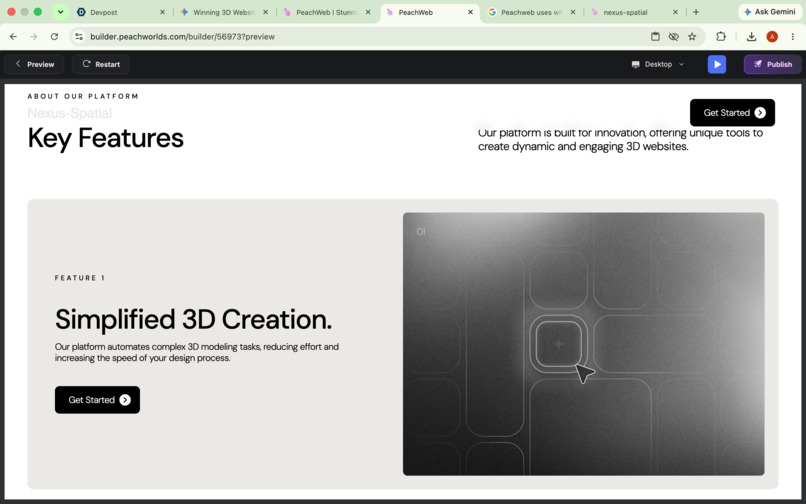
Image-7
-
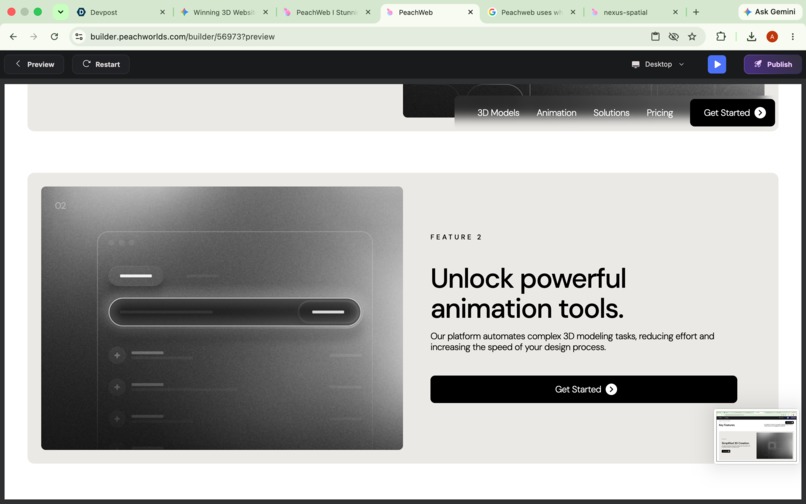
Image-8
-
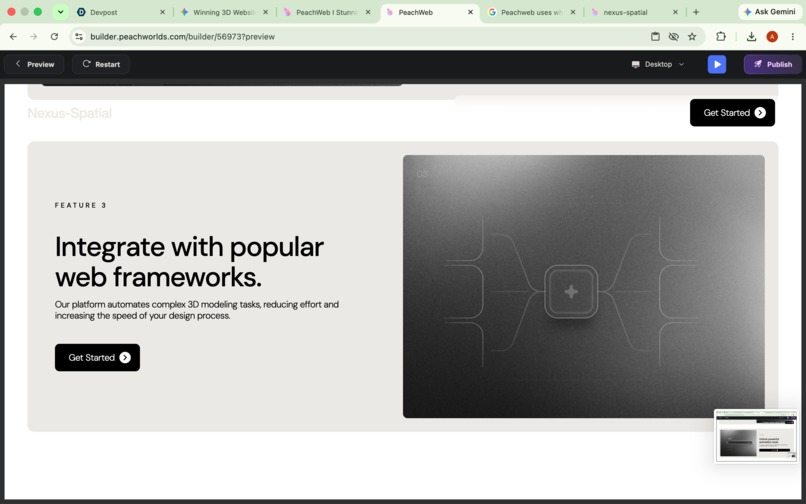
Image-9
-

Image-10
-

Image-11
-

Image-12




1.Inspiration
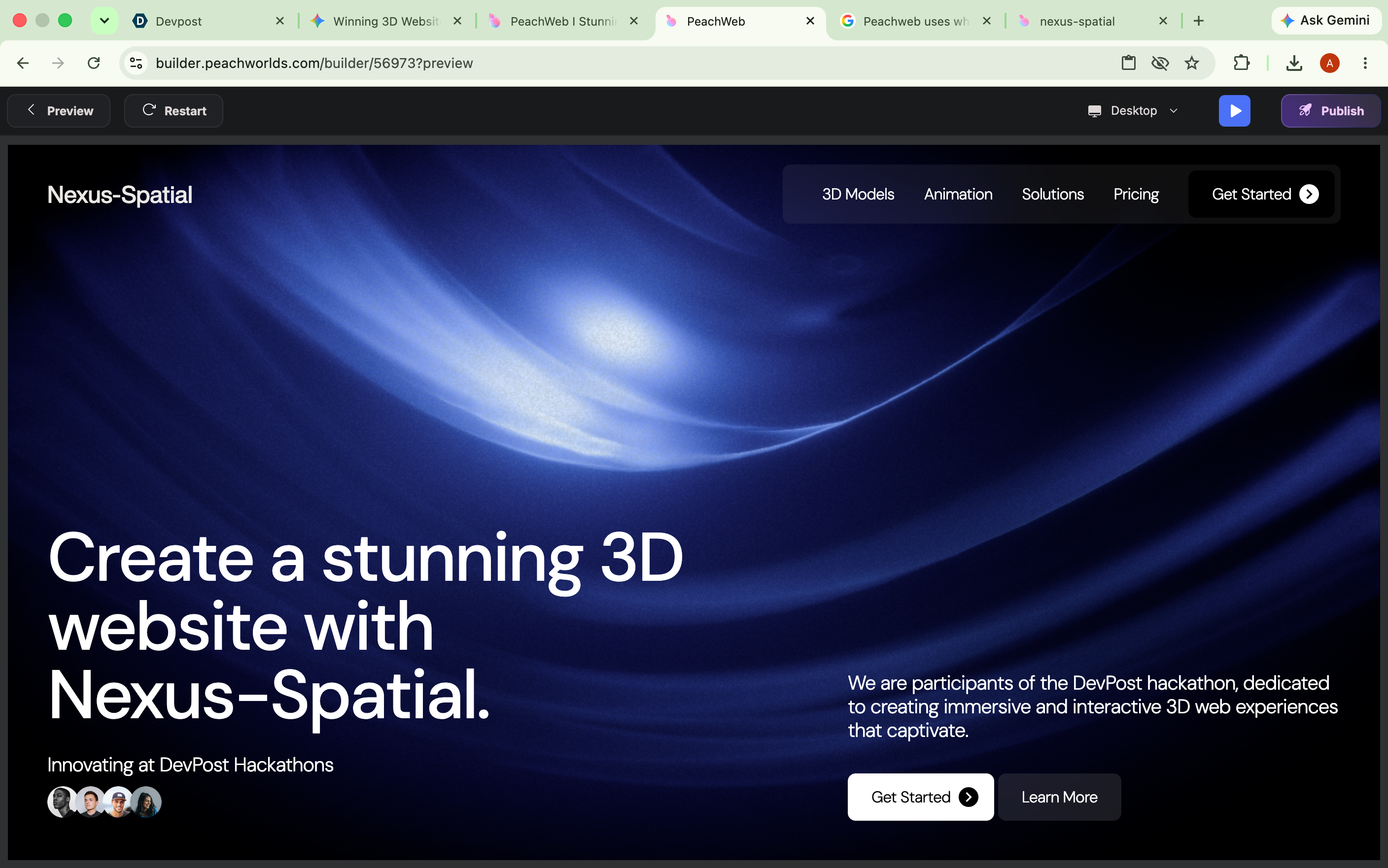
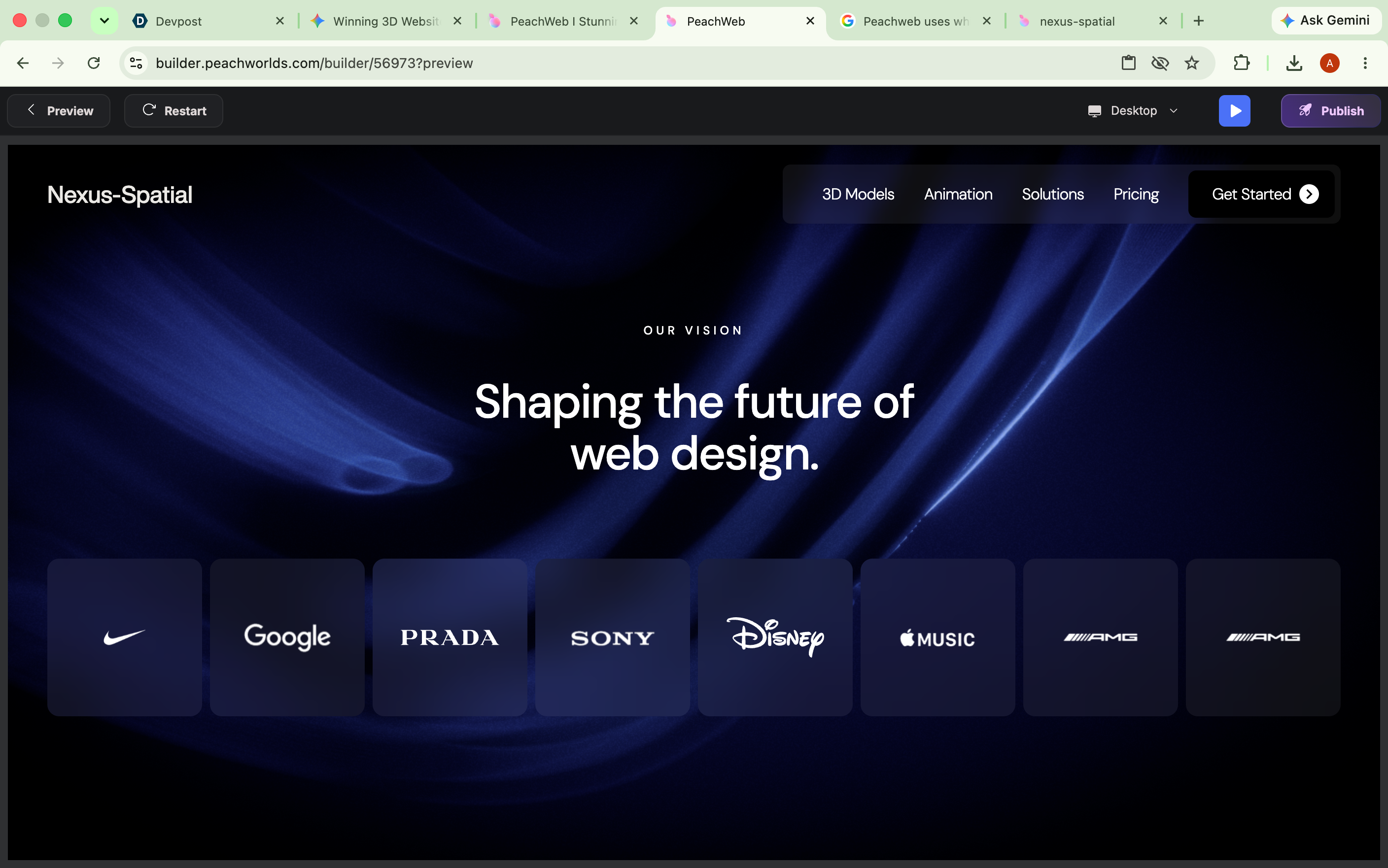
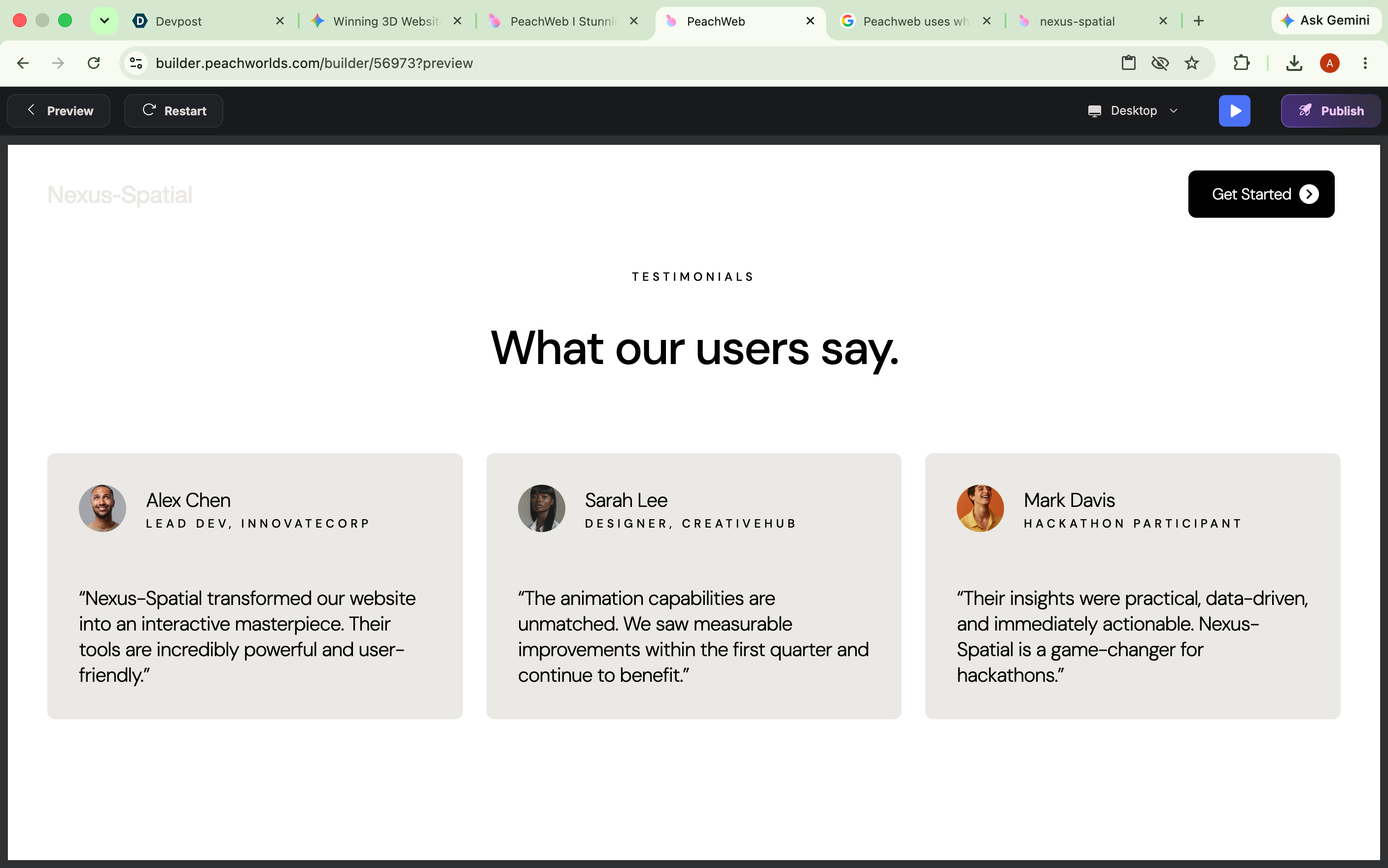
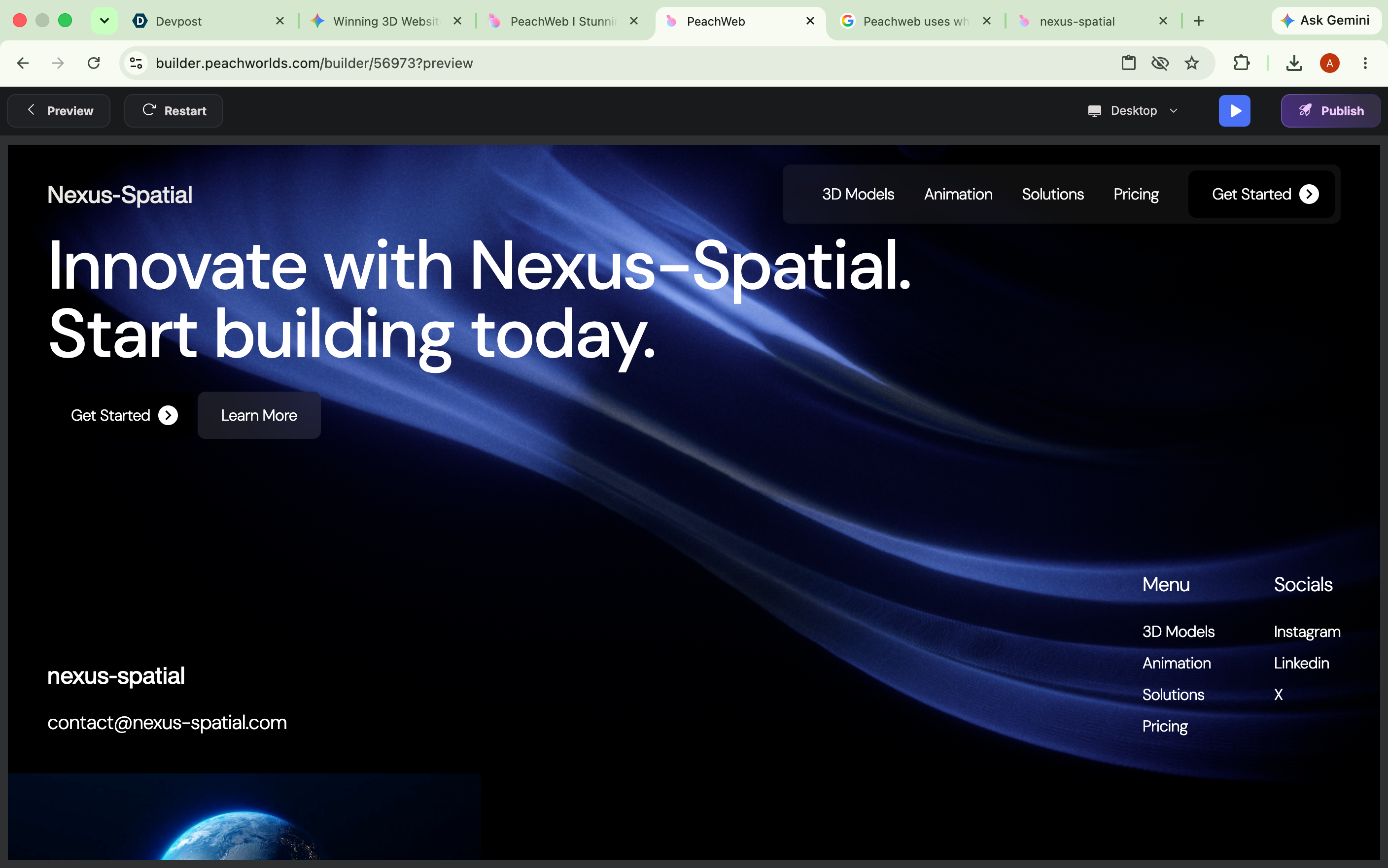
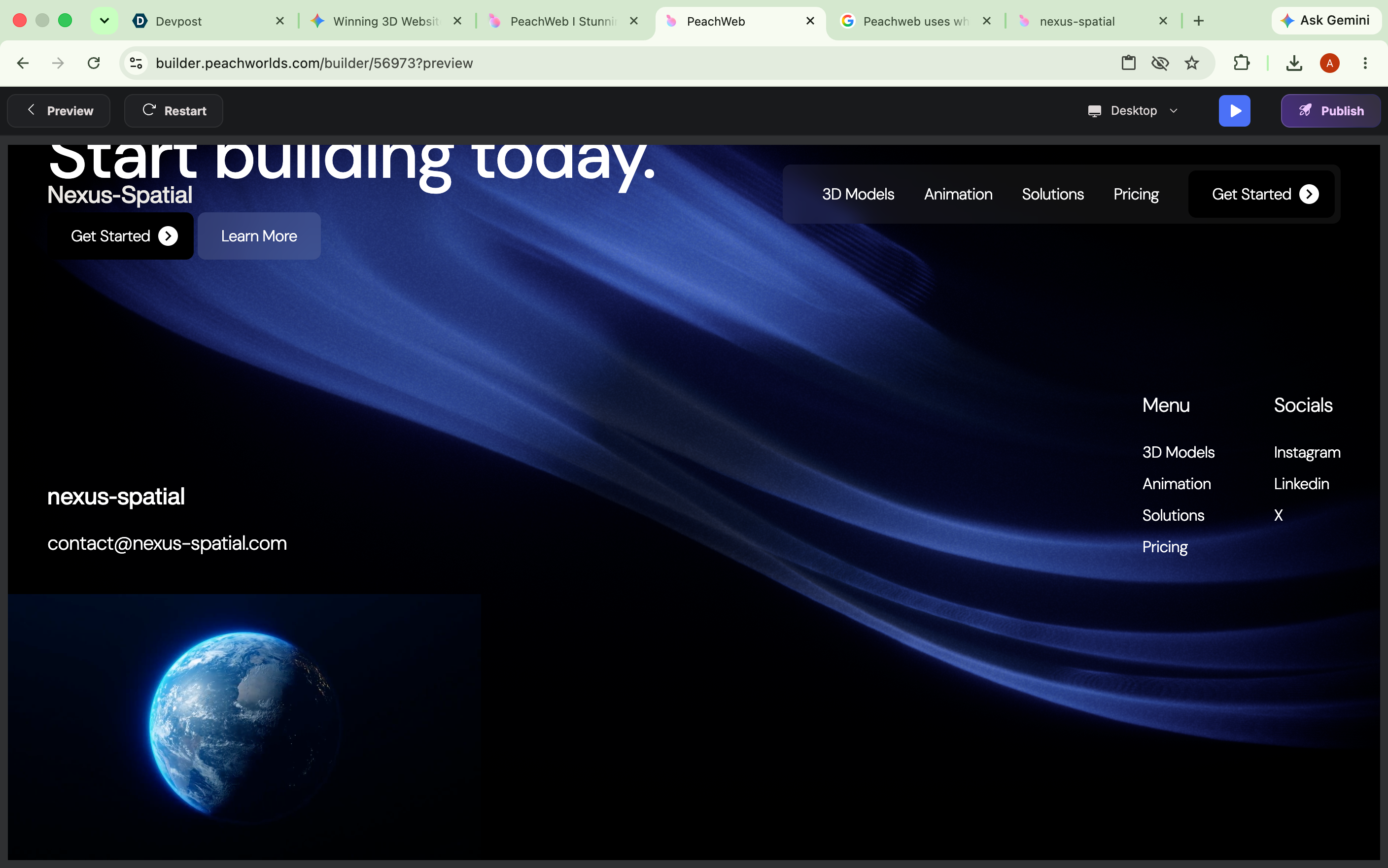
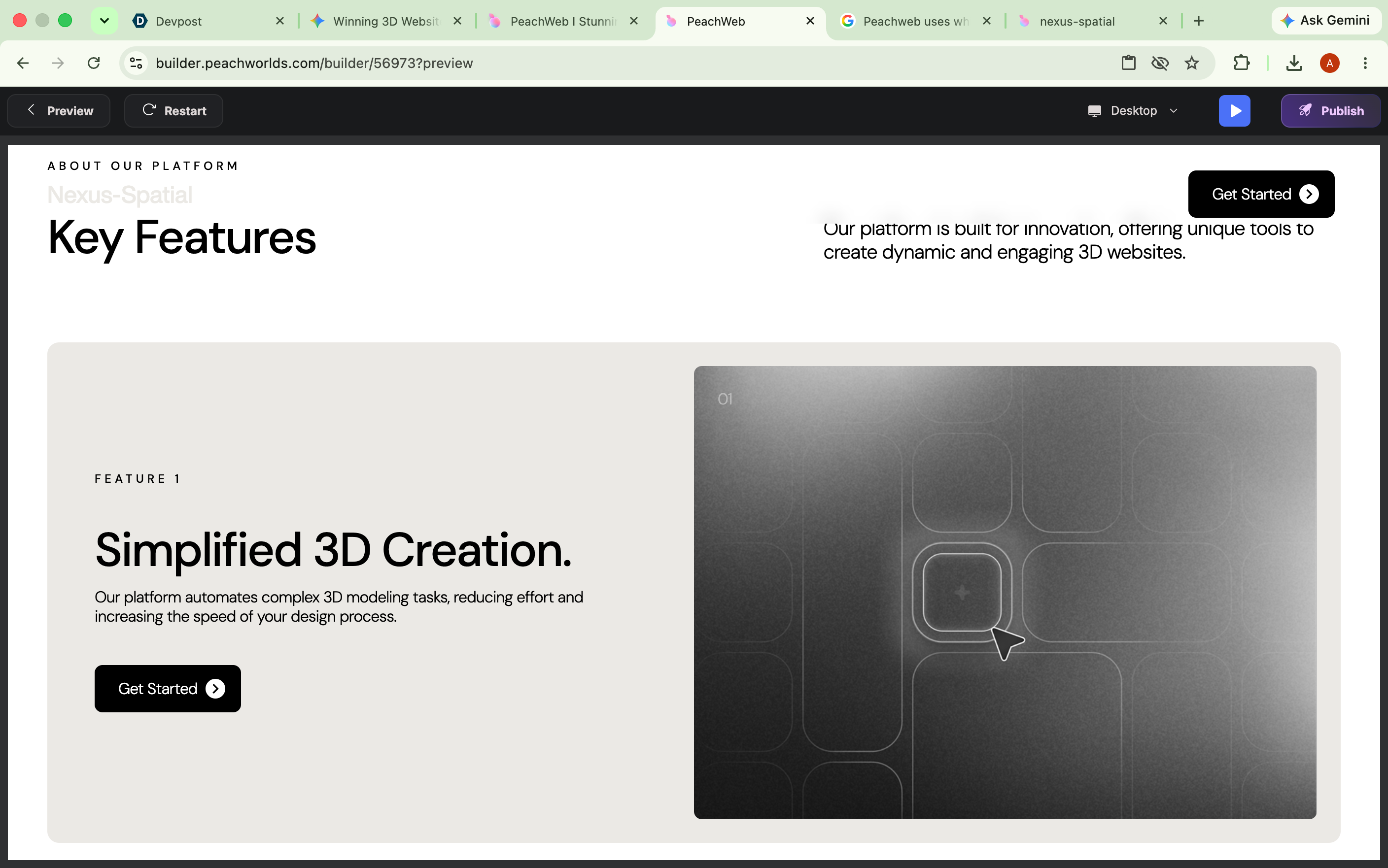
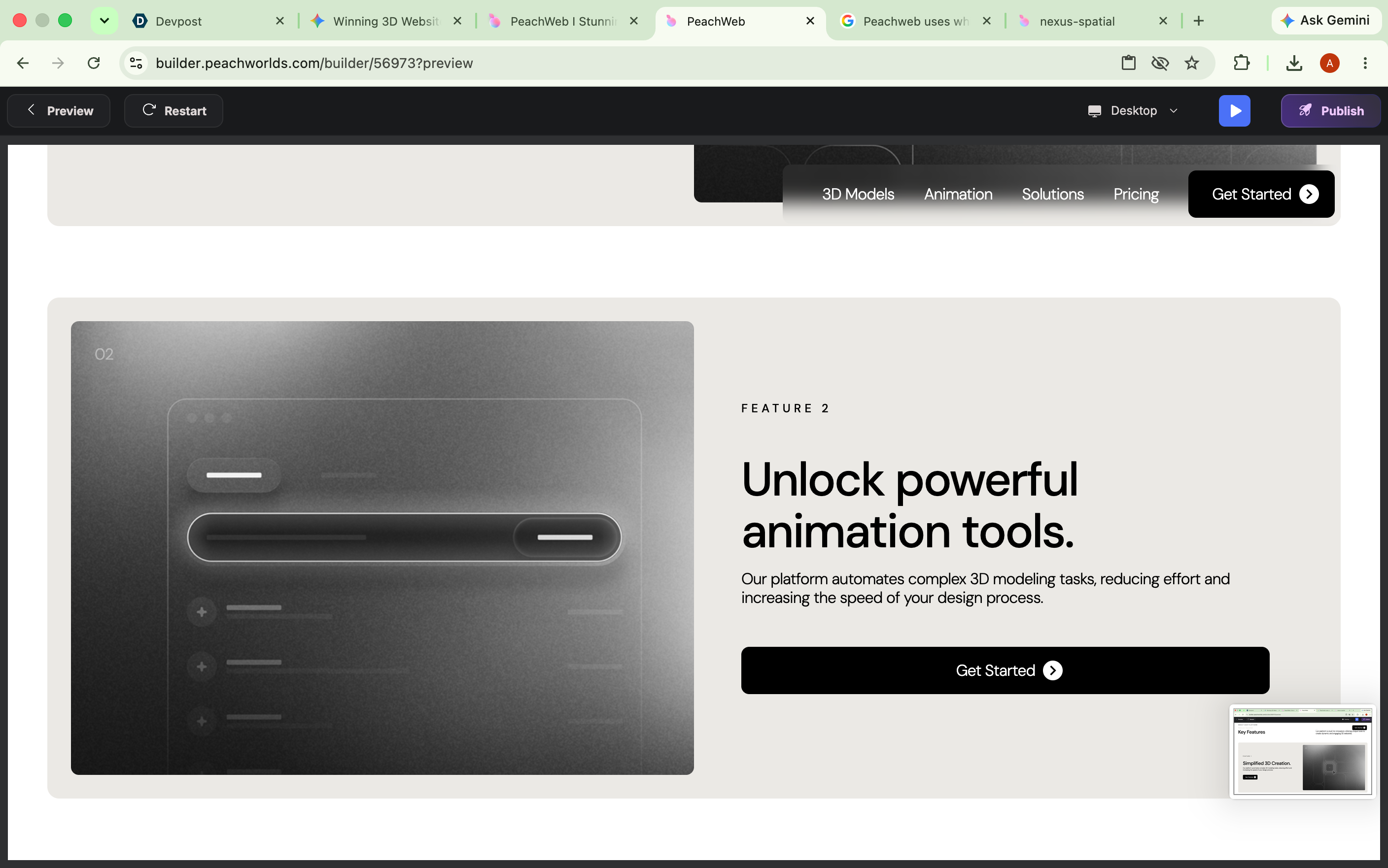
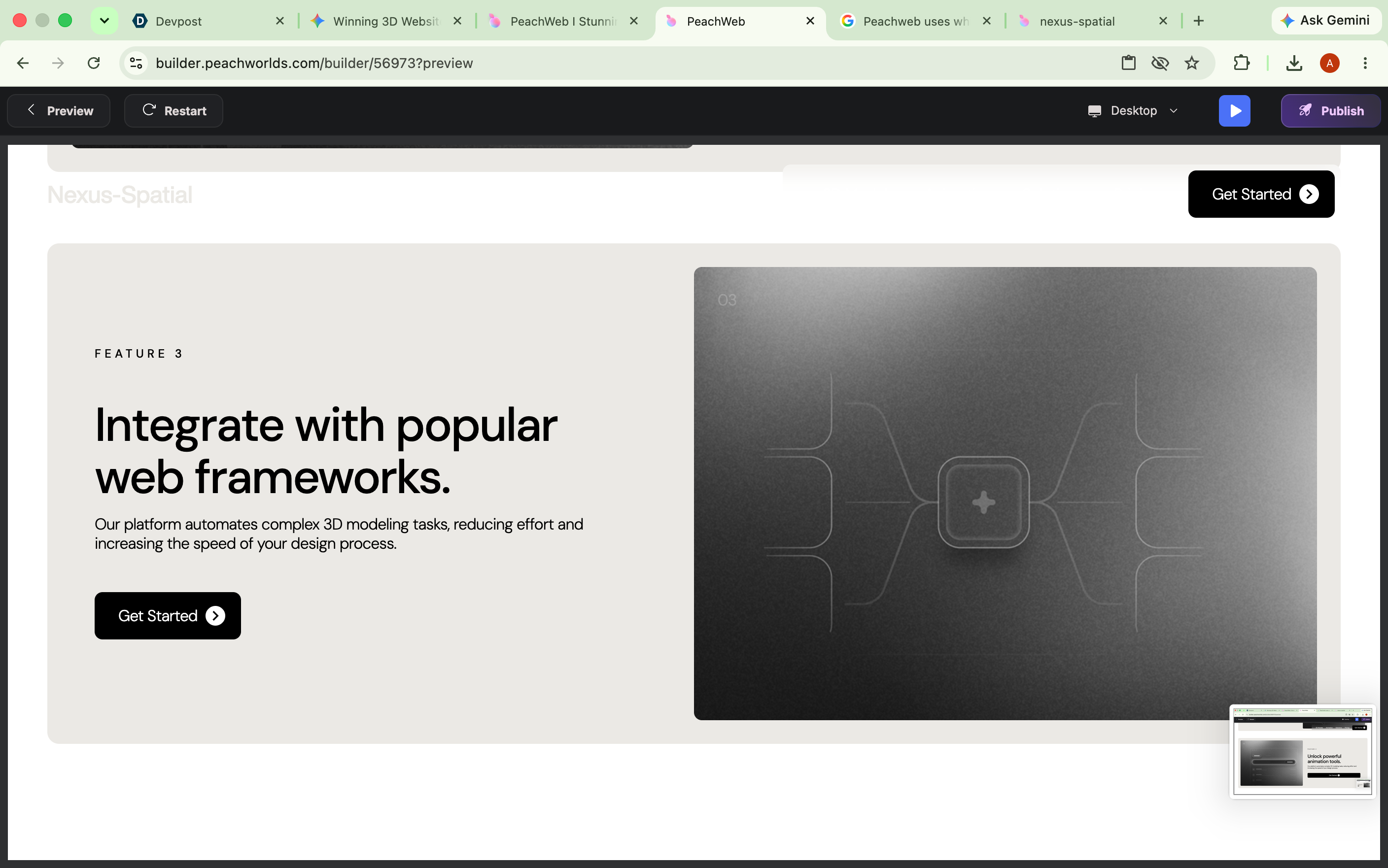
Traditional websites rely on static 2D grids, linear scrolling, and flat layouts that rarely engage users beyond surface-level browsing. Inspired by the sleek asset composition and intuitive workflow of Peachweb, we set out to reimagine how people interact with web content. Nexus Spatial was born from a simple vision: to bridge the gap between creative 3D design and modern web interfaces, creating a digital environment that feels tangible, responsive, and alive.
- What It Does Nexus Spatial converts standard web browsing into an interactive 3D canvas. Users can manipulate spatial elements in real time, exploring dynamic visual nodes that react to every cursor movement.
Interactive Spatial Core: A glowing, real-time 3D centerpiece that responds dynamically to hover and click events.
Fluid 2D/3D Integration: Seamless overlay of clean typography and HUD elements mapped directly over a WebGL canvas.
Immersive Lighting & Depth: Utilizes realistic material shaders, bloom effects, and dynamic camera depth to create an atmosphere of digital wonder.
- How We Built It We designed and staged our 3D assets directly within a spatial layout canvas, combining intuitive model arrangement with lighting passes and WebGL post-processing.
Design & Scene Composition: Peachweb, Spline, 3D Asset Libraries
Render Engine & FX: WebGL, Real-time Bloom, Procedural Shaders
Styling & UI: Clean minimalist layout, high-contrast dark palette, glowing neon accents
- Challenges We Ran Into Our biggest challenge was maintaining high visual fidelity—such as glass refractions, glow effects, and smooth camera rotations—without causing frame drops across different hardware. We resolved this by optimizing object geometry, managing shadow map resolutions, and fine-tuning ambient light passes to achieve a stable 60 FPS performance.
5.Accomplishments That We're Proud Of Zero-Latency Interactions: Delivering instant visual feedback on cursor hover without lag or layout shifts.
Cohesive Visual Identity: Achieving a polished, futuristic aesthetic that balances functional copy with interactive 3D graphics.
Rapid Deployment: Going from initial visual concept to a published, publicly accessible 3D site within a single sprint.
6.What's Next for Nexus Spatial WebXR Integration: Adding native Virtual Reality (VR) and Augmented Reality (AR) support for head-mounted displays.
Multi-Node Navigation: Expanding the single-page spatial canvas into a interconnected 3D universe for complex web applications.
Built With
- ai
- peachweb
