-
-
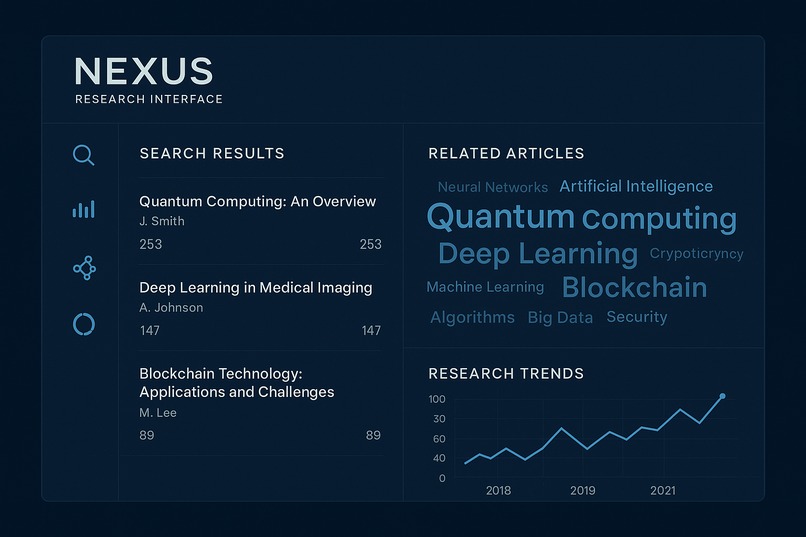
From Confusion to Clarity, From Curiosity to Discovery, From Idea to Creation.
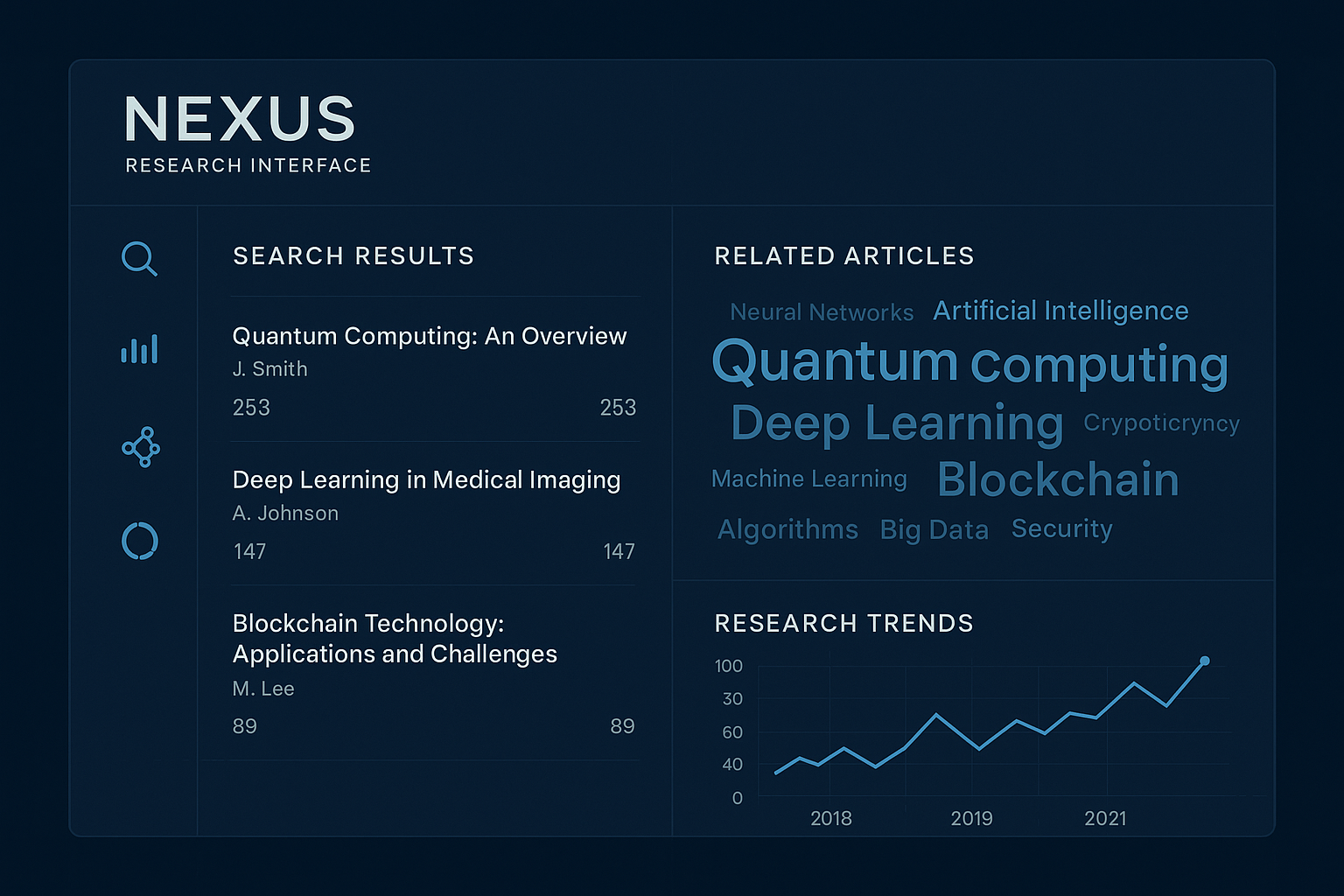
Inspiration
The Spark Behind the Vision Every breakthrough begins with a moment — a quiet realization, a persistent frustration, or a spark of inspiration that refuses to fade. For me, this project was born from all three.
For years, I watched students, creators, researchers, and innovators struggle with the same overwhelming problem: real knowledge was locked behind complexity, scattered sources, paywalls, and endless noise.
Whenever I tried to research anything—AI, physics, medicine, history, business—I found myself opening 20 tabs, jumping between articles, videos, papers, and still feeling like I was only scratching the surface. The deeper the topic, the more chaotic the process became.
At some point, I asked myself a simple question:
Why does exploring knowledge still feel like chasing fragments?
That question stayed with me.
Then came the moment of clarity: What if there was a universal research interface? A system that didn’t just search… …but mapped knowledge, explained it, summarized it, simplified it, deepened it, and even generated new ideas — all in one space.
A place where anyone, no matter their background, could go from beginner to expert without drowning in complexity.
That idea became an obsession.
What it does
I wanted a tool that could transform curiosity into clarity. A system that could turn questions into discovery. A platform where a student, a founder, a researcher, or a dreamer could walk in and come out with insight, direction, and understanding.
So I built this project — because the world deserves a smarter way to learn, a clearer path to knowledge, and an engine powerful enough to help anyone master any field.
How we built it
**How I Created It?
It didn’t start as a project. It started as a frustration.
Every time I tried researching something—AI, physics, business, history, anything—I found myself drowning in tabs, articles, videos, and threads that never truly connected. I kept jumping between sources yet still felt like I was only collecting fragments of knowledge instead of understanding the whole picture.
At some point, I just stopped and asked myself:
“Why does learning still feel like chasing scattered pieces?”
That question stuck to my mind. I couldn’t unthink it.
And then the spark hit me: What if there was one interface that could take any field and map it out clearly—explain it, organize it, deepen it, and even generate new insights?
The more I thought about it, the bigger the idea grew. It stopped being a thought and became an obsession.
I started imagining a system that didn’t just search for information… but understood the structure of a field, taught it, summarized it, expanded it, and made mastery feel natural.
I wanted something that could take curiosity and turn it into clarity.
So I built it.
I designed the concept, the flow, the tools, the intelligence behind it. I mapped how research should work if it were intuitive, clean, and powerful. I created something I wished existed when I first started exploring big ideas.
I built this project because I believe knowledge shouldn’t be a maze. It should be a gateway.
And this interface… is my answer to that belief — a tool that helps anyone master any field without the chaos.
From confusion to clarity. From curiosity to discovery. From idea… to creation.
Challenges we ran into
**Challenges We Ran Into
Building this project wasn’t smooth or magical. It was messy, complicated, and honestly… humbling. Here are the biggest challenges we faced along the way:
1. Making Knowledge Understandable Without Oversimplifying
One of the hardest parts was striking the balance between:
- being deep enough for experts
- being clear enough for beginners
We kept rewriting structures, reorganizing concepts, and redesigning flows because we realized how easily “simplifying” can turn into “dumbing down,” which we refused to do.
2. Turning Complex Fields Into Mapped, Visual Systems
Fields like AI, medicine, physics, or economics aren’t just branches — they’re galaxies.
Trying to build a system that maps entire disciplines without losing nuance was a serious challenge. We had to rethink how information should be structured, layered, and interconnected.
3. Fighting Information Overload
The internet has too much information and not enough clarity.
We struggled with how to design an interface that cuts through noise while still being comprehensive. Creating a tool that filters intelligently without hiding important details required dozens of iterations.
4. Ensuring the System Doesn’t Fabricate Information
This was critical.
We wanted an engine that explains and synthesizes, not one that invents facts. Preventing hallucinations required very careful reasoning structures, guardrails, and evidence-based pathways.
It was a constant battle between capability and responsibility.
5. Building Tools That Work for *Every Field*
Designing a research interface for one domain is easy. Designing one that works for medicine, engineering, history, psychology, economics, AI, law, and more is another story.
Different fields think differently. We had to create flexible logic that adapts to any discipline without breaking.
6. Keeping the Experience Clean and Not Overwhelming
We wanted power, but not clutter. Depth, but not confusion.
Interfaces kept becoming too dense, too complex, or too intimidating. We reworked the UX repeatedly to make it feel light, intuitive, and “flowing,” even when handling heavy topics.
7. Turning Inspiration Into a Working System
The idea was huge. Almost too huge.
There were moments when we questioned if we should narrow it down or reduce the scope. But every time, the vision pushed us forward — to build something bold, ambitious, and genuinely transformative.
8. Staying Motivated Through the Complexity
Some days felt like progress. Some days felt like we were walking in circles.
But the belief that the world needed a smarter way to learn kept us going.
Accomplishments that we're proud of
**Accomplishments We’re Proud Of?
Looking back at everything we’ve built, there are a few accomplishments that genuinely make me proud — not just because they were hard, but because they represent the soul of the project.
1. We Created a Research Interface That Actually Makes Sense
This is the one that means the most to me. We built something that finally turns chaotic research into clear pathways, logical maps, and deep understanding. People no longer have to chase 20 tabs to understand one idea — and that alone feels revolutionary.
2. We Built a System That Works for *Any Field*
AI. Medicine. Engineering. History. Economics. Psychology. No matter the discipline, the interface adapts, restructures, and teaches.
Creating something truly universal is rare. We did that.
3. We Reduced Complexity Without Sacrificing Depth
This is a balance most systems never achieve. But we found a way to keep explanations: ✔ deep ✔ layered ✔ accurate ✔ and still easy to understand
Experts appreciate it. Beginners don’t feel intimidated. That is a huge accomplishment.
4. We Created Tools That Transform Curiosity Into Clarity
The research question generator, the hypothesis builder, the methodology designer, the insight engine — these aren’t average features. They’re tools that genuinely change how people learn and think.
They turn “I’m lost” into “I get it now.”
5. We Made Knowledge Flow Instead of Overwhelm
One of the most beautiful accomplishments is how the interface feels. It doesn’t suffocate you with information. It guides, structures, reveals, and explains.
Learning feels natural again.
6. We Built Something That Inspires Creativity and Discovery
Users aren’t just reading—they’re:
- generating new ideas
- building frameworks
- designing models
- spotting patterns
- proposing research topics
- creating papers and insights of their own
The system doesn’t just teach. It empowers.
7. We Proved That Knowledge Can Be Accessible to Everyone
No background required. No advanced degree. No privileged access.
We democratized understanding — and that’s something to be genuinely proud of.
8. We Turned a Vision Into Reality
The biggest accomplishment? We didn’t just imagine a better way to learn… we built it.
We turned frustration into innovation. We turned curiosity into clarity. And we turned a simple question into a system that can help millions.
What we learned
**What We Learned?
Throughout this entire journey — from the first spark of the idea to the final working prototype — we learned lessons that reshaped how we think about research, design, and problem-solving. Here’s what stood out the most from my perspective:
1. Simplicity Is the Hardest Thing to Build
We learned that simplifying complex knowledge isn’t about removing details — it’s about restructuring them. Clarity takes more work than complexity, and good design is invisible until it’s missing.
2. People Don’t Struggle With Intelligence — They Struggle With Structure
When users get overwhelmed, it’s rarely because they’re not smart enough. It’s because the information around them is not organized in a way the brain naturally understands.
Our biggest insight: Structure beats memorization. Understanding beats information.
3. Tools Should Think With You, Not For You
We discovered that people don’t want an AI that replaces their thoughts. They want an AI that:
- guides
- organizes
- clarifies
- challenges
- expands their ideas
- supports their creativity
Empowerment matters more than automation.
4. Research Isn’t Linear — And Our System Shouldn’t Be Either
We learned that real understanding jumps between:
- questions
- concepts
- examples
- applications
- contradictions
- alternative perspectives
By mirroring that natural flow, our interface feels fluid instead of restrictive.
5. Visualizing Knowledge Unlocks Understanding Faster
One thing became obvious: People grasp patterns and relationships way faster through diagrams, links, layers, and concept maps than through paragraphs.
Seeing ideas > reading ideas.
6. Every User Learns Differently
Some users prefer deep dives. Some prefer summaries. Some want analogies. Some want technical theory.
Our system had to adapt — and building that taught us the importance of flexible learning pathways.
7. A Great Product Doesn’t Start With Features — It Starts With Frustration
We learned that the core idea didn’t come from inspiration. It came from pain.
From struggling with:
- too many articles
- too many concepts
- zero clarity
- confusing papers
- scattered information
Solving our own problem gave the product authenticity.
8. The “Aha!” Moment Is the Real KPI
Not number of users. Not page views. Not daily interactions.
The real measure of success is: How often do people finally understand something they’ve struggled with?
When users say, “Oh! Now it makes sense”— that’s everything.
9. Building for Everyone Forces You to Think Deeply
We learned that creating a universal research assistant means:
- stripping away assumptions
- rebuilding explanations from the ground up
- testing with beginners and experts
- translating complexity into intuition
It pushed us as creators to understand the content more deeply than ever.
10. The Future of Learning Is Guided, Not Forced
The biggest lesson: People learn best when knowledge meets them where they are — not where the world expects them to be.
What's next for Nexus Research Interface
**What’s Next for Nexus Research Interface?
The project may be functioning, but in my eyes, this is only the beginning. Here’s what comes next — not just as goals, but as the future direction of Nexus Research Interface from my point of view:
🔮 1. Turning Nexus Into a Fully Intelligent Research Companion
Right now, Nexus organizes and explains. Next, it will anticipate, recommend, and predict what a learner needs next.
We’re moving toward a system that can:
- identify missing knowledge
- suggest optimal learning paths
- auto-generate concept maps
- highlight contradictions in sources
- propose new questions the user hasn’t even thought of yet
Nexus won’t just respond — it will think ahead.
🎛 2. Introducing a Dynamic Knowledge Map Engine
One of the biggest upgrades planned is a visual, interactive knowledge universe where:
- every concept connects
- every field branches into subfields
- users can zoom from basics to advanced layers
- research feels like exploring a living map
Imagine navigating AI, physics, finance, biology, law, or philosophy like you’re zooming through a galaxy.
That’s where we’re going.
🤝 3. Collaborative Research Mode
We want Nexus to support teamwork — the kind real researchers do.
Coming features include:
- shared research boards
- team concept maps
- joint annotations
- real-time AI-supported group brainstorming
Research, but multiplayer.
📚 4. A Library of Pre-Built Expert Knowledge Structures
We’ll create a repository of:
- curated learning paths
- field breakdowns
- expert explanations
- modular knowledge templates
- starter packs for any subject (medicine, coding, engineering, etc.)
Users won’t start from scratch — they’ll start from a strong foundation.
🧠 5. Deeper Reasoning Models Built Into the Interface
Next version of Nexus will include:
- multi-perspective analysis
- contradiction checking
- argument comparison
- theorem tracing
- cross-disciplinary synthesis
Basically, Nexus will help you think like a researcher, not just search like one.
🛠 6. Plugins + Integrations
To make Nexus fully usable in real workflows, we plan integrations with:
- academic databases
- citation managers
- coding environments
- writing apps
- productivity tools
Imagine taking your research from idea → outline → paper → presentation all inside Nexus.
🌍 7. Offline + Low-Data Mode for Global Accessibility
Since accessibility is important, we’ll explore features that allow Nexus to work even in areas with:
- low bandwidth
- unstable connectivity
- limited devices
Knowledge shouldn’t be gated behind high-end tech.
🚀 8. Nexus 2.0 — From Research Tool to “Understanding Engine”
The long-term vision?
To make Nexus not just a research interface but an engine of understanding — a place where anyone can break down any field, explore any idea, and master any subject without confusion or fragmentation.
A system that transforms complex topics into clear, elegant, learnable knowledge.
🌟 In short:
What’s next is expansion. Intelligence. Collaboration. Decentralization. And a learning experience that feels alive.
Built With
- googleaistudio

Log in or sign up for Devpost to join the conversation.