Inspiration
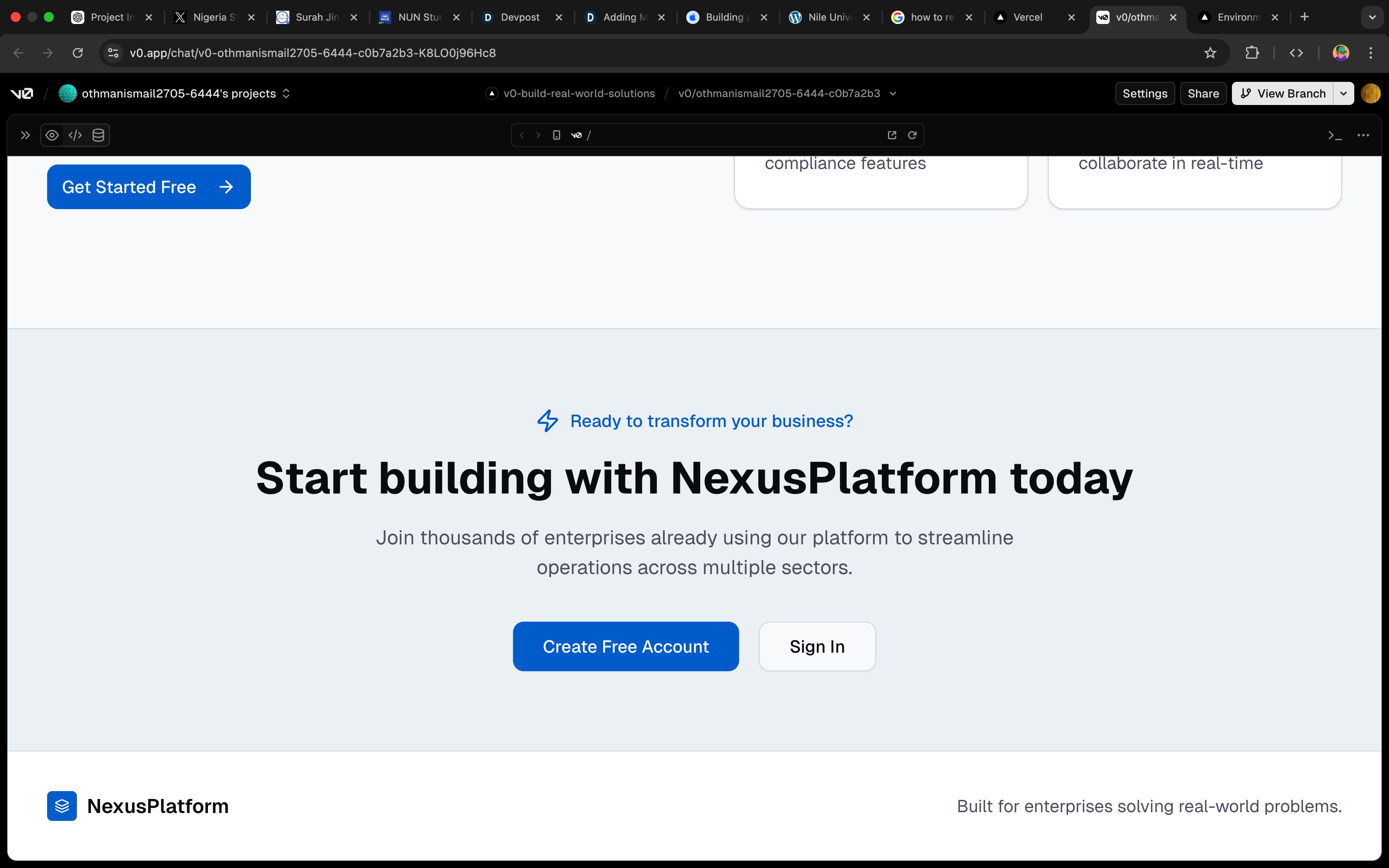
Nexus Platform was inspired by the growing need for a smarter and more connected digital workflow experience. We noticed how scattered productivity tools, communication systems, and management platforms often create friction instead of simplifying work. Our goal was to design a unified platform that feels fast, modern, and intuitive while leveraging AI-assisted development to dramatically accelerate the building process.
We were also inspired by the rise of modern startup tooling and AI-powered development environments. Seeing how quickly ideas can move from concept to deployment motivated us to push the limits of rapid prototyping and product design during the project.
What it does
Nexus Platform is a centralized digital platform designed to streamline workflows, improve collaboration, and create a smoother user experience through a clean and scalable interface.
The platform focuses on:
Organizing workflows into a unified system Improving accessibility and responsiveness across devices Delivering a modern UI/UX experience Supporting scalable integrations and future expansion Accelerating productivity through automation-friendly architecture
Its modular structure allows features and services to grow over time without compromising performance or usability.
How we built it
We built Nexus Platform using a modern full-stack development workflow focused on scalability, speed, and rapid iteration.
Tech Stack Frontend: React + Next.js Styling: Tailwind CSS UI Generation: v0 by Vercel Backend Services: API-driven architecture Deployment: Vercel Version Control: Git & GitHub
The workflow started with wireframing and planning the user experience. From there, we used AI-assisted tools to generate and refine UI components quickly, allowing us to focus more on application logic, responsiveness, and overall architecture.
We continuously iterated on the platform by testing components, refining layouts, optimizing performance, and improving usability across devices.
Challenges we ran into
One of the biggest challenges was balancing speed with quality. Since the project moved quickly, we had to carefully manage priorities and avoid feature overload.
Other challenges included:
Refining AI-generated code into production-quality components Maintaining consistency across the UI Optimizing responsiveness for different screen sizes Managing time effectively during rapid development cycles Structuring scalable architecture while still moving fast
We also faced challenges integrating multiple moving parts into a cohesive user experience without sacrificing performance.
Accomplishments that we're proud of
We’re proud that Nexus Platform evolved from an idea into a polished and functional product within a short development window.
Some key accomplishments include:
Building a scalable and modern architecture Creating a responsive and visually clean interface Successfully integrating AI-assisted development workflows Delivering a cohesive user experience Establishing a strong foundation for future expansion
We’re especially proud of how quickly we transformed concepts into working features while maintaining a professional and production-ready feel.
What we learned
This project taught us that modern development is becoming increasingly collaborative between developers and AI-powered tools.
We learned:
How to rapidly prototype and iterate effectively The importance of clean component architecture How to refine and optimize AI-generated code Better UI/UX decision-making processes The value of prioritization during fast-paced development
Most importantly, we learned that execution and adaptability matter just as much as technical complexity.
What's next for Nexus Platform
The next step for Nexus Platform is expanding its feature set and transforming it into a more complete ecosystem.
Future plans include:
Advanced AI-powered automation features Real-time collaboration tools User authentication and personalized dashboards Analytics and reporting systems Third-party integrations Enhanced scalability and cloud infrastructure improvements
We also plan to continue refining the platform based on user feedback and explore opportunities to evolve Nexus Platform beyond a hackathon project into a fully deployable, real-world solution.
Built With
- python-package-index
- vercel

Log in or sign up for Devpost to join the conversation.