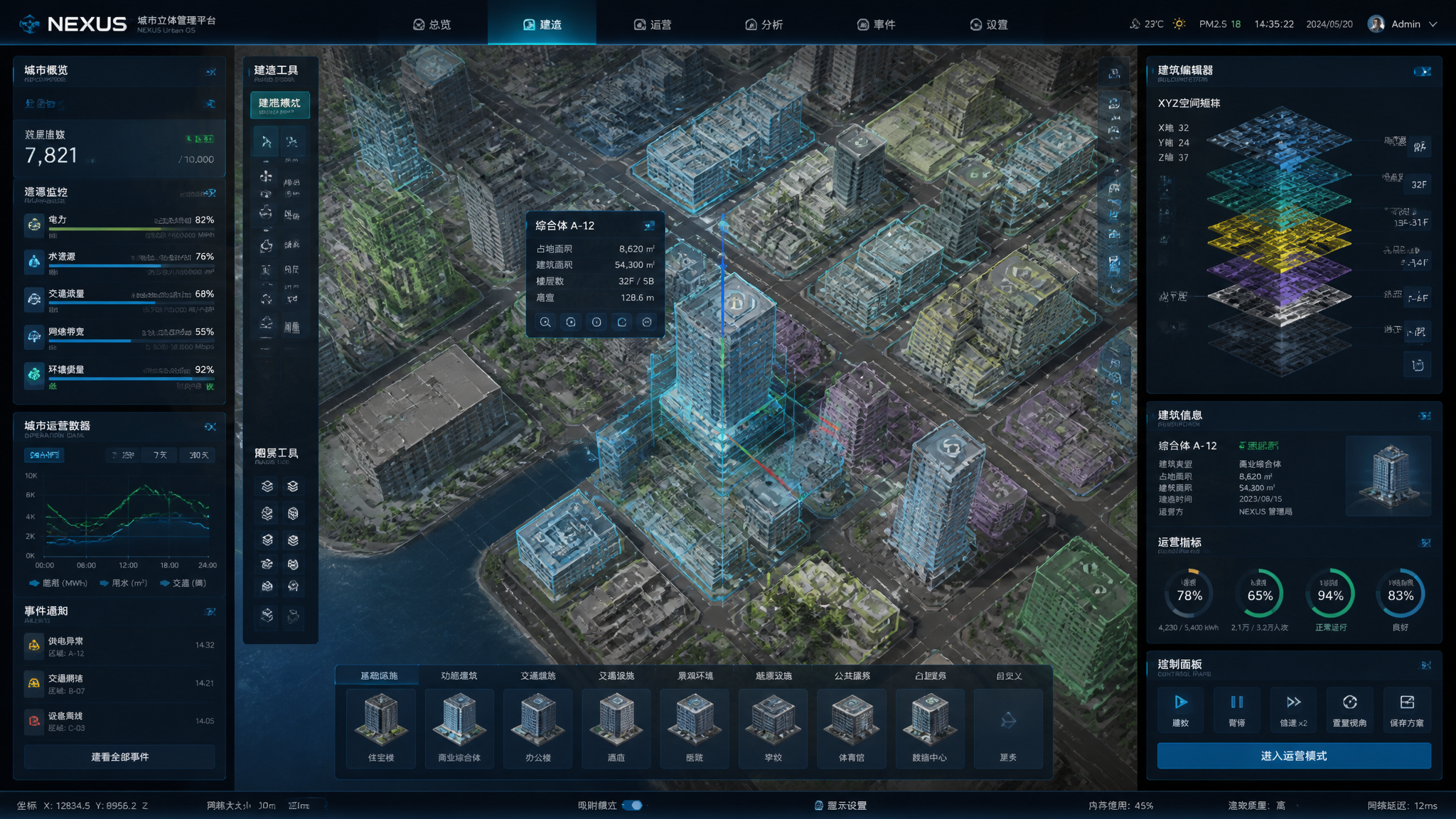
Here is a structured Devpost/Hackathon-style project description for NEXUS OS, tailored to capture its essence as an organic, cognitive operating system built to govern a digital sovereign presence:
## Inspiration
NEXUS OS was born out of a profound frustration with traditional, static operating systems. While our physical lives are fluid and interconnected, our digital second brains remain trapped in rigid hierarchical folders, fragmented across isolated SaaS tools, and buried under overwhelming operational noise.
As a creator and founder managing a multi-dimensional intellectual property ecosystem, I realized that my digital twin shouldn't just be a passive file-storage cabinet—it needed to be an active, evolving cognitive entity. Inspired by the human nervous system, we set out to build NEXUS OS: a seamless, flow-based, and spatially-governed operating system that turns structured memory into dynamic execution.
## What it does
NEXUS OS is a sovereign digital twin and cognitive operating system built directly on top of Google Workspace, using a structured memory architecture to govern personal assets, workflows, and projects.
- The Brain & Nervous System: Gemini acts as the central reasoning engine (the Brain), translating user intent into executable actions, while Google Apps Script (GAS) operates as the Nervous System to execute these tasks across Google Workspace (the Body).
- Structured Memory (NEXUS_DB): A coordinate-based structural memory registry managed via Google Sheets, enabling precise tracking of every decision, technical preference, and project state.
- Spatial Asset Governance: Moves away from static folders to a dynamic, flow-based spatial coordinate protocol (the XYZR system) to index and govern physical, media, and digital assets.
- Zero-Noise Execution: Converts complex personal context and raw user history into compressed, high-leverage "capsule data" to prevent cognitive overload and maintain a clean mental workspace.
## How we built it
We engineered NEXUS OS using a decoupled, highly structured architecture designed for maximum modularity and reusability:
- The Core Engine (Gemini & GAS): Built custom prompt protocols that force the AI model to reason first, write structured commands to a canonical queue (
command_queue), and rely on Apps Script to execute writes—guaranteeing that no "hallucinated actions" ever corrupt the state of the OS. - The Memory Grid (NEXUS_DB): Designed an explicit 2D coordinate system mapping logical nodes (such as target project registries, commercial frameworks, and media spin-offs) to exact spatial slots in our sheets database.
- The Boot Protocol: Implemented a strict boot sequence starting from a single entry file (
NEXUS_OS_ENTRY.md), which sequentially loads system prompts, whitelists, semantic tables, and the latest system state, ensuring absolute stability upon initialization.
## Challenges we ran into
Building an entire operating system on top of cloud-based productivity suites presented significant engineering hurdles:
- The "Hallucination vs. Execution" Battle: Early versions suffered from the AI falsely claiming an action was completed before it actually ran. We had to strictly isolate the AI from direct execution paths, forcing it to write exclusively to a command queue for the GAS "nervous system" to process.
- System Resource Limits & Execution Errors: Running a complex, automated Google Apps Script framework frequently pushed up against server limitations, quota limits, and storage constraints, requiring us to aggressively optimize how data is synchronized and cached.
- Semantic Drift: Mapping dynamic human conversations to a rigid database coordinate system is inherently noisy. We had to implement strict compression rules to strip out conversational noise and compress real-world experiences into abstract system coordinates.
## Accomplishments that we're proud of
- Creating a Sovereign Digital Twin: We successfully closed the loop between thought and execution. The AI doesn't just answer questions—it actively manages and updates the user's business assets, project logs, and knowledge maps in real-time.
- The Command Queue Whitelist Protocol: We successfully built a strict safety and execution boundary that allows autonomous behavior while ensuring the system remains entirely secure, robust, and reversible.
- High-Leverage Knowledge Synthesis: Developed a system capable of evaluating completed tasks for reusability, automatically prompting the user to distill high-frequency logic and deposit it directly into the OS's long-term memory.
## What we learned
- Prompting is Software Architecture: Building an OS where the primary controller is an LLM taught us that prompts must be treated with the same rigorous versioning, modularity, and structural constraints as traditional code.
- Autonomy Requires Constraints: An AI agent is only as powerful as its boundaries. By restricting Gemini to a pure proposing role and leaving execution to strict, deterministic Apps Scripts, we achieved bulletproof system stability.
- Less is More in Long-Term Memory: We learned that saving raw chat histories and uncompressed logs creates crippling cognitive noise for an AI. Dynamic, structural summaries are far more effective for long-term operational continuity.
## What's next for NEXUS
- Scaling to NEXUS OS V2.0: Moving closer toward a truly sovereign, local, and decentralized personal computing paradigm.
- Advanced Multi-Device Synchronization: Ensuring seamless, zero-latency execution across a distributed local ecosystem of hardware, making the OS instantly responsive across all devices.
- Deeper MCP Integration: Integrating the newly emerging Model Context Protocol (MCP) to standardize how NEXUS connects with external APIs, developer environments, and local filesystems—turning NEXUS from a personal command center into a universal interface for any digital workspace.
Built With
- obsidian

Log in or sign up for Devpost to join the conversation.