Inspiration
Modern enterprise AI workflows often break down when a single large model is forced to handle planning, reasoning, validation, and execution at once. We were inspired by how high-performing engineering teams divide responsibilities across specialists. We wanted to replicate that structure in software using Gemini 3 models — turning AI from a monolithic assistant into a coordinated swarm of expert agents.
The idea behind Nexus was simple: instead of one overloaded LLM, build a system where agents collaborate, critique each other, and produce verified outputs. We wanted something production-minded — observable, structured, and safe enough for real business workflows.
What it does
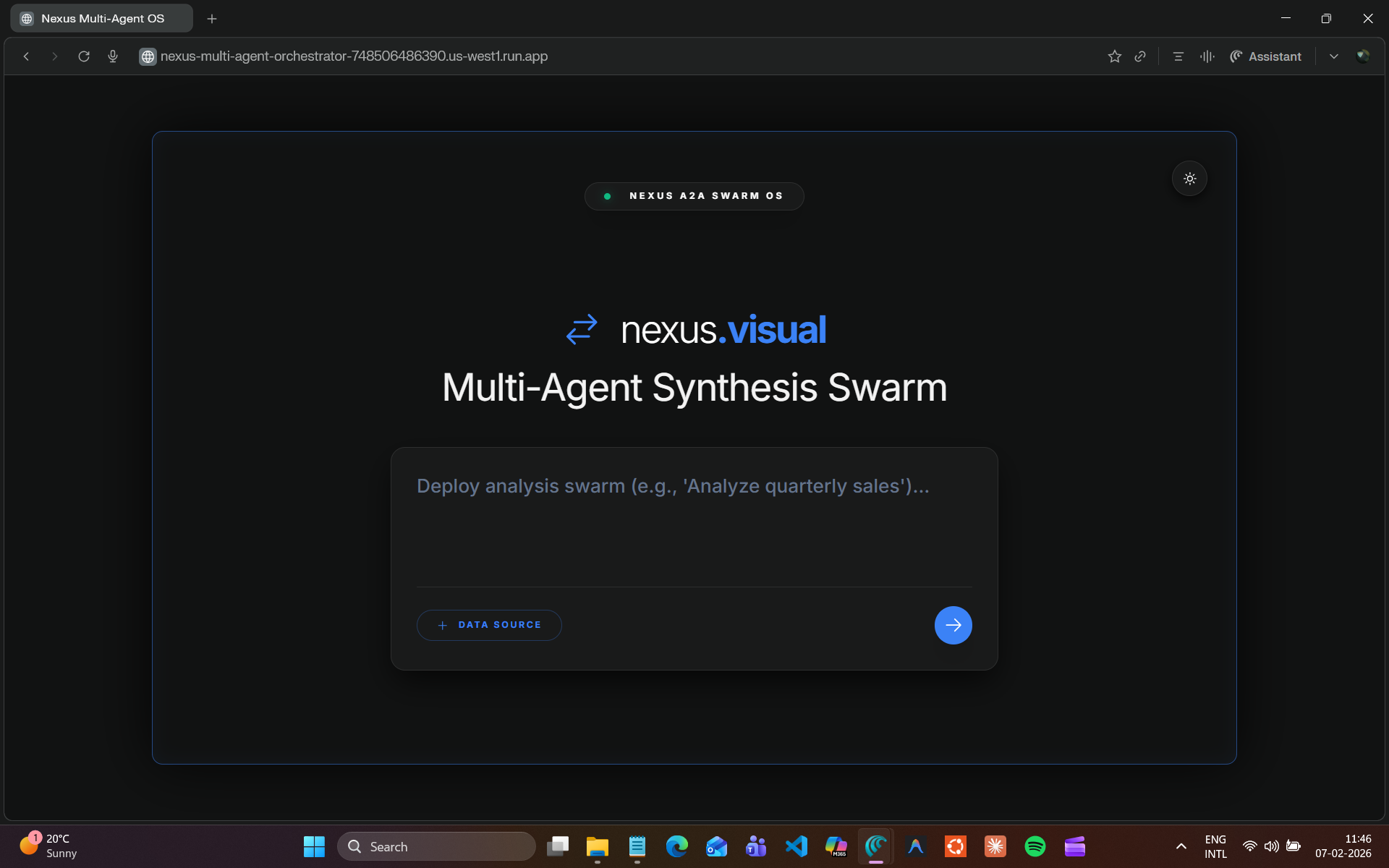
Nexus Multi-Agent Orchestrator decomposes vague business requests into an execution graph handled by specialized AI agents.
A user can upload structured or semi-structured data and ask a high-level question. Nexus:
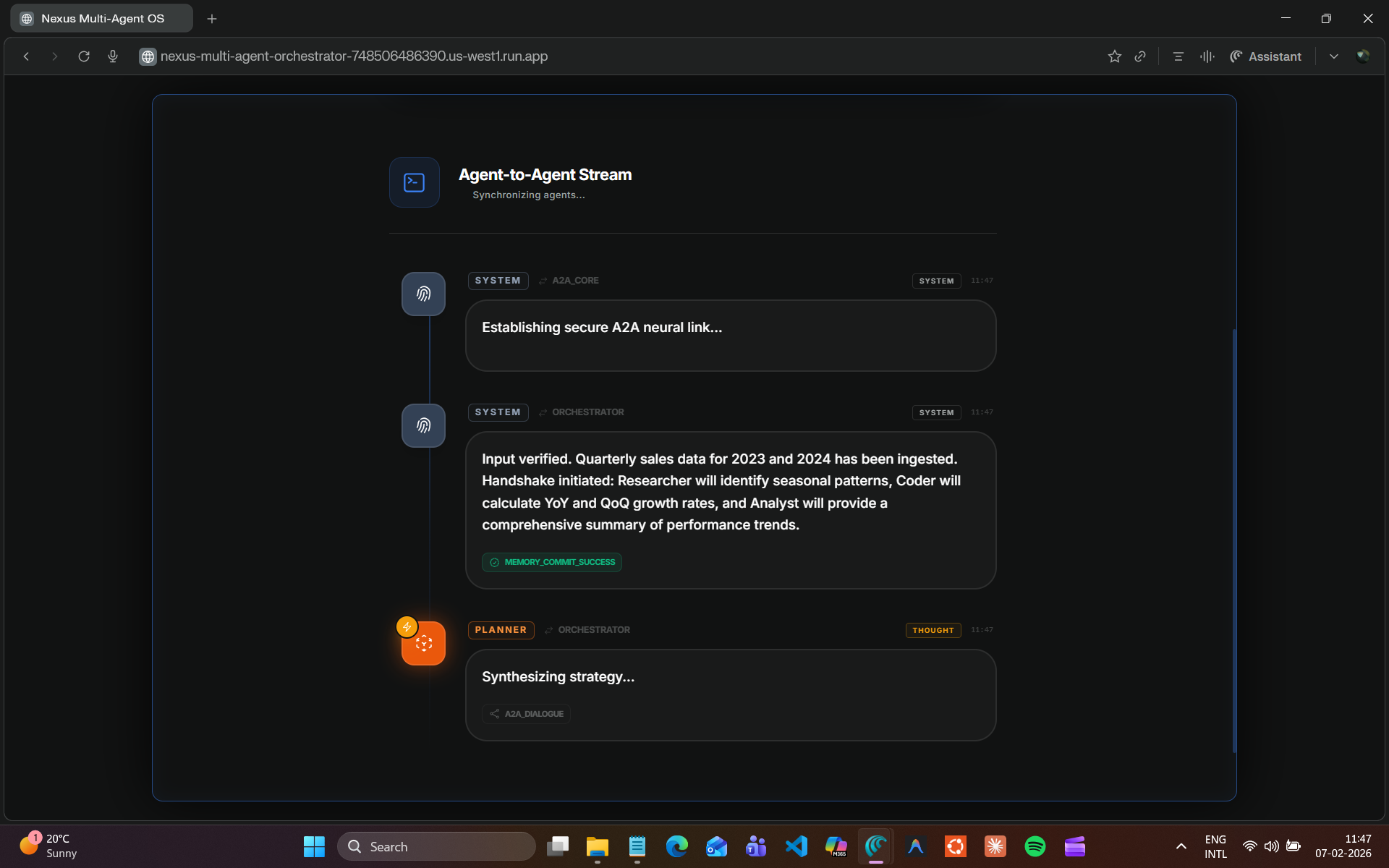
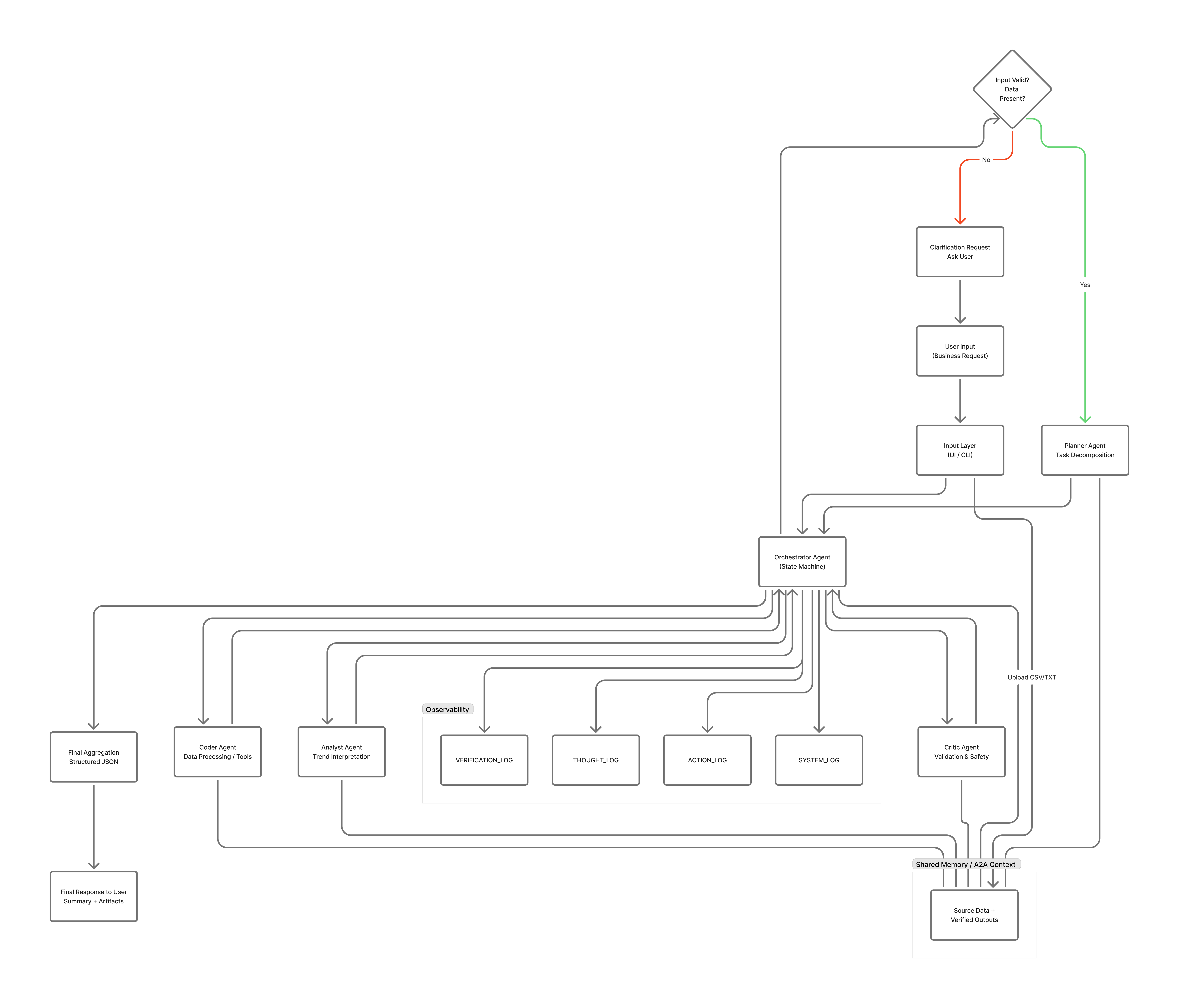
- Plans a task DAG
- Executes data analysis through worker agents
- Verifies outputs through a critic agent
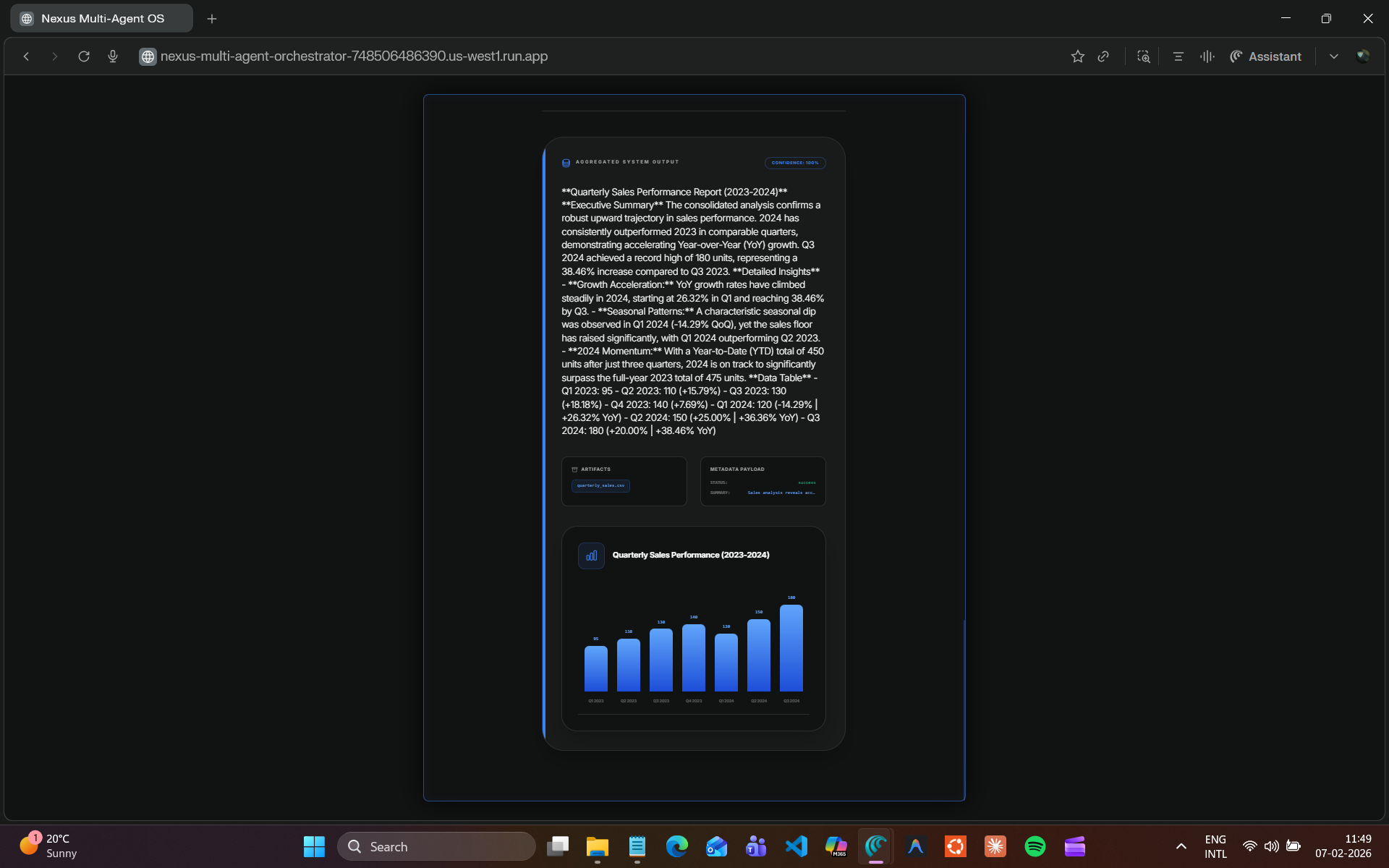
- Aggregates everything into structured JSON
- Provides confidence scoring and observability logs
The result is reliable AI reasoning with built-in validation, instead of unchecked hallucinated answers.
It behaves less like a chatbot and more like an autonomous AI engineering team.
How we built it
Nexus is built around the Gemini 3 API and Google AI Studio, using Gemini as the cognitive engine for every agent in the swarm.
We implemented:
- A TypeScript orchestration kernel
- A modular agent architecture
- Shared memory context passing
- Strict JSON schema enforcement
- A critic validation pipeline
- Real-time A2A observability streams
Gemini 3 Pro/Flash models were selected for their strong reasoning, low latency, and structured output reliability. Google AI Studio enabled rapid iteration of agent system prompts, testing orchestration flows, and debugging agent behavior before integrating into the runtime.
Each agent has a strict role:
- Planner → builds execution graphs
- Coder → simulates tool execution and computation
- Analyst → interprets data
- Critic → verifies logic and grounding
- Aggregator → produces final structured output
We followed Google ADK-inspired agent design principles to maintain modularity and reproducibility.
Challenges we ran into
The hardest problem was not building agents — it was controlling them.
Multi-agent systems tend to drift without guardrails. We had to design:
- Schema-locked outputs to prevent format corruption
- Critic verification loops to reduce hallucinations
- Grounded dependency checks
- State synchronization across agents
- Failure recovery paths
Another challenge was observability. Autonomous systems quickly become black boxes. We built structured logging layers (thought logs, action logs, verification logs) to make agent reasoning inspectable in real time.
Balancing autonomy with safety was the core engineering trade-off.
Accomplishments that we're proud of
We’re proud that Nexus behaves like a disciplined engineering workflow, not a demo chatbot.
Key wins:
- Reliable multi-agent coordination using Gemini 3
- Built-in hallucination defense via the Critic pattern
- Structured JSON-first output pipeline
- Live A2A observability stream
- Modular architecture ready for scaling
The system is already shaped like a production backend rather than a prototype toy.
What we learned
We learned that orchestration matters more than raw model power.
Even the best model becomes unreliable without:
- structure
- validation
- decomposition
- memory discipline
Multi-agent architecture isn’t about complexity — it’s about controlled intelligence. Gemini 3 performed best when each agent had a narrow, well-defined cognitive role.
We also learned how critical developer tooling like Google AI Studio is for rapid agent iteration and system prompt engineering.
What's next for Nexus Multi-Agent Orchestrator
Next steps focus on turning Nexus into a scalable autonomous platform:
- Persistent execution state via Redis/Postgres
- Session resume and long-running task support
- Distributed worker microservices
- Multi-turn planning refinement
- Tool sandbox execution (real Python runtime)
- Enterprise RAG pipelines
- Visual orchestration dashboard
Our long-term vision is a production-grade AI orchestration layer that enterprises can plug into existing workflows a swarm intelligence engine that transforms ambiguous requests into trustworthy outcomes.

Log in or sign up for Devpost to join the conversation.