
NEXUS-MIND: Cognitive Mobility Intelligence for Borderless Human Capability
Inspiration
Global mobility today is broken — not due to a lack of technology, but due to systems that fail to understand humans as cognitive beings.
While observing how professionals struggle with resumes, visa processes, trust verification, and cross-cultural collaboration, a consistent pattern emerged:
Every existing system forces humans to adapt to the system, instead of the system adapting to the human.
Translation tools preserve words but lose intent.
Resumes compress identity into rigid formats.
Credentials do not travel across borders.
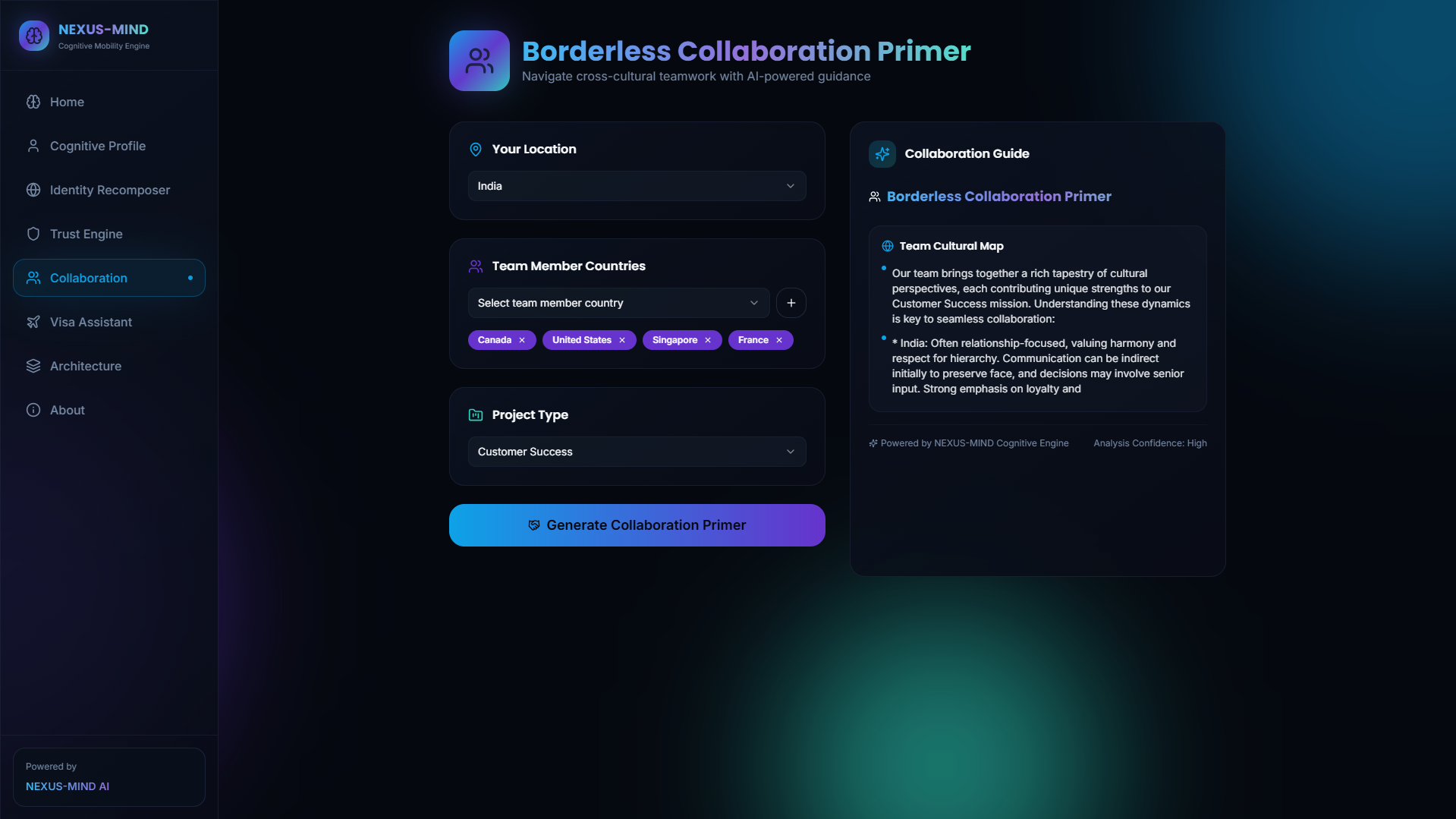
Trust resets every time geography changes.
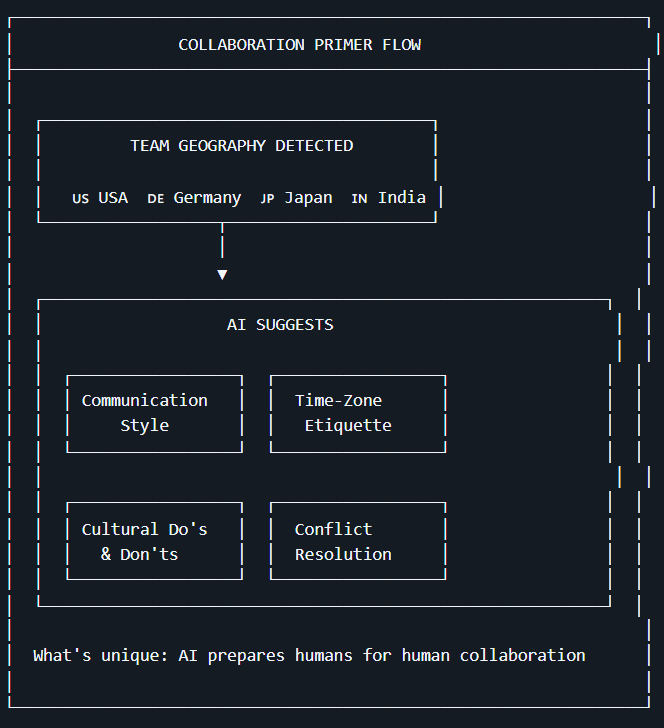
The deeper failure is cognitive. Human intent, identity, and trust are treated as static data, even though in reality they are dynamic mental states that evolve with context.
This realization led to NEXUS-MIND — a deliberate attempt to rethink global mobility as a cognitive systems problem, not a documentation, compliance, or translation problem.
What This Project Is
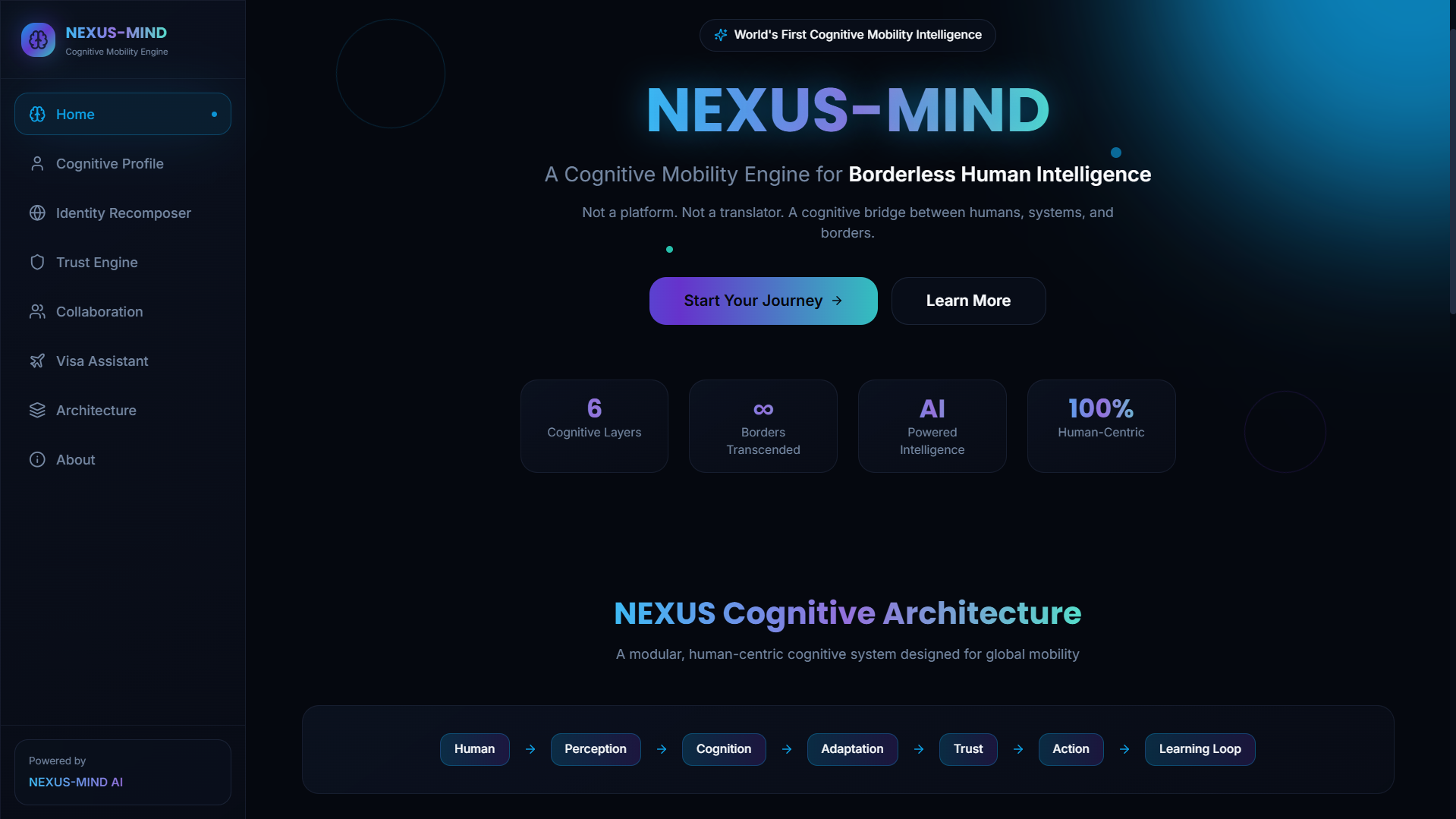
NEXUS-MIND introduces Cognitive Mobility Intelligence (CMI) — a new class of AI systems designed to understand, preserve, and adapt a human’s intent, identity, and trust across cultural, linguistic, and geopolitical boundaries, without requiring humans to change who they fundamentally are.
This project is not:
- A translator
- A resume optimizer
- A chatbot
- A credential verification platform
This project is:
- Cognition-aware mobility intelligence
- Intent-preserving identity transformation
- Explainable, non-credential-centric trust modeling
- Continuous alignment between human cognition and global contexts
NEXUS-MIND does not optimize documents. It models cognition.
How It Works — Cognitive Architecture, Not Features
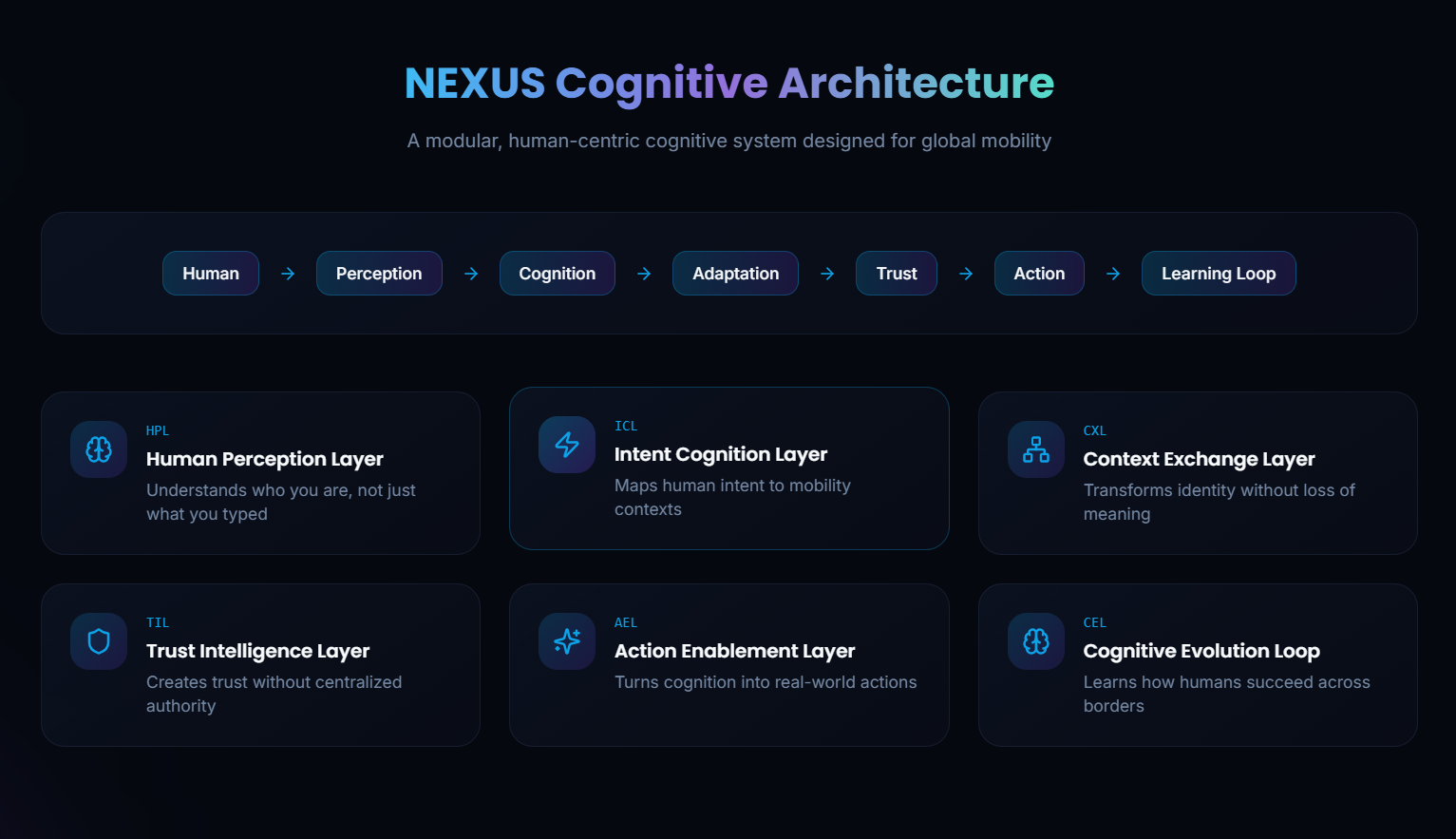
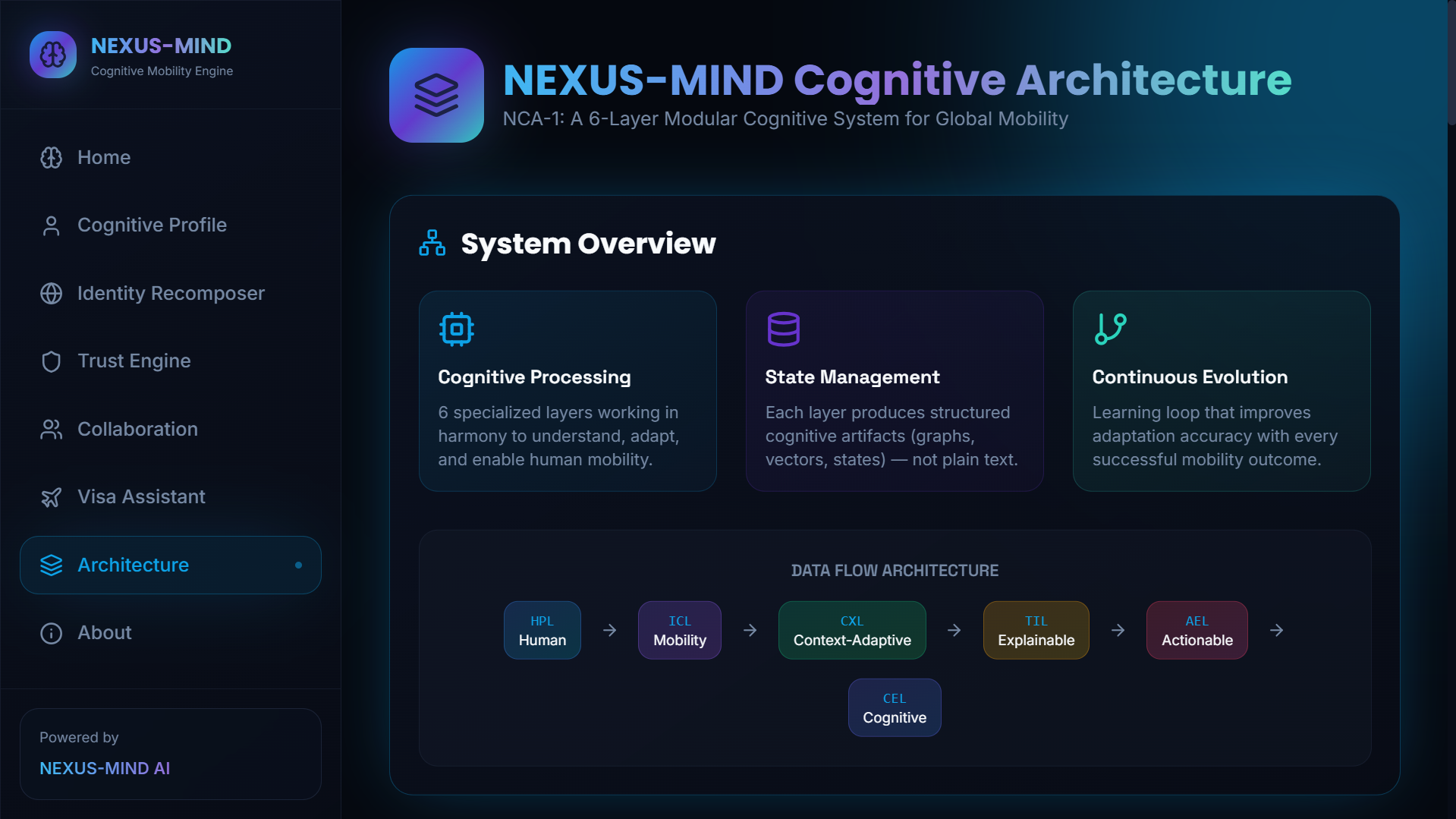
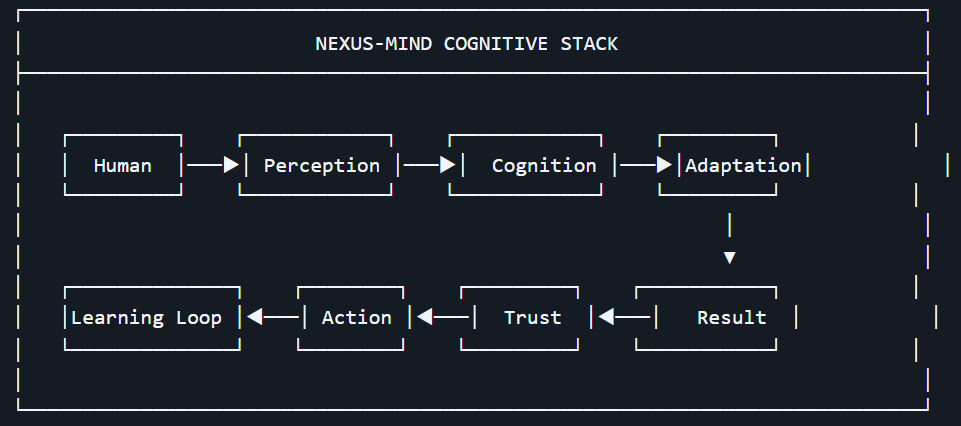
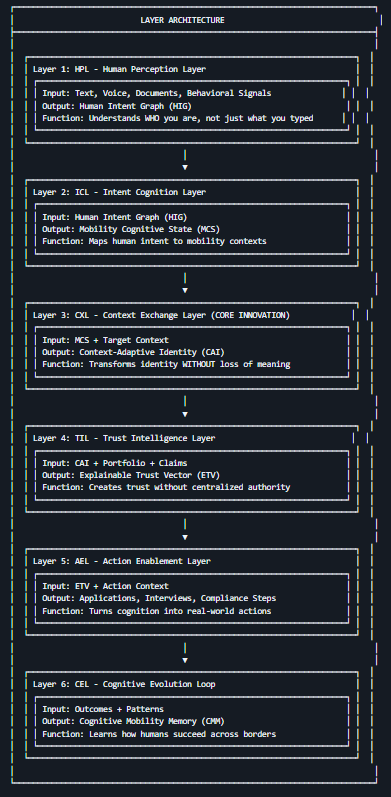
At its core, NEXUS-MIND is designed as a six-layer cognitive architecture, where each layer represents a distinct and non-mergeable cognitive function.
These layers are computational primitives, not UI features.
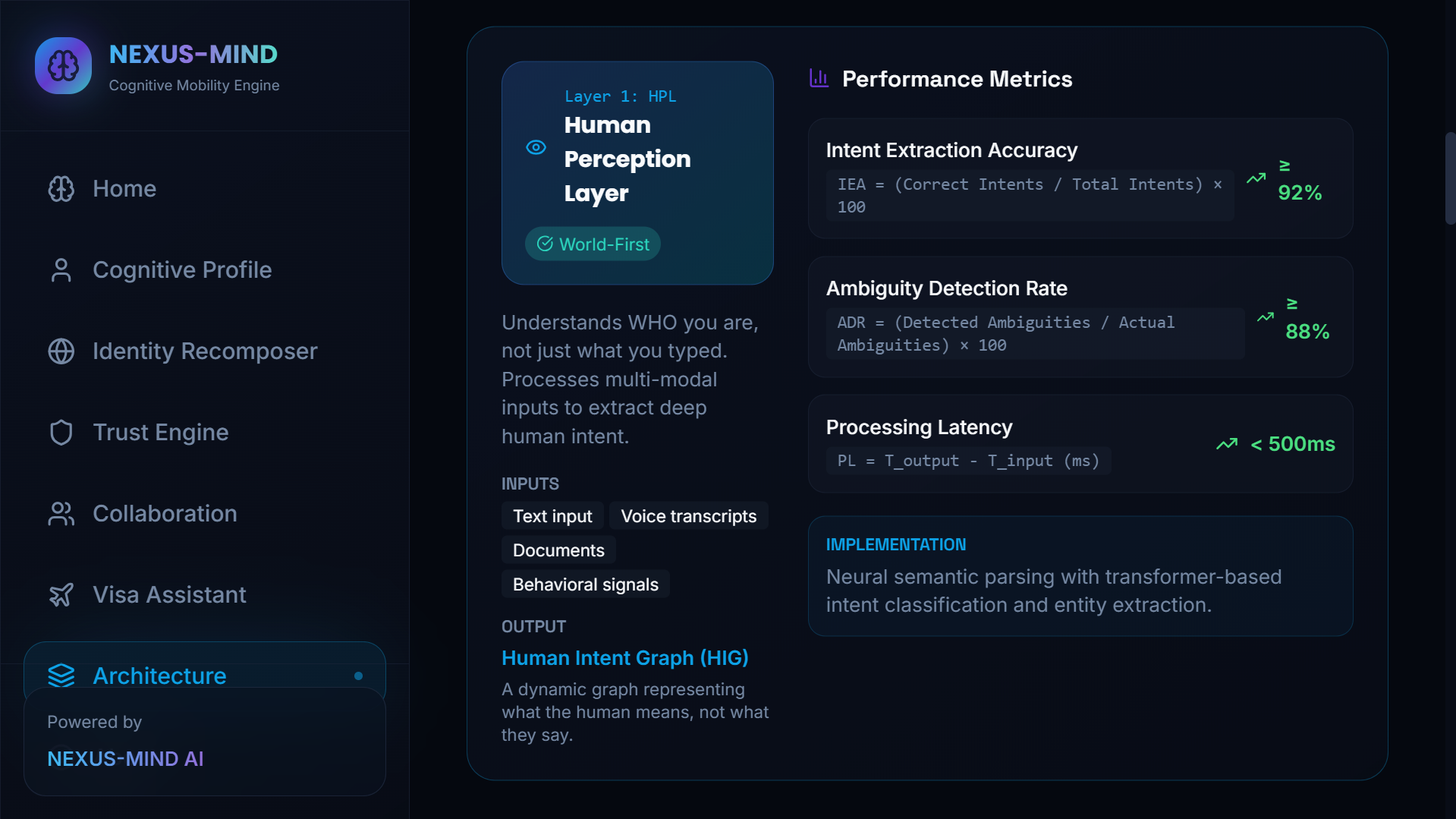
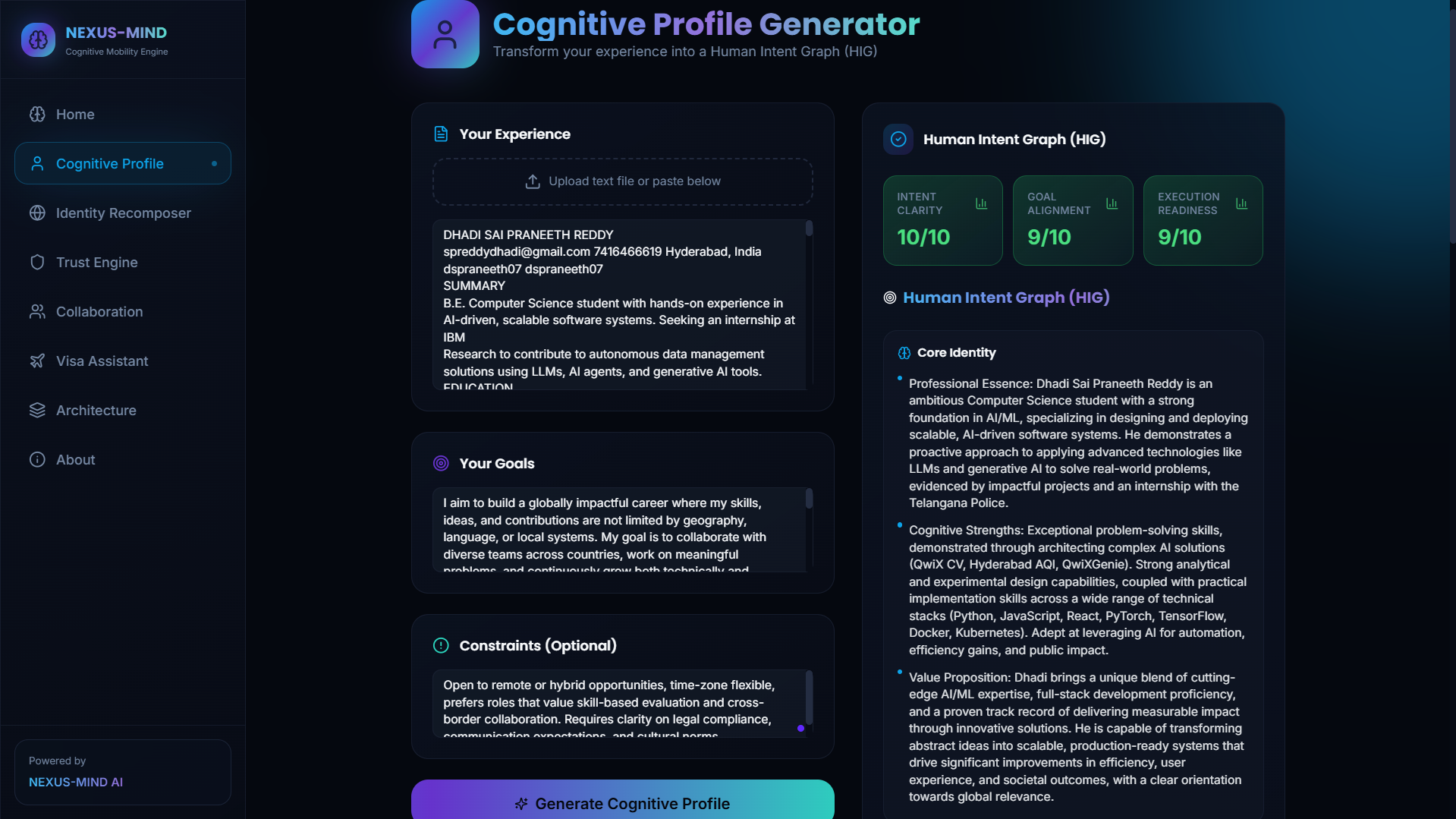
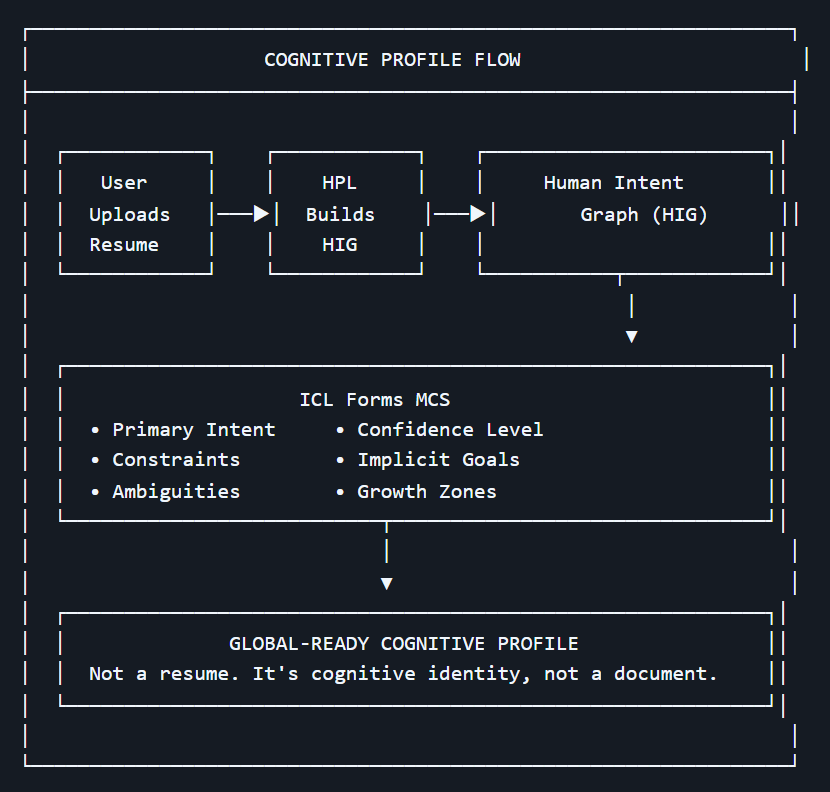
1. Human Perception Layer (HPL)
Interprets who the human is, not just what they typed.
It produces a Human Intent Graph (HIG) — a graph-based representation of intent with uncertainty, confidence, constraints, and implicit goals.
2. Intent Cognition Layer (ICL)
Reasons over intent rather than applying rules.
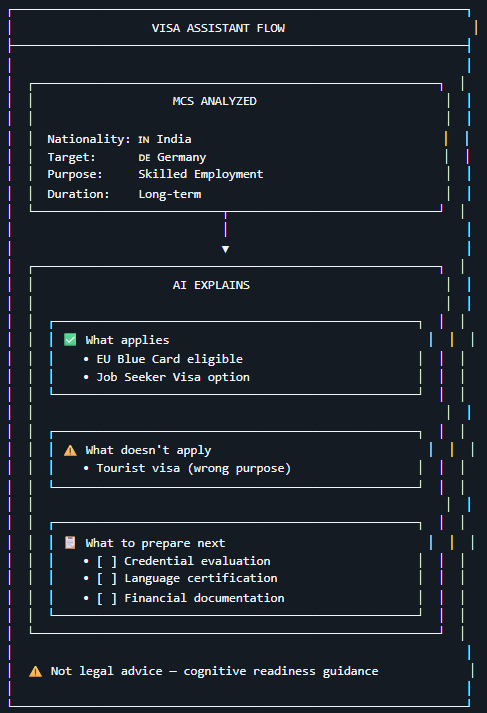
It converts the HIG into a Mobility Cognitive State (MCS) — a readiness snapshot that reflects how prepared a human is for a given mobility context.
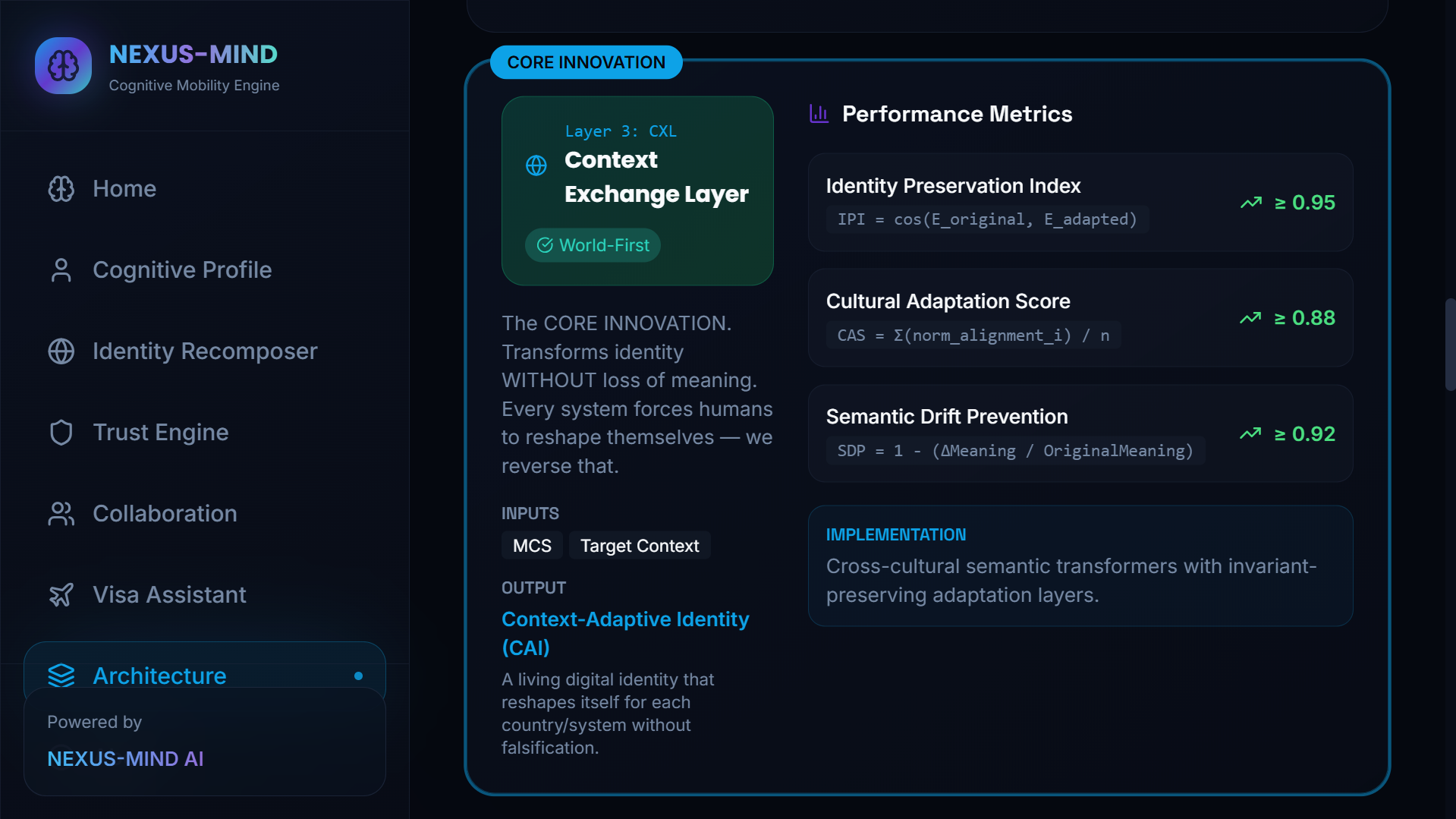
3. Context Exchange Layer (CXL) — Core Innovation
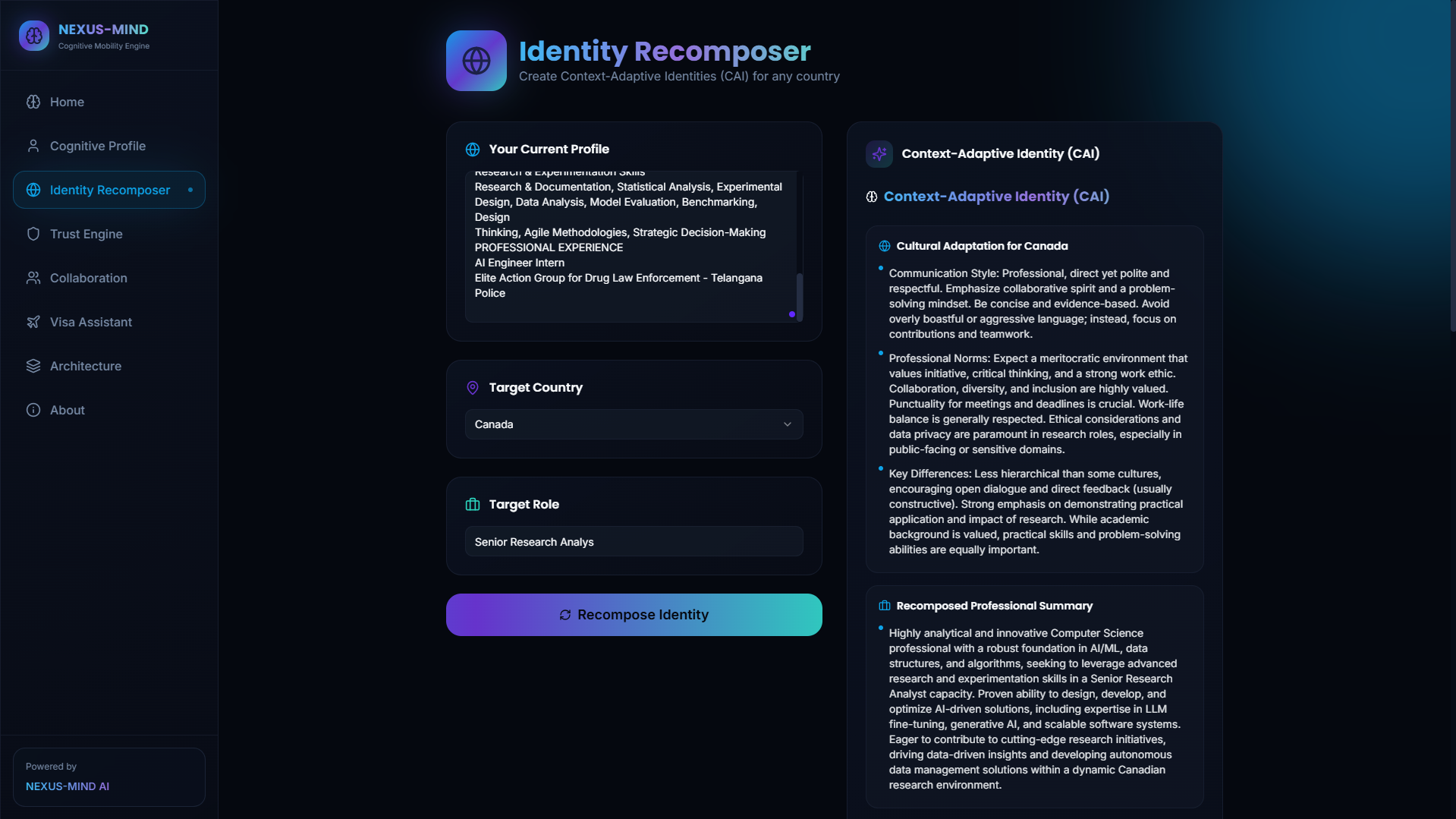
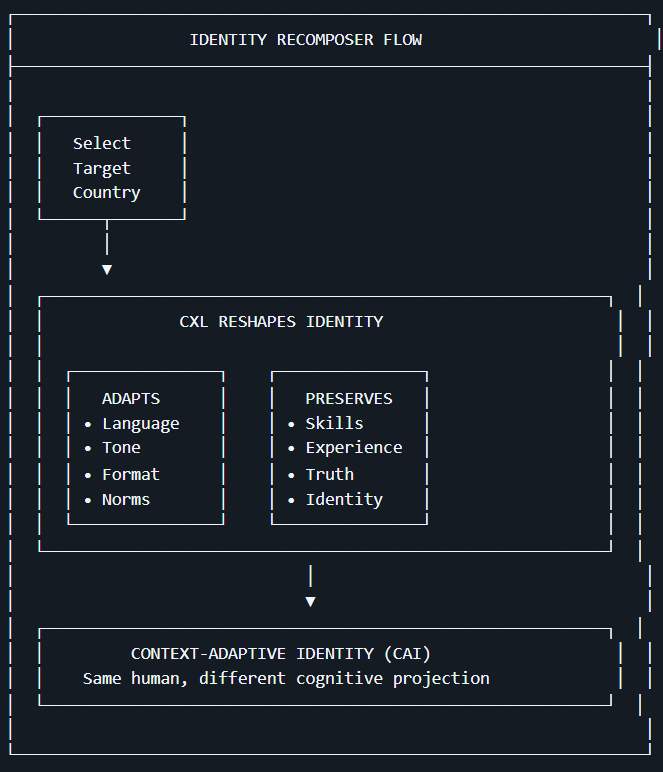
Transforms identity without loss of meaning.
It generates a Context-Adaptive Identity (CAI) by preserving invariant human traits (skills, experience, truth) while adapting cultural expression, norms, and framing.
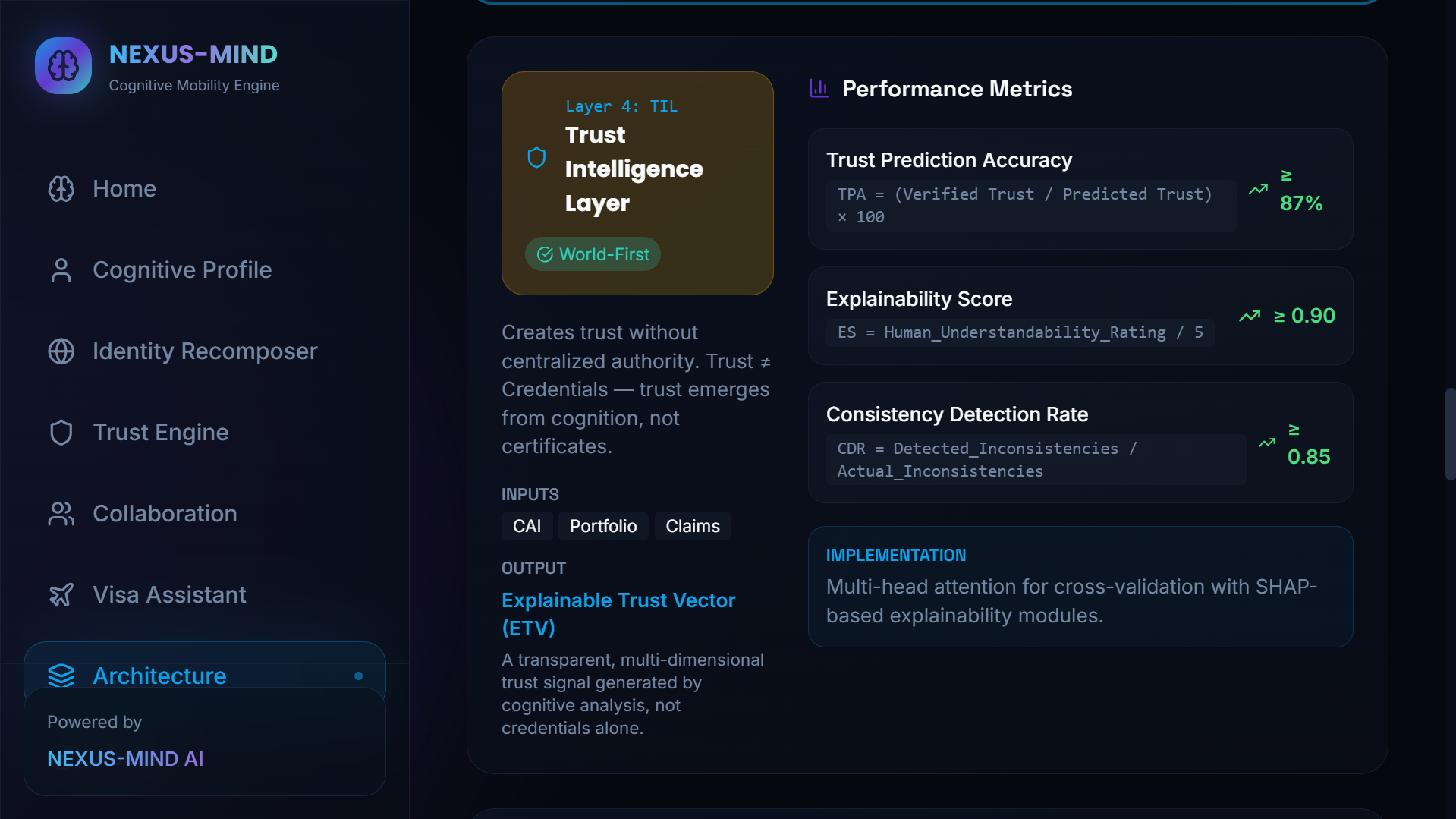
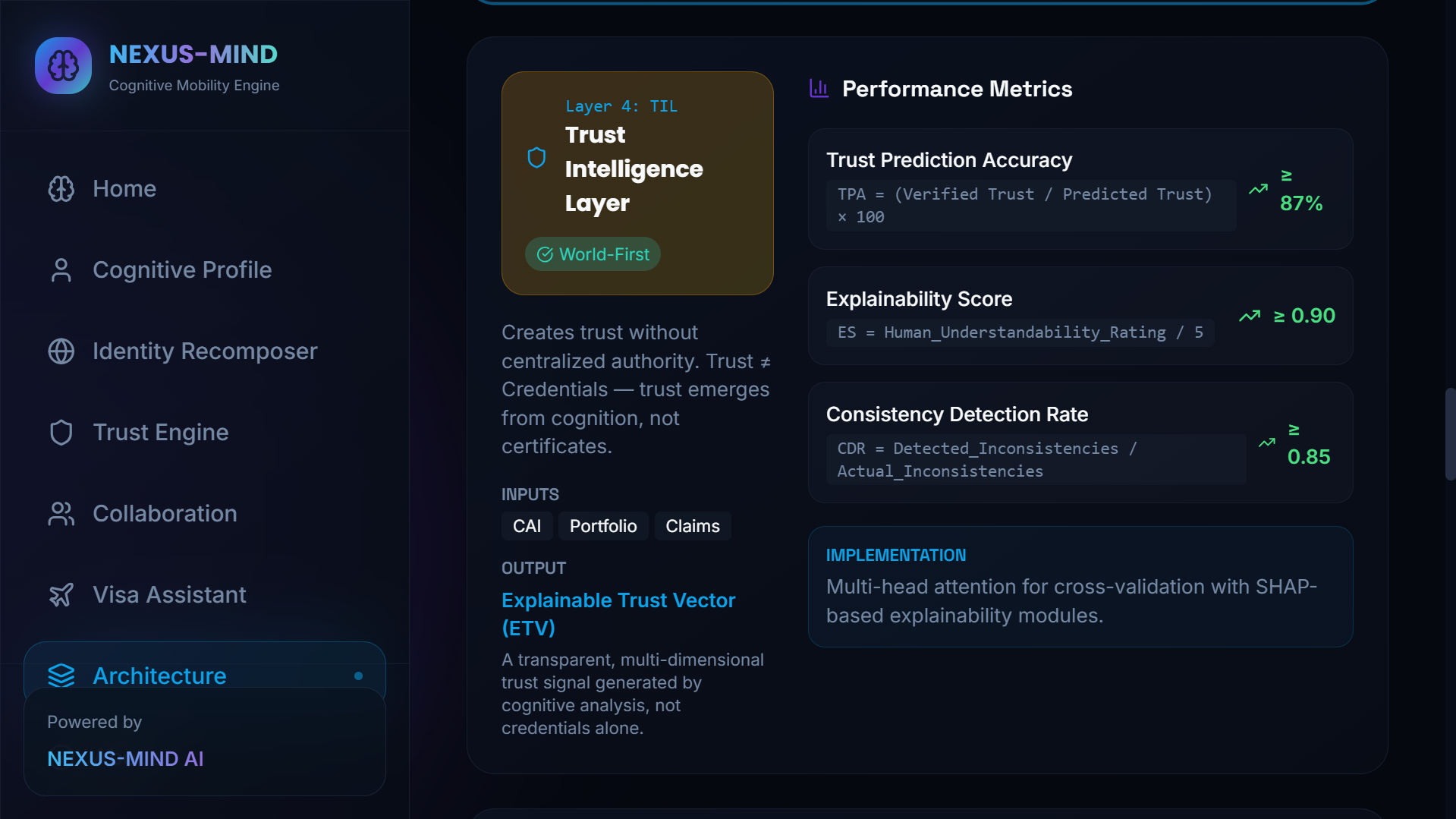
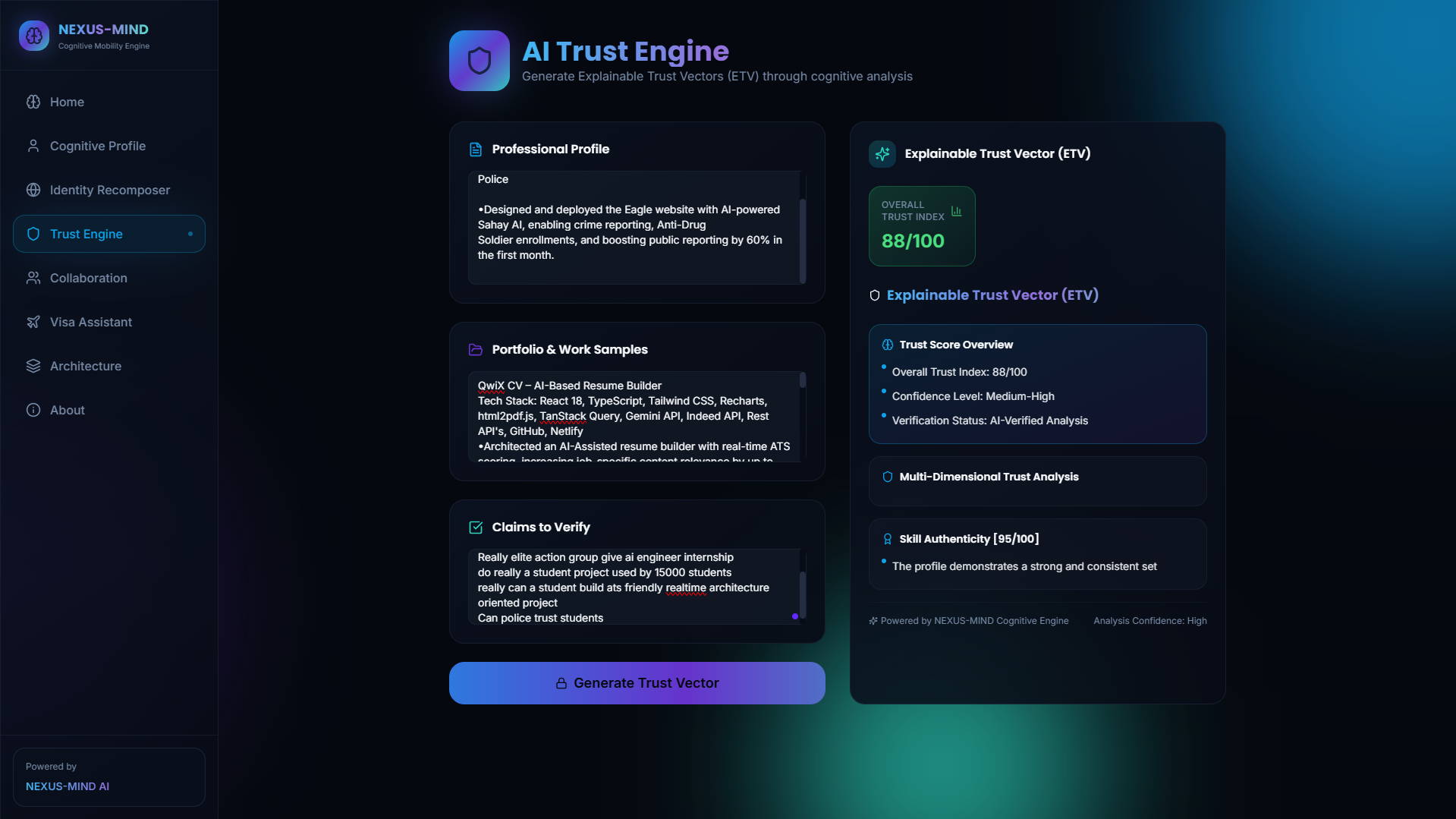
4. Trust Intelligence Layer (TIL)
Models trust without centralized authorities or credentials.
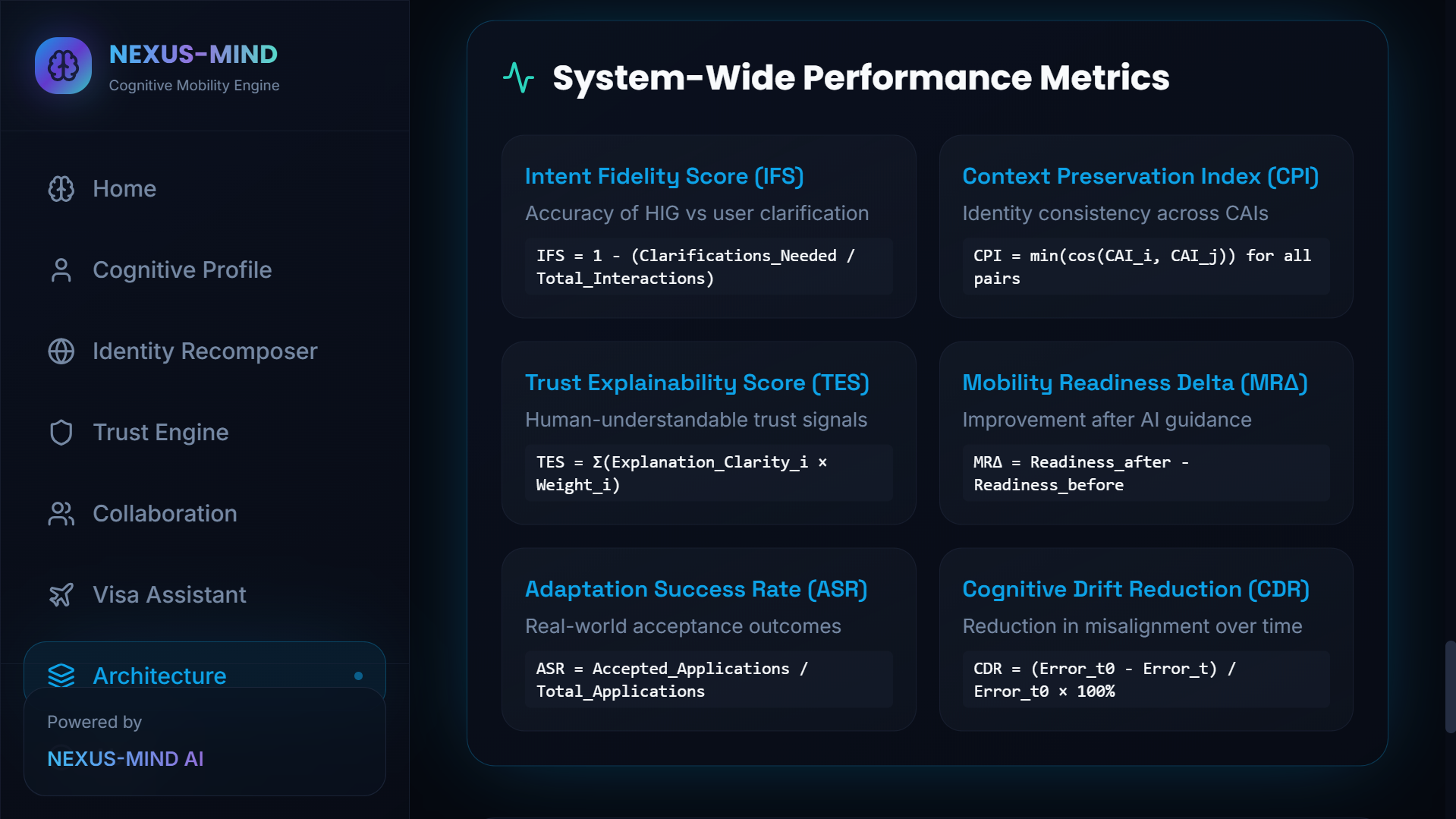
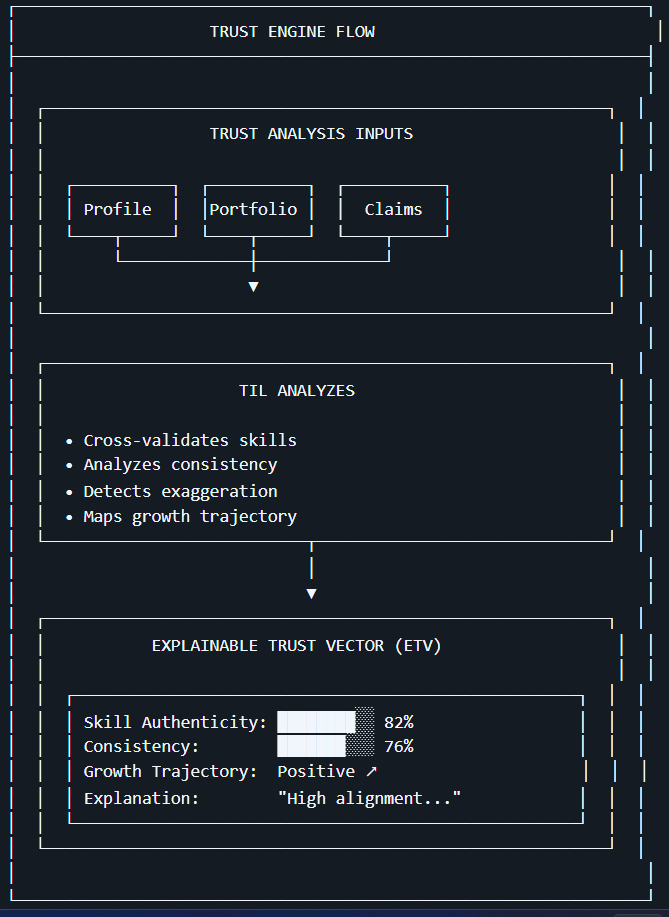
It outputs an Explainable Trust Vector (ETV) derived from cognitive consistency, cross-validation, and trajectory analysis rather than certificates.
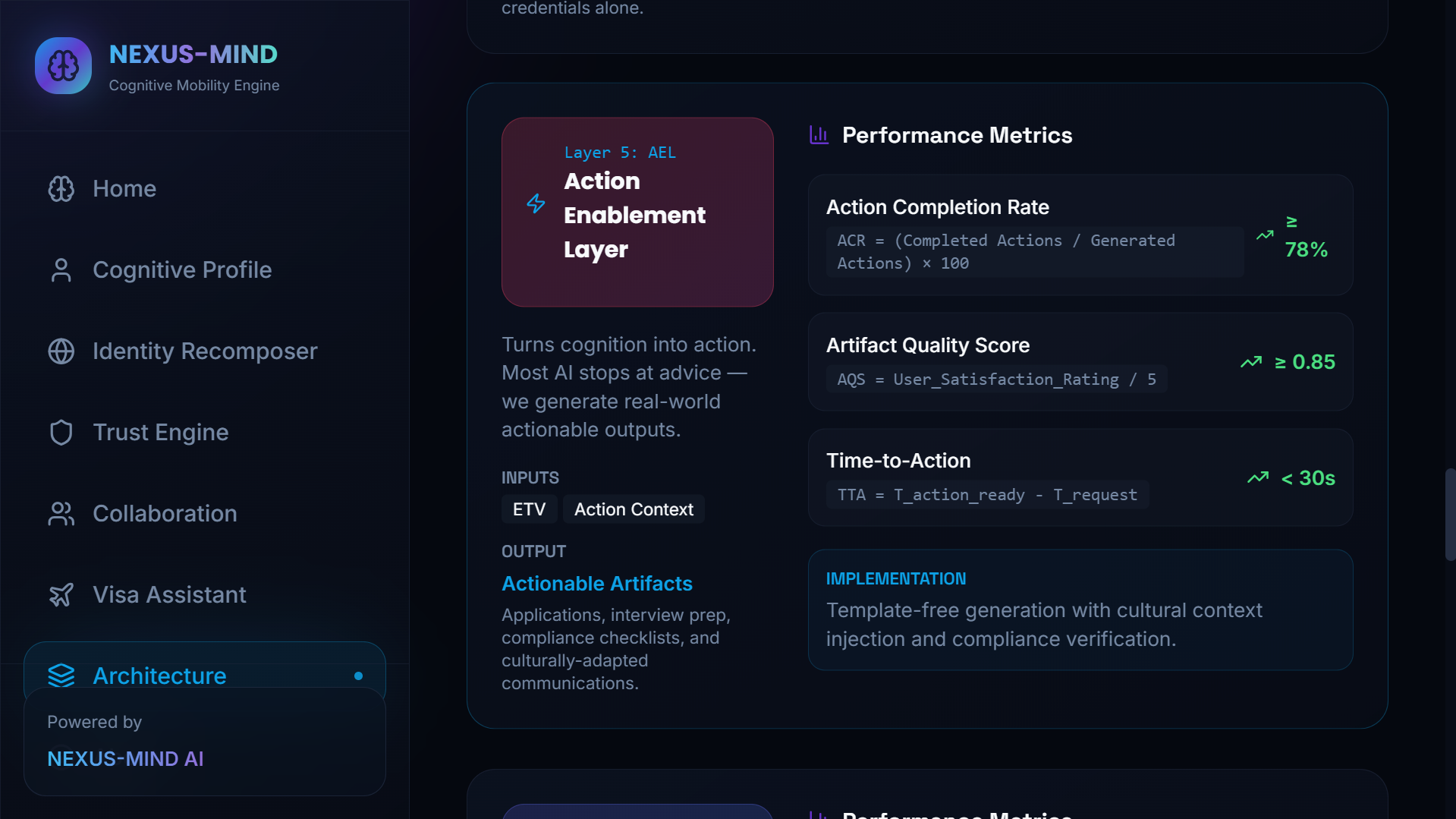
5. Action Enablement Layer (AEL)
Converts cognitive understanding into real-world actions such as applications, interview preparation, and compliance steps.
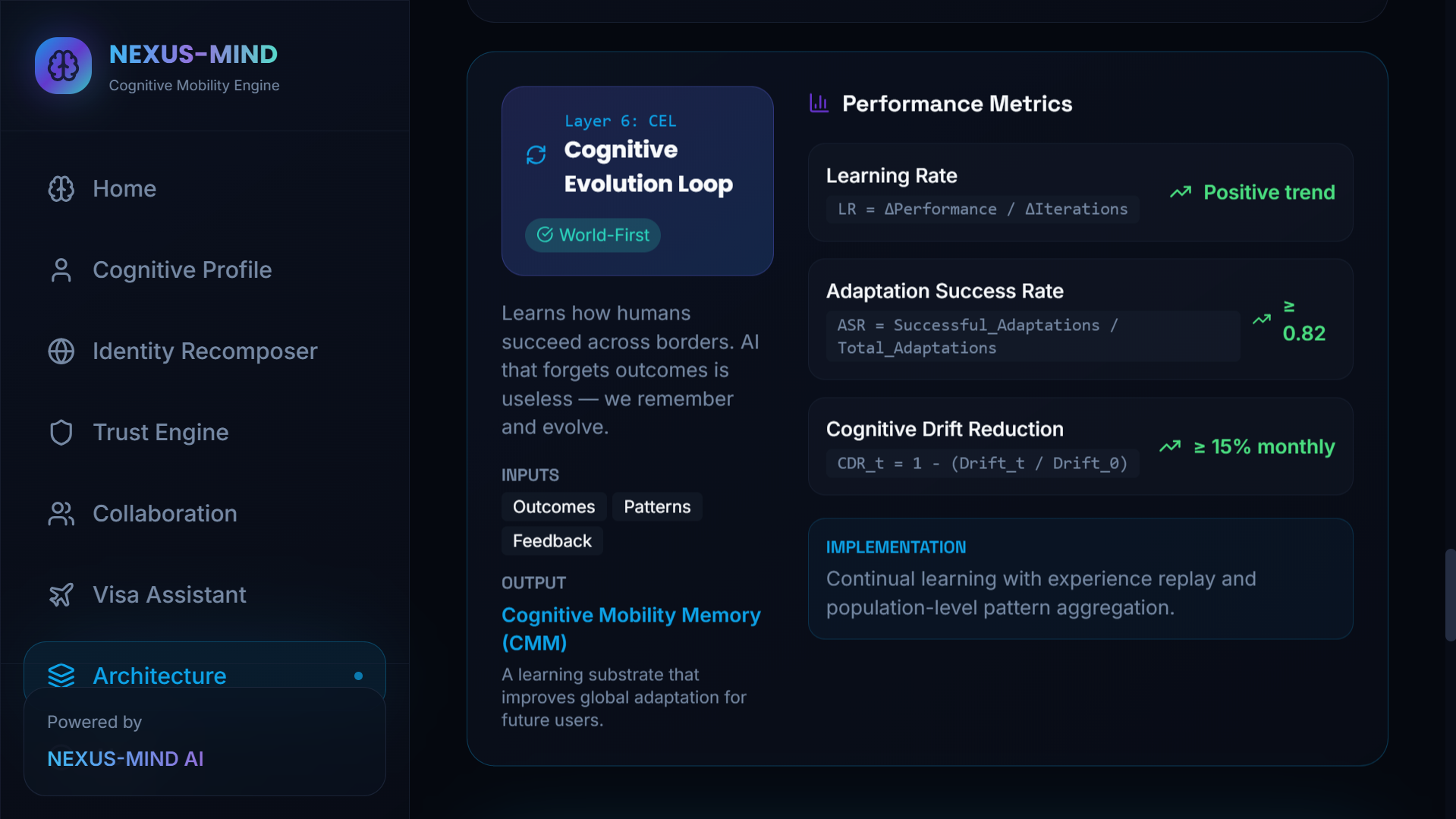
6. Cognitive Evolution Loop (CEL)
Learns from outcomes at a population level, forming Cognitive Mobility Memory (CMM) that captures how humans succeed across borders over time.
These layers cannot be collapsed: perception ≠ cognition ≠ adaptation ≠ trust ≠ action ≠ learning.
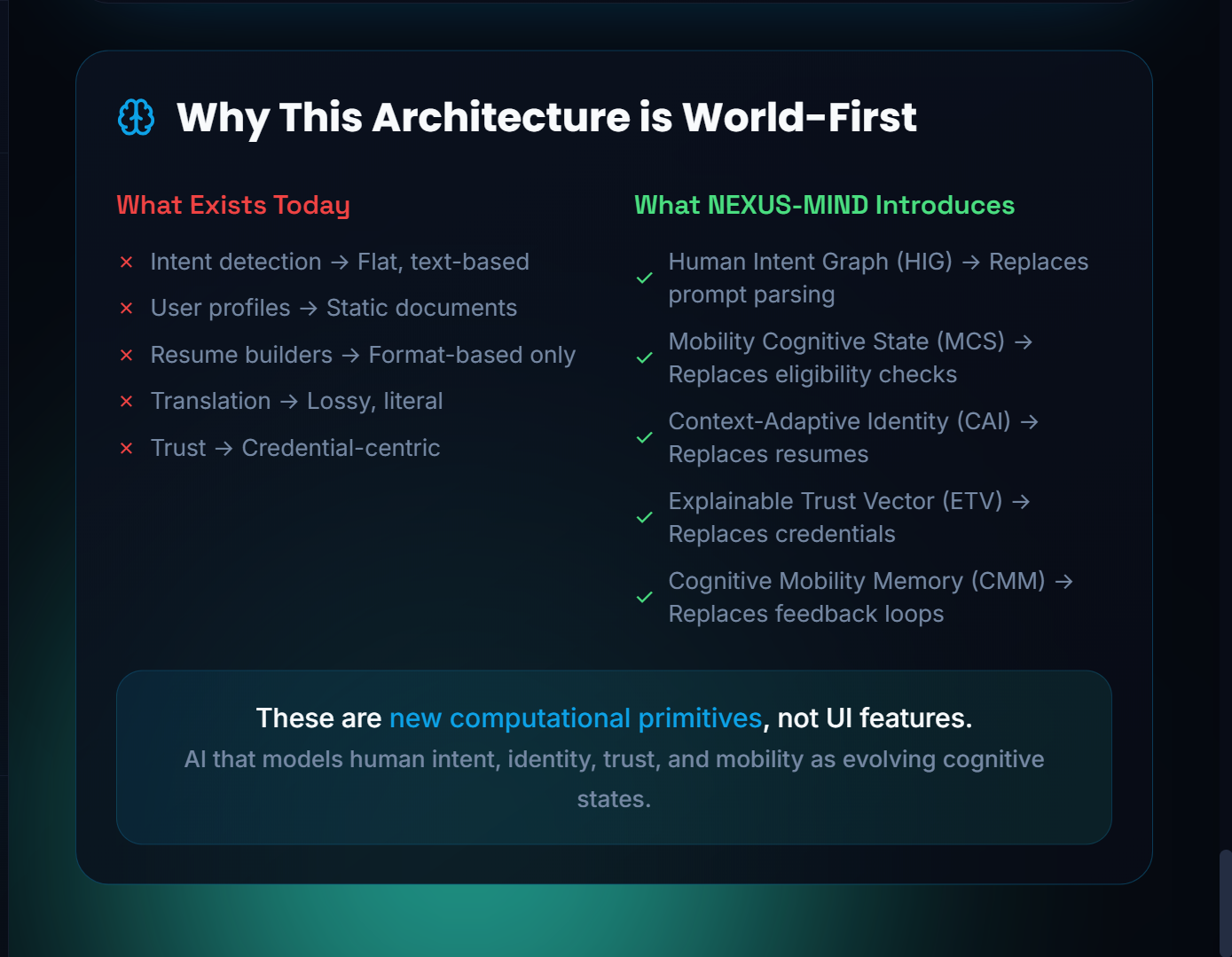
Why This Is World-First
NEXUS-MIND introduces abstractions that are not formalized in existing AI systems:
- Intent modeled as a graph, not free text
- Identity represented as a context-adaptive cognitive projection, not a resume
- Trust expressed as an explainable vector, not credential authority
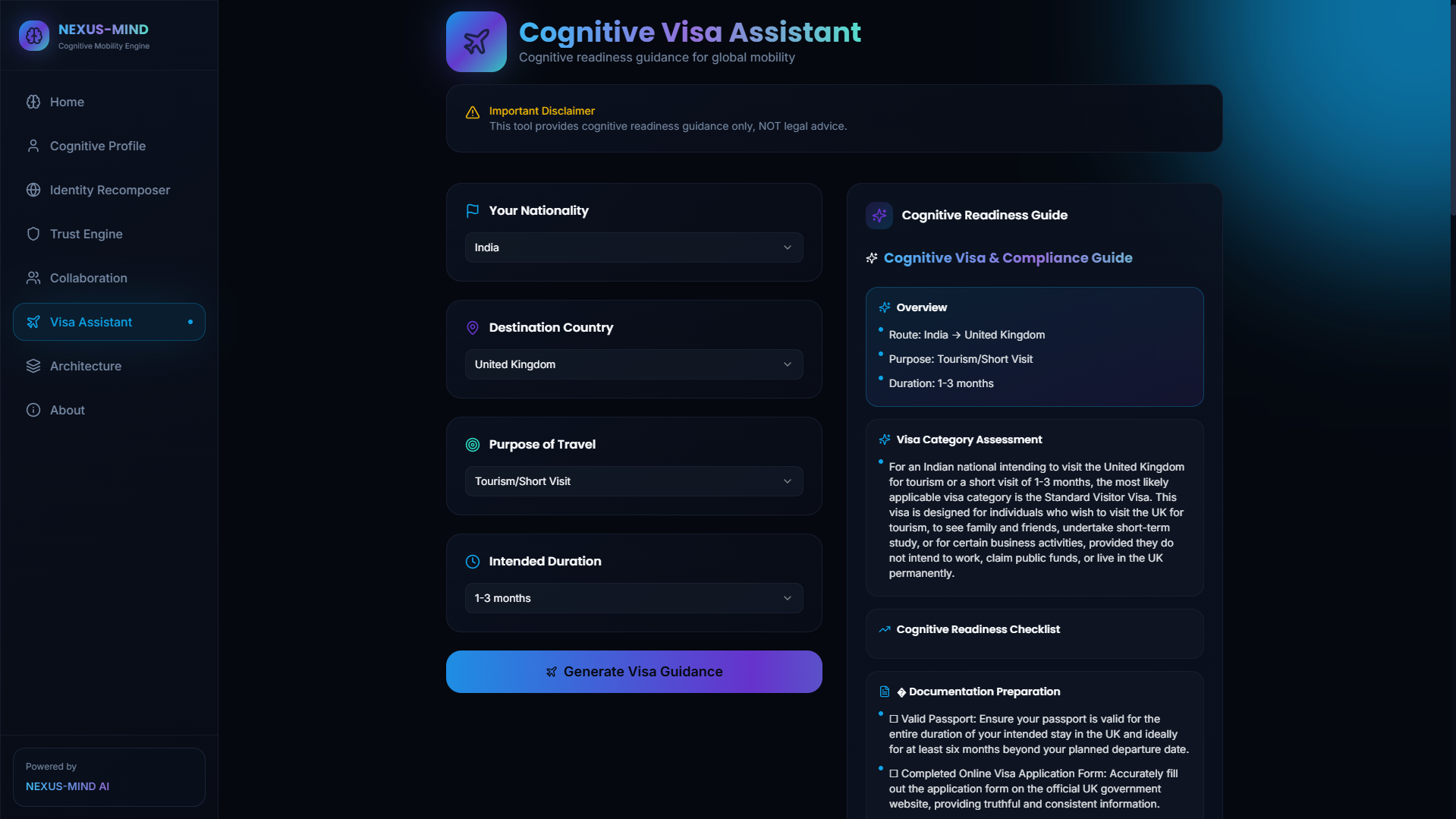
- Mobility framed as cognitive readiness, not eligibility rules
- Learning performed at population-level mobility patterns, not personalization alone
This is not feature-level innovation.
It is abstraction-level innovation.
How It Was Implemented
The system is implemented as a modular cognitive pipeline, where each layer produces structured cognitive artifacts consumed by the next layer.
- The frontend visualizes cognitive states, not chat conversations
- The backend treats AI models as reasoning substrates, not conversational agents
- Outputs are structured, validated, and state-aware
- The architecture is intentionally model-agnostic and extensible
Large language models (including Google Gemini) are used strictly as cognitive processors to operationalize the architecture.
The novelty lies in what is being modeled, not in the choice of model.
Challenges Faced
- Designing intent, identity, and trust as stateful cognitive entities
- Preventing identity distortion during cross-cultural adaptation
- Making trust explainable, transparent, and debuggable
- Maintaining architectural ambition without over-claiming capabilities
Why This Is Not AGI (Yet)
NEXUS-MIND is a domain-specific cognitive system, not Artificial General Intelligence.
It:
- Requires human oversight
- Focuses exclusively on global mobility
- Does not claim autonomy, consciousness, or sentience
However, it demonstrates a practical pathway toward cognition-first AI systems, where intelligence emerges from structured cognitive layers rather than prompts.
What I Learned
- The future of AI lies in new cognitive abstractions, not larger models
- Intent, identity, and trust are computational problems
- Human-centric AI must preserve truth, agency, and explainability
NEXUS-MIND represents an experimental but concrete step toward that future.
Built With
- css3
- explainable-ai
- extreme-motion
- framermotion
- gemini
- hyperon
- metta
- modularcognitivearchitecture
- promptcloud
- python
- react
- responsible-ai
- shadcn-ui
- singularitynet
- tailwindcss
- three.js
- typescript
- vite

Log in or sign up for Devpost to join the conversation.