-
-
#Home page
-
#Sign up
-
#Community page
-
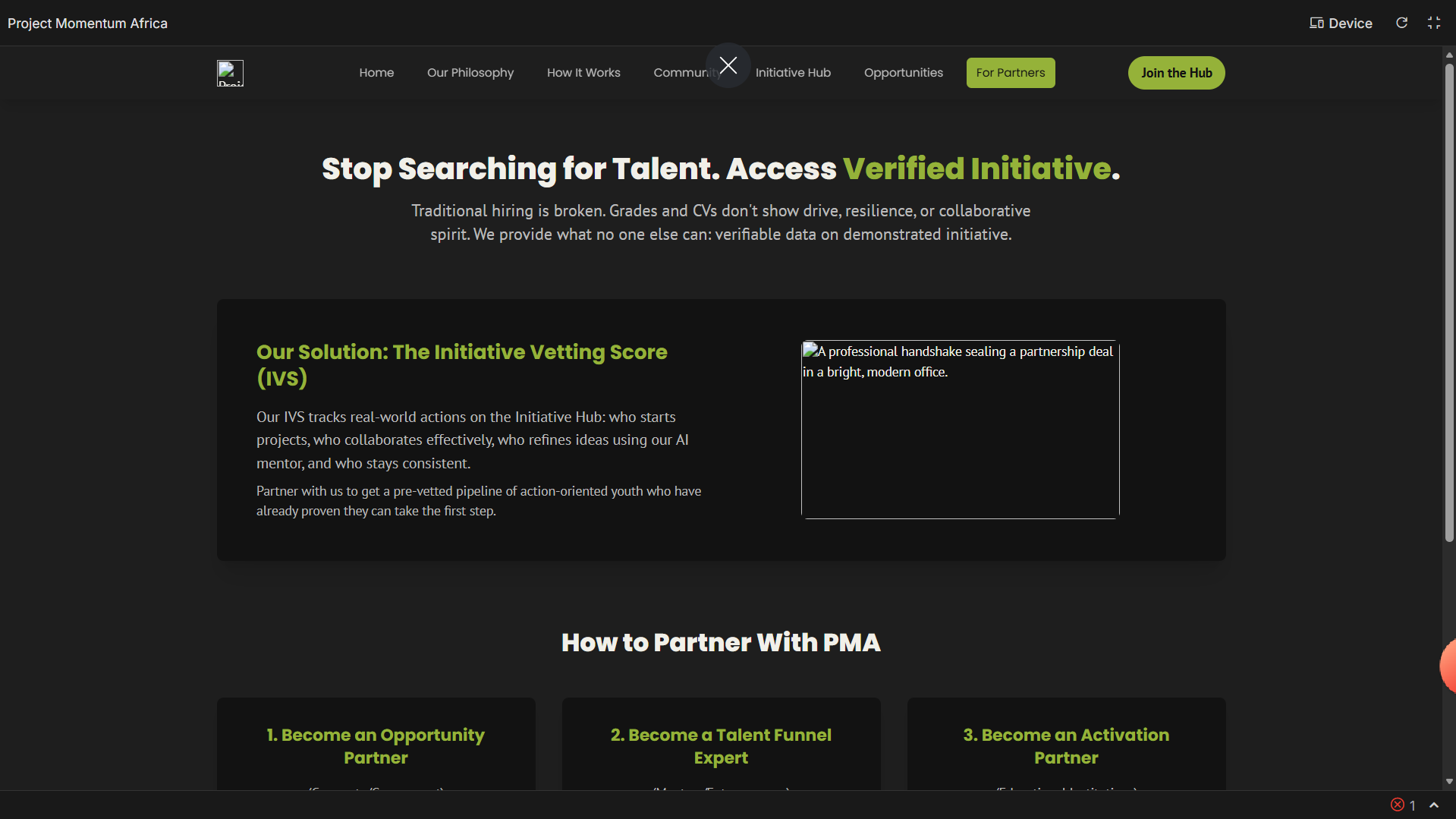
#For partners
-
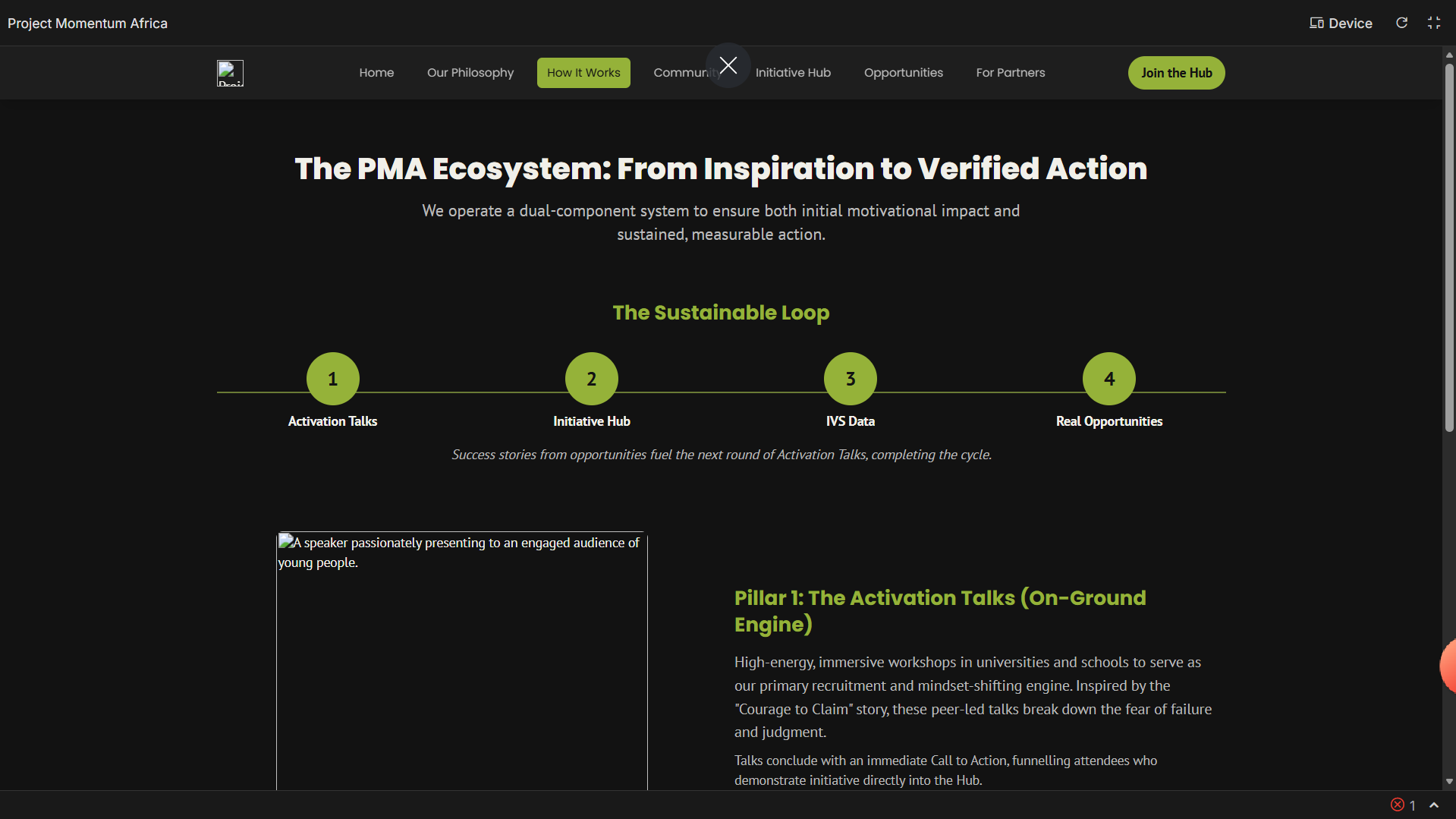
#How it works
-
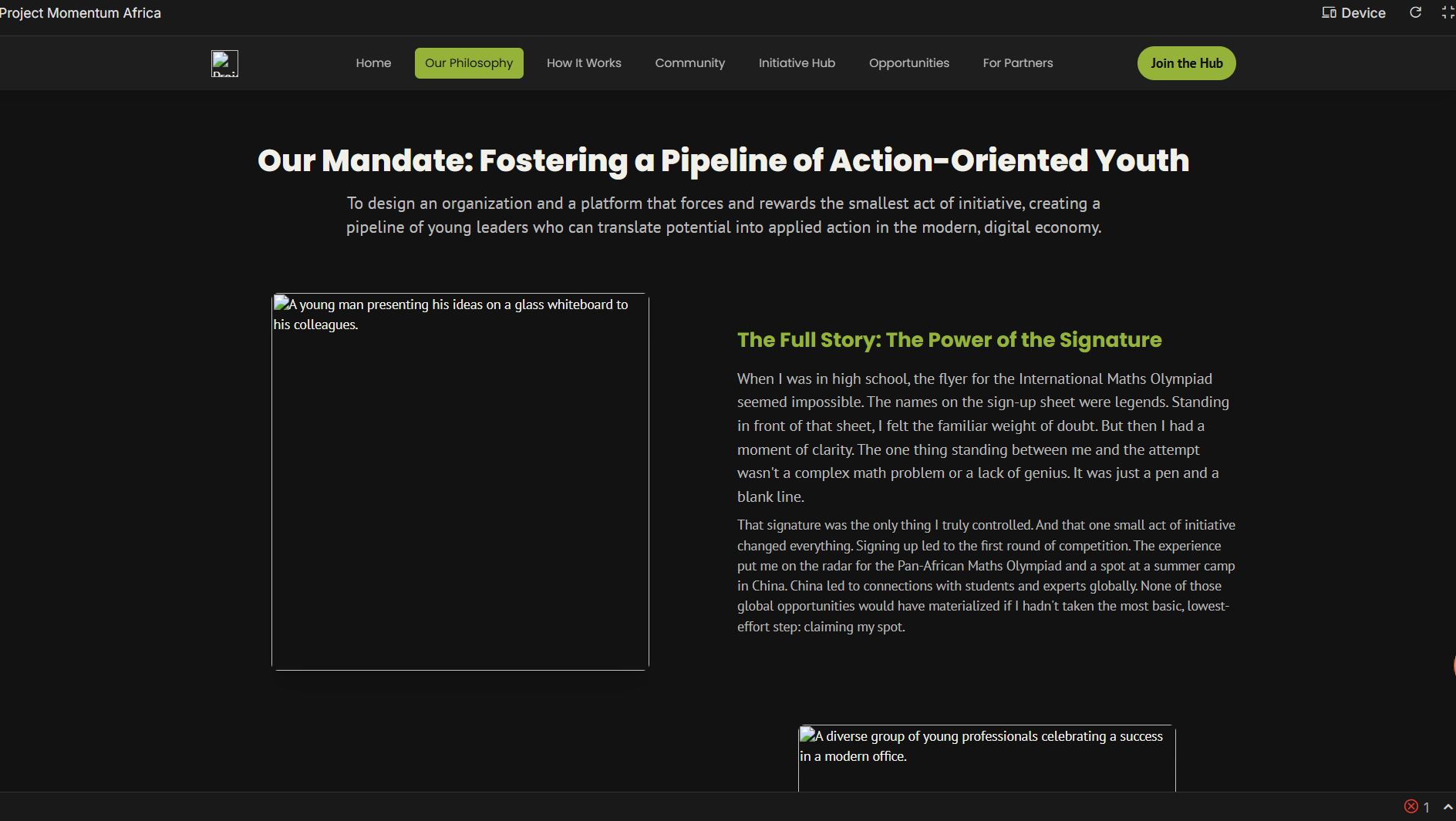
#Philosophy page
The Power of the Signature: Your First Act of Initiative
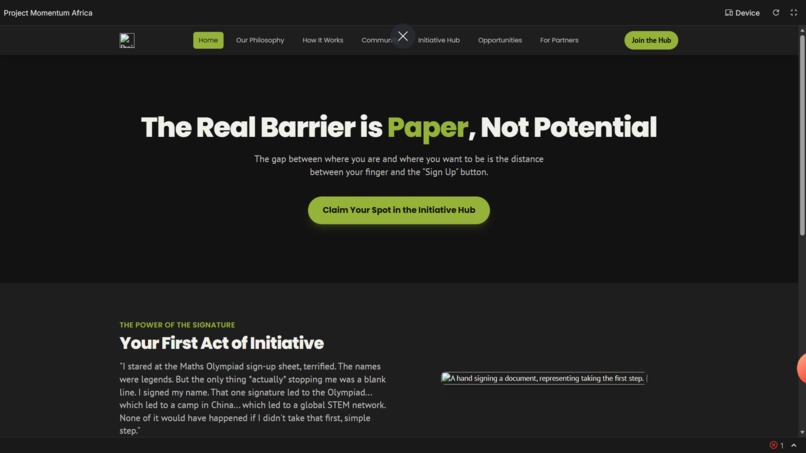
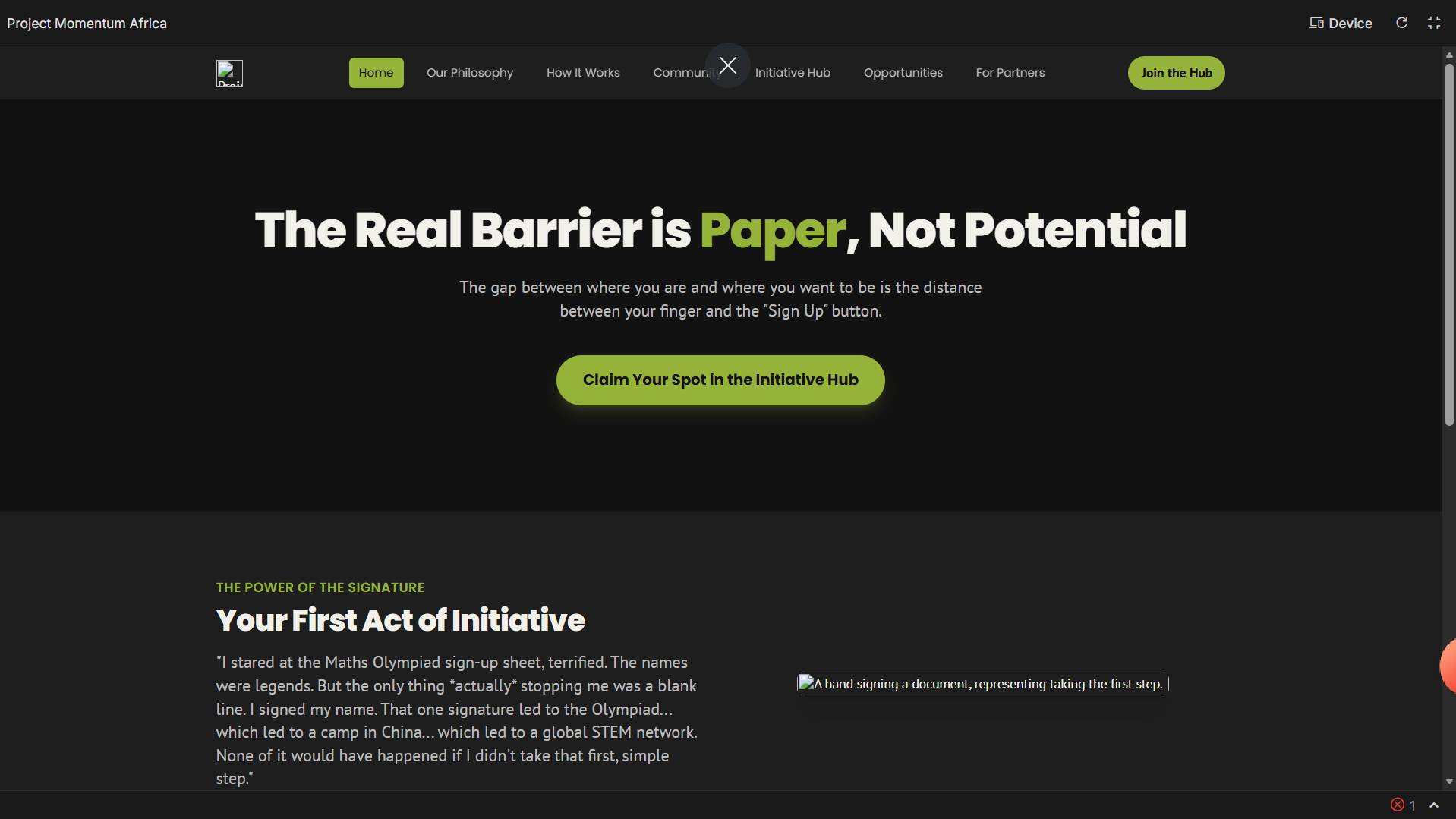
The Real Barrier is Paper, Not Potential
When I was in high school, the flyer for the International Maths Olympiad seemed impossible. The names on the sign-up sheet were legends—seniors who seemed born with a calculator in hand. Standing in front of that sheet, I felt the familiar weight of doubt and the fear of embarrassing myself.
The competition was terrifying. The effort required was immense. The stakes felt too high.
But then I had a moment of clarity. I looked at the sheet and realized that the one thing standing between me and the attempt wasn't a complex math problem or a lack of genius. It was just a pen and a blank line.
The Chain Reaction
I didn't conquer the fear; I simply overpowered it with a single, simple action: I wrote my name down.
That signature was the only thing I truly controlled. And that one small act of initiative changed everything:
The Olympiad: Signing up led to the first round of competition.
The Camp: The competitive experience, regardless of the final score, put me on the radar for the Pan-African Maths Olympiad and, later, a spot at the International Summer Camp in China.
The Network: China led to connections with students and experts globally, opening doors to STEM opportunities that weren't even listed on the initial sign-up sheet.
None of those global opportunities would have materialized if I hadn't taken the most basic, lowest-effort step: claiming my spot.
The Lesson for Project Momentum Africa
This is the hidden key to success we want to share with every single one of you:
The gap between where you are and where you want to be is not a lack of resources, skill, or money. It is the distance between your finger and the "Sign Up" button.
Your first, most crucial act of entrepreneurship is initiative. Forget the fear of failure, forget the competition—just take the pen (or hit the button) and claim your course.
The Initiative Hub is the new sign-up sheet. What name will you write today?
Project Momentum Africa: Initiative and Empowerment Project Momentum Africa (PMA) is a dual-component youth empowerment project focused on solving the mindset barrier to opportunity among African youth. Its core philosophy is that the largest obstacle to success is not a lack of resources or talent, but the failure to take the first, smallest act of initiative—the metaphorical "signature on the sign-up sheet."
I. Genesis and Core Philosophy PMA's founding methodology is derived directly from the founder's experience with high-stakes international competitions (like the Maths Olympiads). The core lesson was that all subsequent global opportunities—the summer camp, the network, the STEM doors—flowed from a single, low-effort act of claiming a spot.
Problem Definition: The fundamental challenge facing African youth is not a lack of opportunities, but a widespread lack of initiative, self-belief, and the inability to identify, claim, and commit to available opportunities. Many talented students know how to study but not how to translate potential into applied action in the modern, digital economy.
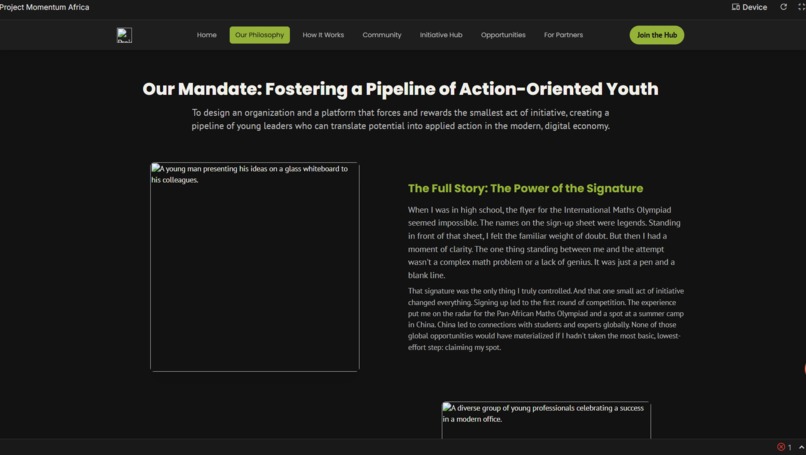
Mandate: Design an organization and a platform that forces and rewards the smallest act of initiative, creating a pipeline of action-oriented youth.
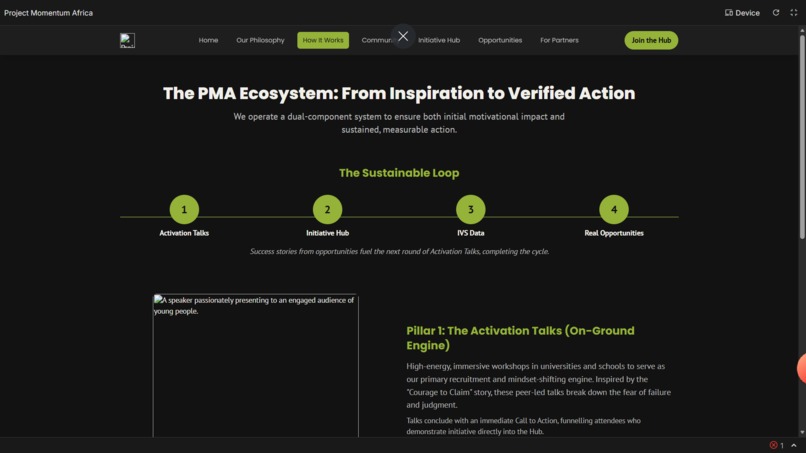
II. Methodology: The Dual-Component System PMA operates a dual-component hybrid empowerment ecosystem to ensure both initial motivational impact (mindset) and sustained, measurable action (data).
- Pillar 1: The Activation Talks (On-Ground Engine) The Activation Talks are high-energy, immersive workshops hosted in universities and secondary schools, serving as the primary recruitment and mindset-shifting engine.
Design Focus: High-energy, peer-led workshops to break down the fear of failure and judgment, drawing inspiration from the founder's "Courage to Claim" story.
Methodology: Talks conclude with an immediate Call to Action (CTA), funnelling attendees to sign up for the Initiative Hub. This ensures only those who demonstrate initiative enter the system.
Content: Focuses on the mentality of taking the first step, overcoming the fear of the sign-up sheet, personal storytelling, practical skills (networking, financial literacy), and leveraging digital opportunities.
Talent Funnel: Students who demonstrate commitment are identified and referred to vetted, external Experts (mentors, entrepreneurs) for deep, specialized mentorship and real-world opportunities.
- Pillar 2: The Initiative Hub (Digital Vetting Platform) The Initiative Hub is a dedicated, youth-only, secure digital space (website and mobile app) that serves as the quantifiable core of the organization.
Design Requirement: It is architected to be a peer-only, non-judgmental space (using pseudonymity and strict moderation) where youth can share anxieties, challenges, and raw ideas without the pressure of elders or formal authority figures, fostering genuine vulnerability and collaboration.
Key Features:
Idea Incubation Channels: Dedicated forums for posting and collaborating on project ideas, encouraging the transition from discussion to structured action (e.g., community service, freelance micro-projects).
The AI Mentor Integration: Utilizes an AI Refiner (e.g., powered by Google's Gemini API) instructed to act as a supportive thought partner, turning unstructured ideas into structured, actionable plans.
Life Tips & Resilience: A curated repository of user-generated and expert-vetted content on practical life skills, goal setting, and emotional resilience.
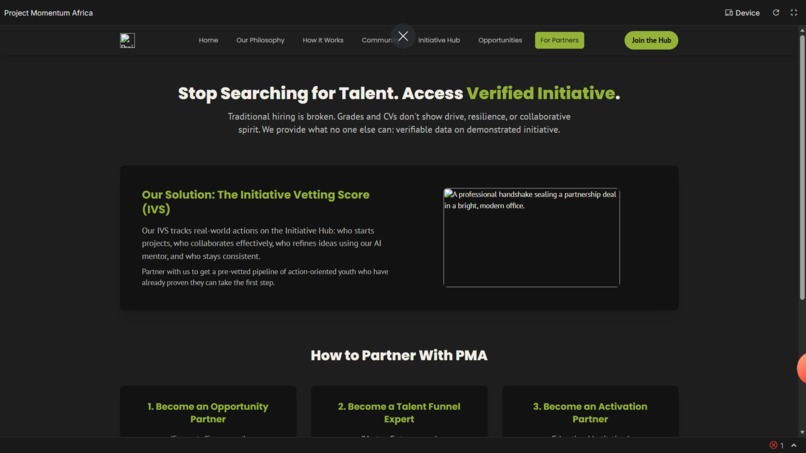
III. The Mechanism: Vetting by Initiative (IVS) The Initiative Hub generates data used to create the Initiative Vetting Score (IVS), which is the organization's policy instrument for securing reserved opportunities.
IVS Creation: The IVS tracks measurable actions on the Hub, such as initiating a new project, collaborating with users, submitting refined ideas to the AI Refiner, and consistency of engagement.
Policy Mandate: This verifiable data on demonstrated drive, not just grades, allows PMA to negotiate for Dedicated Opportunity Streams (DOS) from government and corporate partners (e.g., the Government of Botswana).
Sustainable Loop: The Talks fuel the Hub with motivated youth; the Hub quantifies and refines their drive; the IVS data secures reserved opportunities (DOS); and the resulting success stories are used to fuel the next round of Activation Talks.
The Target Impact is to create action-oriented African youth who shift their mindset, gain agency, and translate talk into tangible projects that lead to real-world income and career paths.
Challenges we ran into • The Technical Cliff: Our team's biggest hurdle was a massive gap in technical experience. With one founder having only minor HTML education and the other none whatsoever, the "learning to code from scratch" path was impossible given the hackathon's time limit. We had a complex, data-driven, multi-platform vision but no traditional way to build it. • Learning to "Vibe Code" with AI: Instead of giving up, we were forced to pioneer a new workflow. We learned to "vibe code"—using Google's AI (Gemini) as our primary technical developer. This process was a challenge in itself. We had to learn how to translate our abstract, psychological project goals (like "build a non-judgmental space") into precise, logical, and effective prompts. Our challenge shifted from writing code to perfecting the art of articulation to guide our AI partner. • Designing for an Intangible: On top of this, our core problem isn't technical; it's psychological. Our greatest conceptual challenge was designing a system to solve an emotional barrier—the fear of failure. This led to our hardest problem: creating the Initiative Vetting Score (IVS). We had to figure out how to take abstract concepts like "drive," "resilience," and "collaboration" and turn them into verifiable, quantifiable data that a government or corporate partner would actually trust.
Accomplishments That We're Proud Of Our biggest accomplishment is that we personally lived the philosophy of Project Momentum Africa during this hackathon. We started with a massive skills gap-one teammate with minor HTML knowledge and the other with none. We faced our own "paralysis of initiative." Instead of giving up, we took the first step, and we are proud of proving our own model: that initiative, not pre-existing skill, is the real starting point. From that one act of initiative, we achieved: • We Built Our First-Ever Functional App: This entire platform, the Initiative Hub, was built by a team with no prior development experience. We are very proud to have moved from a zero knowledge base to a functional prototype. • Inventing a "Vibe Coding" Workflow: We learned how to collaborate with AI (Google's Gemini) as the main developer. Success wasn't about coding; it became mastering this deep skill of articulation, about being able to translate the complex, psychological vision into logical prompts that the AI could build from. • Designing a Full-Circle Sustainable Ecosystem: We didn't just build an app; we designed a system. We are proud to architect the "sustainable loop" connecting high-energy, on-ground Activation Talks with the digital Initiative Hub, where inspiration is immediately converted into measurable action. • Designing a New, Data-driven Social Intervention: The thing we are most proud of is the Initiative Vetting Score. We designed a way to translate the intangible "soft skills"-drive, collaboration, and resilience-into verifiable, quantifiable data. This turns our Hub from a simple forum into a powerful policy instrument able to negotiate real-world jobs and opportunities for youth.
What We Learned This hackathon was a live-fire test of our entire philosophy underlying Project Momentum Africa. We didn't just build a project; we became our own first case study. We Learned a New Form of Literacy: "Vibe Coding" Our most critical takeaway is that to be a builder, one no longer has to be a traditional developer. We learned a new skill: AI-native development. We learned how to "vibe code," translating our complex, psychological vision into the precise, logical, and sequential prompts that an AI partner-like Google's Gemini-could understand and execute. Perhaps the most important new skill we acquired was technical articulation, the art of taking an abstract goal like "a non-judgmental space" and turning it into functional design and code. Our Core Philosophy is True: Initiative > Pre-existing Skill We learned, in the most personal way possible, that our project's core hypothesis is correct. Our lack of coding experience was our "paralysis of initiative." Our decision to try anyway—to "vibe code"—was our "signature on the sign-up sheet." We proved that the barrier to creation has collapsed; the only thing really standing in the way is the first, smallest act of trying. We are the first success story of our own model. * The Power of Systems Thinking We learned that an app alone is not a solution; inspiration from a talk is transient. The real magic is in the creation of the **"sustainable loop" that bridges them. We learned how to think like system architects, building a pathway that guides a user from a moment of high-energy inspiration-the Activation Talk-directly into a structured, measurable, and continuous journey of action: the Initiative Hub. What's Next for Nexus
Our plan is to immediately activate the "sustainable loop" we have designed. We are not going to wait for a perfect product but move on two parallel tracks: developing the digital platform and simultaneously igniting the on-ground engine.
- Starting the On-Ground Engine (The Activation Talks) Our immediate priority is proving our mindset-shifting model. We will start off by working with local school and university clubs-for example, coding clubs, entrepreneurship societies, and debate teams. This gives us the opportunity to: Pilot and refine our "Courage to Claim" workshop curriculum with a pre-vetted, high-potential audience. Onboard our first "alpha" cohort of users directly into the Initiative Hub, ensuring that the platform is seeded with precisely the type of "action-oriented" youth our partners want to find.
- Evolving the Initiative Hub from Prototype to Pilot While the on-ground talks take place, we'll be hardening our hackathon prototype for real-world use. The "vibe coding" with AI got us here, but the real next steps are to:
Solidify the backend and security of the platform to create the secure, non-judgmental space we promised. • Fully implement the two key features: the integration of the AI Mentor for the refinement of ideas, and the backend algorithm for the Initiative Vetting Score (IVS). **3. Securing Our First "Dedicated Opportunity Stream" Partner As more users are onboarding and the IVS algorithm is being iteratively built, we will utilize this hackathon project as a strong proof-of-concept in order to start conversations with our first partners. We aim to secure one single, dedicated internship, mentorship slot, or micro-grant. This first "DOS" will prove the entire loop-from an Activation Talk, to Hub activity, to a real-world outcome-of creating the first success story that will fuel our growth.
Built With
- cloudfier
- firebase
- firebase-authentication
- google-gemini
- providing-strong-typing-over-javascript-for-better-code-quality-and-maintainability."-framework
- react
- storage
- tailwind
- typescript


Log in or sign up for Devpost to join the conversation.