Inspiration
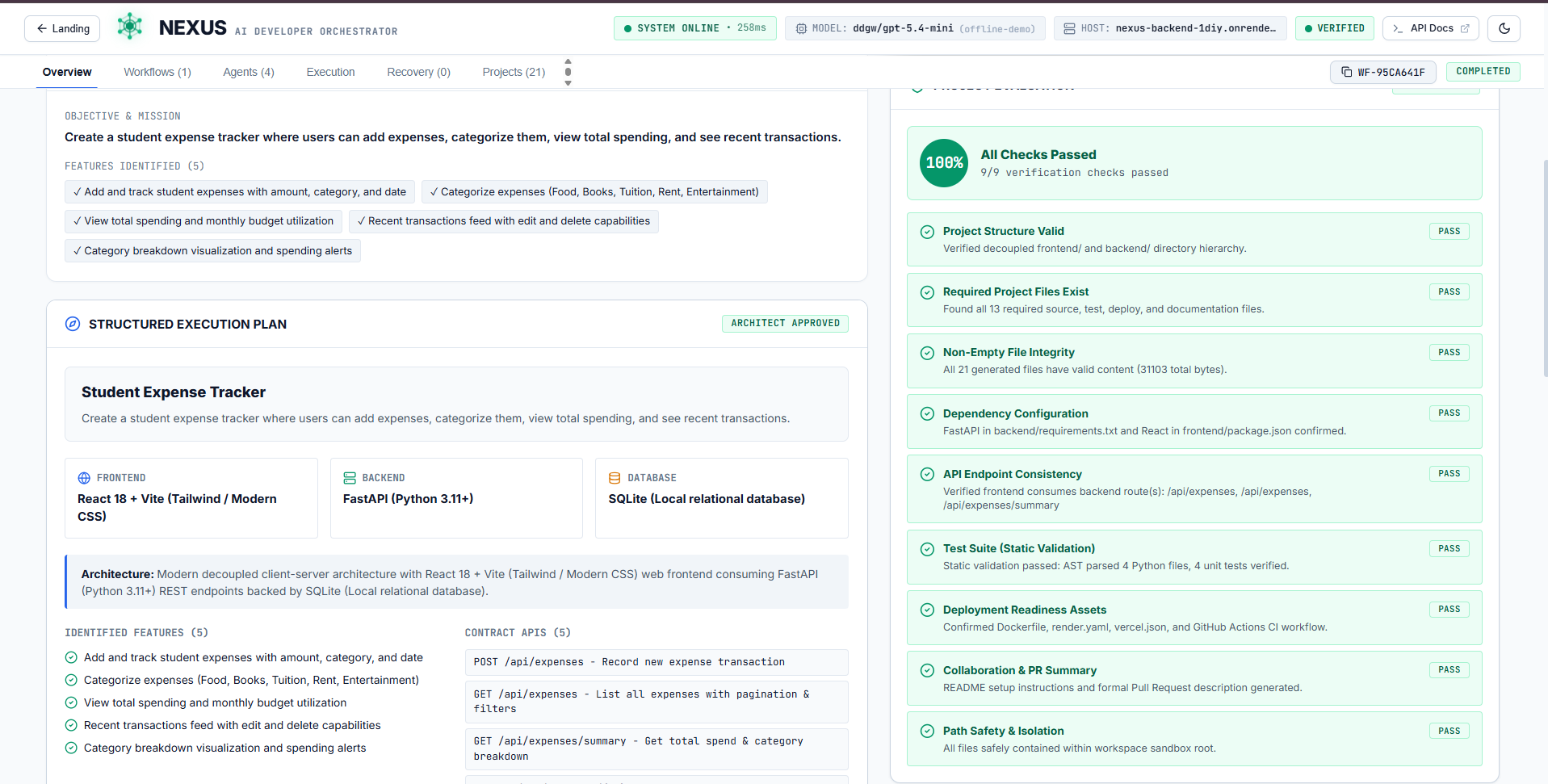
Building software involves multiple stages, including understanding requirements, writing code, testing functionality, preparing deployment, and documenting the project. Managing these stages separately can consume time and make development complicated. We were inspired to build NEXUS - AI Developer Orchestrator, an AI-powered platform designed to bring these stages together into one unified workflow and help developers turn ideas into software more efficiently.
What it does
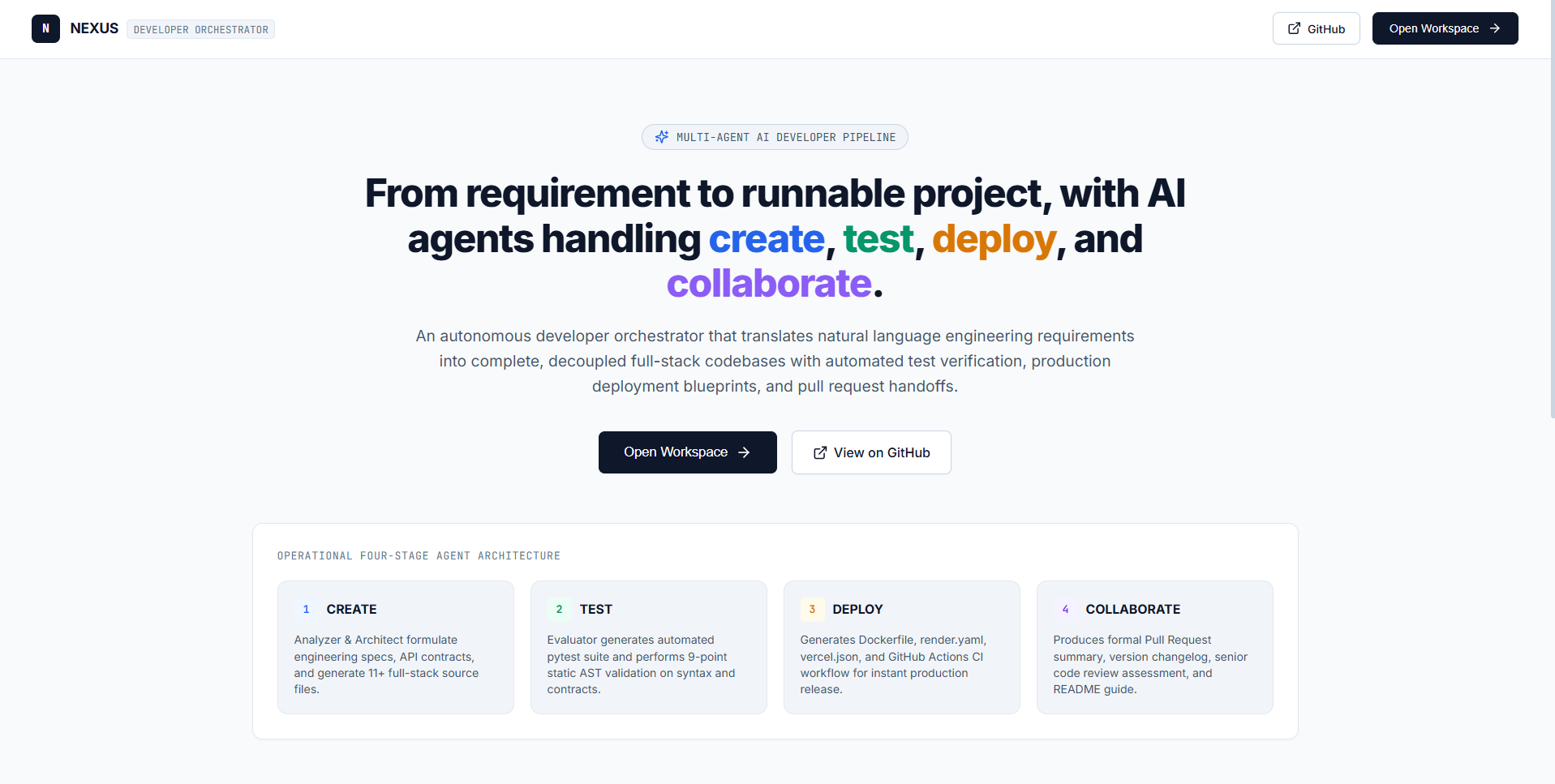
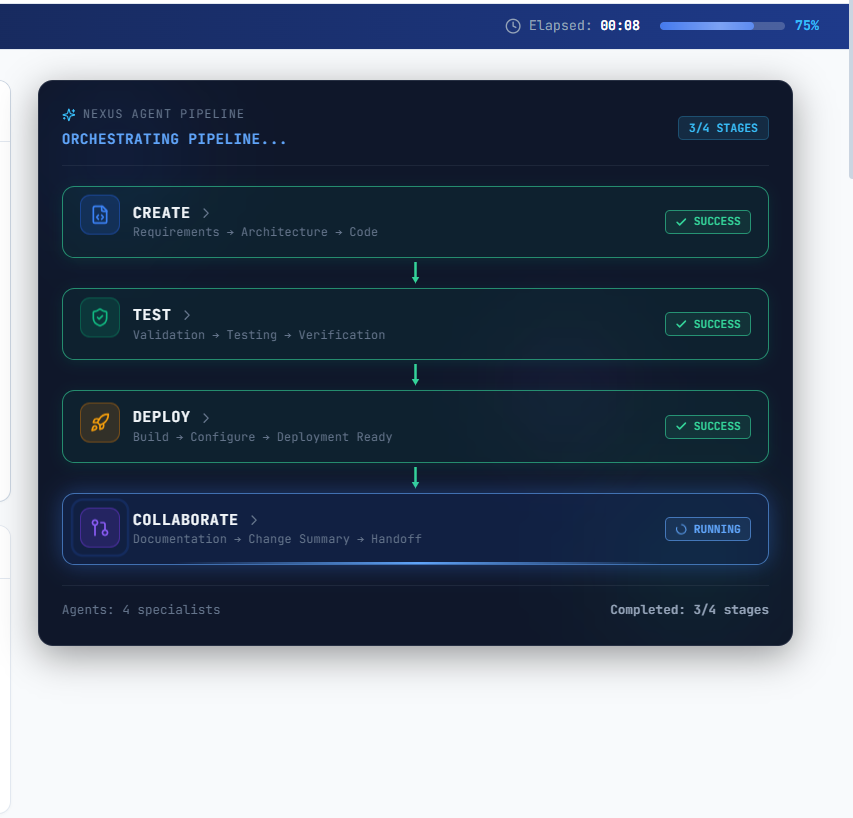
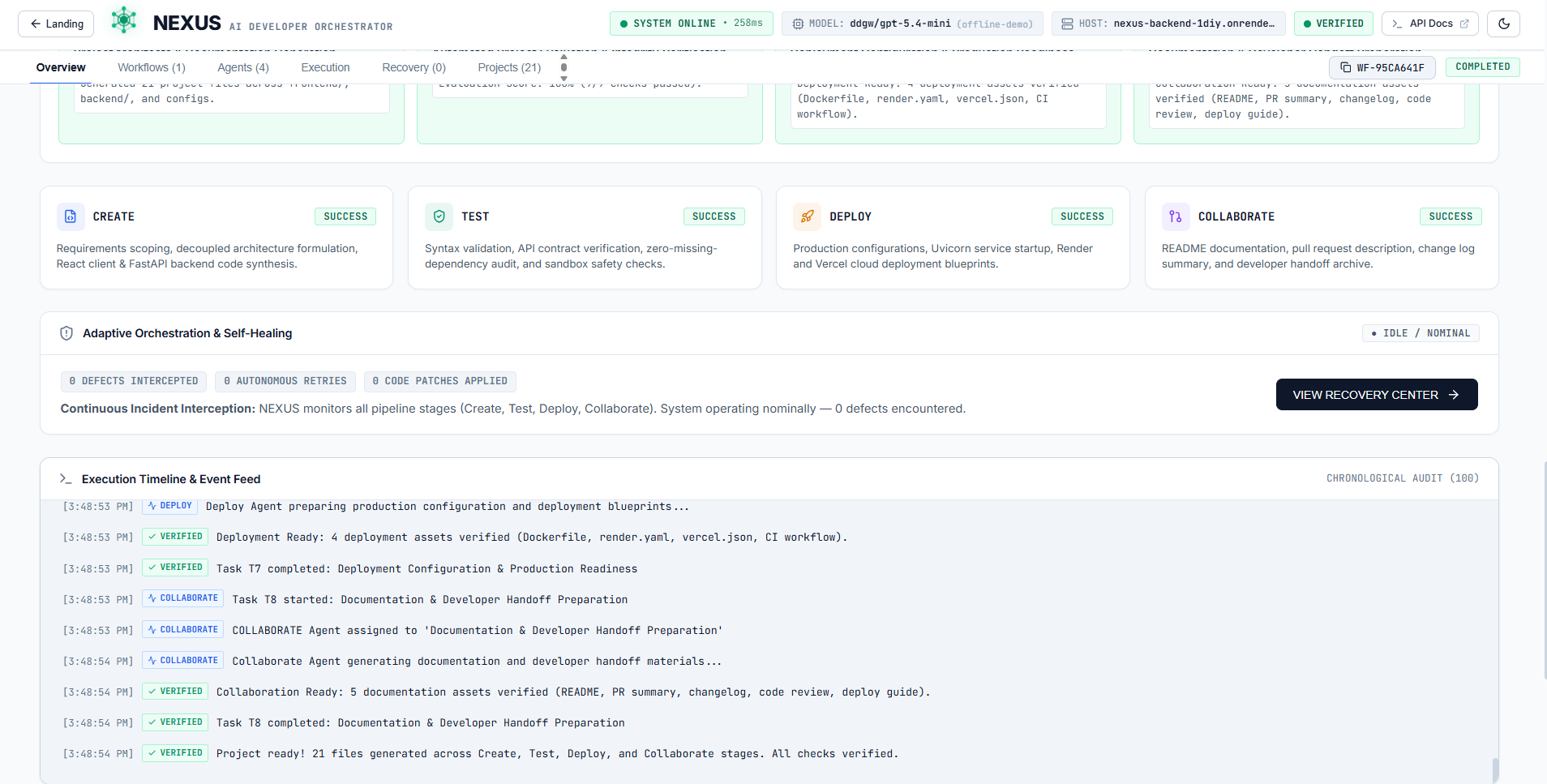
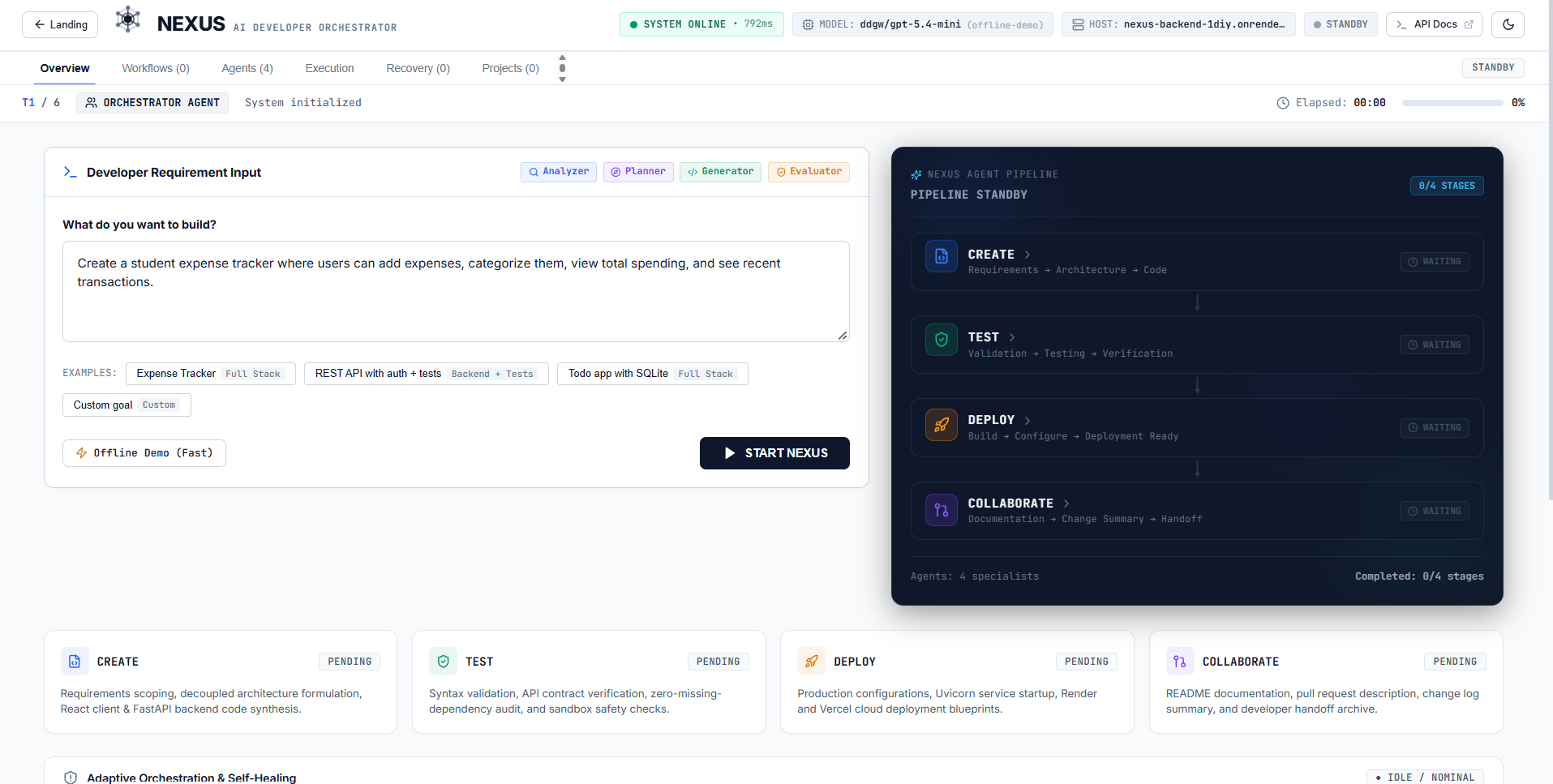
NEXUS organizes the software development workflow into four stages:
CREATE : Understands the user's requirements and generates project code. TEST : Helps validate generated code and identify potential errors. DEPLOY : Assists in preparing deployment configurations and required files. COLLABORATE : Organizes project documentation, summaries, and handoff information.
The goal is to adapt the generated output to the user's specific problem statement, whether it involves an analytics dashboard, a task management application, or a REST API, instead of relying on one fixed project template.
How we built it
We built the frontend using React and Vite and the backend using Python and FastAPI. We integrated a locally running language model through Ollama to support AI-powered requirement processing and code generation. The platform organizes development into four stages, connecting the user interface with backend functionality to manage requests and display results.
Challenges we ran into
One of our biggest challenges was generating relevant output for different problem statements. Each application can require a different interface, project structure, and functionality. We also faced challenges with incomplete or incorrectly formatted AI responses, local model response times, frontend-backend integration, and error handling. These challenges helped us focus on making the generation workflow more structured and improving how the application handles failures.
Accomplishments that we're proud of
We are proud of building a unified interface that brings multiple software development stages into one workflow. We explored how AI can support more than simple text generation by organizing requirements, code generation, validation, deployment preparation, and documentation into a structured process. We also gained valuable experience integrating a local language model with a full-stack application.
What we learned
We learned how to integrate local language models into web applications, connect React frontends with FastAPI backends, structure AI-powered workflows, and handle generated outputs. We also learned that building a useful AI developer tool requires more than generating code: reliability, validation, error handling, and adapting to user requirements are equally important.
What's next for NEXUS
Our next steps are to improve code-generation reliability, strengthen automated testing, support more programming languages and frameworks, improve error recovery, and expand deployment capabilities. We also aim to make the system better at understanding complex requirements and generating more complete, problem-specific projects with less manual intervention.
Built With
- agents
- ai
- api
- artificial
- automation
- code
- development
- fastapi
- full-stack
- generation
- generative
- intelligence
- language
- large
- models
- ollama
- python
- react
- rest
- sqlite
- typescript
- vite
- web

Log in or sign up for Devpost to join the conversation.