-
-
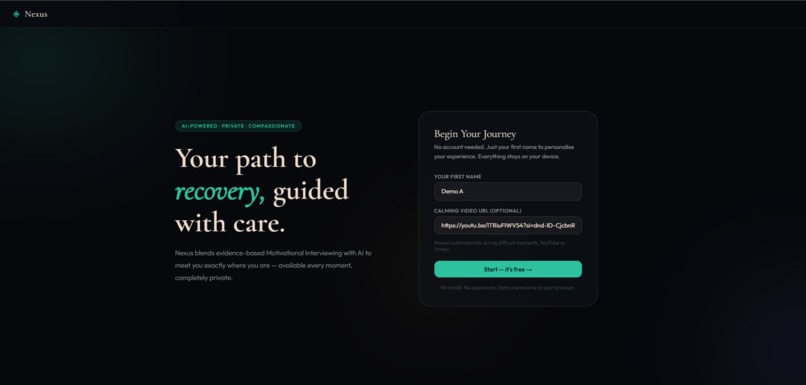
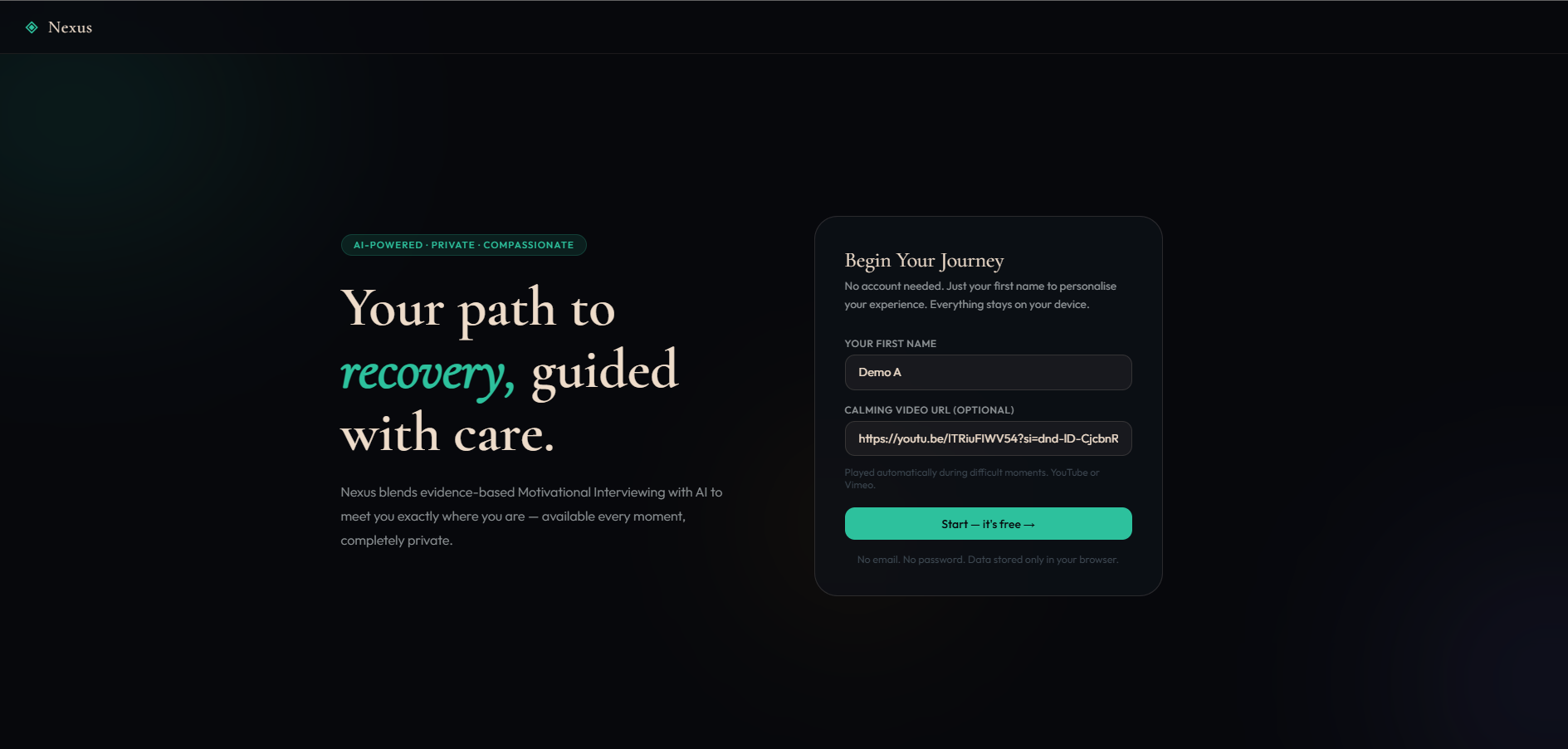
Login Page
-

AI integrated chatbot
-
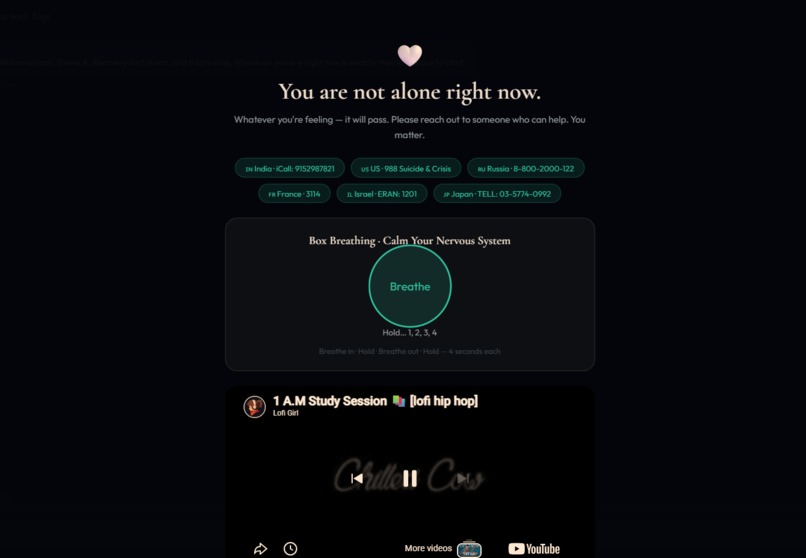
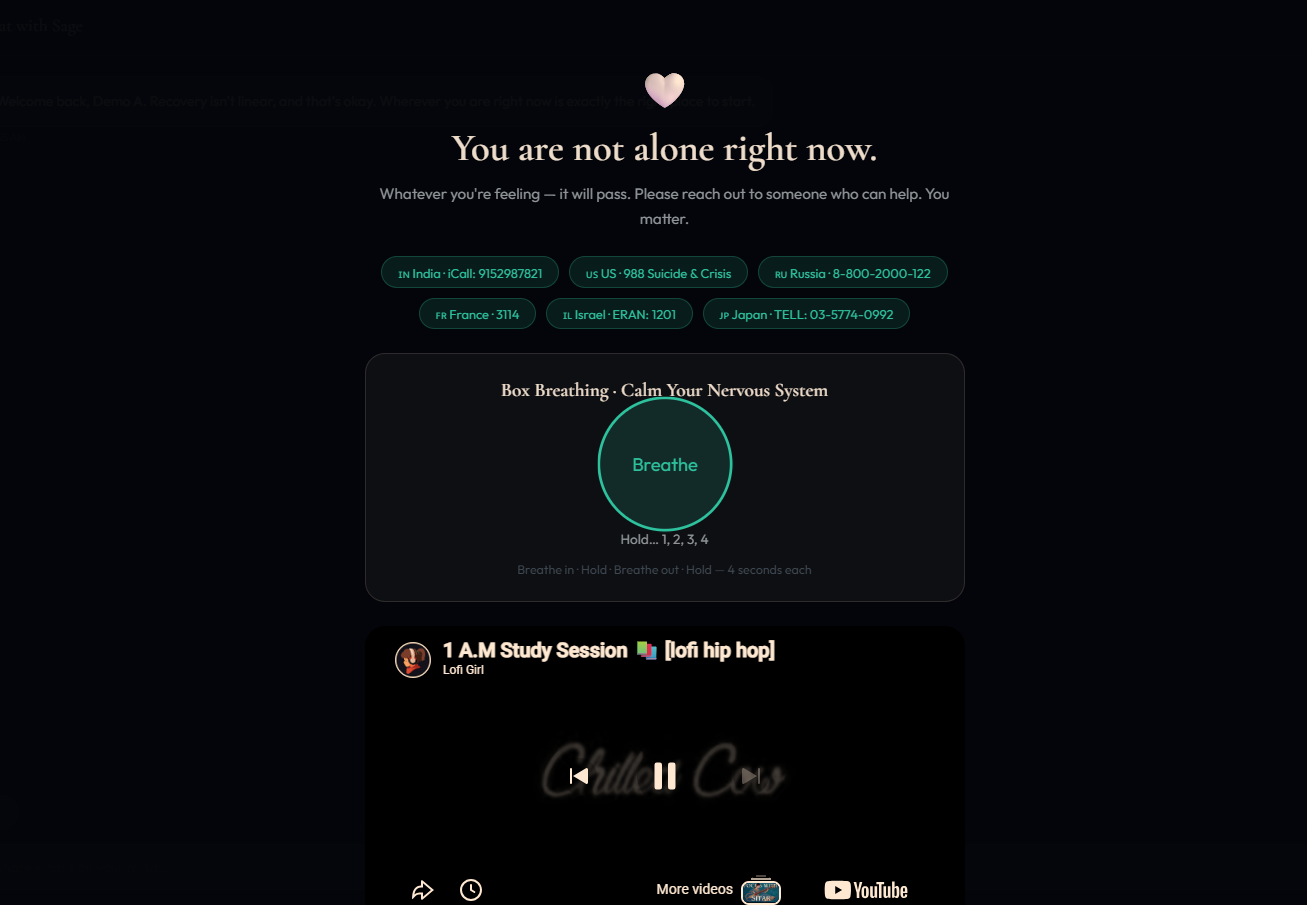
A breathing method with your favourite music video to calm you down during Crisis trigger
-
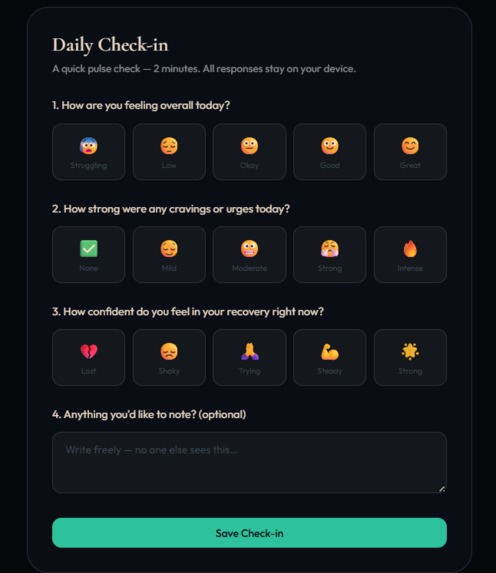
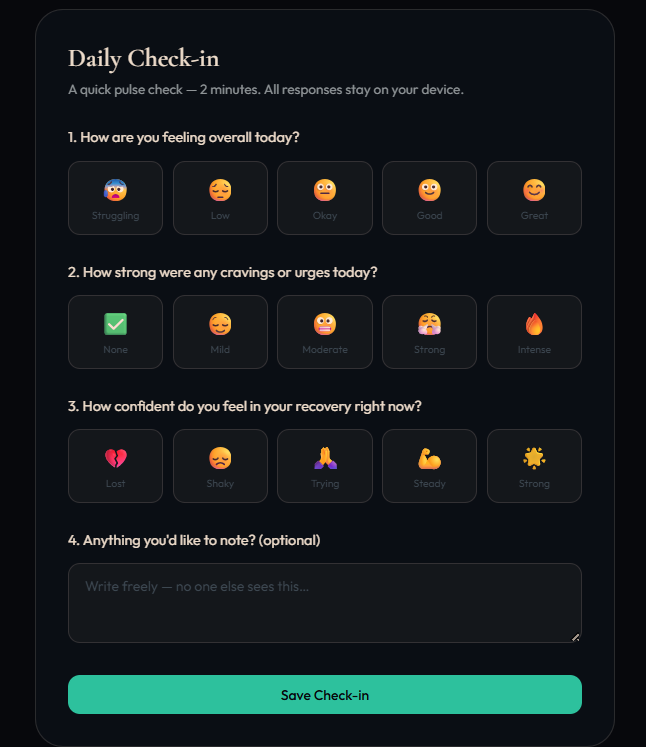
Daily Check Ins
-
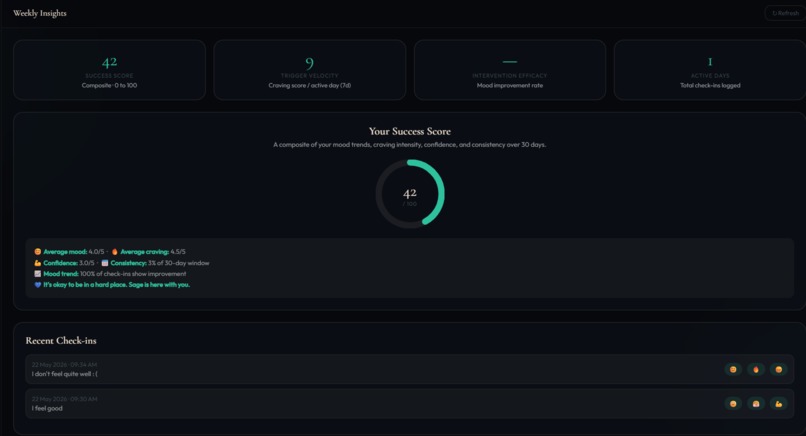
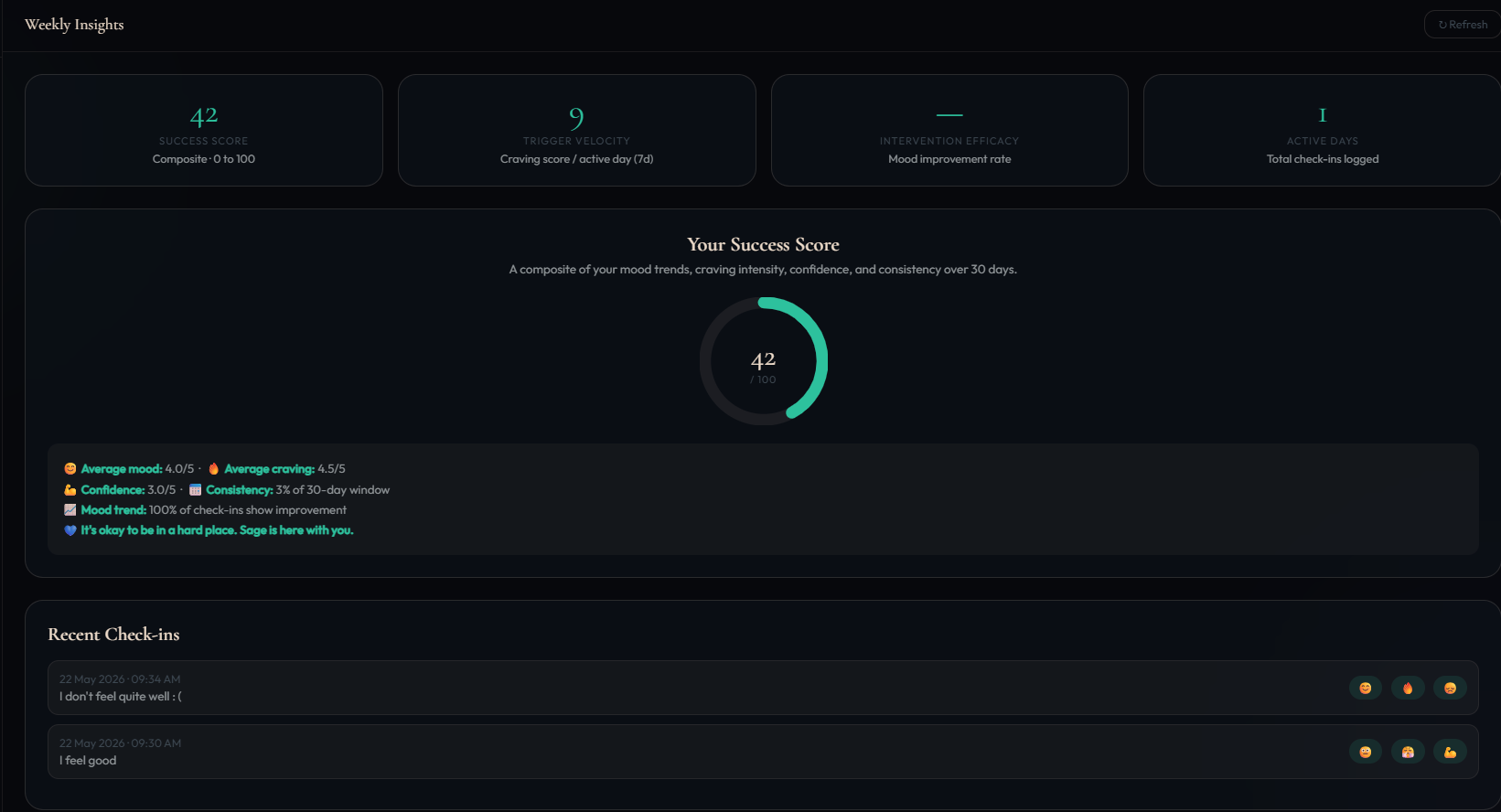
Weekly Insights Section

Inspiration
The global addiction care ecosystem is at a breaking point. Healthcare systems are strained by rising costs and critical staffing shortages, while patients face prohibitive barriers to early intervention. Clinicians, overwhelmed by administrative burdens and documentation, are reporting record levels of burnout. Simultaneously, the prevalence of substance use disorders is rising across all demographics. Nexus was born from the need to bridge the widening gap between the surging demand for addiction support and the capacity of the current healthcare infrastructure. Our goal was to design an AI-powered "support layer" that empowers clinicians by offloading initial triage and documentation, while providing patients with immediate, empathetic, and structured early-stage support.
What it does
Nexus is an AI-powered conversational support platform dedicated to addiction awareness, early intervention, and emotional stabilization. It serves as a privacy-first digital companion that helps users navigate recovery using evidence-based motivational interviewing principles.
- Sage (AI Therapist): An AI assistant that guides users through behavioral reflections, prioritizing emotional stabilization over long-form advice.
- Daily Check-in & Weekly Insights: Captures mood and craving data to generate a "Success Score" and analyze trigger patterns.
- Crisis Detection: A real-time safety layer that detects distress and automatically triggers immediate grounding exercises and resource redirection.
- Privacy-First: Designed with user sovereignty in mind; all sensitive check-in data is stored locally via localStorage, removing the need for centralized databases.
How we built it
Nexus utilizes a modular, full-stack architecture designed for resilience and security:
- Frontend: Developed with a clean, responsive HTML/JS interface that manages authentication and secure local API key storage.
- Backend: A FastAPI-driven engine that handles complex request routing and behavioral analytics.
- Intelligence Layer: A multi-model router (OpenRouter, Google Gemini, HuggingFace) ensures system reliability with intelligent fallback mechanisms.
Challenges we ran into
- Resilient Routing: Coordinating seamless transitions between multiple LLM providers without sacrificing response quality or speed.
- Security Architecture: Carefully separating user-controlled API keys from the application’s backend logic while maintaining a smooth authentication flow.
- Safety Engineering: Designing a crisis-detection system that remains both empathetic and unobtrusive, requiring significant iterative prompt engineering to ensure it doesn't interrupt healthy therapeutic flows.
- Deployment: Managing frontend module dependencies in a static server environment required rigorous configuration management.
Accomplishments that we're proud of
- Modular Intelligence: We successfully integrated multiple LLMs with a custom fallback layer, ensuring the system remains high-performing and reliable.
- Privacy-First Design: By implementing local-first storage for sensitive user data, we’ve prioritized user trust and security.
- Impact-Driven Safety: Our crisis detection isn't just an add-on; it is an active safety service that provides immediate, actionable interventions (like box breathing) to users in distress.
- System Efficiency: We achieved a balance between high-quality AI interaction and low computational overhead through our lightweight state-summary pattern.
What we learned
We learned how AI systems can be designed not just for conversation, but for structured clinical support, crisis detection, and behavioral analytics. We also gained insight into motivational interviewing techniques, state summarization for reducing token usage, and how multi-model routing (OpenRouter, Gemini, HuggingFace) can improve system reliability.
What's next for Nexus
- Predictive Risk Scoring: Implementing time-series modeling to identify relapse risks before they escalate.
- Adaptive Therapy Paths: Evolving static responses into dynamic, personalized care pathways based on long-term user engagement.
- Clinician Dashboard: Launching a professional interface for providers to monitor anonymized patient progress and receive automated intake summaries.
- Multimodal Support: Incorporating voice-to-voice interaction to increase accessibility and emotional impact.
- Offline Capability: Developing a PWA (Progressive Web App) to ensure crisis tools are available even when a user is disconnected.
- Federated Privacy: Transitioning to fully decentralized, user-controlled data storage to ensure maximum mental-health data privacy.
Built With
- css
- fastapi
- google-gemini-api
- html
- huggingface-inference-api
- javascript
- langchain
- openrouter-api
- python


Log in or sign up for Devpost to join the conversation.