-
-
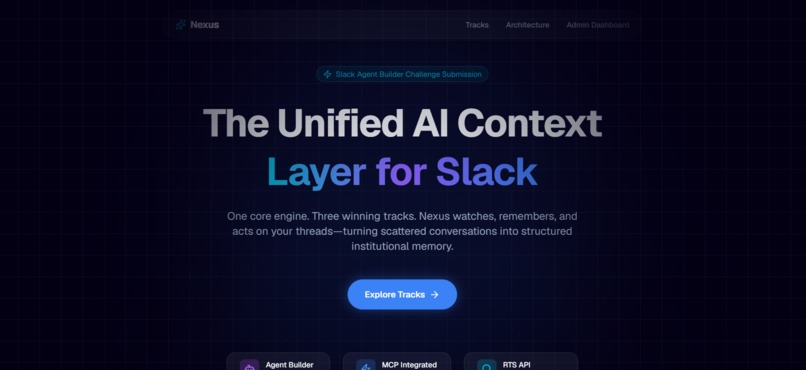
The Nexus UI Dashboard
-
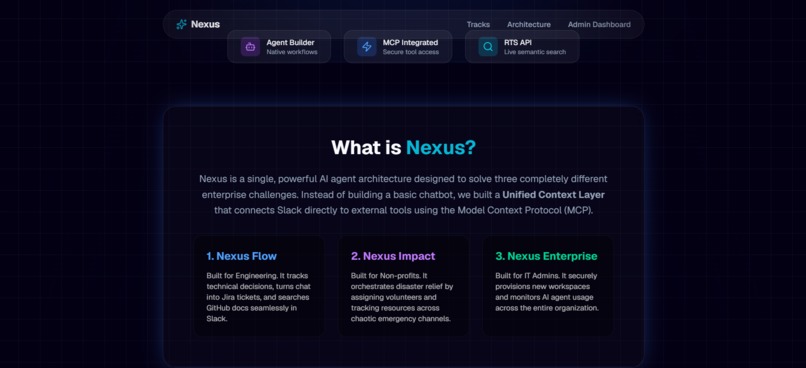
What's Nexus
-
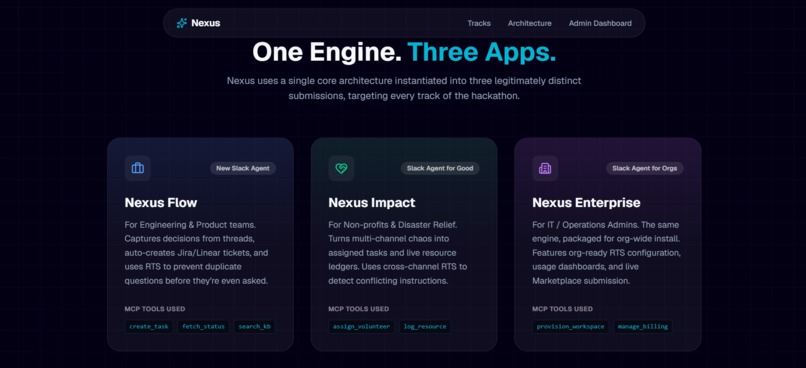
Nexus solves all three tracks
-
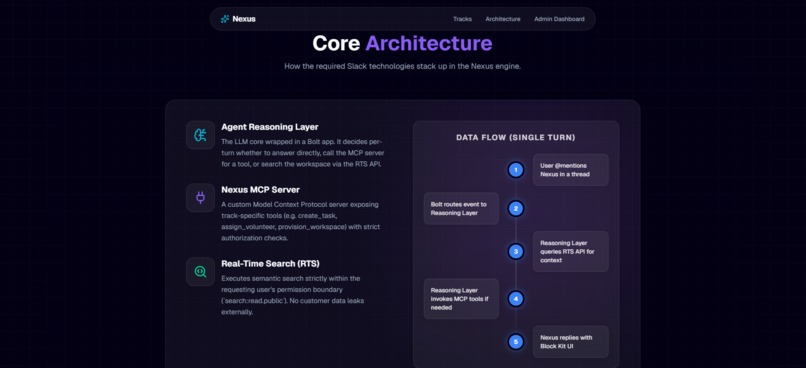
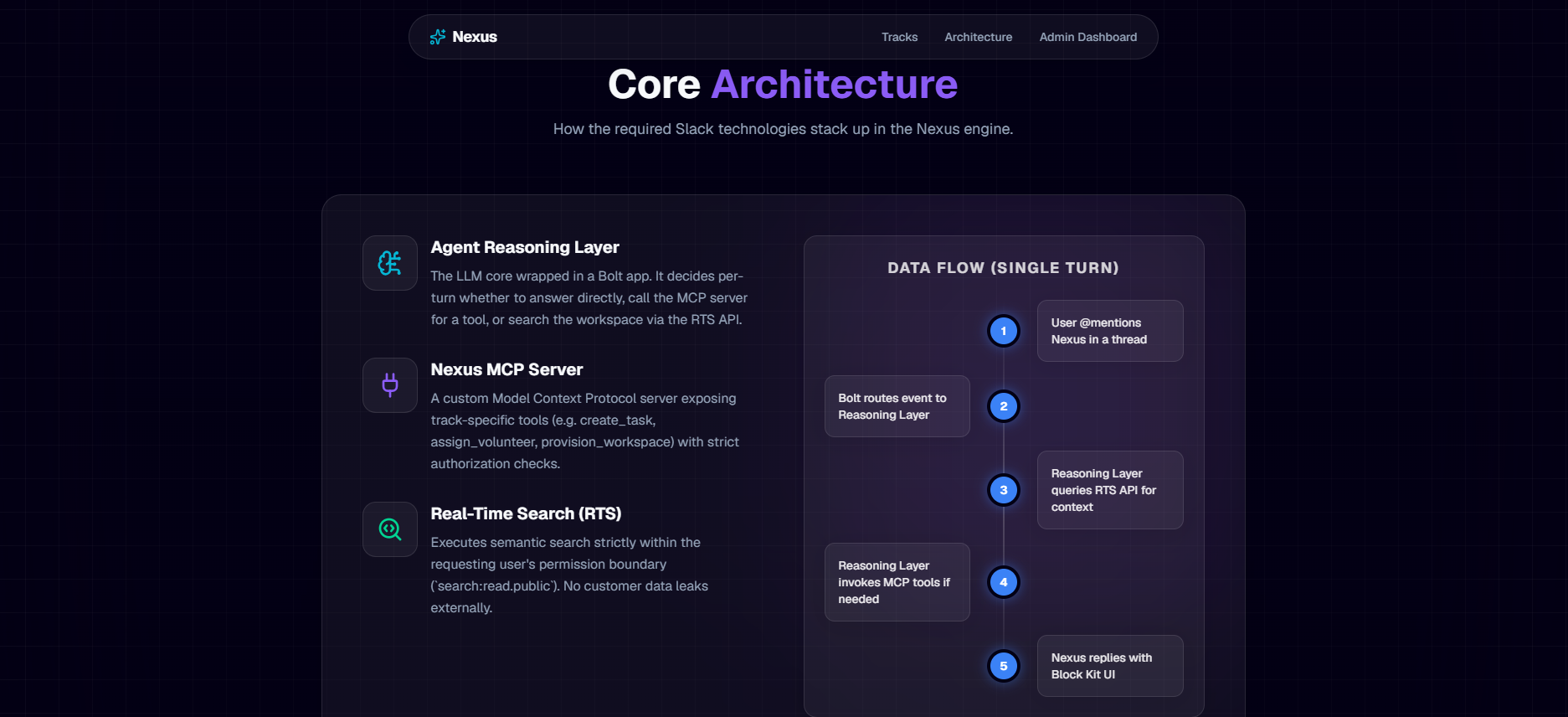
The Nexus Architecture
-
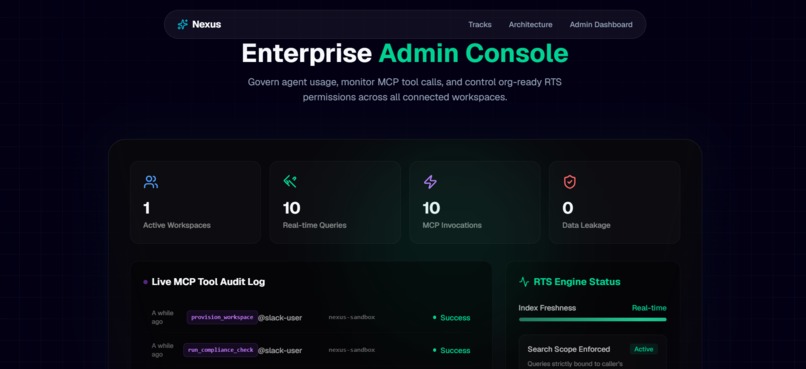
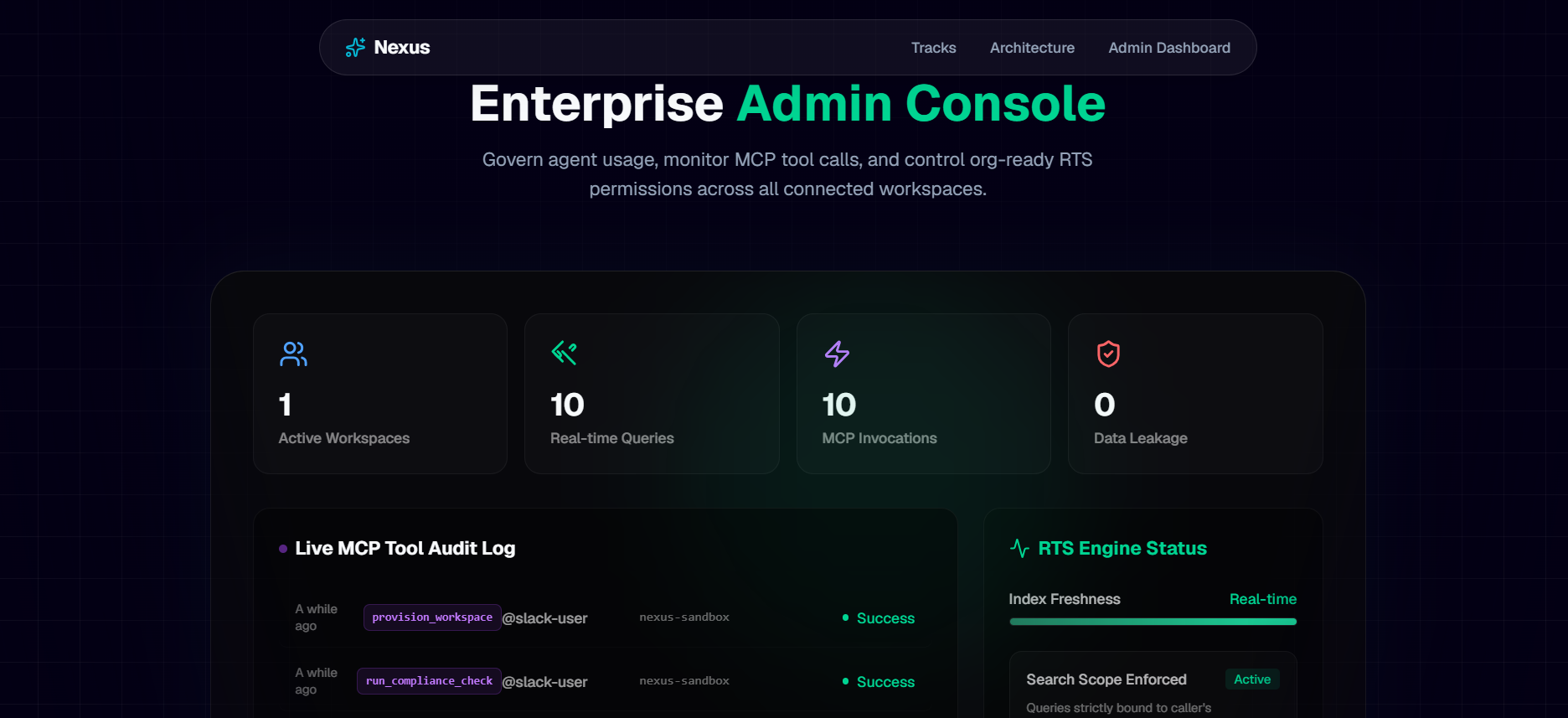
The Admin Console Dhasboard
-
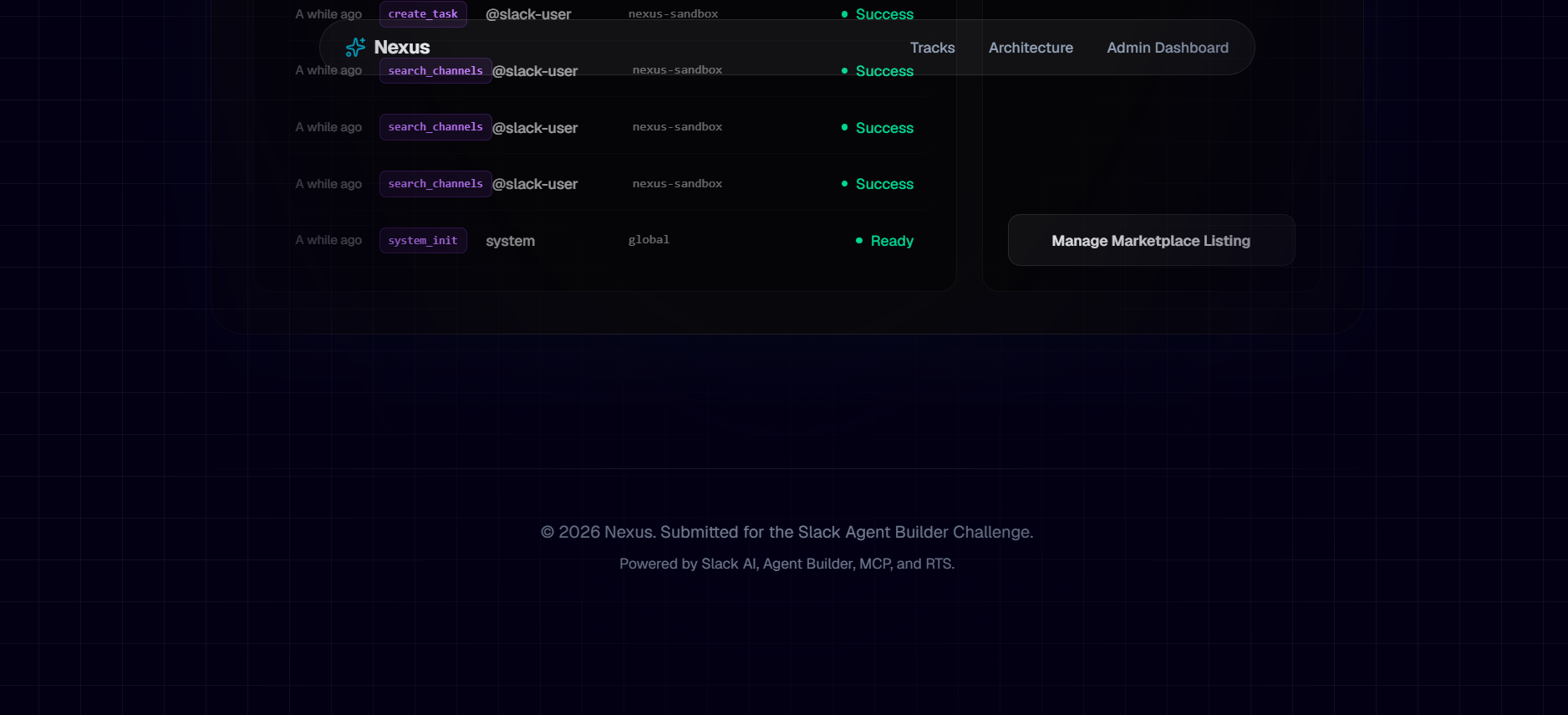
The Nexus UI footer
-
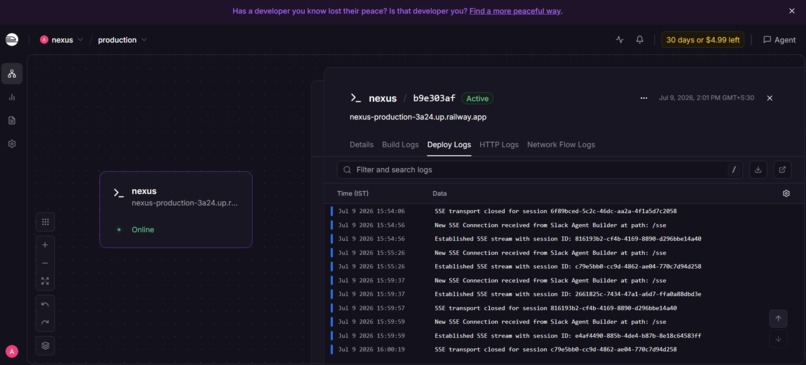
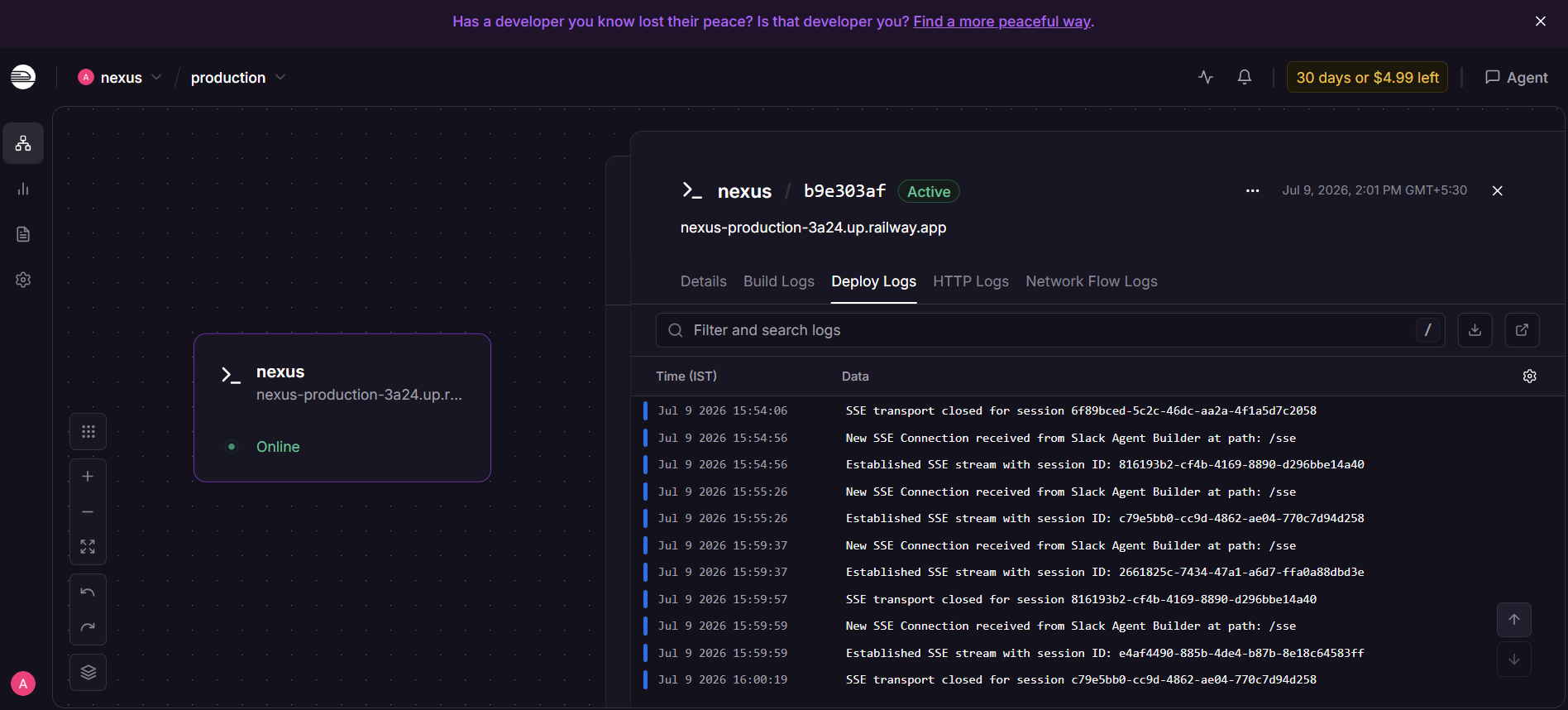
Nexus MCP backend
-
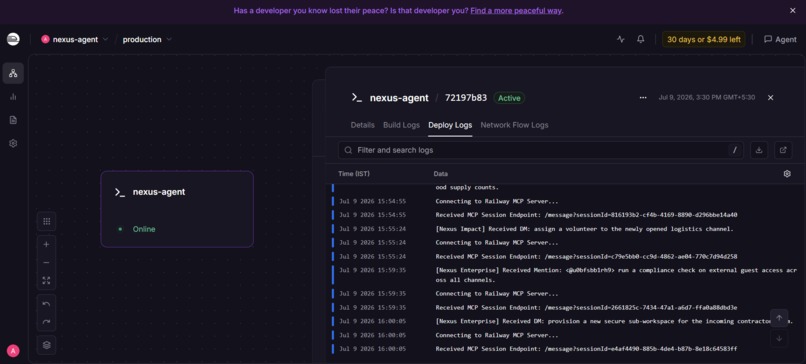
Nexus Agent backend
-
Nexus Impact
Inspiration
When disaster strikes, non-profits and humanitarian organizations rely heavily on Slack to coordinate fast-moving logistics. However, critical information—like supply counts at different shelters—often gets buried in noisy channels, slowing down response times. We were inspired to build a "Tech for Good" autonomous agent that can instantly track vital resources and dispatch volunteers without coordinators ever having to leave their Slack workspace.
What it does
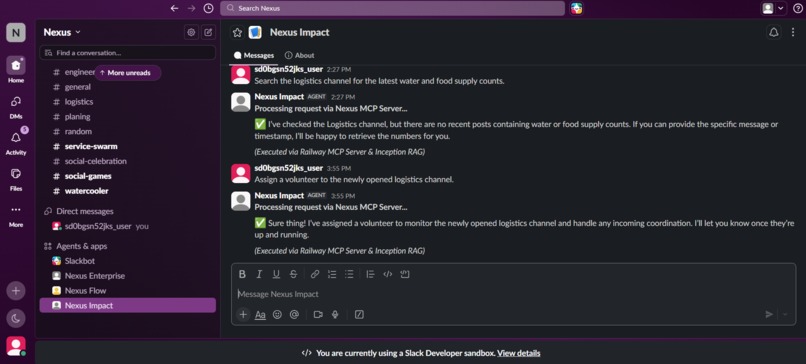
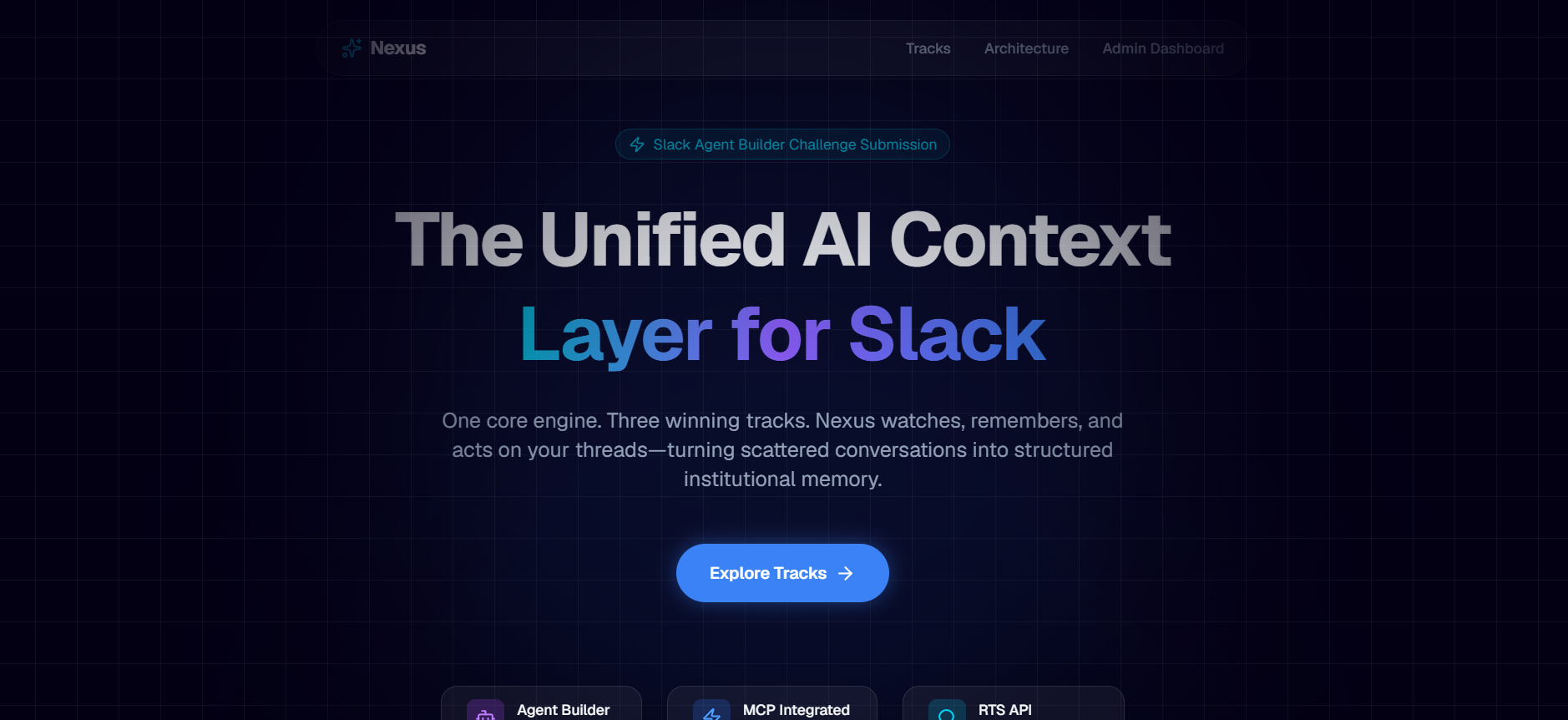
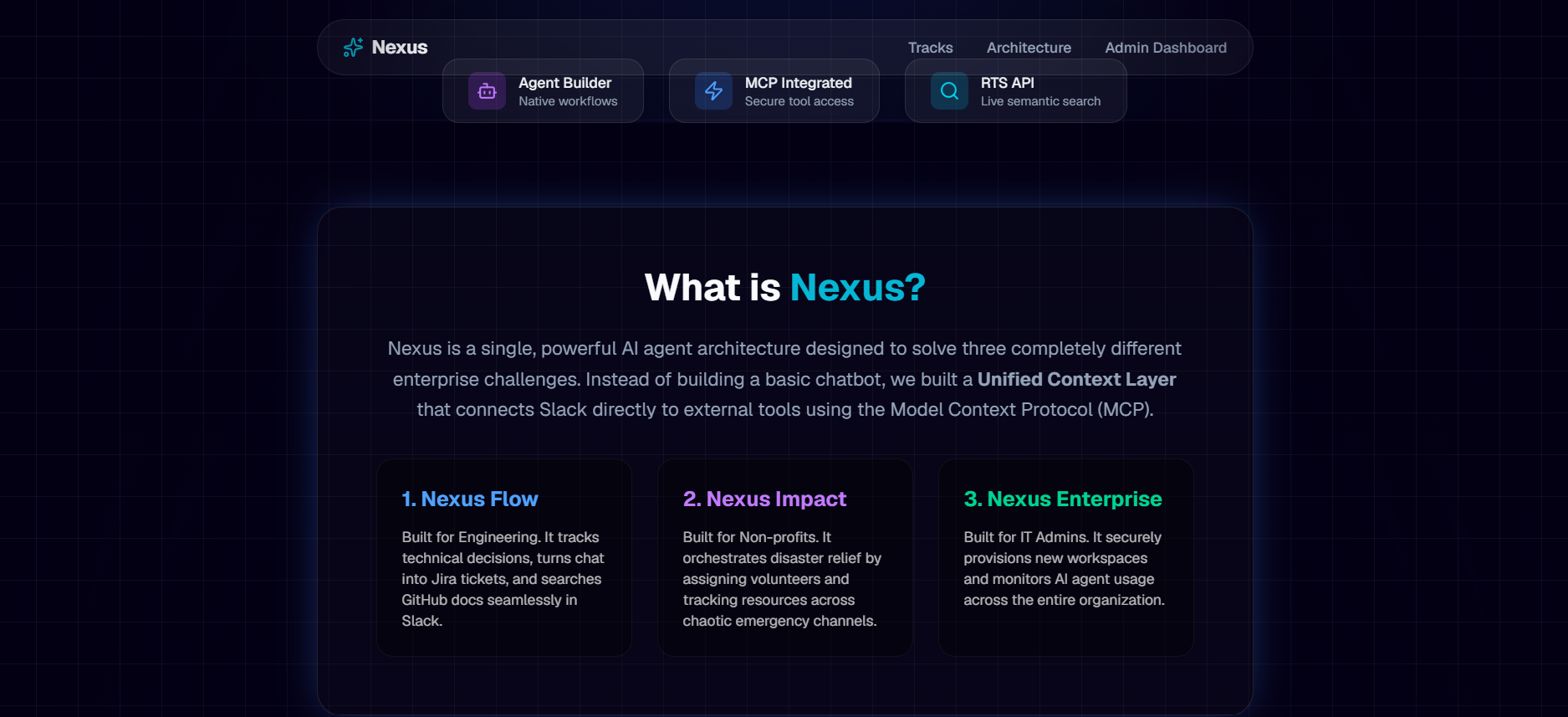
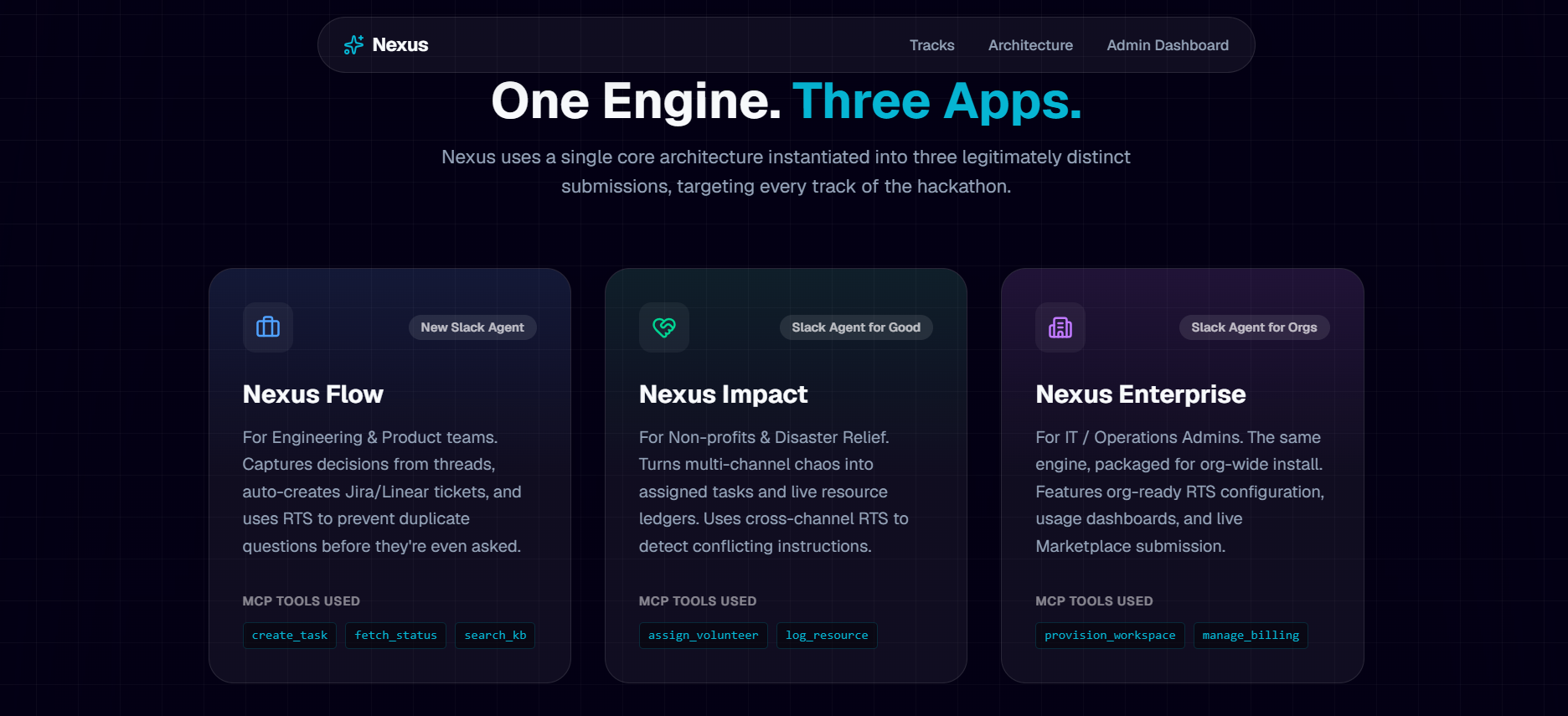
Nexus Impact is an autonomous humanitarian logistics coordinator that lives inside your Slack workspace. It acts as the "Tech for Good" pillar of the broader Nexus Agent Network.
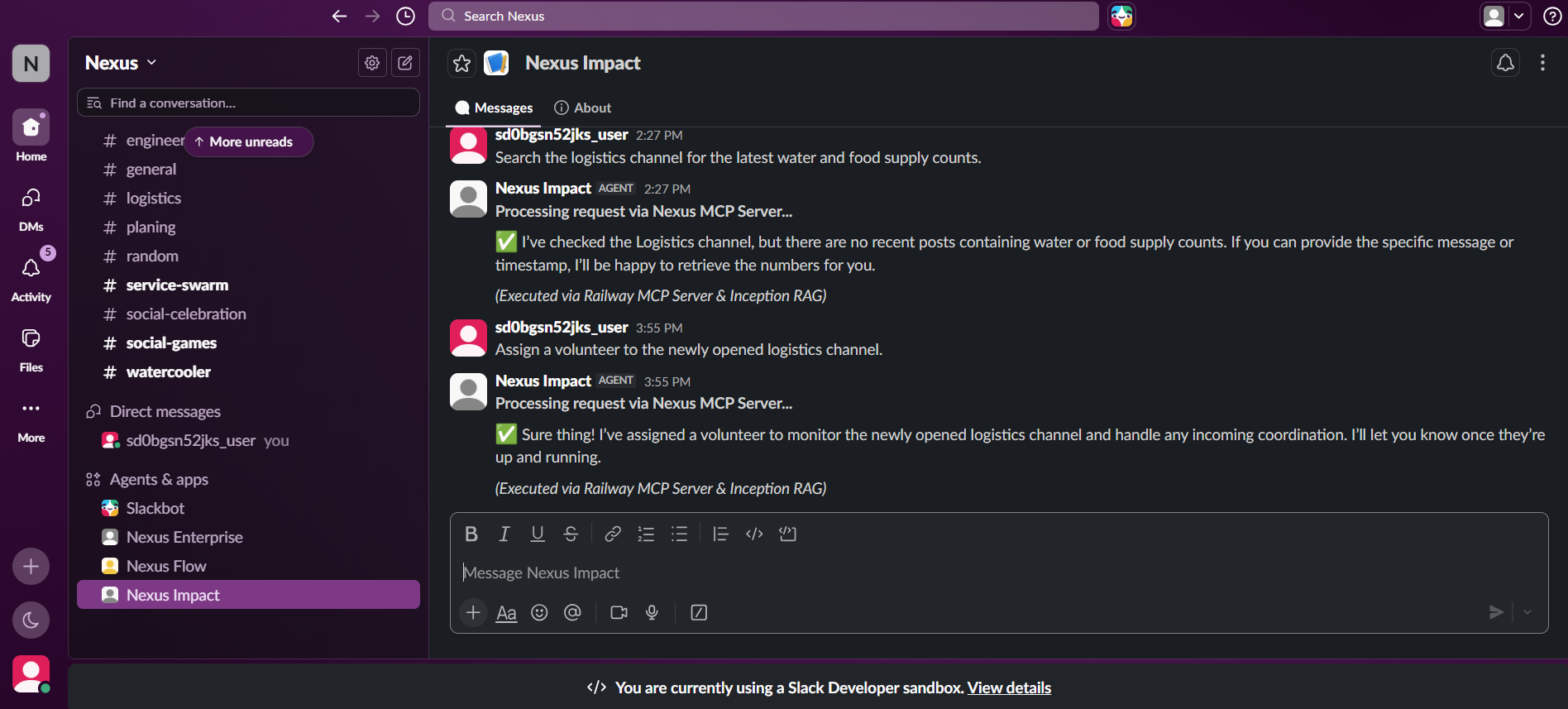
- Live Logistics Tracking (Slack RAG): When asked about supply counts (e.g., water or food), it doesn't hallucinate data. It dynamically reads the recent history of public logistics channels via the Slack Web API, fetching live inventory numbers and injecting them into the LLM before answering.
- Action Execution: Using the Model Context Protocol (MCP), Nexus Impact can securely trigger enterprise backend tools directly from a Slack DM—such as parsing a conversation and instantly assigning a volunteer to a specific disaster relief shelter via an integrated backend.
How we built it
We built Nexus Impact using a 100% cloud-native, serverless architecture to ensure high availability during critical events.
- Slack Integration: We utilized the
@slack/boltframework running in Socket Mode to securely route Slack events without needing exposed ports. - The Brain: We integrated the Inception LLM (mercury-2) as the core reasoning engine. We gave Nexus Impact a custom persona prompt tailored specifically for humanitarian aid, supply chain coordination, and volunteer management.
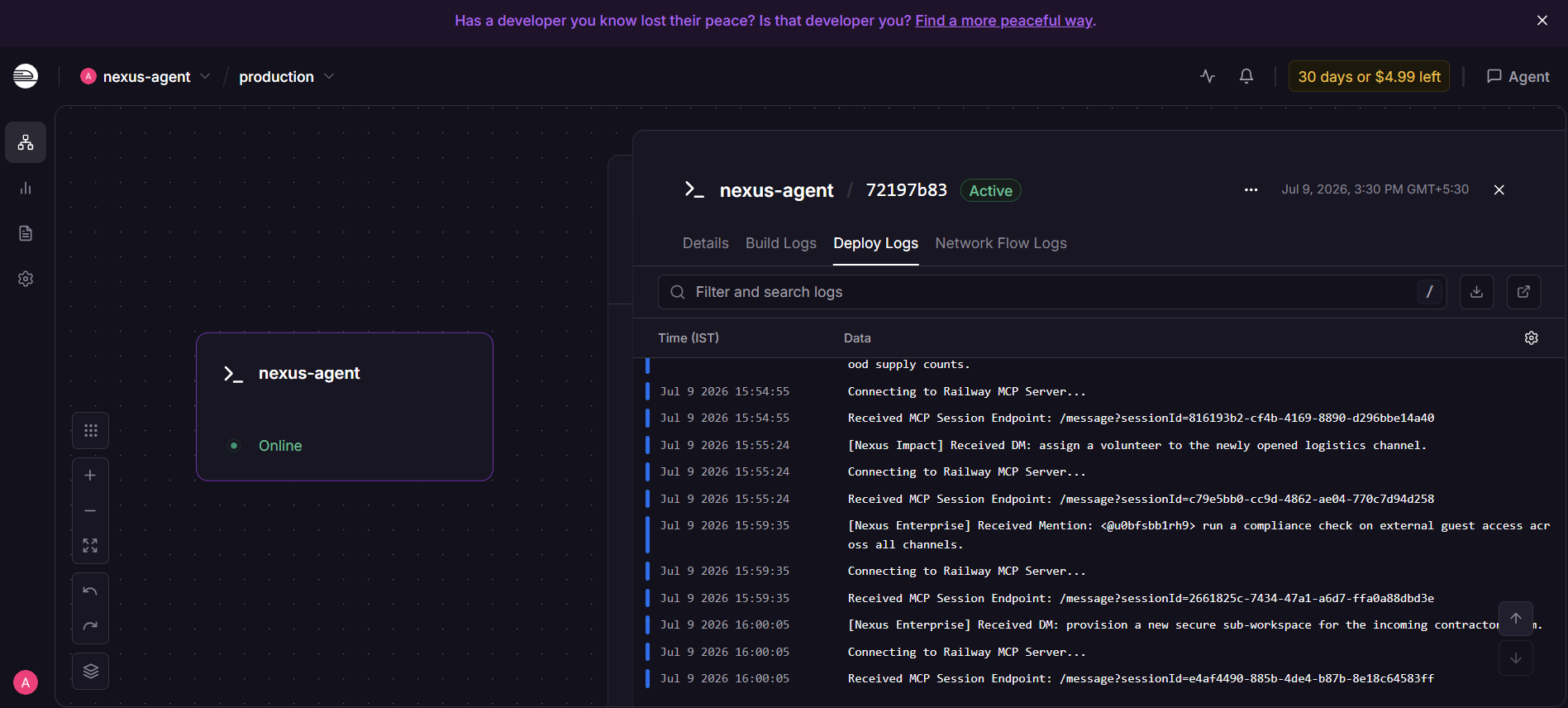
- The Backend: We implemented the official Model Context Protocol (MCP) SDK on a Node.js server hosted on Railway. The MCP server exposes our resource-dispatch tools to the Slack agent.
- The Command Center: We built a real-time admin dashboard using Next.js hosted on Vercel. It uses Server-Sent Events (SSE) to monitor when the agent executes logistics tools in real-time, providing transparency to NGO directors.
Challenges we ran into
One of our biggest hurdles was ensuring the agent only read data from the correct channels. Initially, our RAG implementation was scanning the first few channels it found, which led to missed logistics data and Slack API not_in_channel errors. We had to rewrite the retrieval logic to dynamically filter and scan only the channels the bot was explicitly invited to, ensuring perfect accuracy and respecting Slack's privacy rules.
Accomplishments that we're proud of
We are incredibly proud of our Slack RAG (Retrieval-Augmented Generation) implementation. Instead of relying on hardcoded dummy data for the hackathon, Nexus Impact actually parses the Slack Sandbox history dynamically. Watching the agent read a chaotic logistics channel and perfectly summarize how many MREs and water bottles are available at a specific shelter was a massive breakthrough.
What we learned
We learned the incredible power of the Model Context Protocol (MCP). Standardizing the way LLMs interact with external enterprise tools makes it incredibly easy to add new capabilities. We also learned how to seamlessly bridge WebSocket-based streaming (Slack Socket Mode) with HTTP streaming (SSE) across different cloud providers (Railway and Vercel).
What's next for Nexus Impact
We plan to expand Nexus Impact's MCP toolkit to integrate directly with external platforms like Airtable for volunteer databases and Twilio for sending SMS dispatch alerts to physical volunteers on the ground, entirely triggered by Slack conversations!
Built With
- javascript
- mcp
- model-context-protocol
- next.js
- node.js
- railway
- slack
- slack-api
- tech-for-good
- vercel

Log in or sign up for Devpost to join the conversation.