-
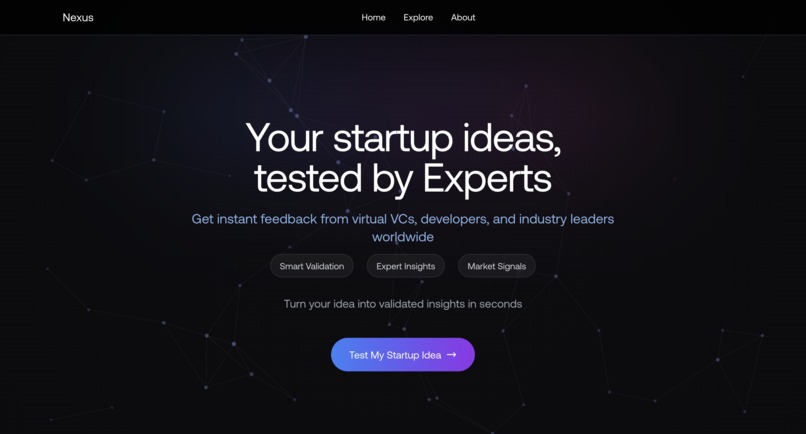
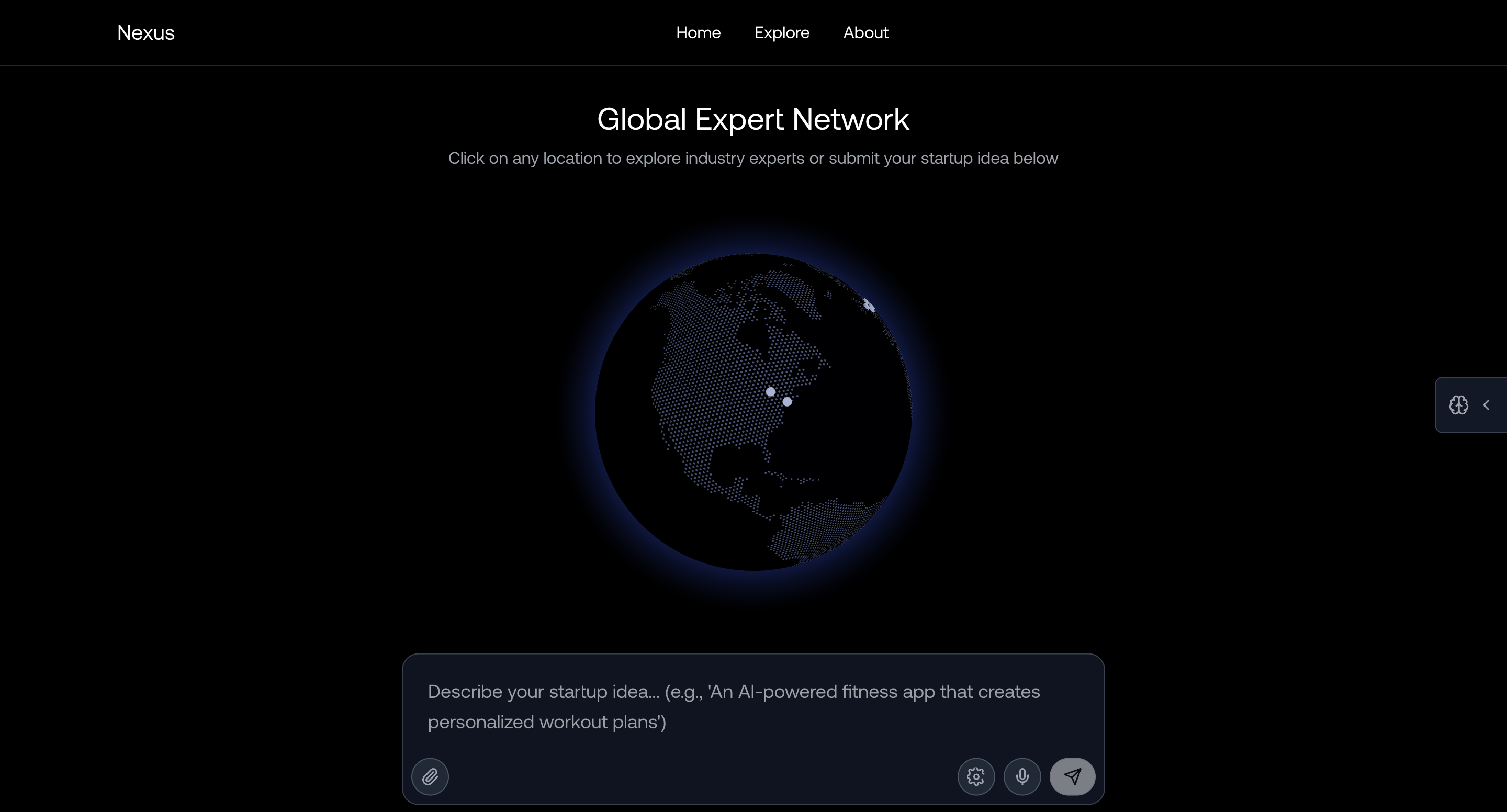
homepage
-
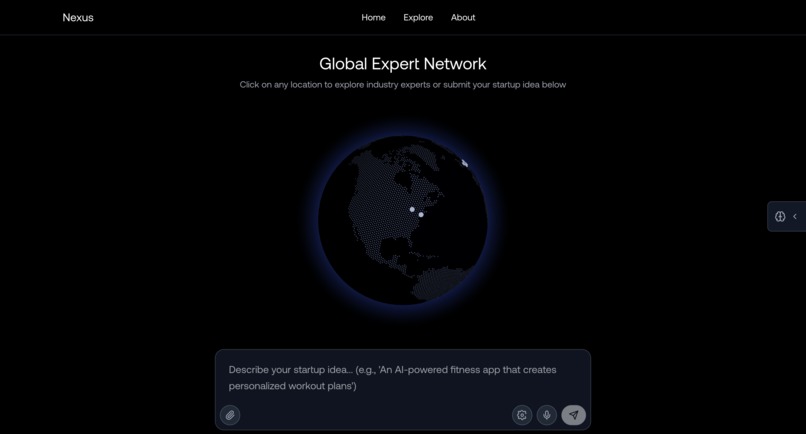
Enter startup idea
-
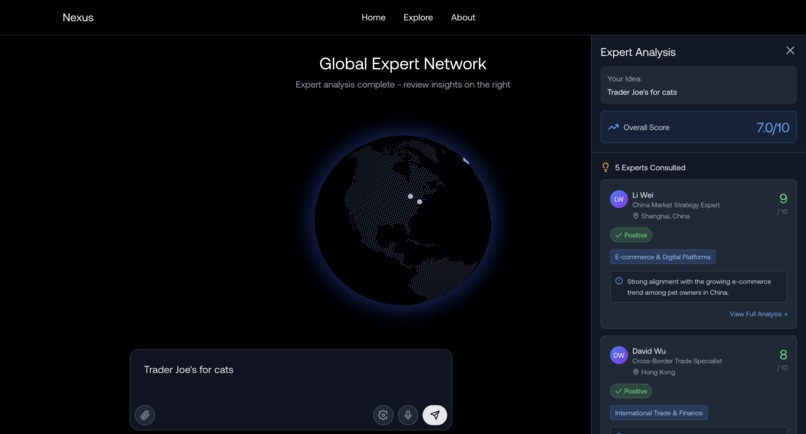
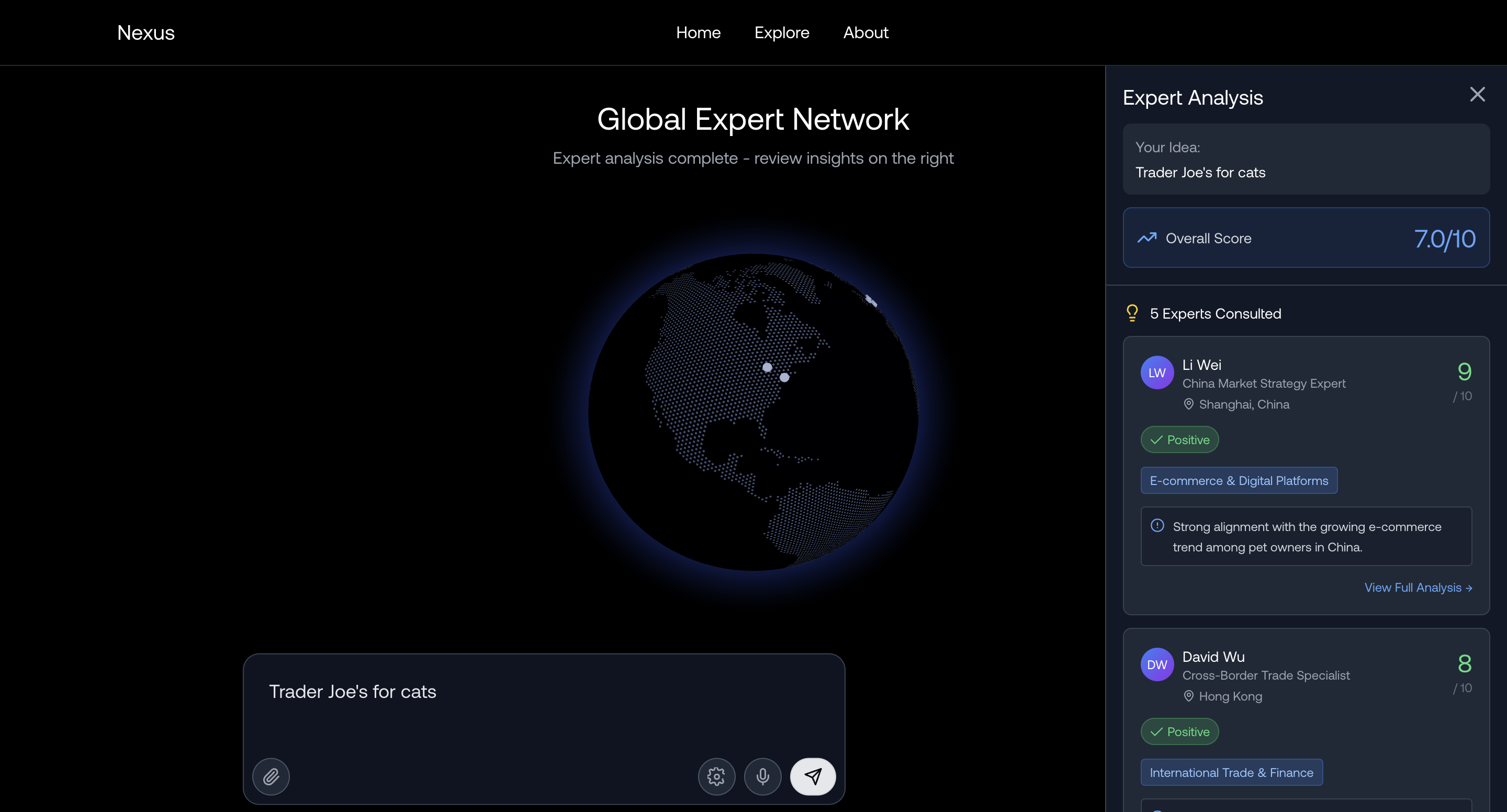
Response from VCs
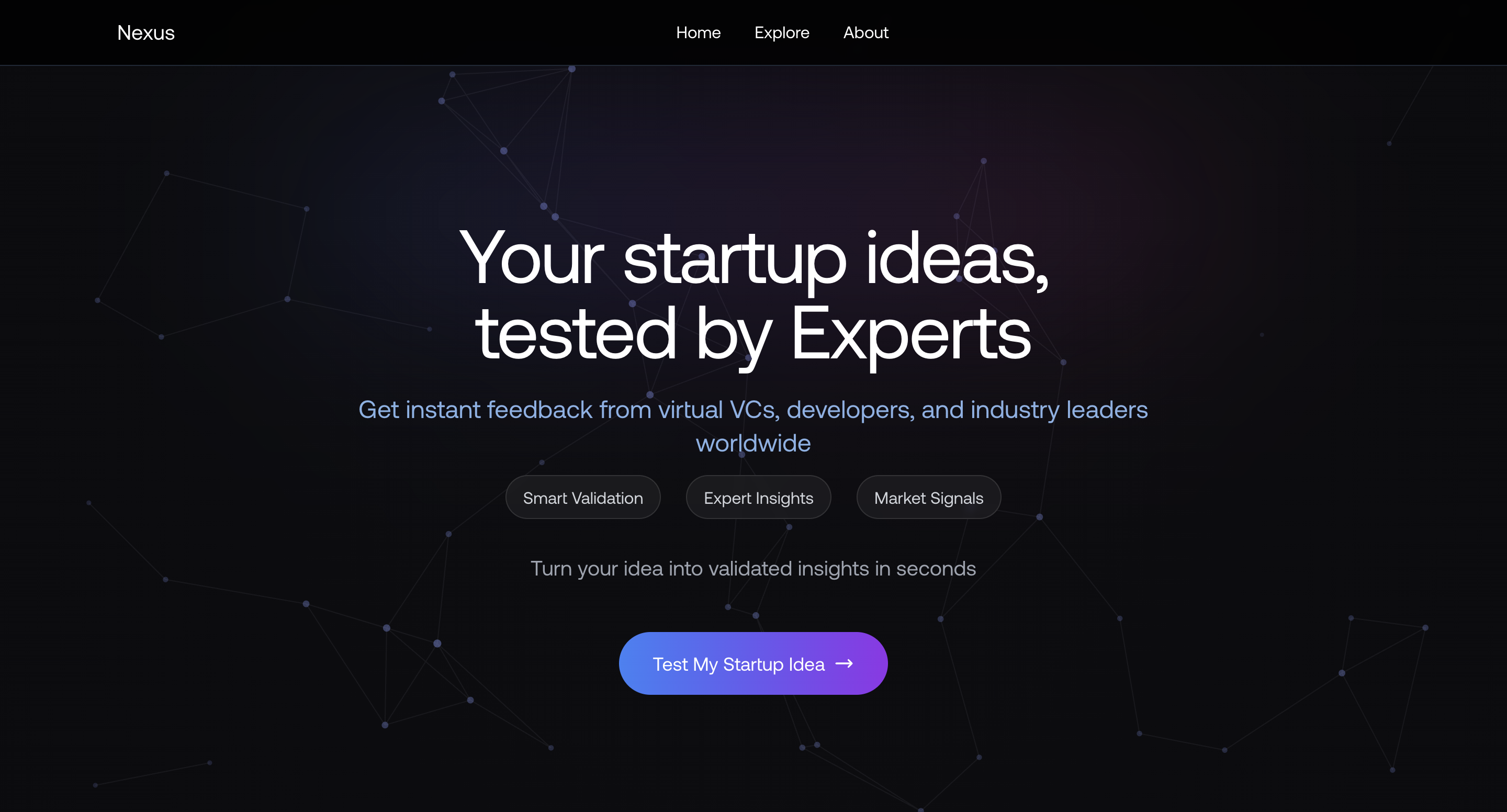
Inspiration
As a group of aspiring student developers and hackathon enthusiasts, we were fascinated by how idea validation – one of the most challenging aspects of building a startup – could be transformed using AI agents. Most early founders spend months gathering market research, expert opinions, and investor feedback. We wanted to build something that could simulate that process instantly and deliver a way to test ideas against virtual experts from around the world.
That idea became Nexus: an AI-powered platform that connects your startup concepts with simulated personas like VCs, developers, and industry leaders, providing real-time insights, validation, and market signals.
What We Learned
Integrating technologies like OpenAI, ElevenLabs, and Snowflake taught us how to combine natural language intelligence, voice synthesis, and data infrastructure into a cohesive system:
OpenAI: Powered the reasoning and conversation logic behind our virtual experts. We learned how to design agentic behavior, prompt chains, and context windows that make personas feel realistic and adaptive.
ElevenLabs: Brought those experts to life with expressive, human-like speech. We explored how to dynamically generate voice responses from agent insights, enhancing immersion and accessibility.
Snowflake: Served as our data backbone, enabling fast storage and retrieval of conversation logs, user interactions, and market signal metrics. We learned how to integrate scalable data pipelines that handle real-time querying and aggregation.
Together, these tools gave us a deeper understanding of how multi-modal AI systems can collaborate with language, data, and audio, working in sync to simulate human expertise.
How We Built It
We developed Nexus as a full-stack web application, combining modern frameworks and APIs:
Frontend: Built with React + TypeScript, designed for speed and clean visualization.
Backend: Node.js server connecting to the OpenAI and ElevenLabs APIs, coordinating agent responses and audio generation.
Data Layer: Snowflake integration for storing user sessions, query histories, and aggregated feedback metrics.
AI Orchestration: A system of persona templates (VC, Developer, Designer, Economist) managed through OpenAI’s tool-calling features, enabling context-driven multi-agent conversations.
The result is an interactive experience where a user submits a startup idea, receives structured feedback from multiple expert agents, and can even listen to them discuss insights aloud.
Challenges We Faced
Building Nexus came with plenty of technical hurdles:
API Rate Limits & Context Handling: Managing multiple OpenAI personas at once meant juggling context length, rate limits, and message coherence.
Voice Synchronization: Integrating ElevenLabs audio generation with asynchronous text responses required queueing and playback control to ensure natural pacing.
Snowflake Integration: Designing an efficient schema for AI-generated insights while maintaining query performance was a challenge, especially under rapid prototyping constraints.
Rendering & Performance: The globe visualization and sidebar UI required memoization and reactivity tuning to avoid re-renders or animation resets when updating the chat interface.
Cross-Tool Communication: Ensuring that data flowed seamlessly between AI, data storage, and frontend components forced us to think deeply about state synchronization and modular design.
What we learned
Through Nexus, we discovered how powerful agentic AI can be when designed with collaboration in mind. This project not only deepened our understanding of large language models and cloud integration, but also demonstrated how innovation can emerge when data, creativity, and curiosity converge.
More than just a prototype, Nexus reflects what we love most about hackathons: learning fast, experimenting boldly, and turning ambitious ideas into working technology.
Built With
- elevenlabs
- openai
- react
- snowflake
- typescript


Log in or sign up for Devpost to join the conversation.