
Nexus
Inspiration
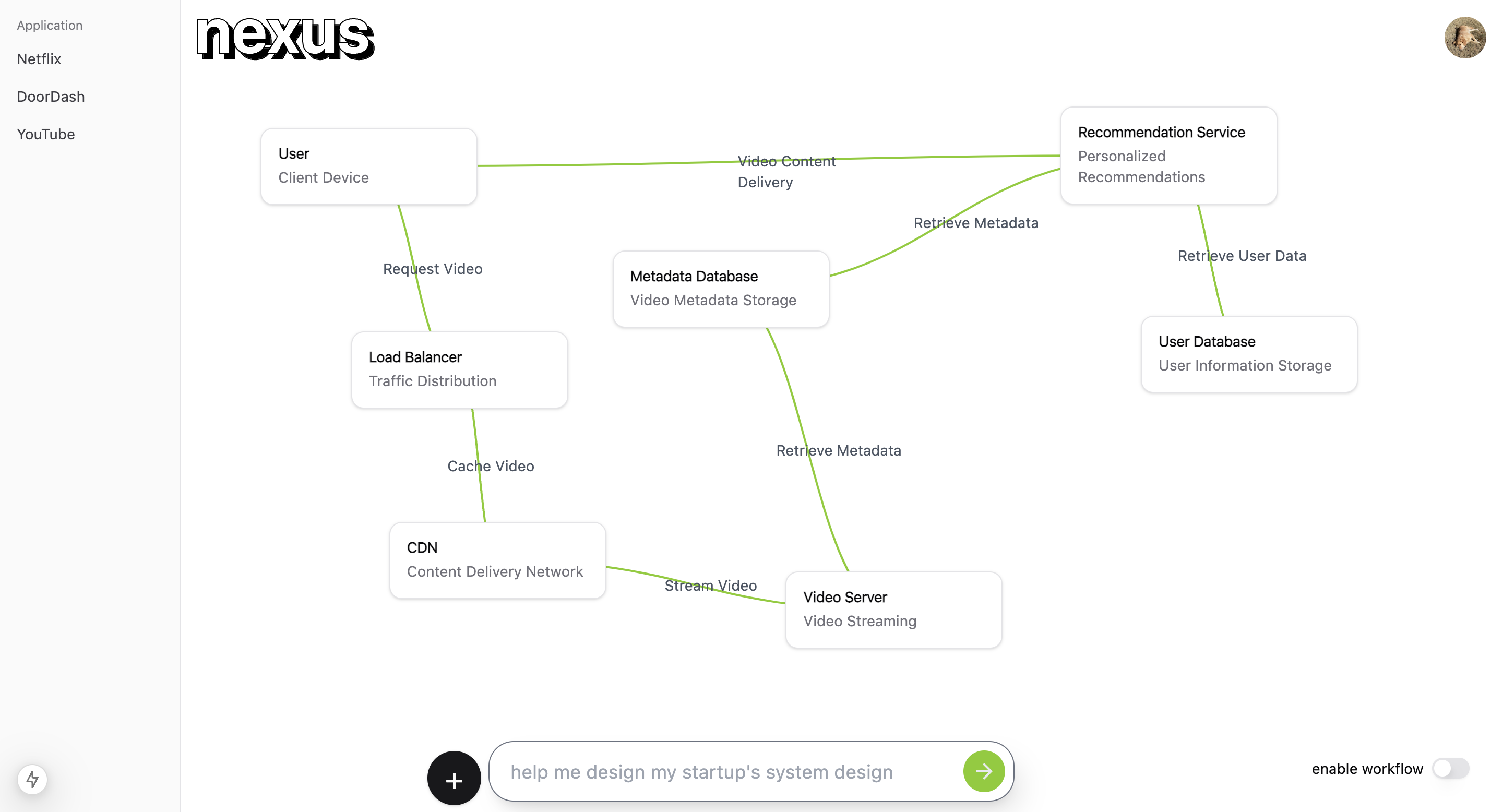
System design is crucial for building reliable, scalable architectures, yet it can be challenging to visualize complex systems effectively. We created Nexus to provide an intuitive, interactive network visualization tool for users at all experience levels—whether it's students preparing for system design interviews or senior engineers developing architectures for companies and startups.
What it Does
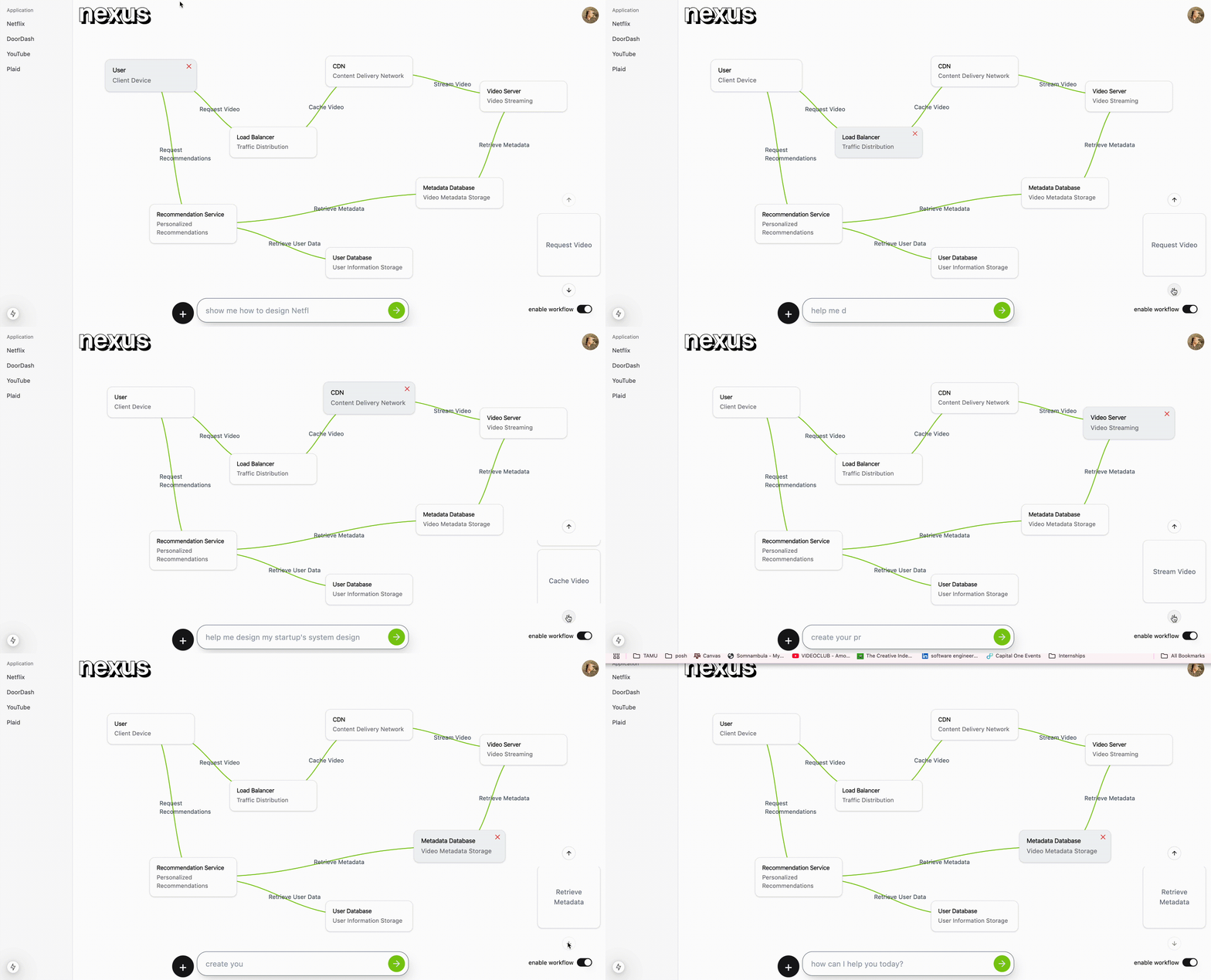
Nexus enables users to visualize and explore system design workflows. Users can create mind maps representing components, data flow, and connections within a system. By leveraging AI-driven insights, Nexus helps users break down and structure system designs, making it easy to understand how data flows between nodes.
How We Built It
We built Nexus using a combination of cutting-edge tools and frameworks:
- Databricks: For data processing and integration with machine learning workflows.
- MosaicML and Meta Llama: Powering AI-driven responses to generate system designs.
- LangChain: For chaining responses from different models and streamlining output into structured workflows.
- MongoDB: For storing users’ design history, allowing them to revisit previous designs.
- NextAuth: For secure user authentication.
- React and Tailwind CSS: To create a responsive and visually appealing user interface, enabling clear visualization of nodes and data flows.
Sample Node / Connections Response from LLM:
{
  "Nodes": [
    {"id": 1, "name": "User"},
    {"id": 2, "name": "Authentication"},
    {"id": 3, "name": "App Servers"},
    {"id": 4, "name": "Database"},
  ],
  "Connections": [
    {"from": 1, "to": 2},
    {"from": 2, "to": 3},
    {"from": 3, "to": 4},
    {"from": 4, "to": 5},
  ],
  "Flow": [
    "User Input -> Authentication -> App Servers -> Database"
  ]
}
Challenges We Ran Into
One of the biggest challenges was integrating multiple AI models seamlessly with LangChain. Ensuring the generated designs were both structured and intuitive required significant tweaking of prompts and response chaining. Additionally, creating a smooth, user-friendly experience for handling complex system designs was technically demanding.
Accomplishments that We're Proud Of
We’re proud to have developed a tool that not only helps visualize complex workflows but also leverages AI to generate and structure system designs dynamically. Our seamless integration of Databricks and LangChain for multi-model response handling, along with a user-friendly interface, represents a significant accomplishment.
What We Learned
Through this project, we deepened our understanding of integrating multiple machine learning models, optimizing prompt engineering, and enhancing user experiences with interactive, data-driven visualizations. We also gained experience in scalable back-end design and database management to support a history feature.
What's Next for Nexus
Moving forward, we plan to add new features, including:
- Multiplayer collaboration: Allowing multiple users to collaborate on system designs in real-time.
- Enhanced AI insights: Providing deeper analysis and optimization suggestions for designs.
- Export and share options: Enabling users to easily export and share their designs.
Built With
- databricks
- figma
- langchain
- mongodb
- mosaic-ai
- next.js
- python
- react
- typescript


Log in or sign up for Devpost to join the conversation.