-
-
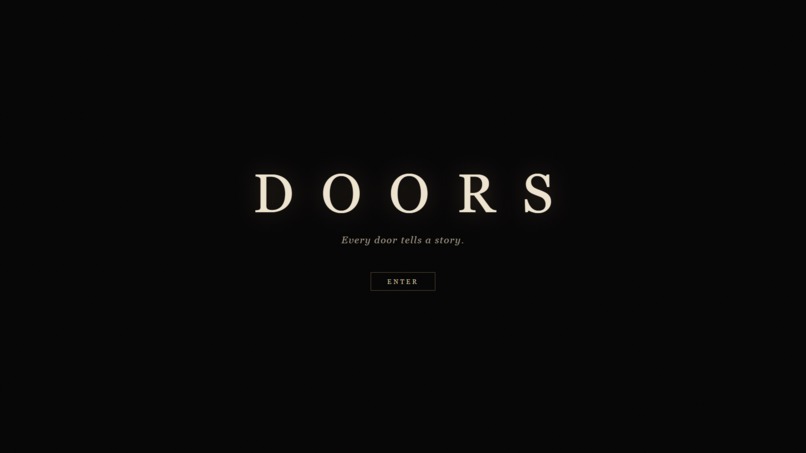
Home Page
-
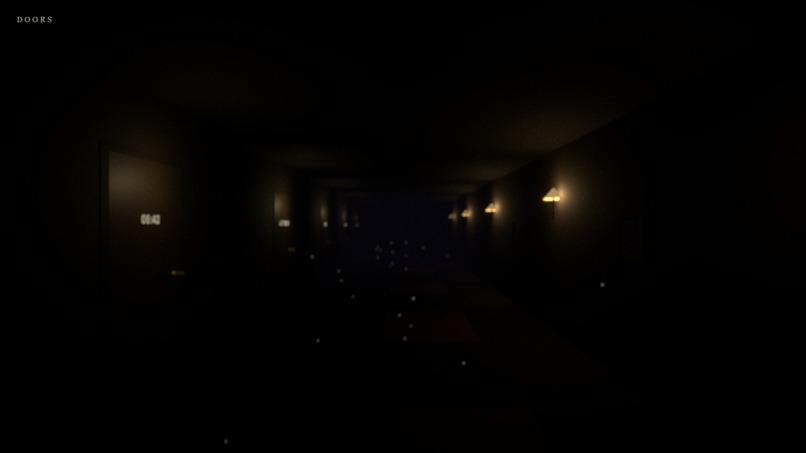
Hallway Page
-
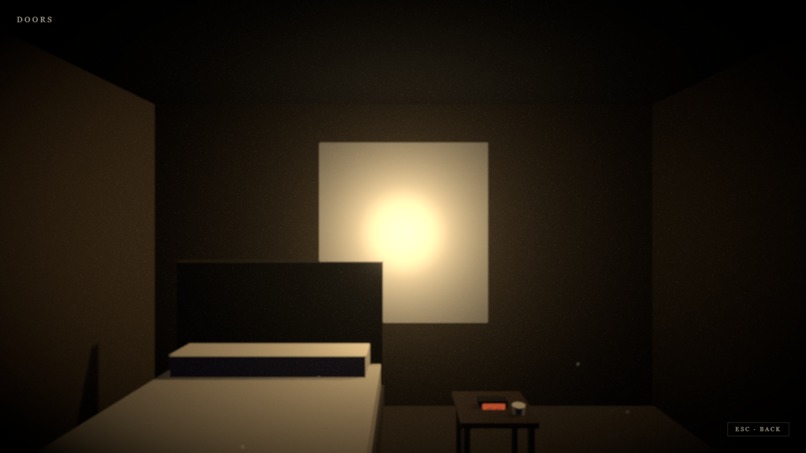
06:42 Page
Inspiration
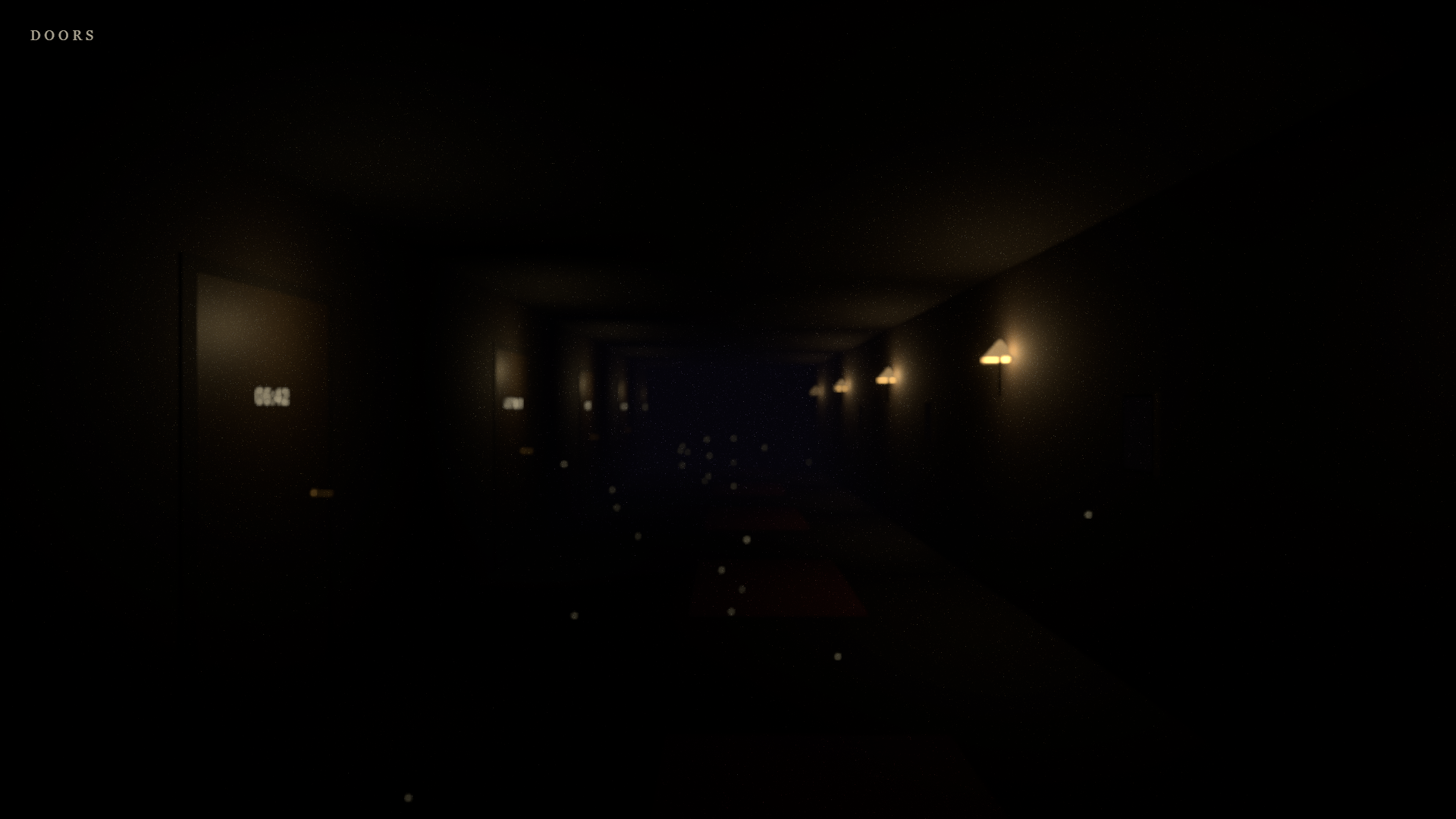
We wanted to build something that didn't feel like a Three.js demo — no spinning cube, no neon grid floor. The idea came from a simple image: a hallway with doors you can't see behind, each one holding a fragment of the same memory. "Every door tells a story" became the whole design brief in five words, and everything — the pacing, the sound, the mirror reveal — got built in service of that line.
What it does
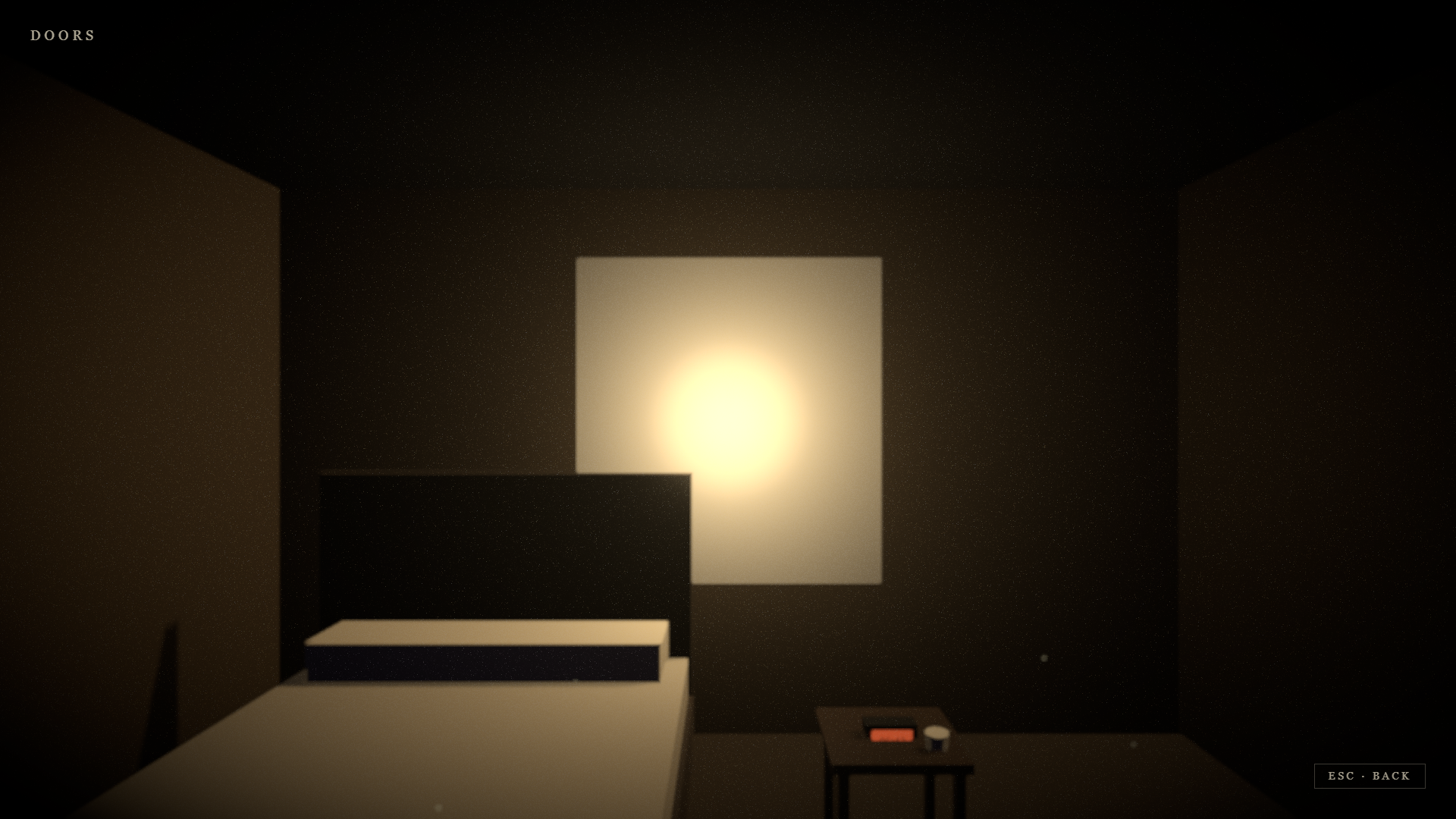
DOORS is a first-person, cinematic 3D website. You walk down a hallway and open five doors, each leading to a fully realized environment: a bedroom frozen at 06:42, a rain-soaked train platform at night, a nostalgic childhood room from 2012, an ordinary hotel room whose mirror shows something it absolutely should not, and finally a quiet room that ties every earlier scene together. Clicking objects in each scene — a photograph, a suitcase, a calendar, the mirror — reveals a piece of the story through environmental detail instead of text dumps or UI panels.
The biggest moment is Room 404: stand in front of the mirror and it doesn't reflect the hotel room around you. It shows the hallway from the very beginning of the experience — colder, dimmer, and not quite right.
How we built it
- React Three Fiber + drei for the 3D scene graph and helpers
- GSAP for every hand-tuned animation: the door swing, the handle turn, the camera transitions between scenes
- Zustand for a lightweight story-state store tracking which doors have been opened and which clues found, so later scenes can react to what you've already seen
- @react-three/postprocessing for bloom, depth of field, film grain, and a vignette — doing a lot of the "cinematic" heavy lifting that would otherwise need baked lighting
- A custom Web Audio synthesis engine instead of sound files — footsteps, the door creak, rain, and room tone are all generated at runtime with oscillators and filtered noise, so the project needed zero external audio assets to feel alive
- The mirror in Room 404 is a
RenderTextureportal: a second, smaller "ghost" version of the hallway is rendered live into a texture and mapped onto the mirror's surface, rather than faking it with a static image
Challenges we ran into
- Getting movement to feel cinematic, not FPS. Raw WASD strafing broke the mood instantly. We settled on eased forward/back travel along a single axis plus a clamped, drag-based look-around — enough agency to feel present, not enough to feel like a shooter.
- The mirror. Reflecting real geometry in real time is expensive and fiddly; rendering an entirely separate "ghost hallway" scene into a texture turned out to be both cheaper and narratively stronger, since it let us deliberately make it wrong rather than just accurate.
- No asset pipeline. With no time to source or license 3D models and audio, every room is built from primitives — boxes, cylinders, planes — and every sound is synthesized. The challenge became making restraint look intentional: materials, lighting, and fog carrying the realism instead of geometry density.
- Keeping five separate scenes feeling like one story rather than
five disconnected demos, using shared components (a
Furniture.jsxkit, a commonPlayerController, oneSceneTransitionfade) so the whole experience reads as one continuous place.
What we learned
That atmosphere is mostly a lighting and pacing problem, not a polygon problem — a low-poly room with the right fog, warm point lights, and a slow camera can read as more "real" than a high-fidelity scene with flat lighting. We also learned how far procedural audio can go in a browser without a single audio file, and how much a single well-placed reveal (the mirror) can carry an entire experience.
What's next for DOORS
- Swap in real GLTF models and an HDRI environment for the hallway, since the architecture is already set up to drop them into any scene file without touching the rest of the app
- Add recorded/foley audio alongside the synthesized layer for texture
- A sixth, hidden door that only appears once all five story clues have been found
Built With
- gsap
- javascript
- react
- react-three-drei
- react-three-fiber
- react-three-postprocessing
- three.js
- vite
- web-audio-api
- webgl
- zustand

Log in or sign up for Devpost to join the conversation.