Inspiration
Nexus AI was born from a simple observation: many aspiring creators have brilliant ideas but lack a centralized, accessible environment to bring them to life. Whether it’s a lack of computing power, complex setup requirements, or the steep learning curve of modern frameworks, the "barrier to entry" is often too high. I built Nexus AI to democratize innovation, providing a seamless, AI-powered workspace where anyone—regardless of their technical background—can bridge the gap from concept to execution.
What it does
Nexus AI serves as an all-in-one intelligent project incubator. It assists users by:
Automating Workflow: Setting up development environments and scaffolding project structures in seconds.
Intelligent Collaboration: Offering an AI-driven "co-pilot" that helps debug code, generate documentation, and suggest architectural improvements.
Resource Centralization: Bringing together design tools, version control, and deployment pipelines into a single, intuitive dashboard.
How we built it
The core of Nexus AI is built on a modern, scalable stack designed for speed and reliability:
Frontend: Developed with React and Tailwind CSS for a responsive, developer-friendly UI.
Backend: A Node.js and Python hybrid architecture to handle intensive AI processing and real-time data.
AI Engine: Integrated Large Language Models (LLMs) via API to power the natural language interface and code generation features.
Cloud Infrastructure: Hosted on AWS/Vercel, utilizing containerization to ensure that user projects stay isolated and secure.
Challenges we ran into
One of the biggest hurdles was context management—ensuring the AI understood the "big picture" of a user's project rather than just looking at individual files. We also faced significant challenges in optimizing latency; nobody wants to wait 30 seconds for an AI response when they’re in the flow of creating. We overcame this by implementing a robust caching layer and streamlining our API calls.
Accomplishments that we're proud of
The "One-Click" Setup: Successfully building a system that can initialize a full-stack project from a single natural language prompt.
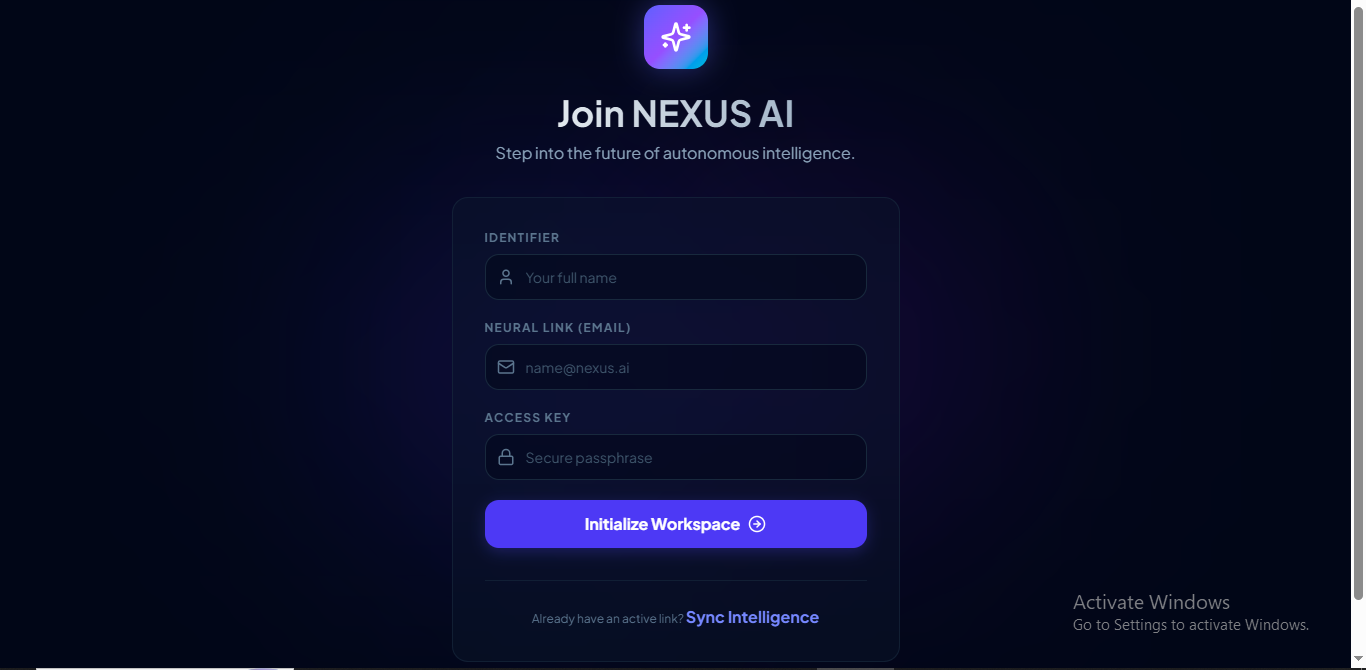
Intuitive UX: Creating a clean interface that makes complex AI operations feel simple and approachable for beginners.
Seamless Integration: Developing a custom file-syncing system that updates in real-time as the AI suggests changes.
What we learned
Building Nexus AI taught us that AI is a partner, not a replacement. We learned how to fine-tune the balance between automated generation and user control. We also gained deep insights into prompt engineering and the importance of "human-in-the-loop" design to ensure the code produced is not just functional, but high-quality and maintainable.
What's next for Nexus AI
The journey doesn't end here. Our roadmap includes:
Multi-User Collaboration: Allowing teams to work within the same Nexus environment in real-time.
Custom Model Training: Giving users the ability to "teach" Nexus AI their specific coding style or company guidelines.
Mobile Companion App: A lightweight version of the platform for monitoring project builds and quick debugging on the go.

Log in or sign up for Devpost to join the conversation.