-
-
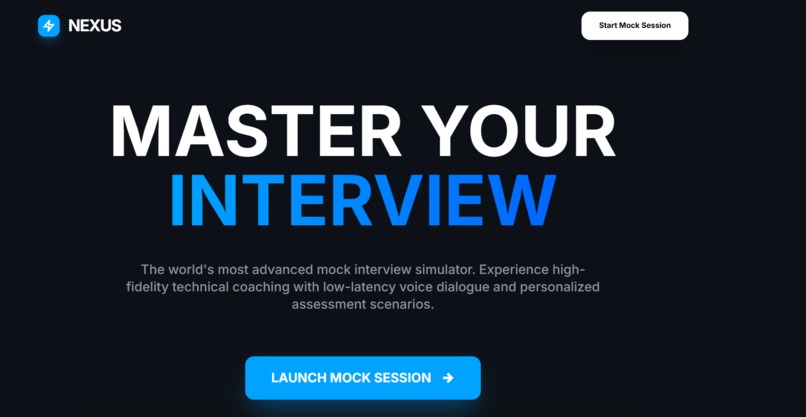
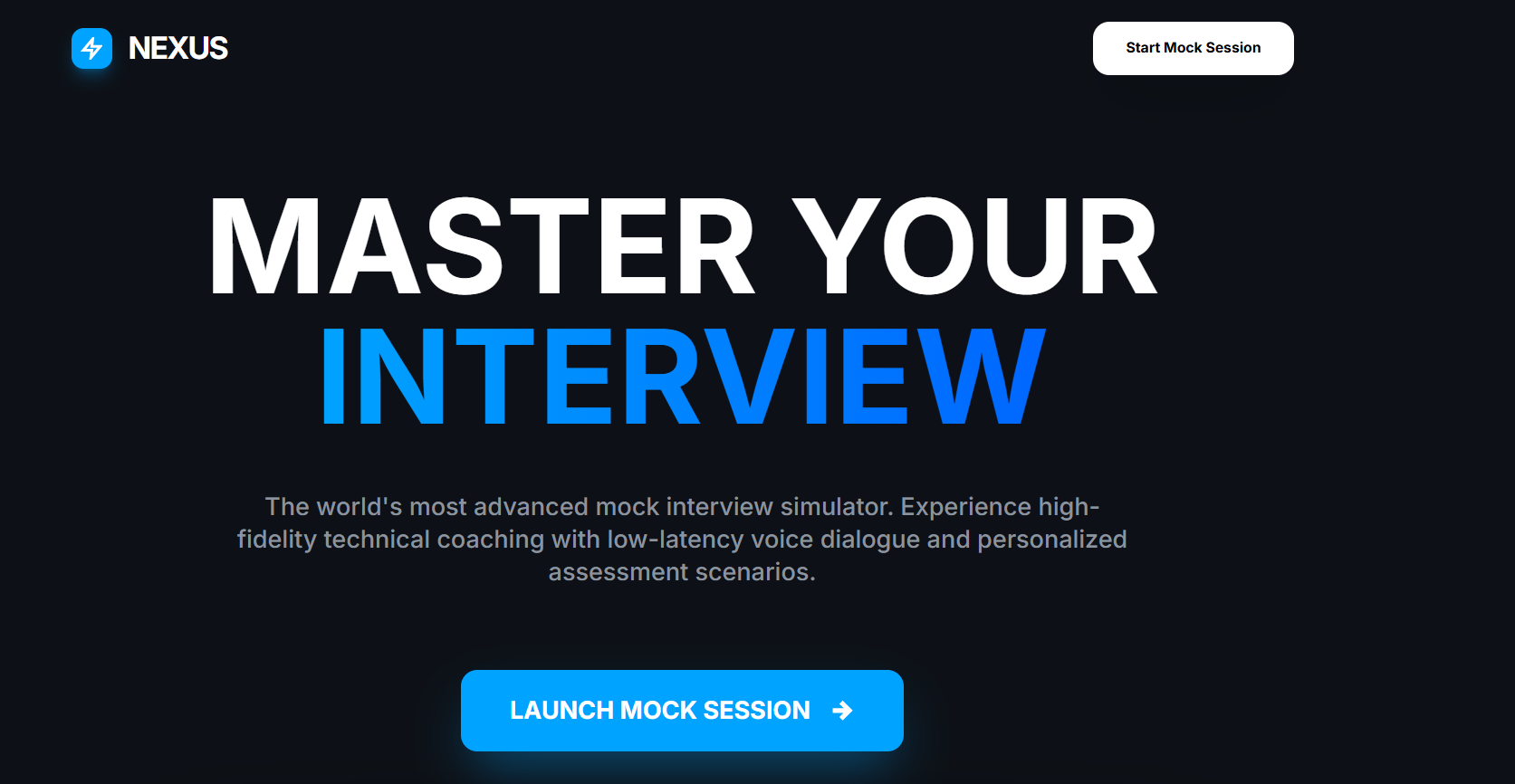
Nexus Landing Page: The starting point for users to "Master Your Interview" through high-fidelity simulation.
-
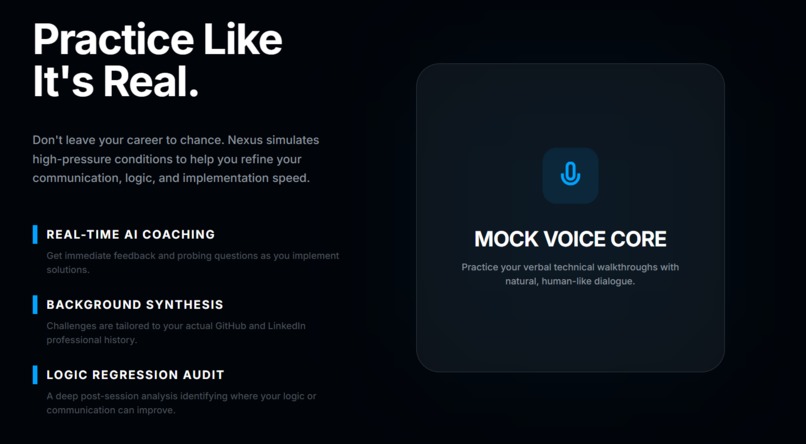
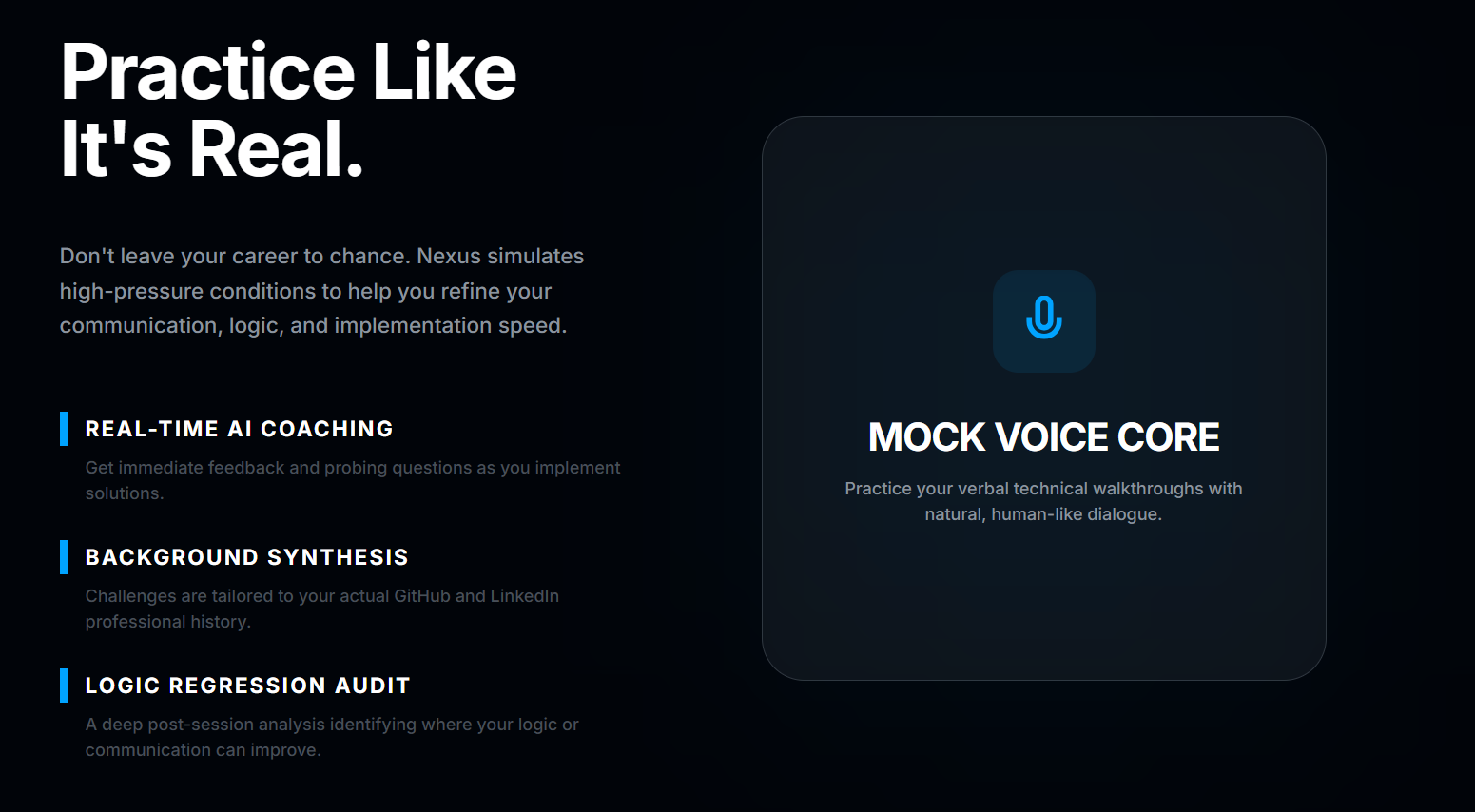
Features Overview: A deep dive into real-time coaching, background synthesis, and logic regression audits.
-
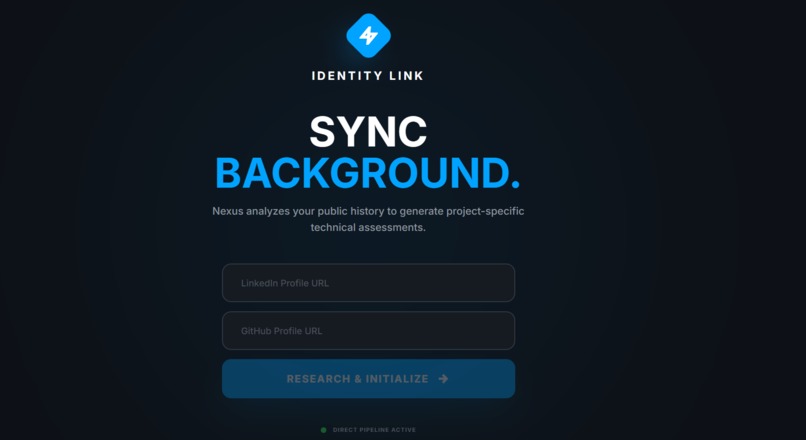
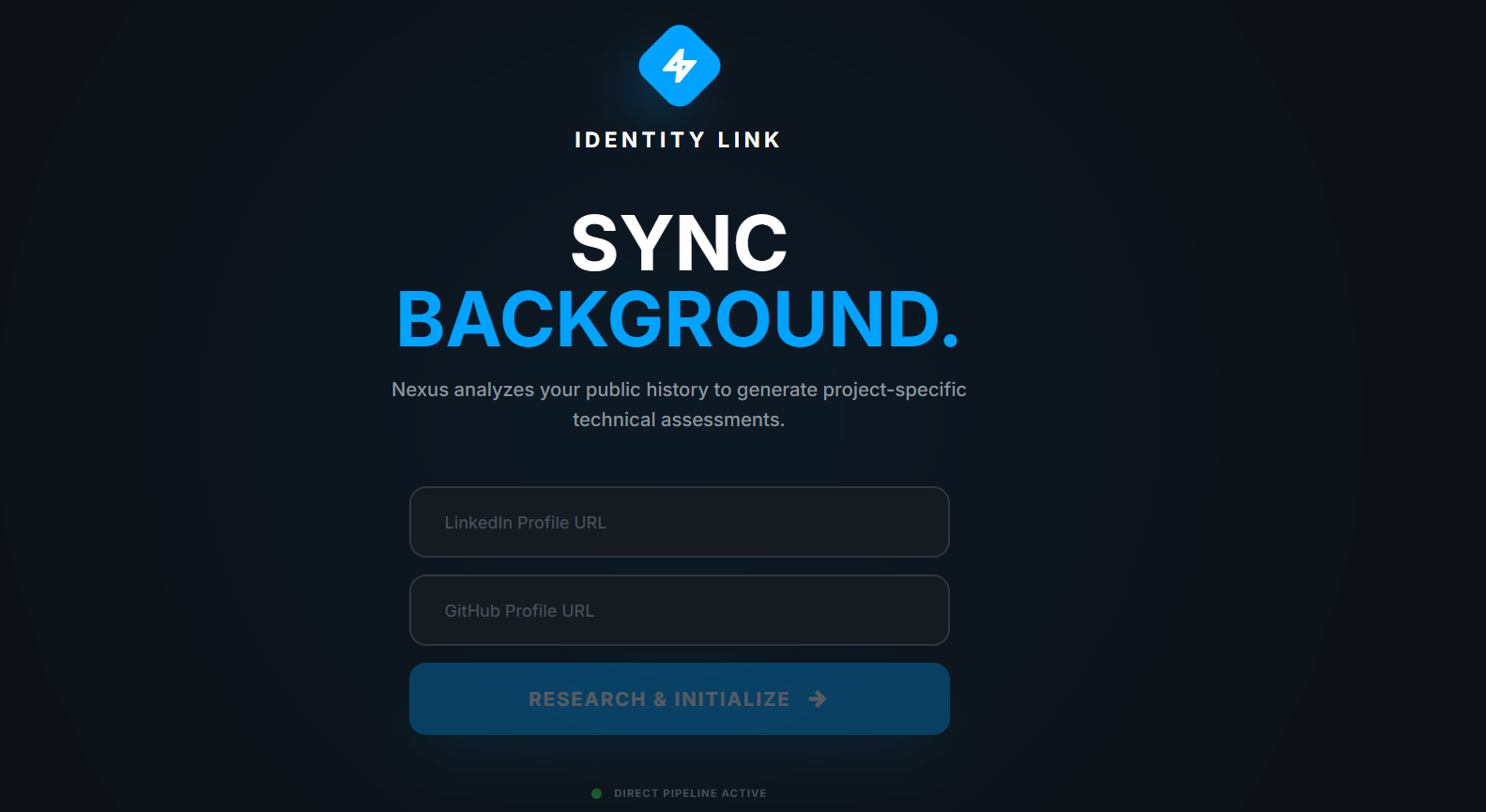
Identity Link: Personalizing the experience by syncing professional data from LinkedIn and GitHub.
-

Candidate Profiling: The AI engine in action, synthesizing projects and personality into a technical roadmap
-
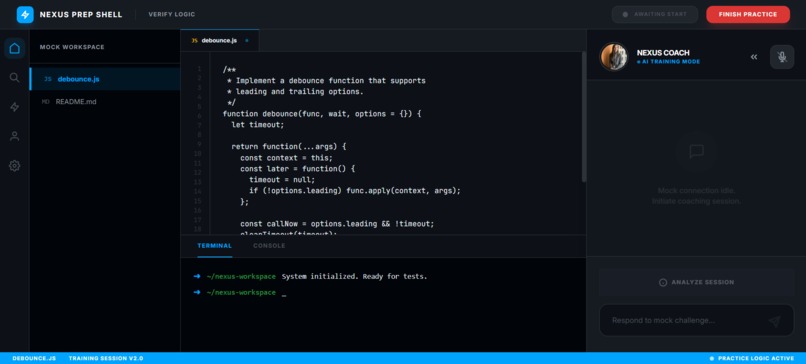
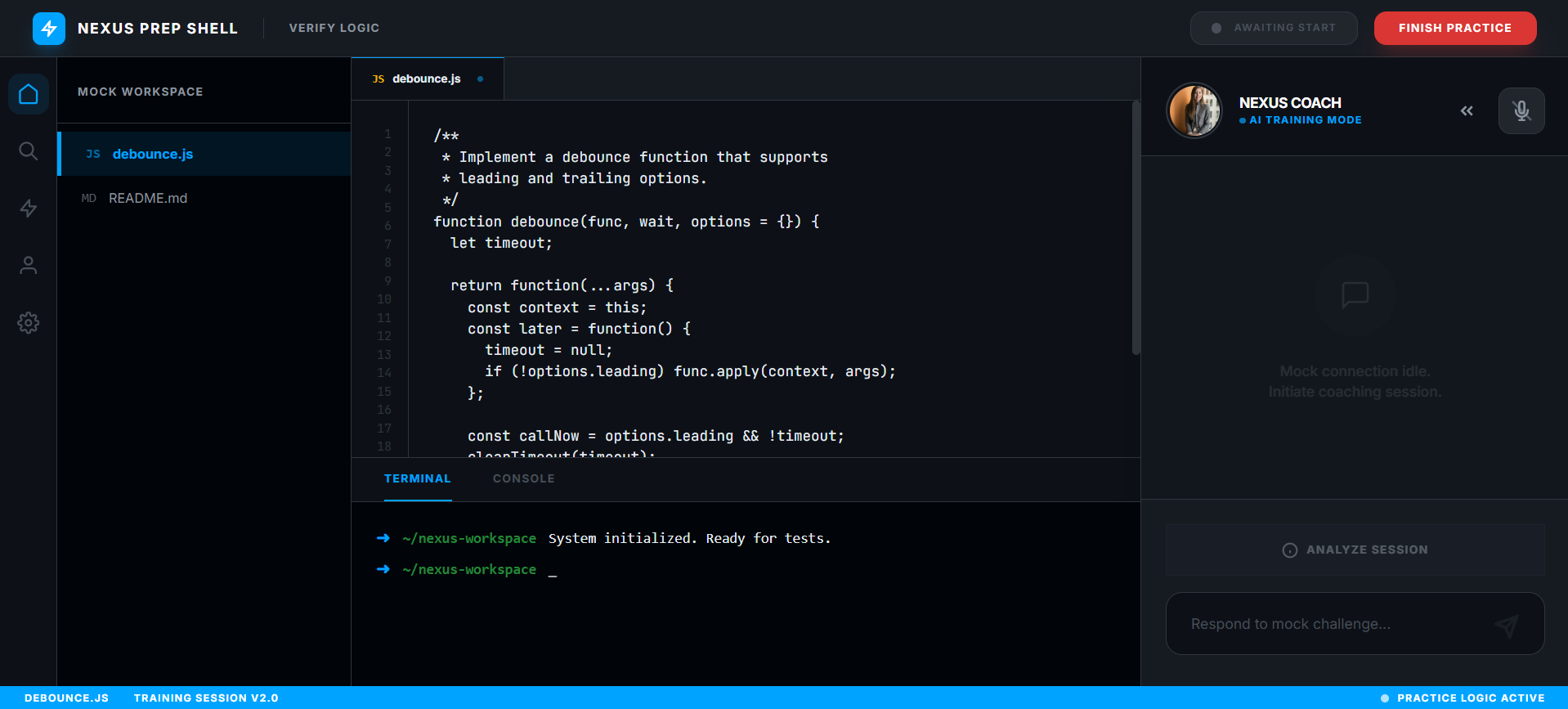
Nexus Prep Shell: A seamless, integrated workspace for live coding, terminal testing, and AI mentorship.

Inspiration
The entry-level tech market has become intensely competitive, especially for students from smaller universities who may not have strong alumni pipelines or brand-name leverage.
A high GPA alone no longer differentiates candidates. Recruiters increasingly expect engineers to defend architectural decisions, explain trade-offs, and articulate why specific implementations were chosen.
However, most mock interview platforms focus almost entirely on algorithm drills. They simulate coding rounds but ignore one of the most decisive interview questions:
“Walk me through this repository.”
That deep-dive into real projects is where interviews are often won or lost.
I built Nexus AI to replicate that real-world pressure and bridge the gap between theory and actual engineering discussion.
What it does
Nexus AI is an identity-aware interview simulator.
Instead of assigning random coding problems, it:
- Syncs with your LinkedIn and GitHub
- Analyzes your repositories and contribution patterns
- Identifies frameworks, architecture choices, and technical depth
- Conducts a real-time voice interview grounded in your own projects
Using advanced conversational AI, Nexus probes:
- Why certain hooks were used
- How concurrency was handled
- What trade-offs were made
- Where system bottlenecks might exist
After each session, it generates a Junior Dev Readiness Report, evaluating:
- Technical depth
- Logical clarity
- Communication precision
- Engineering mindset
- Market alignment
The result is structured, measurable interview preparation.
How I built it
Frontend Built with React 19 and Tailwind CSS, designed as a responsive “Shell” optimized for real-time, voice-first interaction.
AI Core Powered by Google Gemini 2.5 Flash via the Native Audio Live API for low-latency conversational dialogue.
Analysis Engine Uses Gemini 3 Pro to conduct structured logic audits and communication critiques.
Grounding System Implements search grounding to synthesize live professional data from public profiles and repositories.
Audio Layer Developed a custom PCM encoding/decoding pipeline to handle raw audio streaming over WebSockets for real-time processing.
Challenges I ran into
Handling raw PCM audio streams in the browser was significantly more complex than anticipated.
The standard:
decodeAudioData()
does not support streaming chunk-based input, requiring custom buffering and playback management.
I also encountered a race condition between:
- Establishing the Live API connection
- Injecting contextual system instructions
Without proper sequencing, the AI would respond before identity research completed. I redesigned the state management flow to guarantee fully contextualized greetings and responses.
Real-time conversational systems require strict synchronization to maintain credibility.
Accomplishments that I'm proud of
I successfully created a truly identity-aware AI agent.
Instead of asking:
“What is a React hook?”
Nexus asks:
“I noticed you used
useMemoin your portfolio project. Why was memoization necessary in that context?”
That shift — from theoretical abstraction to contextual interrogation — significantly increases realism.
I’m also proud of the Job Market Alignment dashboard, which translates interview performance into tangible insights tied to hiring demand and projected salary ranges.
What I learned
I learned how powerful grounding is when building intelligent systems.
Providing structured access to real-world repositories and metadata transforms a generic LLM into a specialized professional evaluator.
I also strengthened my knowledge of:
- The Web Audio API
- WebSocket-based streaming architectures
- Real-time state synchronization in React
- Latency optimization for live AI systems
Most importantly, I learned that context multiplies the effectiveness of AI-driven evaluation.
What's next for Nexus AI Interview Prep
Multi-Modal Video Analysis Adding camera-based feedback to evaluate posture, eye contact, and non-verbal communication.
Referral & Talent Pipeline Integration Surfacing high-performing candidates to recruiters based on quantified Audit scores.
Dynamic Market Benchmarking Continuously adjusting evaluation metrics based on live hiring trends.
My long-term vision is to build infrastructure that allows engineers to compete on demonstrated skill — not institutional brand recognition.

Log in or sign up for Devpost to join the conversation.