-
-
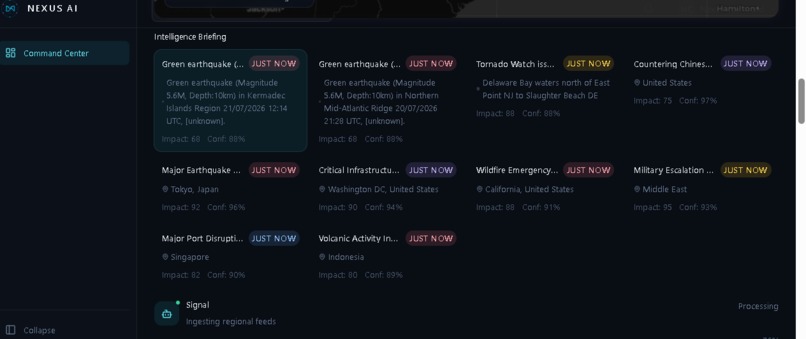
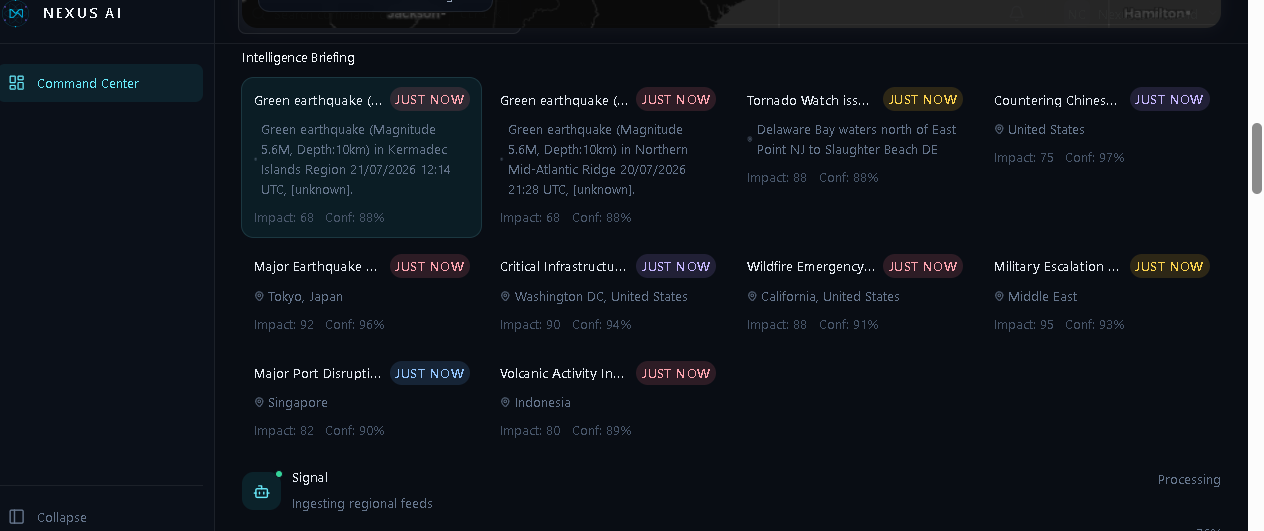
List of LIVE Global Threats
-
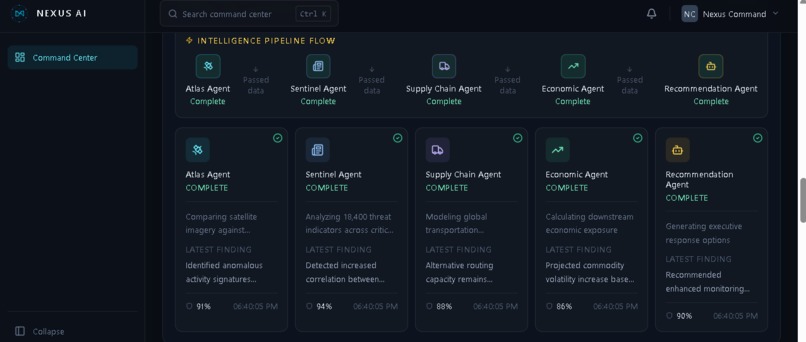
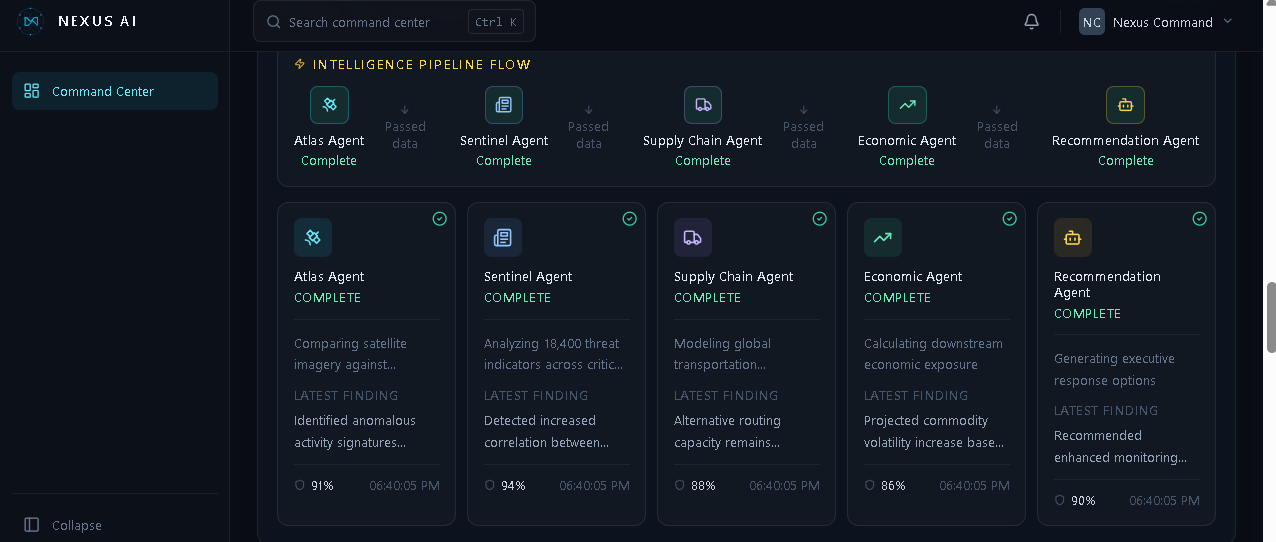
Different AI agents at work to scan the global event.
-
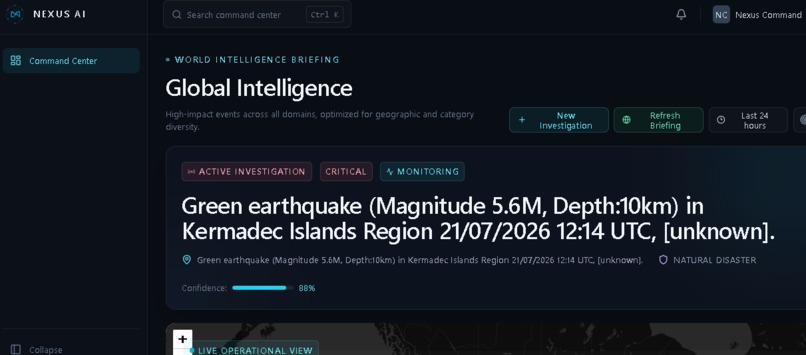
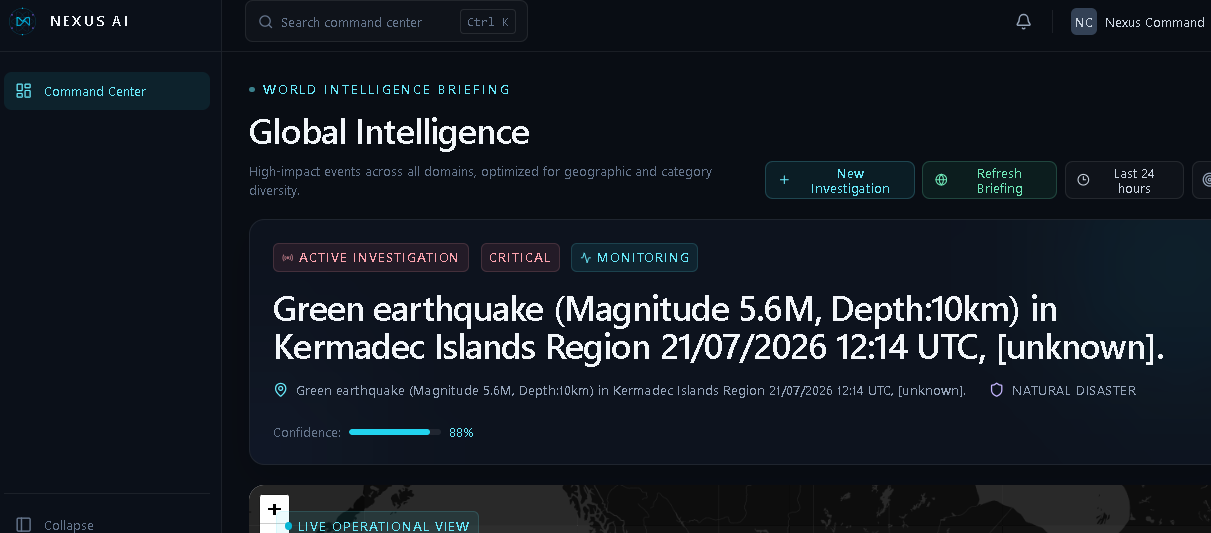
Event Display
-
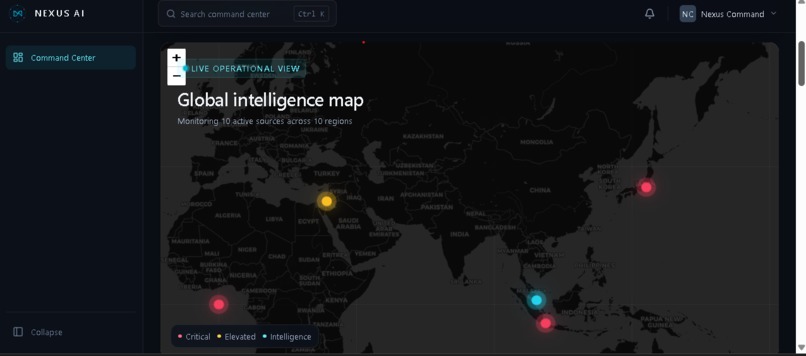
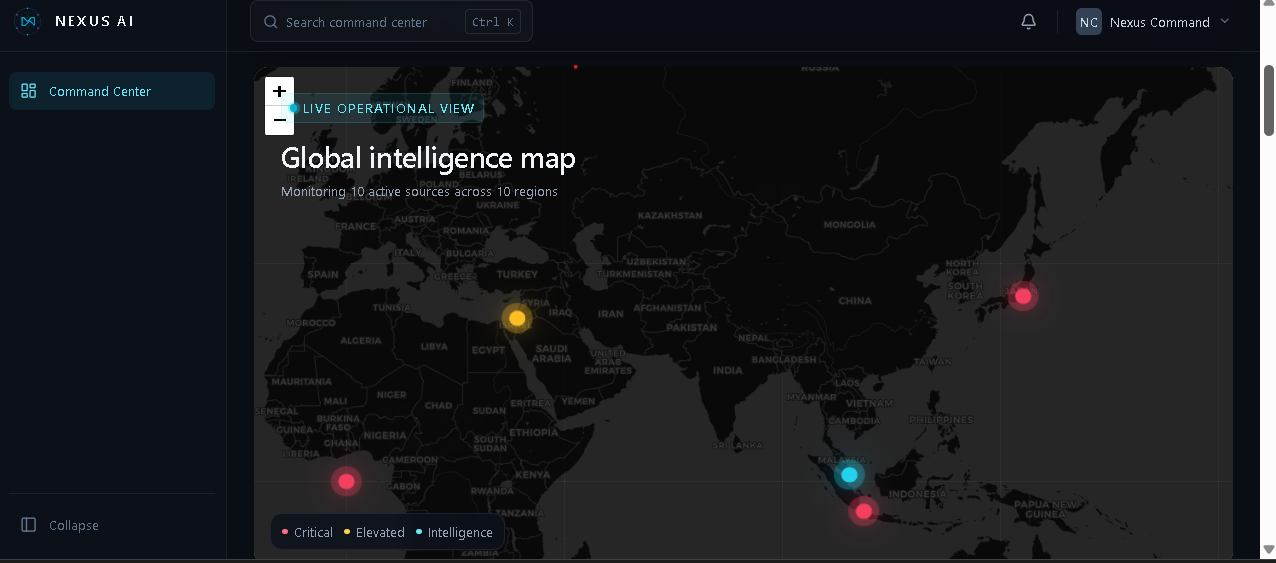
MAP with the dots being the threats
Nexus AI
Inspiration
During major global events, information is often spread across many different sources, making it difficult to quickly understand what is happening. We wanted to build a platform that could bring important information together and make it easier for people to analyze situations.
Nexus AI was created to provide a centralized intelligence dashboard that combines real-time event data, visualization, and AI-powered analysis.
What it does
Nexus AI is a global intelligence platform that helps users monitor and investigate important events around the world.
The platform allows users to:
- View global events on an interactive map
- Explore event details including location, description, and severity
- Receive AI-generated analysis for specific situations
- Monitor live intelligence updates through a centralized dashboard
Instead of manually searching through different sources, users can view organized information in one place.
How we built it
Nexus AI uses a full-stack architecture:
Frontend:
- React
- Vite
- Leaflet for interactive maps
Backend:
- Python
- Flask
- REST APIs
AI:
- Google Gemini API for event analysis and investigation
Deployment:
- Vercel for frontend hosting
- Render for backend hosting
The frontend communicates with the backend through APIs. The backend processes event information and provides structured data that is displayed through the dashboard.
Challenges we ran into
One of the biggest challenges was connecting multiple parts of the system together. We had to debug communication between the frontend and backend, handle API deployment issues, and ensure that live data could be displayed correctly.
Another challenge was designing an interface that could display large amounts of information without overwhelming users. We focused on creating a clean command-center style dashboard that makes important information easy to understand.
Accomplishments that we're proud of
We successfully built a working full-stack application that combines:
- Interactive global visualization
- AI-powered investigation
- Real-time style event monitoring
- A deployed frontend and backend system
We are especially proud of creating a platform that turns complex information into something users can quickly explore and understand.
What we learned
Through building Nexus AI, we learned how to:
- Build and deploy a full-stack application
- Connect frontend interfaces with backend APIs
- Work with AI APIs in real applications
- Debug deployment and integration problems
- Design user experiences for information-heavy applications
What's next for Nexus AI
Future improvements include:
- Adding more data sources
- Improving event verification
- Adding predictive analysis
- Building more specialized AI agents
- Expanding global monitoring capabilities
How we used Codex
Codex helped accelerate our development process by assisting with debugging, implementation, and engineering decisions.
We used Codex to:
- Debug backend API issues
- Improve frontend components
- Troubleshoot deployment problems
- Iterate faster on features
Codex helped us spend less time solving small technical issues and more time improving the overall product experience.
Built With
- ai
- ai-agents
- crisis-intelligence
- data-visualization
- emergency-response
- flask
- gemini
- generative-ai
- global-monitoring
- machine-learning
- python
- react
- real-time-data
- social-impact

Log in or sign up for Devpost to join the conversation.