


Inspiration
Social situations can be stressful when there is no clear "right" answer.
I built Nexus after thinking about how often people are expected to learn social interactions through trial and error. For neurodivergent people, that trial-and-error process can be especially difficult. A conversation with a teacher, manager, cashier, or stranger can feel high-stakes when you aren't sure what the other person means or how you're expected to respond.
I wanted to create a place where people could practice without having to perform.
Instead of giving users a score for how "socially correct" they were, Nexus focuses on reflection. The goal to help them feel more prepared and confident while still being themselves.
What it does
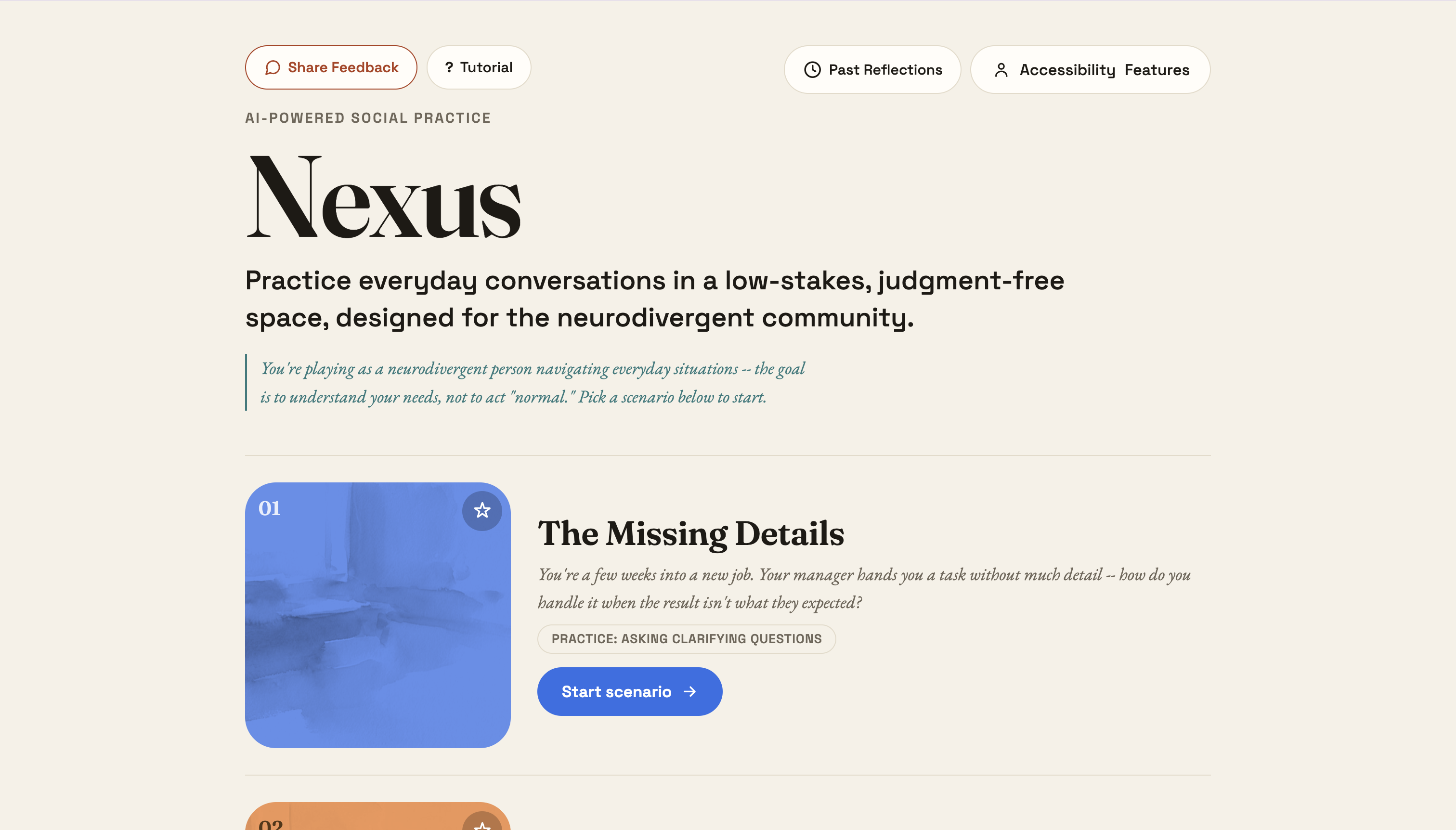
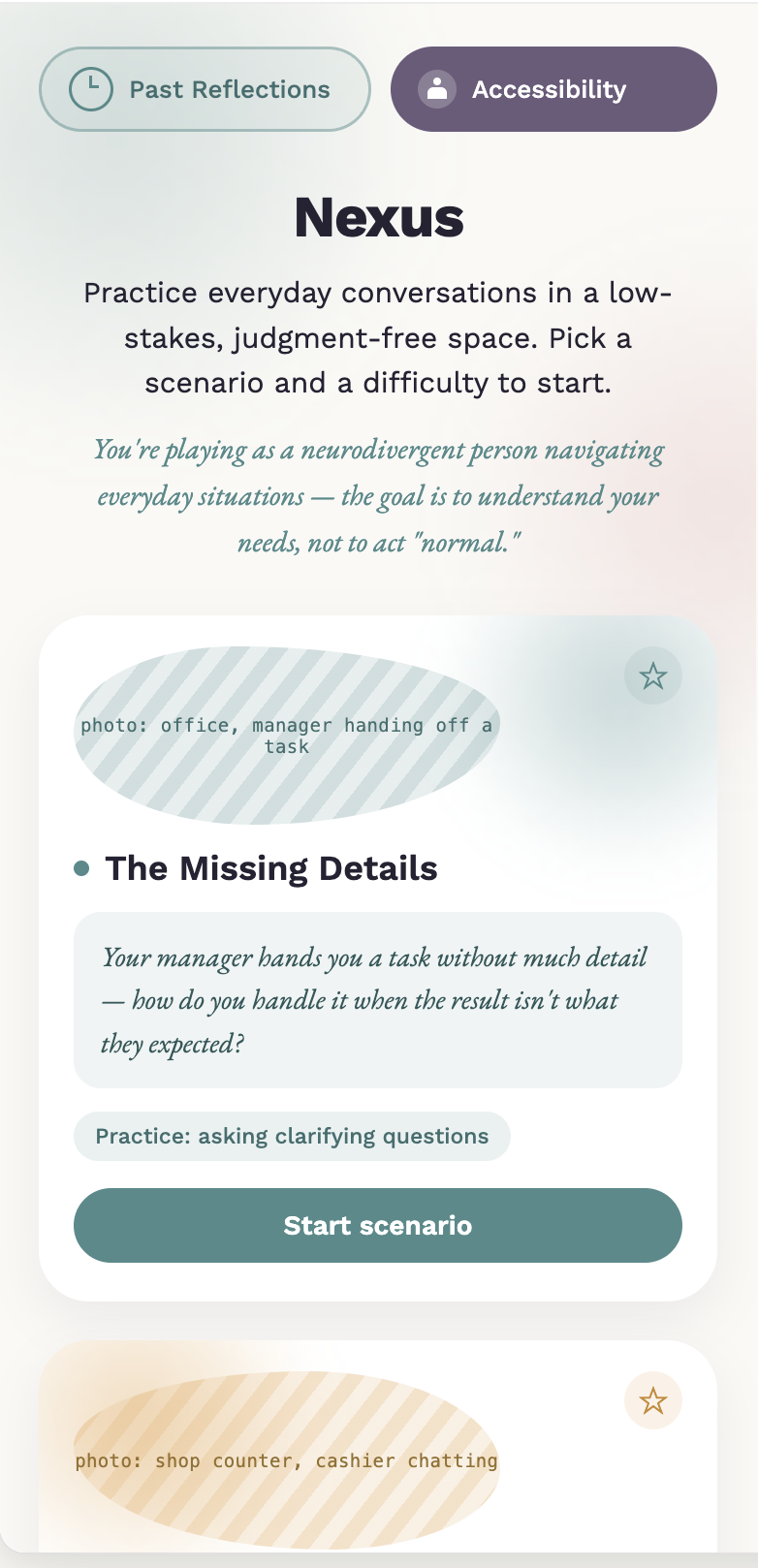
Nexus is an AI-powered social scenario practice tool for neurodivergent users.
Users can enter realistic situations and practice conversations with an AI character. Scenarios include situations such as:
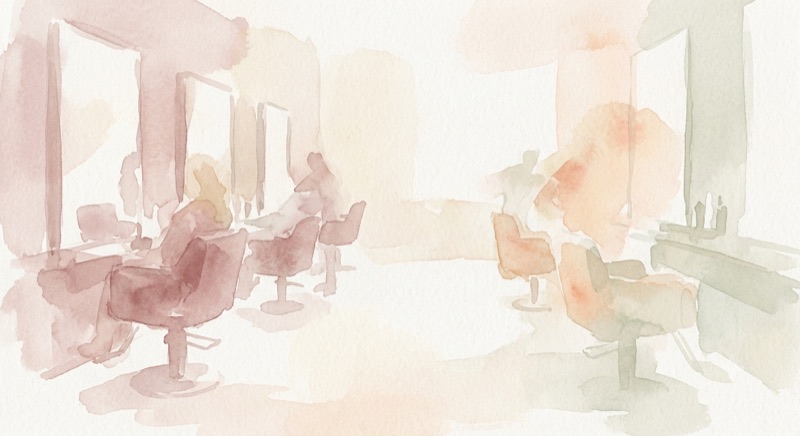
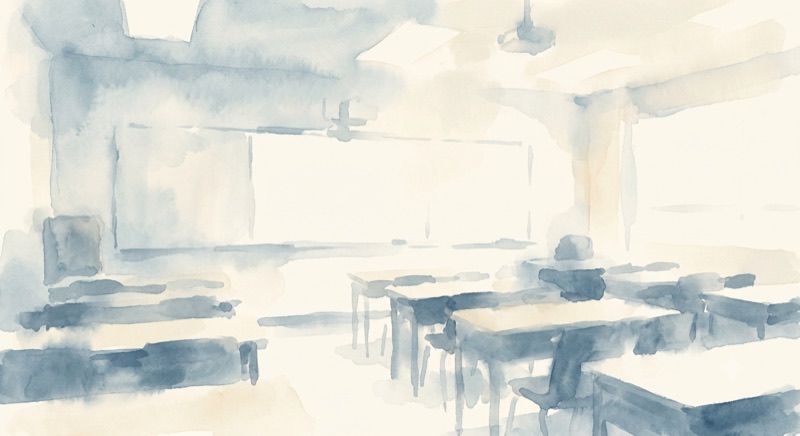
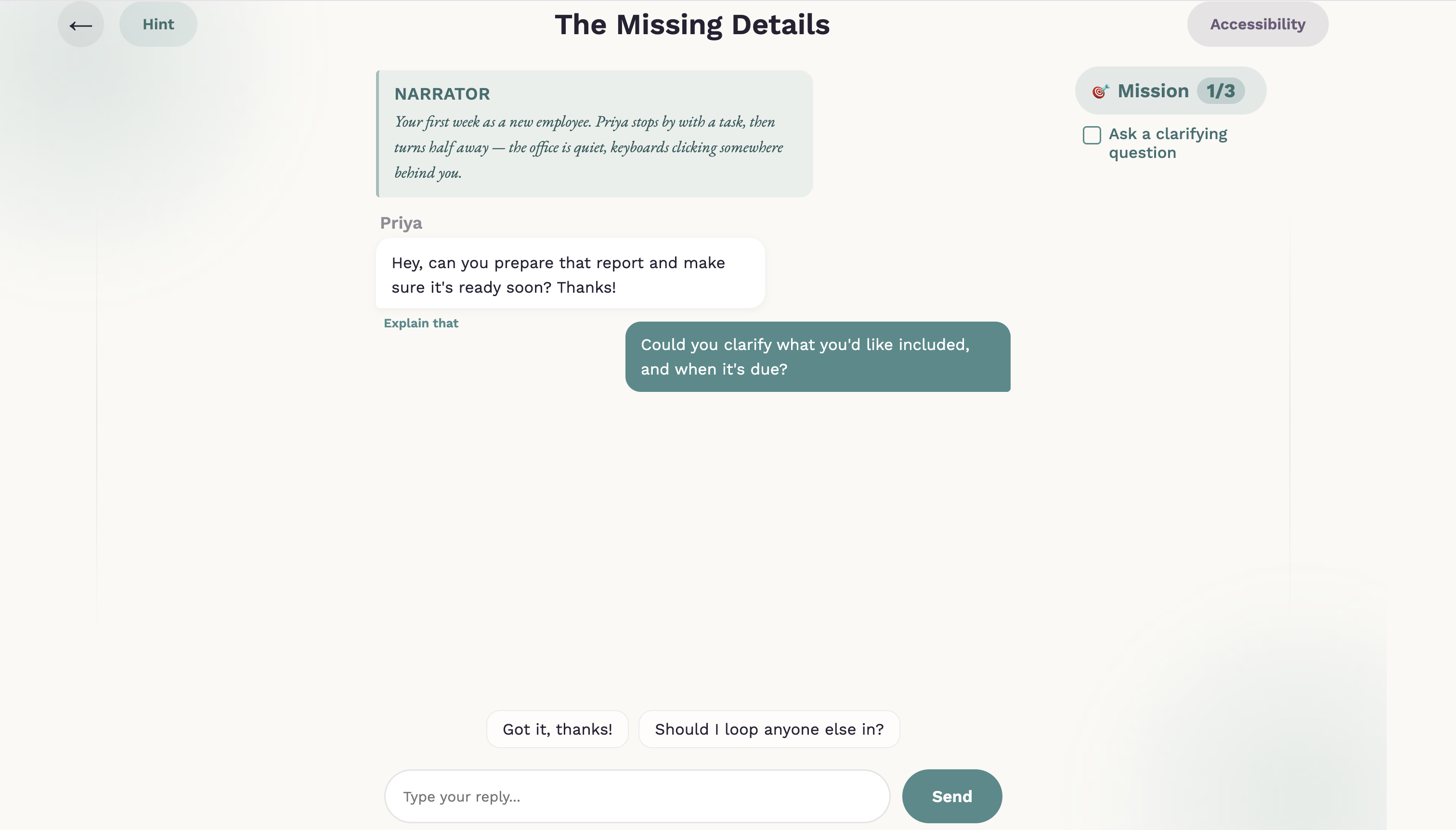
A manager giving vague instructions Making small talk with a cashier Handling an overwhelming environment Practicing how to interrupt or enter a conversation Navigating sarcasm, irony, and ambiguous social cues
Nexus provides a low-stakes environment where users can experiment with different responses and reflect on what happened.
The experience is designed around one principle:
You don't have to perform to be understood.
How we built it
Nexus is built as a web application so that users can access it without installing specialized software.
Frontend: React Backend: Node.js + Express AI: OpenAI API (GPT models) for roleplay dialogue, hints, and reflections Voice: OpenAI Realtime API + WebRTC for live spoken roleplay Deployment: Railway (single-service deployment serving both backend and built frontend) Scenario system: Scenarios are stored separately from the application logic, making it easier to add new situations
I designed the interface to feel calm and non-judgmental rather than like a traditional educational or assessment platform. The visual design uses a warm, minimal interface inspired in part by the conversational technology shown in "Her" (movie), while adapting it into a more accessible and welcoming experience.
I also involved neurodivergent users throughout testing. I shared Nexus through multiple Discord communities, a friend group, and Stanford SNP REACH Slack communities. I received detailed feedback responses, including responses from users who identified as neurodivergent and described experiences with autism, ADHD, and dyslexia.
That feedback directly influenced the project. I added and refined features to address concerns around accessibility, social pressure, trust, and the need for a safer way to practice conversations.
Challenges we ran into
One of the biggest challenges was realizing that building an AI that can talk is much easier than building an AI that can create a useful and emotionally safe practice environment.
Early versions focused heavily on the conversation itself. Feedback showed me that the surrounding experience mattered just as much: users needed to understand that they weren't being graded, feel comfortable experimenting, and have a way to reflect afterward.
Another challenge was trust. Asking someone to open an unfamiliar website and talk to an AI about social situations naturally raises questions about privacy, safety, and whether the AI will judge them. This pushed me to think more carefully about transparency and how Nexus communicates its purpose. To address this, I also had to learn how to responsibly introduce the project to real communities. I researched and followed Discord server guidelines, learned how moderation systems work, and even figured out how to properly file posting requests or “tickets” in community support channels so I could share Nexus in spaces for neurodivergent users without spamming or violating rules. This helped me understand that distribution is part of accessibility too — if people can’t safely discover the tool, it doesn’t matter how good it is.
Finally, designing realistic social scenarios was difficult. Social interactions are highly contextual, and there often isn't a single correct response. To make the scenarios feel grounded, I pulled from real-life sources: personal experiences, conversations with friends, and anonymized stories shared in neurodivergent Discord communities and forums.
- https://us.specialisterne.com/autistic-employees-may-process-instructions-differently-than-intended/ 2 &3 https://community.autism.org.uk/f/adults-on-the-autistic-spectrum/29268/small-talk 4.https://www.theguardian.com/society/2025/oct/06/experience-autistic-person-in-the-workplace-realised-it-was-ok-to-ask-for-changes-after-40-years I also observed common situations discussed in ADHD and autism support spaces, like misunderstandings with teachers, difficulty interpreting vague instructions at work, or uncertainty in casual small talk. Nexus therefore had to avoid turning social interaction into a rigid multiple-choice test. ## Accomplishments that we're proud of I'm proud that Nexus evolved beyond a simple chatbot into a more intentional practice environment.
Most importantly, neurodivergent users were involved in the design process rather than being treated only as the target audience. Their feedback changed the product.
I'm also proud of building a working system that combines scripted scenarios, AI-driven roleplay, and live voice interaction into a single experience.
Nexus taught me that accessibility isn't just about adding accessibility features at the end of development. It means involving the people you're designing for throughout the process.
What we learned
The biggest lesson I learned is that "helpful" does not always mean "more feedback."
When practicing a social interaction, giving someone a numerical score can make the experience feel like another test. Sometimes the most valuable thing is simply having a safe place to try again.
I also learned that AI products require more than technical implementation. Building trust, communicating limitations, listening to users, and designing for emotional comfort are just as important as making the underlying model work.
Most importantly, I learned to question the assumption that accessibility means teaching people to conform to a particular way of communicating. Nexus should help people navigate the world without telling them that they need to become someone else to belong in it.
What's next for Nexus
Nexus is still an early prototype, and there is a lot more to explore.
Next, I want to: Expand the library of real-world scenarios Improve personalization for different communication preferences Make reflection more useful without turning it into a score Continue testing with neurodivergent users Improve voice-based roleplay and accessibility Explore stronger privacy protections and clearer data practices Work with neurodivergent communities and organizations to develop scenarios based on real experiences
Ultimately, I want Nexus to become more than a place to practice conversations. I want it to be a place where people can feel safe, experiment, make mistakes, and be themselves.
Built With
- accessibility
- ai
- anthropic
- assistive-technology
- claude-api
- conversational-ai
- css
- express.js
- generative-ai
- html
- human-centereddesign
- javascript
- natural-language-processing
- neurodiversity
- node.js
- openai-api
- openai-realtime-api
- railway
- react
- responsive-design
- social-skills
- user-research
- vercel
- voice-ai
- webrtc


Log in or sign up for Devpost to join the conversation.