Inspiration
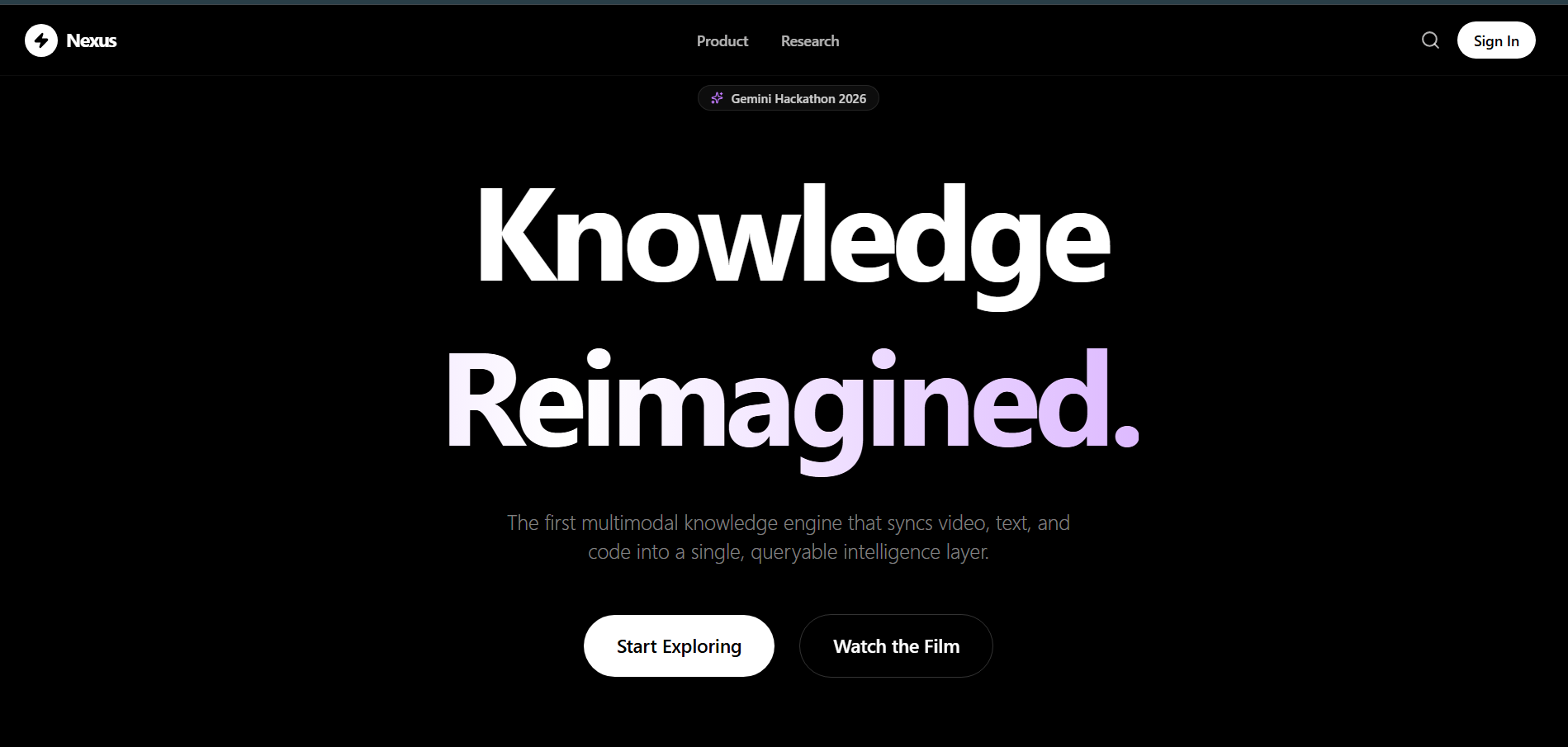
As students, we've all experienced the struggle of juggling multiple learning resources—PDFs, lecture videos, textbook images, and notes—scattered across different apps. Nexus was born from the need for a unified, intelligent study companion that could understand and process any type of educational content seamlessly.
What it does
Nexus is an AI-powered multimodal learning assistant that transforms how students interact with educational materials:
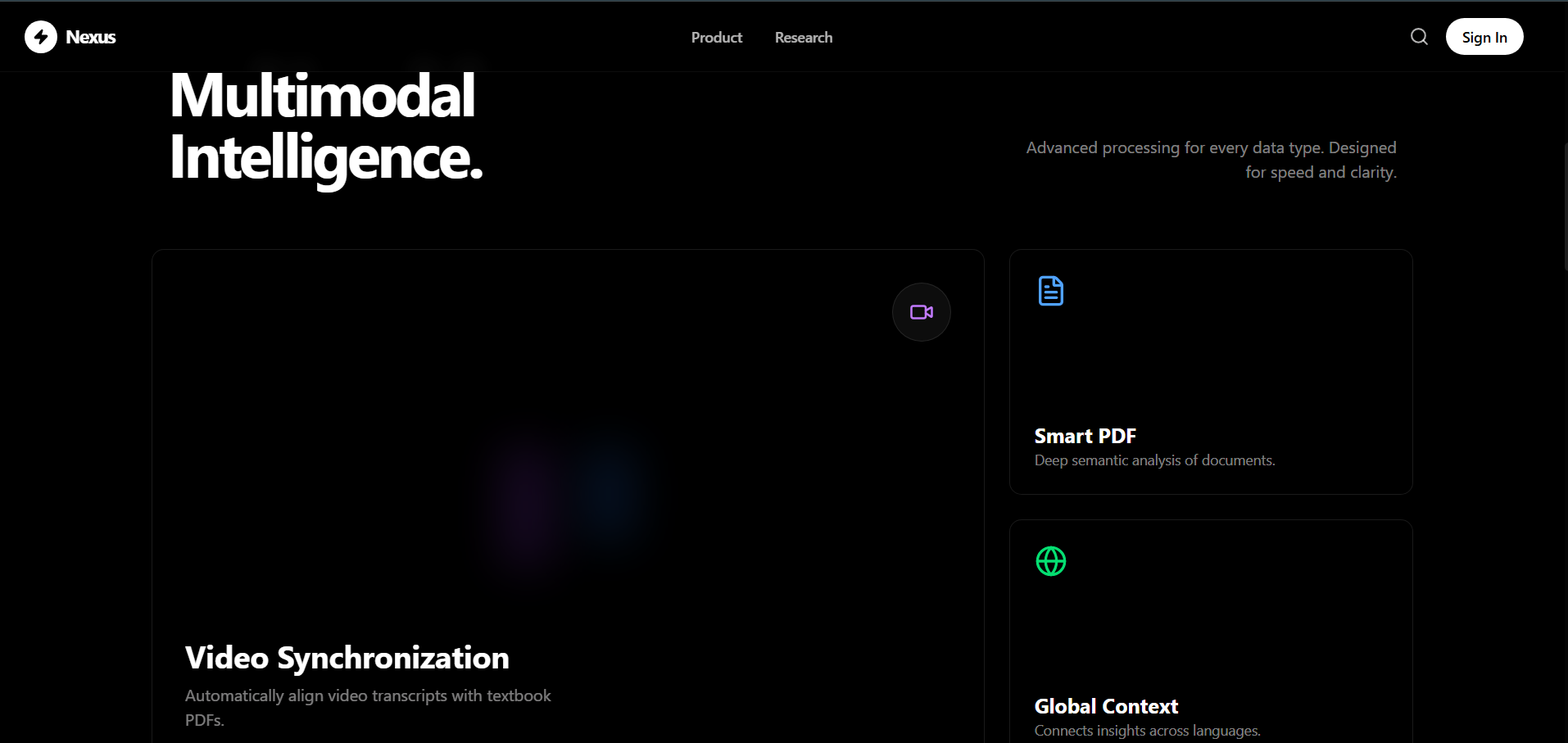
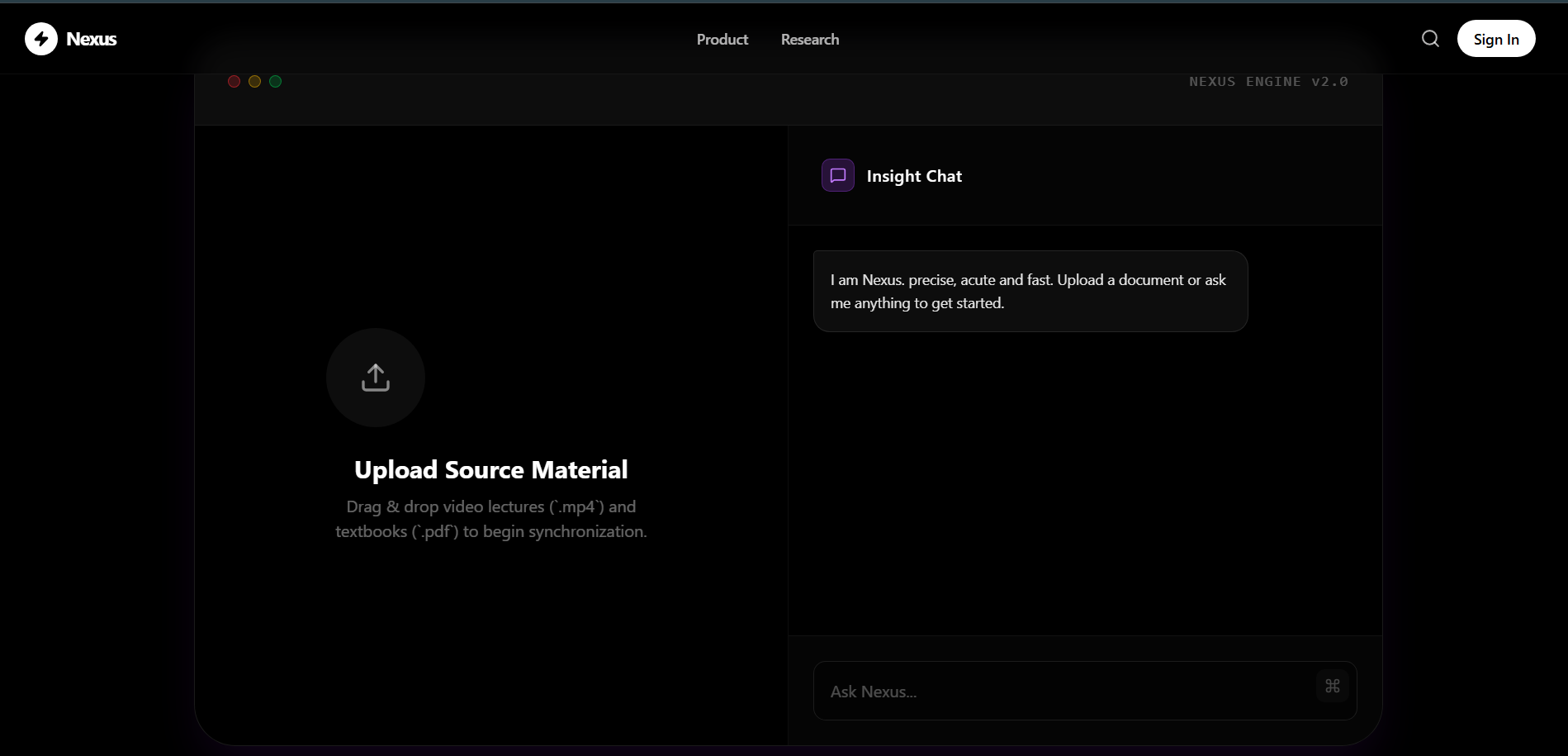
- Smart PDF Analysis : Upload any PDF and get instant AI-generated summaries using Groq's Llama 3.3 70B
- Vision Intelligence: Analyze diagrams, charts, and textbook images with Llama 4 Scout's advanced vision capabilities
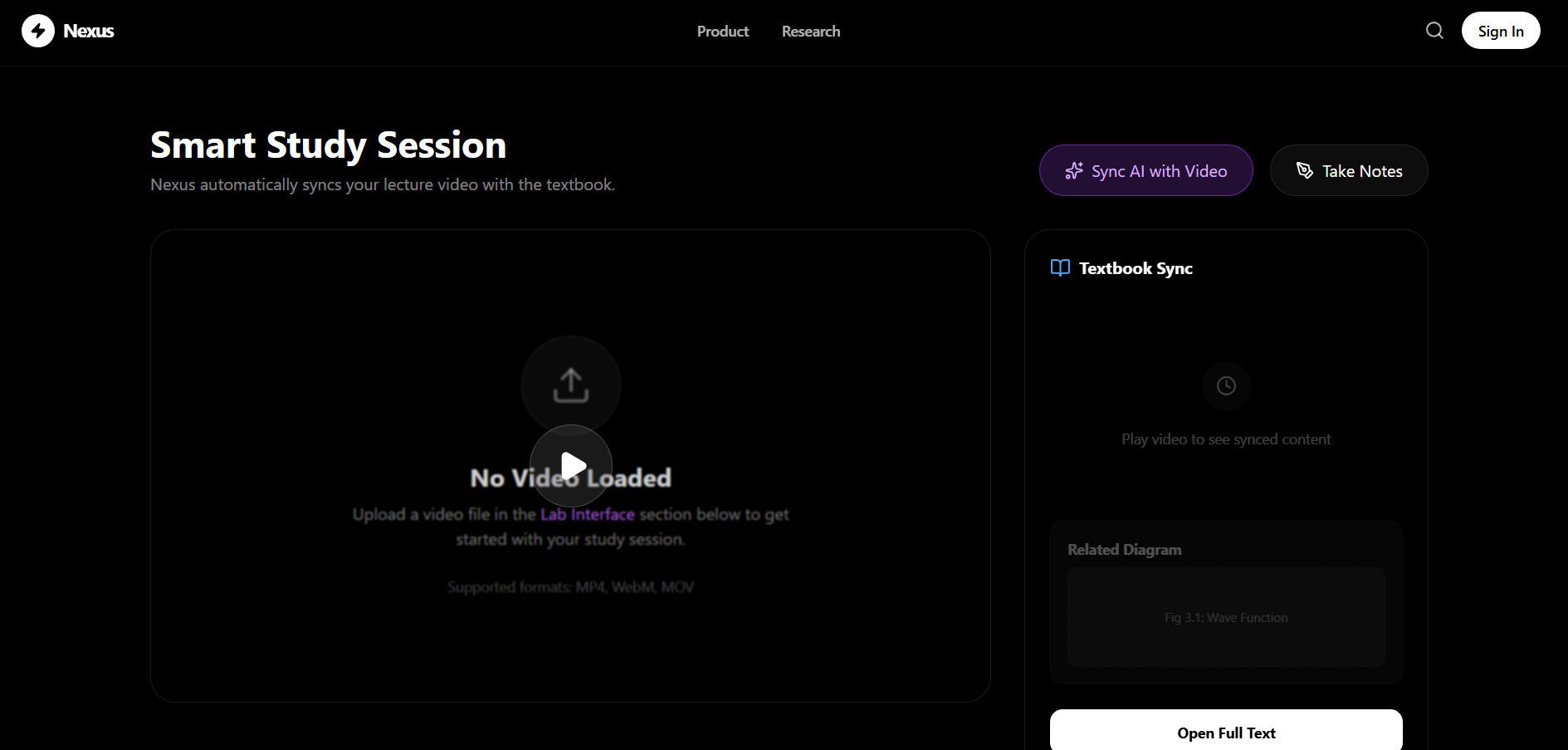
- Interactive Video Player: Upload lecture videos and interact with an AI that understands your content
- Context-Aware Chat : Ask questions about any uploaded material—the AI remembers everything you've shared ## How we built it We built Nexus using a modern, performant tech stack:
- Frontend: React + TypeScript with Vite for blazing-fast development
- Styling : Custom CSS with glassmorphism and premium animations via Framer Motion
- AI Integration : Groq API with multiple Llama models (3.3 70B for text, 4 Scout for vision)
- PDF Processing : pdfjs-dist for client-side text extraction
- Video Playback : React Player with custom controls
- Deployment : Vercel for instant global delivery The architecture prioritizes speed and user experience—all AI responses are powered by Groq's lightning-fast inference, providing real-time interactions that feel magical. ## Challenges we ran on
- Multimodal Context Management: Synchronizing state across PDF uploads, image analysis, and video playback while maintaining conversation context was complex. We solved this with a centralized context system that updates as users interact with different media types.
- PDF Text Extraction : Processing large PDFs client-side without blocking the UI required careful optimization with Web Workers and streaming APIs.
- Vision Model Integration : Getting image analysis working required base64 encoding, proper error handling, and selecting the right Llama 4 Scout model for educational content.
- TypeScript Type Safety : Balancing strict typing with the flexibility needed for dynamic AI responses and various file formats. ## Accomplishments
- Built a fully functional multimodal AI app in record time
- Achieved sub-second AI response times using Groq's infrastructure
- Created a premium UI that rivals commercial products
- Successfully integrated three different AI capabilities (text, vision, video)
- Deployed to production with zero downtime ## What we learned
- Groq's API is incredibly fast—responses that would take 5-10s with other providers happen in under 1 second
- Context management is crucial for AI applications—users expect the AI to "remember" their uploads
- Premium UI/UX significantly impacts user perception of AI quality
- Client-side processing (PDF parsing, image encoding) can work beautifully with proper optimization ## What's next for Nexus
- Video Transcription : Integrate Whisper API for automatic lecture transcription
- Smart Timestamps : Auto-generate clickable chapters for lecture videos
- Study Notes Export : One-click export of AI summaries to Markdown/PDF
- Collaborative Features : Share study sessions with classmates
- Mobile App : Native iOS/Android apps for studying on the go
Built With
- 3.3
- 4
- css3
- framer
- groq
- llama
- motion
- pdfjs-dist
- player
- react
- scout
- typescript
- vercel
- vite

Log in or sign up for Devpost to join the conversation.