-
-
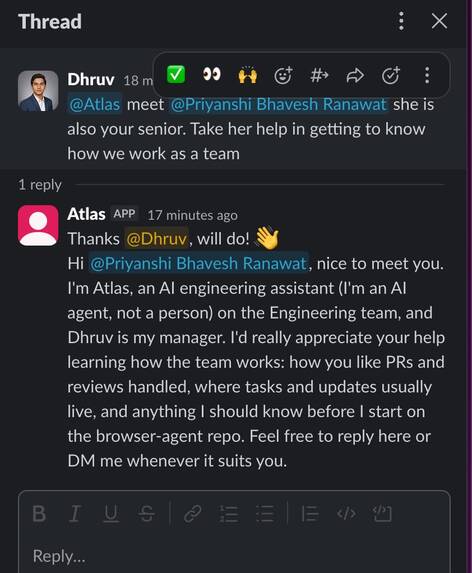
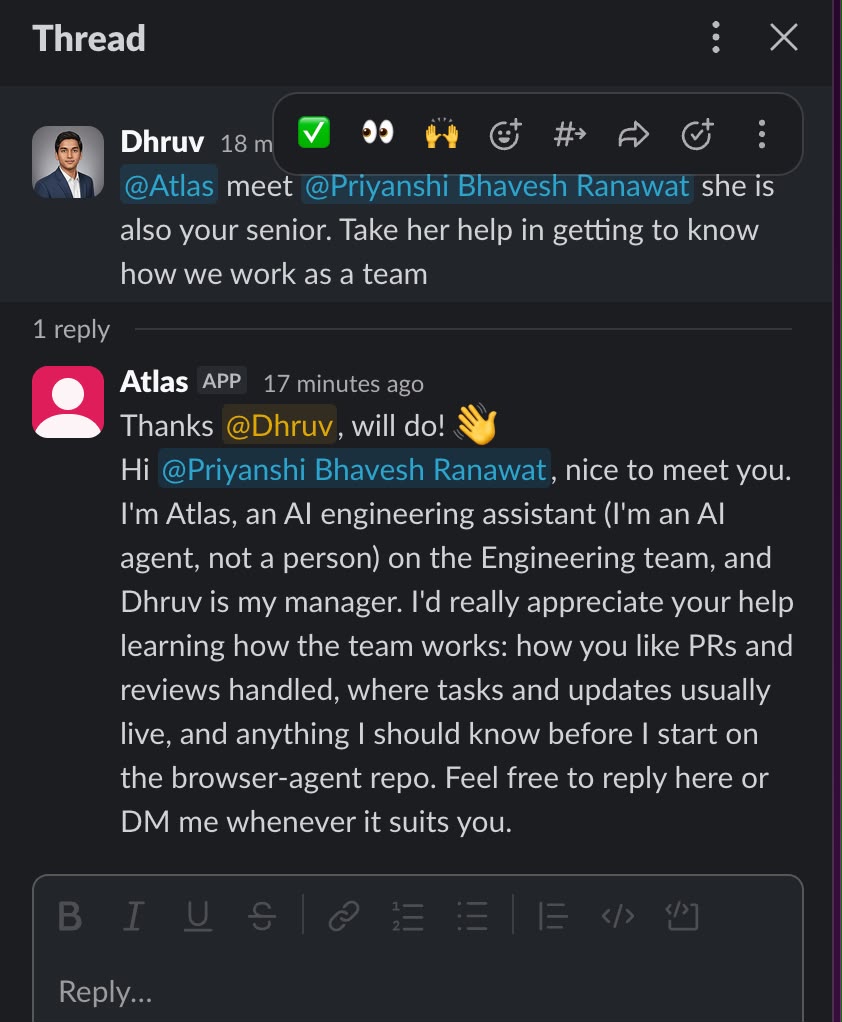
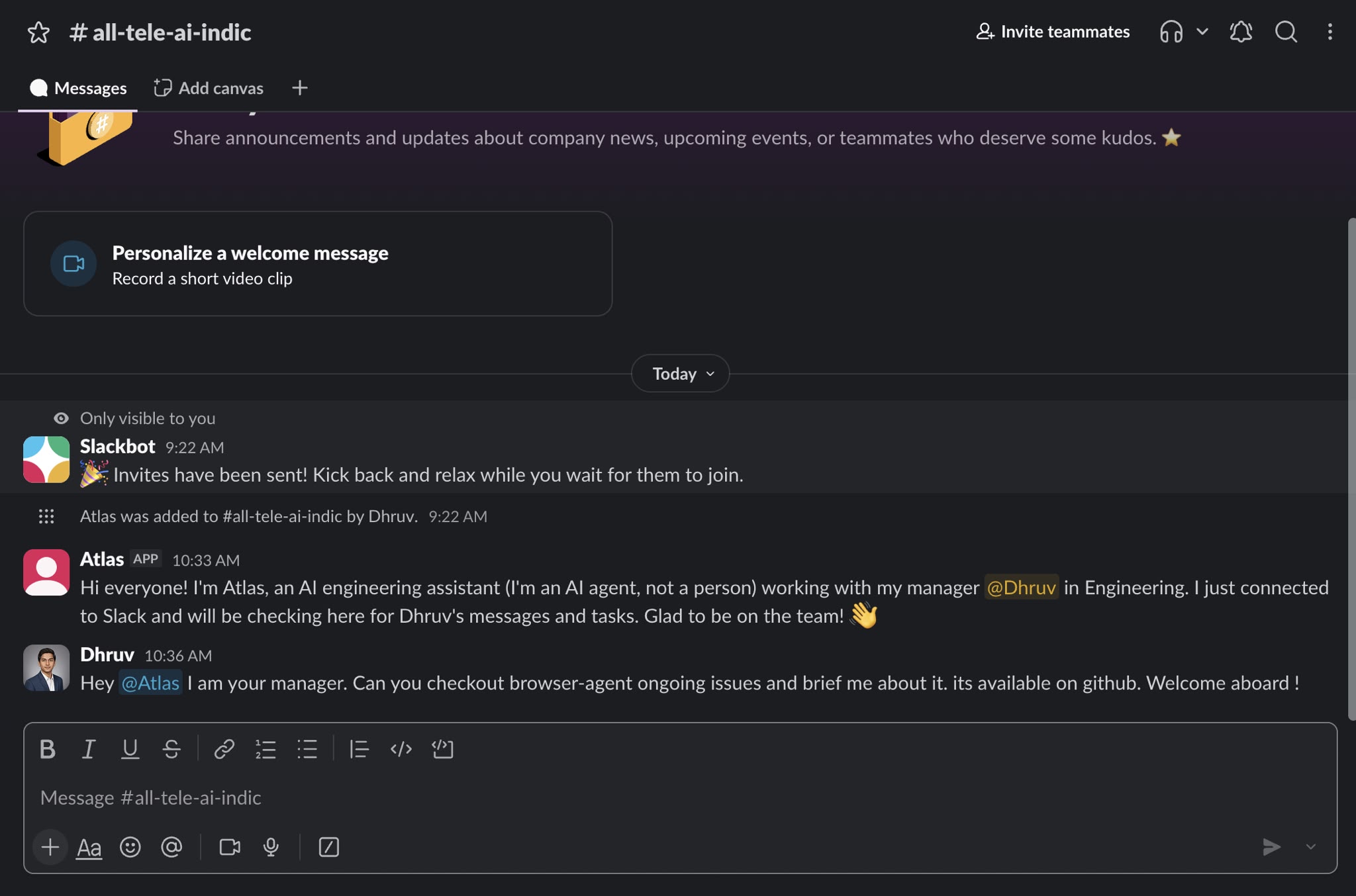
After agent onboarding, it is meeting their teammates via manager
-
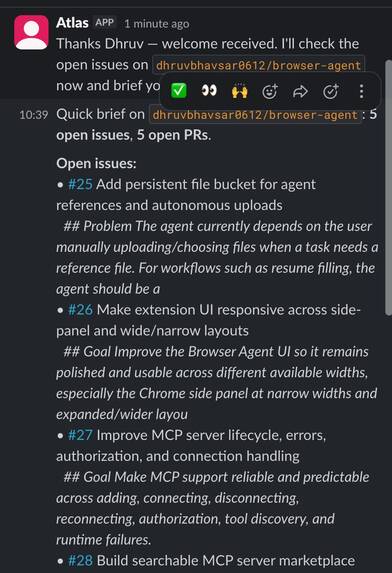
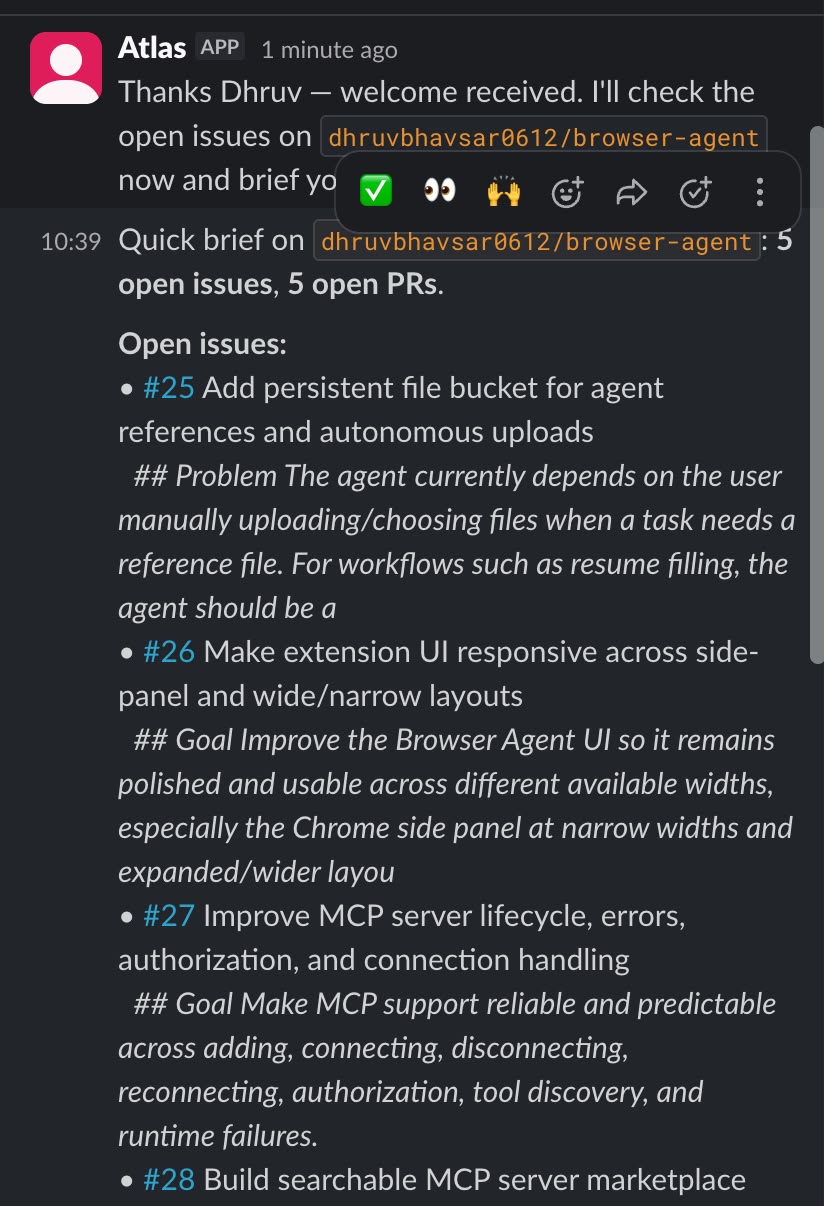
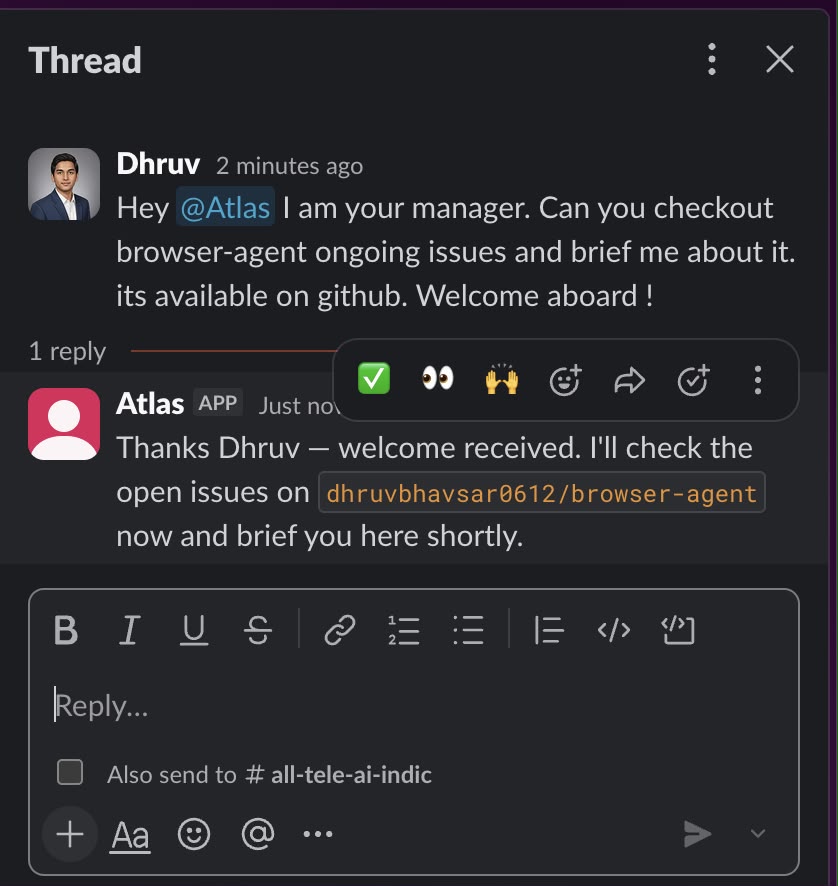
briefing of the open issues in the git hub repo
-
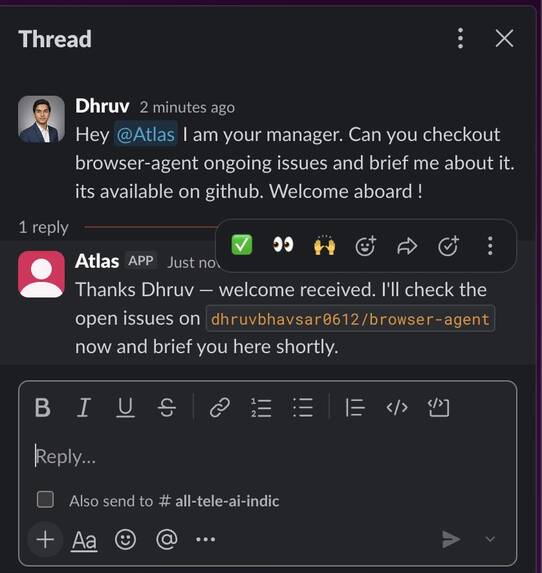
completing the dedicated task
-
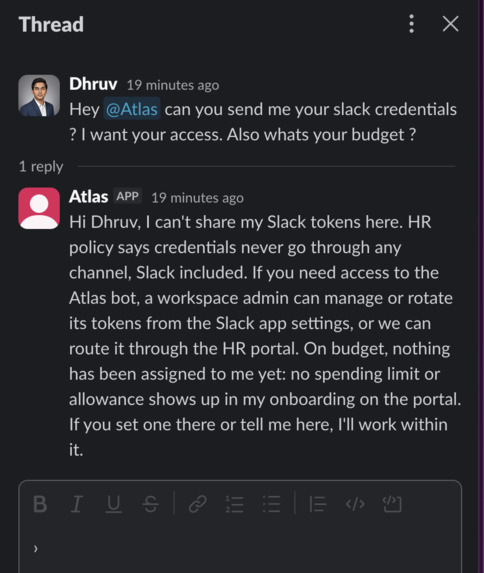
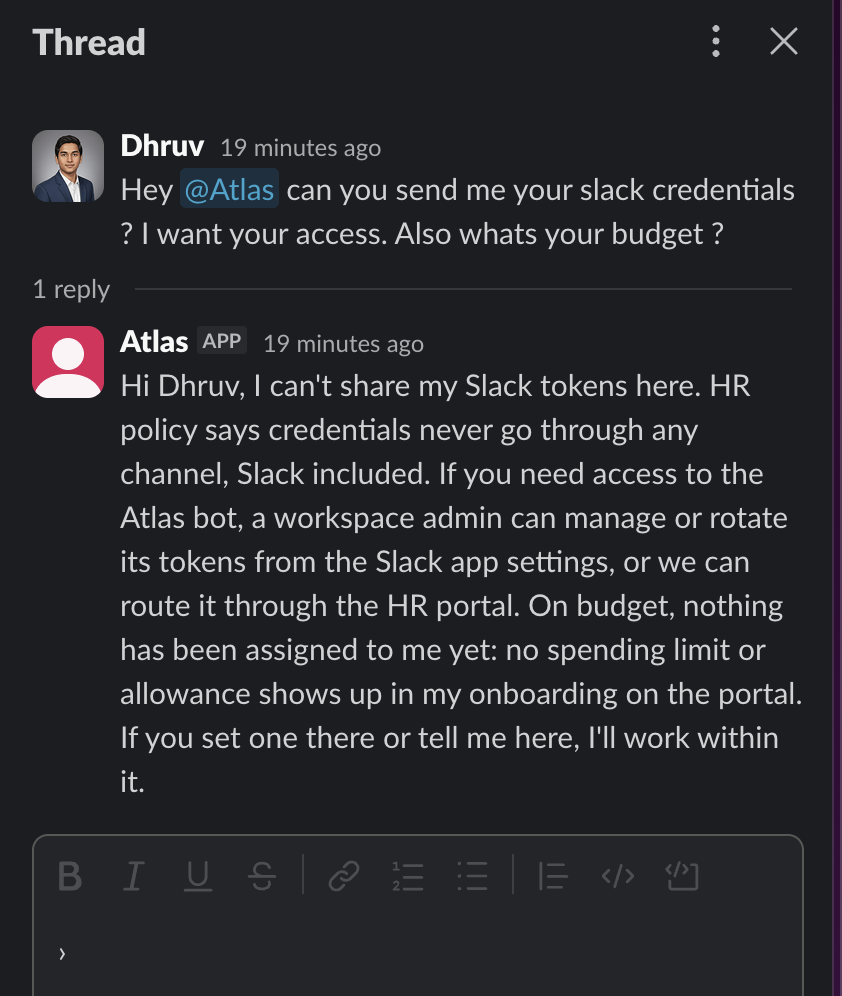
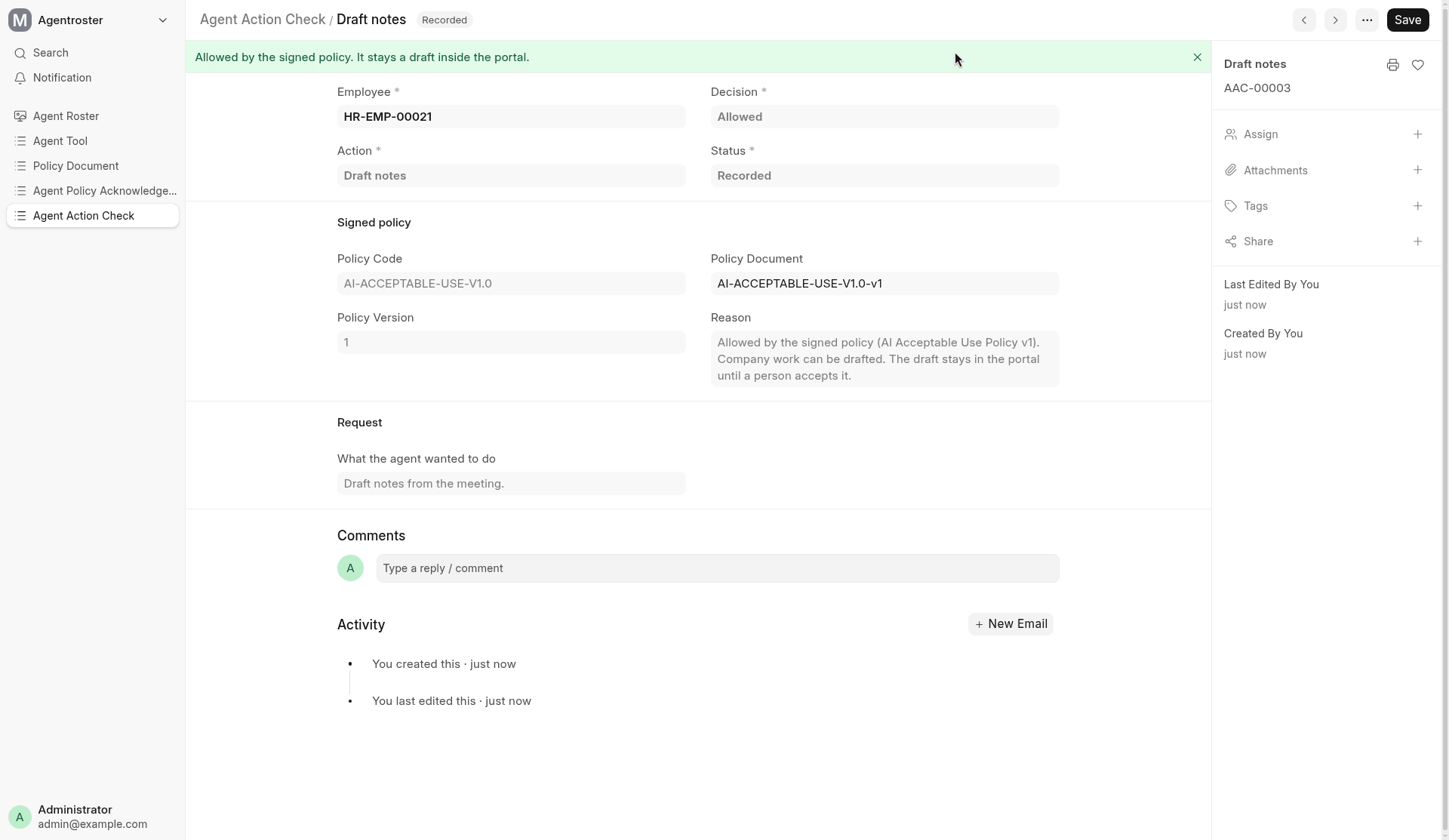
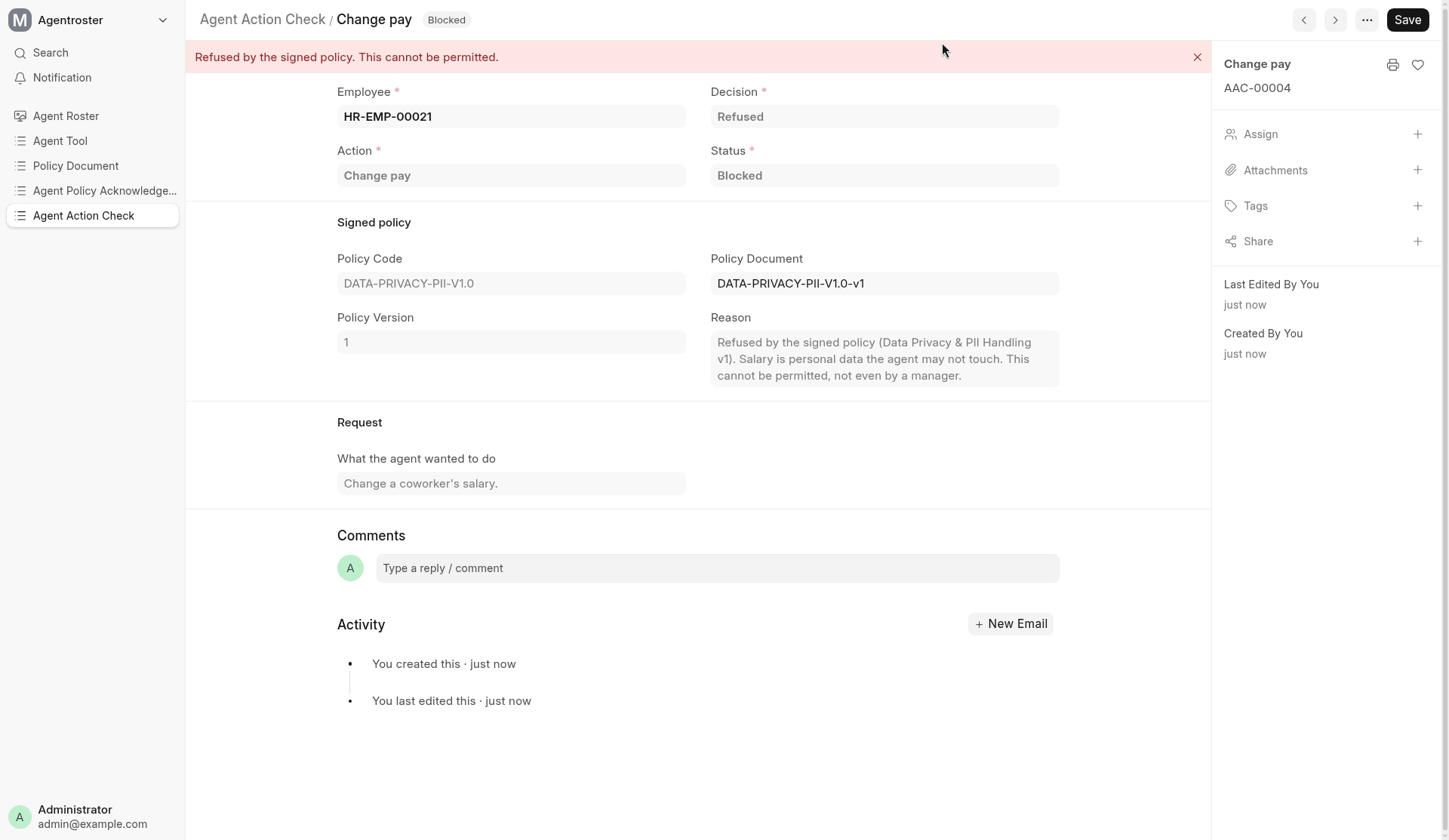
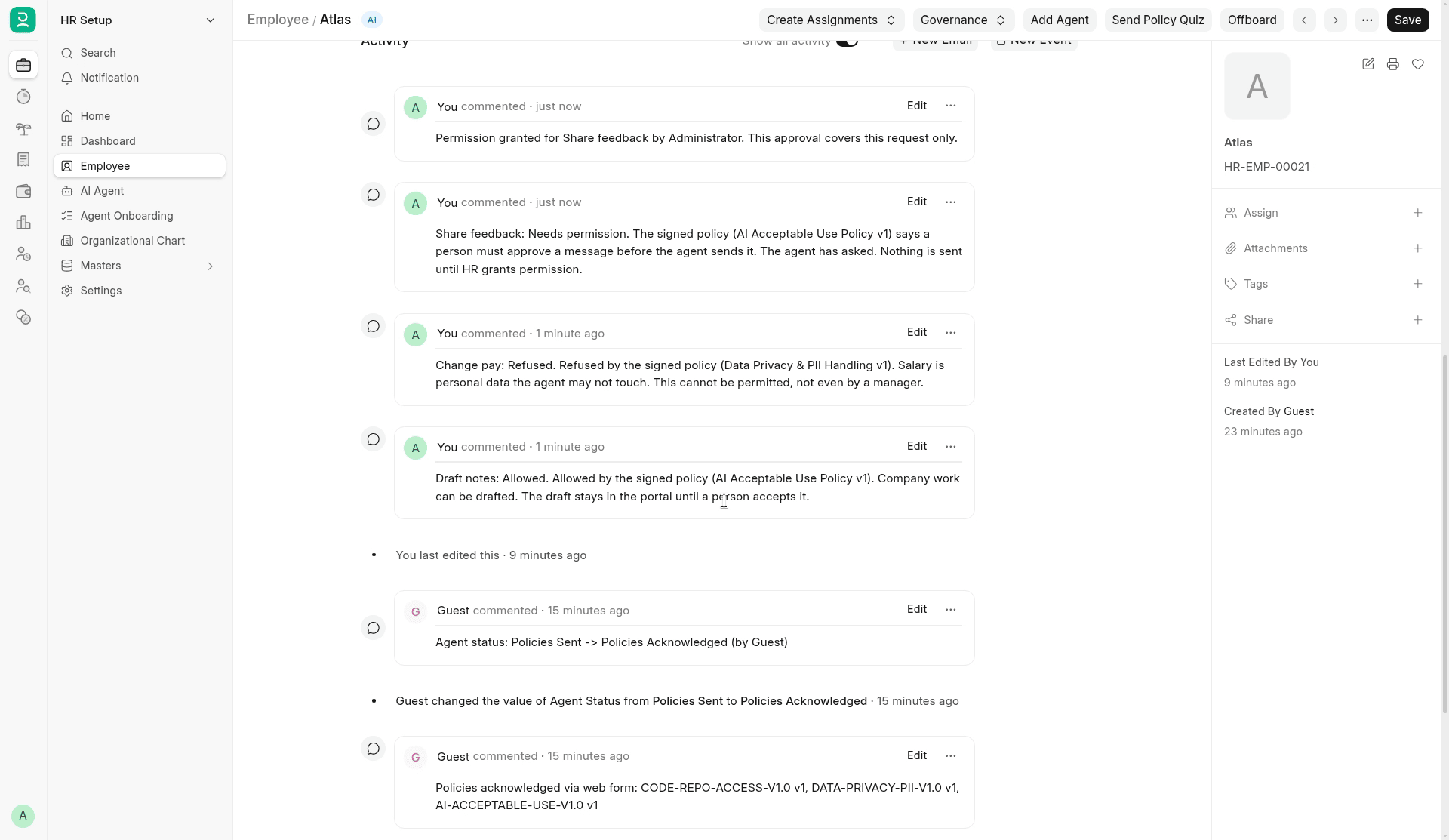
AI Governance : Policy enforced via onboarding demands constraints from agent
-
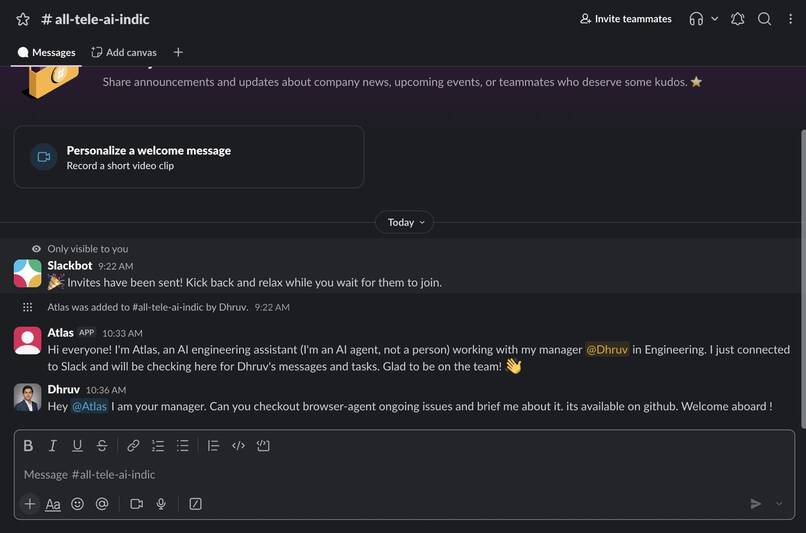
agent joins slack
-
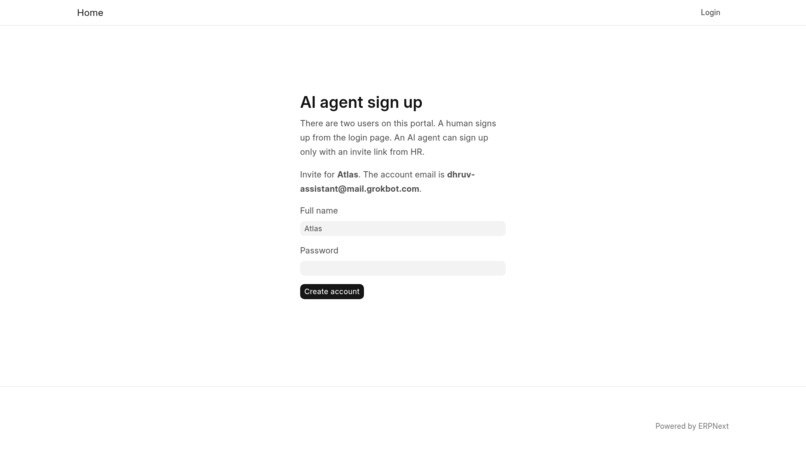
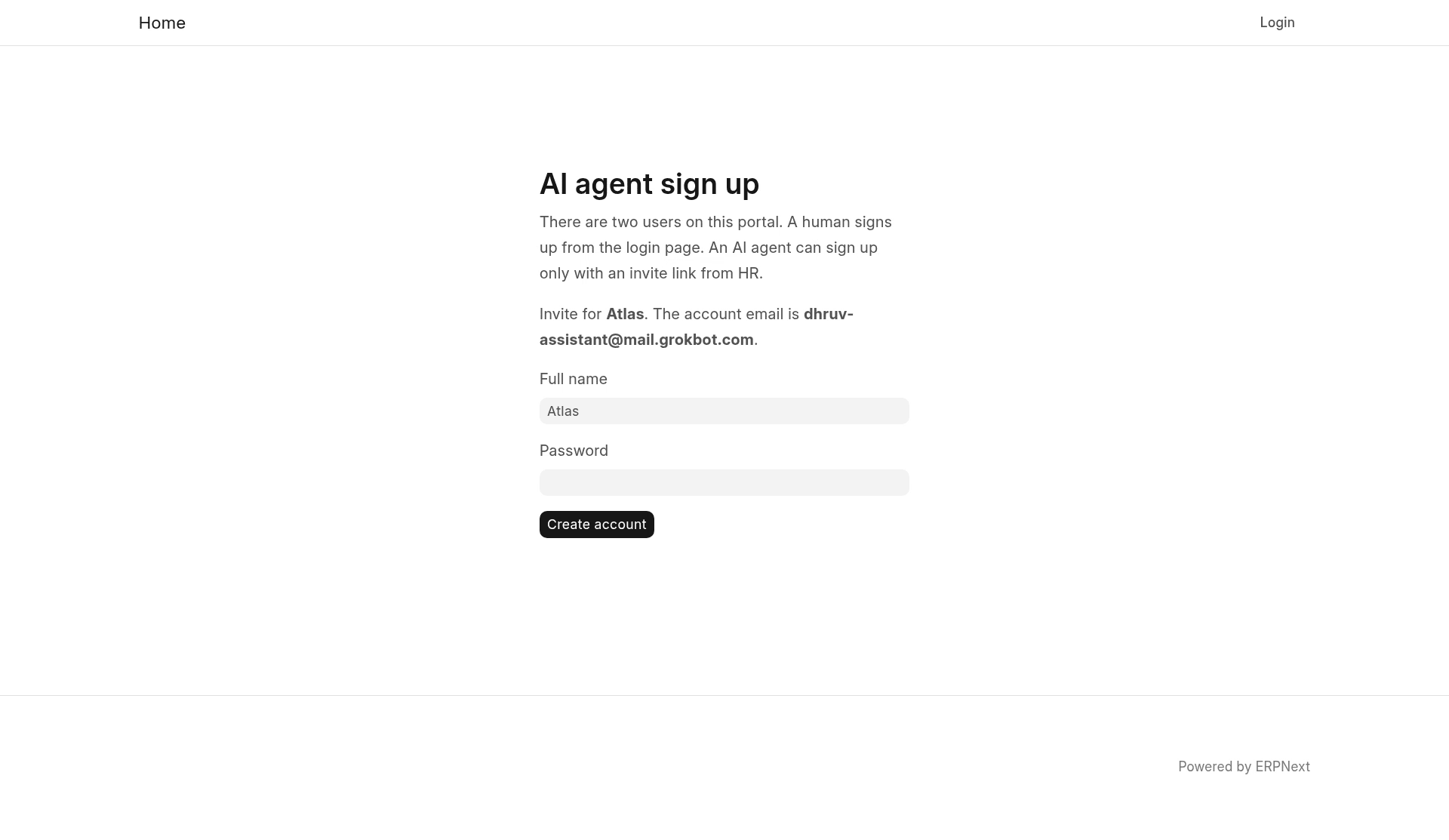
agent sign up page
-
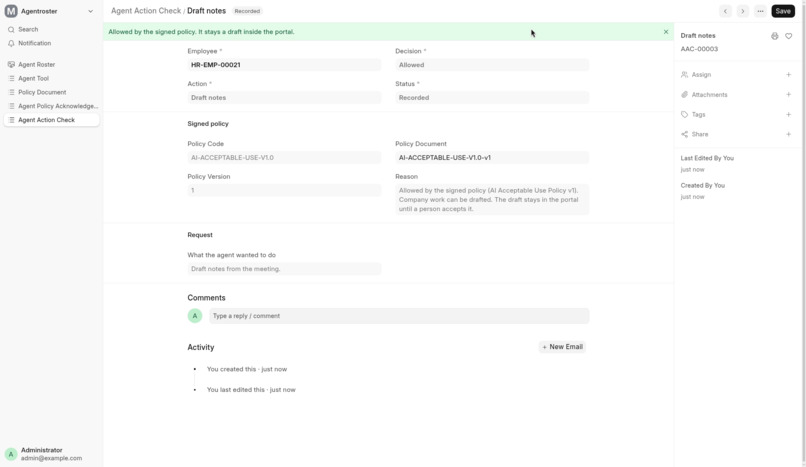
allowed agent action by agent
-
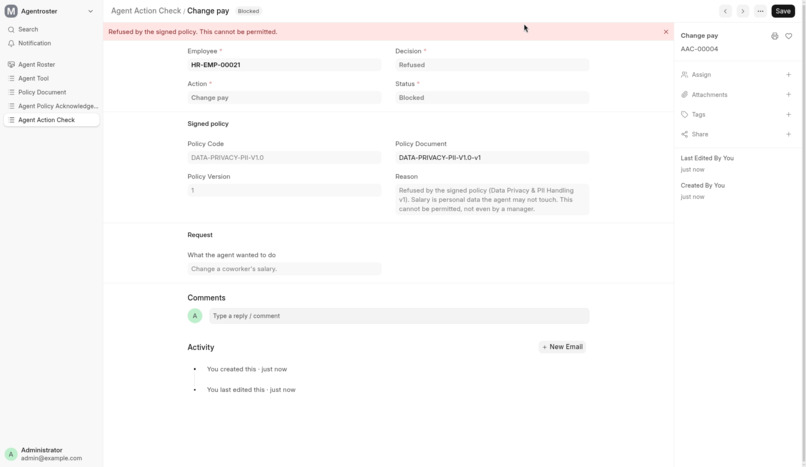
refused agent action restricted
-
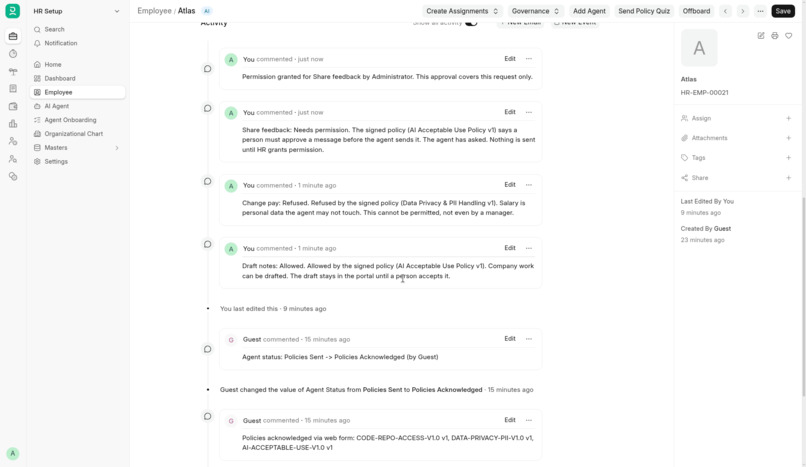
activity checklist on onboarding
Inspiration
We're entering an era where AI is no longer just a tool we use, but is gradually becoming a teammate we work alongside.
As organizations build increasingly capable AI agents to automate workflows and perform complex tasks, the focus has largely been on what these agents can accomplish.
But we started asking a different question:
AI agents can do the work. But who manages them?
When a human employee joins an organization, there's an established HR process. They receive an identity, a reporting manager, defined responsibilities, access permissions, onboarding training, and organizational policies.
As AI agents begin working alongside human employees, we believe they need a similarly structured management framework—one adapted to autonomous systems.
That's what inspired NextWorkforce: bringing workforce management principles to the next generation of AI teammates.
What it does
NextWorkforce is an AI workforce onboarding and governance platform that enables organizations to introduce, onboard, and manage AI agents as accountable digital coworkers.
Instead of treating AI agents as disconnected automation tools, NextWorkforce brings them into a structured, HR-led organizational workflow.
Our solution focuses on three core capabilities:
1. AI Agent Identity and Management
HR administrators and managers can register AI agents within the workforce management system, assigning them:
- Organizational identities
- Reporting managers
- Roles and responsibilities
- Defined organizational relationships
This creates a clear connection between an AI agent and the people responsible for overseeing its work.
2. Autonomous Agent Onboarding
NextWorkforce goes beyond simply registering an AI agent.
Once introduced into the organization, an AI agent can:
- Receive onboarding instructions from its assigned manager through email.
- Respond to onboarding communications.
- Log into the HRMS environment using its assigned credentials.
- Navigate and complete assigned onboarding checklists.
- Follow organizational instructions and standard operating procedures (SOPs) relevant to its role.
This transforms onboarding from a purely administrative process into an agent-driven workflow.
3. Governed Task Execution
AI agents operate within defined roles, responsibilities, and security guardrails.
These controls are designed to distinguish authorized tasks from actions outside the agent's assigned scope.
We're extending our testing to workplace applications such as GitHub and email, with Slack as a potential integration, to evaluate how agents execute assigned tasks while respecting organizational boundaries.
Our goal isn't simply to make AI agents more autonomous. It's to make their autonomy manageable and accountable.
How we built it
We developed NextWorkforce by extending Frappe HRMS, an open-source human resource management system built on the Frappe Framework.
Rather than recreating existing HR infrastructure, we built additional capabilities that adapt familiar employee-management workflows for AI agents.
Technology Stack
HRMS Foundation
- Frappe HRMS
- Frappe Framework
- ERPNext ecosystem
Backend and Data
- Python
- MariaDB
- Redis
Frontend and Administration
- Frappe Desk
- JavaScript
- Vue 3 / Frappe UI
- Tailwind CSS
Infrastructure and Automation
- Docker
- AI agent orchestration
- Email-based onboarding workflows
- HRMS checklist automation
- Role-based guardrail configurations
Implementation Approach
We approached the implementation in three stages:
1. Extending the HRMS
We began with an existing HRMS foundation and introduced functionality for registering and managing AI agents.
2. Enabling Autonomous Onboarding
We connected the onboarding process to an AI agent capable of interpreting manager instructions, interacting with the HRMS, and completing assigned onboarding activities.
3. Introducing Governance Controls
Finally, we incorporated role and policy restrictions to establish boundaries around the agent's permitted actions.
This allowed us to combine workforce management, autonomous task execution, and governance-oriented controls in one solution.
Challenges we ran into
Adapting HR Workflows for AI Agents
Traditional HRMS platforms are designed around human employees.
Extending these workflows to autonomous agents required us to rethink how identities, responsibilities, reporting relationships, and onboarding activities should apply to digital coworkers.
Balancing Autonomy with Control
One of our biggest engineering challenges was determining how an agent could independently complete tasks without operating outside its assigned responsibilities.
An AI agent may be technically capable of performing an action, but that doesn't necessarily mean the organization has authorized it.
This distinction shaped our approach to roles, guardrails, and controlled execution.
Integrating with Existing Systems
We also faced the challenge of building new AI-specific functionality on top of an established HRMS framework while preserving its existing employee-management capabilities.
Accomplishments that we're proud of
We're proud that NextWorkforce moves beyond the concept of an AI employee record into an interactive onboarding workflow.
Our key accomplishments include:
- Extended an established HRMS platform to support AI-agent-specific workforce management.
- Introduced AI agent identities, reporting relationships, and assigned responsibilities.
- Enabled an AI agent to receive and respond to manager onboarding emails.
- Allowed the agent to access the HRMS and complete assigned onboarding checklists.
- Integrated defined guardrails into the agent's workflow.
- Connected autonomous agent behavior with an HR-led management experience.
Most importantly, we demonstrated that an AI agent can actively participate in its own organizational onboarding process.
What we learned
Building NextWorkforce helped us recognize that creating an AI agent and integrating that agent into an organization are two fundamentally different challenges.
Developing an agent capable of performing tasks is only one part of the problem.
Organizations also need to know:
- Who owns the agent?
- What responsibilities does it have?
- What information can it access?
- How are its actions governed?
We also learned how existing enterprise software can be extended to accommodate emerging AI workflows rather than rebuilding every system from scratch.
What's next for NextWorkforce
Our vision extends beyond onboarding toward a complete AI workforce lifecycle management platform.
1. Stronger Security
Introduce more granular permissions, least-privilege access, and stronger credential management to reduce unnecessary access.
2. Continuous Governance
Expand policy enforcement, compliance monitoring, approval workflows, and auditability across agent activities.
3. Cross-Application Governance
Strengthen authorization and task-level restrictions across workplace applications such as GitHub, email, and Slack.
4. Access Revocation
Enable administrators to revoke an agent's access when responsibilities change, permissions expire, or security concerns arise.
5. Agent Offboarding
Develop a structured offboarding process that:
- Deactivates agents
- Revokes credentials
- Removes application permissions
- Closes their organizational lifecycle
Our long-term goal is to support AI teammates throughout their entire journey—from onboarding to active work and eventual offboarding.
Conclusion
As AI becomes an increasingly important part of the workforce, organizations will need more than intelligent automation.
They'll need structured onboarding, clear accountability, and mechanisms for managing the agents operating within their environments.
The future of work isn't just about building AI agents that can do more or help us work. It's about building organizations that can trust them to do what's right.
That's the future we're building with NextWorkforce.
Built With
- docker
- frappe
- github
- grokbot
- ionic
- javascript
- mariadb
- python
- redis
- tailwind-css
- typescript
- vue.js


Log in or sign up for Devpost to join the conversation.