-
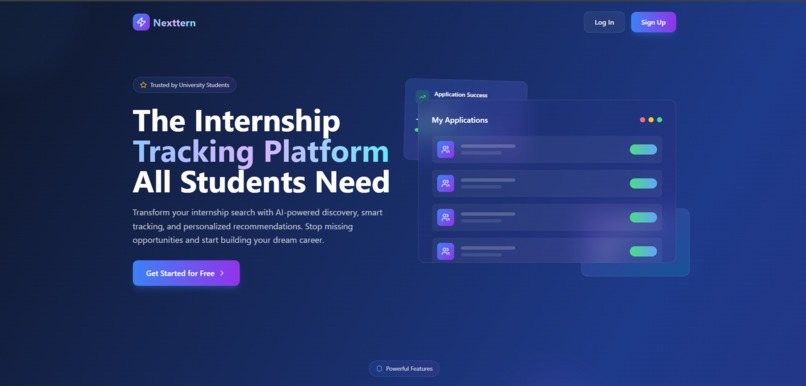
Landing Page
-
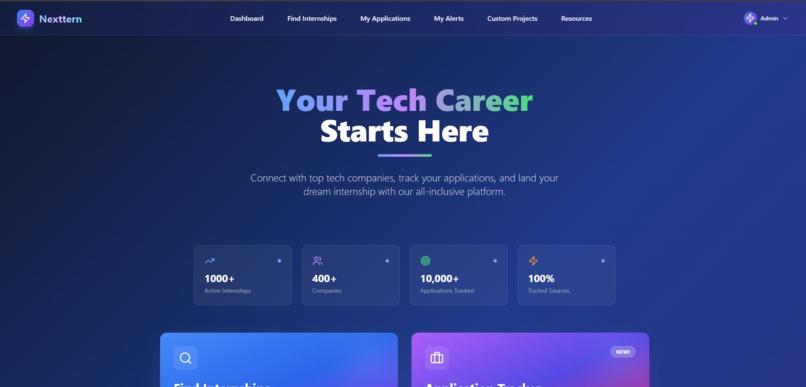
Dashboard
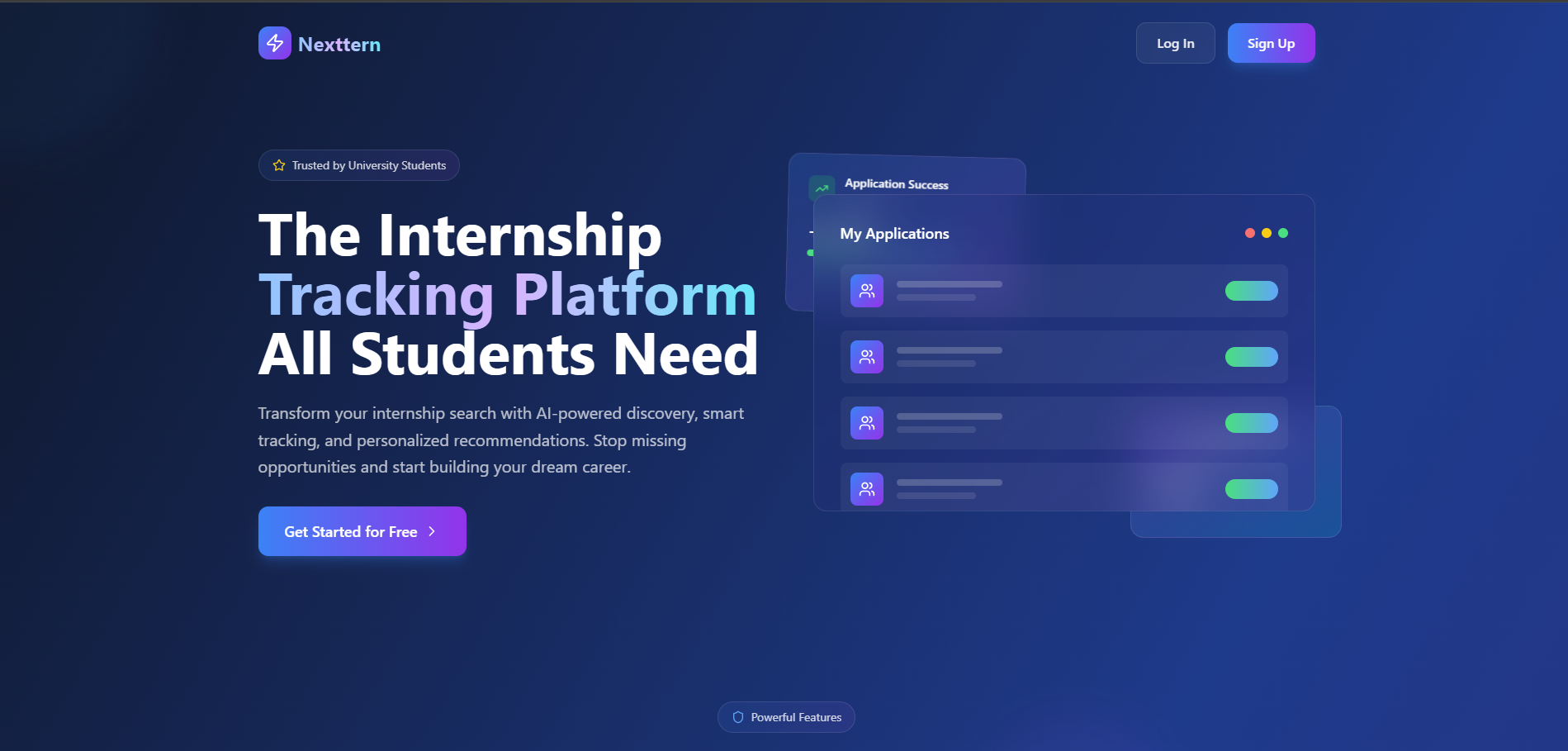
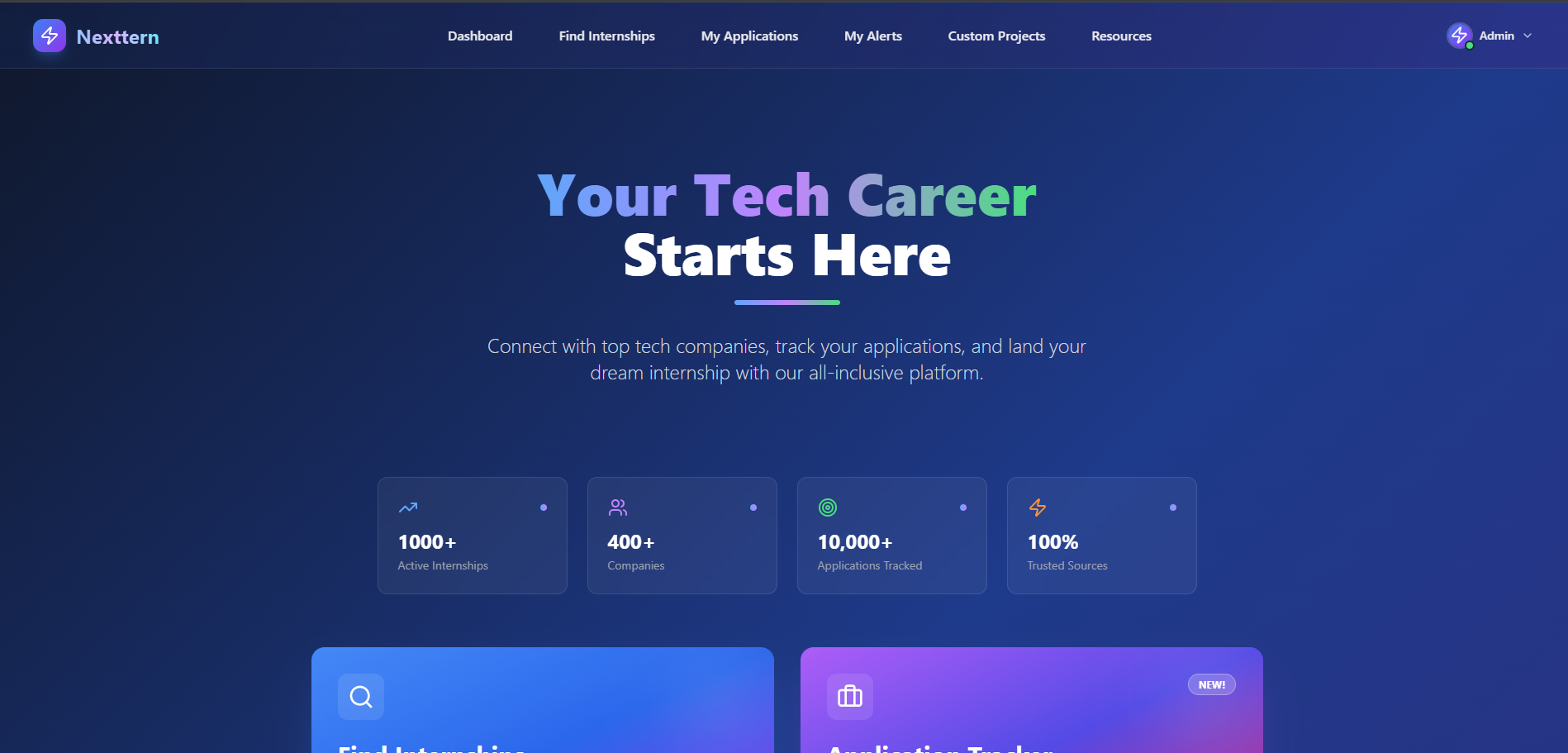
Nexttern: Intelligent Internship Discovery and Management Platform
Inspiration
Nexttern was born out of my own frustration with the traditional internship search process. Like many students, I spent countless hours scouring job boards, tracking applications in messy spreadsheets, and missing out on opportunities simply because there was no unified, intelligent platform to guide me.
This problem affects thousands of students who waste time on expired listings and fragmented job boards, which is why I set out to build Nexttern as a comprehensive solution. I wanted to create something that not only streamlined the search and application process, but also empowered students to take control of their career journey with confidence.
What it does
Nexttern goes far beyond simple internship searching. The platform features:
- User profiles with avatar upload and customization
- Comprehensive application tracking and status management
- Project showcase capabilities for portfolios
- Real-time alerts and notifications system
- Curated career resources and materials
- Personalized dashboard with tailored recommendations
- AI-Powered Project Guide Generator using Gemini 2.0 Flash API that analyzes job descriptions and creates tailored project roadmaps
The standout feature is the intelligent project guide system: users can input any job description, and Nexttern's AI analyzes the required skills to generate a comprehensive, step-by-step project guide specifically designed to build those exact competencies. This transforms passive job browsing into active skill development.
I built sophisticated deduplication logic to prevent duplicate listings and implemented a dual-database approach, using DynamoDB for internship data and Supabase for user data, ensuring optimal performance and scalability.
The platform consistently updates its database with the newest opportunities while filtering out expired listings so users never waste time on "ghost" applications.
How I built it
Architecture & Technology Stack
- Frontend: Modern web technologies with responsive design
- Backend: Java Spring Boot initially, later some features migrated to AWS Lambda rest deployed on Railway
- AI Integration: Google Gemini 1.5 Flash API for intelligent project guide generation
- Databases:
- DynamoDB for internship data optimization
- Supabase for user data management, application tracking, alerts, profiles
- Cloud Infrastructure: AWS services including Lambda, EventBridge, SES, and CloudWatch
- Development Tools: Maven, Docker for containerization
- Authentication: JWT with OAuth integration (Google) and traditional email/password
Key Technical Implementation
- Dual-Database Architecture: Strategic database selection based on use case requirements
- Serverless Computing: AWS Lambda for cost-effective, scalable processing
- Automated Updates: AWS EventBridge for scheduled data aggregation
- AI-Powered Analysis: Gemini 2.0 Flash API integration for job description parsing and project guide generation
- Advanced Prompt Engineering: Sophisticated system prompts ensuring consistent, high-quality AI outputs
- Security: Comprehensive JWT signature verification and secure environment management
Challenges I ran into
1. Backend-Frontend Integration
My first major hurdle was securely linking the backend and frontend. Routing issues and persistent internal server errors were a constant frustration. I spent significant time debugging API endpoints and standardizing request/response protocols.
2. Authentication Security
Connecting authentication services was another critical challenge, as user data security was my top priority. I spent days optimizing authentication, learning the ins and outs of:
- JWT signature verification on all sensitive endpoints
- OAuth integration with Google
- Traditional email/password authentication
- Ensuring no endpoint could be compromised by simple URL manipulation
3. AWS Lambda Migration
Migrating my internship aggregation service to AWS Lambda was a steep learning curve. Adapting my Java Spring Boot code to AWS's serverless, cloud-native architecture for automatic scaling required extensive trial and error. I eventually succeeded in:
- Deploying my .jar file to Lambda
- Automating daily updates with AWS EventBridge
- Integrating Maven and Docker for streamlined deployment
- Setting up CloudWatch monitoring and alerting for production reliability
4. AI Integration and Prompt Engineering
One of the most technically challenging aspects was integrating Google's Gemini 2.0 Flash API to create the intelligent project guide feature. I spent countless hours on prompt engineering to develop a robust system that could:
- Analyze complex job descriptions and extract key technical requirements
- Generate comprehensive, step-by-step project guides tailored to specific skill gaps
- Maintain consistent formatting and quality across all generated content
- Handle edge cases and varying job description formats
The challenge wasn't just calling the API—it was crafting the perfect system prompt that would reliably deliver well-structured, actionable project roadmaps every single time. This required extensive testing, iteration, and fine-tuning to create a "well-oiled" AI system that users could depend on.
5. Security Implementation
The biggest challenge was making sure every endpoint was properly authenticated. Through this process, I learned how to enforce strict security measures including:
- Secure environment variable management with no hardcoded secrets
- Comprehensive data protection measures
- Logging safety and audit trails
Accomplishments that I'm proud of
- Built a production-ready platform that solves a real problem I personally experienced
- Pioneered AI-driven skill development by integrating Gemini 2.0 Flash for personalized project generation
- Mastered advanced prompt engineering to create reliable, consistent AI outputs
- Implemented enterprise-grade security with comprehensive authentication systems
- Successfully migrated to serverless architecture achieving better scalability and cost-effectiveness
- Created intelligent deduplication algorithms that eliminate redundant listings
- Developed a comprehensive user experience from search to application tracking to portfolio showcase
- Achieved zero hardcoded secrets and implemented robust security practices
- Built automated systems that keep the internship database fresh and relevant
What I learned
This project taught me invaluable lessons across multiple domains:
Technical Skills
- Full-stack development with modern frameworks and cloud technologies
- AI/ML integration and advanced prompt engineering with large language models
- AWS cloud architecture and serverless computing patterns
- Database design and optimization strategies for different use cases
- API integration and third-party service management
- Security implementation and authentication best practices
- DevOps practices including CI/CD, monitoring, and deployment automation
Software Engineering
- AI system design and prompt engineering for consistent outputs
- Production system reliability and monitoring
- Scalable architecture design for growing user bases
- API design and integration best practices
- Error handling and debugging in distributed systems
Problem Solving
- User-centered design thinking to solve real problems
- System architecture trade-offs and decision making
- Performance optimization for both cost and user experience
What's next for Nexttern
The foundational architecture provides a robust platform for continued expansion:
Short-term Goals
- Mobile application development for enhanced accessibility
- Advanced analytics dashboard for user insights and application tracking
- Machine learning integration for enhanced recommendation algorithms
Long-term Vision
- Enterprise partnerships for direct internship posting capabilities
- Integration with professional networks and career services
- AI-powered career guidance and skill development recommendations
- Community features for peer networking and mentorship
Continuous Improvement
- Performance optimization based on user feedback and analytics
- Security audits and vulnerability assessments
- Feature expansion based on user needs and market demands
Built With
- Languages: Java, JavaScript, SQL
- Frameworks: Spring Boot, React
- AI/ML: Google Gemini 2.0 Flash API
- Cloud Services: AWS Lambda, DynamoDB, EventBridge, CloudWatch
- Databases: DynamoDB, Supabase
- Authentication: JWT, OAuth (Google)
- Development Tools: Maven, Docker
- Monitoring: AWS CloudWatch
- Version Control: Git
Nexttern represents more than just a technical project—it's a solution born from personal experience that addresses real challenges faced by students worldwide. Through building this platform, I've not only solved my own problem but also gained invaluable experience in modern software development, cloud architecture, and production system management.
Built With
- amazon-web-services
- docker
- github
- github-actions
- java
- javascript
- maven
- node.js
- react
- restful-api
- spring-boot
- supabase
- tailwindcss


Log in or sign up for Devpost to join the conversation.