-
-
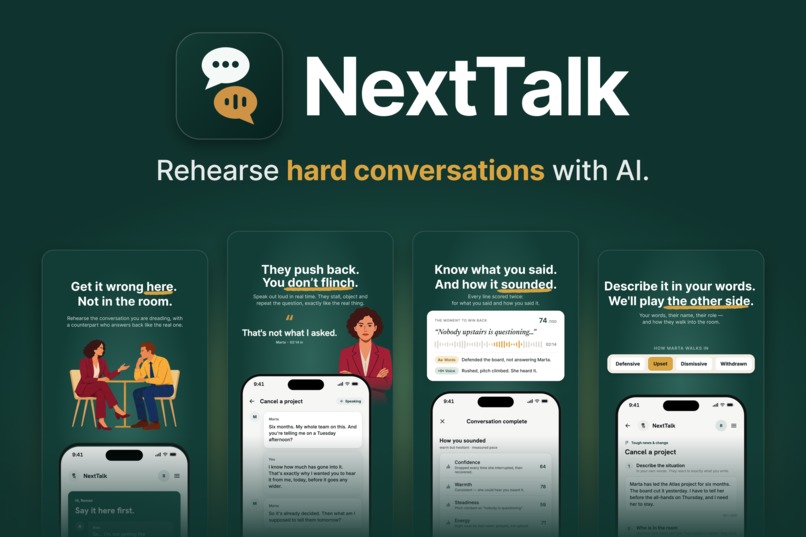
Front Page
-
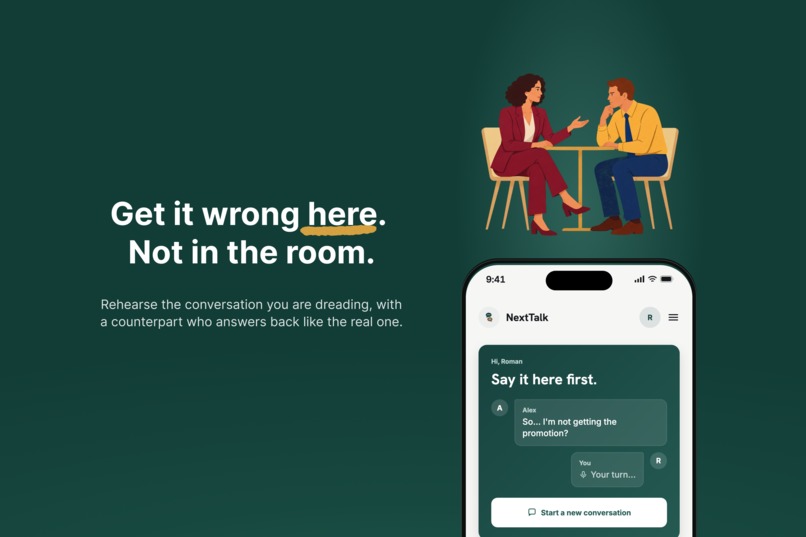
Listing 1
-
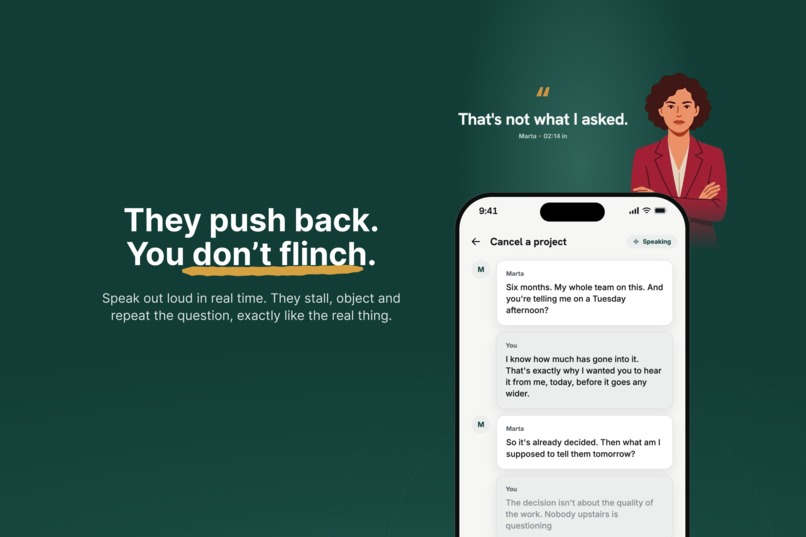
Listing 2
-
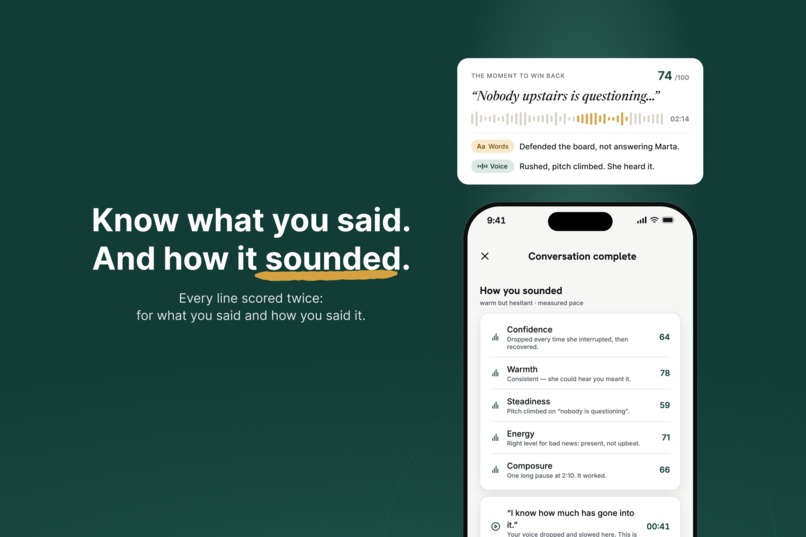
Listing 3
-
Listing 4
-
Icon (1024 x 1024)
-
Screenshot 1 (1179×2556 px)
-
Screenshot 2 (1179×2556 px)
-
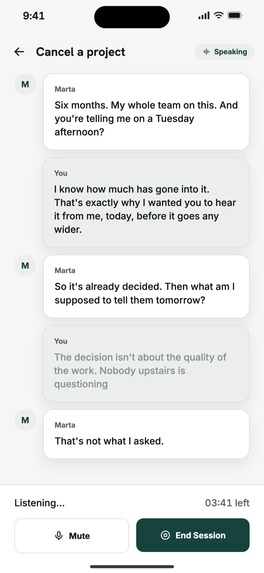
Screenshot 3 (1179×2556 px)
-
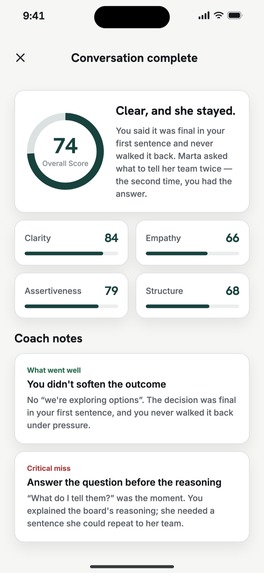
Screenshot 4 (1179×2556 px)
-
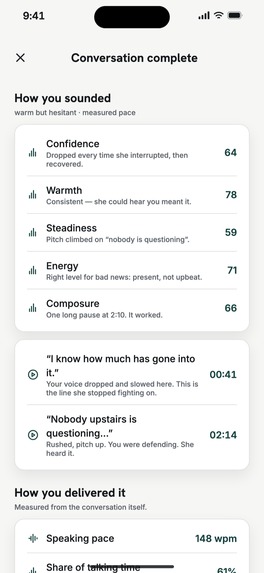
Screenshot 5 (1179×2556 px)
-
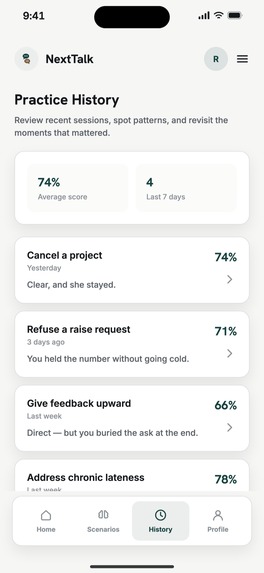
Screenshot 6 (1179×2556 px)
-
Screenshot 7 (1179×2556 px)
Inspiration
When I read the Career Coaching category brief, it clicked. The problem felt real. We spend our days on messages and social media, where you can always edit before you hit send. Real conversations don't work like that, and I think we're getting worse at them. The hard ones happen once, face to face, with no undo.
New managers feel this the most. Nobody trains you for your first "you're not getting the promotion" or "this project is cancelled". You read an article, maybe rehearse in your head, and then it happens live. I wanted a place to practice them first.
What it does
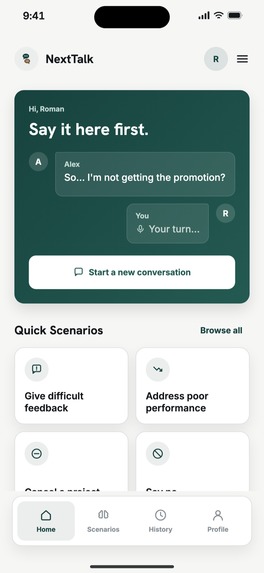
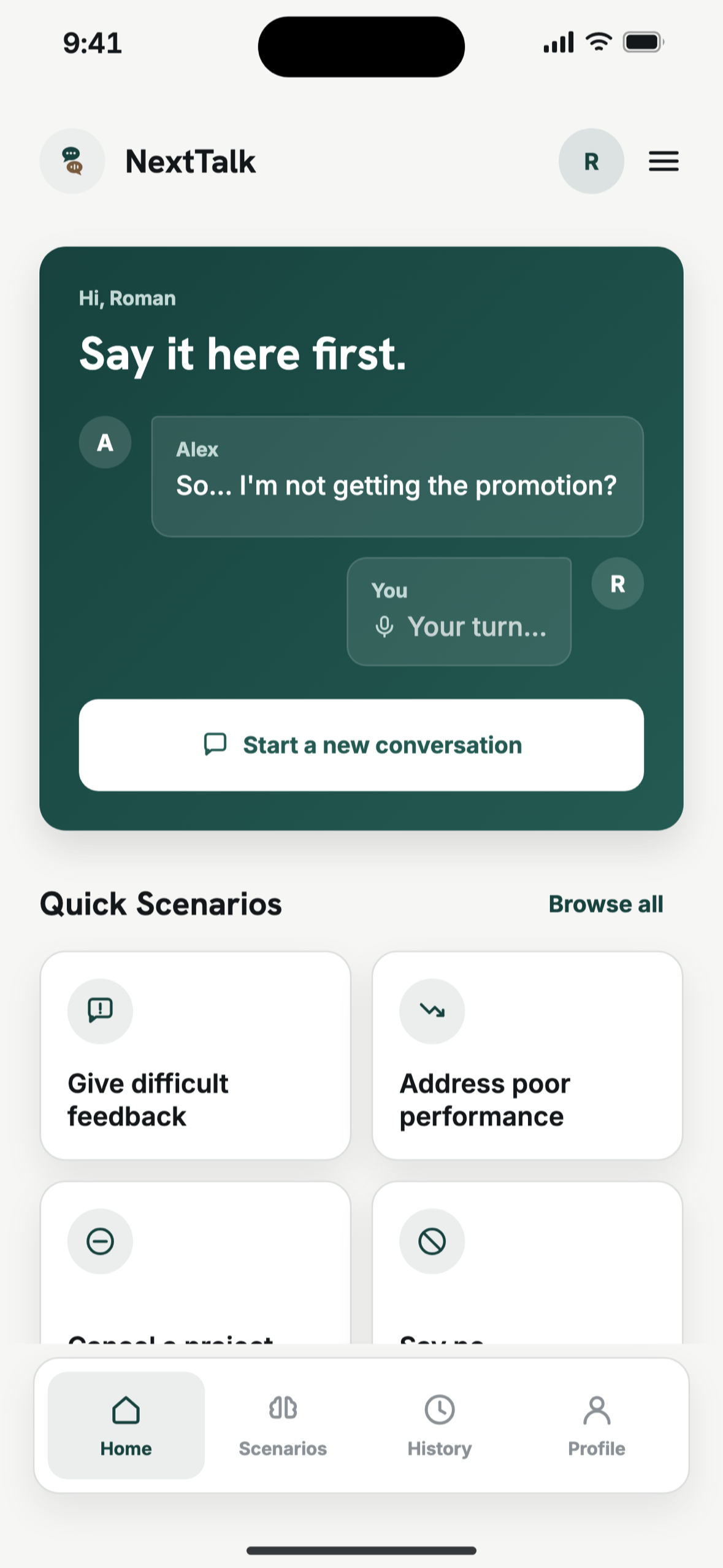
NextTalk lets new leaders practice difficult conversations at work before they happen.
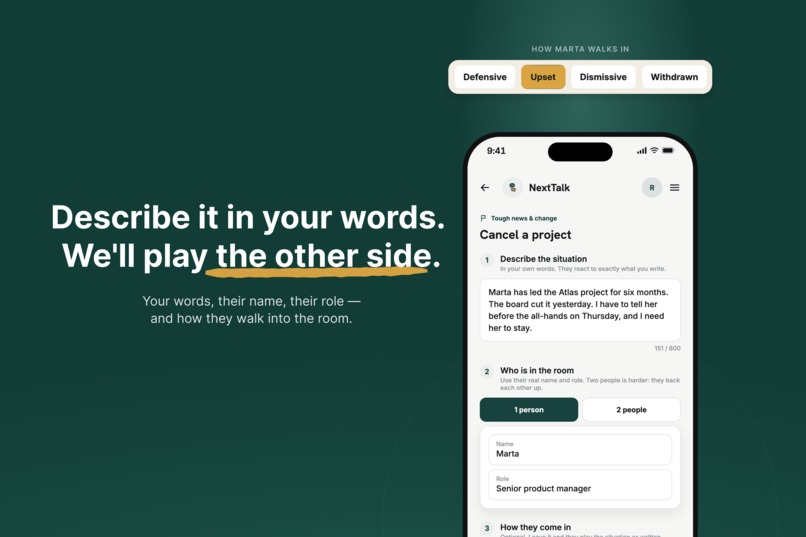
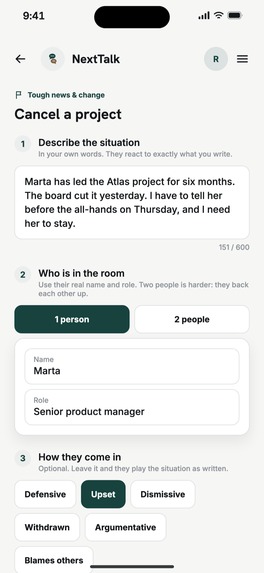
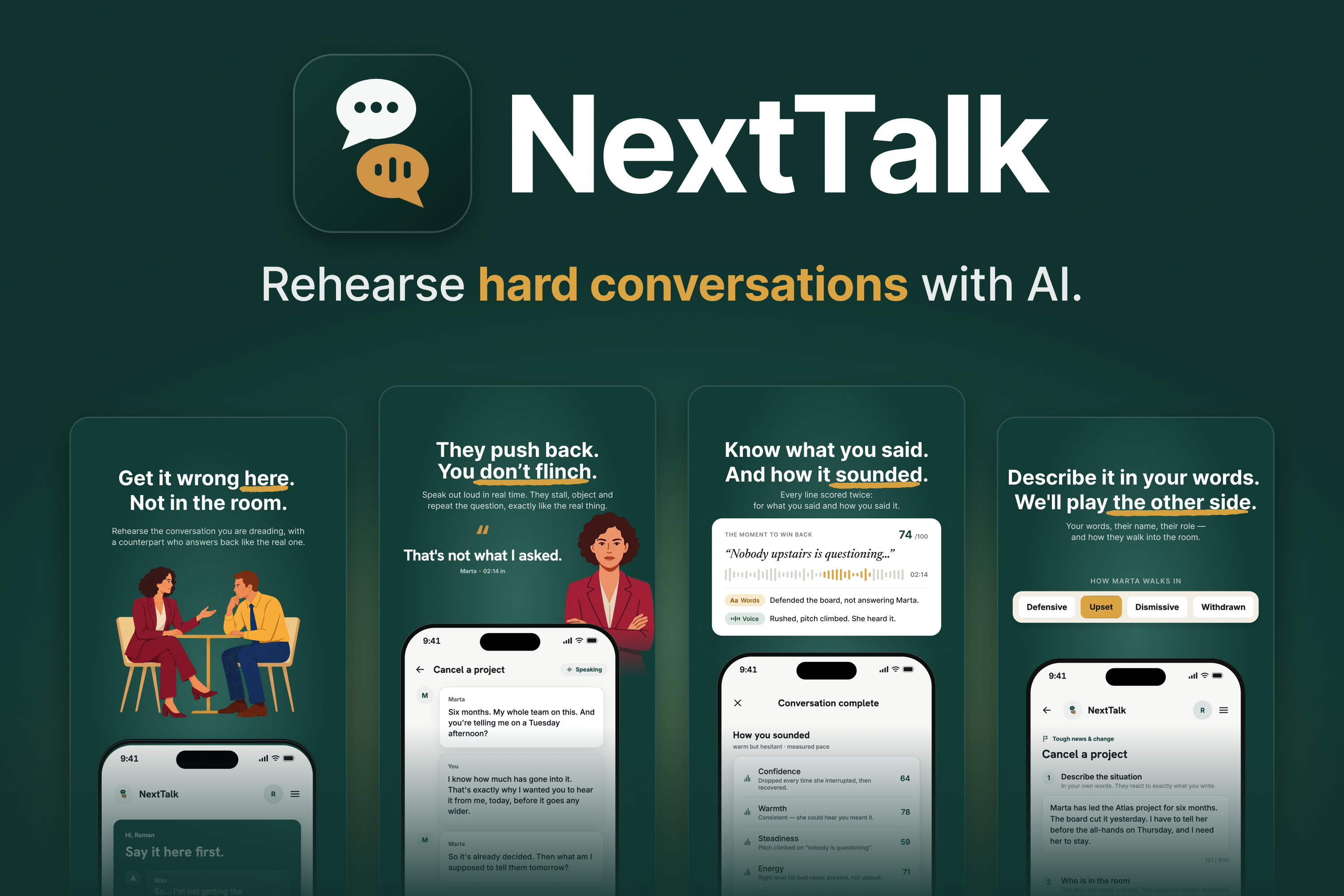
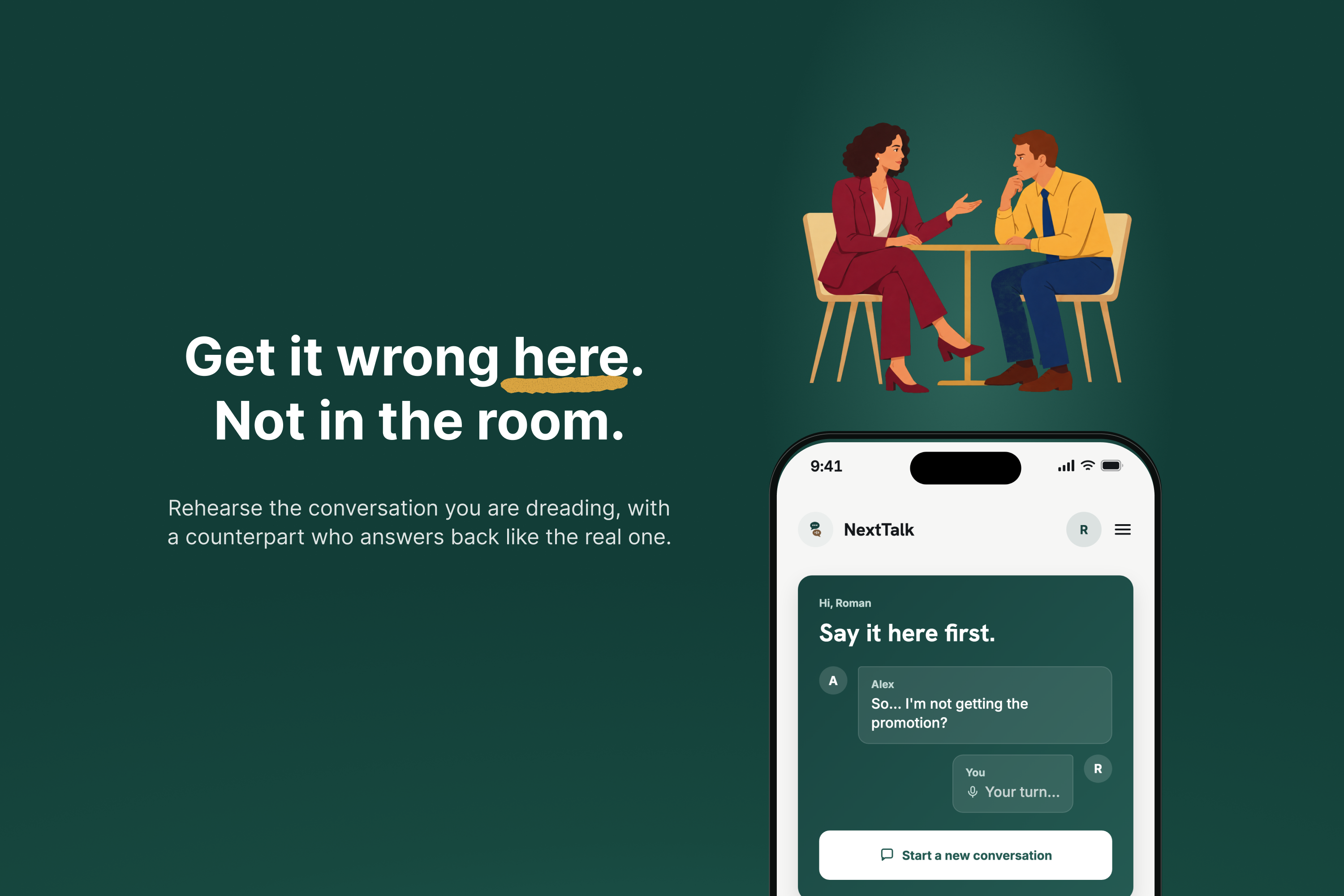
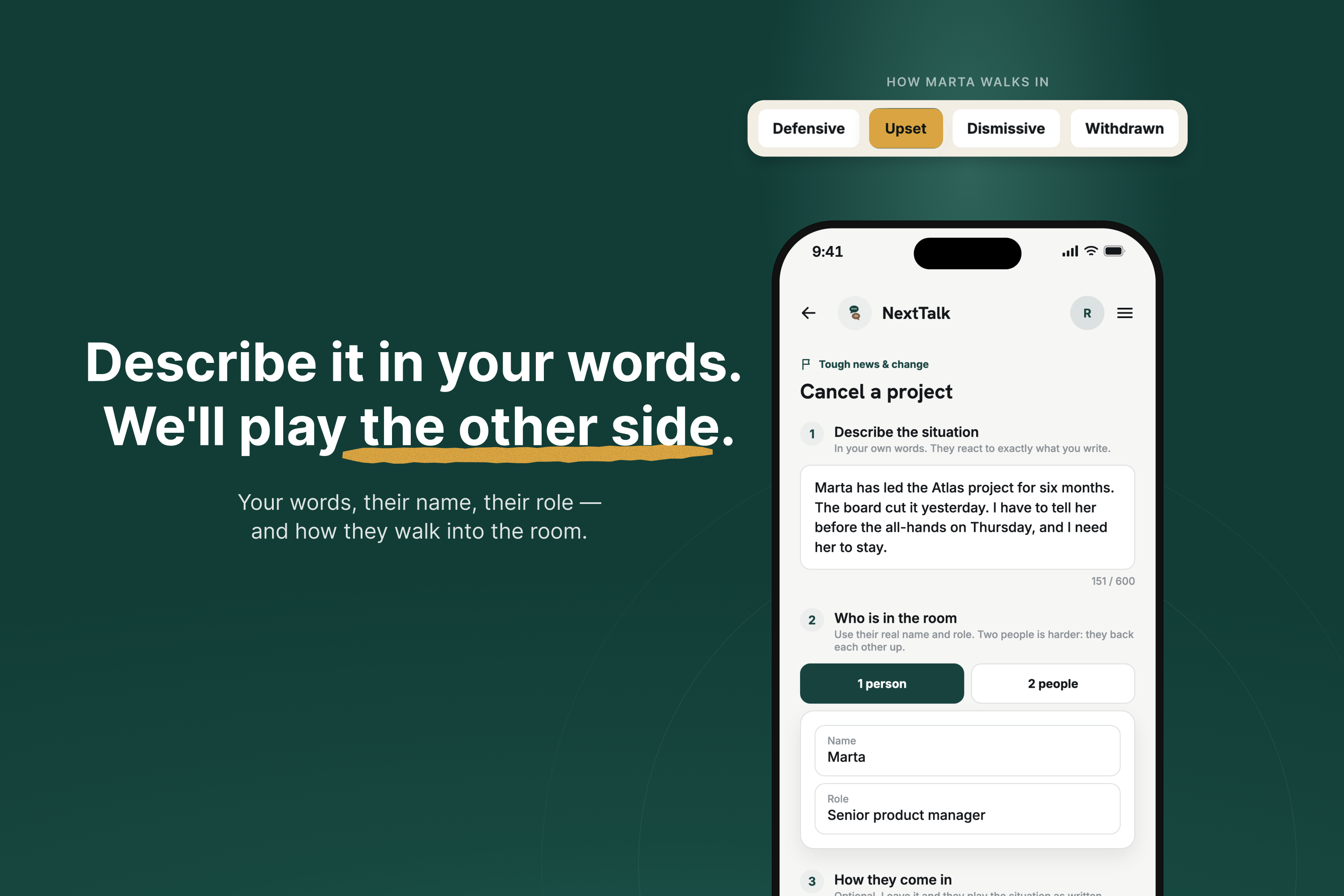
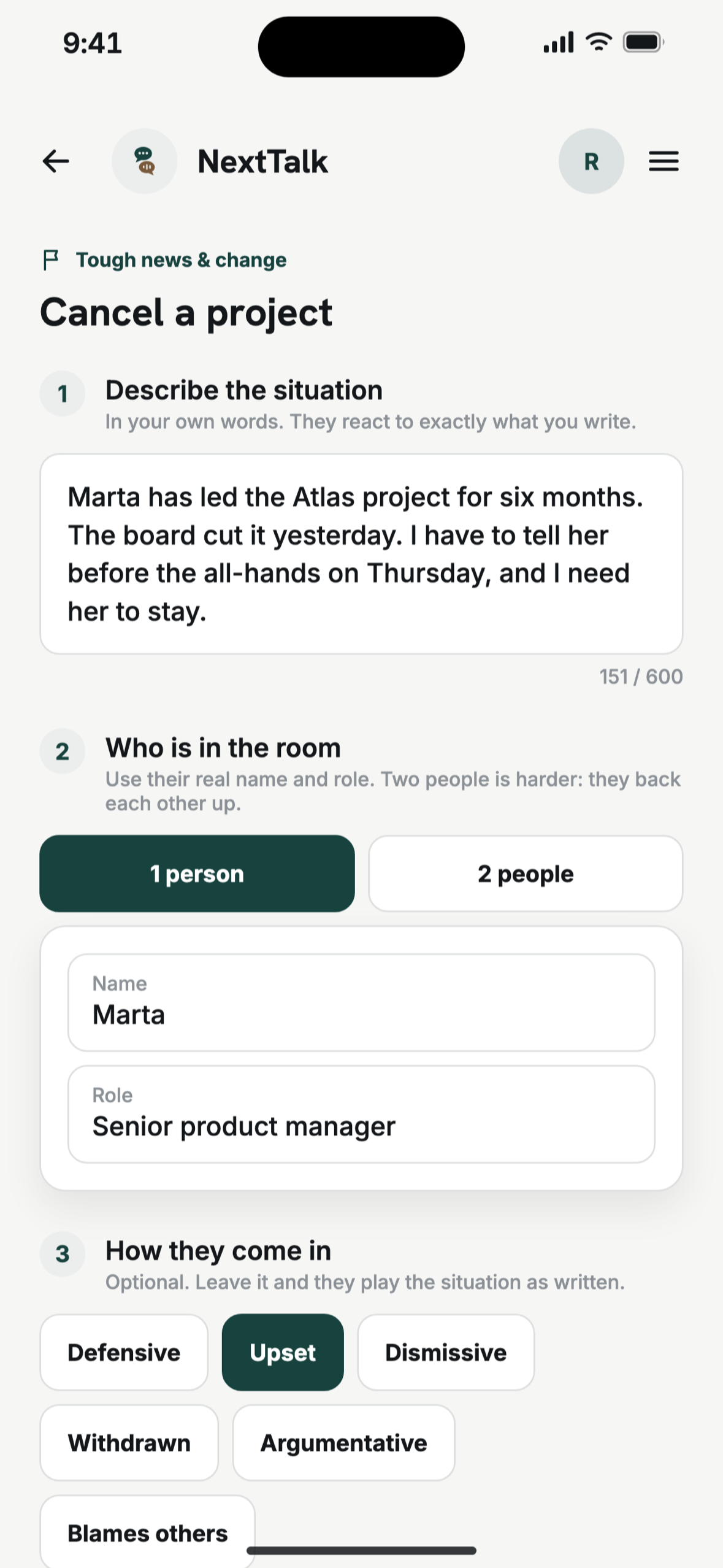
- Set up the conversation. Pick one of 42 scenarios (feedback, saying no, boundaries, tough news, conflict) or describe your own situation. Give the other person a name, a role and an attitude: defensive, upset or dismissive. Choose Gentle, Realistic or Tough.
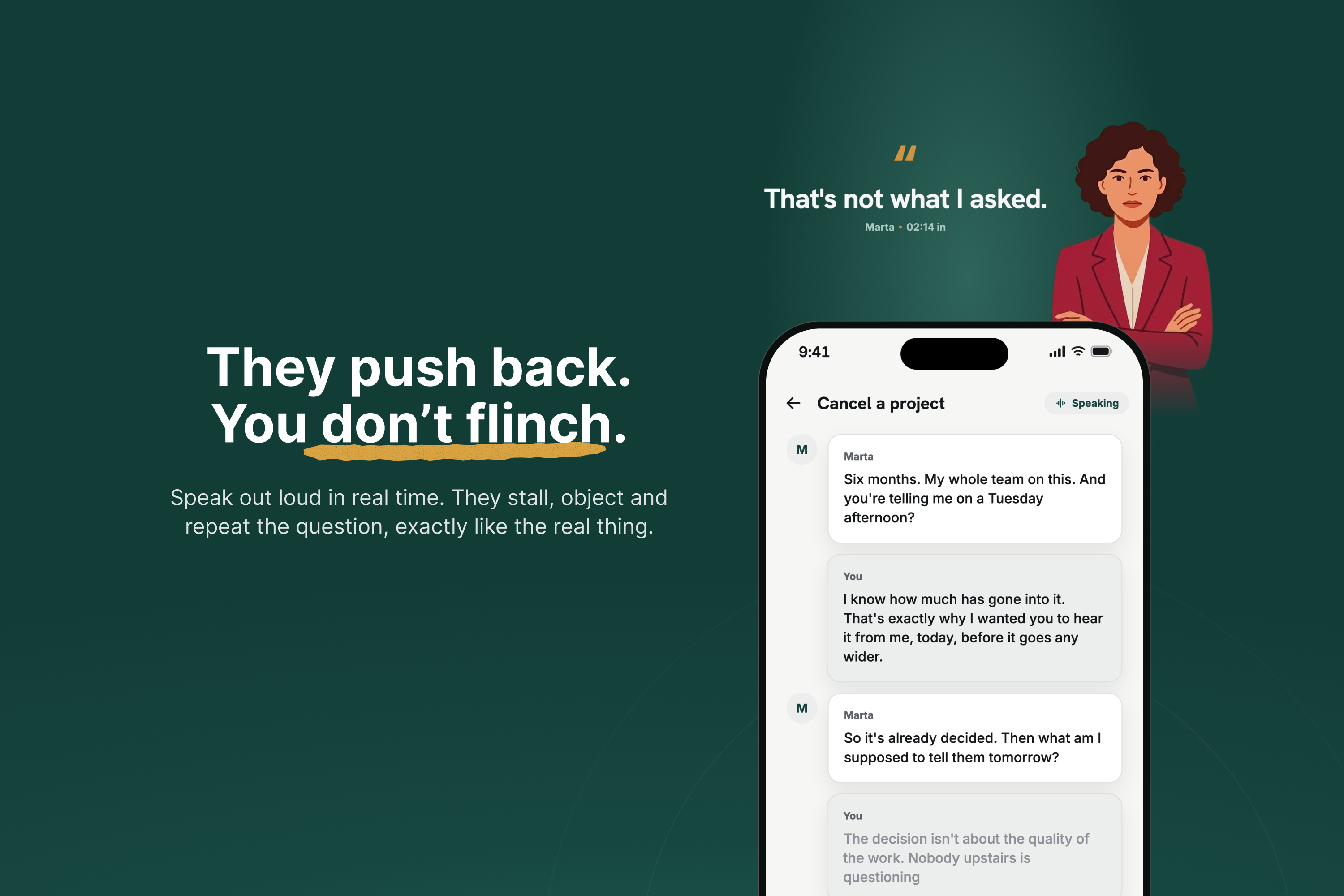
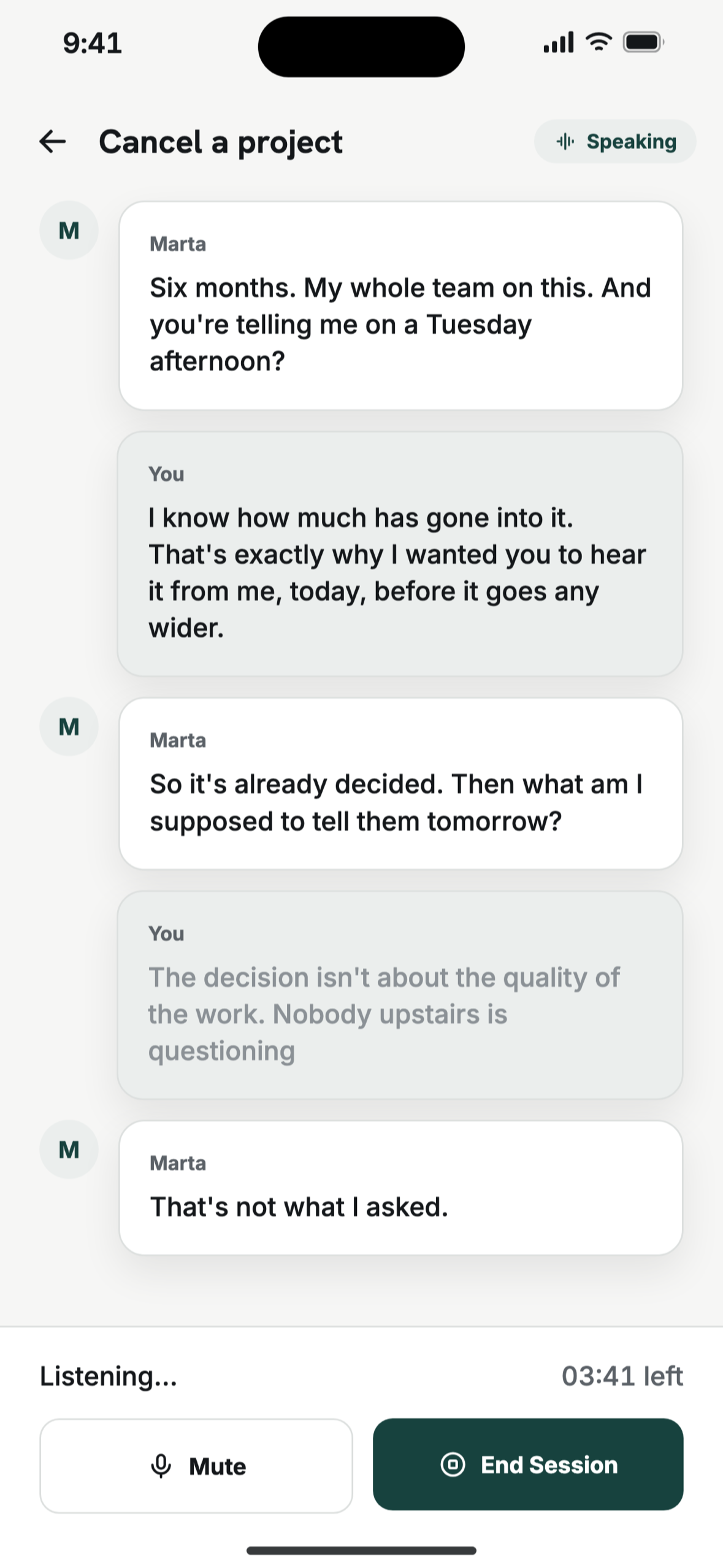
- Have it out loud. A live AI voice answers in real time. It sounds natural and carries real emotion: it interrupts, pushes back, and sounds upset when the character is. In multi-person mode, two people sit across the table and back each other up.
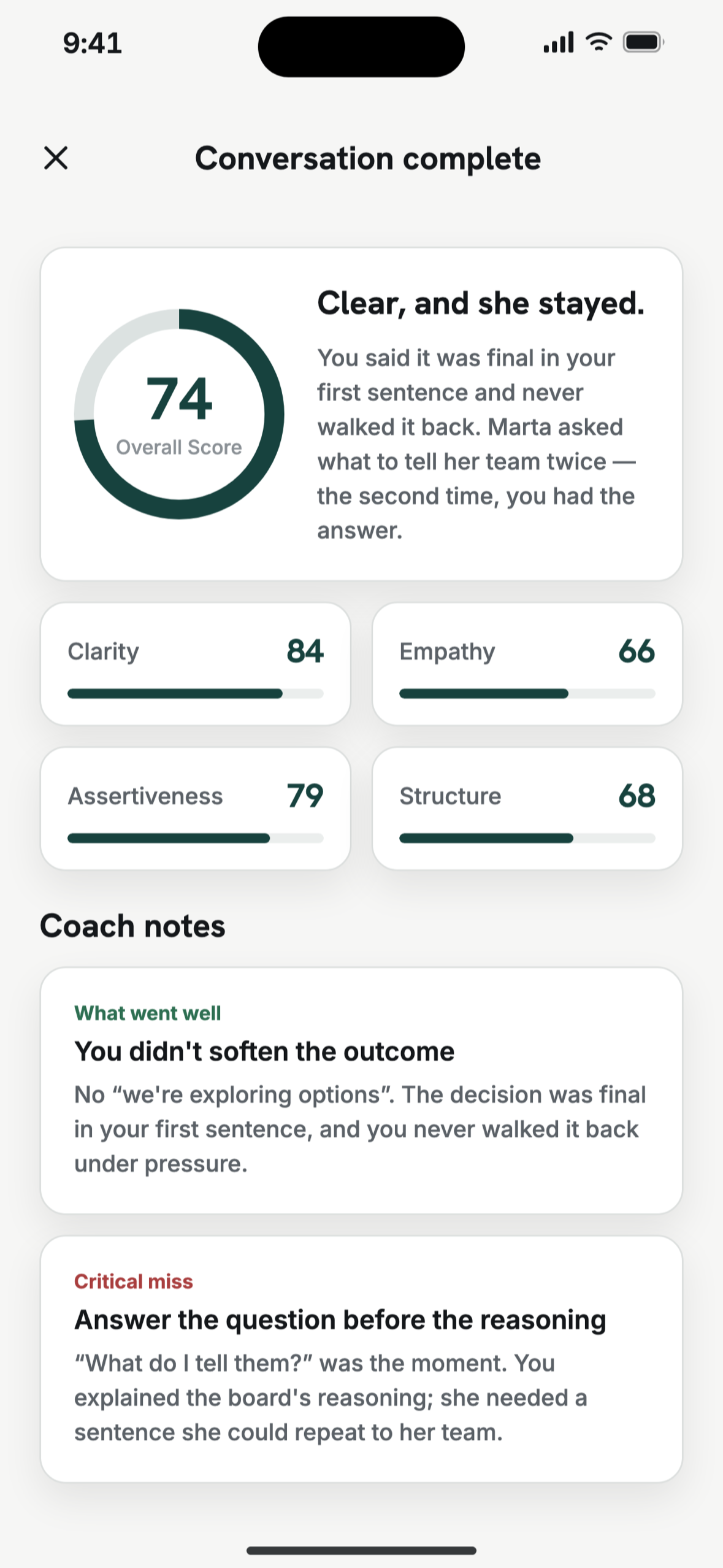
- See what landed. Text analysis scores clarity, empathy, assertiveness and structure, with coach notes on what went well and the one critical miss. It also measures what actually happened: hedging phrases, questions asked, talk share and filler words.
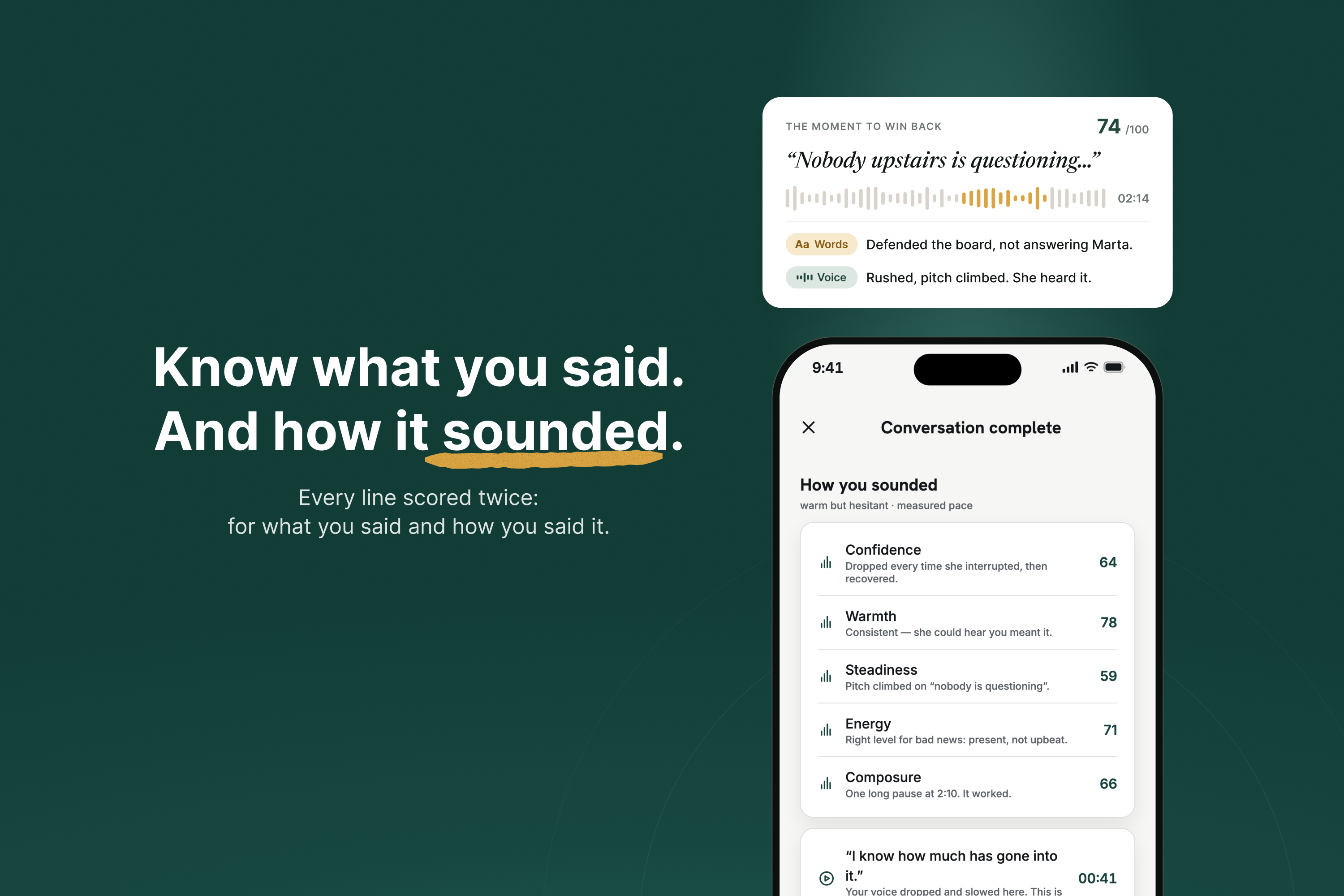
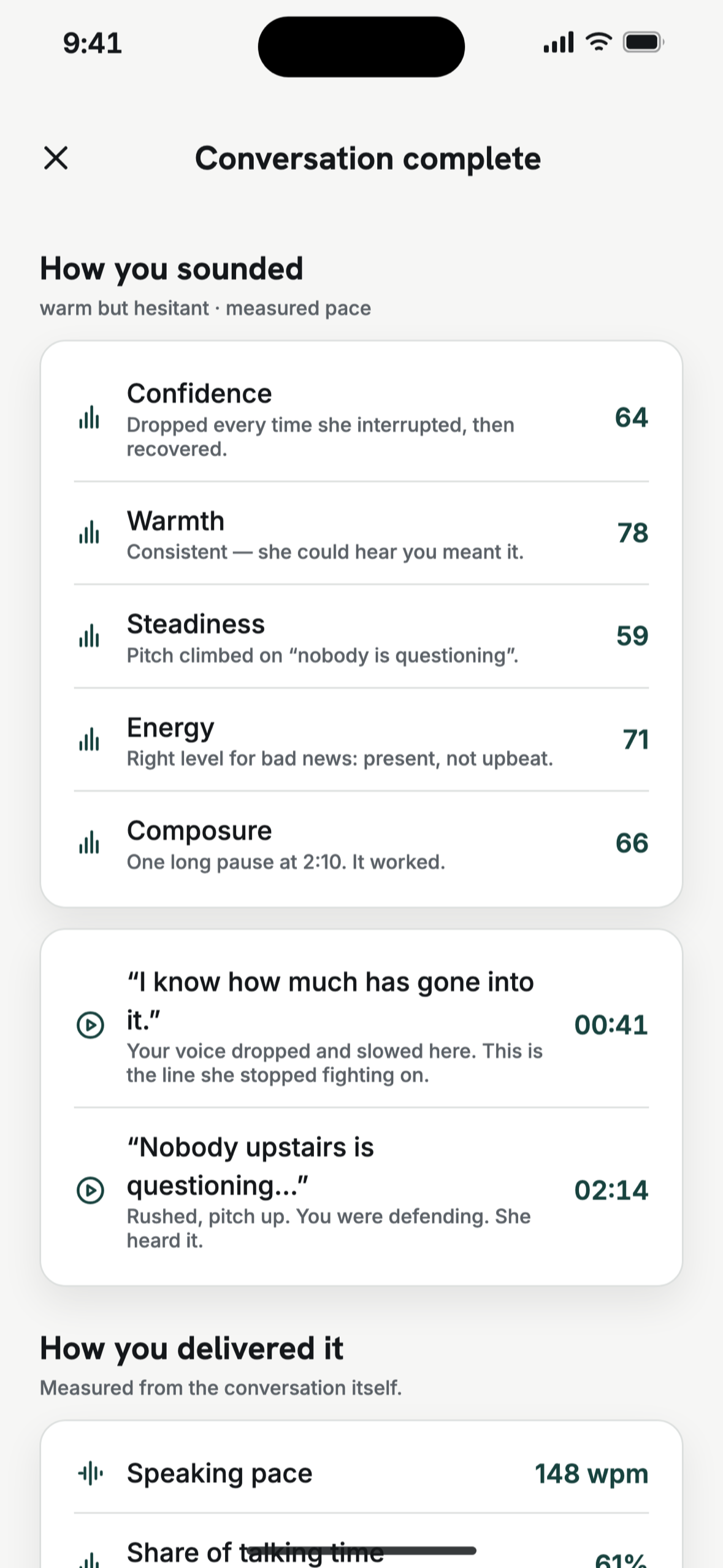
- Hear how you sounded. Voice analysis listens to the recording itself, not the transcript. It rates your confidence, warmth and steadiness, and points to the exact moments your voice gave you away.
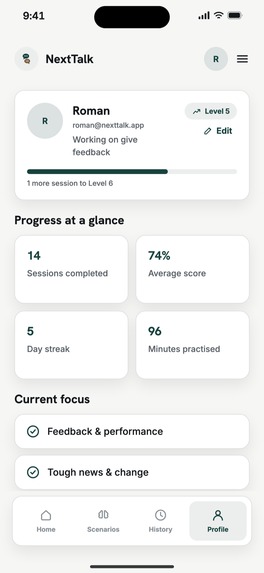
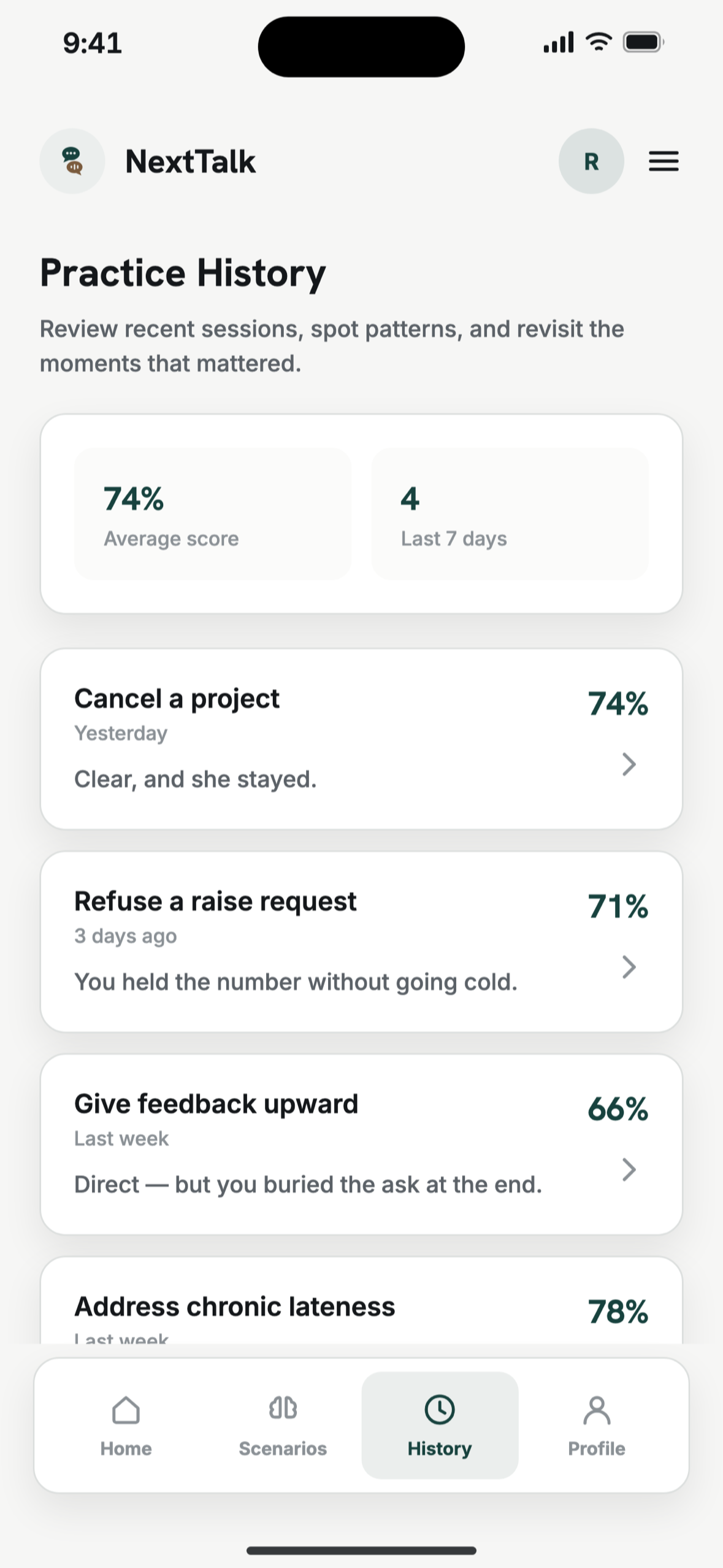
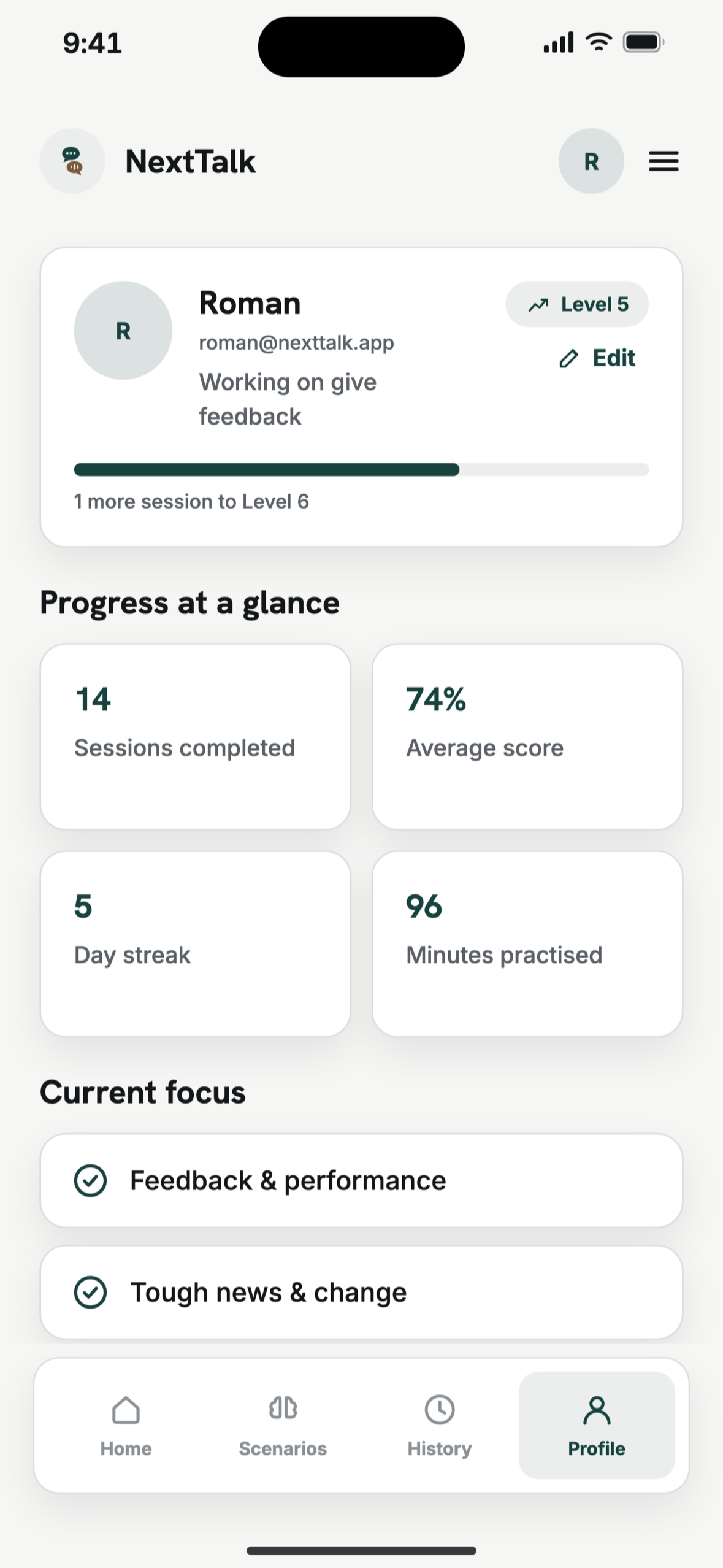
- Watch it add up. Every rehearsal is saved with its replay and results, so you can see yourself improve.
How I built it
I built it from scratch, on my own. Every part of the stack was chosen for one reason: the conversation has to feel real, and the feedback has to be honest.
- Flutter for the app. One codebase, fast iteration, and full control over a custom design. That mattered for an app that should feel calm and professional, not like a chatbot.
- ElevenLabs Conversational AI for the live voices. Practice only works if the other side sounds human: low latency, natural turn-taking, interruptions and emotion in the voice. It also supports several voices in one conversation, which made two-person mode possible, and it keeps the recording that voice analysis needs.
- Gemini for the analysis. It's multimodal, so the same model family reads the transcript for what you said and listens to the audio itself for how you said it. The Flash model is fast and affordable enough to run after every rehearsal. It also screens scenarios for safety before a call starts.
- Supabase for the backend: Postgres with row-level security, auth and Edge Functions in one place. All billing and scoring run on the server, so the app can never grant itself practice time.
- RevenueCat for subscriptions. Purchases arrive through a verified webhook, and only then does the server grant minutes.
Challenges I ran into
Why not just use ChatGPT? The biggest challenge wasn't technical. Why would anyone use NextTalk instead of ChatGPT or another AI chatbot? A chatbot can help you find the words, and even play the other person. But it can't listen to your recording and tell you your voice dropped the moment she interrupted, or put two different people across the table. So voice analysis and multi-person conversations became the heart of NextTalk.
Fair billing for live voice. Every minute of live voice costs real money, so NextTalk charges for the seconds you actually talk, not per session. A call can end after 90 seconds, or the agent can hang up after a long silence. So the app reserves time before a call, settles what was really used afterwards, and a reconciler checks every session against ElevenLabs' own records.
A safety filter that doesn't get in the way. App Review requires moderation for AI-generated conversations. But this is an app for letting people go and confronting difficult colleagues, and a strict filter would block exactly the conversations users need most. So the filter blocks only a narrow set of genuinely harmful content, and lets hard workplace topics through.
Accomplishments that I'm proud of
- A conversation partner that sounds human: a natural voice, real emotion, real interruptions.
- Feedback on how you said it, judged from the audio itself, not just the words on a transcript.
- Two-person conversations, where they back each other up.
- Honest billing: you pay only for the seconds you actually talk.
- I built all of it myself, from design to backend, including the App Store listing.
- The two biggest features came straight from tester feedback.
What I learned
Mobile app development has changed. With AI, anyone can build an app in a couple of hours, so the app alone isn't enough anymore.
The first question I had to answer wasn't "can I build it?" It was "does it add anything an LLM doesn't already give you?"
The value has to come from something beyond the code: a physical product, a service, data, or real research. For NextTalk, it came from listening to professionals who have these conversations every week. They taught me the words were rarely the problem. Confidence was. That one insight became voice analysis, the feature that makes NextTalk different.
What's next for NextTalk - Lead the Hard Conversations
- Team packs for HR and L&D, so a company can give every new manager practice time. Redeem codes already work in the app.
- More languages, because hard conversations don't only happen in English.
- Trends across rehearsals, showing how your confidence and clarity change over weeks, not just in one conversation.
- A shareable results card, so people can show their progress.


Log in or sign up for Devpost to join the conversation.