-
-
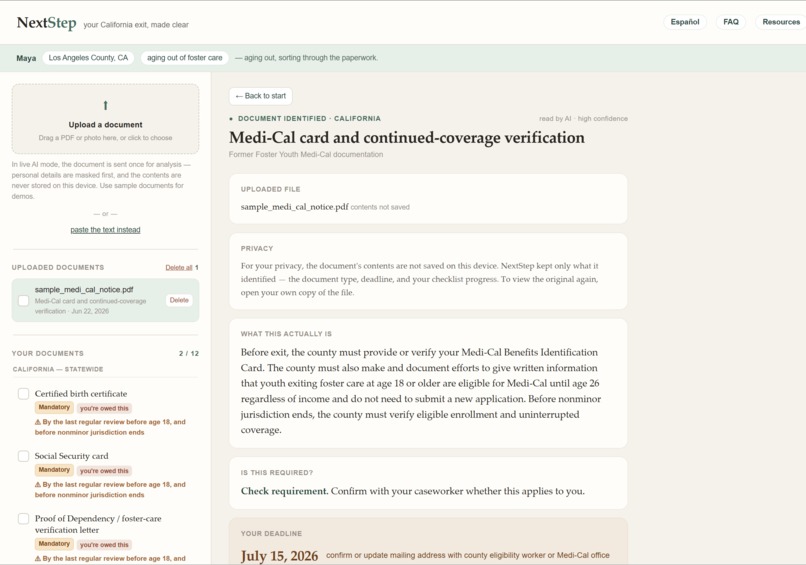
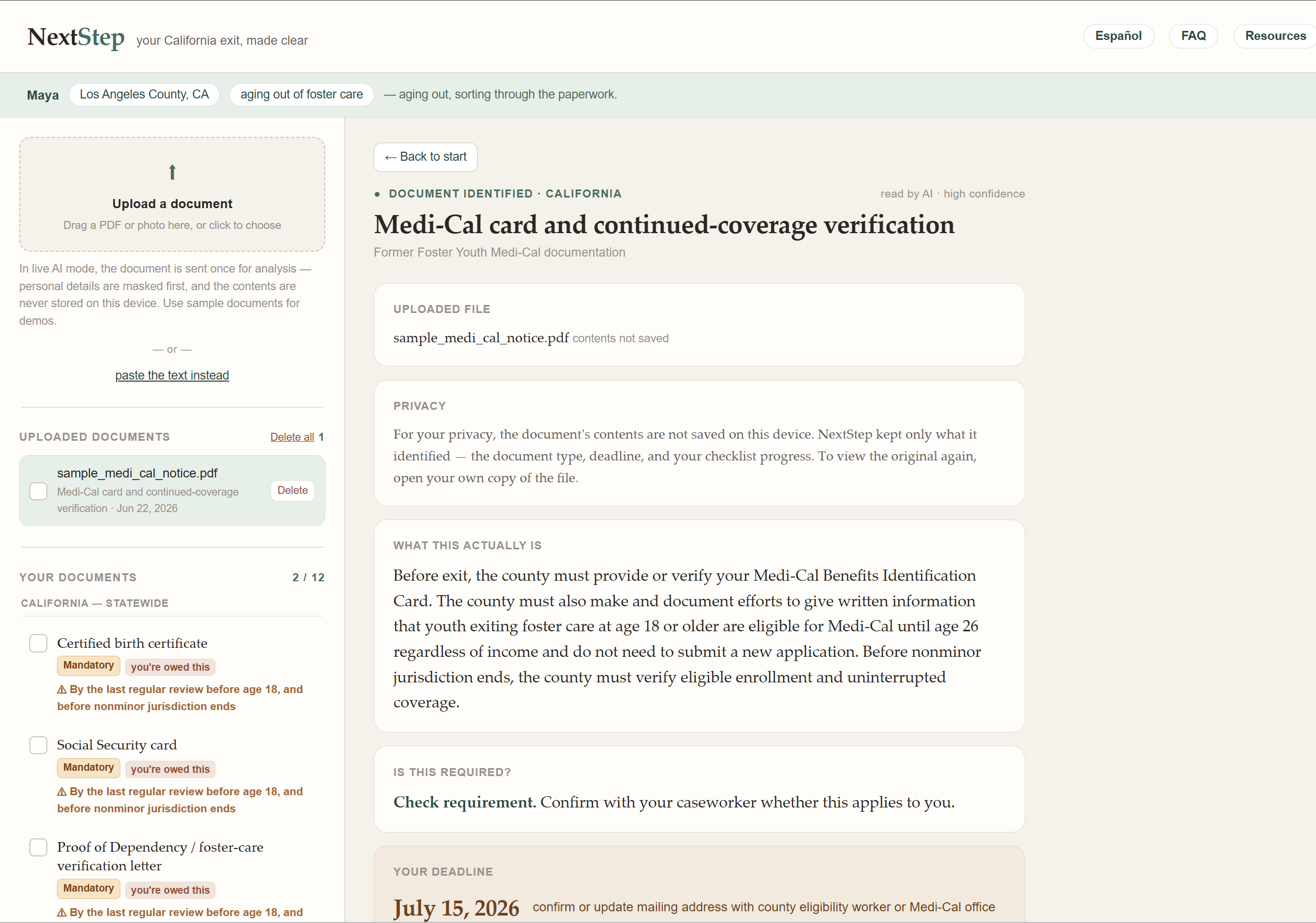
Upload a confusing document. NextStep identifies it and explains what it actually is, in plain language
-
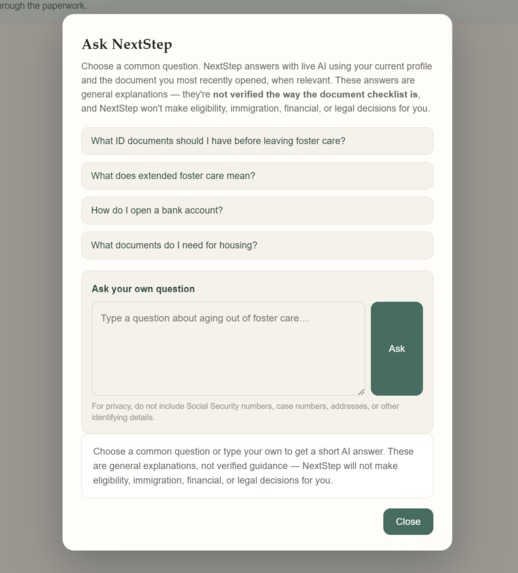
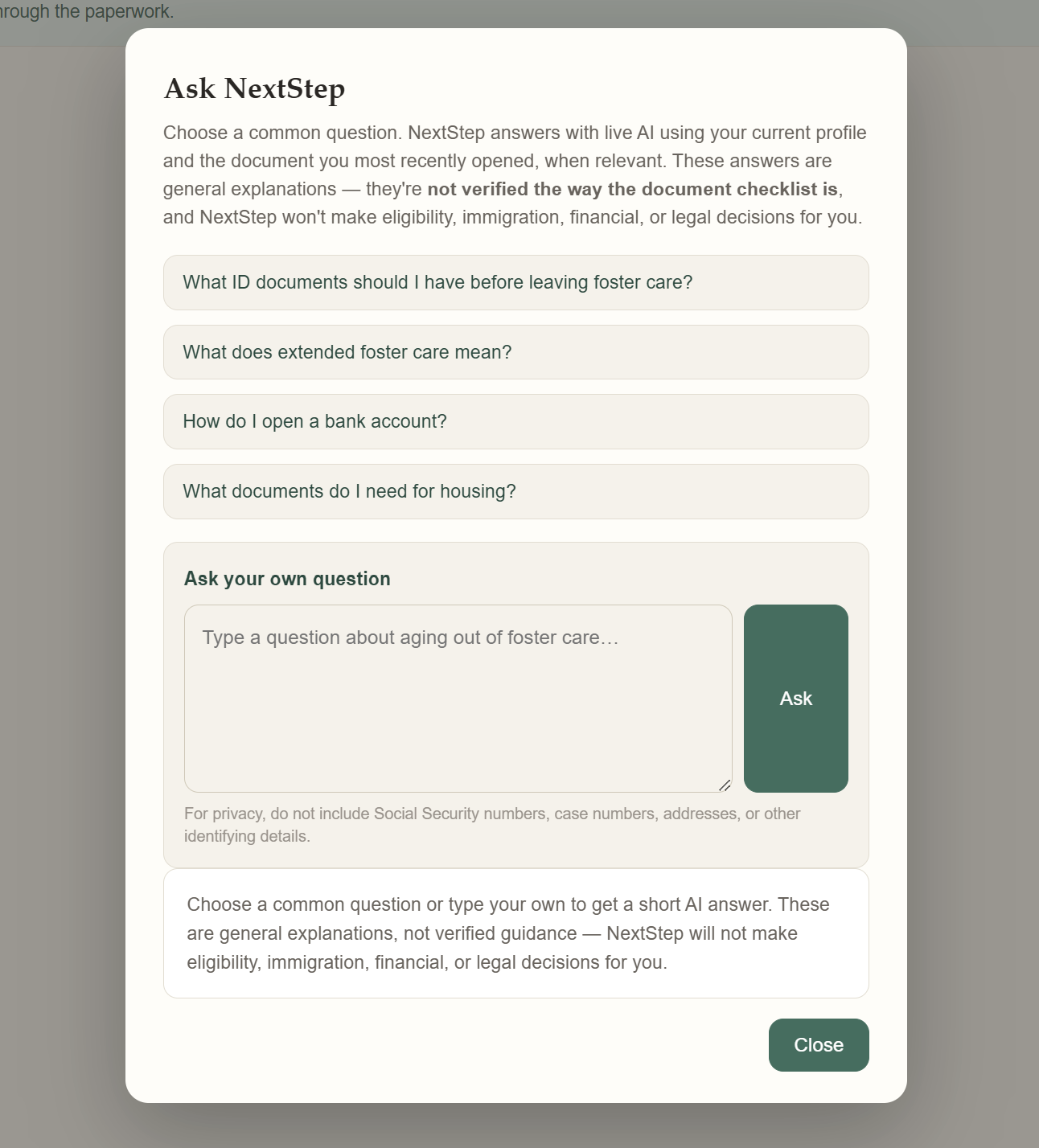
Ask the AI a question
-
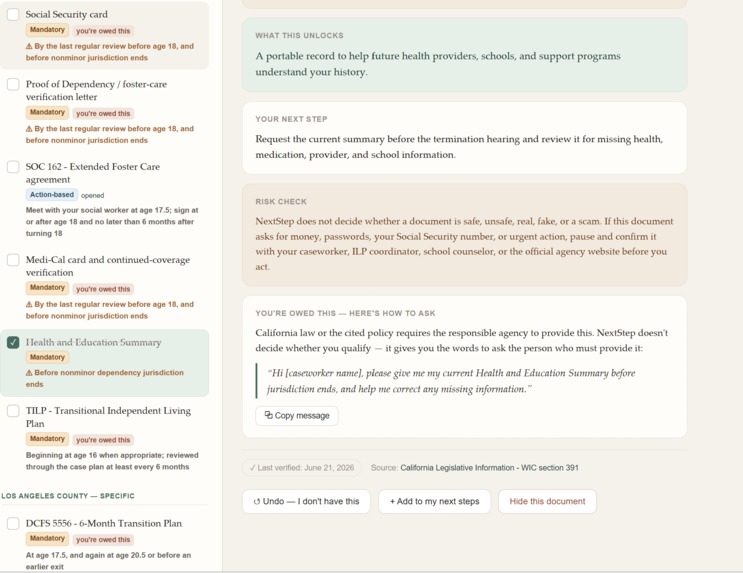
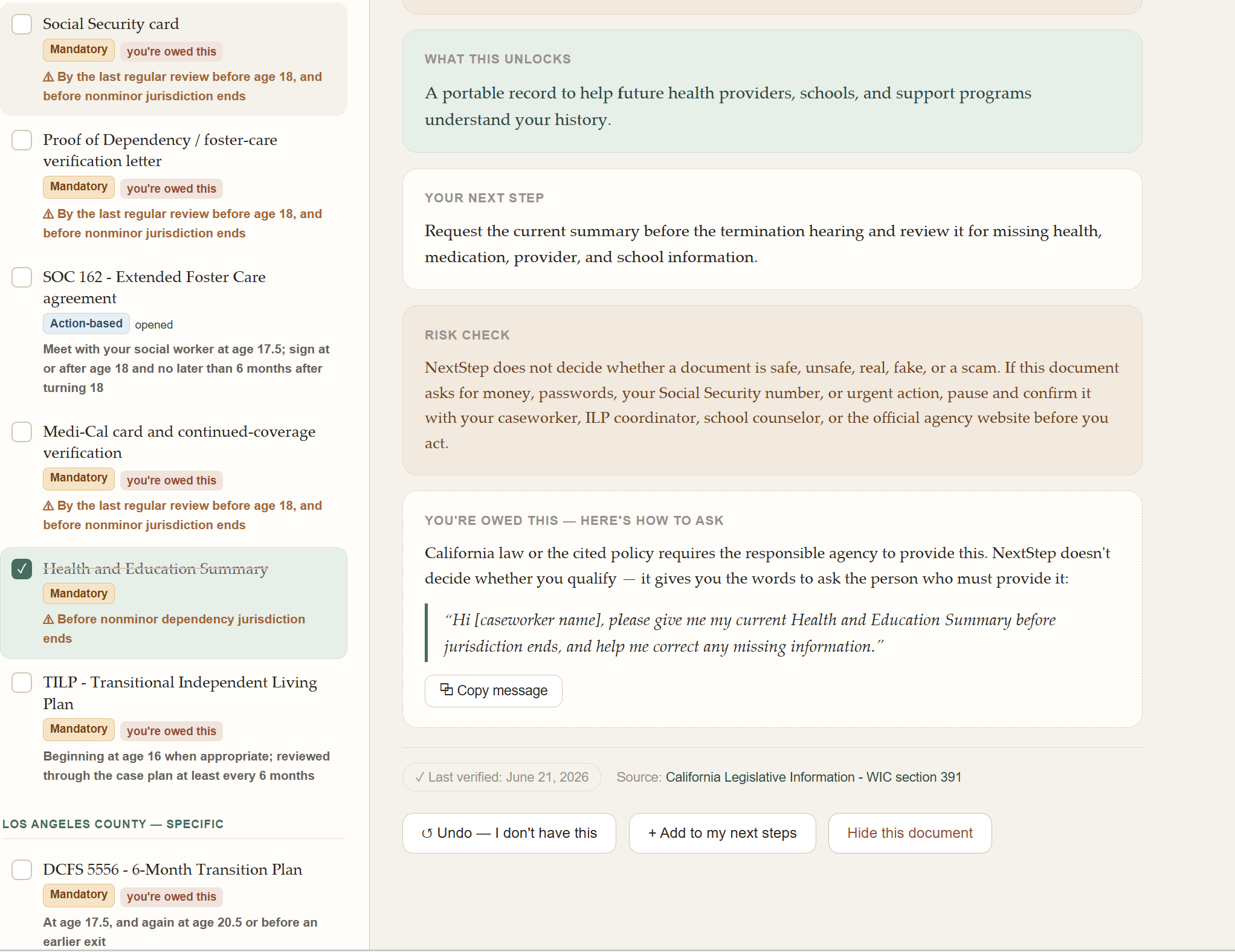
Check the item, add it to your next steps, and see the source
Inspiration
Young people aging out of foster care often receive a stack of important documents related to housing, healthcare, education, court status, and benefits. The information exists, but it is scattered across agencies, written in complex language, and tied to deadlines that can be difficult to understand during a stressful transition period.
We wanted to build something that answers a practical question:
“I have this document in my hand. What is it, why does it matter, and what should I do next?”
What We Built
NextStep is an AI-assisted document translator and action planner for foster youth transitioning out of care.
Users can upload or paste document text, select their location, and receive:
- Document identification
- Plain-language explanations
- Verified source information
- Checklist items and next steps
- Caseworker request scripts
- Deadline reminders
Our current prototype focuses on California statewide documents and Los Angeles County transition resources.
How We Built It
We built NextStep using:
- FastAPI and Python for the backend
- HTML, CSS, and JavaScript for the frontend
- Anthropic Claude for document classification and extraction
- A human-curated knowledge base containing verified foster-care transition information
- Local browser storage for privacy-friendly progress tracking
The AI identifies the document and extracts visible deadlines. Verified explanations, sources, and next steps come from our curated knowledge base rather than the model itself.
Challenges
One of our biggest challenges was balancing usefulness with safety.
Because foster-care transition is a high-stakes situation, we did not want the AI generating legal or eligibility advice. Instead, we separated AI from factual information. The AI performs only classification and extraction, while verified explanations come from human-reviewed sources.
Another challenge was privacy. We designed the system to avoid storing uploaded documents and added redaction steps before sending supported text to the AI model.
What We Learned
We learned that responsible AI is not only about model performance. It is also about deciding what the AI should not do.
Building NextStep taught us how to combine AI capabilities with human verification, source transparency, privacy protection, and clear user guidance in a way that is appropriate for a vulnerable user population.
Built With
- anthropic
- api
- chatgpt
- claude
- css
- fastapi
- github
- html
- httpx
- javascript
- localstorage
- python
- uvicorn

Log in or sign up for Devpost to join the conversation.