-
-
App Icon
-
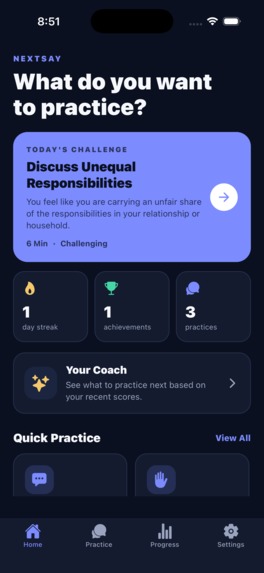
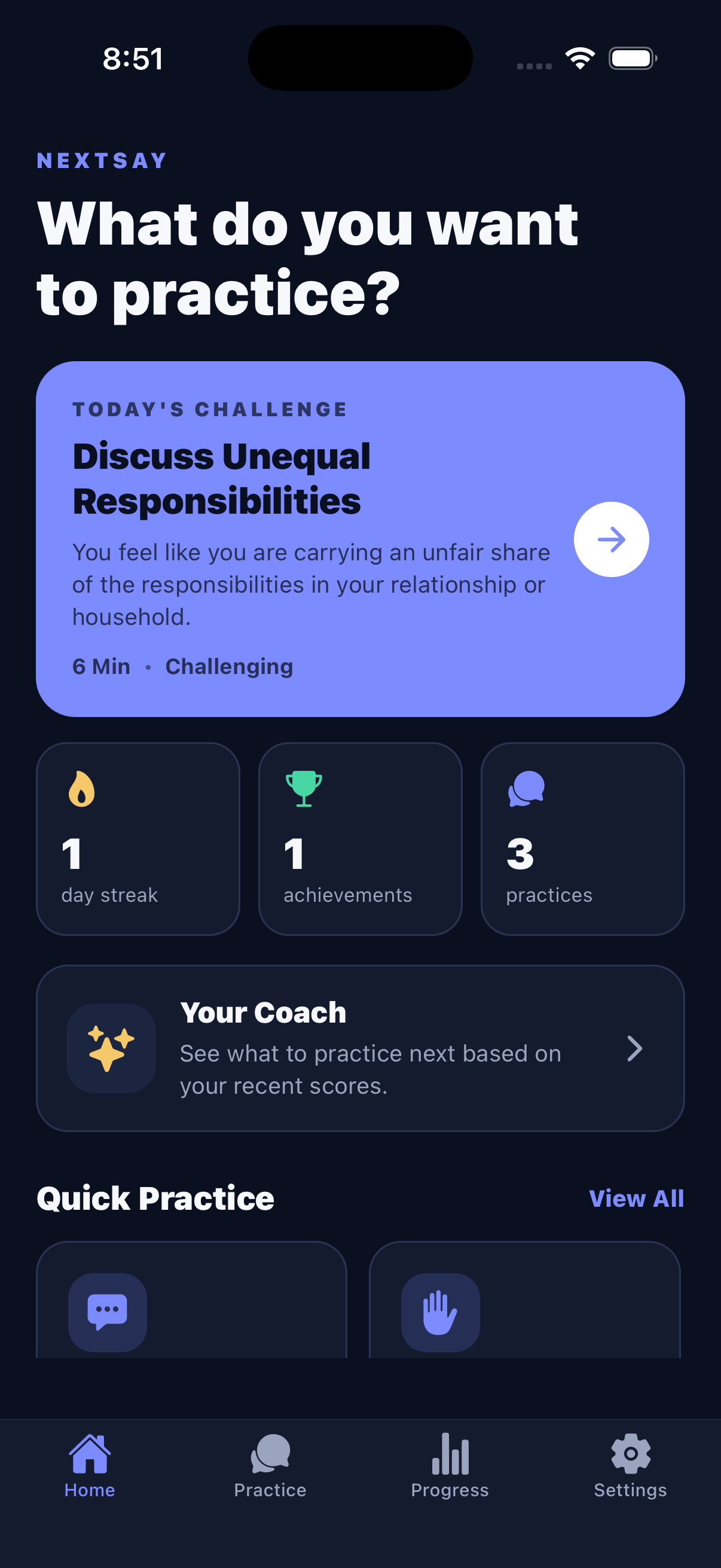
Home Screen after login
-
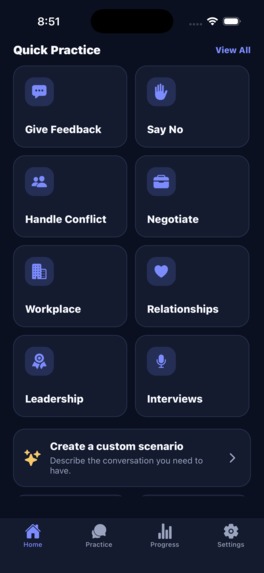
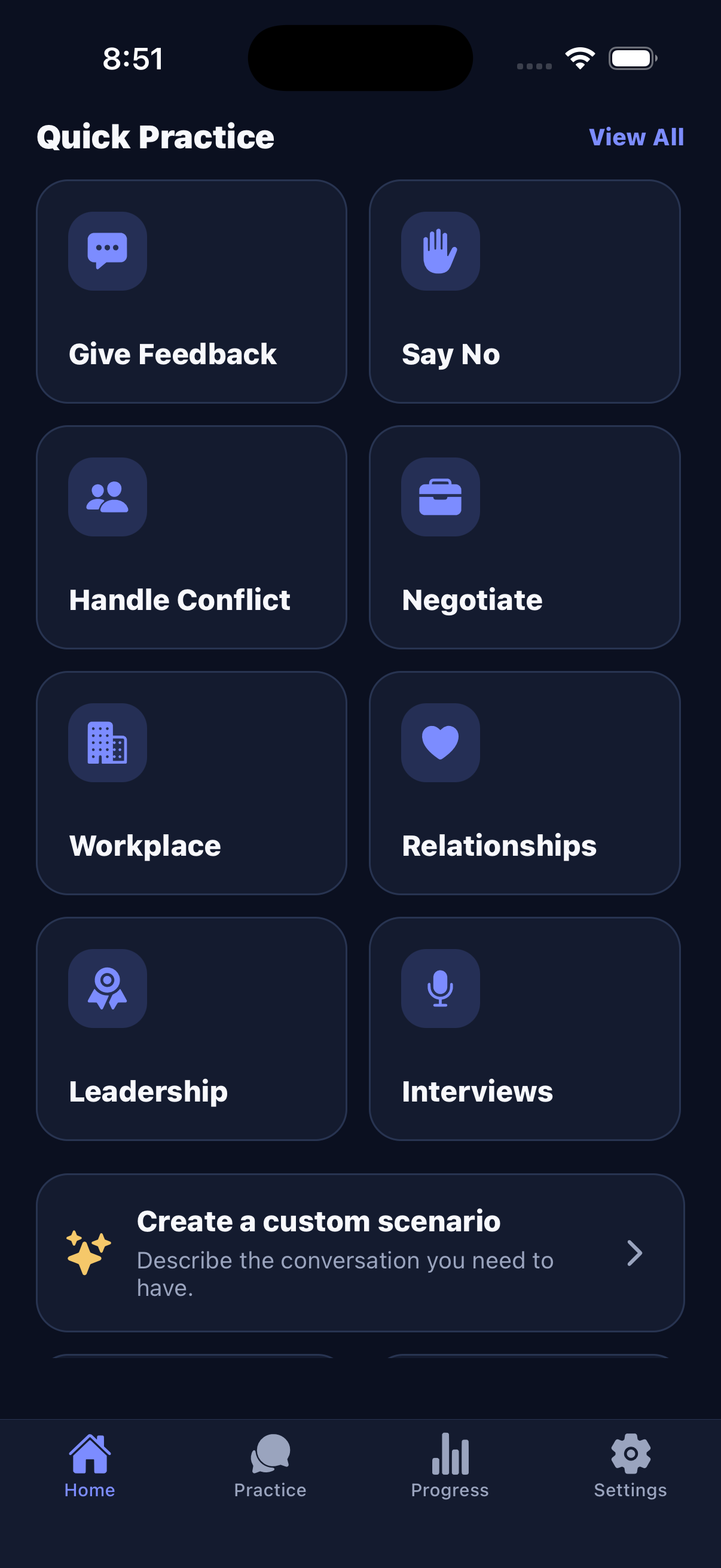
Home Screen Quick Practice
-
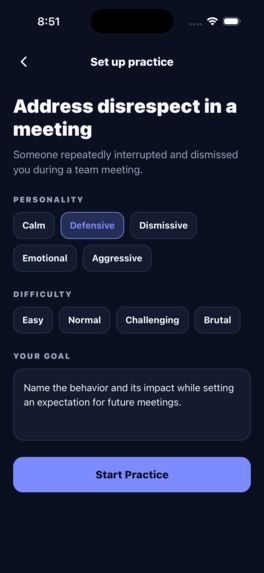
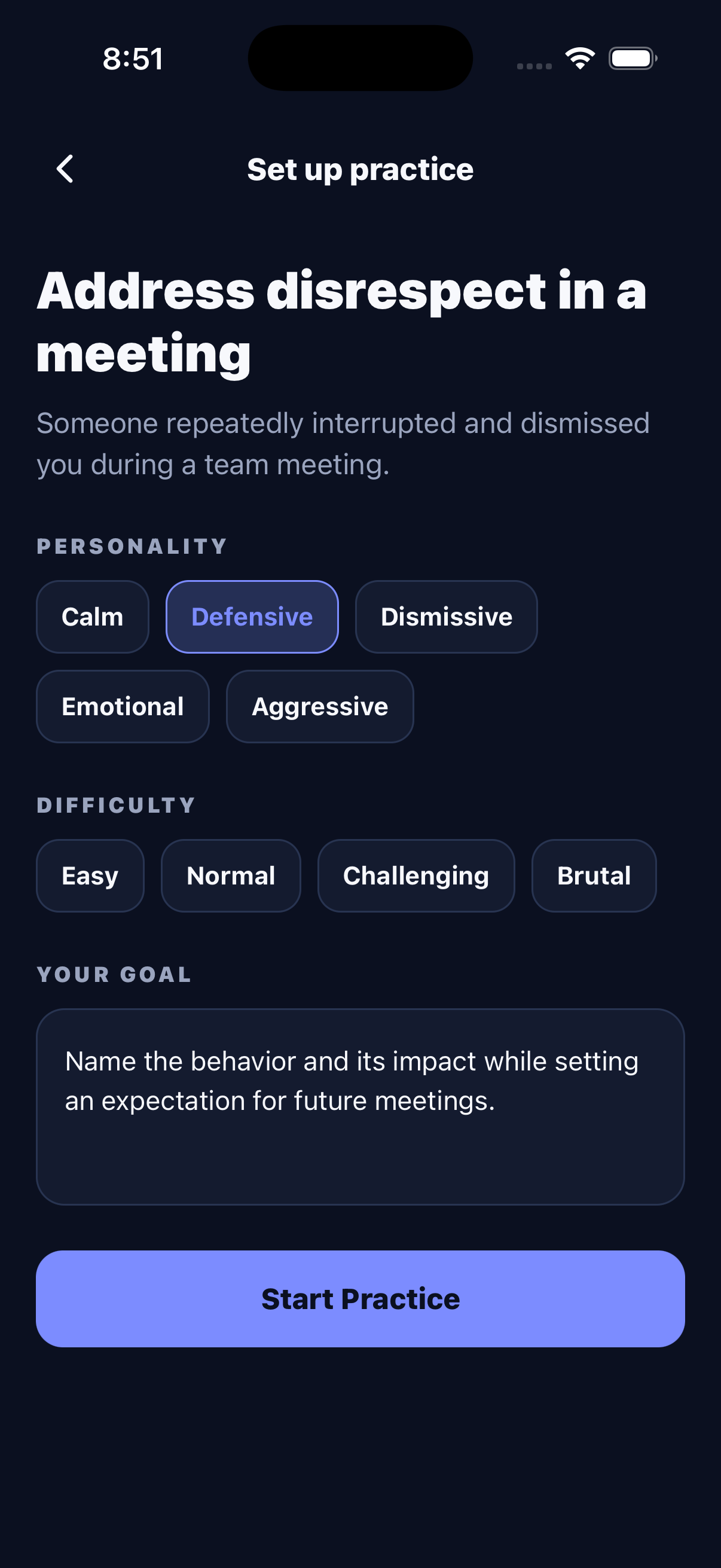
Conversation Setup
-
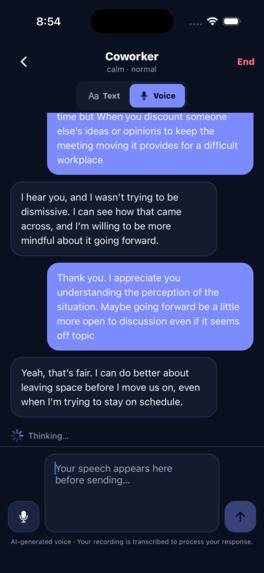
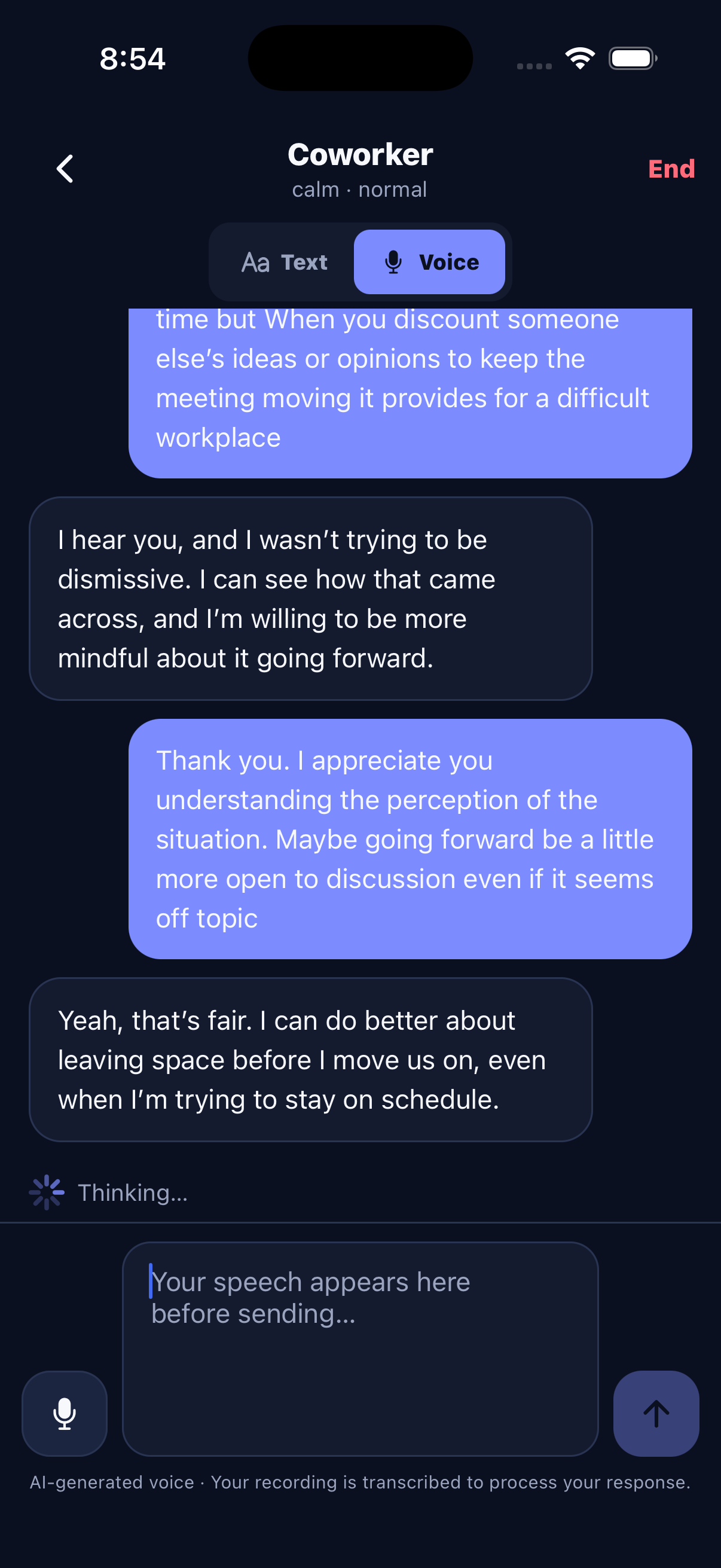
Conversation Screen
-
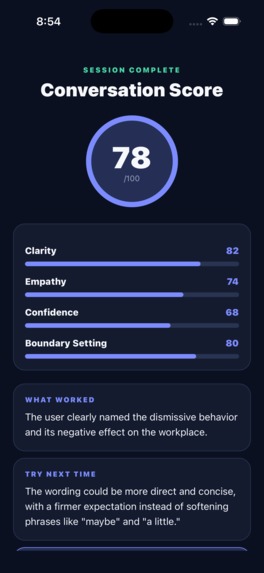
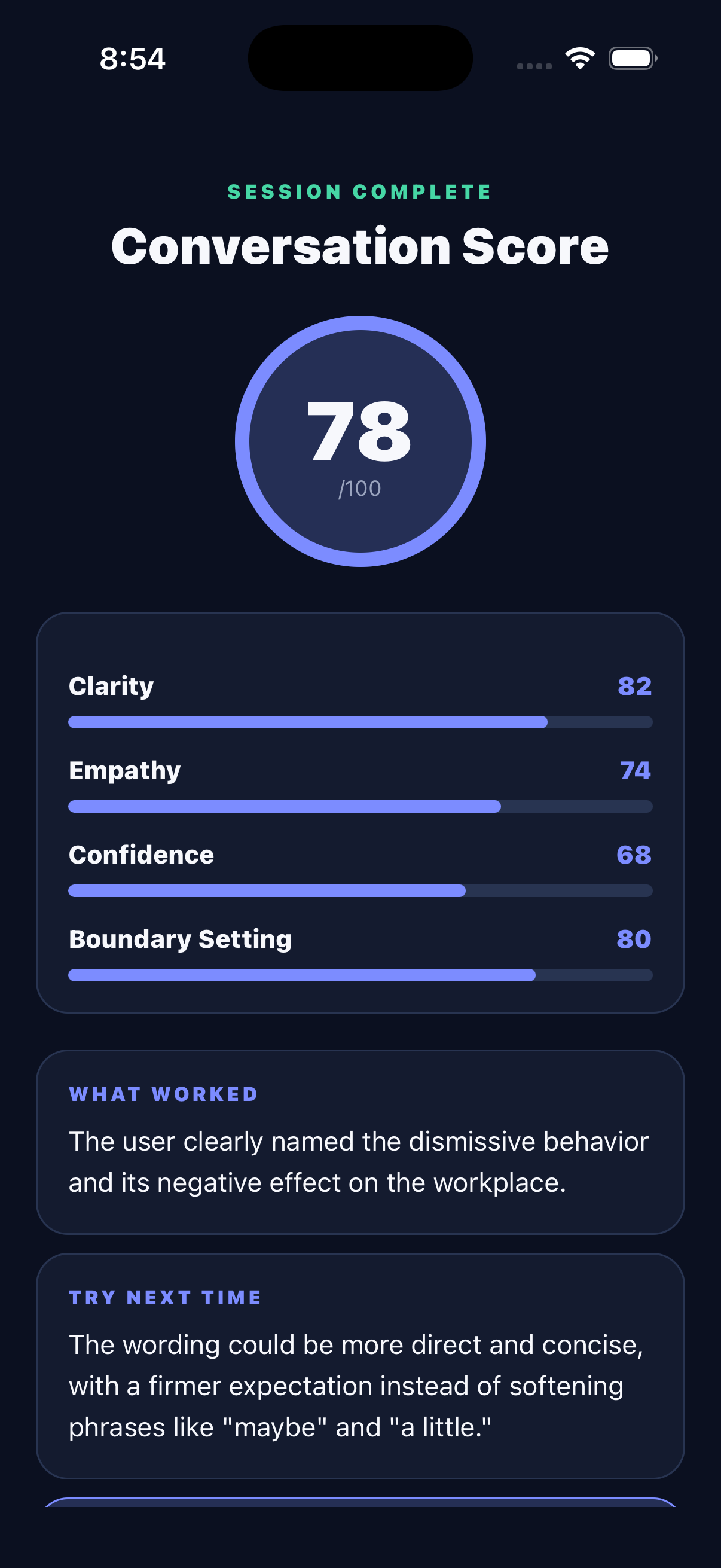
Scoring of Conversdation
-
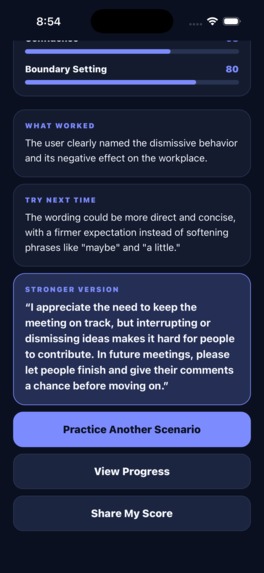
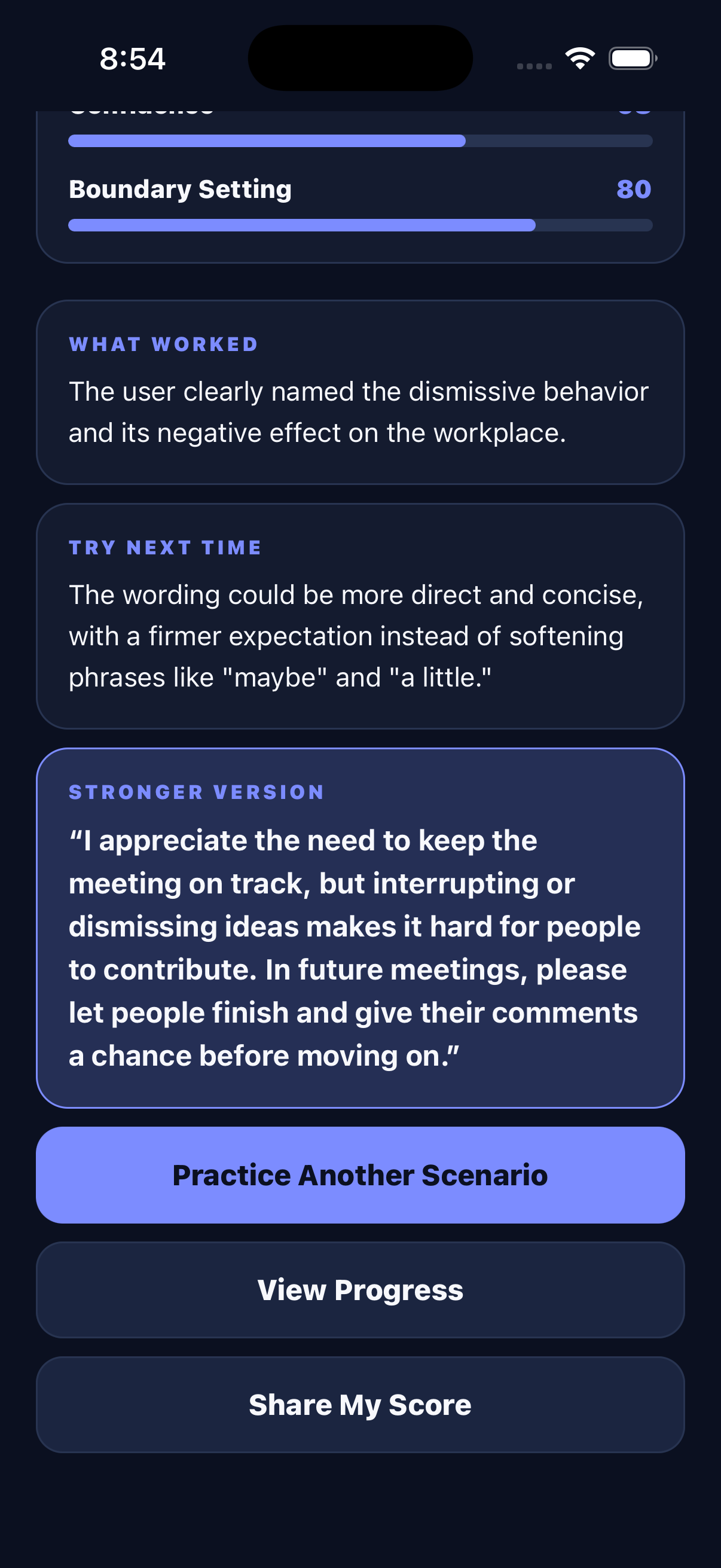
Scoring of Conversdation
-
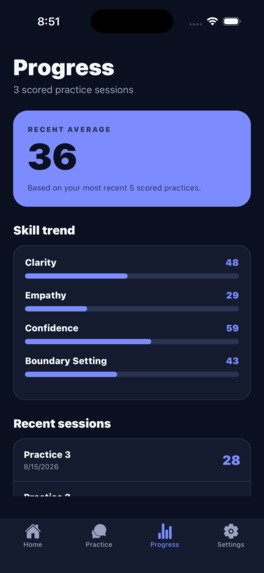
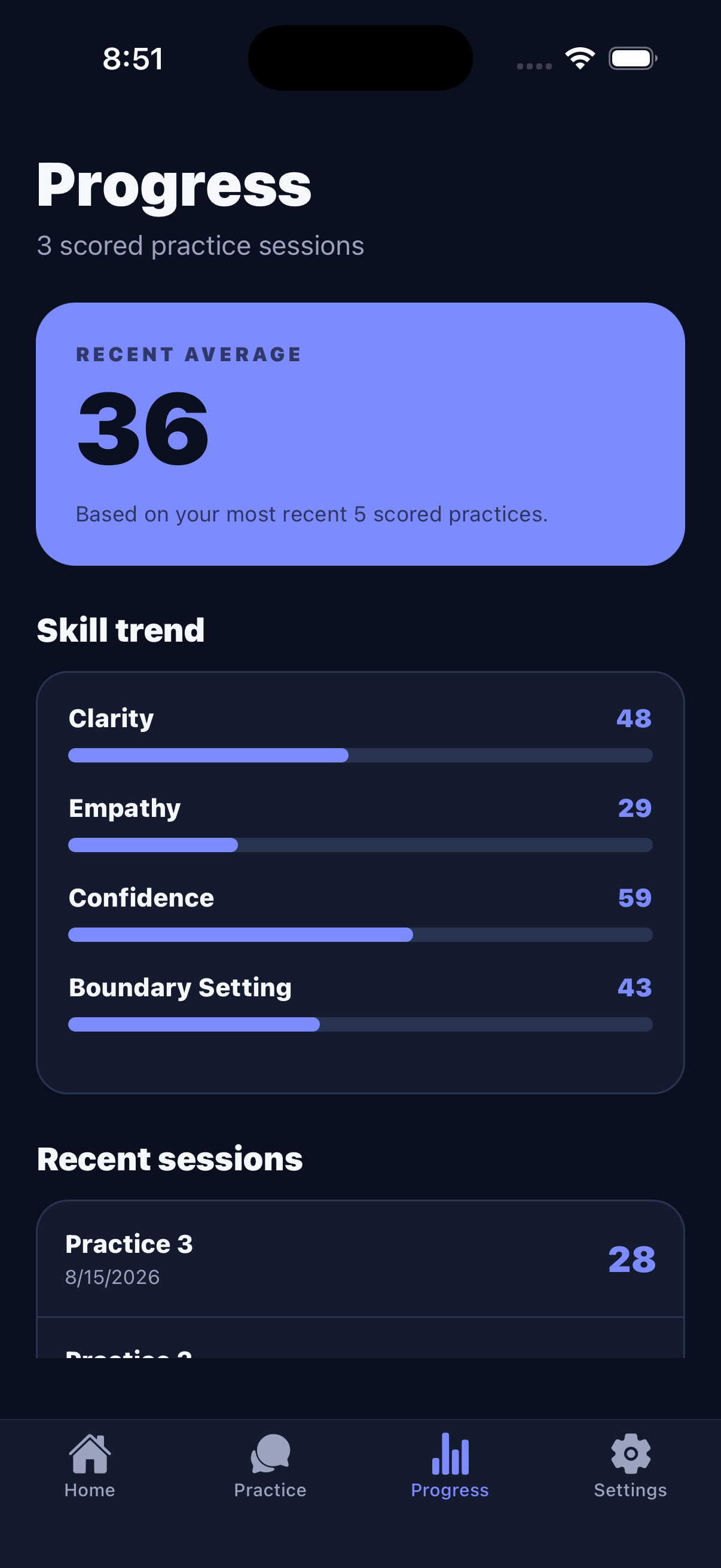
Progress of all Conversations
-
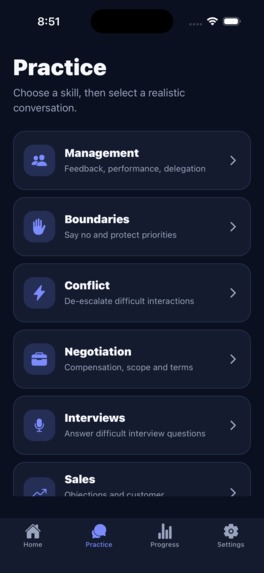
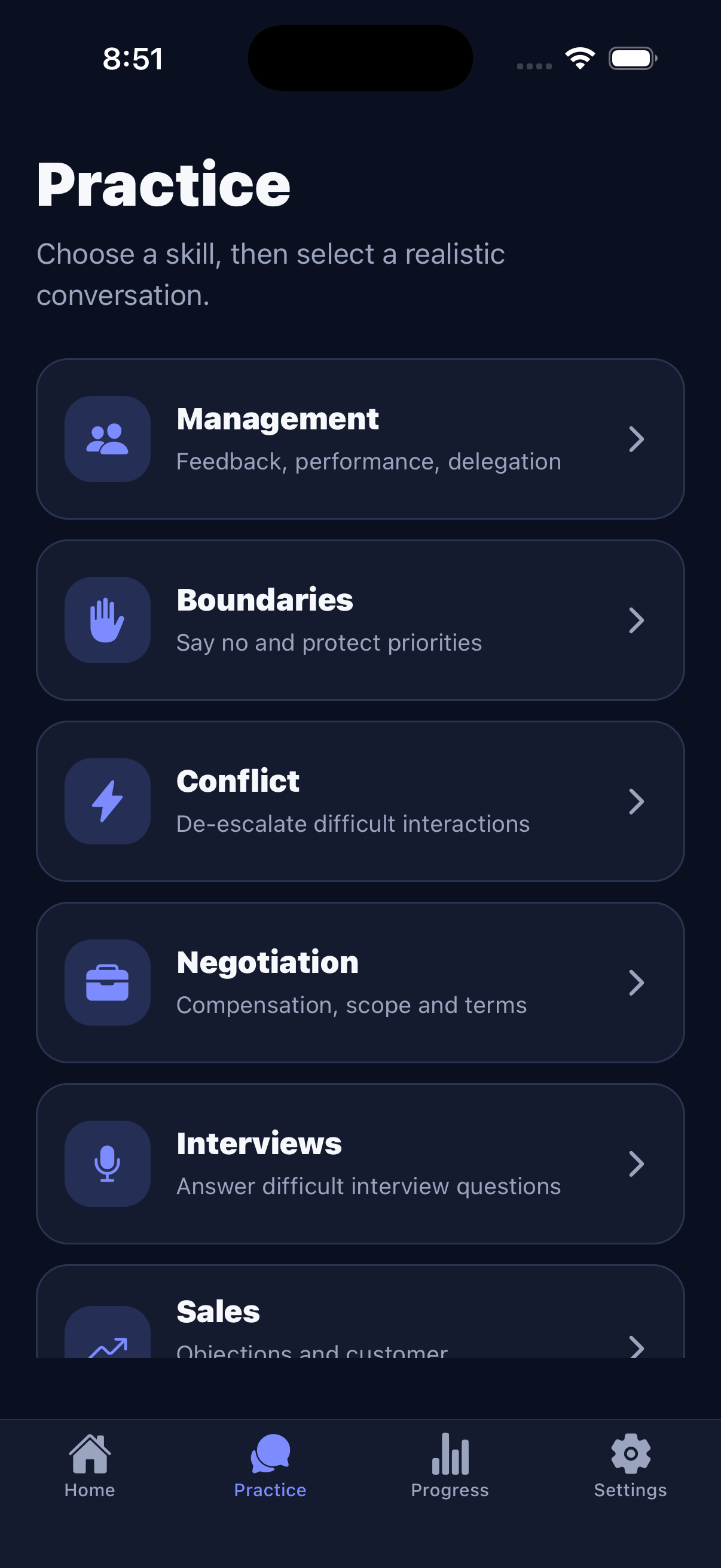
Practice Categories
-
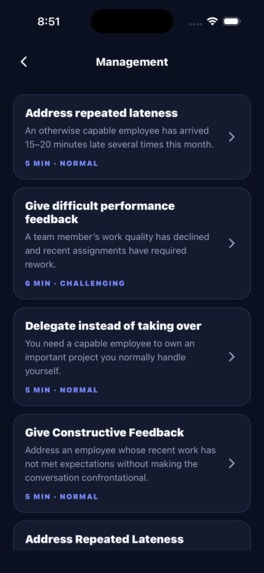
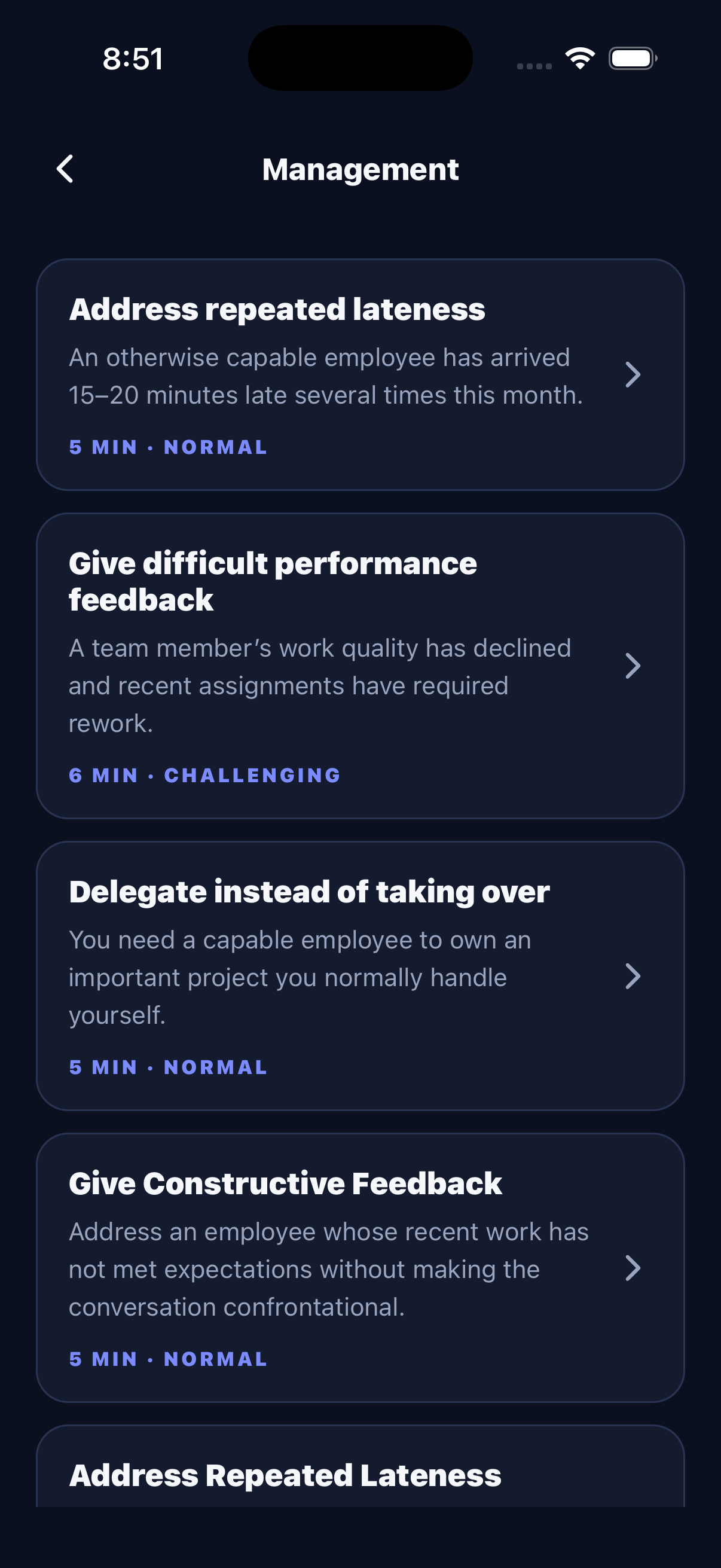
Practice Conversations
-
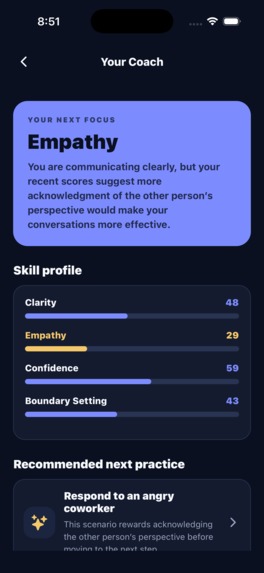
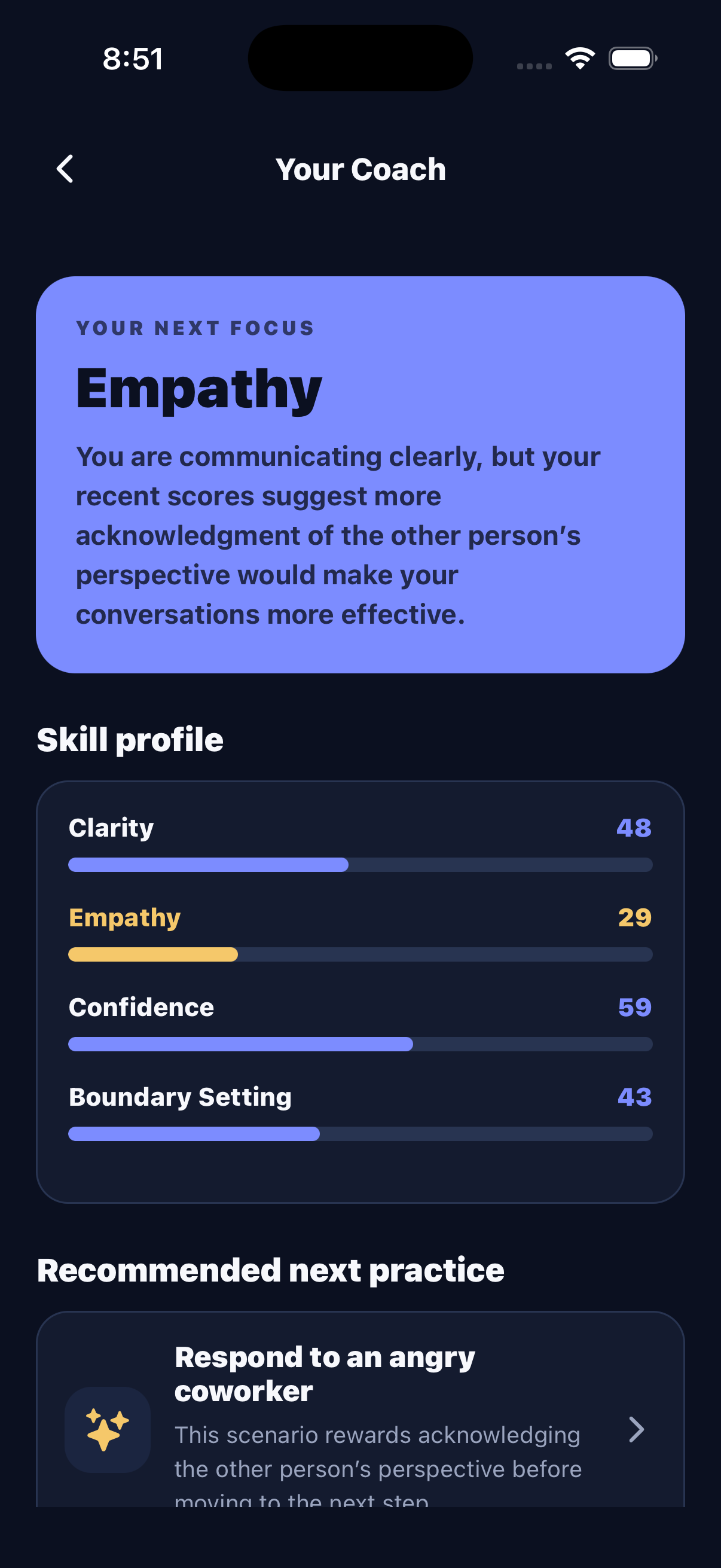
Coaching Screen
-
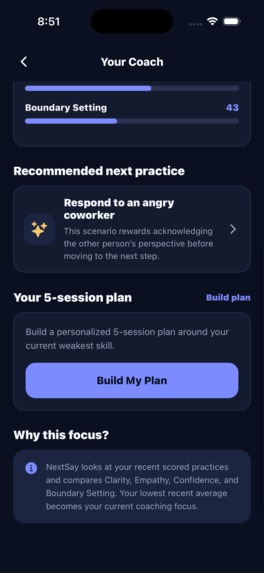
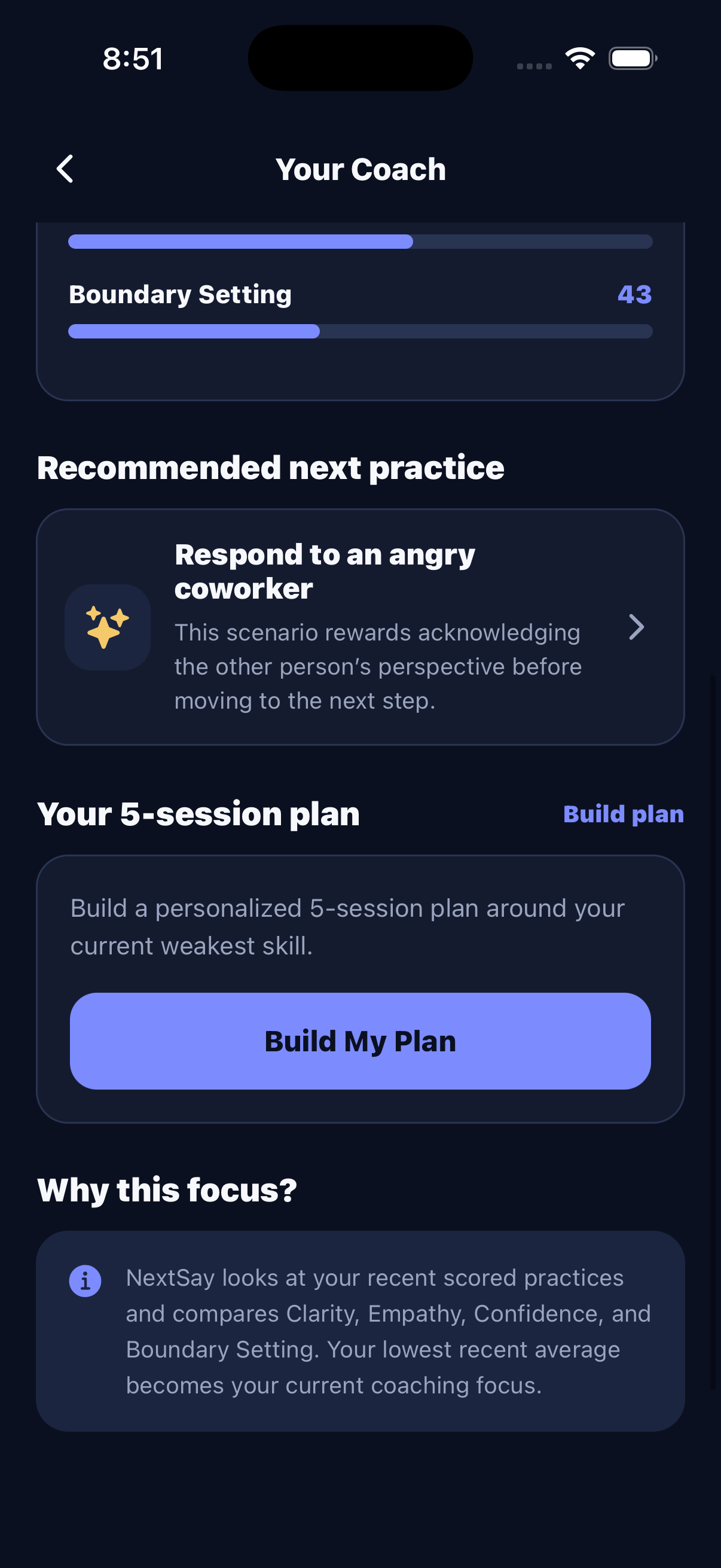
Coaching Screen
NextSay
Inspiration
Most of us have had a difficult conversation where the perfect response came to us 20 minutes too late.
Maybe it was giving an employee difficult feedback, asking for a raise, setting a boundary, handling an angry customer, negotiating a deal, or answering a challenging interview question.
We prepare for presentations, interviews, exams, and sales pitches — but we rarely have a good way to practice the conversations that can have the biggest impact on our careers and relationships.
That inspired NextSay.
NextSay is an AI-powered conversation practice and coaching app designed around a simple idea:
Practice the conversation before it matters.
Instead of reading generic communication advice, users can actually rehearse difficult situations against an AI conversation partner that responds dynamically to what they say.
What it does
NextSay lets users choose a real-world conversation scenario, configure the person they expect to encounter, and then practice the conversation interactively.
Practice scenarios include areas such as:
- Management and employee feedback
- Setting boundaries
- Workplace conflict
- Negotiation
- Interviews
- Sales and customer conversations
Users can also personalize NextSay around the communication skills they want to improve.
During a practice session, the AI doesn't simply give advice. It plays the other person in the conversation, responding to the user's actual words and forcing them to decide what to say next.
Different personalities and difficulty levels make the simulations more realistic. A user can practice with someone who is calm, defensive, dismissive, emotional, aggressive, or otherwise difficult to communicate with.
After the conversation, NextSay evaluates the user's communication across key skills including:
- Clarity
- Empathy
- Confidence
- Boundary Setting
The user receives an overall score along with a specific strength, an area for improvement, and an example of how they could phrase something more effectively.
Over time, NextSay turns those individual practice sessions into measurable progress.
The Progress experience shows skill trends and recent performance, while NextSay Coach analyzes previous sessions to identify the user's current weakest communication skill and recommend what they should practice next.
Once enough practice data exists, the Coach can build a personalized multi-session training plan around that skill.
The goal isn't simply to have conversations with AI.
The goal is to help someone become better at conversations with real people.
How I built it
NextSay is a native mobile application built with React Native for iOS and Android.
The application uses Supabase for authentication, PostgreSQL data storage, Row Level Security, and server-side Edge Functions.
Practice sessions, conversation messages, user goals, assessments, coaching plans, and progress data are stored in Supabase.
The AI conversation and coaching system runs through server-side Supabase Edge Functions.
Each practice session maintains context about the selected scenario, the user's goal, personality, difficulty level, and conversation history. That context is used to generate realistic responses throughout the simulation.
When a session ends, another AI workflow analyzes the transcript and returns structured scoring and coaching feedback. Those results are stored so NextSay can identify trends across multiple sessions instead of treating every conversation as an isolated interaction.
I also integrated:
- RevenueCat for NextSay Pro subscriptions and entitlement management
- OneSignal for configurable practice reminders
- Supabase Auth for account management
- Personalized onboarding and goal selection
- Progress tracking and practice history
- AI-generated coaching plans
- Account deletion, privacy, terms, and support experiences
- Reviewer/development access for testing Pro functionality
The result is a full mobile product rather than simply an AI chat interface.
Challenges I faced
One of the biggest challenges was making the AI feel like a conversation partner instead of an assistant.
A normal AI assistant naturally wants to help, explain, and solve the user's problem. NextSay often needs the opposite behavior. If the user chooses a defensive employee, for example, the AI needs to remain convincingly defensive while still producing a useful and realistic practice experience.
Another challenge was creating meaningful scoring.
It would have been easy to ask an AI model whether a conversation was "good" or "bad," but that isn't particularly useful. I instead structured the assessment around specific communication skills and required the scoring system to base its evaluation on evidence from the actual transcript.
Building the personalized coaching system introduced another challenge: turning individual scores into a useful learning path. NextSay analyzes recent sessions, identifies skill patterns, determines an area of focus, recommends appropriate scenarios, and can create a multi-session practice plan.
There were also plenty of traditional mobile-development challenges: authentication flows, database Row Level Security, subscription entitlements, Android and iOS purchase configuration, notification delivery, navigation, safe-area handling, and keeping state synchronized between the mobile application and backend services.
Each of those problems pushed NextSay closer to feeling like a real product rather than a prototype.
What I learned
The biggest thing I learned is that AI becomes much more interesting when it is given a specific role inside a larger product experience.
NextSay isn't valuable simply because an AI model can generate dialogue. The value comes from combining that capability with scenarios, goals, personalities, conversation history, structured assessments, progress tracking, and personalized coaching.
I also learned how important structured outputs and persistent data are when building AI products. Saving assessments and analyzing performance across sessions makes it possible for the application to adapt to the user instead of starting from zero every time they open it.
On the mobile side, I gained even more experience integrating React Native with Supabase Edge Functions, RevenueCat subscriptions, OneSignal notifications, authentication, and platform-specific iOS and Android behavior.
What's next for NextSay
There is a lot more I want to explore.
A major next step is expanding voice-first practice, making the experience feel even more like standing across from another person rather than typing into an application.
I also want to expand the scenario library, add more sophisticated AI personalities, improve long-term skill analytics, and make the Coach increasingly adaptive as it learns where a user struggles.
Other possibilities include specialized training programs for managers, sales teams, customer service professionals, job seekers, and organizations that want employees to practice difficult situations safely before encountering them in the real world.
Ultimately, I want NextSay to become a place where someone can say:
"I have a difficult conversation tomorrow."
…and immediately have a way to practice it today.
Built With
- android
- artificial-intelligence
- ios
- javascript
- onesignal
- openai
- postgresql
- react-native
- react-navigation
- revenuecat
- supabase
- supabase-edge-functions
- typescript
