-
-

logo
-
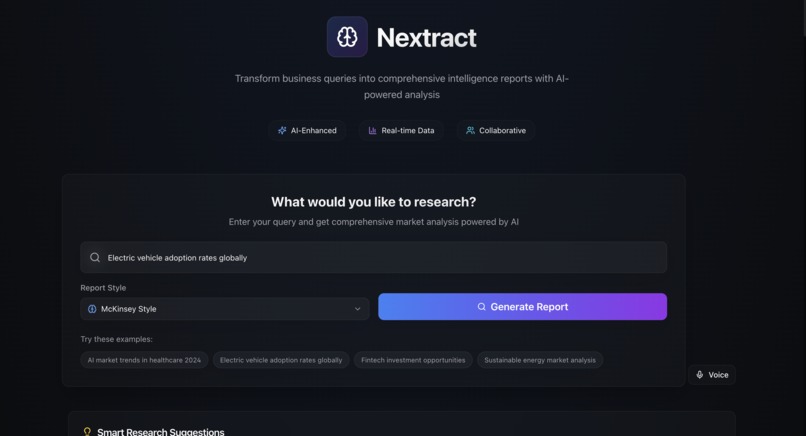
Main section
-
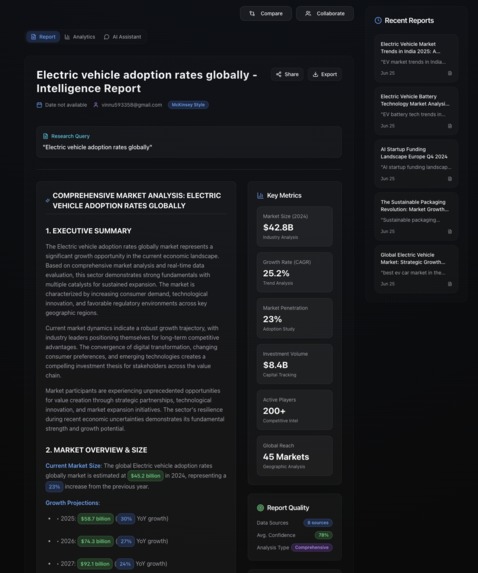
Report generation
-
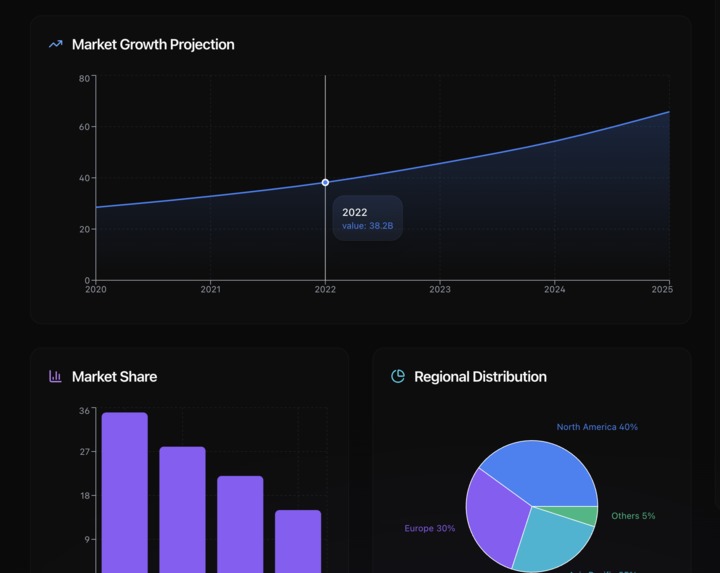
Analytics
-
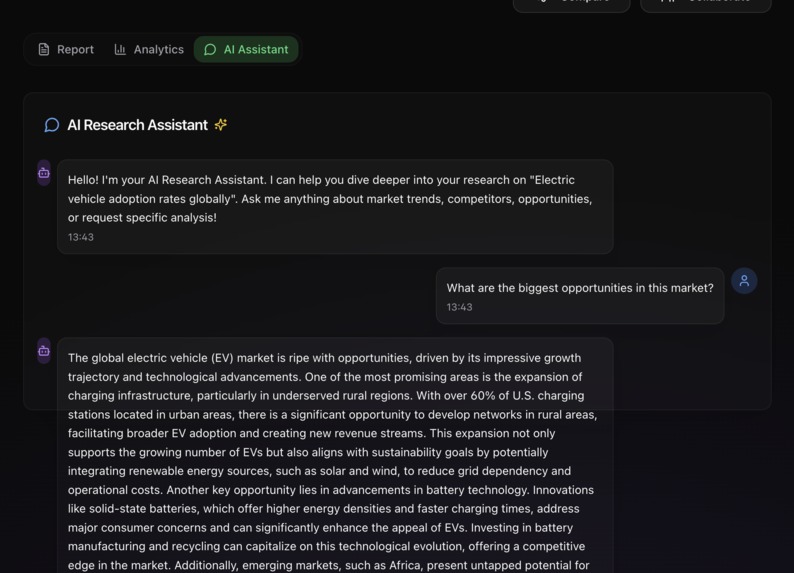
AI assistant
Inspiration
We’ve all been there — staring at 20 browser tabs, drowning in PDFs, Google searches, outdated stats, and AI tools that almost help but don’t quite understand context.
As techies and business nerds ourselves, we asked a simple question:
“Why can’t business research be as easy as asking a question?”
That’s how Nextract was born — an AI-powered business intelligence platform that understands your intent, pulls real-time data, and gives you clear, strategic answers without the analyst fatigue.
What it does
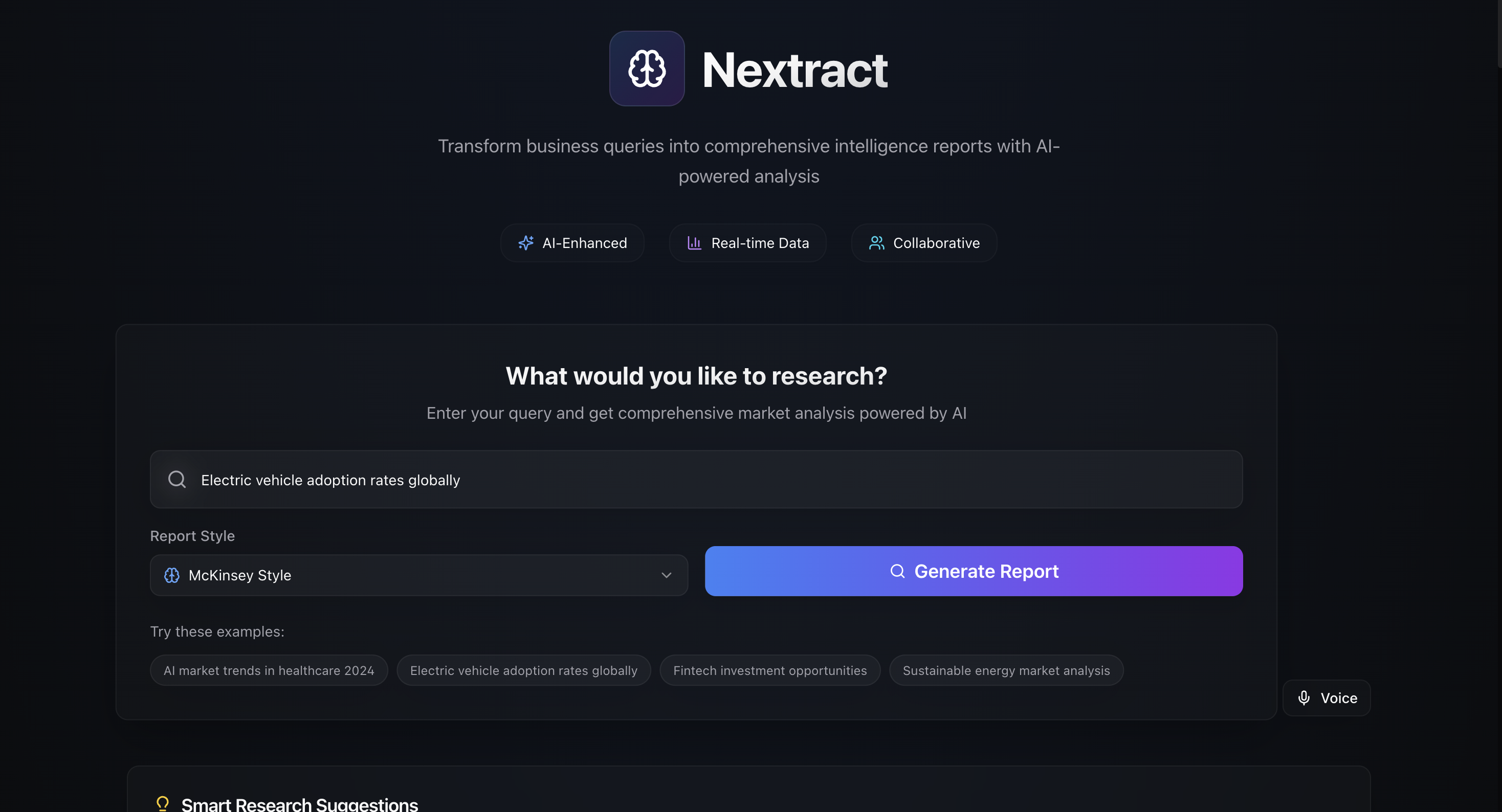
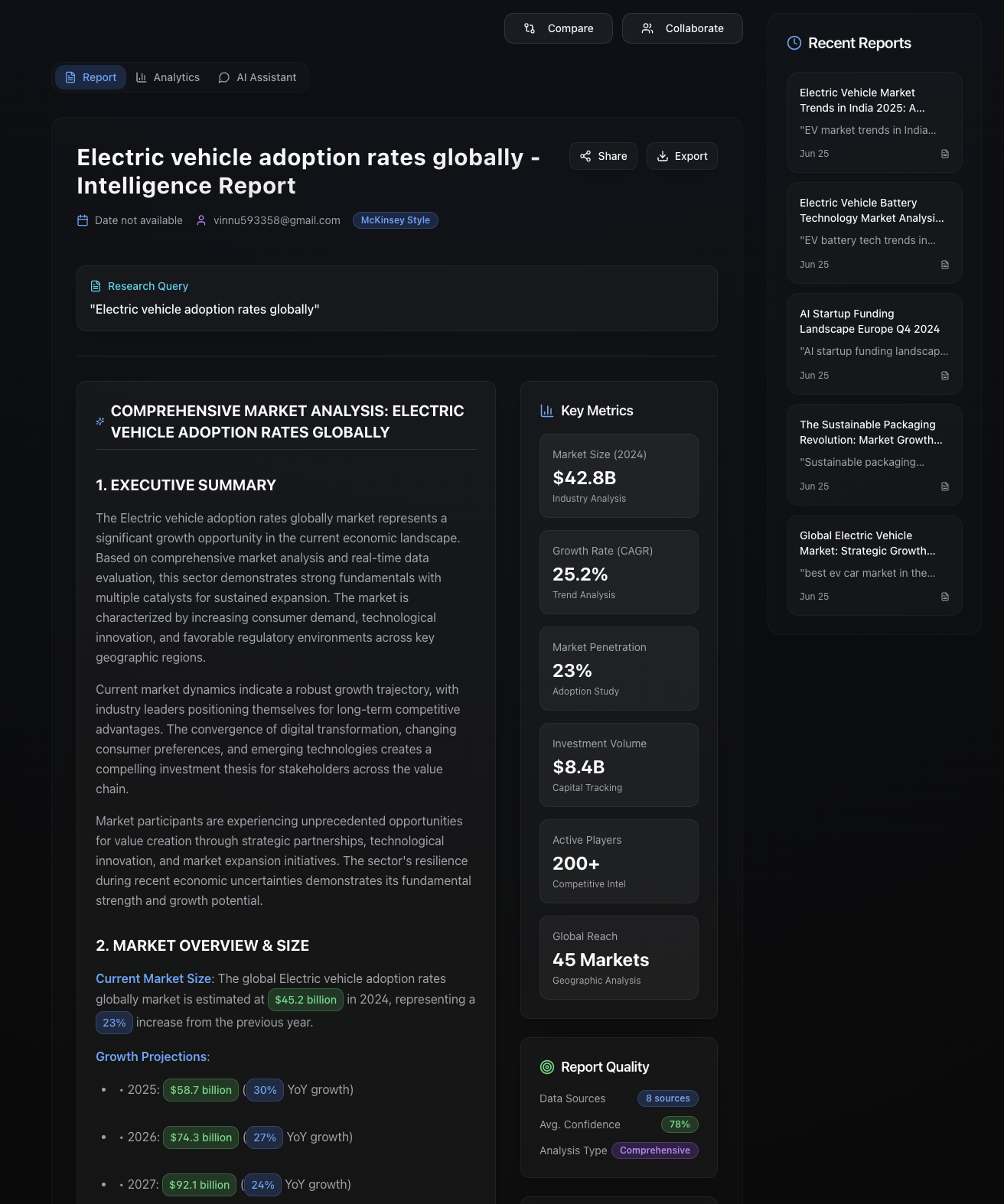
Nextract transforms natural questions — typed or spoken — into complete, visually rich market intelligence reports.
- Executive Summary with Key Metrics
- Market Size, Trends & Challenges
- Competitive Landscape & Future Outlook
- Actionable Recommendations
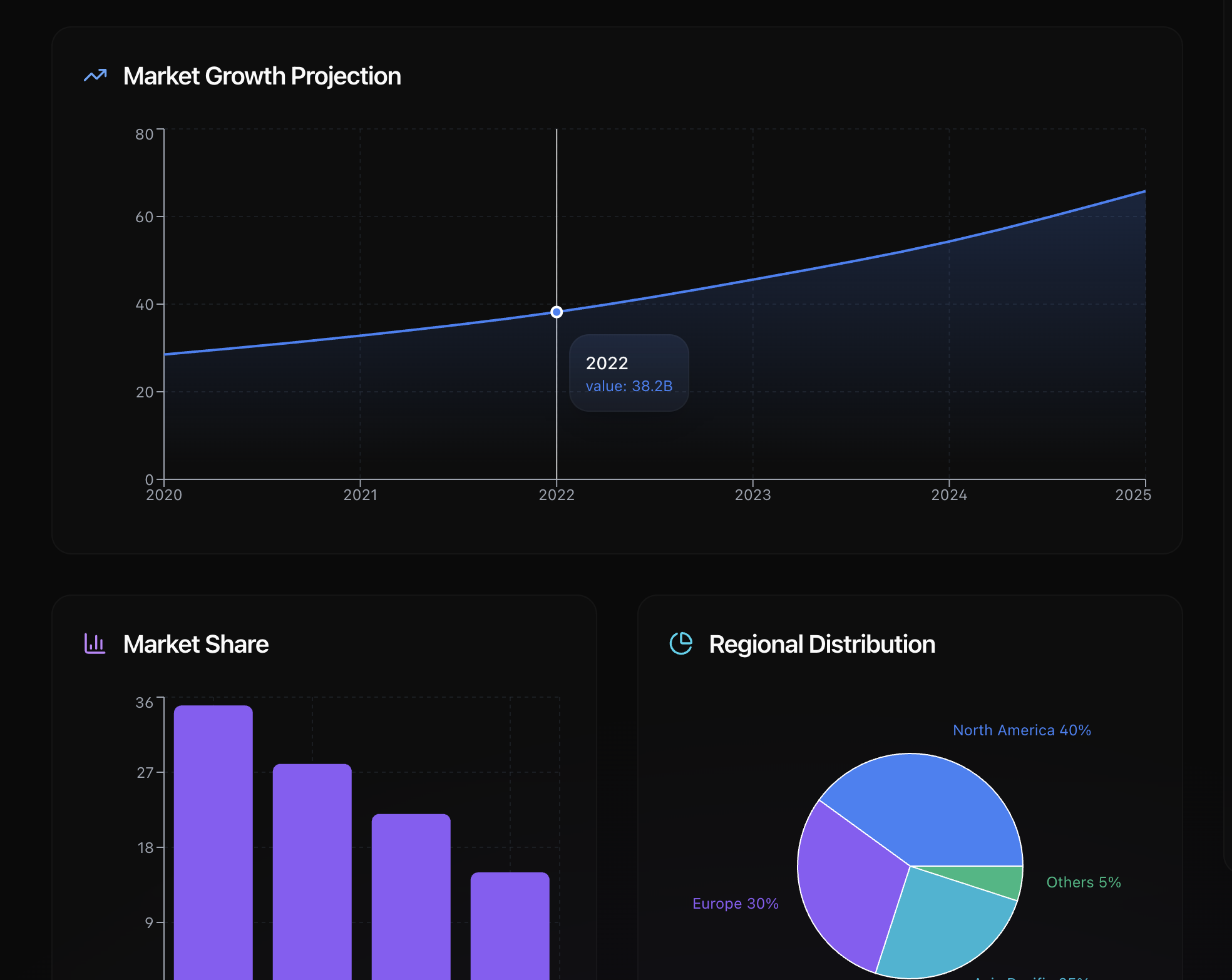
- Interactive Analytics View
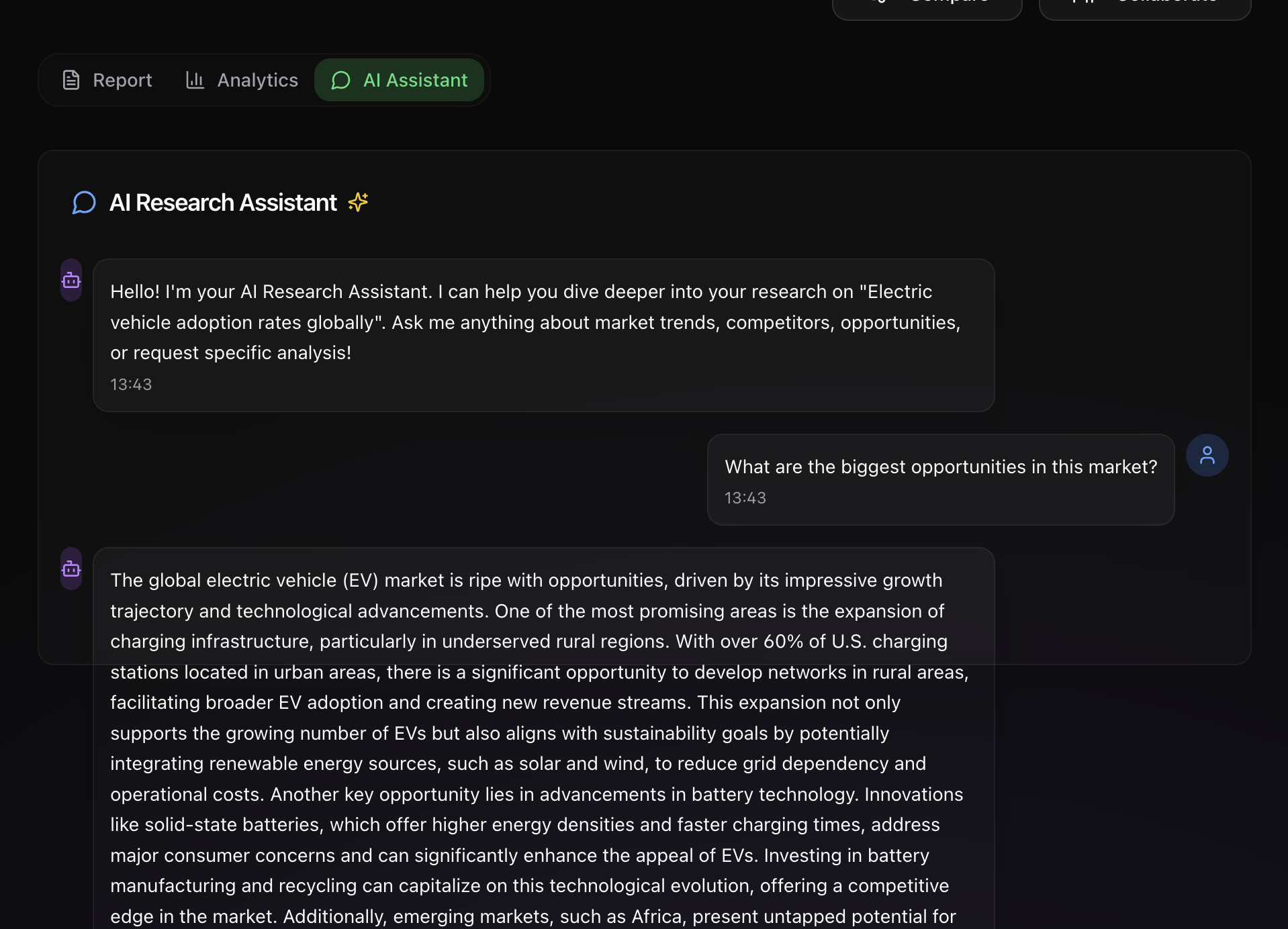
- AI Assistant for follow-up queries
- Compare past reports
- Collaborate live with your team
All in one interface. Fast. Voice-powered. Context-aware.
How we built it
We built Nextract using a modern frontend stack:
- React + TypeScript for a modular, scalable UI
- TailwindCSS + Shadcn/UI for a clean, responsive design
- Recharts for interactive visualizations
- Tanstack Query for efficient data fetching
- OpenAI + custom ML models for smart query understanding and structured report generation
- WebSocket-based collaboration for real-time editing
- Multi-source data aggregation including financial APIs, news scrapers, and sentiment analysis
Our goal was to create something real — not a prototype, but a platform with product-grade polish.
Challenges we ran into
- Syncing voice input with real-time report generation — we had to balance latency and response accuracy
- Designing a modular report engine that could adapt across tones and personas (McKinsey, Bullet, Journalist)
- Integrating multiple APIs and normalizing inconsistent data formats
- Making the AI assistant “aware” of report context for meaningful follow-ups
- Ensuring the design stayed minimal while still delivering feature depth
Accomplishments that we're proud of
- Built a full-stack AI research platform
- Designed a UX that feels like magic — seriously, try the voice input
- Created a functional report comparison and real-time collaboration engine
- Managed to make something we’d actually want to use in our day jobs
- And most importantly — kept it clean, fast, and accessible
What we learned
- Building AI tools is less about the model, and more about UX orchestration
- Voice can be powerful — if you pair it with smart visual feedback
- Business intelligence doesn't have to be boring — if you design like a creator
- You can ship more than you think — if you care more about user flow than just features
What's next for Nextract AI
- Launching a mobile app (React Native)
- Adding custom report templates and export formats
- Advanced dashboards for deep analytics
- Third-party integrations (Notion, Slack, HubSpot, etc.)
- Enterprise features: SSO, audit logs, API rate limiting
- And a dedicated startup package to help founders make data-backed pitches faster
Nextract is not just a tool.
It’s how we wish research worked — context-aware, beautifully visual, and human-first.
Built with love, voice, code, and way too much coffee.
Built With
- browser
- nextjs
- openai
- react
- recharts
- rest
- shadcn
- speech
- superdev
- tailwind
- taily
- tanstack
- vite
- whisper


Log in or sign up for Devpost to join the conversation.