-
-
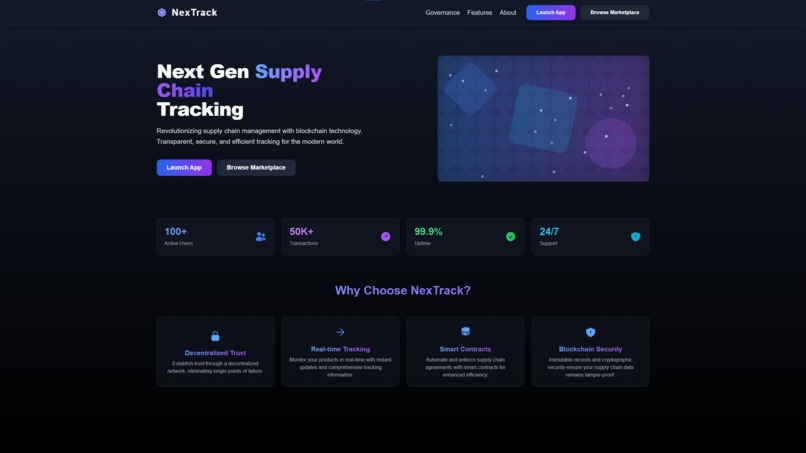
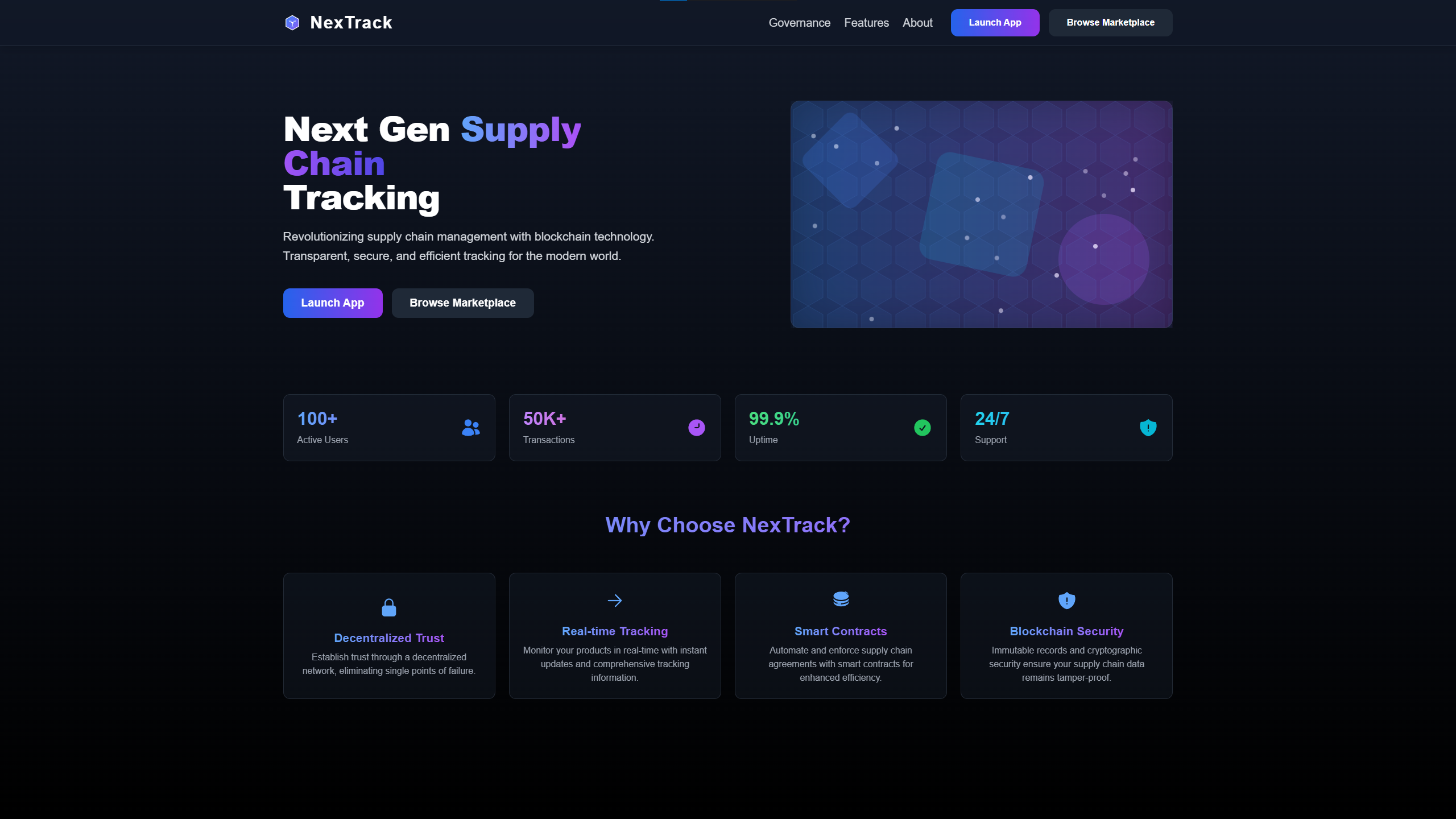
Landing Page
-
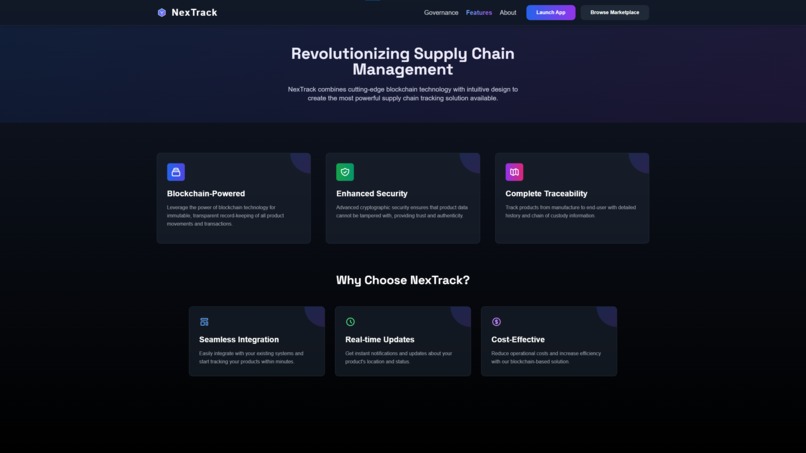
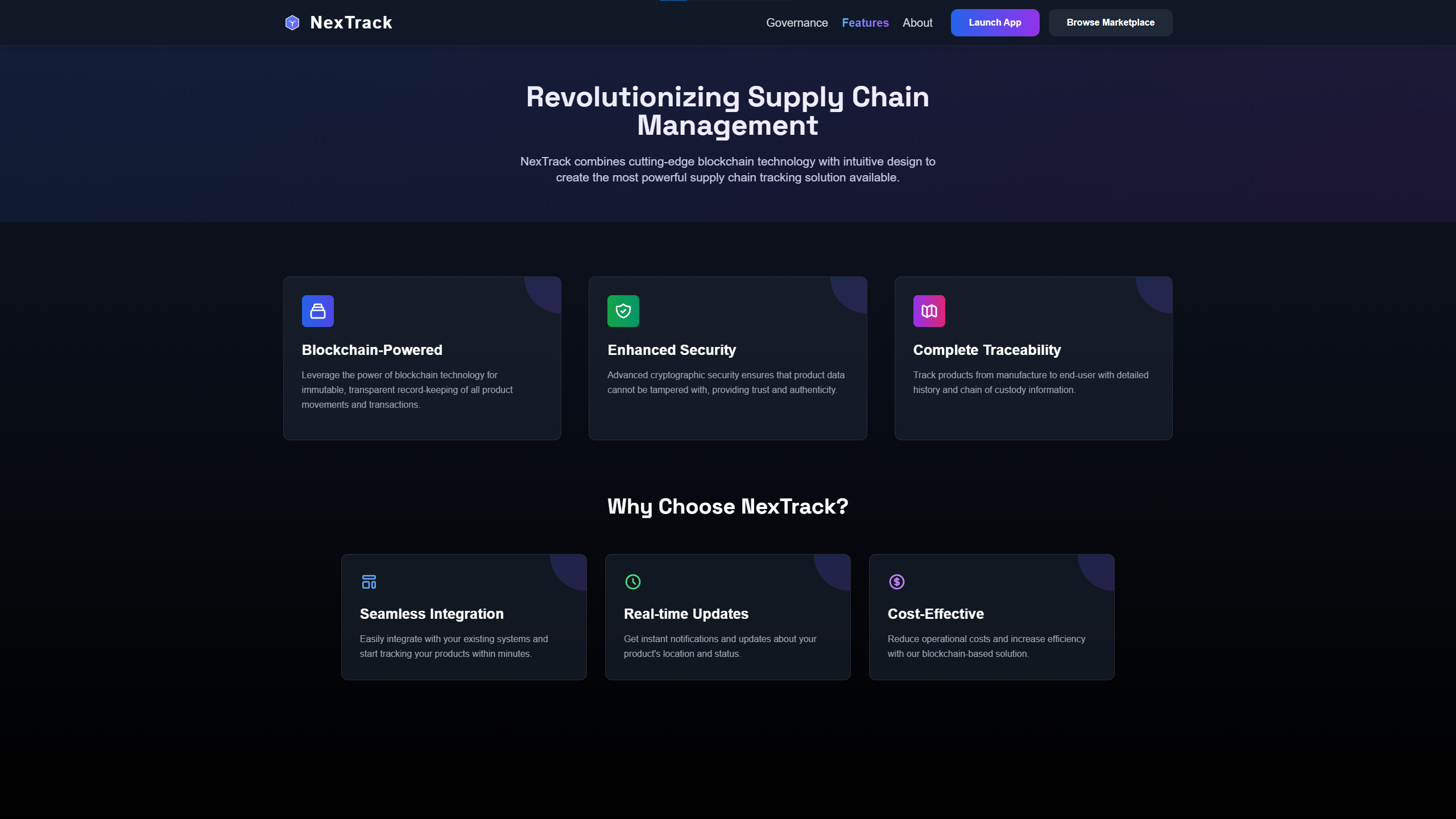
Features Page
-
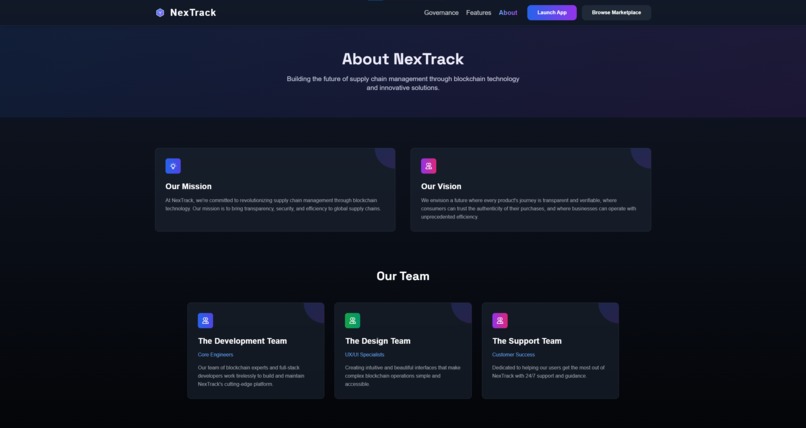
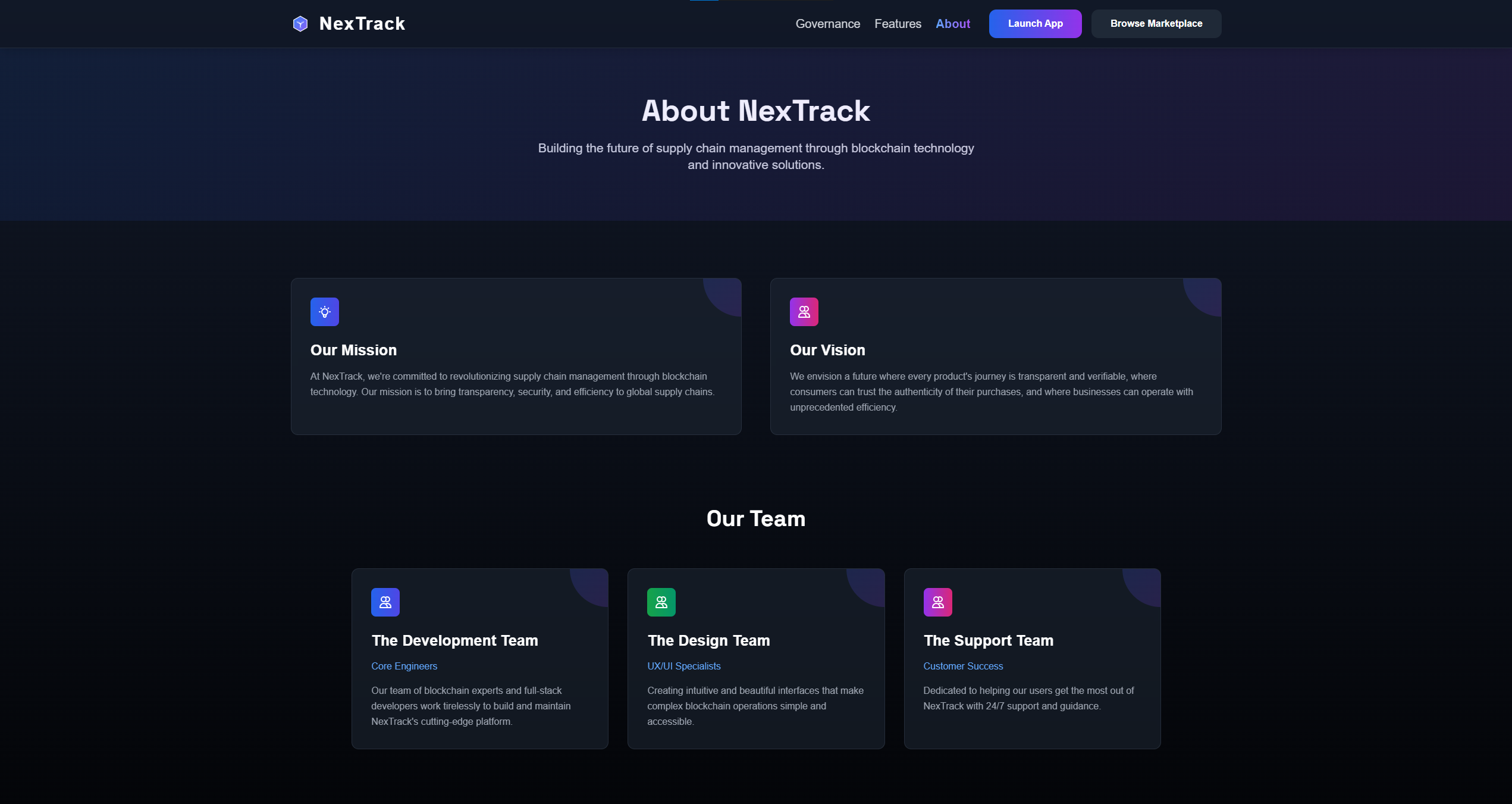
About Page
-
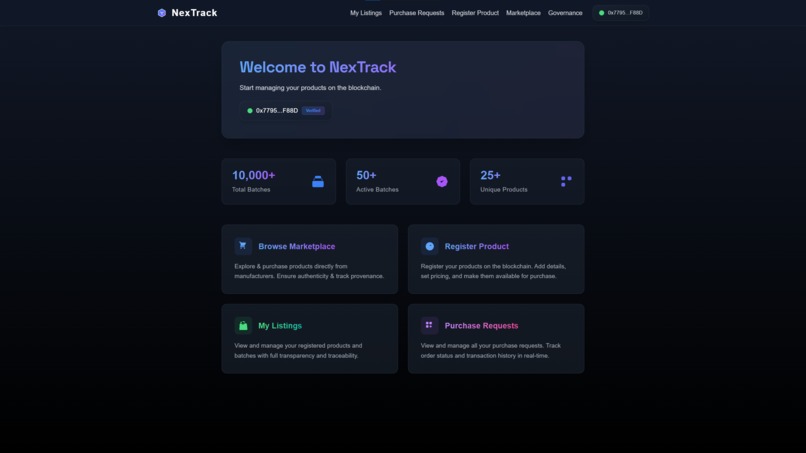
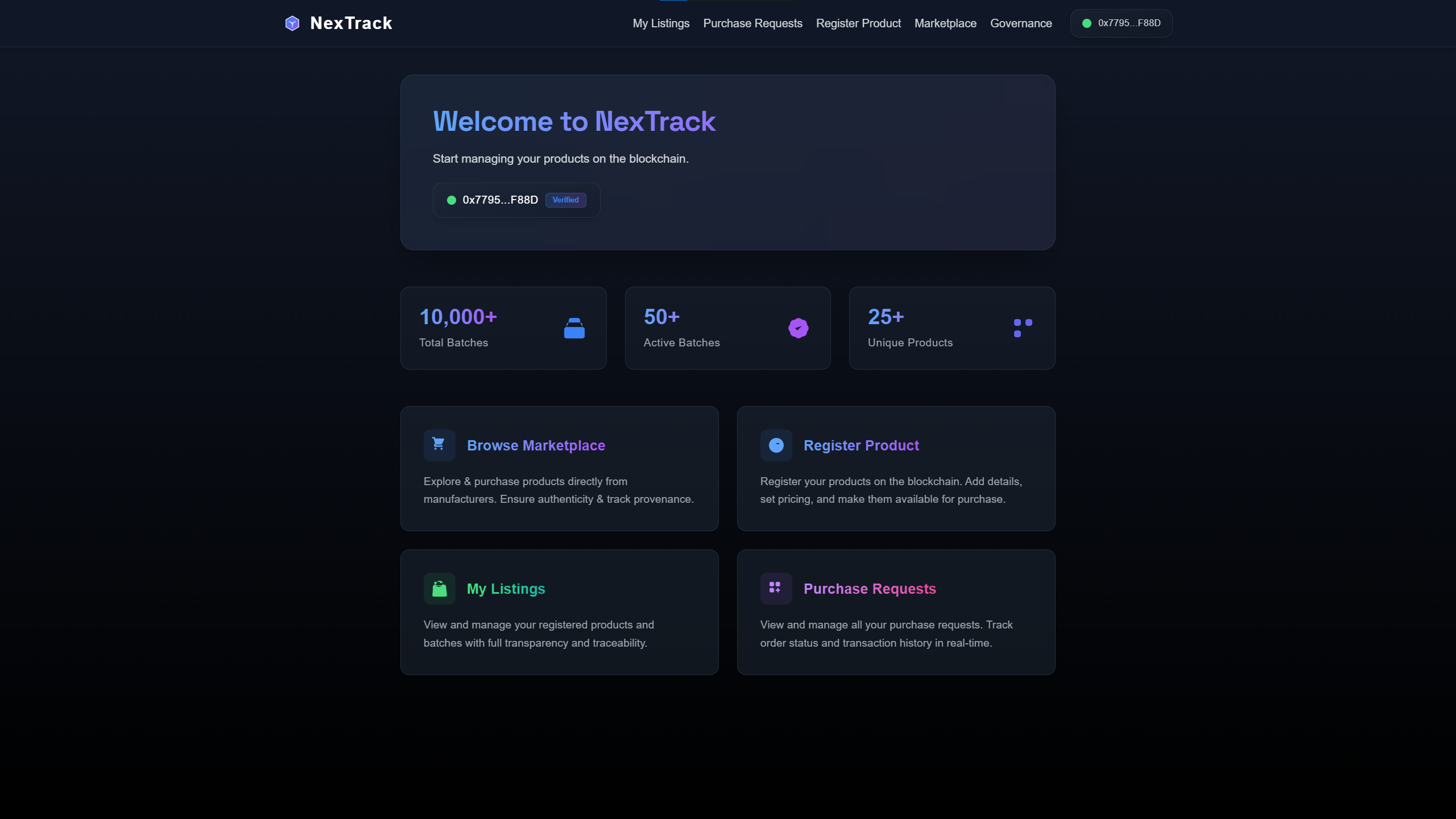
dApp Home Page
-
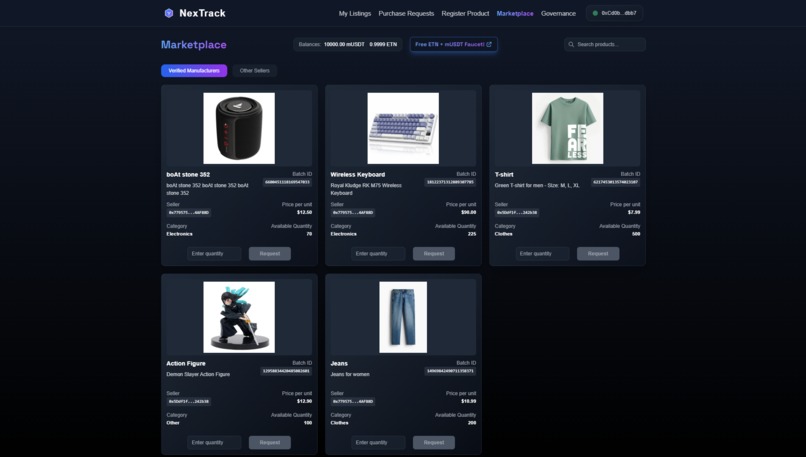
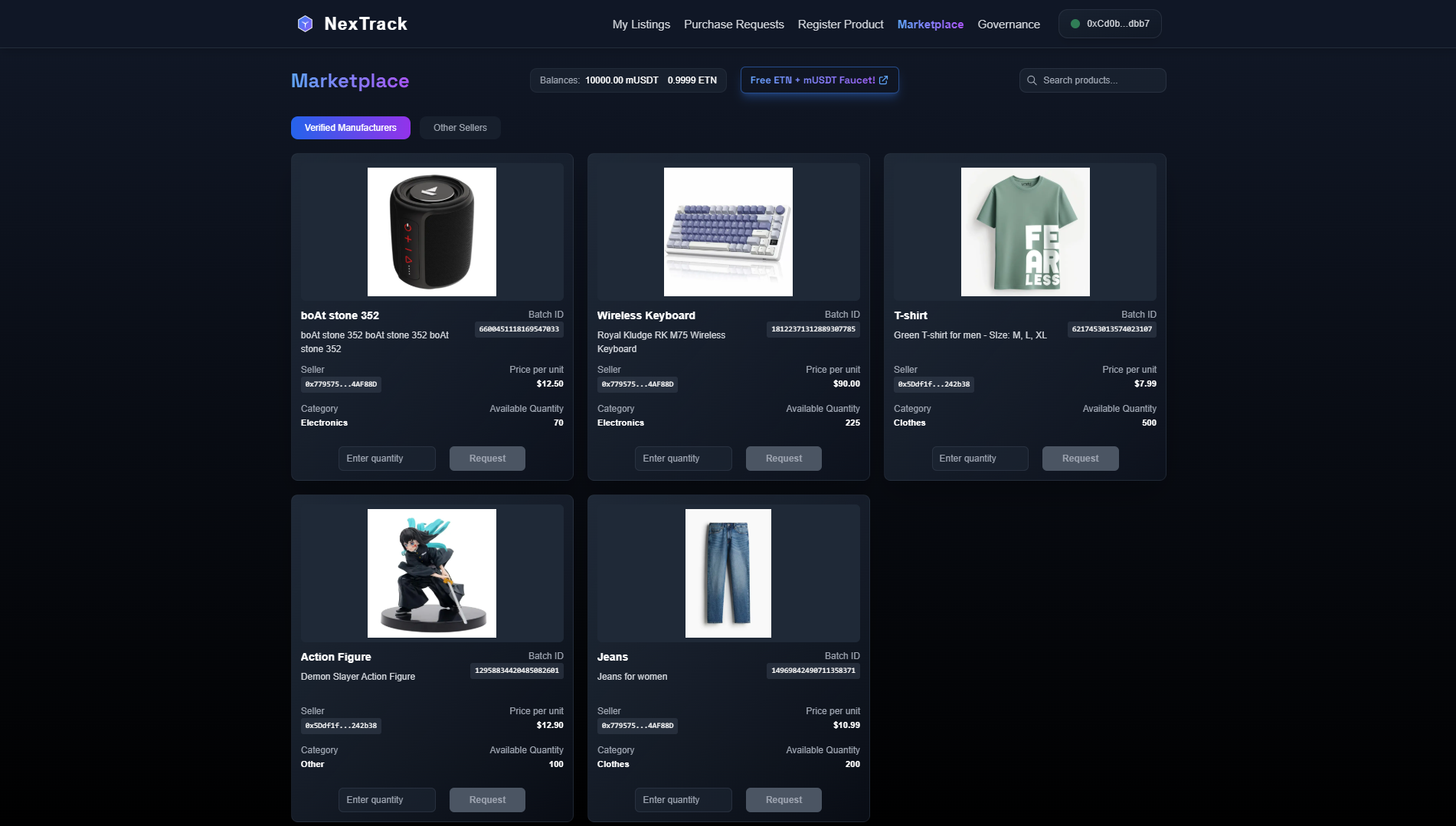
Marketplace Page
-
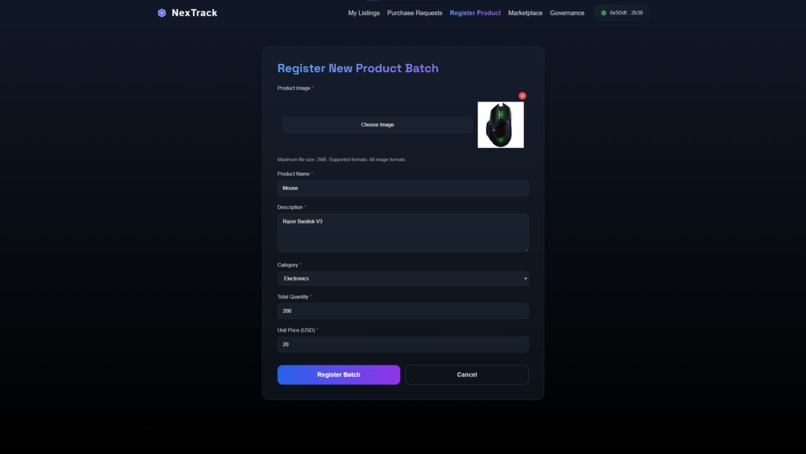
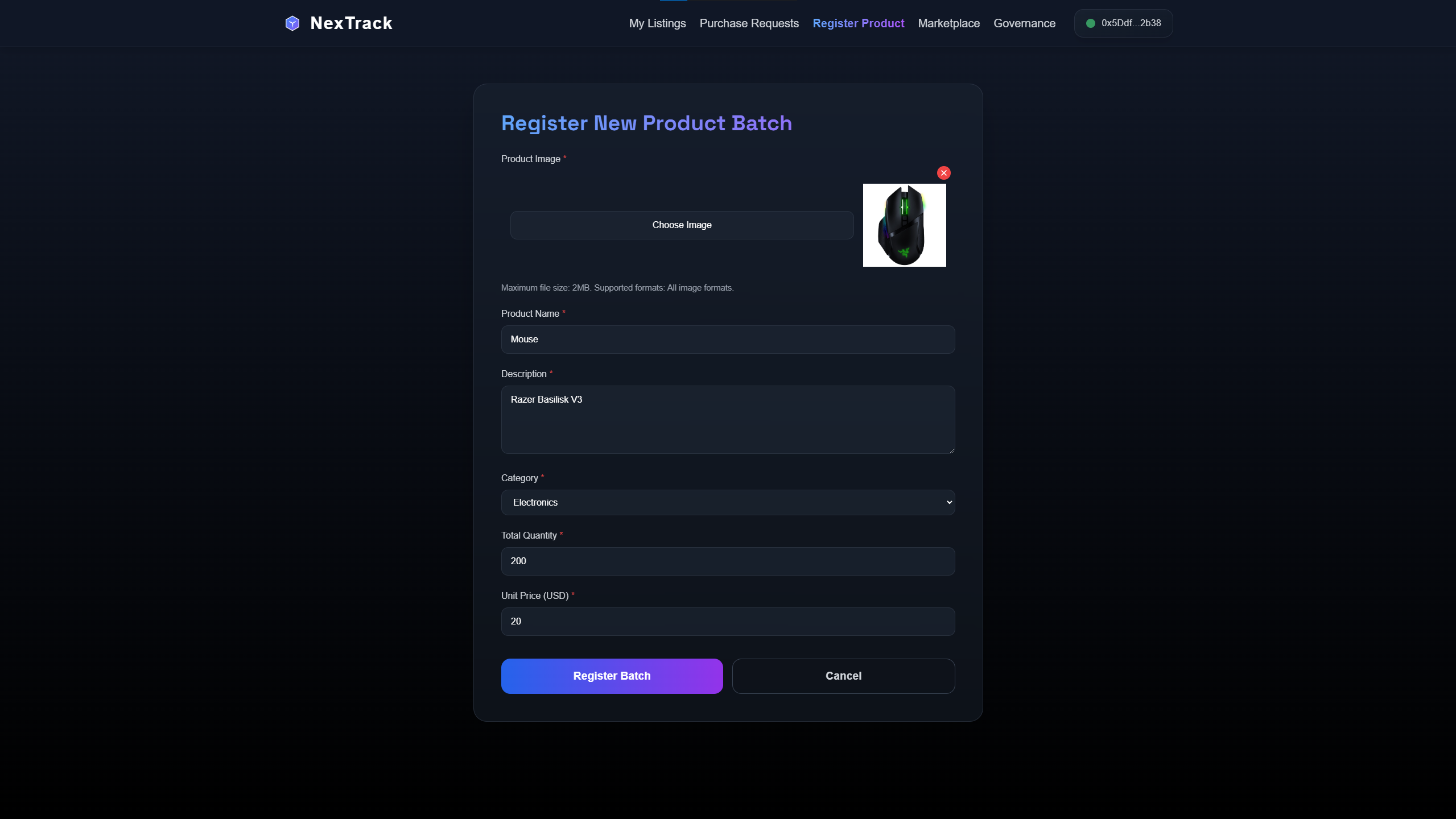
Register Product Form
-
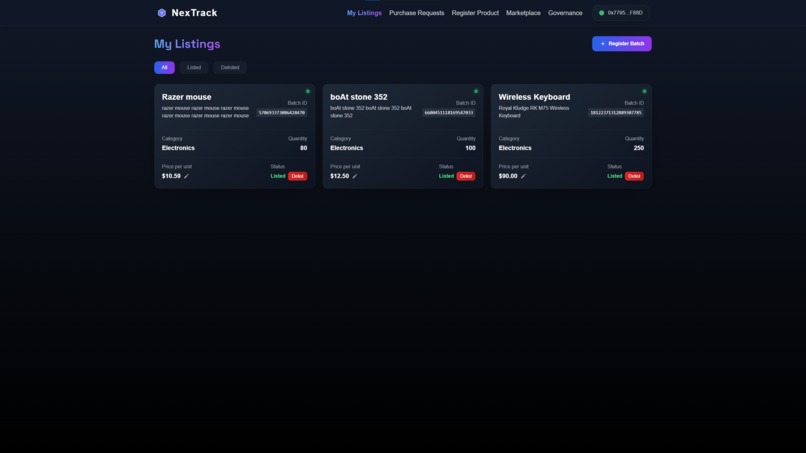
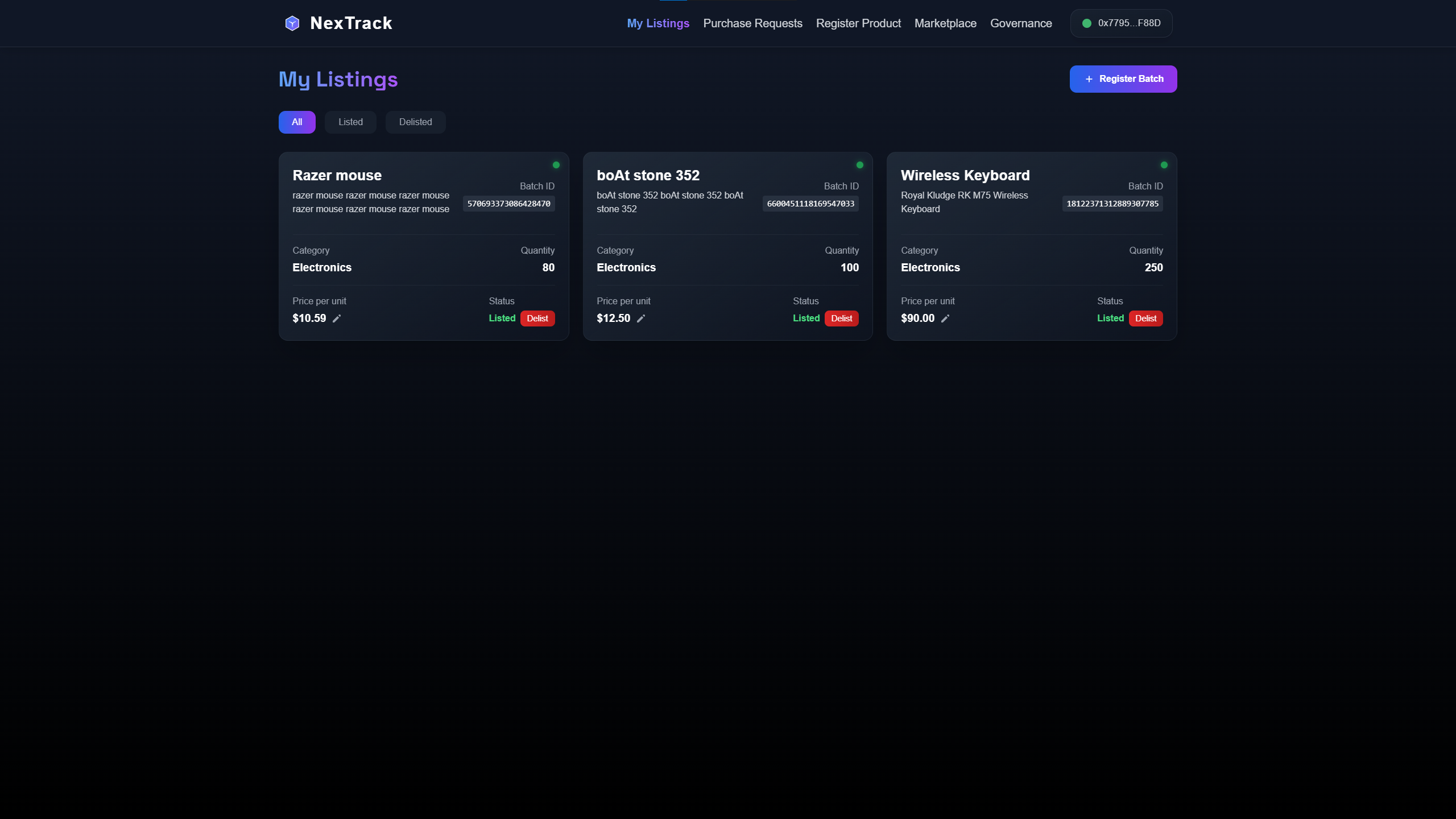
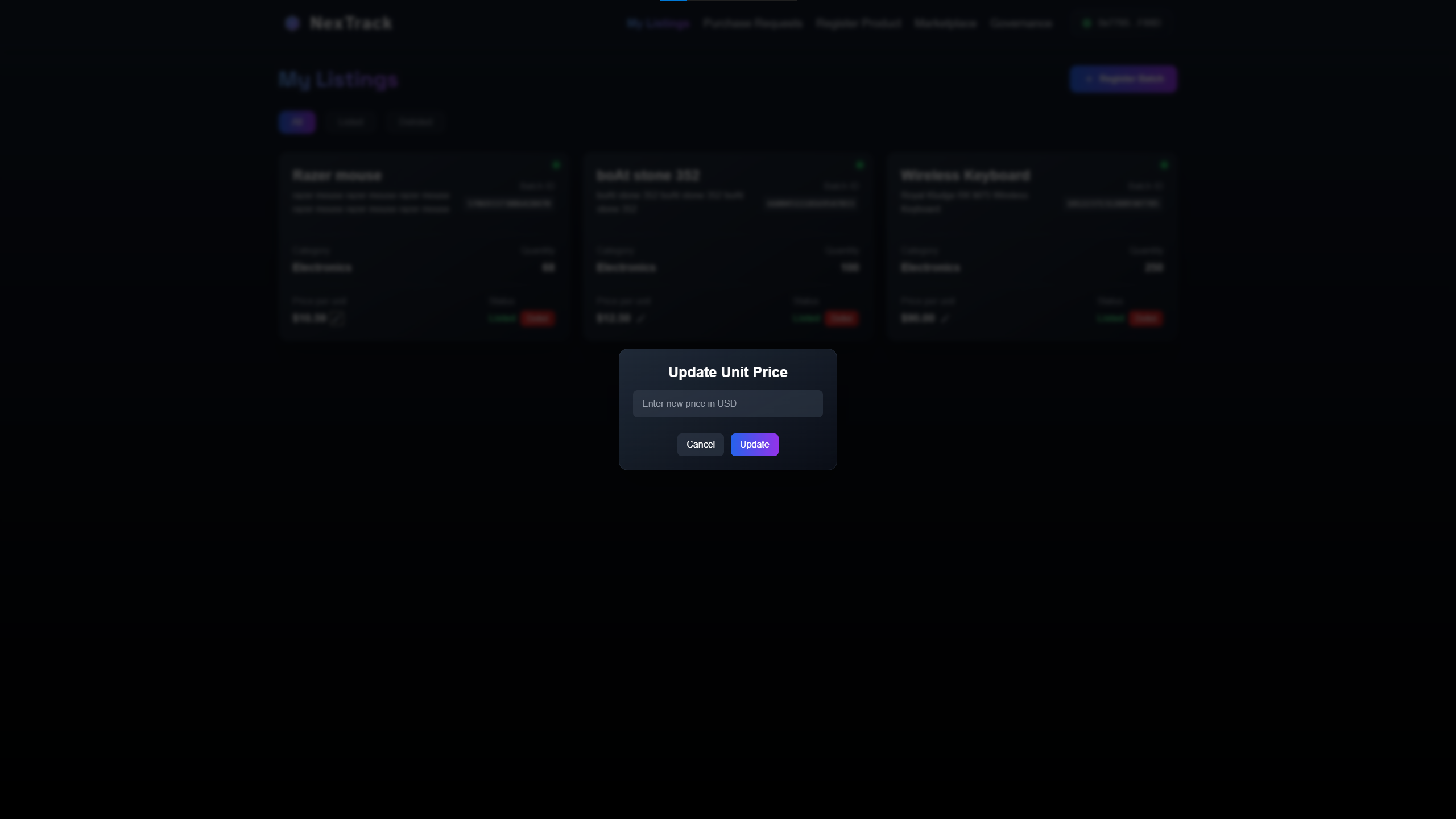
My Listings Page
-
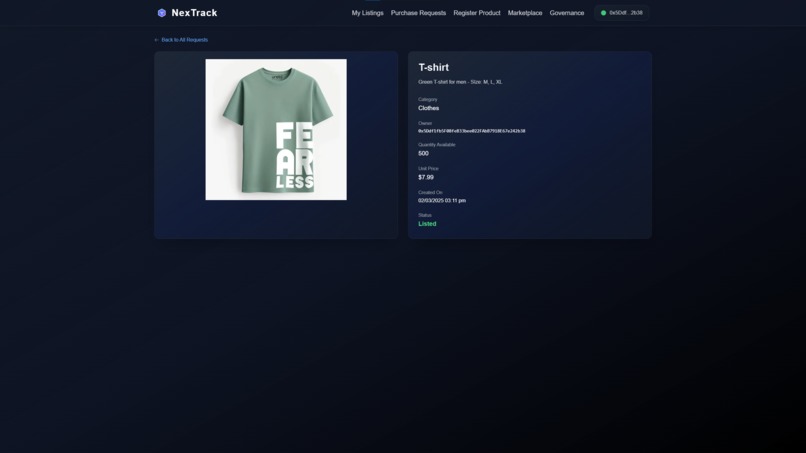
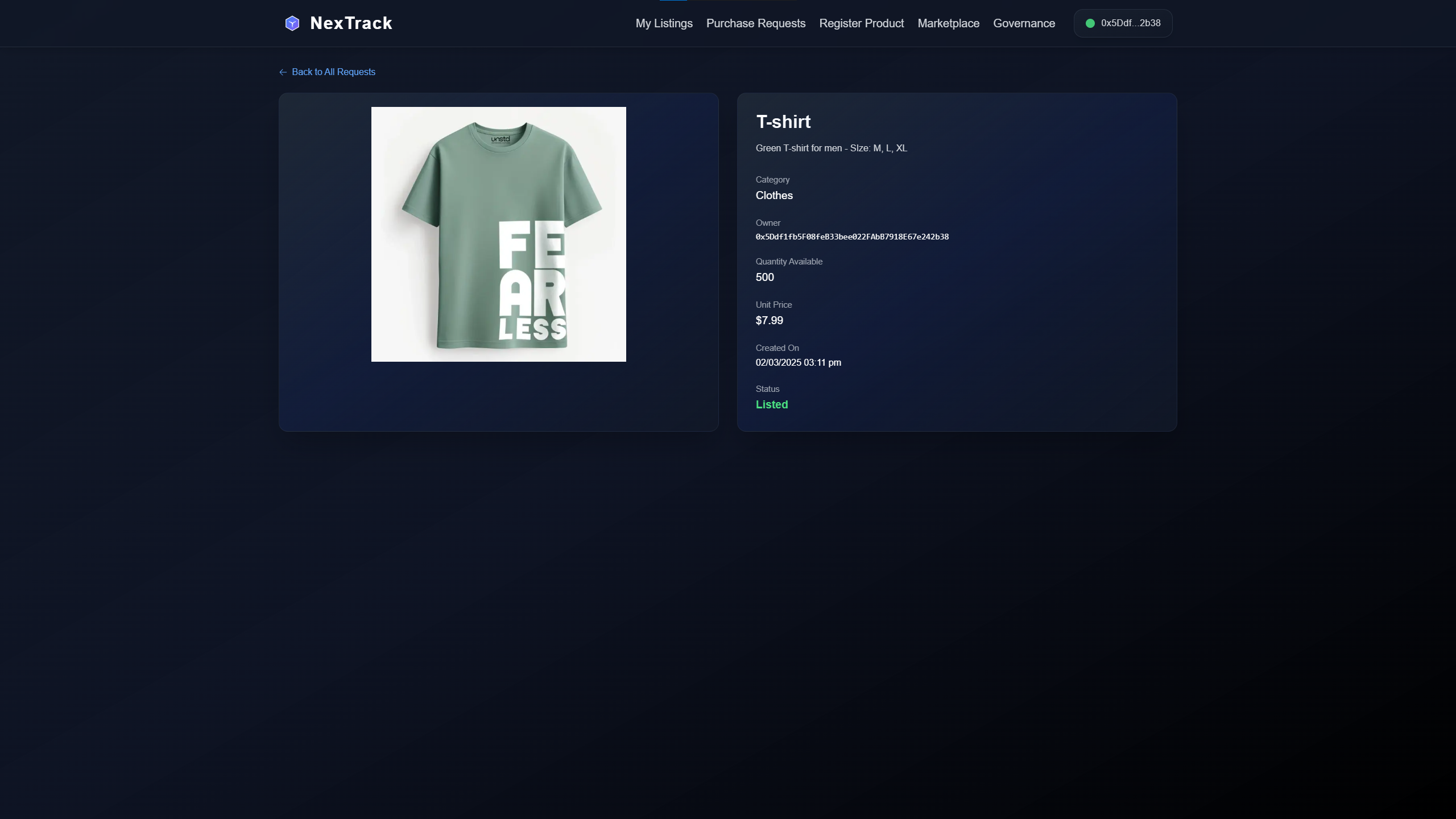
Product Details Page
-
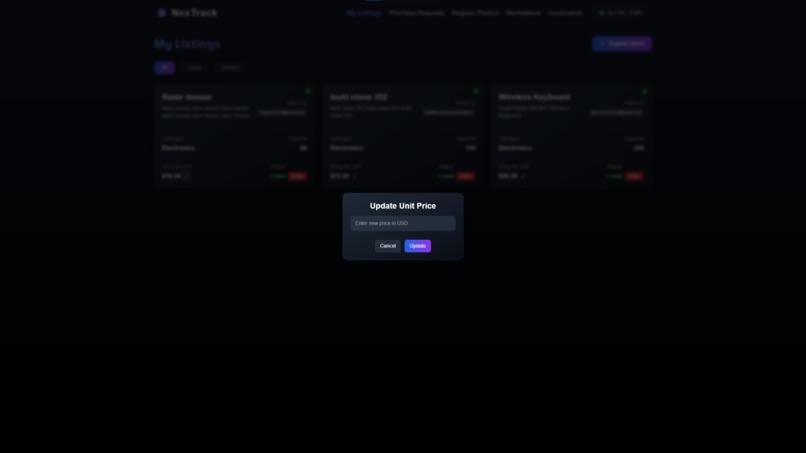
Update Unit Price for listing popup
-
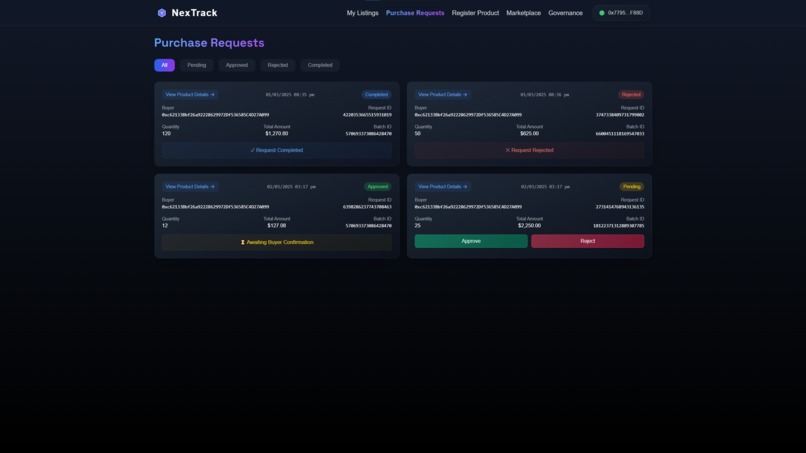
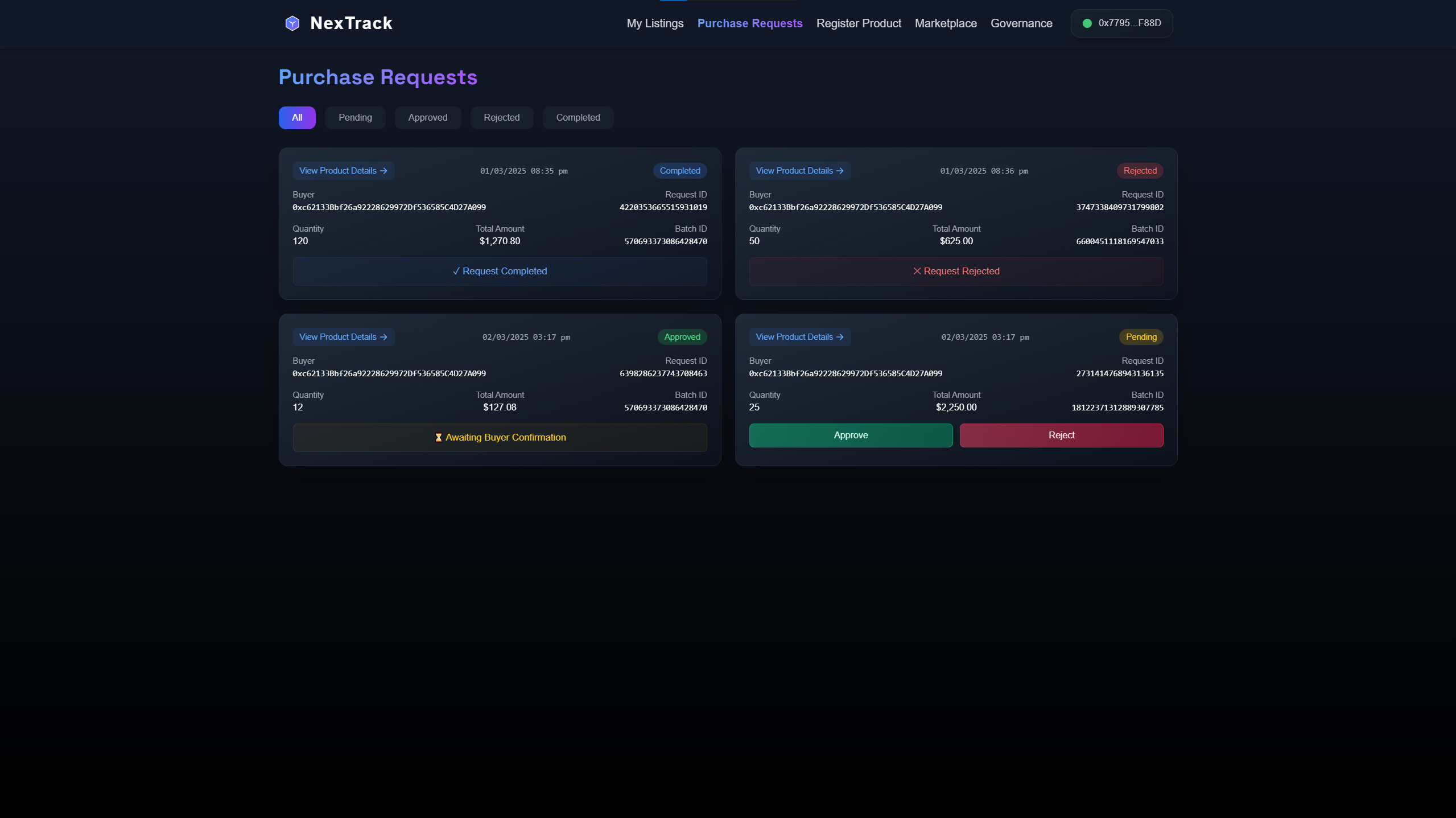
Purchase Requests Page
-
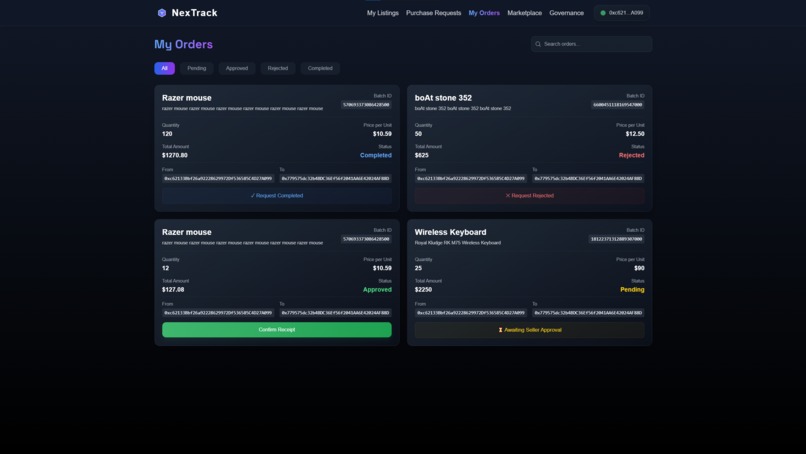
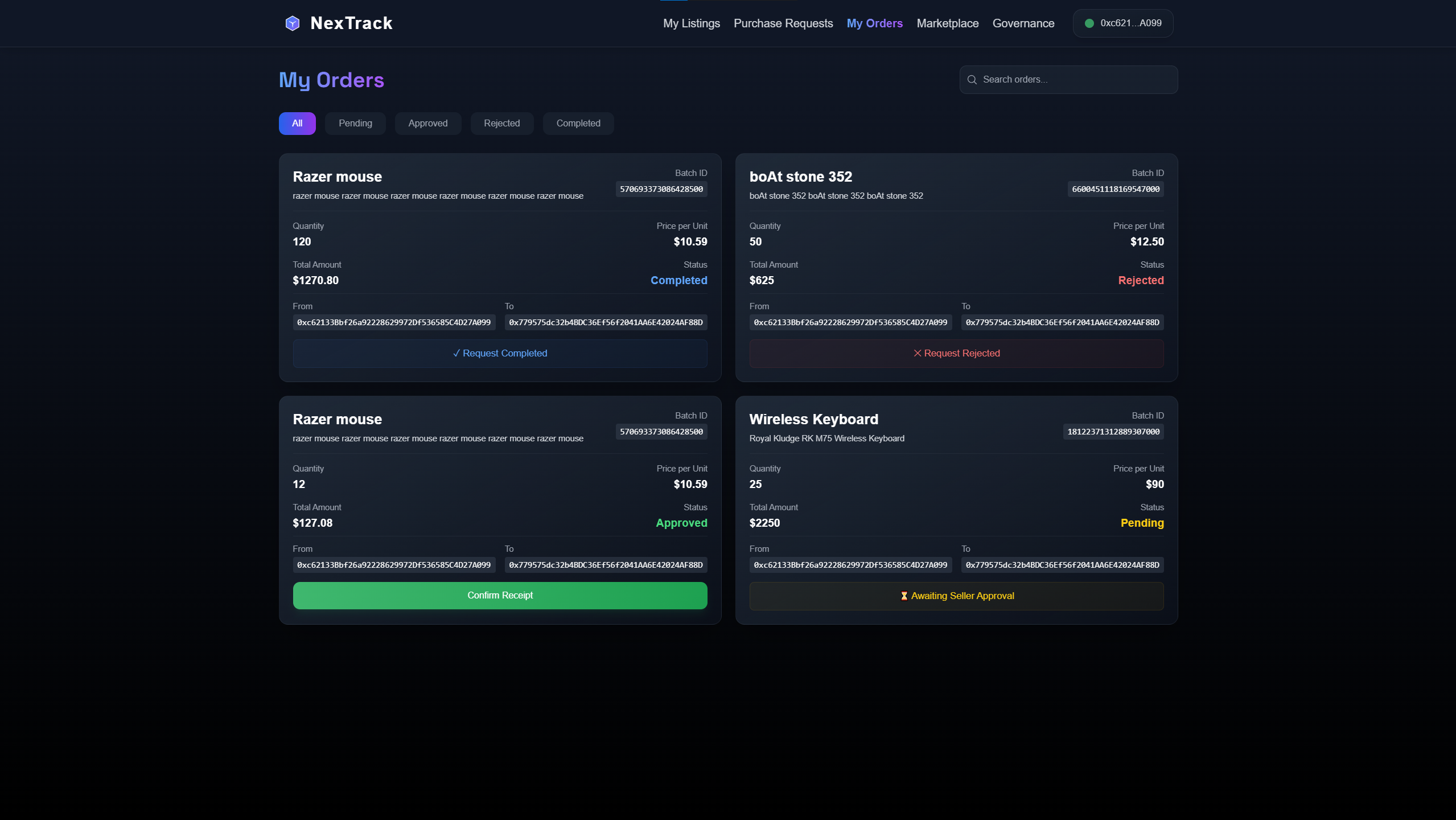
My Orders Page
-
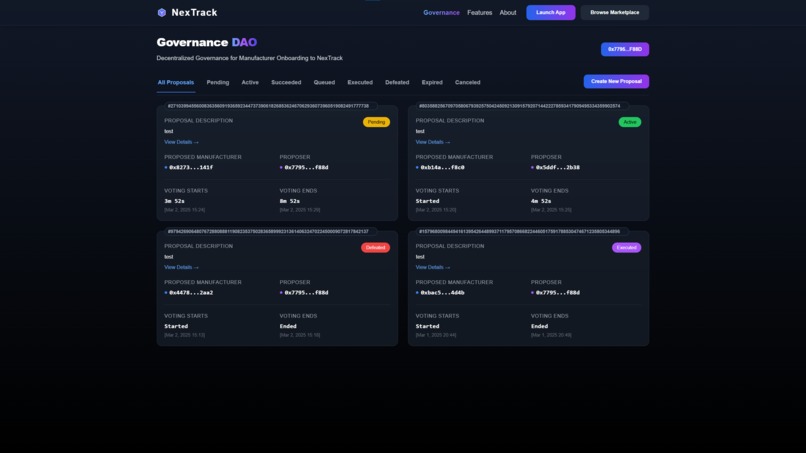
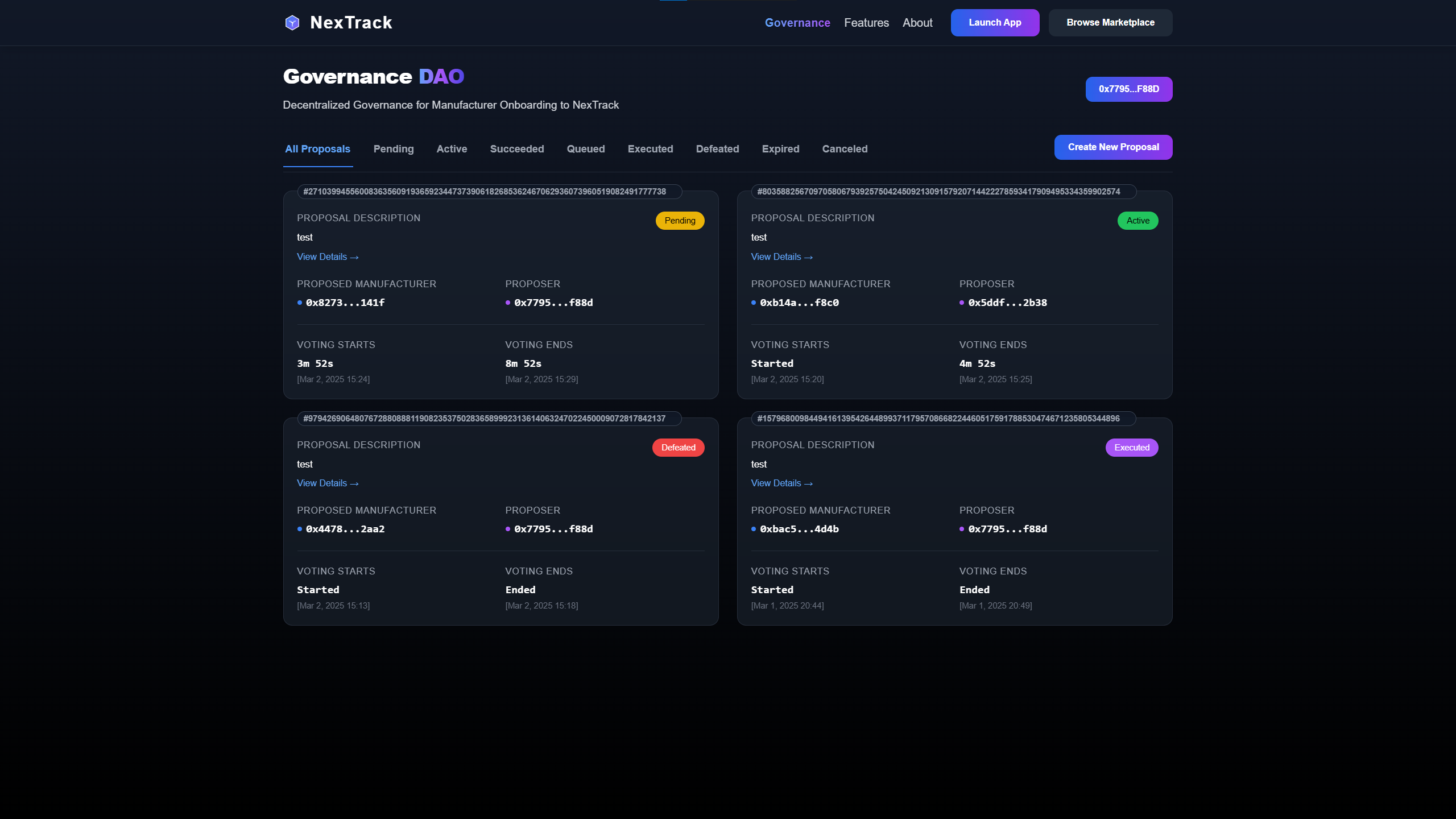
Governance DAO Home Page
-
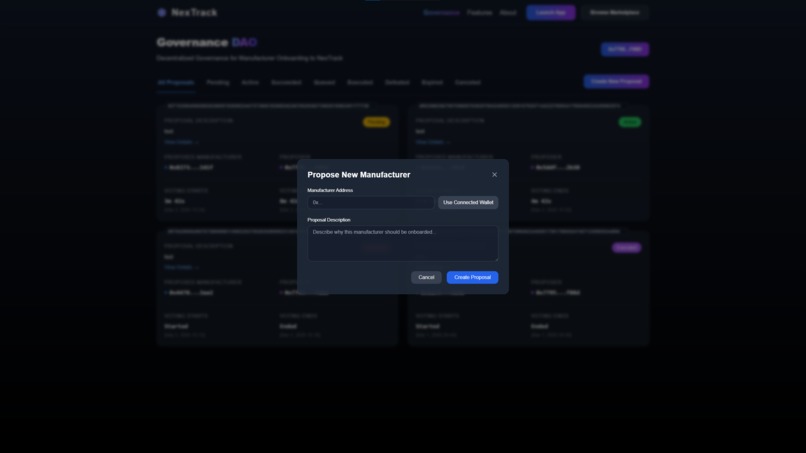
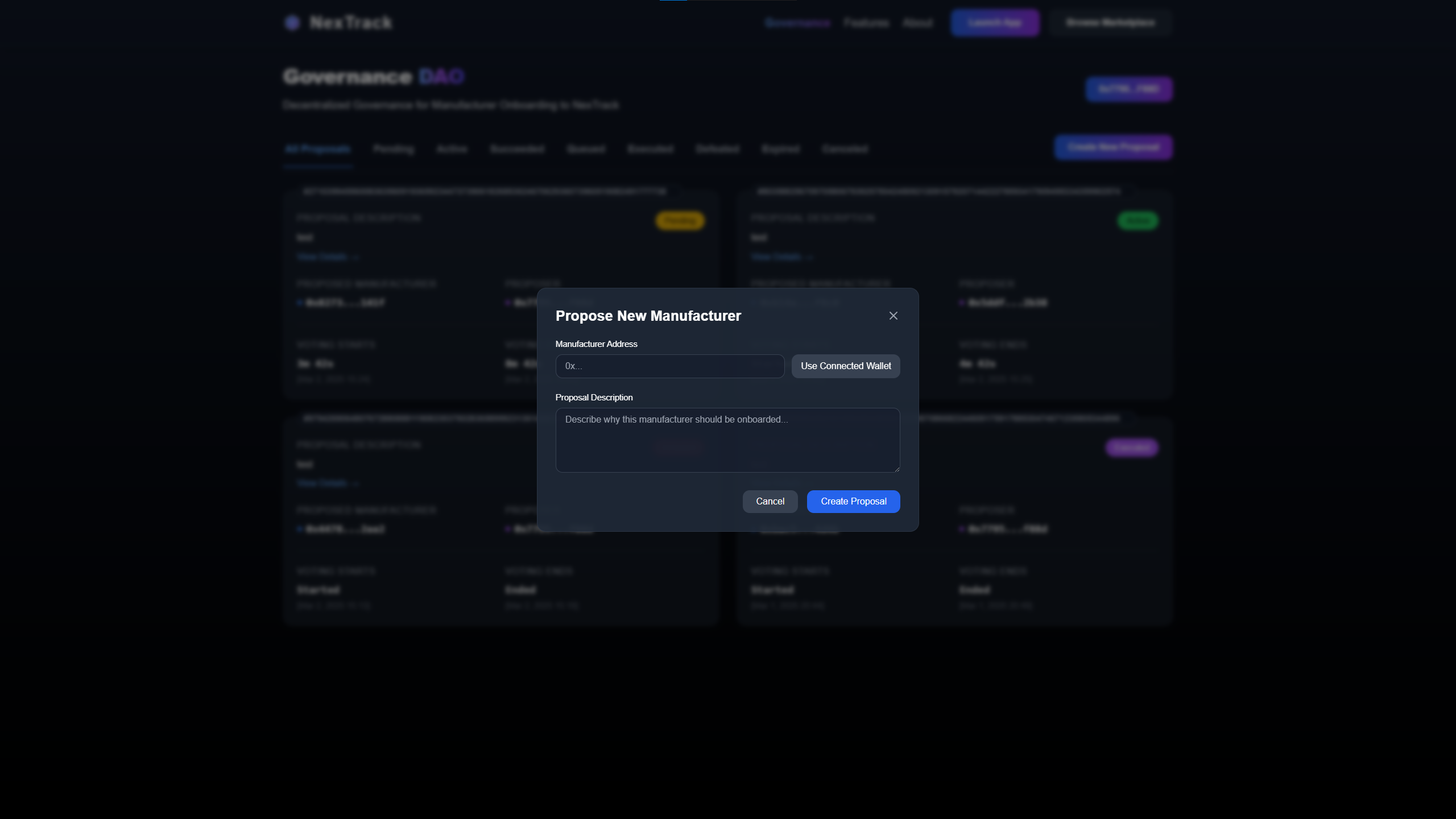
Create New Proposal form popup
-
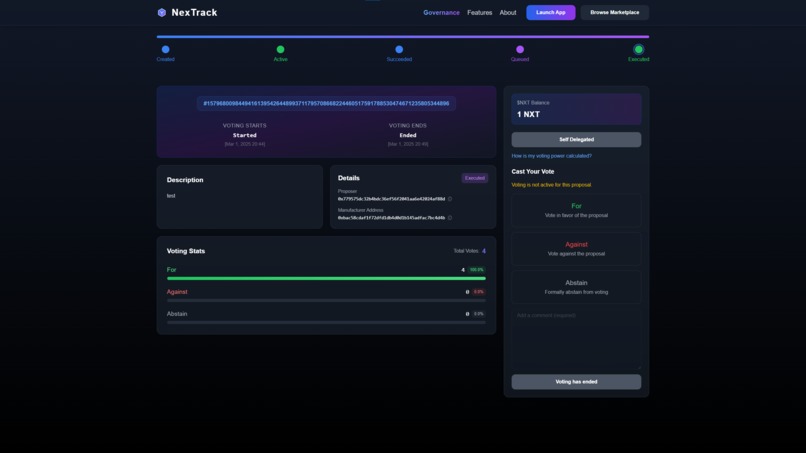
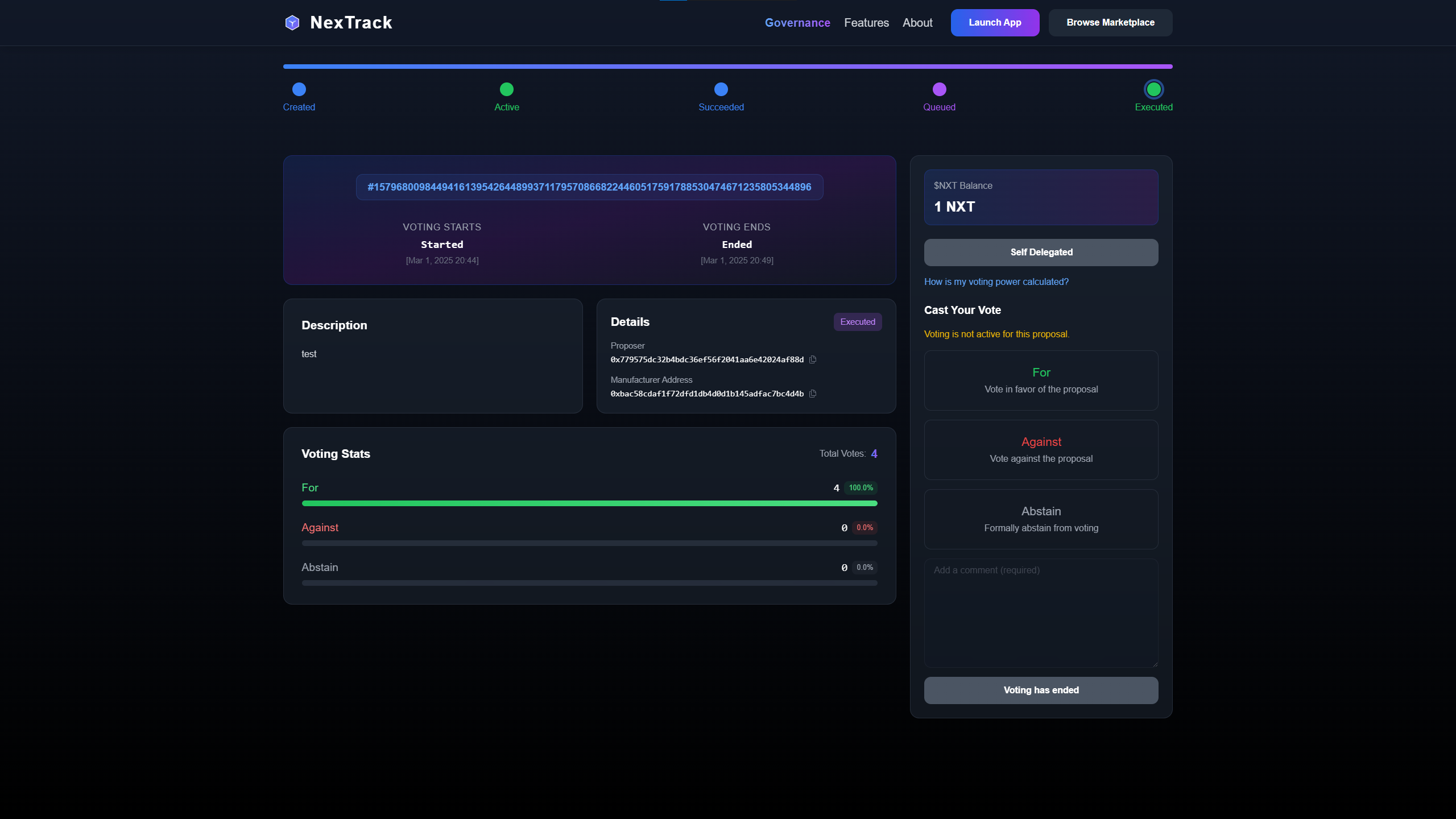
Proposal Details Page (Executed proposal)
-
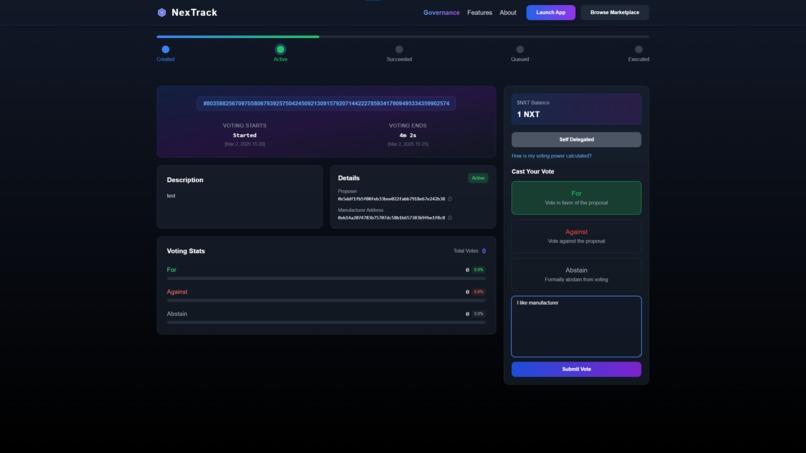
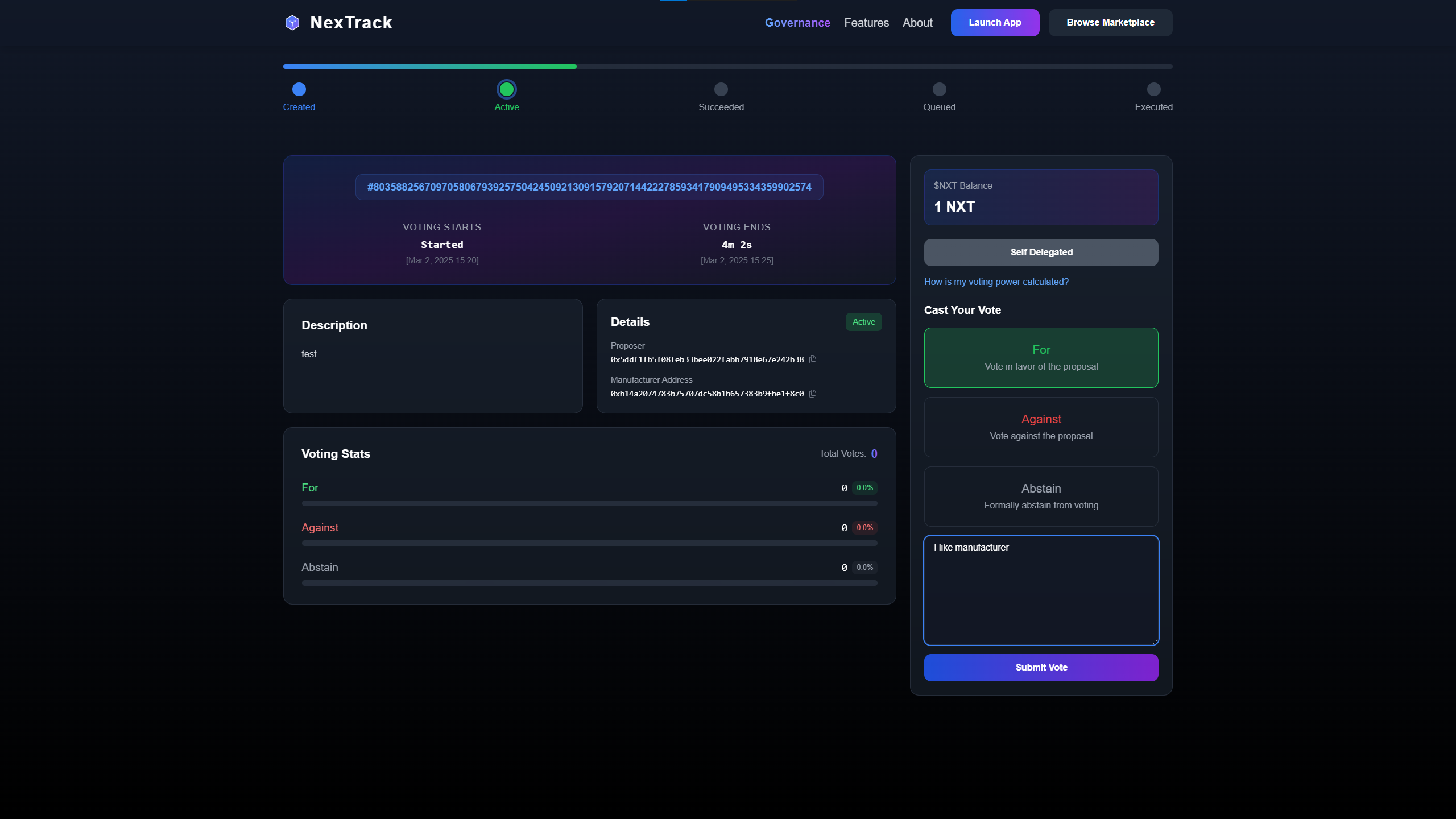
Proposal Details Page (Active Proposal - Voting Pane)
-
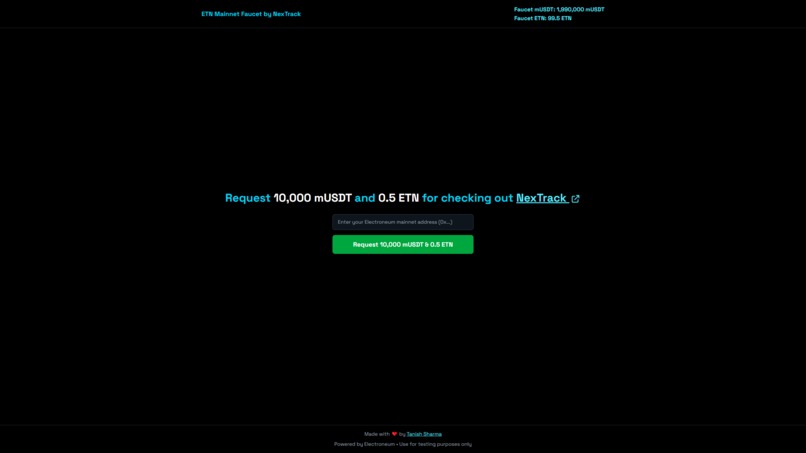
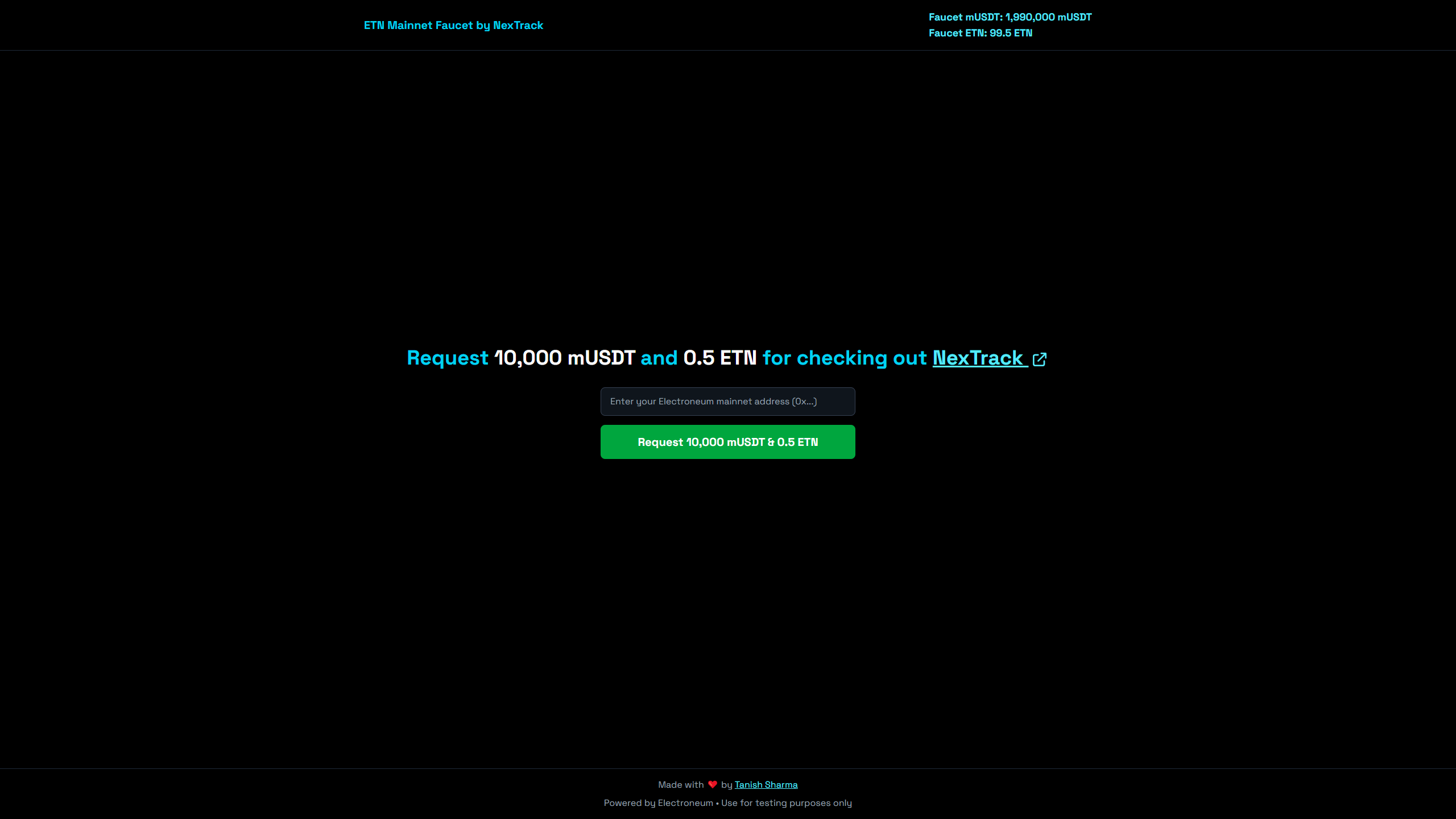
ETN & mUSDT Faucet for people to try out NexTrack
NexTrack: Transforming Supply Chain Transparency Through Blockchain
The Inspiration
The idea for NexTrack was born from my frustration with the current state of supply chains. After hearing countless news stories about counterfeit products, opaque sourcing, and sustainability concerns, I realized there was a fundamental problem: trust. Consumers want to know where their products come from, manufacturers need to protect their brands from counterfeiting, and distributors require efficient ways to verify authenticity.
Traditional supply chain management systems are fragmented, relying on centralized databases that create silos of information. Each participant in the supply chain can only see their immediate connections, making end-to-end traceability nearly impossible. This lack of transparency not only enables fraud but also prevents businesses from telling authentic stories about their products.
I believed blockchain technology could solve these issues by creating an immutable, transparent record of a product's journey from origin to consumer. When I discovered Electroneum's blockchain with its impressively fast 5-second block times and single block transaction finality, I knew I had found the perfect foundation. NexTrack emerged from this vision – a decentralized system where trust is built into the very infrastructure, powered by Electroneum's scalable blockchain.
The Learning Journey
Building NexTrack pushed me to expand my knowledge in several domains:
Blockchain Architecture: I deepened my understanding of how to design decentralized applications that balance transparency with efficiency. I learned that not all data belongs on-chain, and crafting the right data model was crucial for scalability. Electroneum's very low transaction fees made it feasible to record more supply chain events on-chain than would be practical on higher-cost networks like Ethereum.
Smart Contract Development: Working with Solidity 0.8.24 taught me the importance of gas optimization and security-first programming. I spent countless hours studying vulnerability patterns and best practices to ensure my contracts were robust. Electroneum's rapid 5-second block times (compared to Ethereum's 12 seconds) allowed for much quicker testing and iteration cycles.
Economic Models: Designing the marketplace and payment systems required me to think like an economist. How would value flow through the system? What incentives would drive adoption? These questions led me to implement the USDT-based payment system with an escrow mechanism. Electroneum's single block transaction finality was particularly valuable here, as it eliminated the wait times typically associated with blockchain payment confirmations.
Governance Systems: Perhaps my biggest learning curve was implementing the DAO-based governance model. I had to balance decentralization with practicality, ensuring that the system could evolve while maintaining its core principles. The scalability of Electroneum's blockchain ensured that even complex governance operations remained efficient and cost-effective.
The Building Process
I approached NexTrack's development in iterative phases:
Phase 1: Core Architecture
I began by outlining the system's architecture and identifying the key components: product tracking, ownership transfers, payment processing, and governance. Using Foundry as my development framework gave me a solid foundation with its powerful testing capabilities. Electroneum's fast block times made testing and deploying iterations incredibly efficient.
Phase 2: Smart Contract Development
The smart contract development started with NexTrack.sol, which handles the core functionality of product batch registration and tracking. I then developed the Vault.sol contract to manage secure USDT payments between parties. For governance, I implemented GovToken.sol, MyGovernor.sol, and TimeLock.sol using OpenZeppelin's battle-tested libraries as a foundation. Electroneum's low transaction fees meant that even complex contract interactions remained affordable for users.
Phase 3: Testing and Refinement
Using Forge, I created extensive test scenarios to simulate real-world supply chain operations. Each test case represented a user story, from manufacturer registration to consumer verification. This phase revealed several design flaws that I addressed through contract refactoring.
Phase 4: Deployment and Documentation
The final phase involved deploying the contracts using Forge Script and creating comprehensive documentation for users. I wanted to ensure that manufacturers, distributors, retailers, and consumers would all understand how to interact with NexTrack. Leveraging Electroneum's scalability, I was able to design a system that could handle supply chains of virtually any size.
Challenges Faced
Building NexTrack wasn't without its obstacles:
Gas Optimization: The initial implementation of batch tracking was potentially expensive in terms of gas costs. While Electroneum's very low transaction fees mitigated this issue significantly compared to other blockchains, I still redesigned the data structures to minimize on-chain storage by using custom data types like 'structs', while preserving traceability for maximum efficiency.
Security Concerns: The escrow system in the Vault contract presented particular security challenges. If implemented incorrectly, it could have led to locked funds or unauthorized withdrawals. I addressed this by writing rigorous unit tests to ensure that the funds don't get stuck under any scenario.
Balancing Decentralization and Usability: One of the most difficult challenges was finding the right balance between decentralization and practical usability. While a fully decentralized system might be ideologically pure, it could create friction for users. I opted for a hybrid approach where critical functions like ownership transfers are decentralized, while user onboarding has some governance controls. Electroneum's single block transaction finality helped make the user experience much smoother than it would be on chains requiring multiple confirmations.
Integrating Payment Systems: Incorporating USDT payments required careful consideration of token standards and secure transfer mechanisms. I had to ensure that the payment flow was intuitive while preventing potential attacks like reentrancy. Electroneum's scalability ensured that the system could handle high transaction volumes during peak marketplace activity.
Looking Forward
NexTrack is just the beginning of what I envision for blockchain-powered supply chains. Future iterations could include:
- Integration with IoT devices for automated tracking, leveraging Electroneum's fast block times for real-time updates
- Expanded marketplace features with reputation systems, made affordable by Electroneum's low transaction fees
- Cross-chain compatibility once ChainLink adds support for Electroneum, while maintaining Electroneum as the primary infrastructure for its performance advantages
- Mobile applications for consumer verification that benefit from Electroneum's single block transaction finality for instant authenticity checks
This hackathon has shown me that blockchain technology, particularly Electroneum's efficient and scalable infrastructure, has the potential to transform not just finance, but fundamental business operations like supply chain management. By bringing transparency, security, and efficiency to product lifecycles, we can build a more trustworthy commercial ecosystem for everyone.
Built With
- foundry
- ipfs
- nextjs
- pinata.cloud
- solidity
- typescript
- vercel


Log in or sign up for Devpost to join the conversation.