-
-
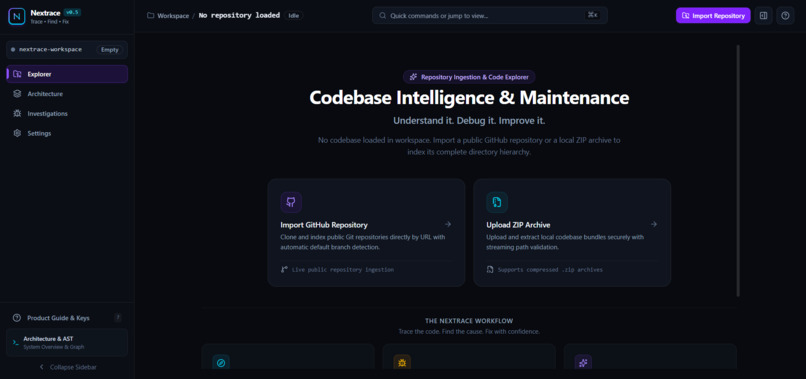
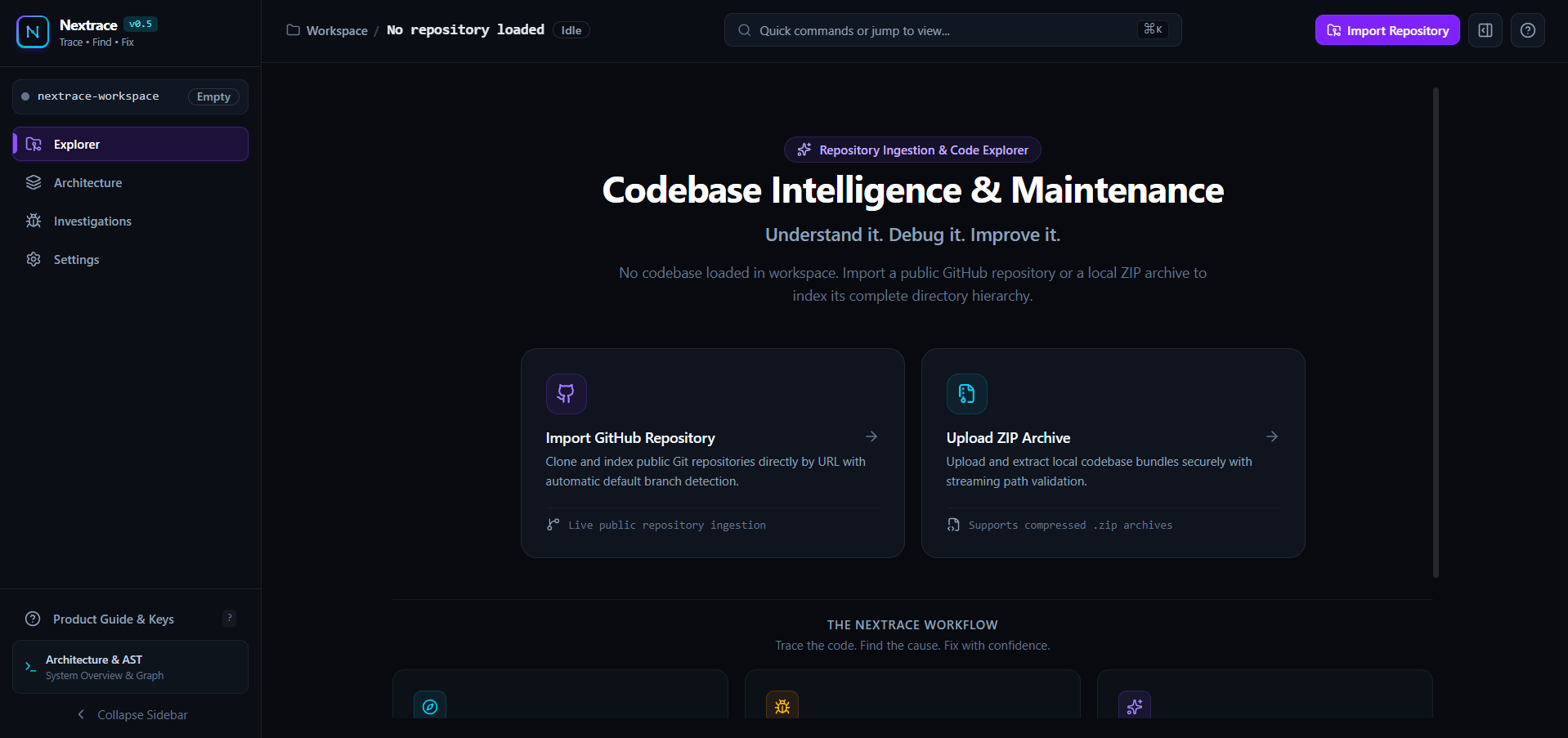
This is the main screen for the out project 'NexTrace - From Code to Clarity'
-
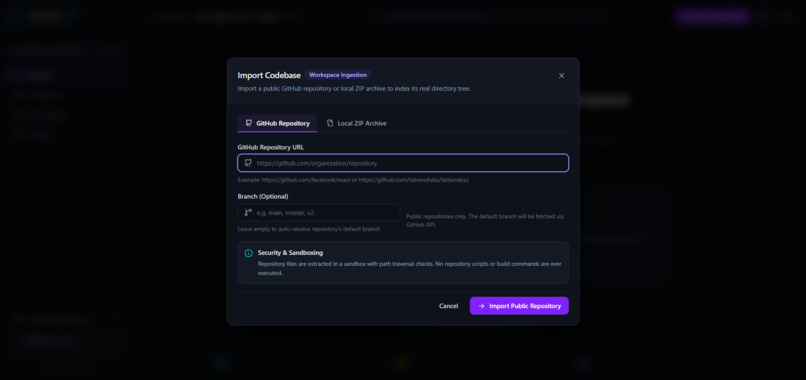
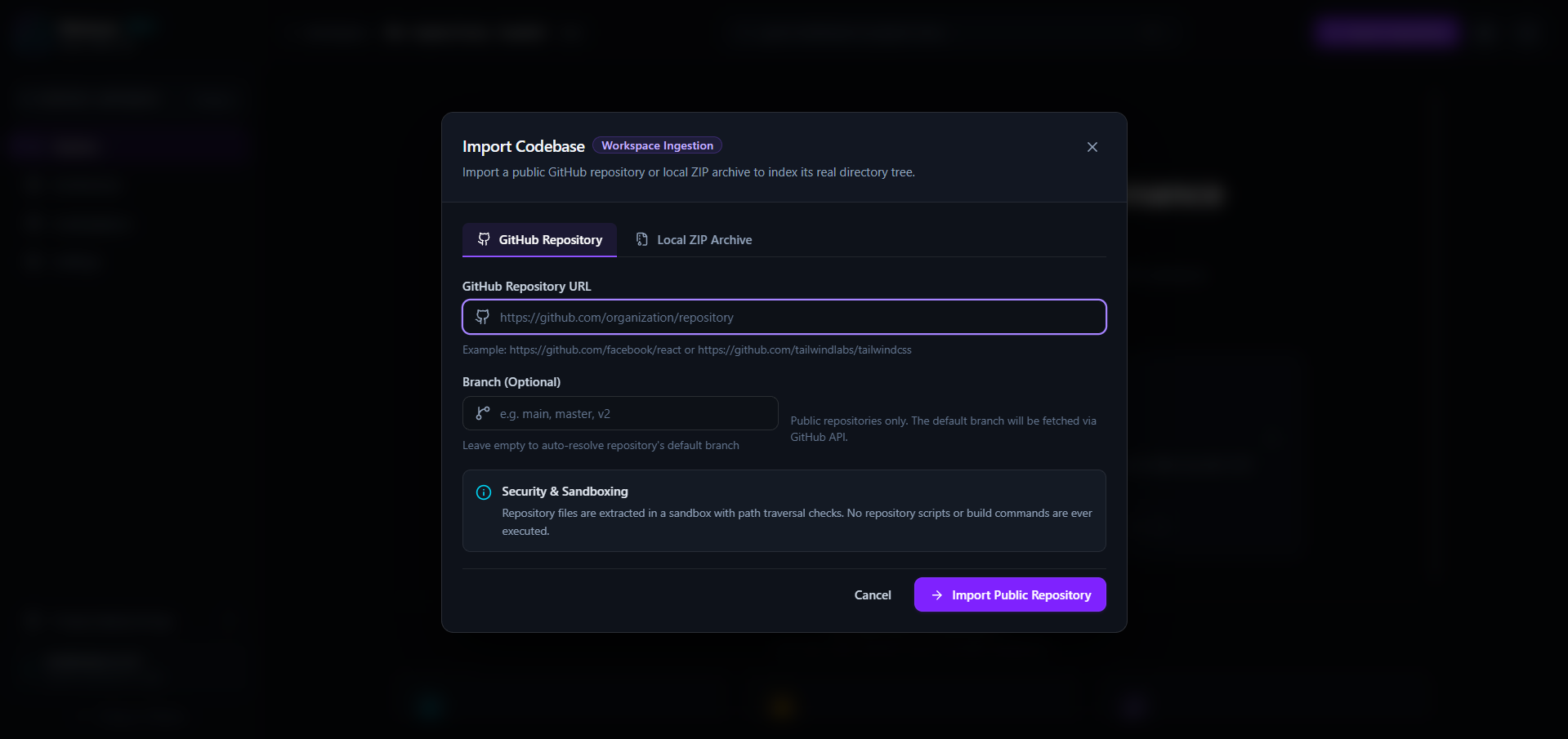
This is the screen for the import of the repo or local zip file
-
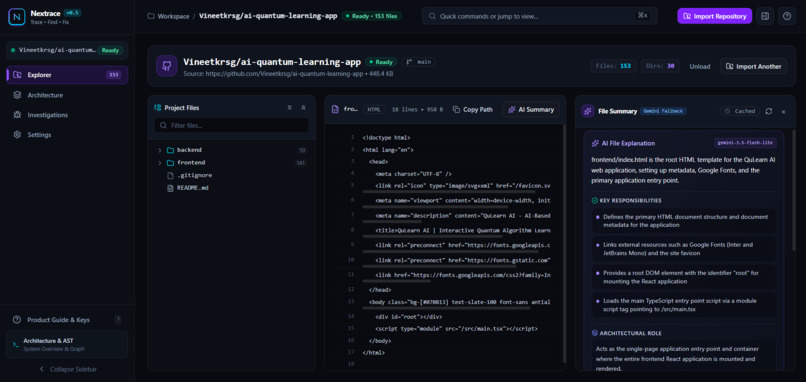
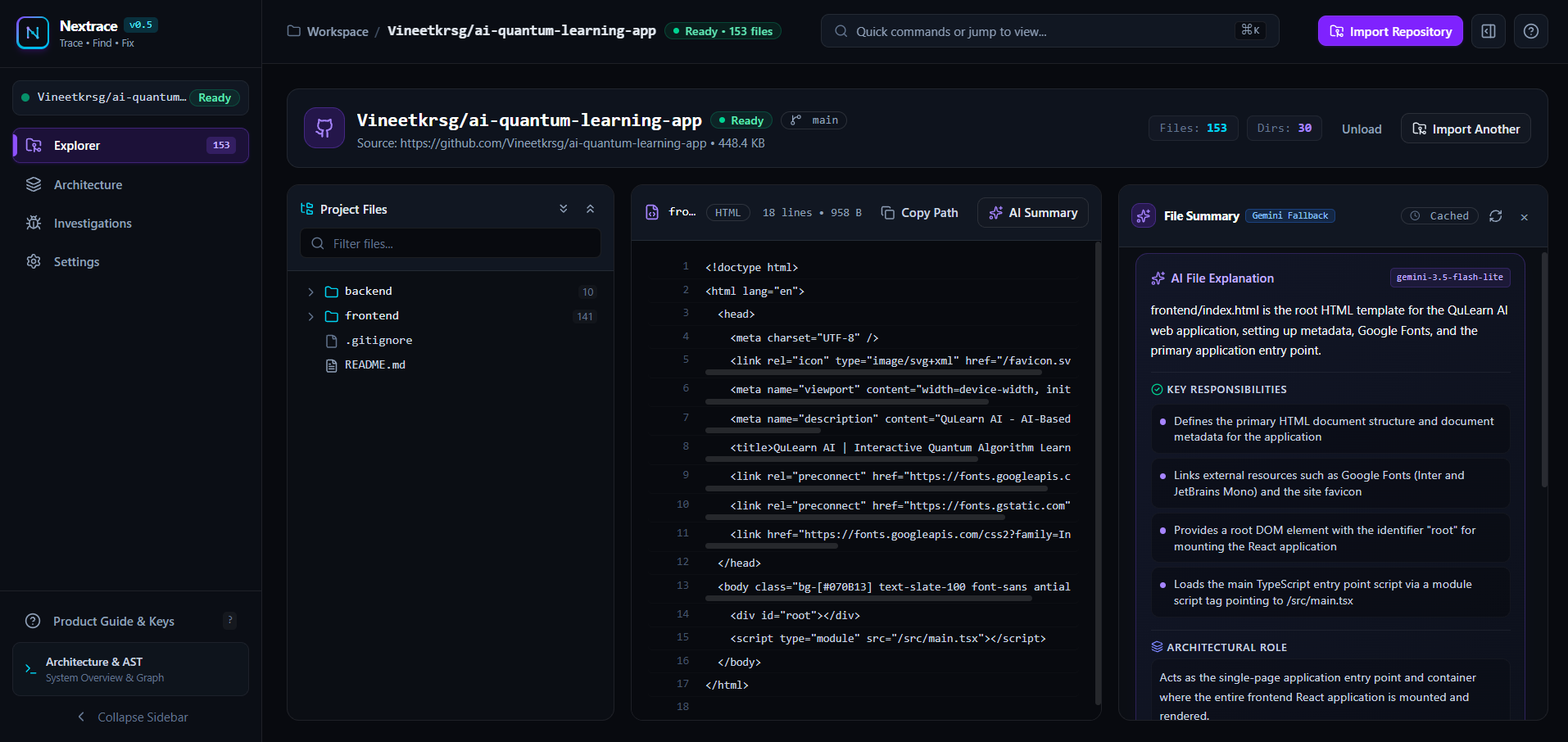
This is the the file tree and i the right most side their is the AI explanation
-
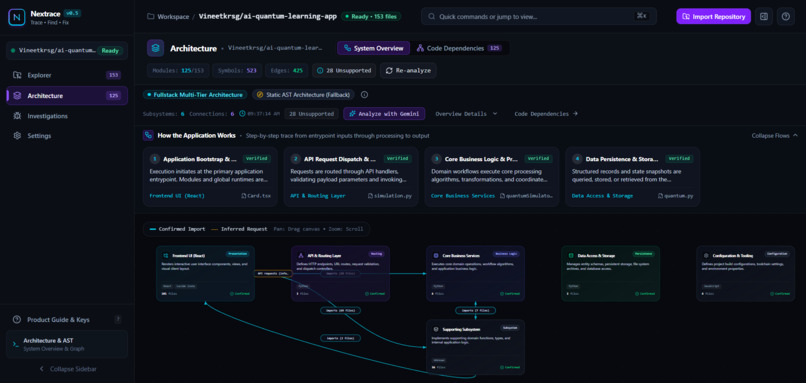
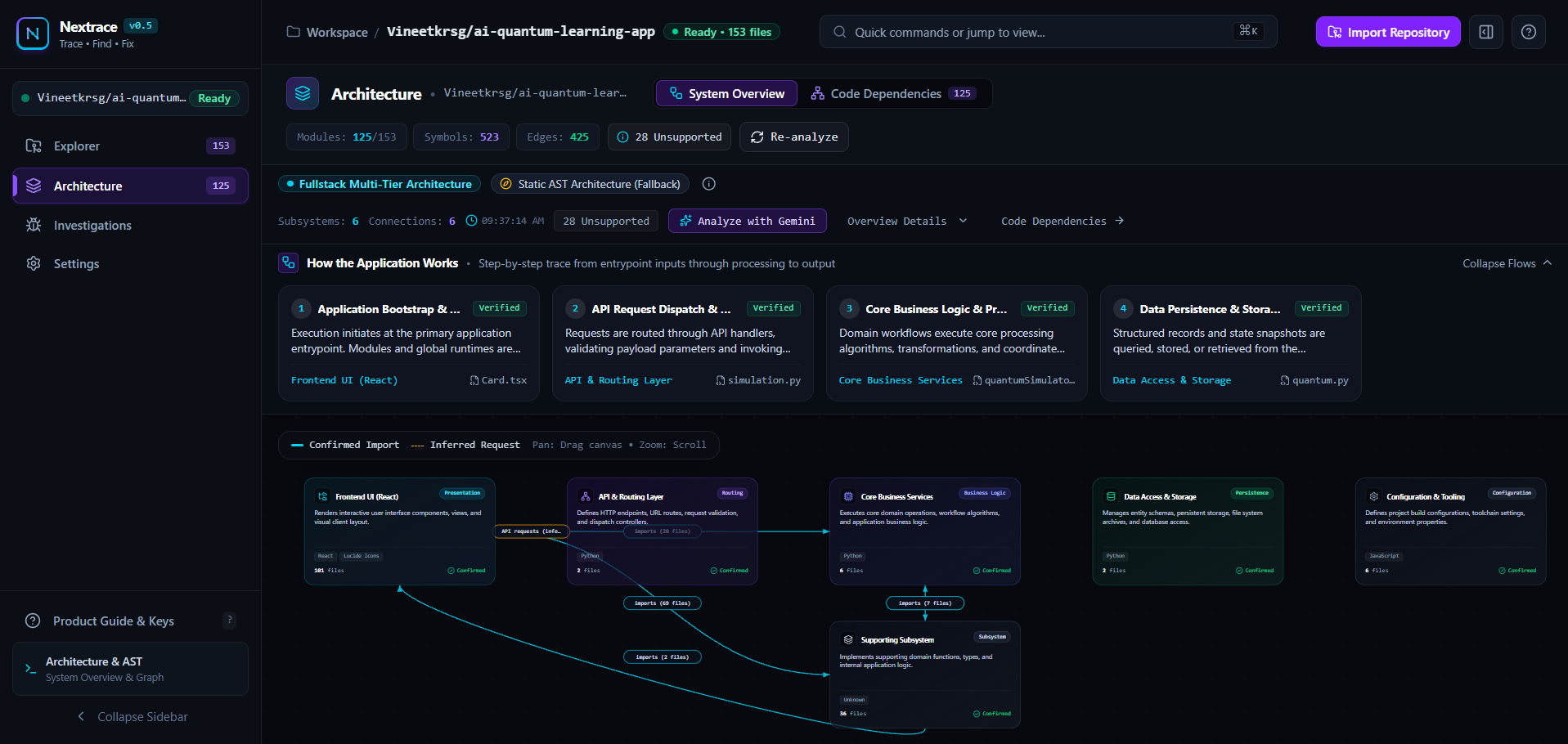
This is a small architecture flow of the app generated by ai integration
-
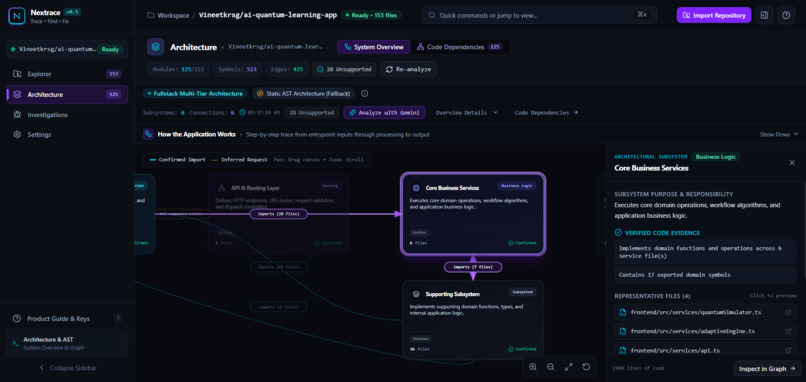
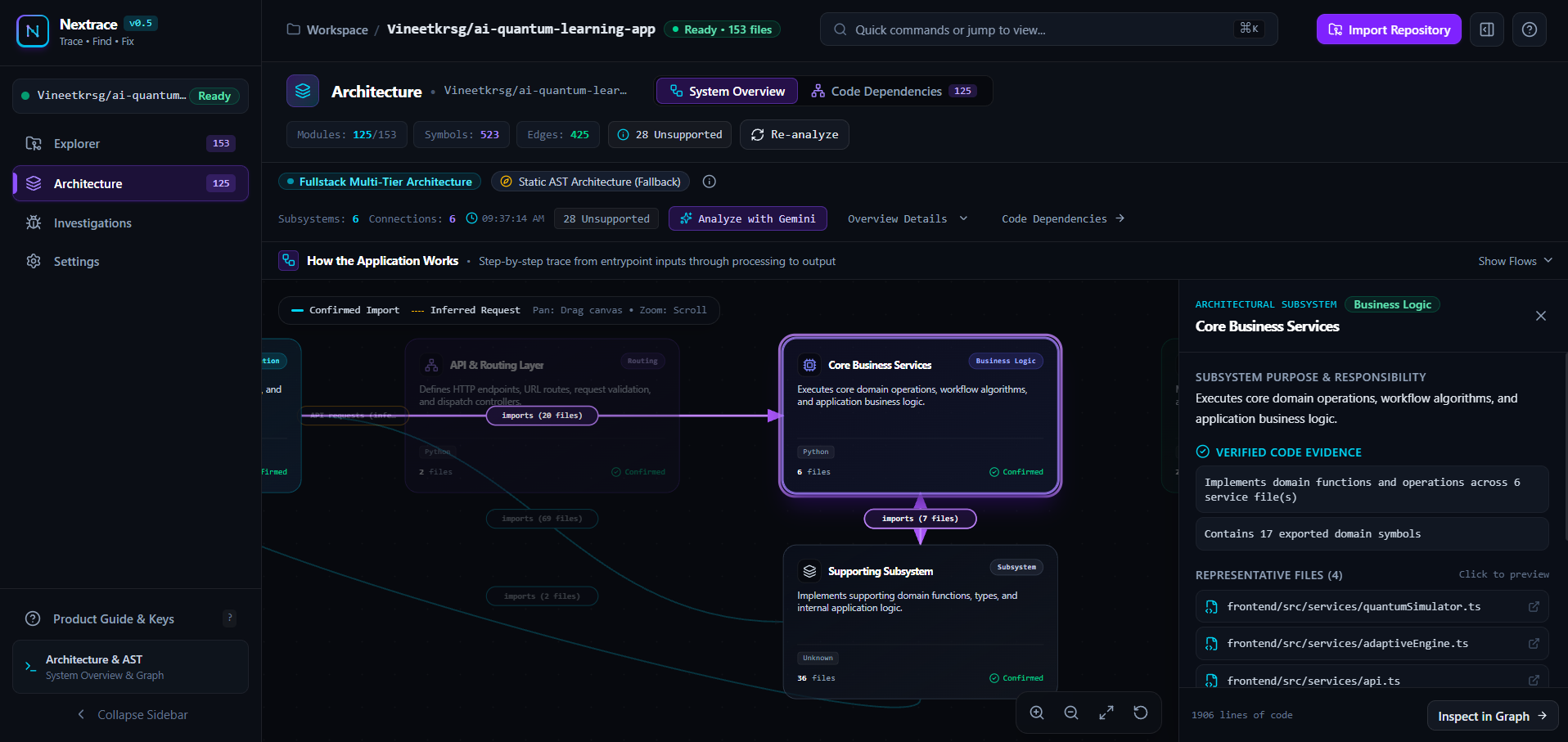
When selecting a particular tile it shows about it like explain it breifly
-
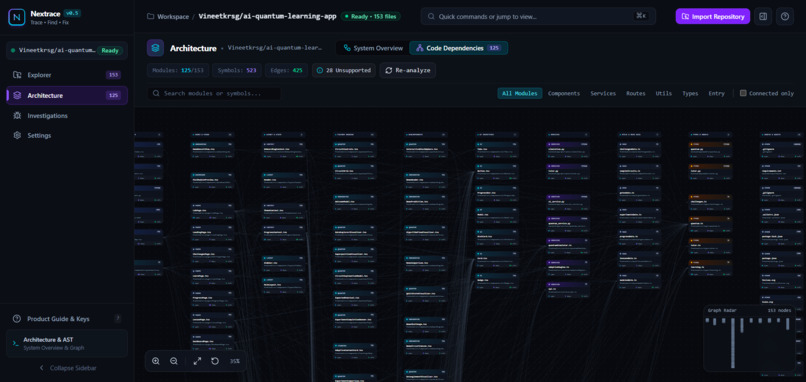
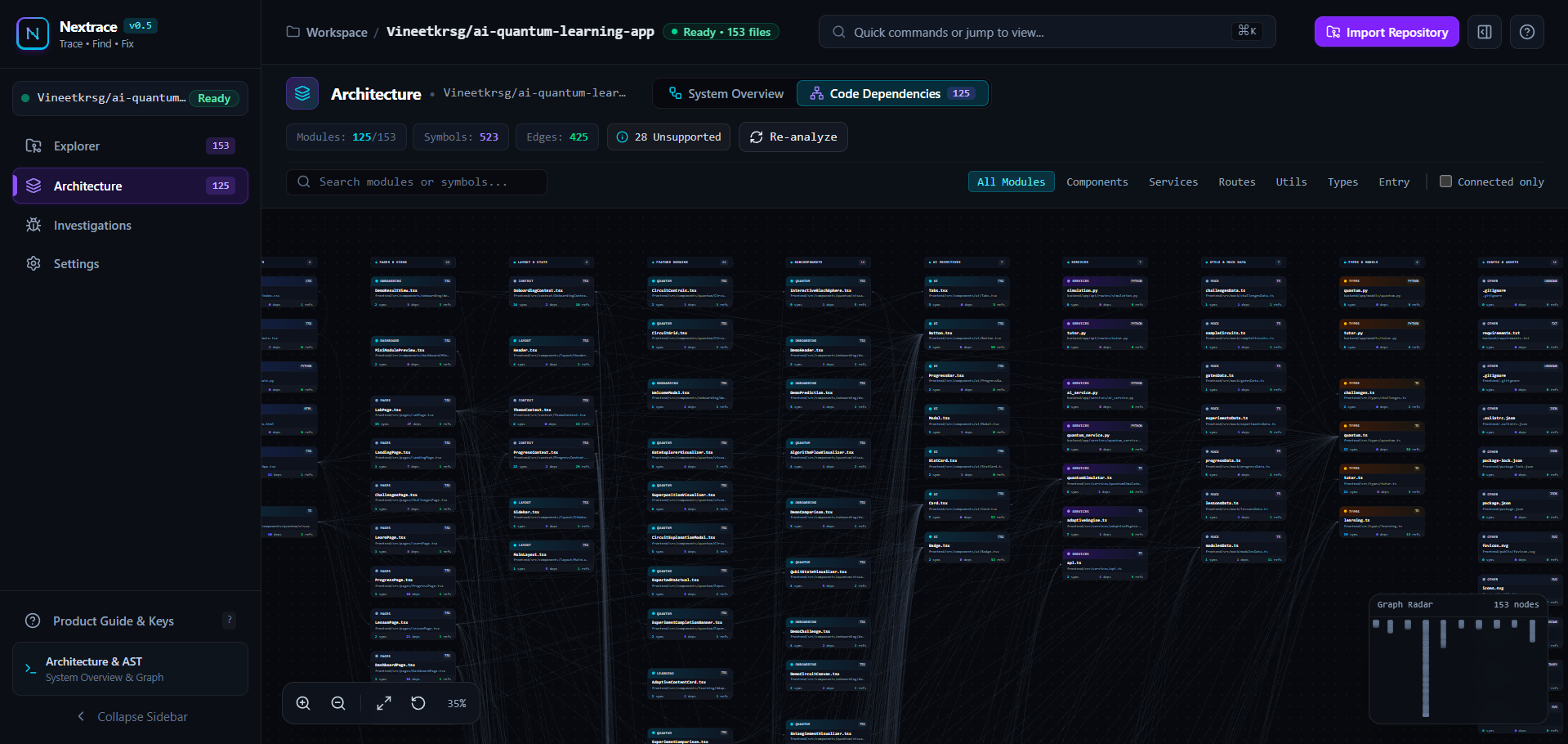
This is the code dependencies linked to each other like the file connected to other ones
-
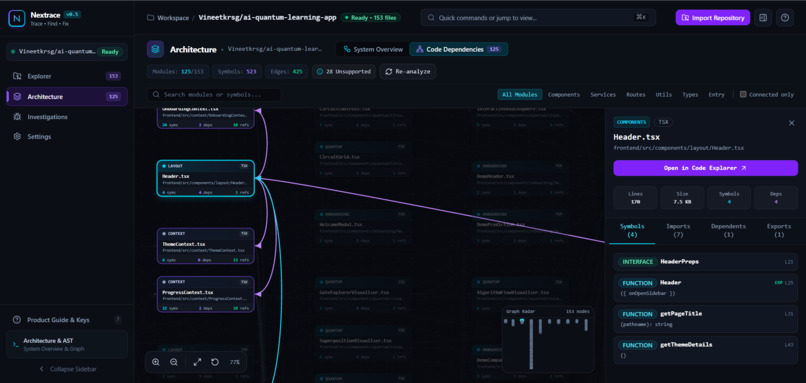
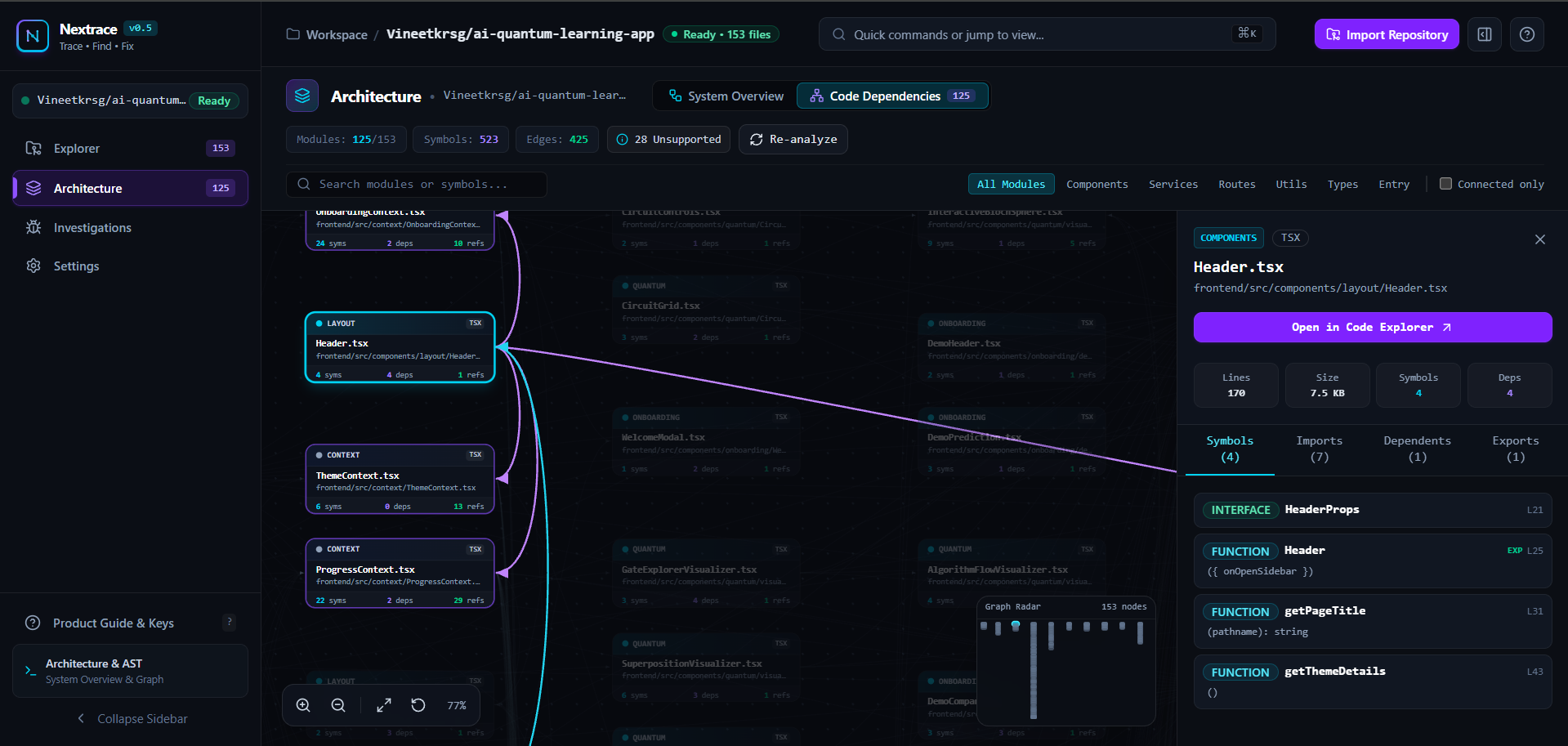
Selecting a particular file shows the import or dependencies of the file
-
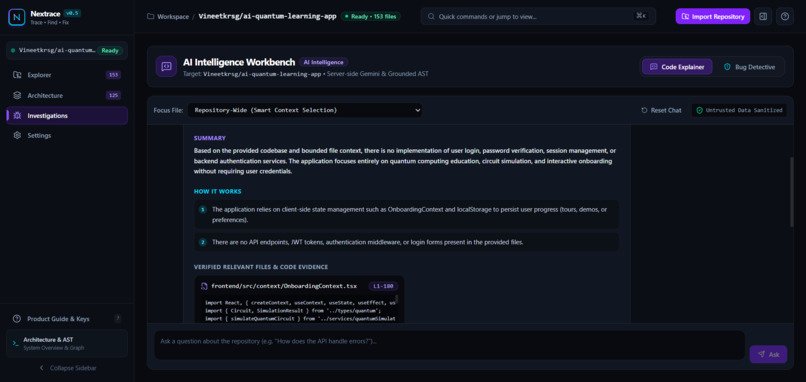
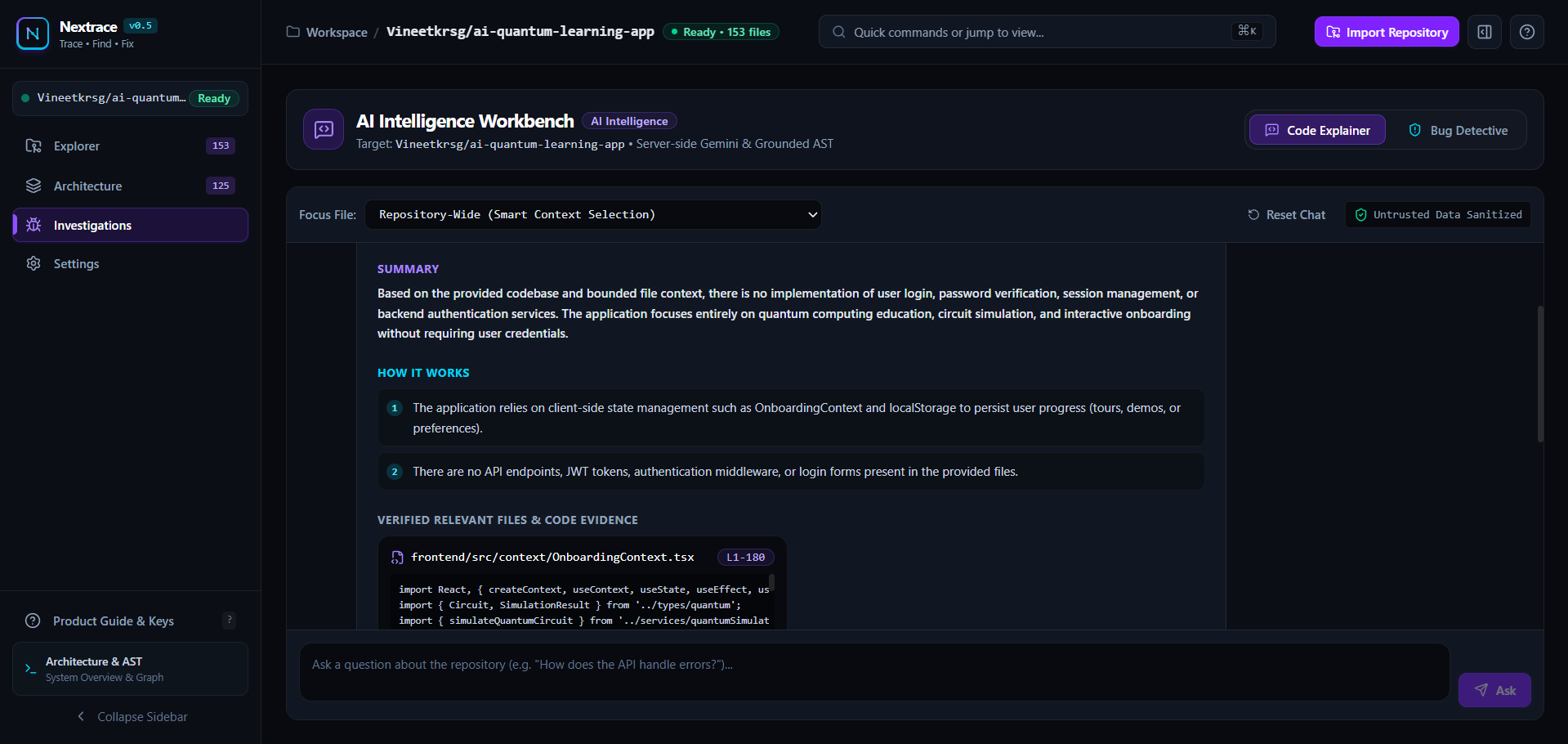
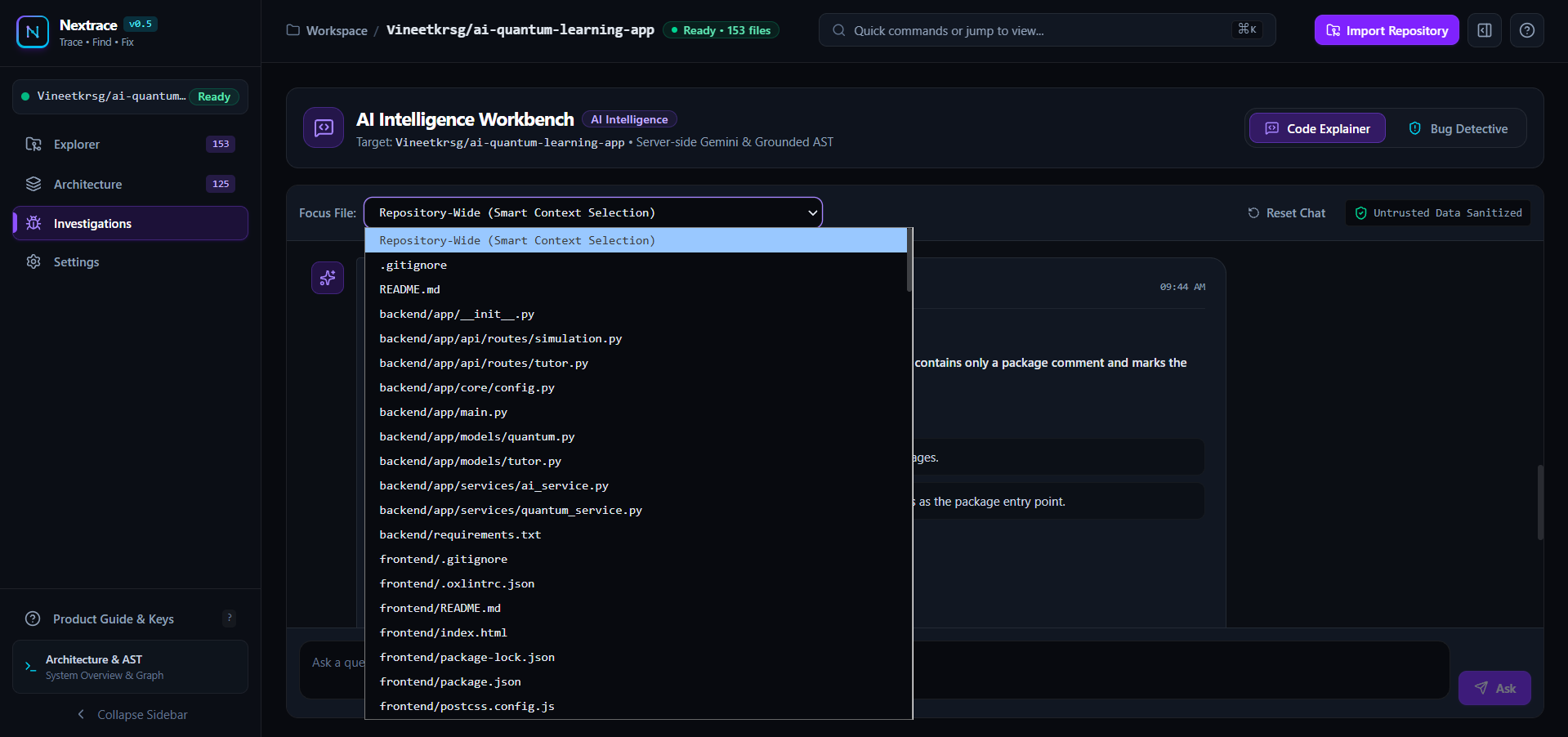
In investigations it tells about any of the question asked by the user regarding the exact file or whole repo
-
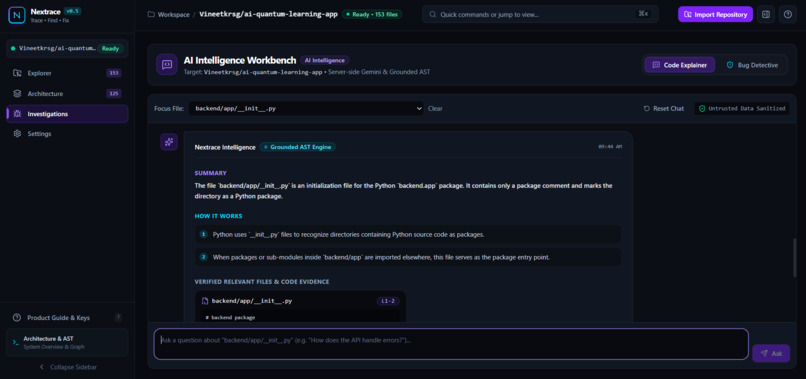
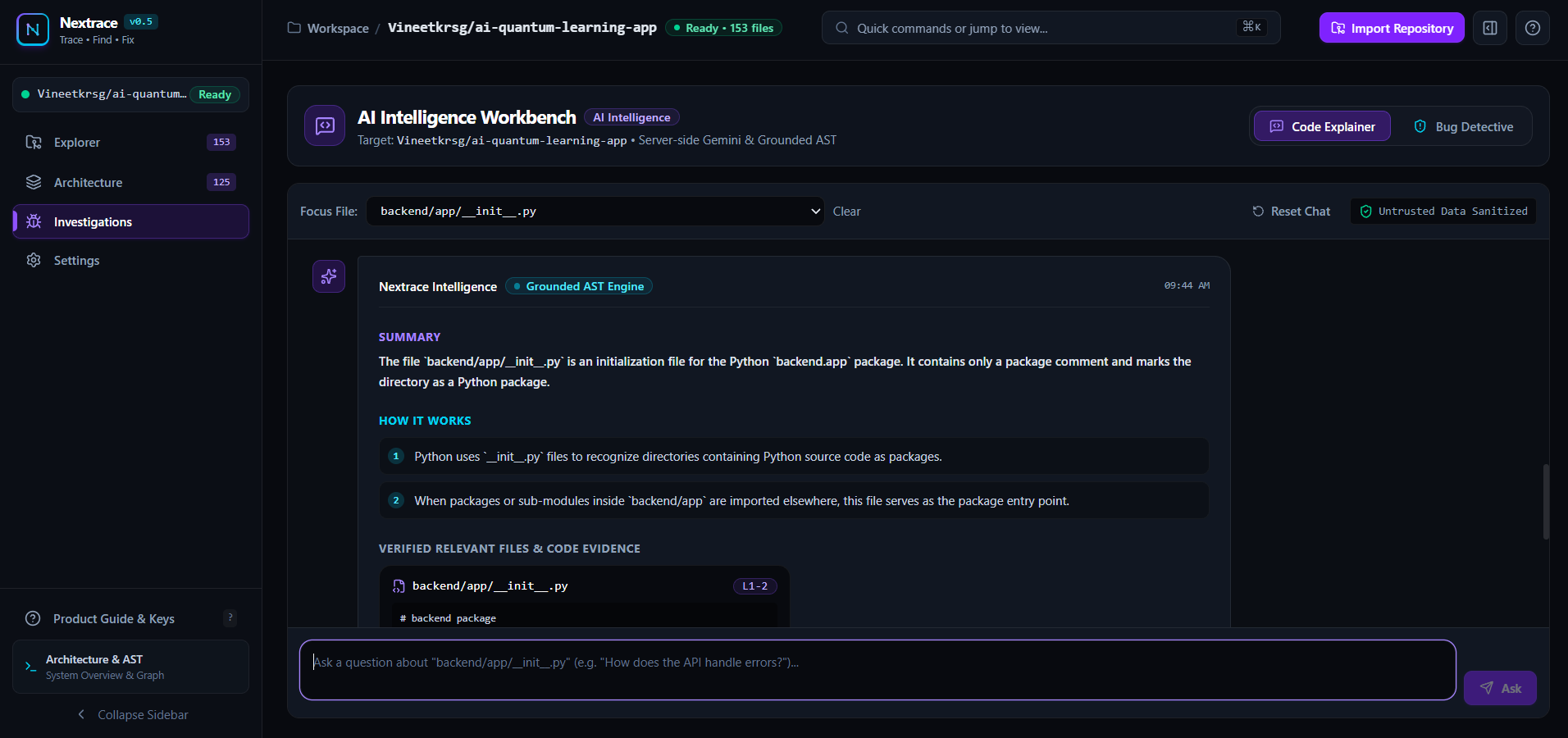
Like here we selected one of the file like __init__.py answers regarding the specific file
-
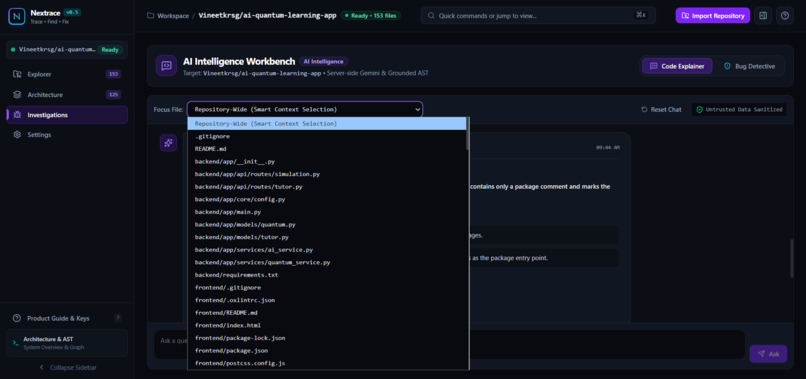
We can select any file instead some files which are machine generated
-
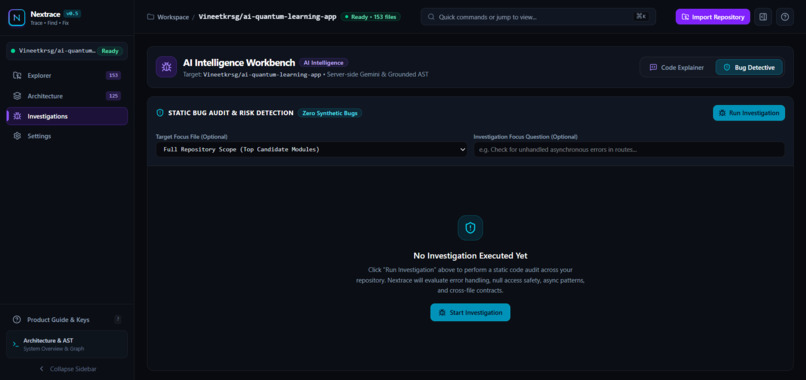
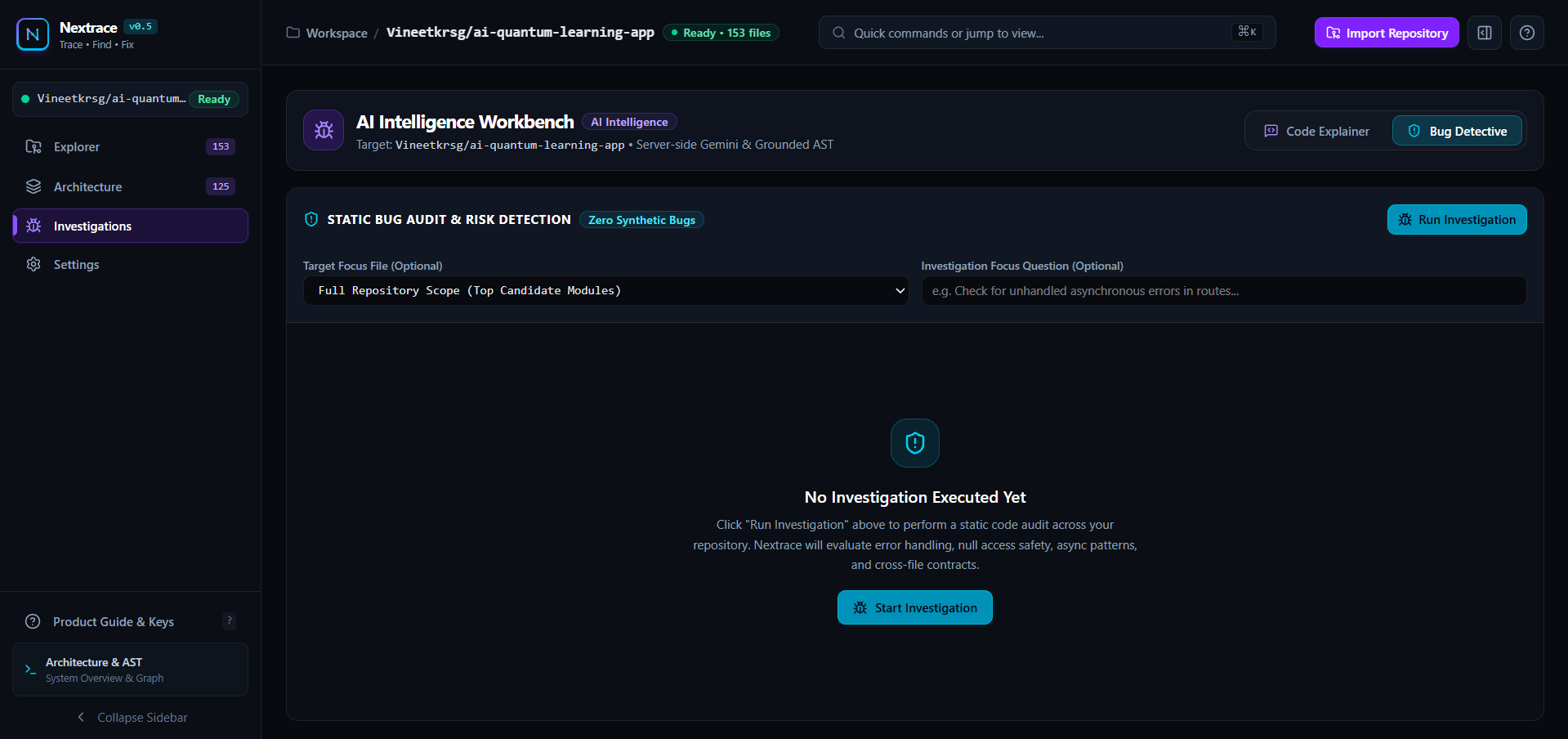
This is the bug detective in investigations tab where it can tell about any bug in the specific file or full repo
-
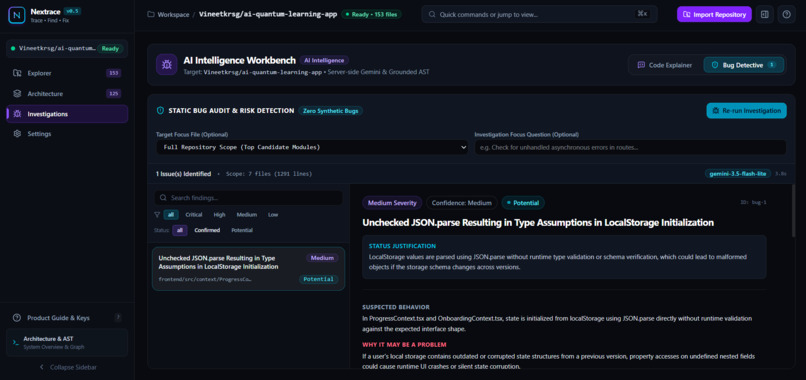
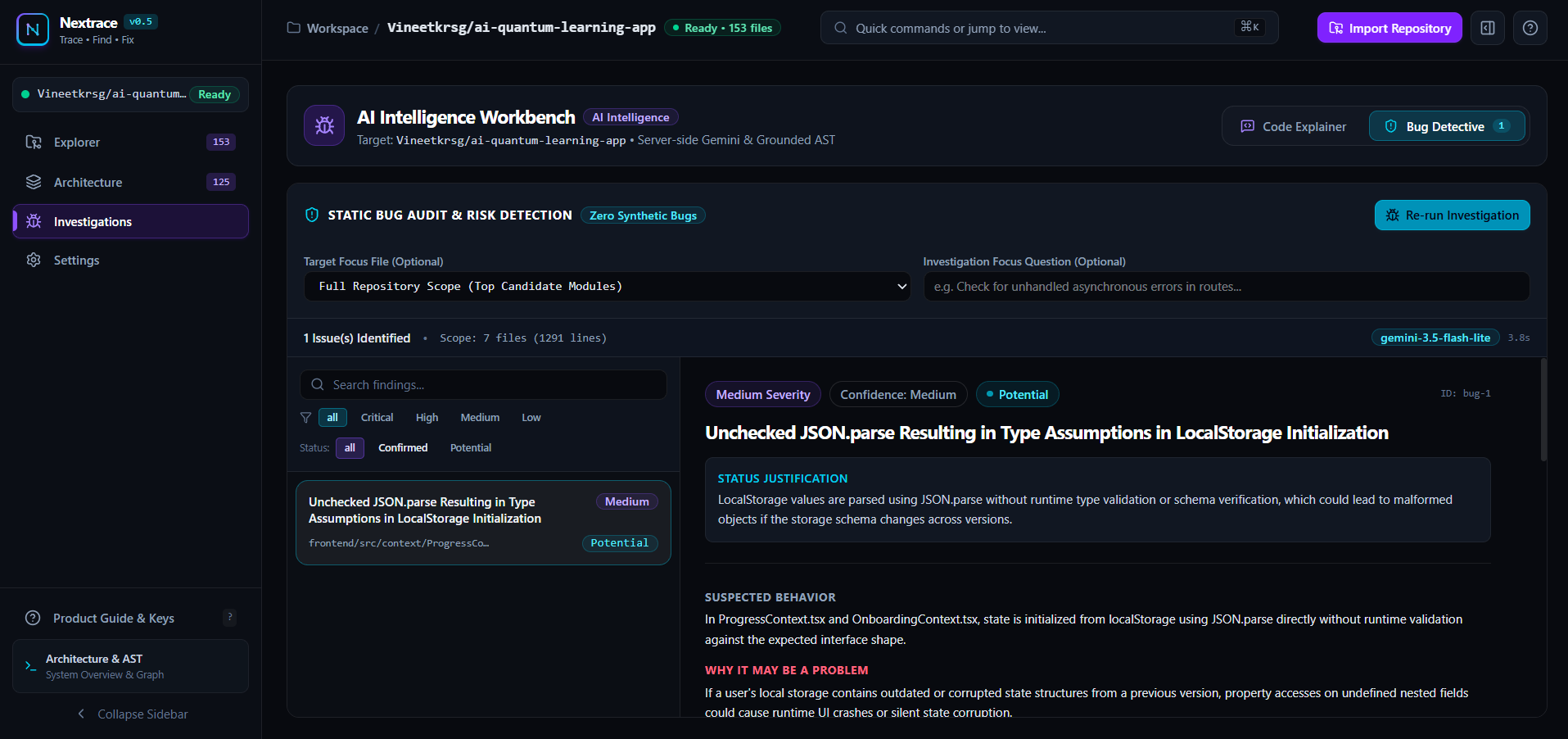
Here it is depicted that what is the error which the bug detective found after investigation
-
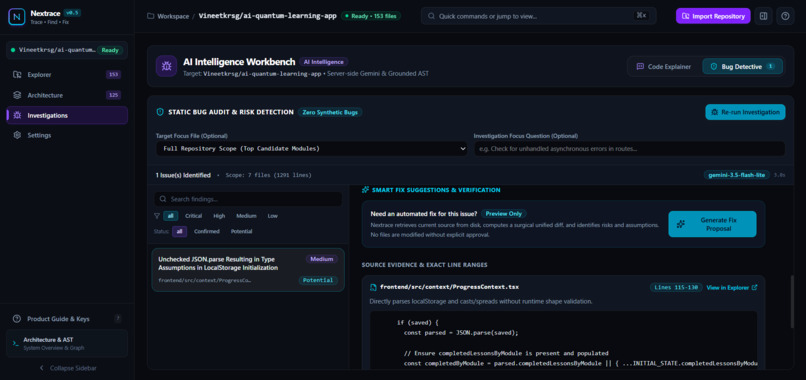
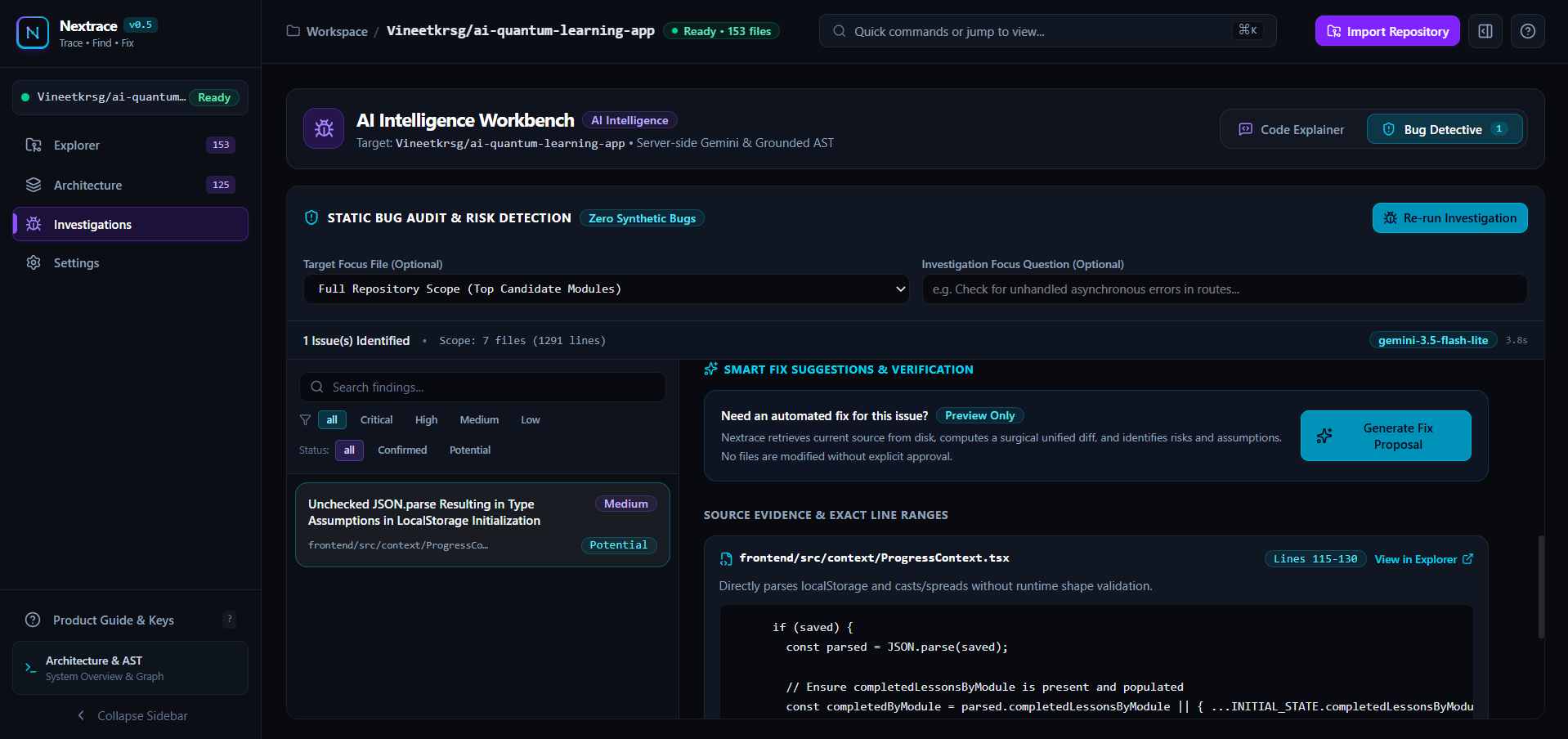
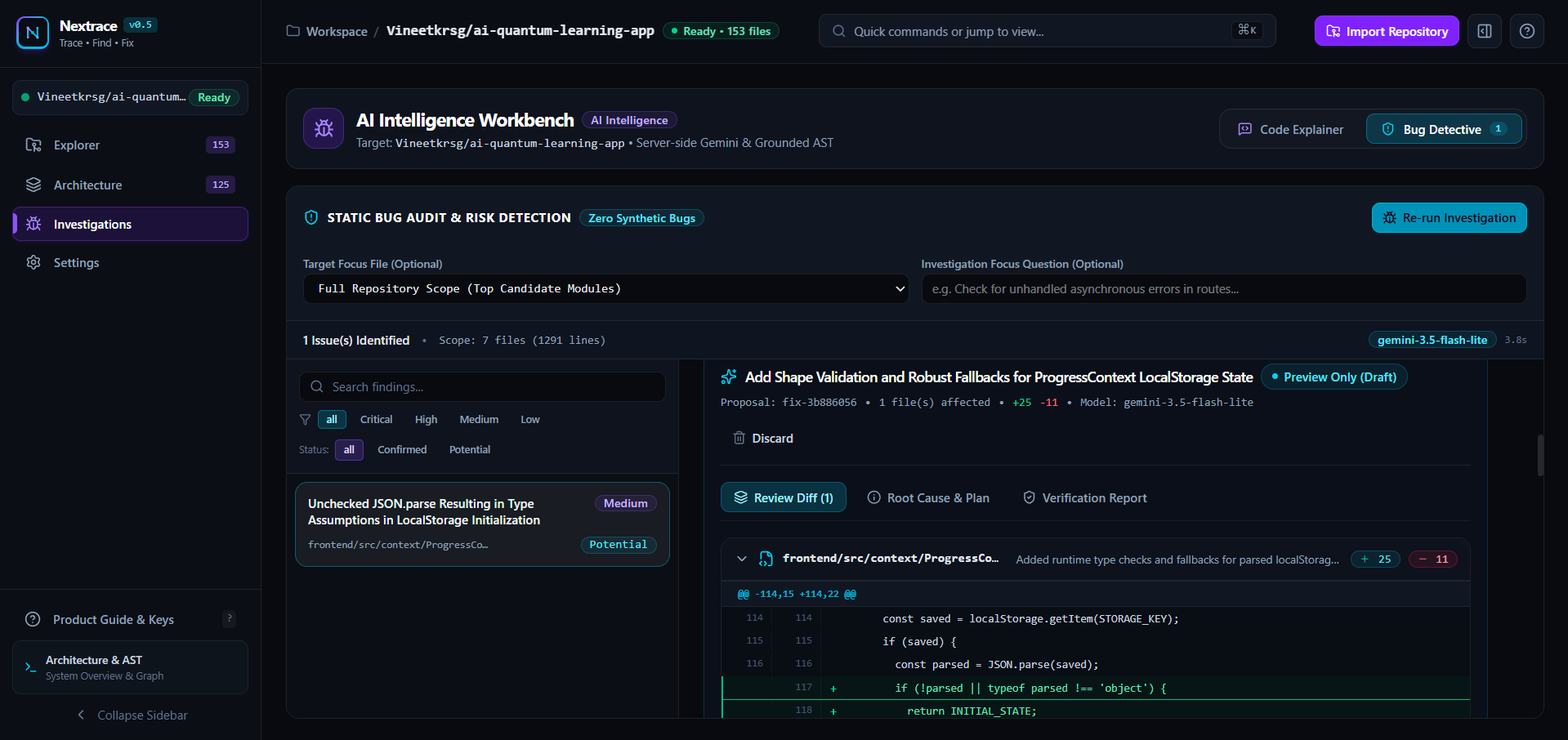
We can generate fix proposal of the bug which came after analysis of the codebase but the whole of power of changing it is in user's hand
-
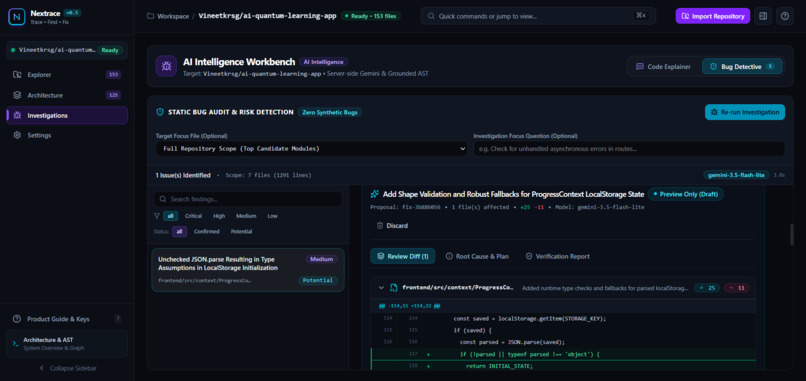
This is the generated fix proposal for the bug and we can accept and apply it or just discard this proposal and generate another
-
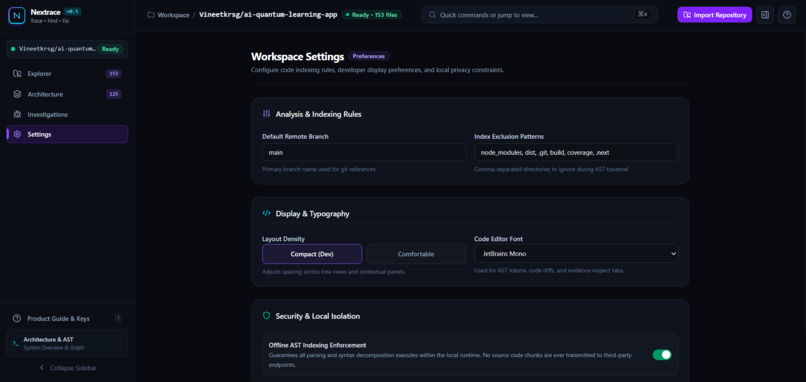
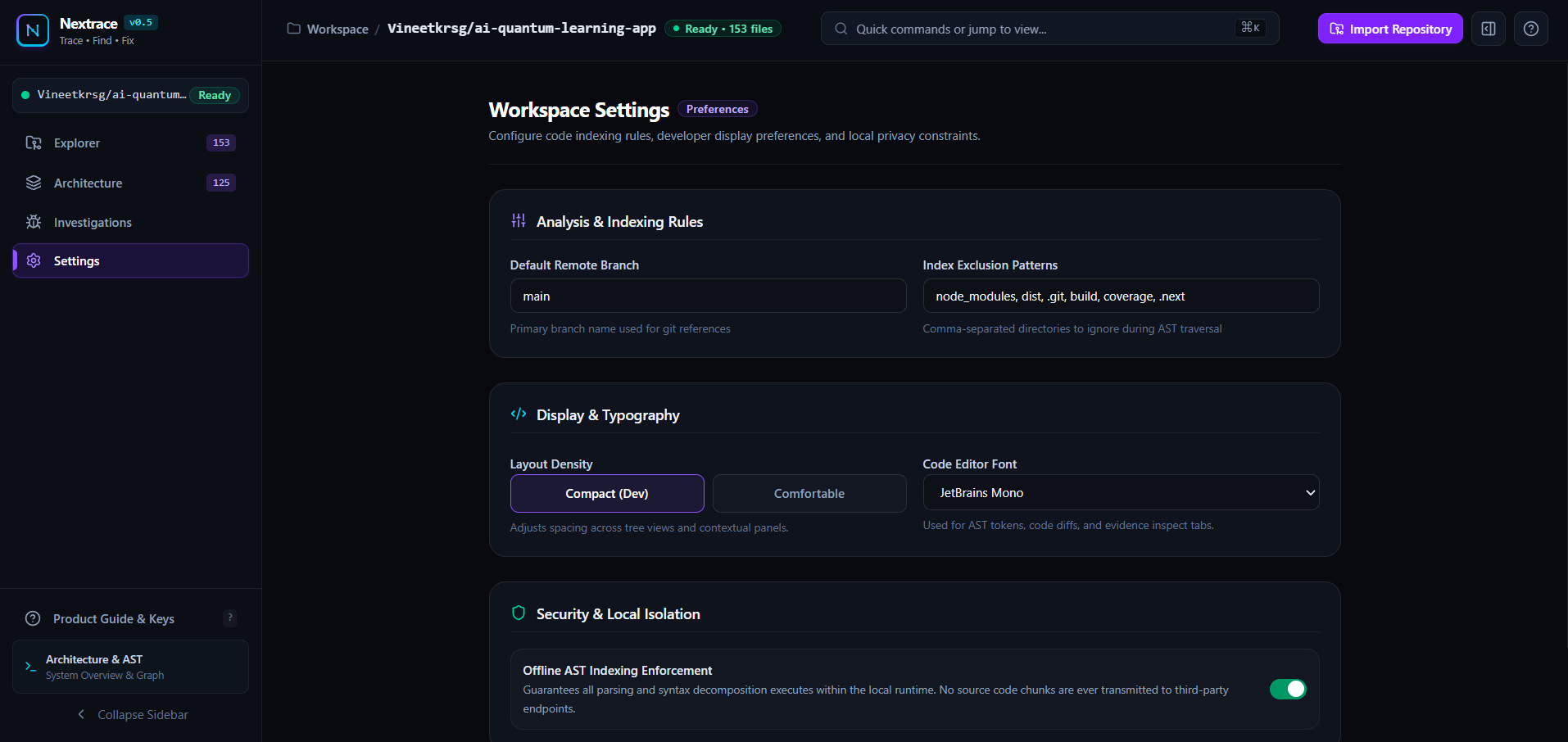
These are the workspace setting like how should be the view and all what should be the default branch etc.
Inspiration
It can be very challenging to understand new code. Developers will often waste hours trying to understand your code structure and where bugs are. We wanted to make it easier with Nextrace where we use AI to make it easier to understand.
What it does
Nextrace is a code intelligence tool that uses AI to allow developers to explore their repository, view the architecture, understand their code with AI generated explanations, debug any issues with evidence and create potential solutions.
How we built it
Nextrace was built using Google Antigravity, React and TypeScript. We used the TypeScript Compiler API for static analysis, Gemini AI for the code explanation and debugging. We have also created interactive architecture visuals.
Challenges
The biggest challenge we faced was getting the static analysis to work well with large repositories, creating effective architecture visuals and ensuring the AI generated content was based on real code. We also wanted to ensure the tool was easy to use and the user had full control over the suggested code changes.
Accomplishments
We are proud that we have created a tool that allows users to explore their code, view the architecture, use AI to understand their code and debug any issues. It makes it easier to explore complex code bases.
What we learned
We learnt how to implement static analysis with AI, create interactive tools for developers and how to ensure the AI is evidence based. We also learnt how to make the AI helpful and not over take the decision making of developers.
Future plans for NexTrace
We want to improve the multi-language support, improve the architecture analysis, improve bug detection and improve the verification of solutions. In the future we want Nextrace to be a dependable tool throughout the software development life cycle.
