-
-
-
Next Move up
-
-
-
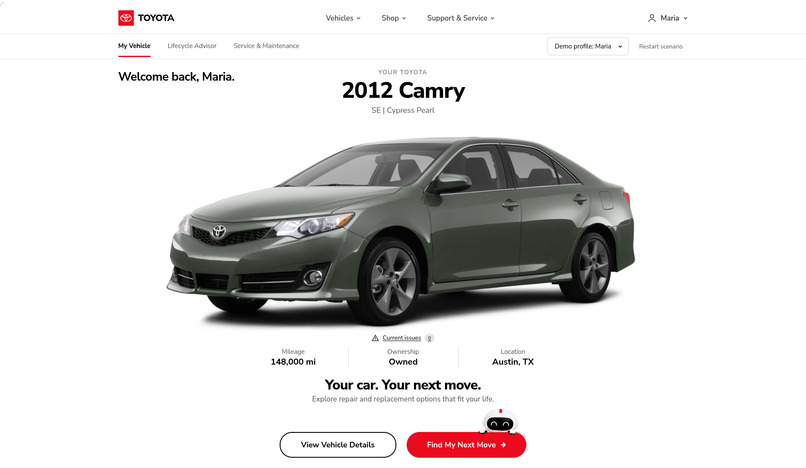
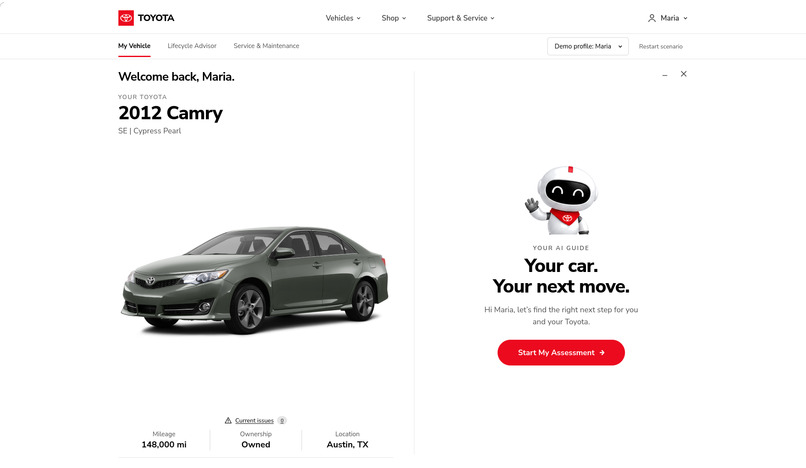
Home Screen
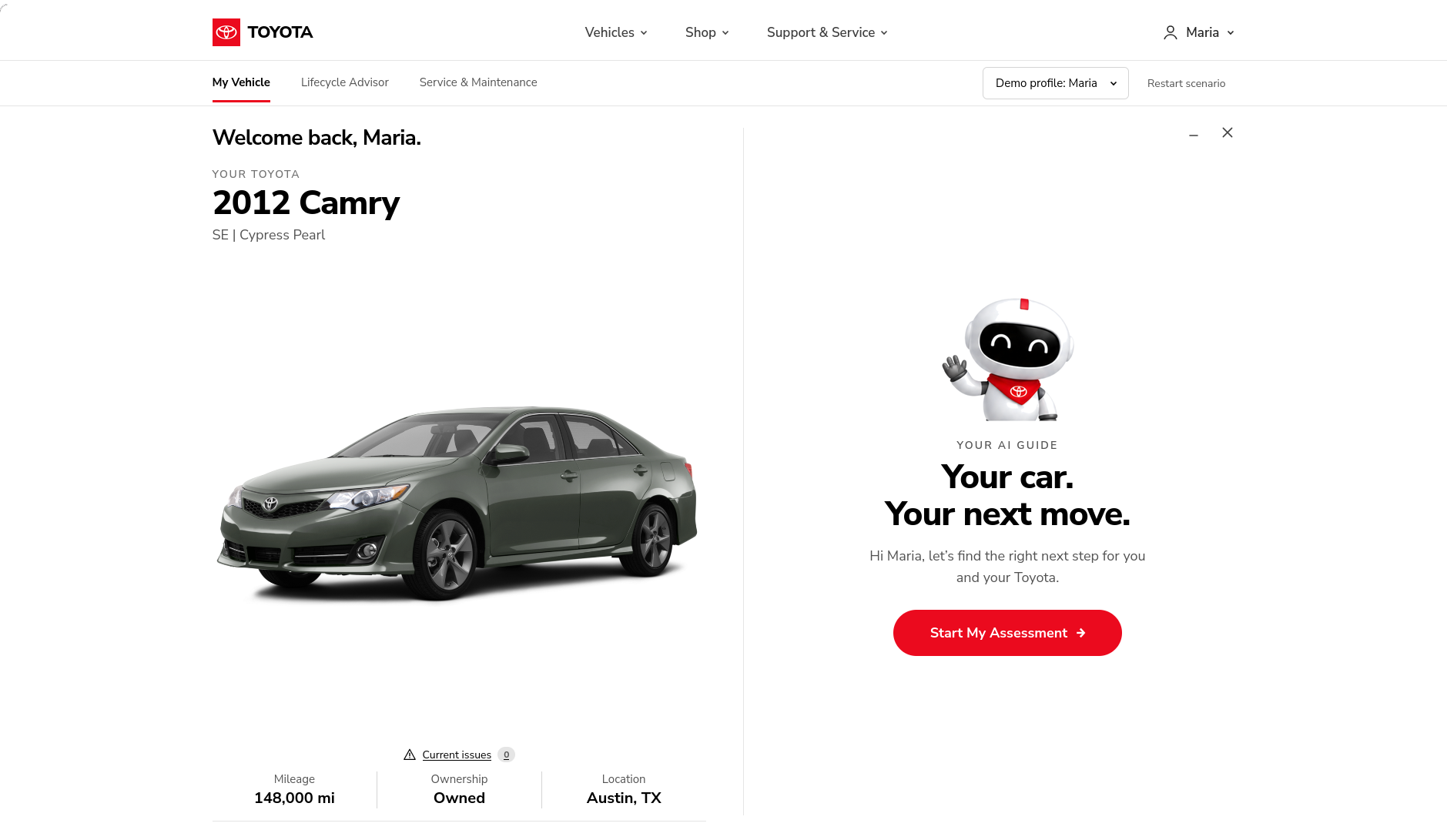
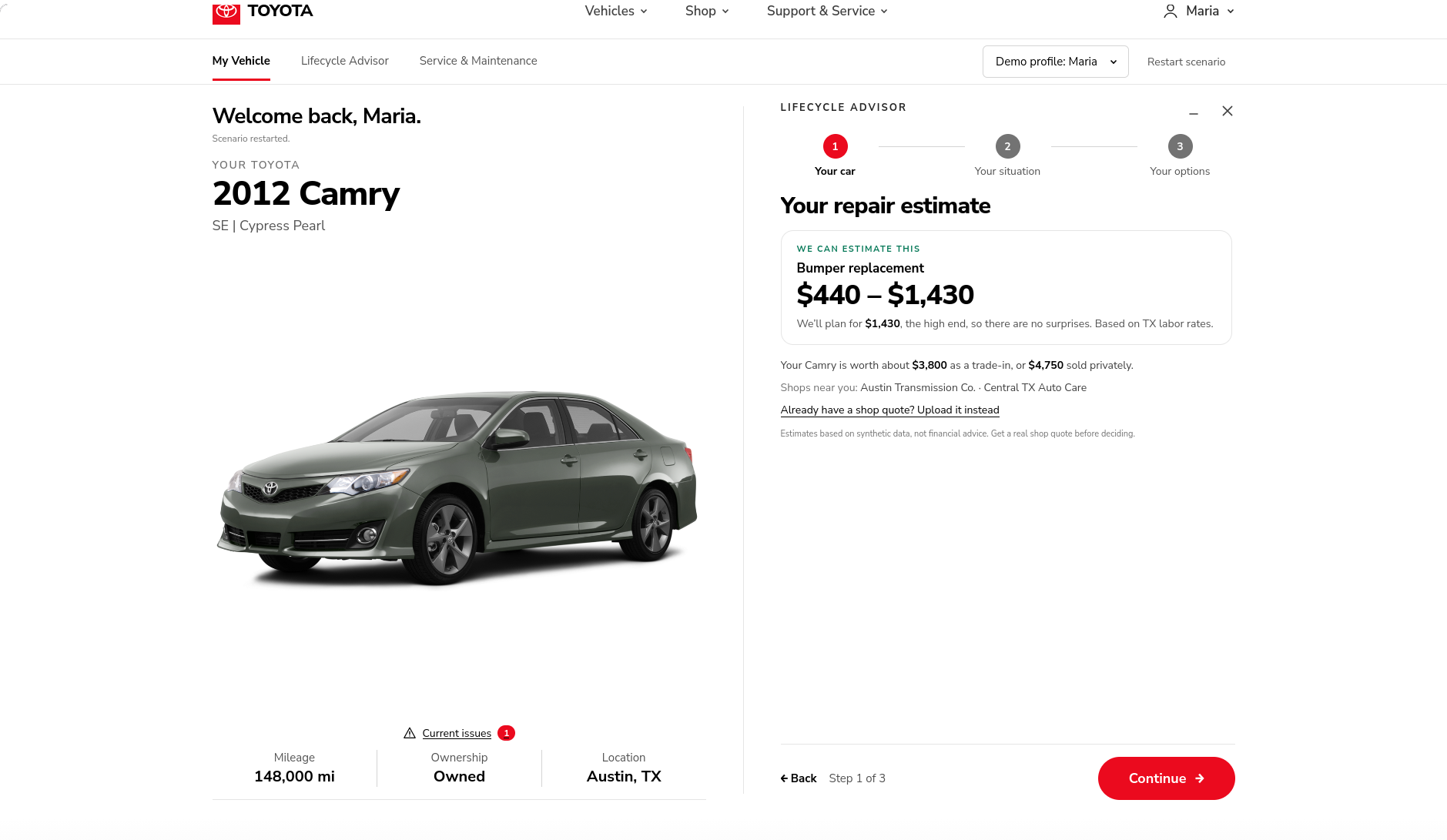
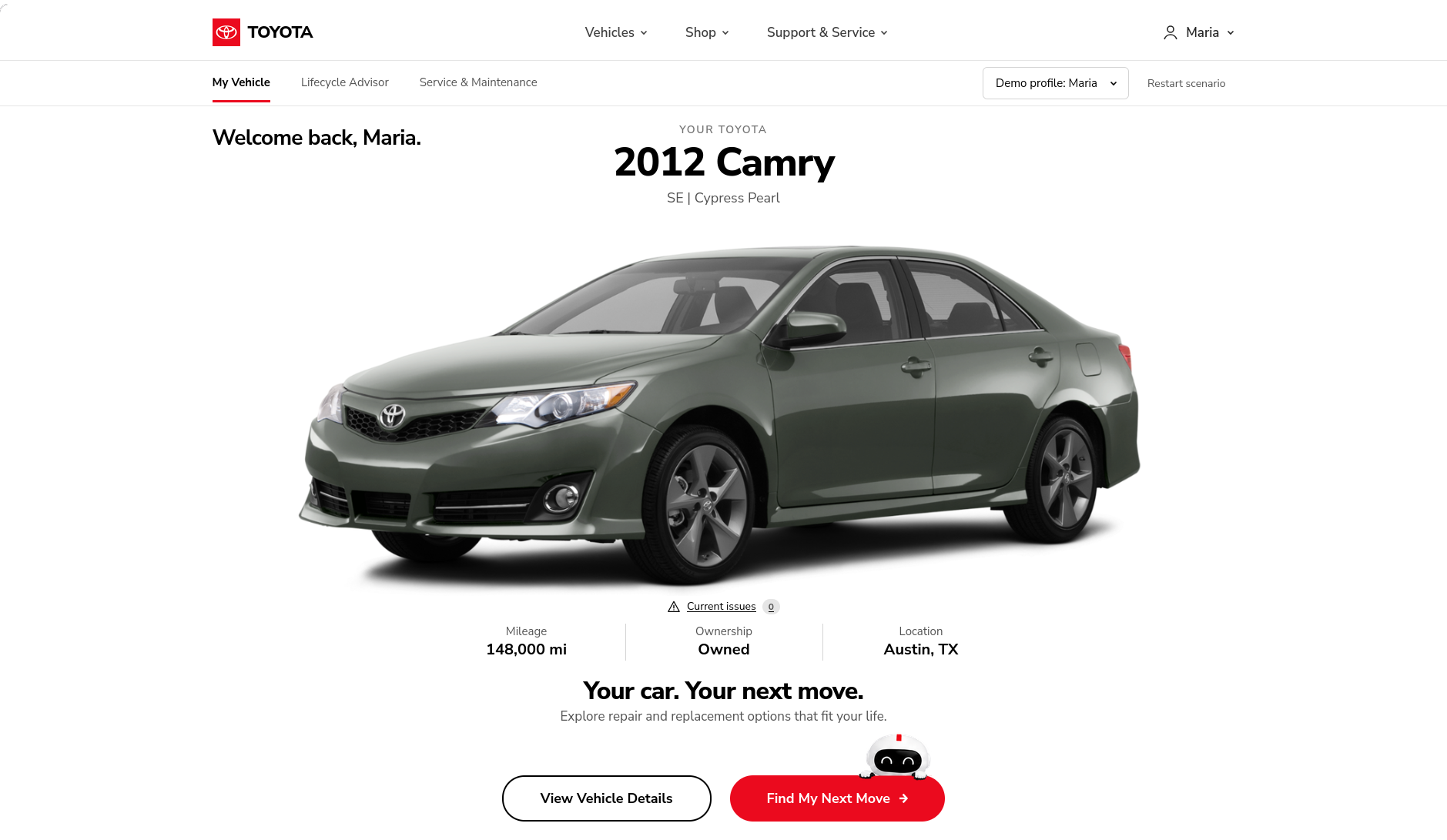
Inspiration
A couple of months ago, one of our teammates was driving home after a calculus midterm when another driver T-boned his car. Thankfully, nobody was hurt, but the repair estimate was quoted at $4,500. Suddenly, a stressful accident became a difficult question: What next?
Repairing the car, trading it in, and taking on another loan each came with different costs and risks. Terms like negative equity, GAP coverage, and financial runway only served to make a hard decision even more confusing.
Our teammate's experience inspired NextMove: a tool to help drivers understand their options when an unexpected repair puts them in this very situation.
What it does
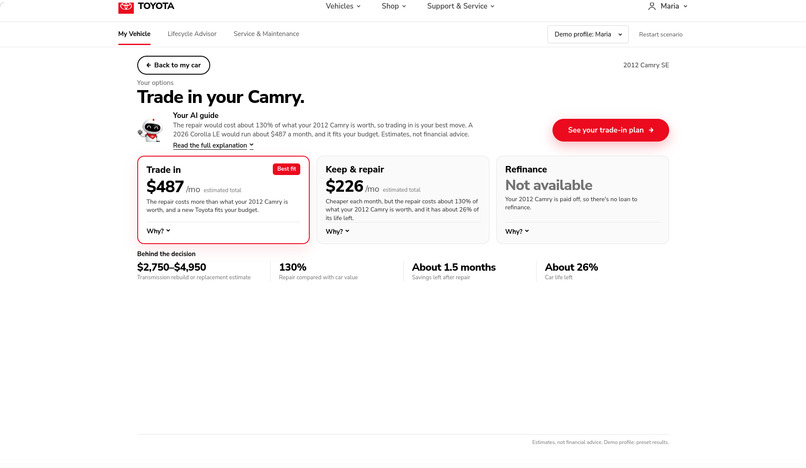
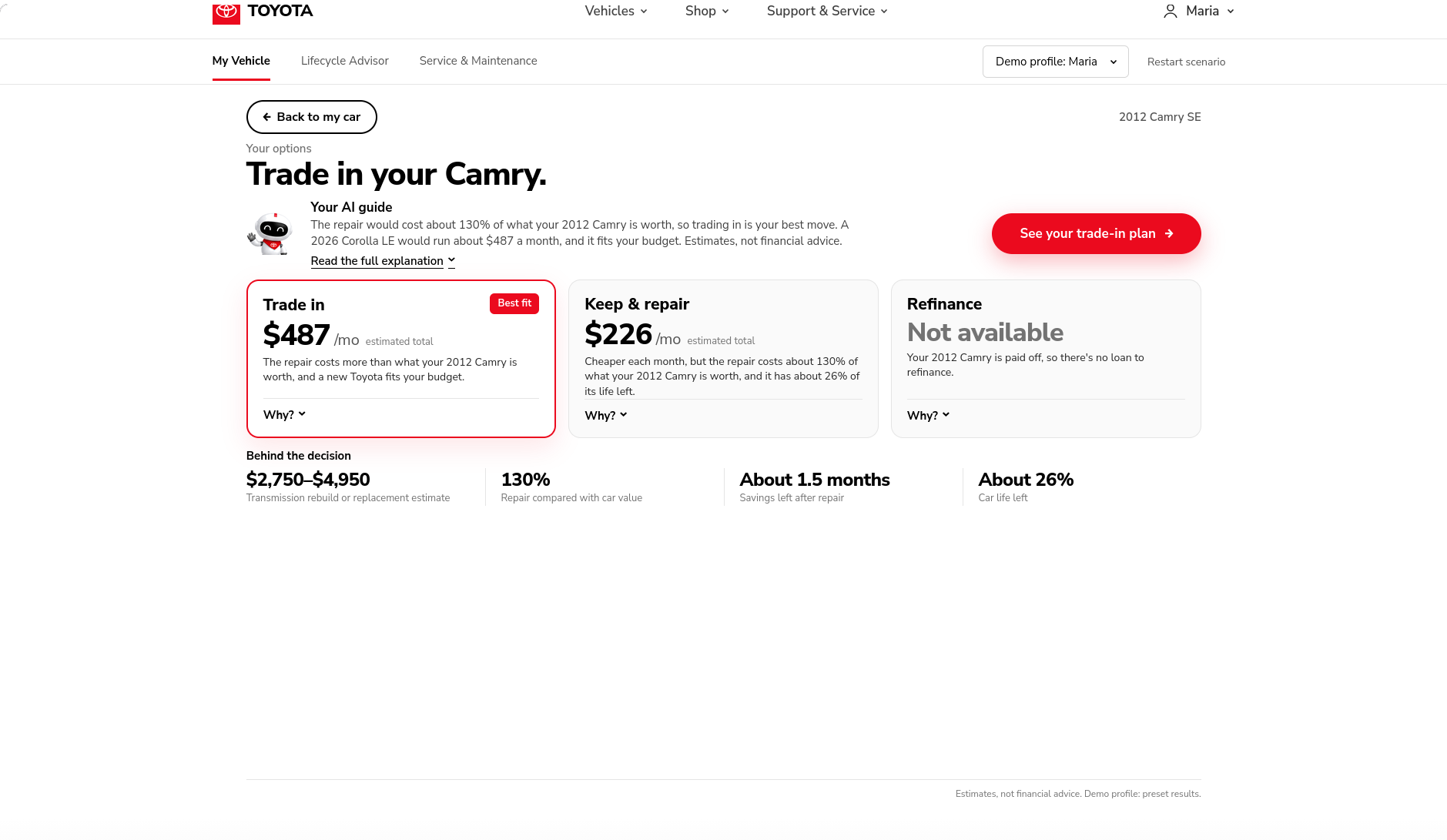
NextMove helps Toyota owners explore whether to repair and keep their current vehicle, trade it in for a newer Toyota, or refinance an existing auto loan.
We designed the experience around a potential future integration with Toyota’s customer ecosystem. Our prototype demonstrates that experience using synthetic customer profiles and vehicle information.
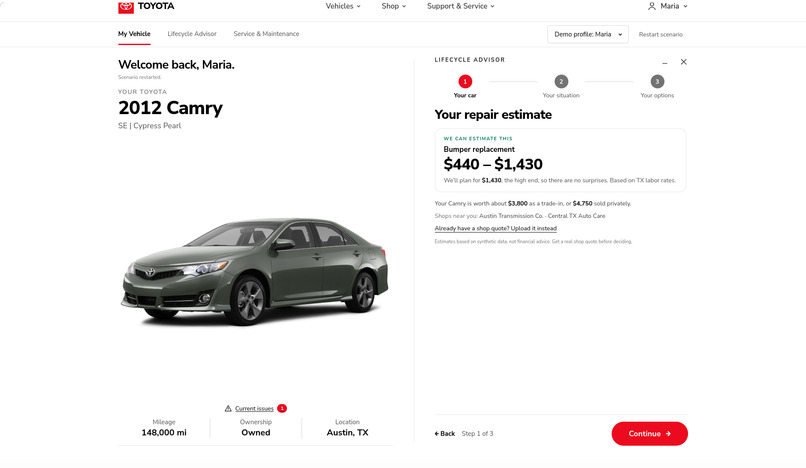
The flow begins with a description of the repair. Our Cost Agent classifies supported repair types and uses predefined cost tables to produce an estimated range. When the issue requires a diagnosis or cannot be estimated confidently, the flow supports entering a quote from a repair shop.
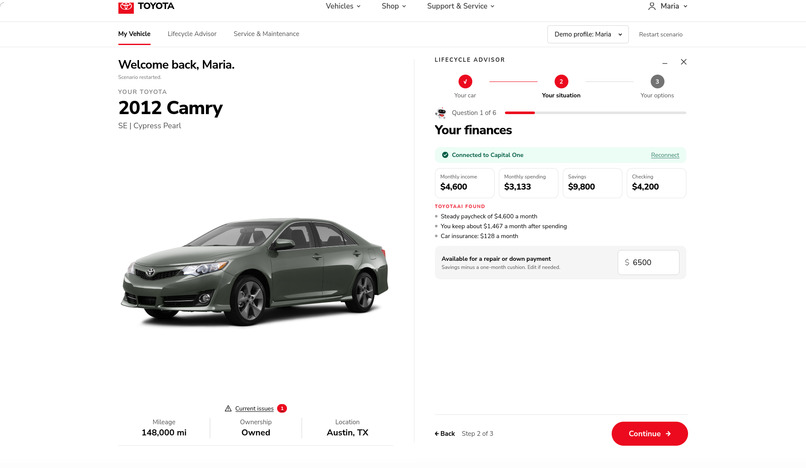
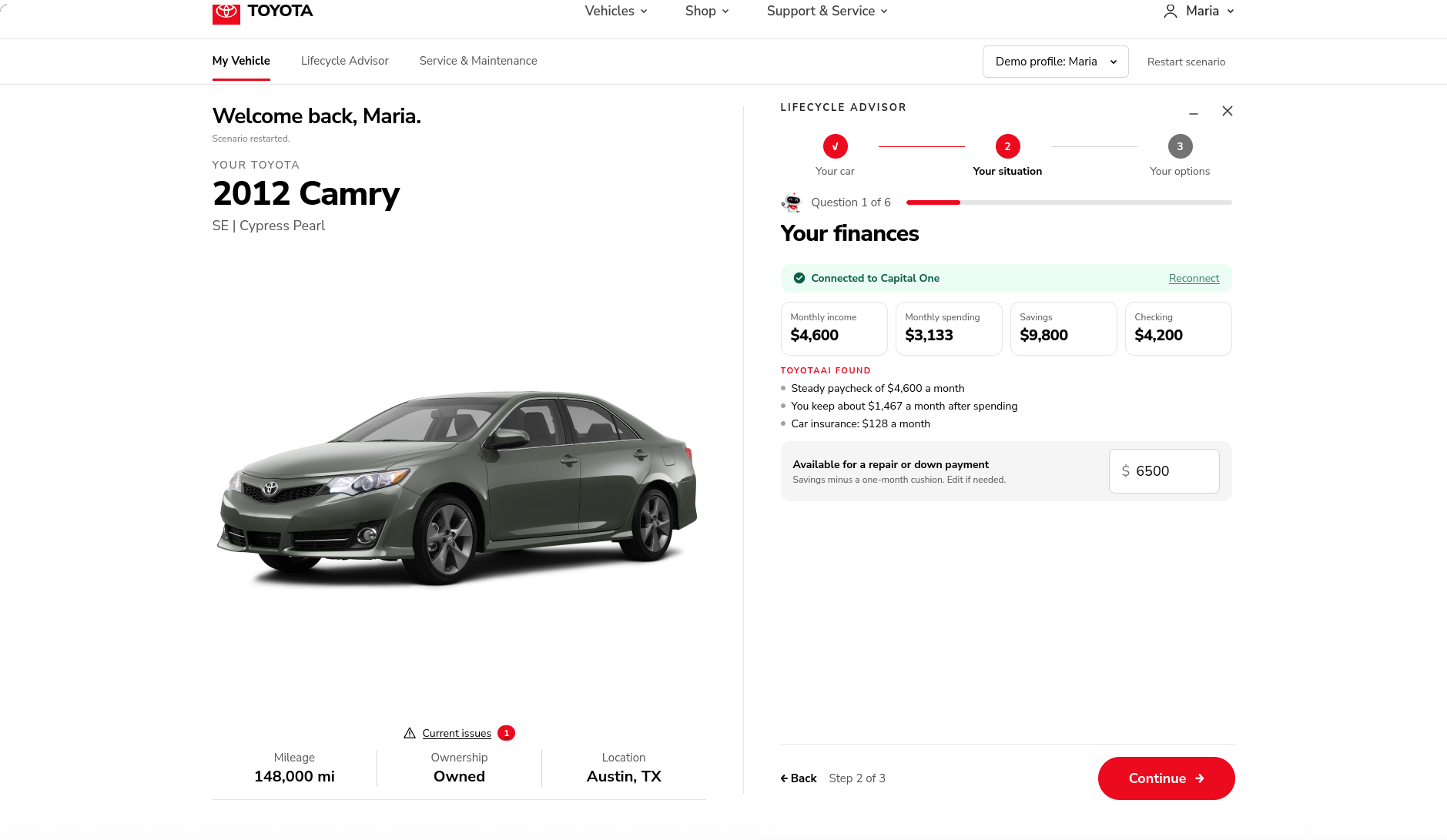
Next, the experience gathers financial context and asks about circumstances that account balances alone cannot explain: upcoming expenses, employment changes, available cash, credit confidence, and reliance on the vehicle. The demo includes a simulated bank connection, while a separate onboarding module supports converting free-text answers into structured factors.
Our Keep, Trade, Refinance (KRT) engine compares estimated monthly costs using vehicle information, repair costs, affordability, and personal financial factors. It also evaluates potential Toyota replacements against the customer’s budget and preferences.
An Explanation Agent turns the calculated results into plain-language guidance. The goal is to help drivers understand the tradeoffs behind a recommendation and make a more informed next move.
The current prototype combines working backend components with a guided interface that still uses illustrative results in parts of the experience.
How we built it
We built NextMove with a Next.js and React frontend using TypeScript and Tailwind CSS, supported by a Python backend built with FastAPI and Pydantic.
We separated language tasks from financial calculations. AI components classify repair descriptions, extract structured information from financial answers, and explain results. Deterministic Python code calculates repair estimates, affordability, loan payments, and the costs of keeping, trading, or refinancing.
The Cost Agent includes a Meta-compatible model integration, while the explanation layer supports configurable model providers. We also built fallback behavior so core demonstrations can run without live model access.
Synthetic Toyota profiles and financial fixtures make the prototype repeatable, and the backend includes Capital One Nessie support for financial account data and a Car Fund savings-account feature.
Challenges we ran into
Our biggest challenge was designing a clear user flow around a decision with many moving parts. A repair estimate alone cannot tell someone whether replacing a car makes sense. We also needed to consider their savings, existing loan, future expenses, and ability to take on a monthly payment.
Another challenge was deciding where AI belonged. We wanted natural-language input and understandable explanations while keeping the calculations traceable and reproducible. Flowcharts and explicit data contracts helped us define those boundaries and connect the components.
Accomplishments that we're proud of
We’re proud of building an experience around a real problem our teammate faced. NextMove brings repair information, financial context, and vehicle options into one decision flow.
We’re especially proud of giving AI specific, useful responsibilities. It helps interpret what users tell us and explain the results, while the financial engine handles the calculations. That separation makes the recommendation easier to inspect and understand. What we learned We learned how much context matters when building financial decision tools. Two drivers facing the same repair bill can reasonably make different choices because of their savings, job stability, transportation needs, and upcoming expenses.
On the backend, we gained experience integrating language models, validating structured outputs, and modeling vehicle and financing costs. On the frontend, we learned how to turn a complex process into a manageable sequence of questions and understandable results.
We also learned to distinguish an estimate from a verified fact and to communicate the assumptions behind a recommendation.
What's next for NextMove
Our next priority is connecting the guided advisor experience to the working backend components so that its results reflect the user’s actual inputs throughout the flow.
Beyond that, we want to improve repair estimates, vehicle valuations, maintenance assumptions, and financing comparisons with more reliable data. Authorized Toyota integration could provide vehicle and service history, while dealership connections could help customers obtain quotes and explore replacement options.
We also want to validate our calculations against realistic scenarios and make uncertainty clearer. Our goal is to help drivers feel better informed when deciding on their next move.

Log in or sign up for Devpost to join the conversation.