-
-
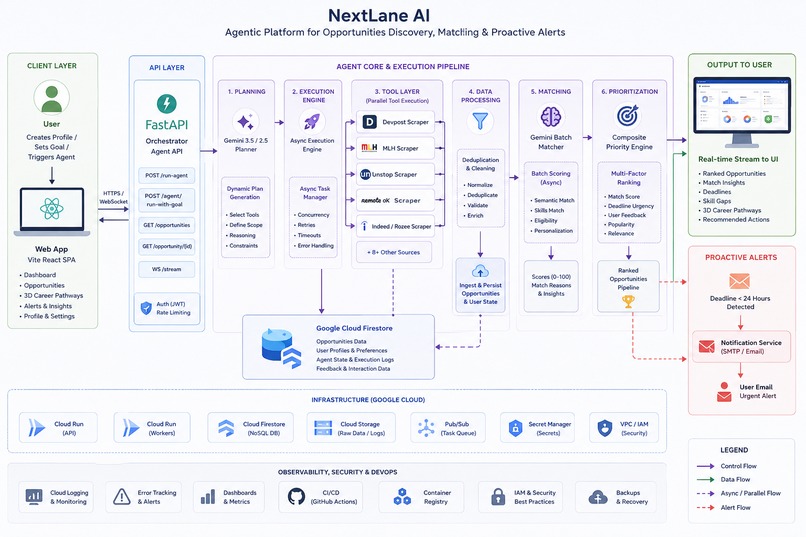
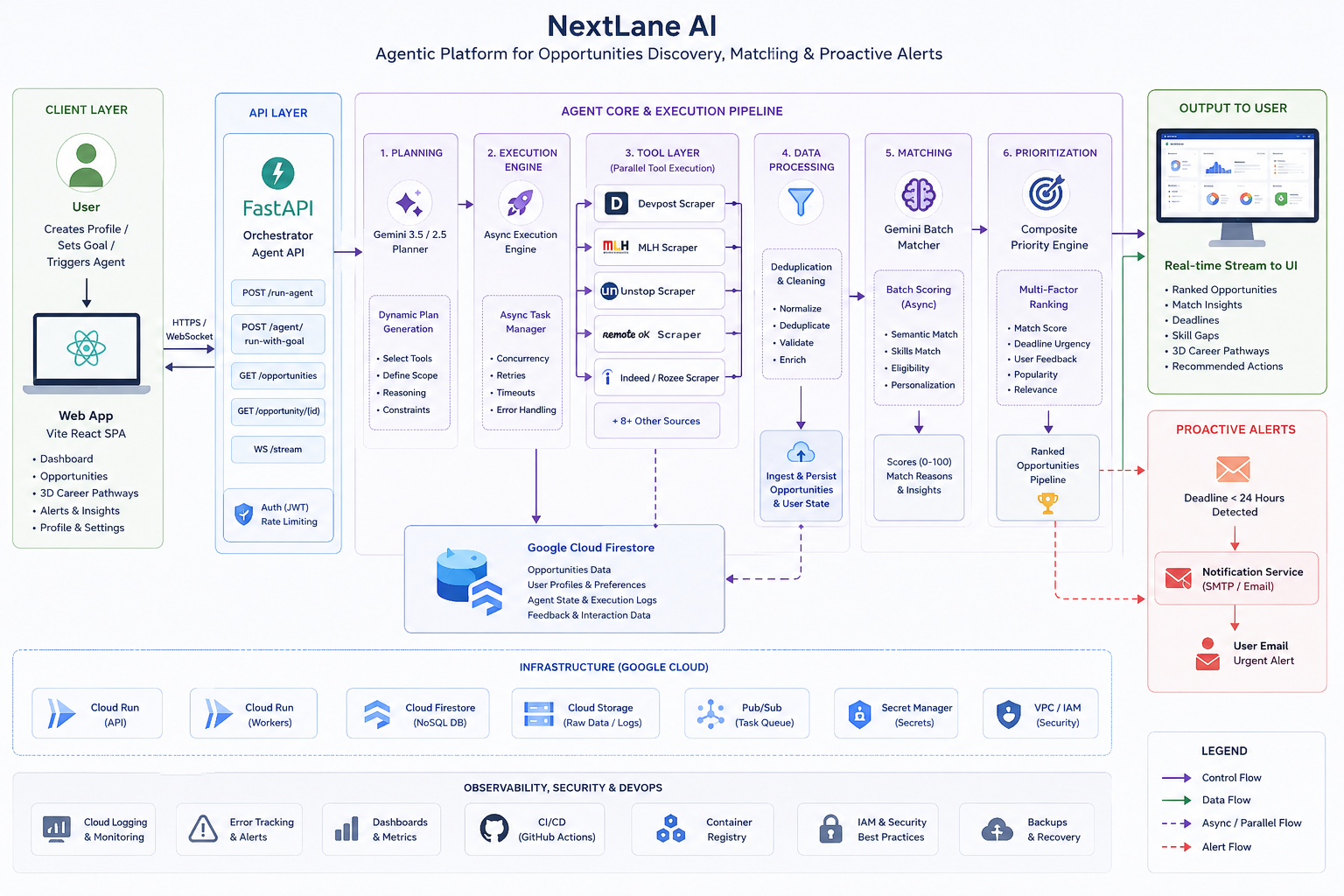
Architecture Diagram
-
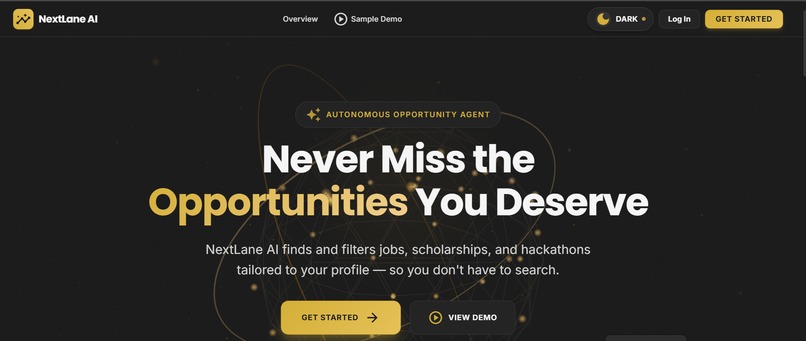
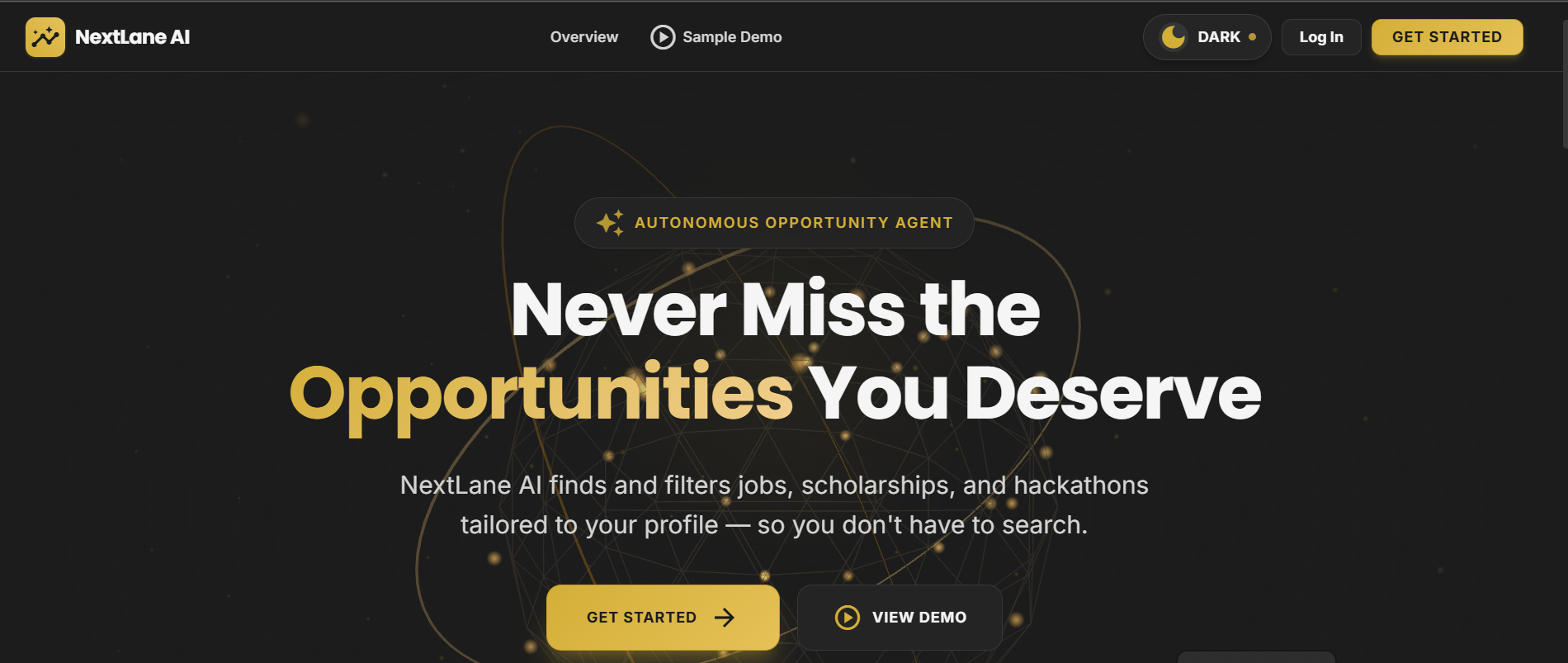
Landing Page
-
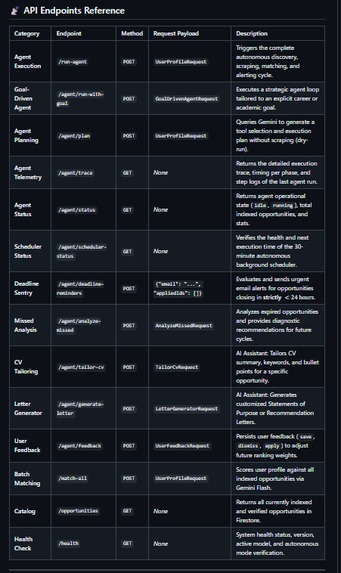
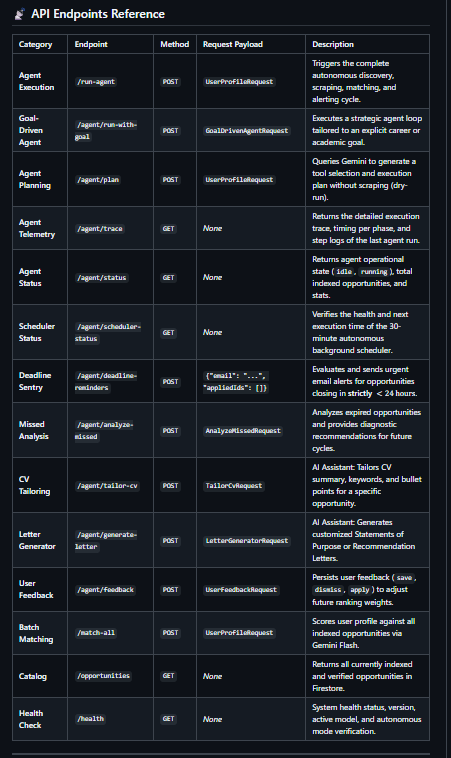
Backend API Endpoints
-
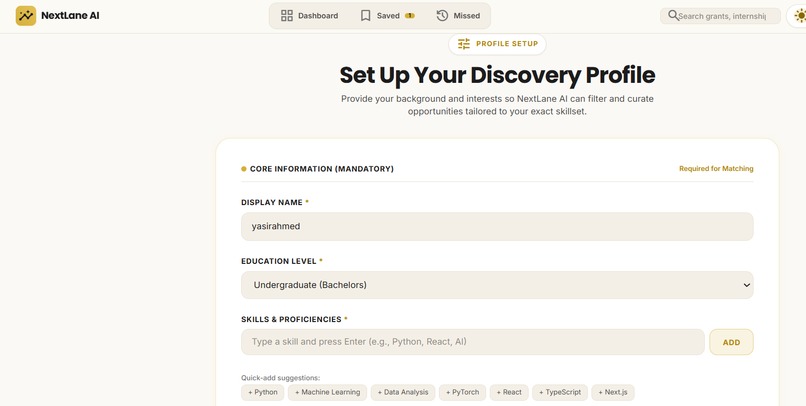
Profile Setup
-
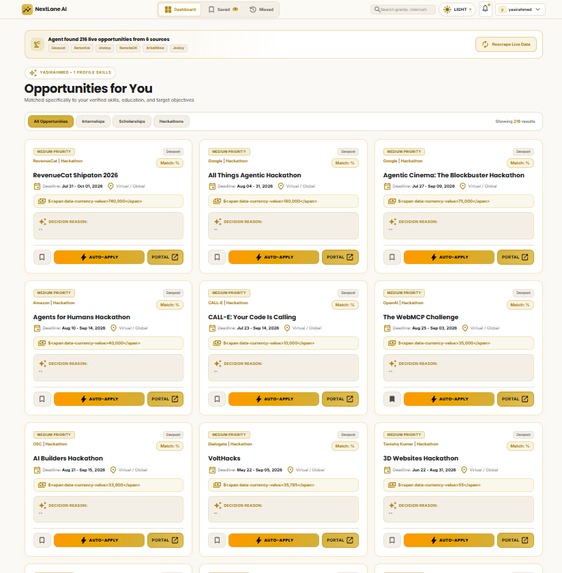
Showing relevant scrapped oppurtunities
-

Agent scrapping pipeline
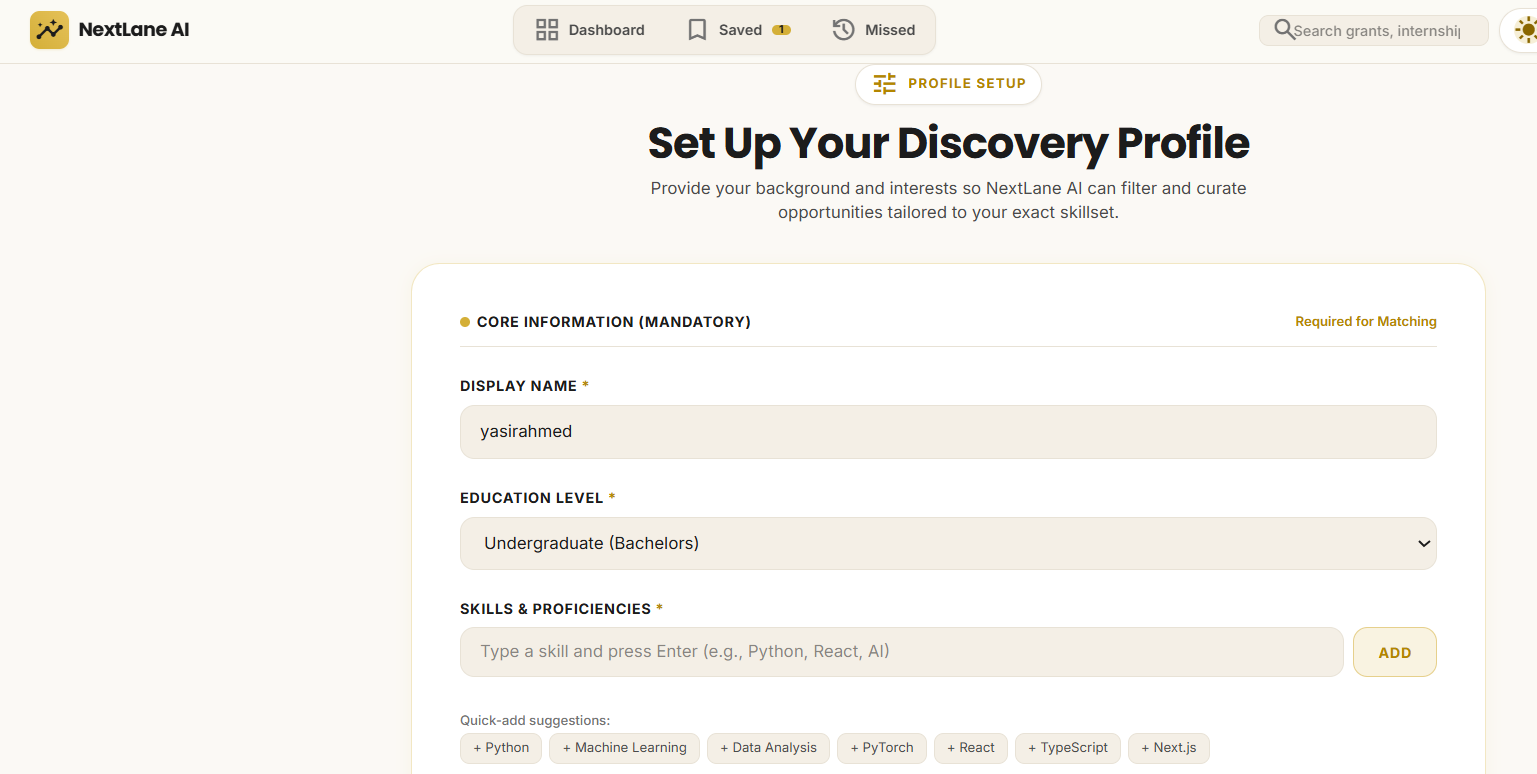
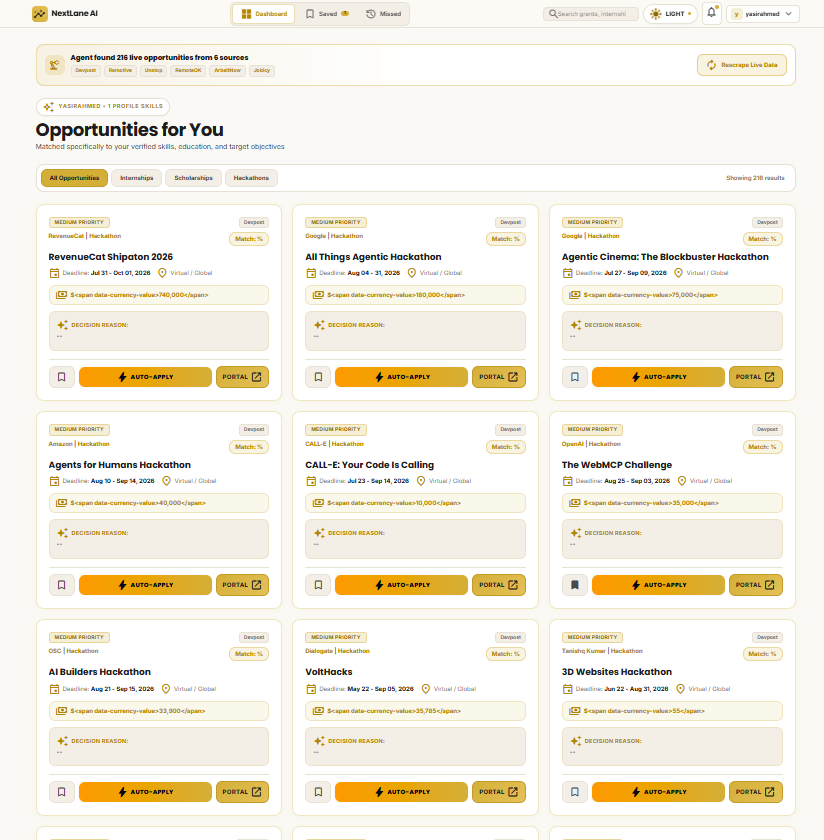

NextLane AI — Autonomous Opportunity Intelligence
Overview
NextLane AI is a system designed to simplify how students and early-career professionals discover relevant opportunities. Internships, hackathons, and scholarships are often distributed across multiple platforms, making it difficult to track them consistently.
This project focuses on building a system that can collect, evaluate, and organize these opportunities in a structured and useful way for each user.
Problem
Opportunity discovery today is largely manual. Users are expected to:
- check multiple platforms regularly
- filter through irrelevant listings
- track deadlines themselves
This process is inefficient and often leads to missed or overlooked opportunities.
Approach
NextLane AI addresses this by automating the workflow from discovery to evaluation.
The system follows a structured pipeline:
- Goal: The user defines what they are looking for
- Plan: The system determines relevant sources and filters
- Execute: Data is collected from multiple platforms
- Evaluate: Opportunities are scored and ranked
- Output: Results are presented with context and priority
Features
Multi-source data collection Aggregates opportunities from platforms such as Devpost and MLH
Goal-based filtering Aligns results with user intent rather than simple keyword matching
Priority ranking Each opportunity is ranked based on relevance, deadline, and requirements
Contextual insights Provides reasons behind recommendations
Deadline awareness Highlights time-sensitive opportunities
Application support Assists users in preparing application materials
System Design
- Frontend: React-based interface
- Backend: FastAPI for request handling and orchestration
- AI Layer: Gemini (via
google-genai) for evaluation and reasoning - Database: Firestore for storing user data and opportunities
- Deployment: Designed for Google Cloud environments
Implementation Notes
- Data from different platforms is normalized into a unified structure
- Matching logic combines rule-based filtering with AI-assisted evaluation
- The system is designed to support asynchronous execution for scalability
Challenges
Data inconsistency Different sources provide incomplete or differently structured data
Relevance filtering Ensuring results are meaningful for different user profiles
Balancing performance and accuracy Managing data collection and evaluation within acceptable response times
Learnings
- A structured pipeline improves clarity and maintainability
- Data quality has a direct impact on system usefulness
- Evaluation logic is more valuable than simply increasing data volume
Use Case
A user looking for AI-related opportunities can define their goal once. The system then collects and ranks relevant options, reducing the need for repeated manual searches.
Conclusion
NextLane AI focuses on improving how opportunities are discovered and evaluated. By structuring the process and reducing manual effort, it aims to make opportunity tracking more consistent and reliable.

Log in or sign up for Devpost to join the conversation.