-
-
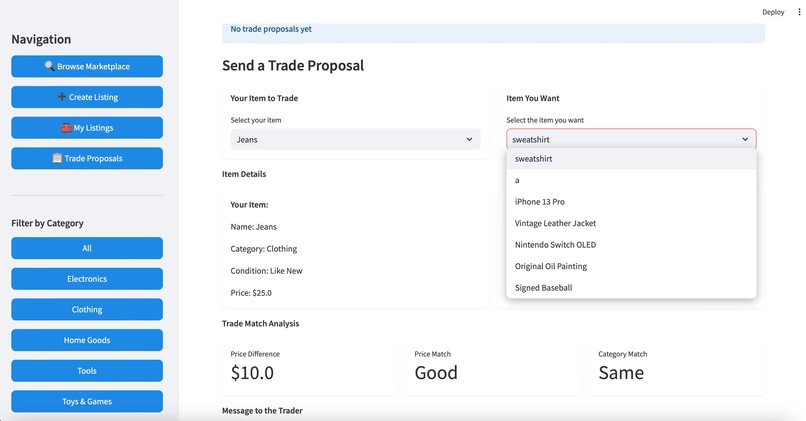
Send a Trade Proposal
-
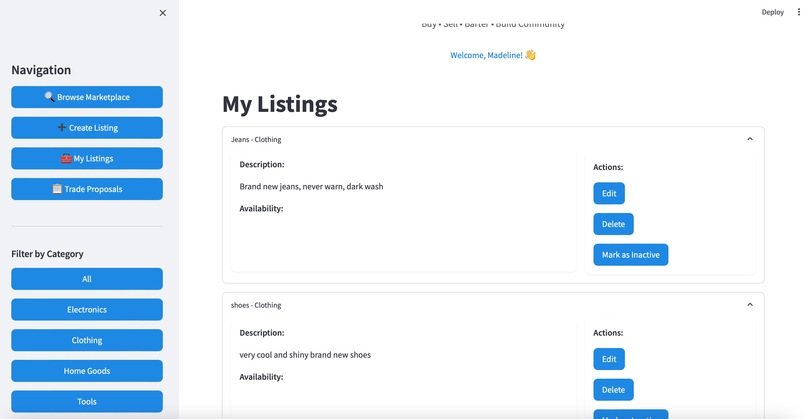
My Listings
-
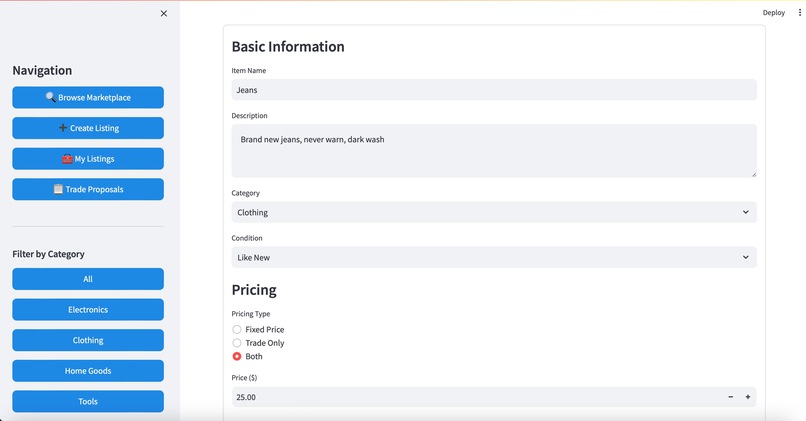
Create Listing
-
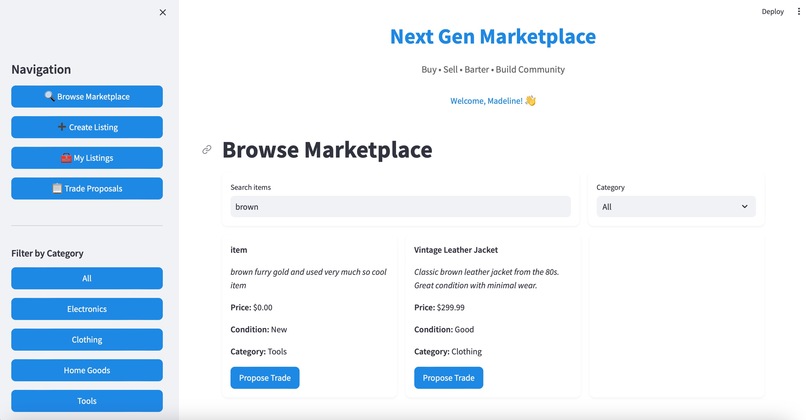
Welcome Page
-
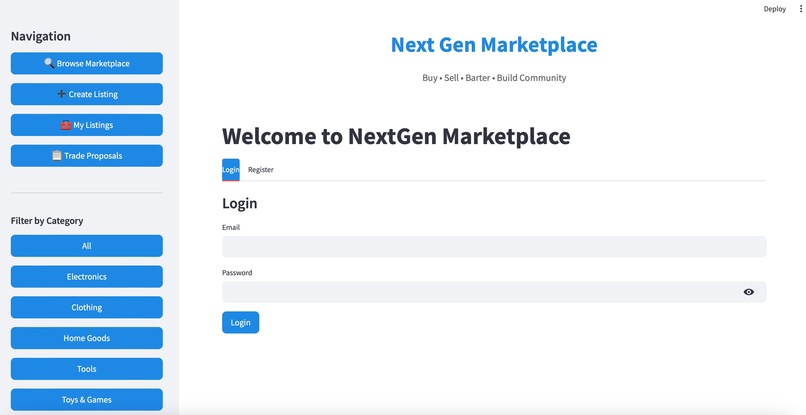
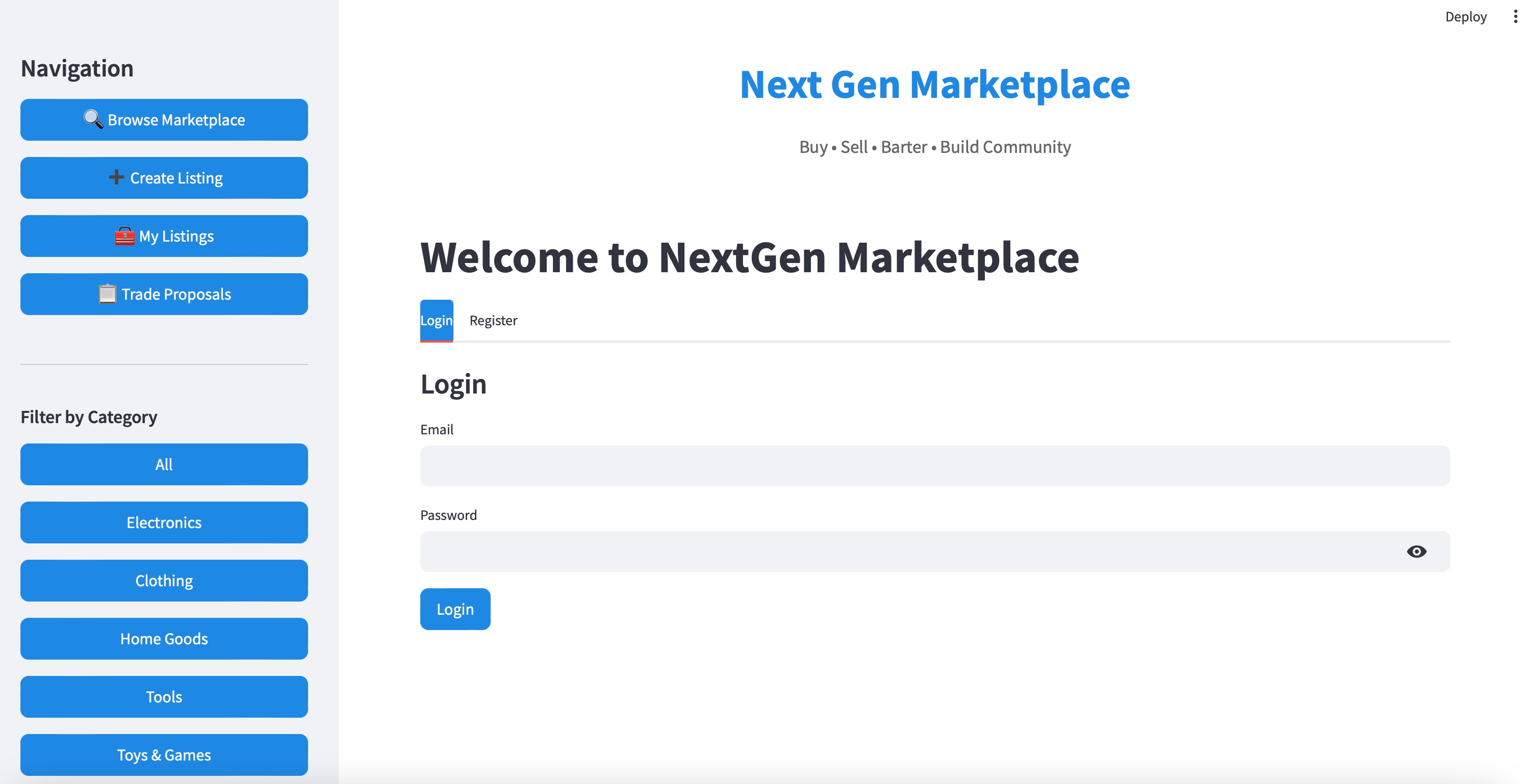
Login/Register


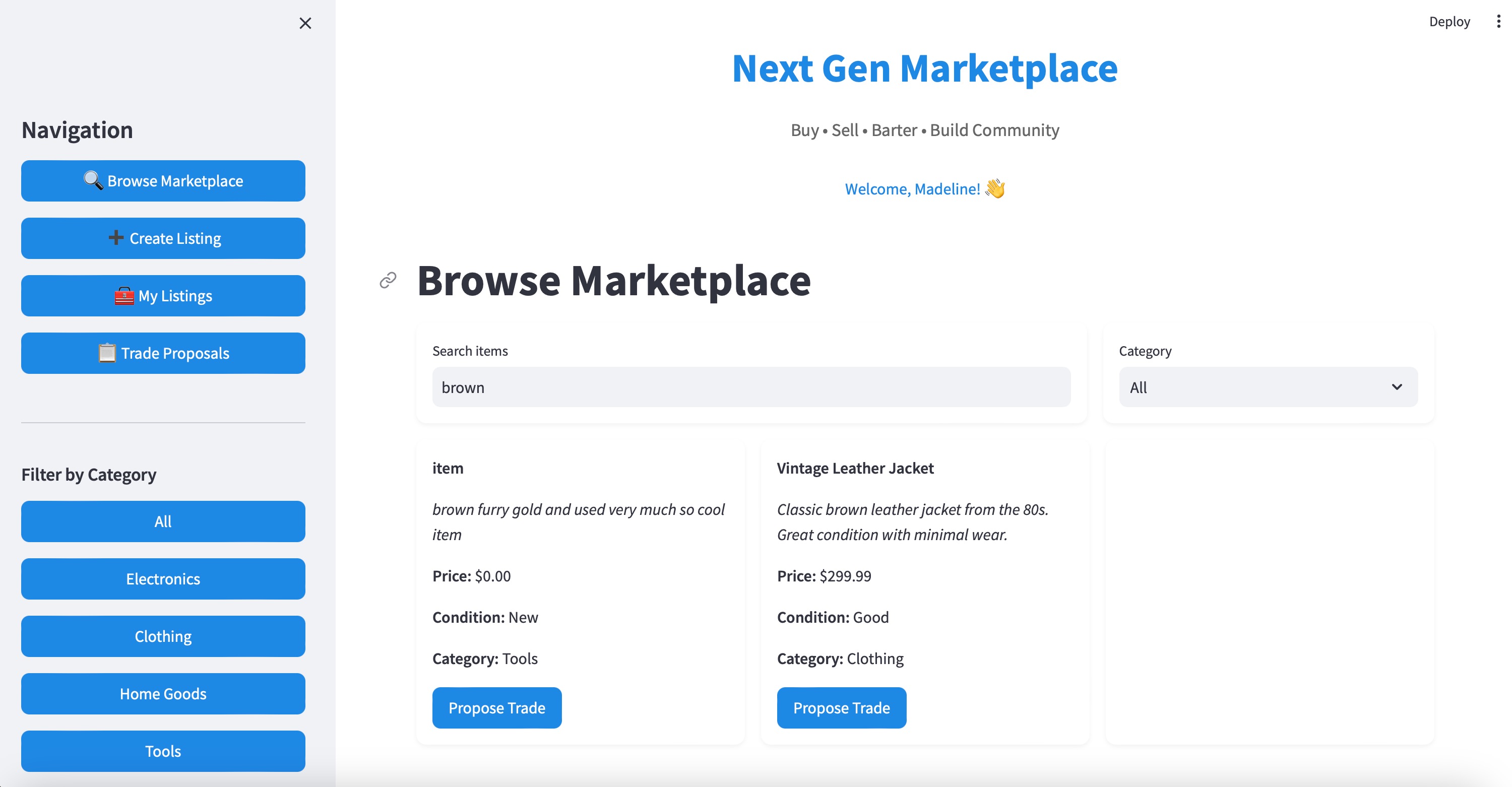
Imagine stepping onto a college campus for the first time, excited but also overwhelmed. You need a haircut, but you have no idea which stylist to trust. You need a textbook for class, but the prices at the bookstore make you hesitateWe felt this struggle firsthand when we got to college. It became clear to us that there was a missing link—a way for students to seamlessly connect with each other to exchange goods and services. That’s where the idea for NextGen Marketplace was born. We wanted to create a platform where students could trade with confidence, knowing they were getting fair value for their items and services.
We ran into challenges securing the backend and connecting it to the front end, ensuring data referenced each time was consistent, reliable, and accurate. A knowledge curve was being able to match and reference API keys, embedding them seamlessly to help ease the typical shopping burden of users.
We built this app through Streamlit using pandas, scikit, and numpy and use the Gemini API backend in firebase.
We learned how to integrate the Gemini API into a working web app that is scalable and efficient in picking up related technology and resources based on the users search. Also the use of connecting backend data that can be scaled in large amounts. Lastly, using the API to do the trading system, ensuring real world applications.
We are proud of creating a working interface that helps users similar to our background have help in university, far away.
What is next for NextGen MarketPlace. Scalability would be nice, but also implementing Stripe API in order for secure on page payment. Also education verification with email for students to securely shop with each other.

Log in or sign up for Devpost to join the conversation.