-
-
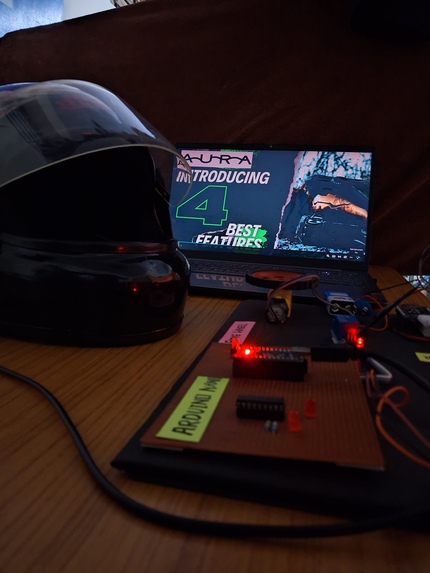
Aura Smart Helmet
-
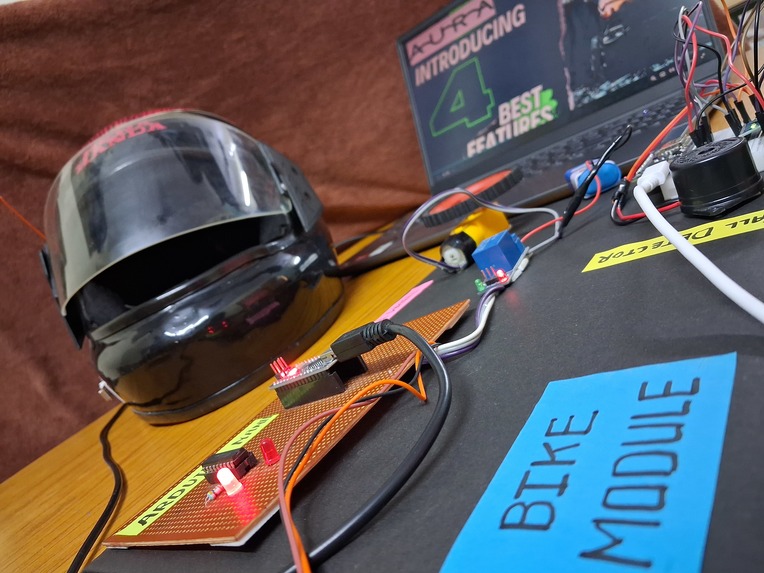
Aura Smart Helmet
-
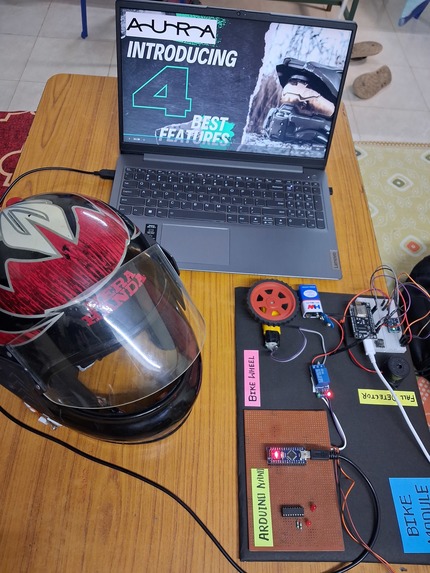
Aura Smart Helmet Setup
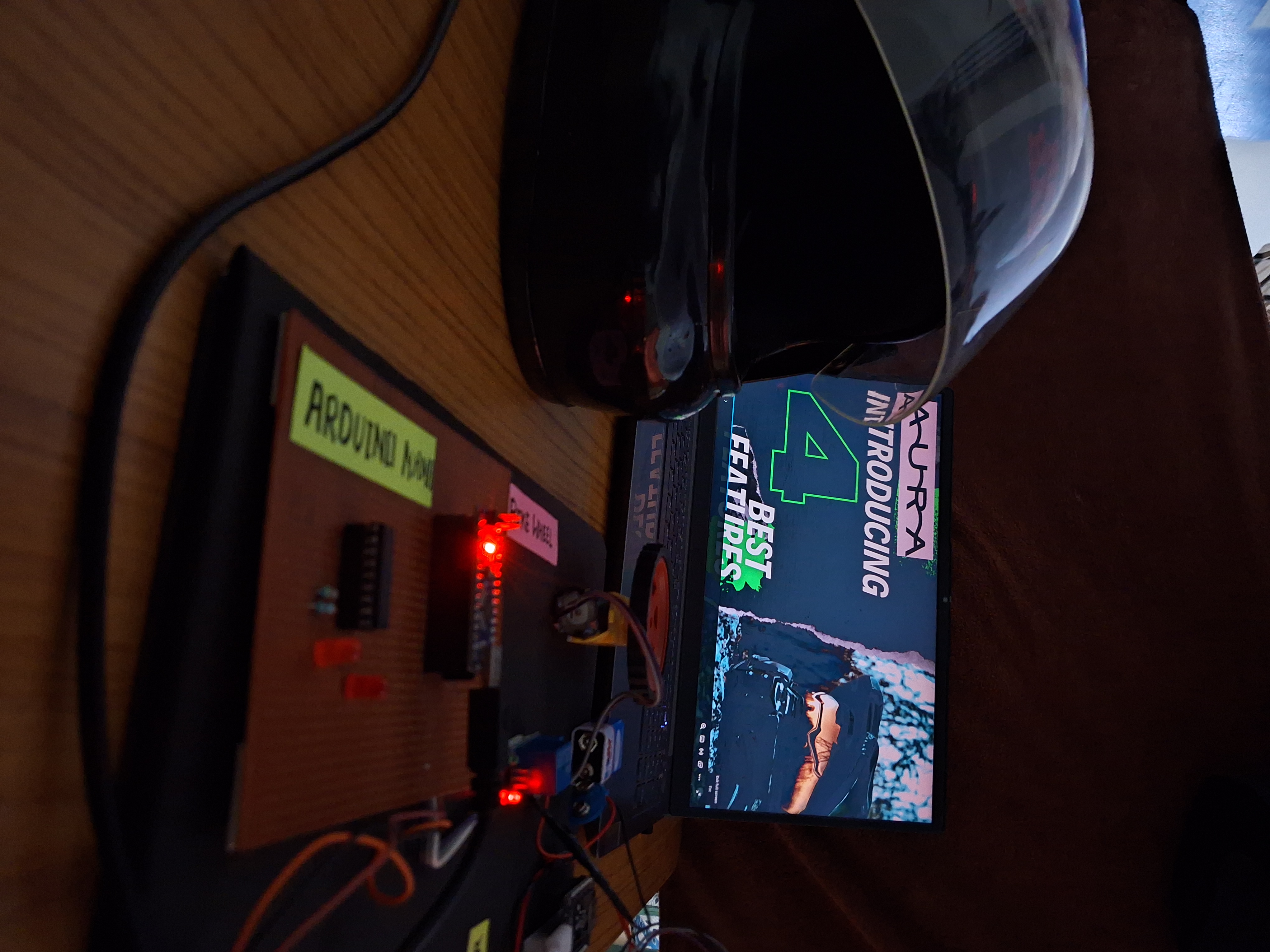
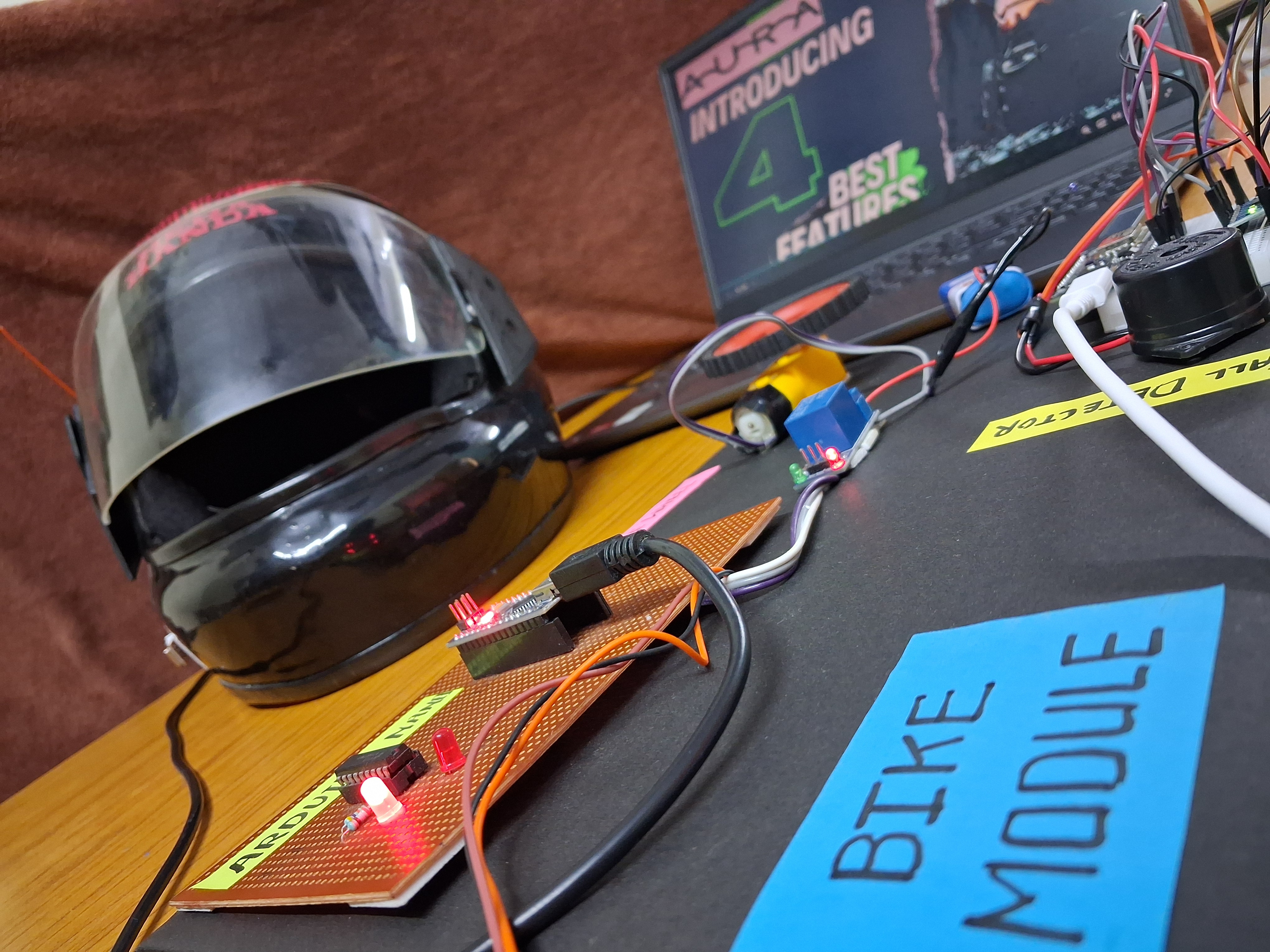
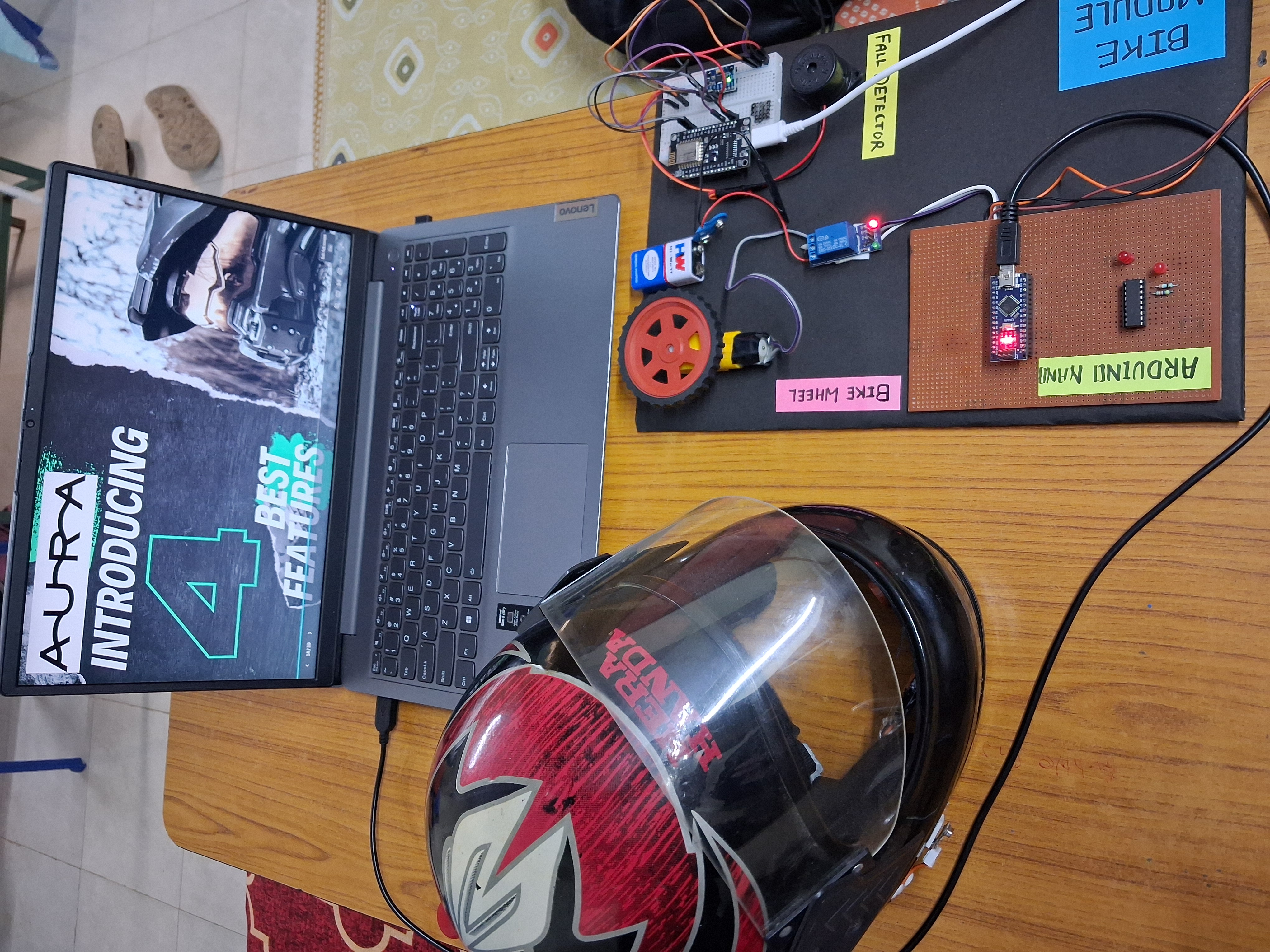
About the Project: Next Gen Smart Helmet
Inspiration 🚴♂️
The inspiration behind our Next Gen Smart Helmet stemmed from a simple question: "How can we make helmet safety smarter?" We noticed a gap in the market for helmets that go beyond just physical protection, offering real-time alerts, monitoring, and connectivity to prevent accidents and save lives. This idea resonated with our team as we thought about how urban traffic safety could be enhanced through technology. Thus, the concept of a smart helmet was born—one that integrates seamlessly with a smart city's safety infrastructure.
Caption: Understanding urban road safety and thinking about the impact of smart technology.
What We Built ⚙️
The Next Gen Smart Helmet is packed with advanced features aimed at proactive safety:
- Smart Lock System: Prevents the bike from starting without the rider wearing a helmet, ensuring compliance with safety protocols.
- Alcohol Detection: Equipped with an MQ3 alcohol sensor, it can detect if the rider is under the influence and disable the bike if necessary.
- Accident Detection & Emergency Messaging: Using an MPU-6050 accelerometer and gyroscope, our helmet detects falls and sends real-time emergency messages.
- Wireless Connectivity: With an ESP8266 module, the helmet can connect to smart city networks to share accident or location information instantly.
Each feature is designed to make riding safer, not just for the rider but for everyone on the road.
Caption: Prototype showing the integrated sensors, wireless module, and accident detection system.
How We Built It 🔧
We combined hardware and software to create a functioning prototype. Here’s a breakdown of our approach:
Hardware Setup: The helmet is equipped with the following components:
- MQ3 Alcohol Sensor: Measures alcohol levels to prevent unsafe driving.
- MPU-6050 Accelerometer and Gyroscope: Detects movement patterns and possible falls.
- Arduino Nano: The brain of our helmet that processes sensor inputs and activates safety protocols.
- ESP8266 Wi-Fi Module: Enables communication with a smartphone or emergency services.
- Battery Operated Motor & 5V Relay: Powers the lock system, preventing ignition when the helmet isn’t worn.
Software Development: We coded the Arduino Nano to analyze sensor readings, trigger actions, and send emergency messages in real-time. The ESP8266 module was programmed for seamless connectivity to external devices and networks.
Testing & Iteration: Each feature went through a rigorous testing process, especially the accident detection sensitivity, to ensure high accuracy.
What We Learned 📚
Our journey with this project was packed with valuable lessons, from soldering circuits to programming real-time data analysis:
- Technical Challenges: We learned to troubleshoot sensor calibration, which is vital for accurate alcohol and accident detection. Programming the ESP8266 for stable connectivity was also a rewarding challenge.
- Project Management: Working within the constraints of time and resources, we learned to prioritize features and make efficient use of available hardware.
- User-Centric Design: Designing a product intended for real-world use taught us to think critically about user experience and the importance of simplicity in interface design for safety devices.
This project enhanced our understanding of IoT integration, hardware-software synchronization, and even user testing.
Challenges We Faced 💡
We encountered several challenges that pushed us to innovate and think creatively:
- Sensor Calibration: Ensuring that the alcohol sensor (MQ3) only activates under genuine risk was a priority to avoid false positives, which required multiple adjustments.
- Accident Detection Precision: Tuning the MPU-6050 for accurate fall detection without triggering false alarms due to minor jerks or bumps was crucial.
- Power Management: Balancing power between the helmet's components, especially with limited battery capacity, was an ongoing challenge.
Overcoming these hurdles was a rewarding experience, reinforcing our understanding of practical engineering challenges in real-world scenarios.
Impact and Future Potential 🚀
The Next Gen Smart Helmet has the potential to revolutionize road safety, particularly in crowded urban areas:
- By integrating with smart city infrastructure, it can enable faster accident response times.
- With the alcohol detection feature, it contributes to responsible driving culture.
- It represents a scalable solution for any city aiming to improve road safety through technology.
With further development, we aim to incorporate GPS tracking for enhanced emergency response and battery optimization for longer operation time. The Next Gen Smart Helmet is more than just a helmet—it’s a step towards a safer, smarter future for urban transportation.
Why This Project Stands Out 🏆
This project doesn’t just add features to a helmet; it’s a transformative approach to urban rider safety. By seamlessly integrating IoT capabilities, real-time data, and proactive safety measures, the Next Gen Smart Helmet redefines helmet use for the modern world.
Thank you for considering our project! We believe this helmet is an essential step towards a safer, smarter urban ecosystem.


Log in or sign up for Devpost to join the conversation.