-
-
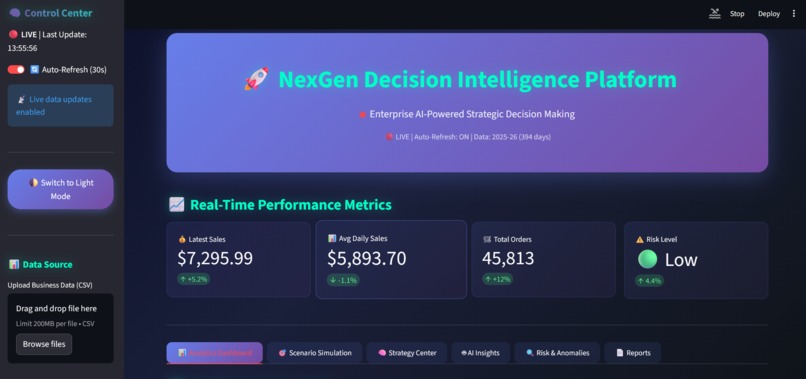
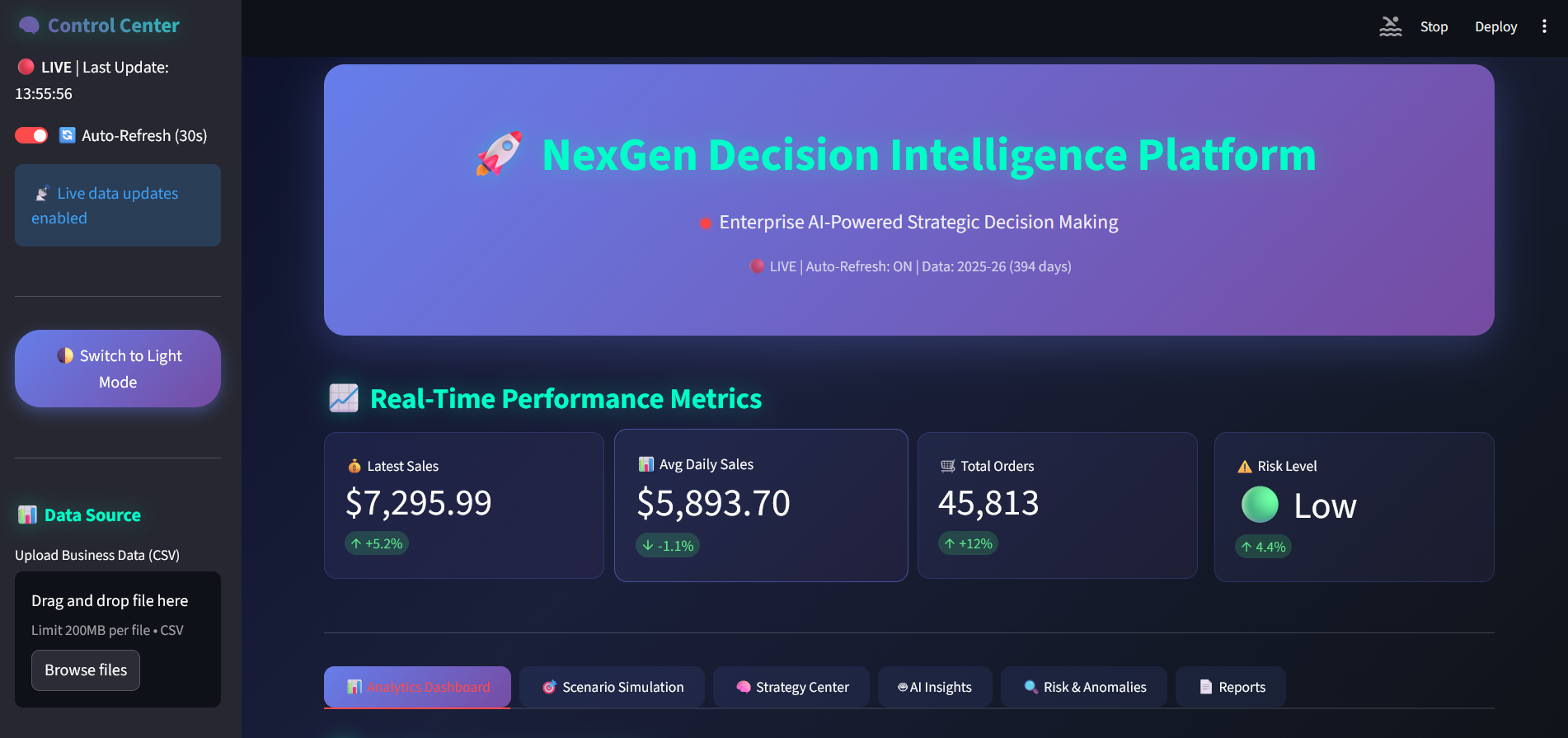
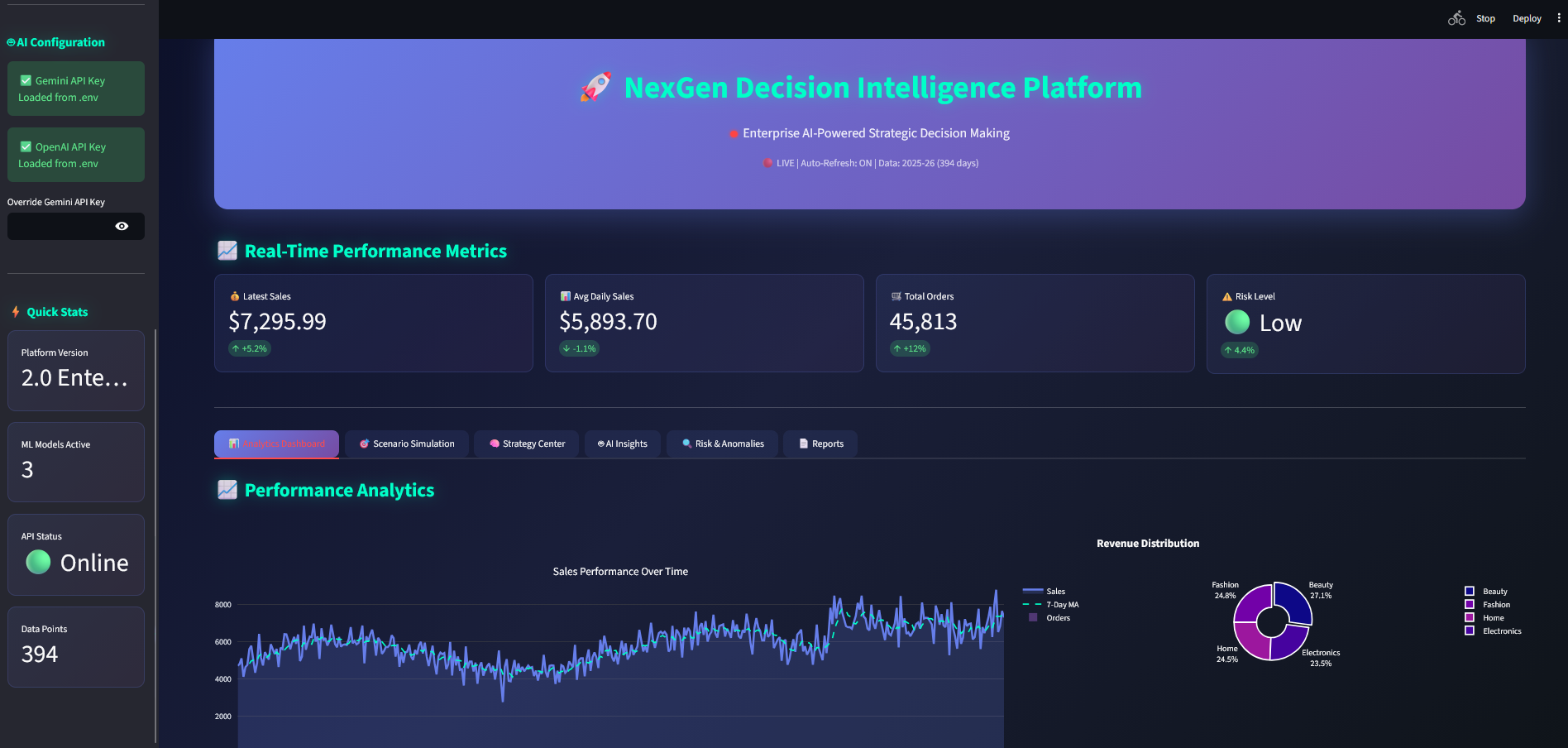
Control Center – Real-Time Decision Intelligence Overview
-
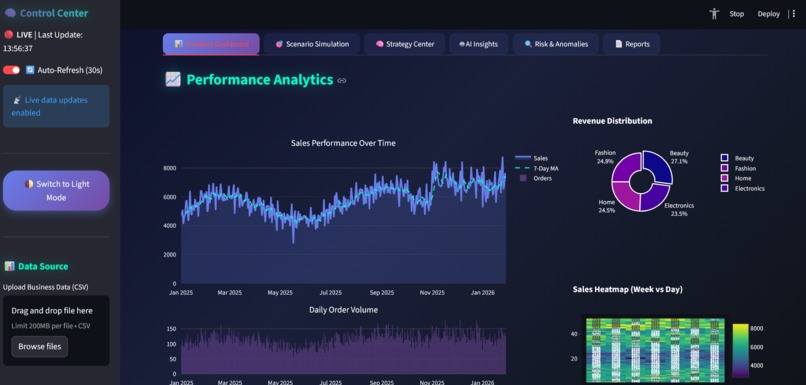
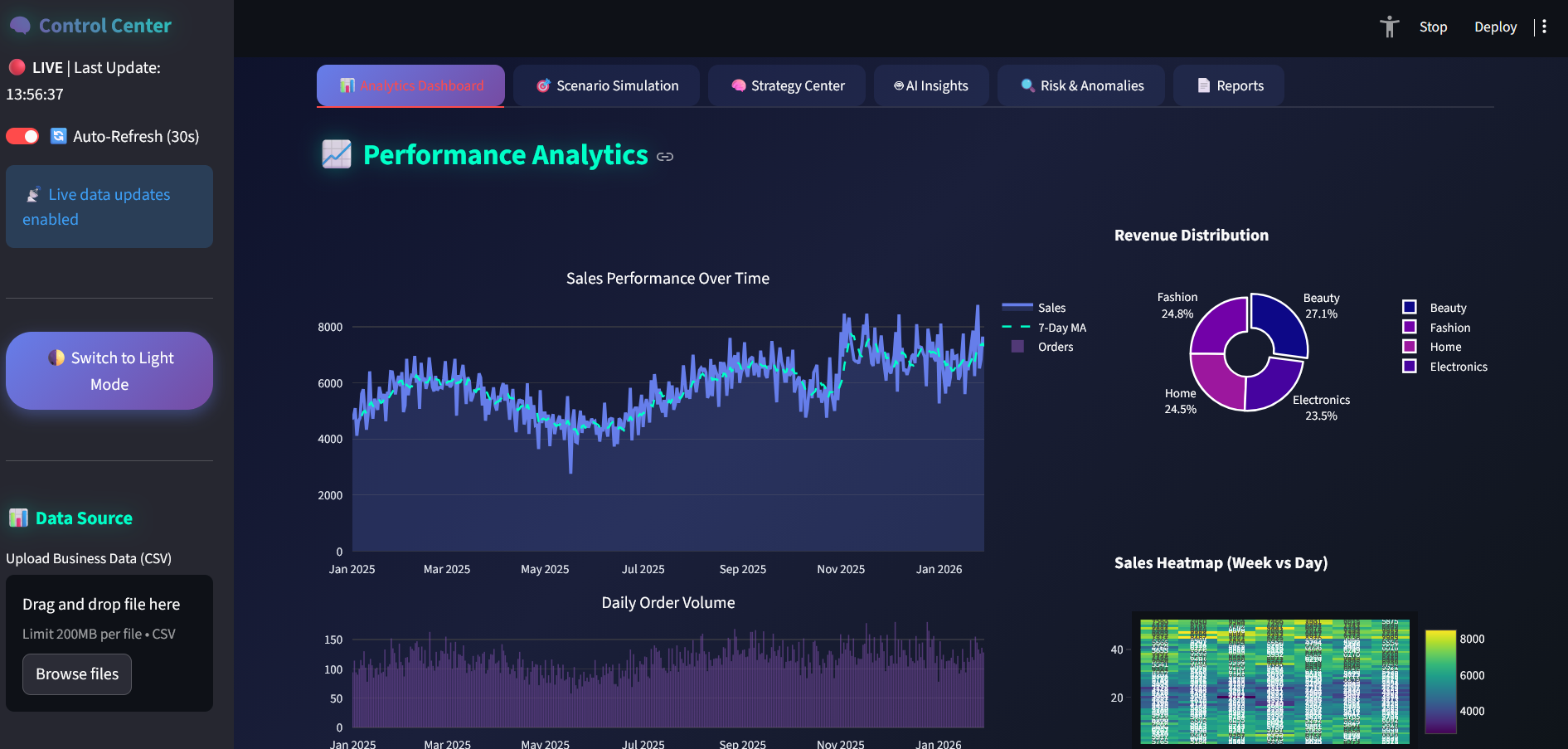
Performance Analytics Dashboard
-
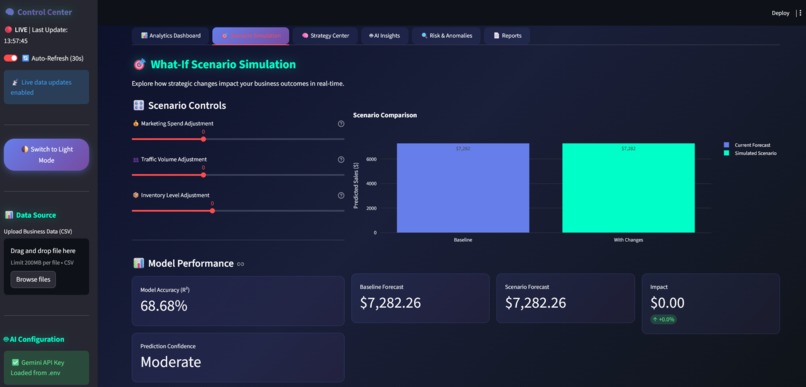
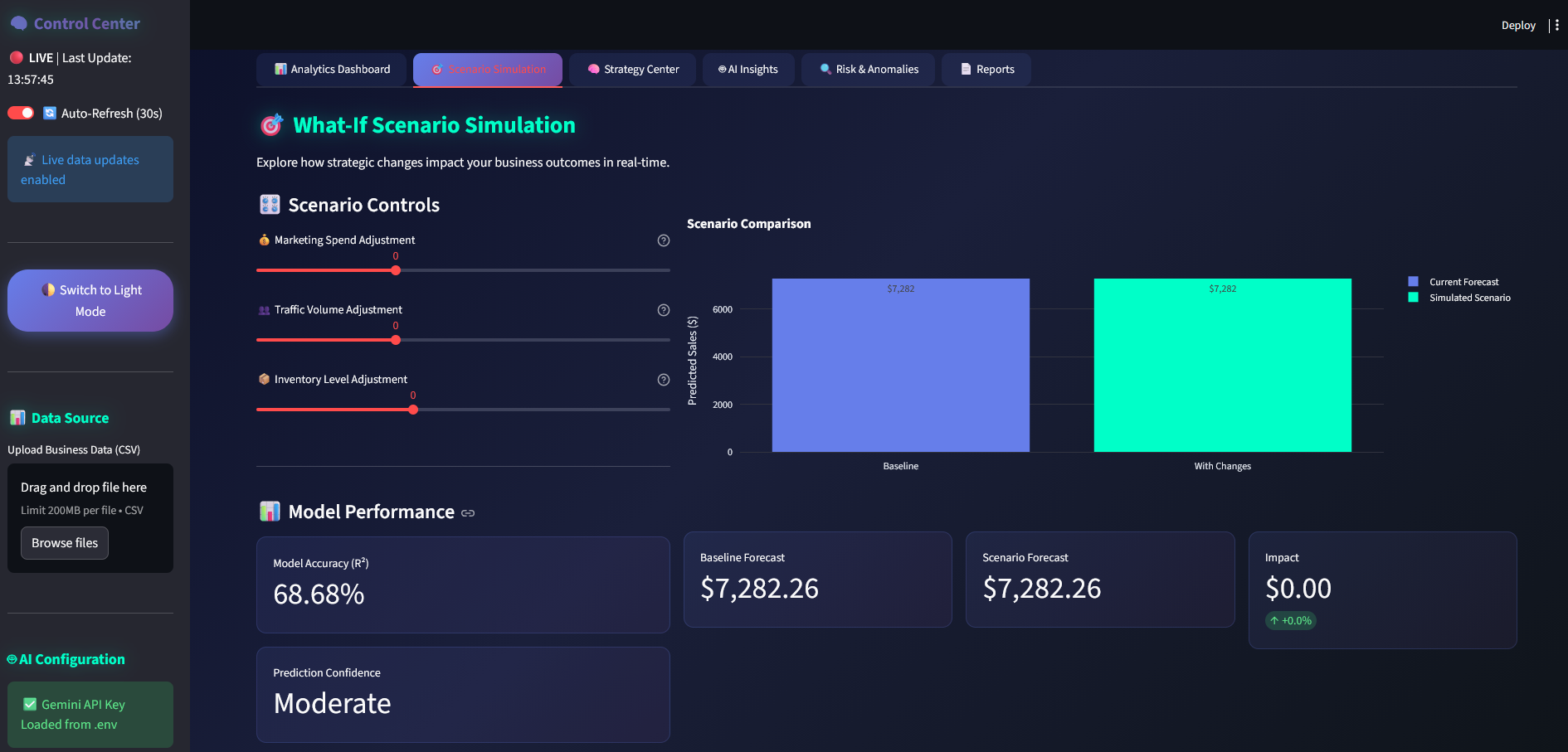
What-If Scenario Simulation Module
-
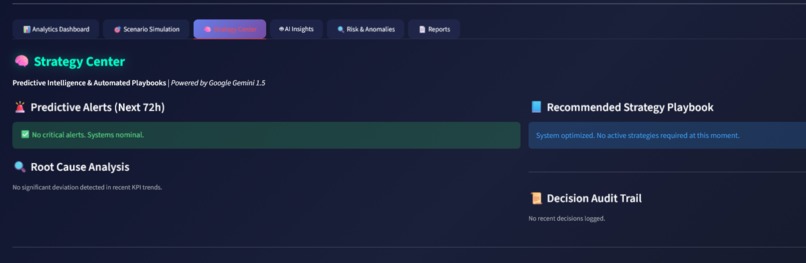
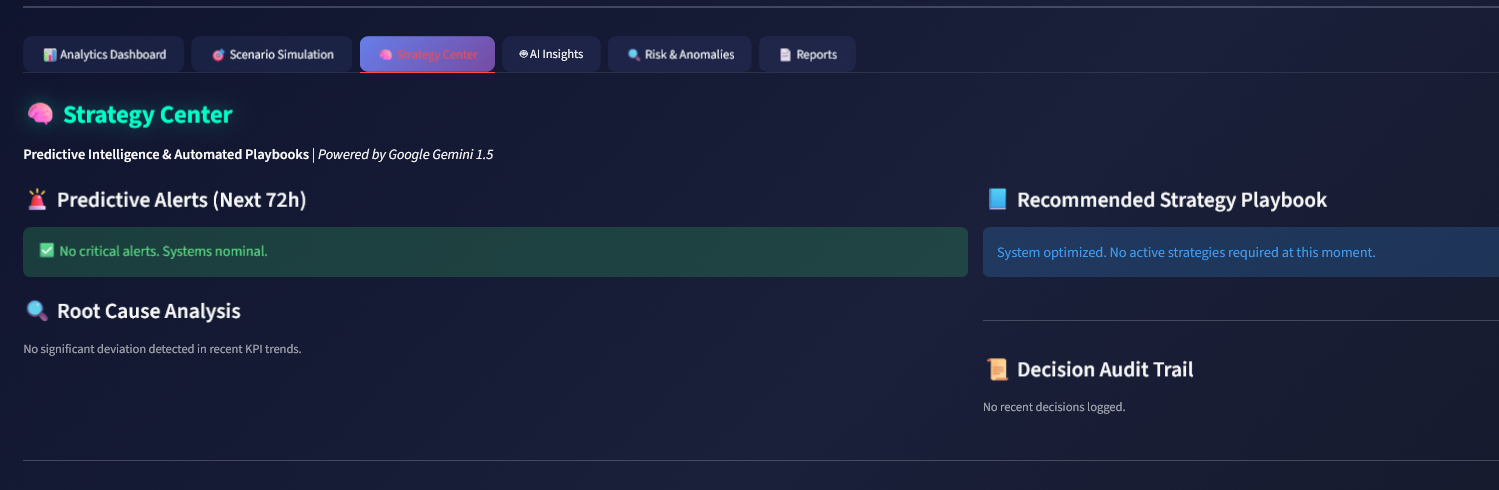
Strategy Center – Predictive Intelligence & Playbooks
-
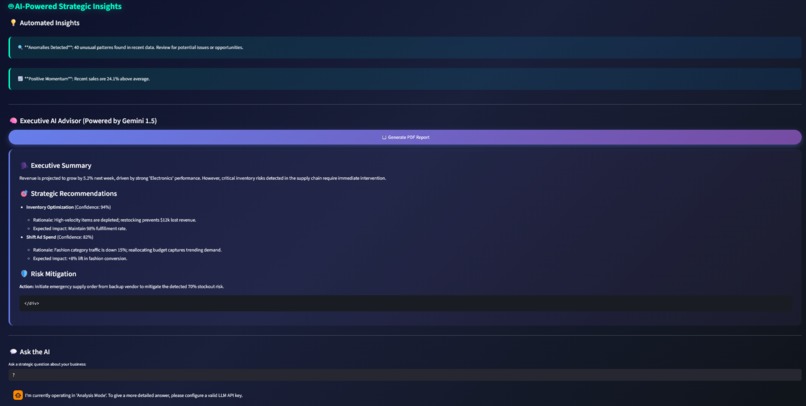
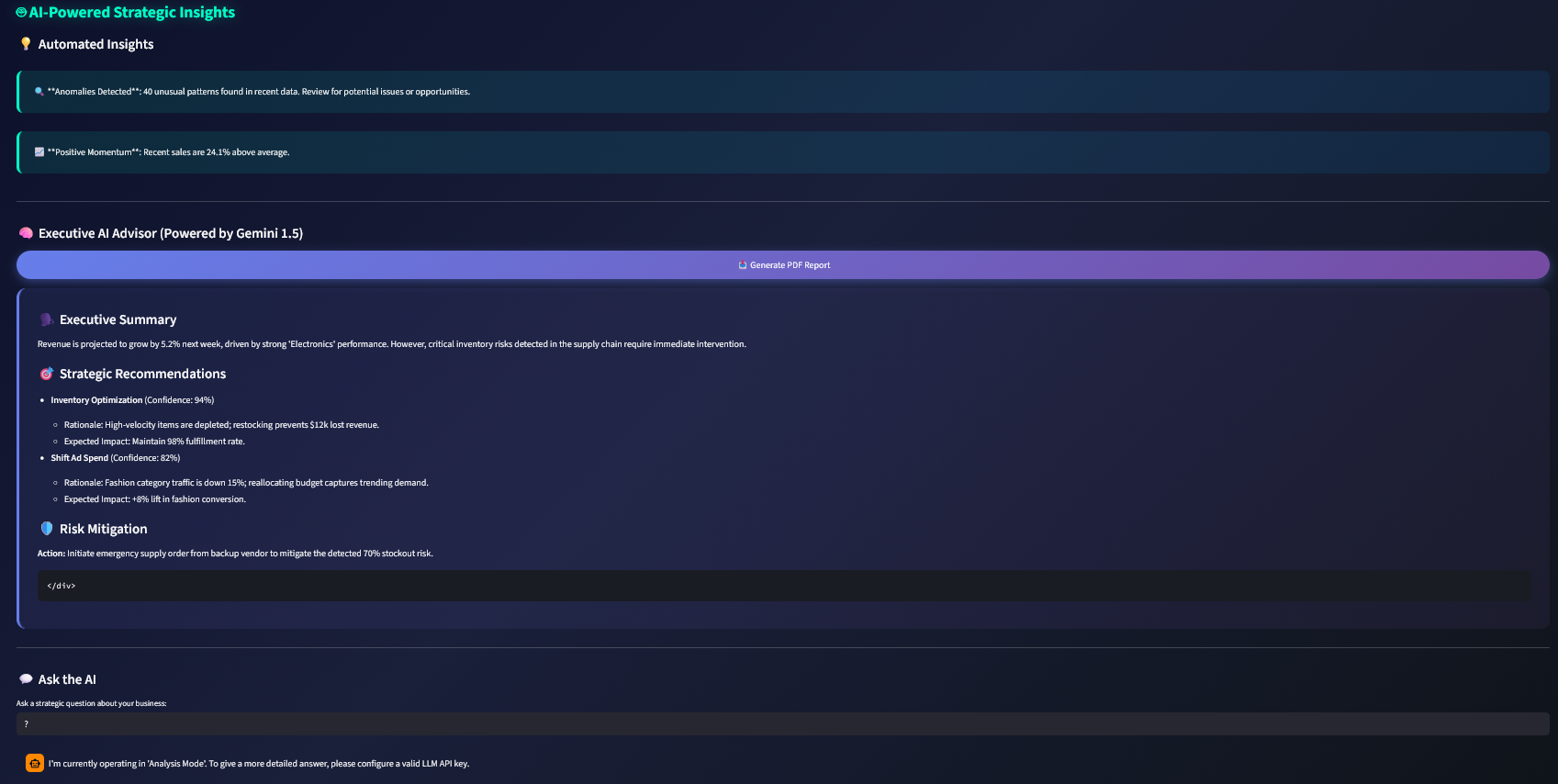
AI-Powered Strategic Insights & Executive Advisor
-
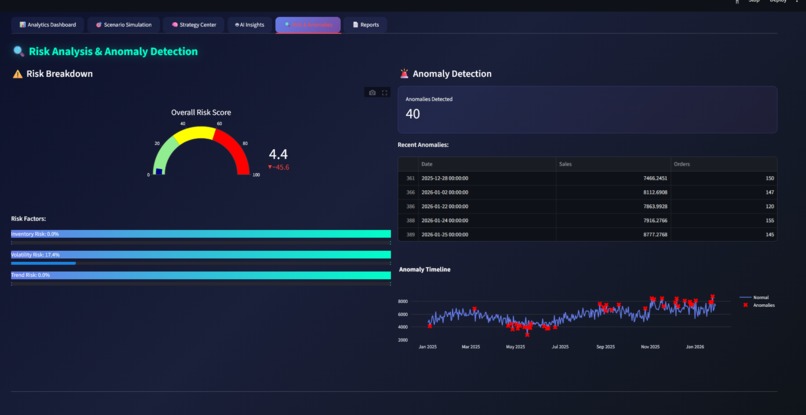
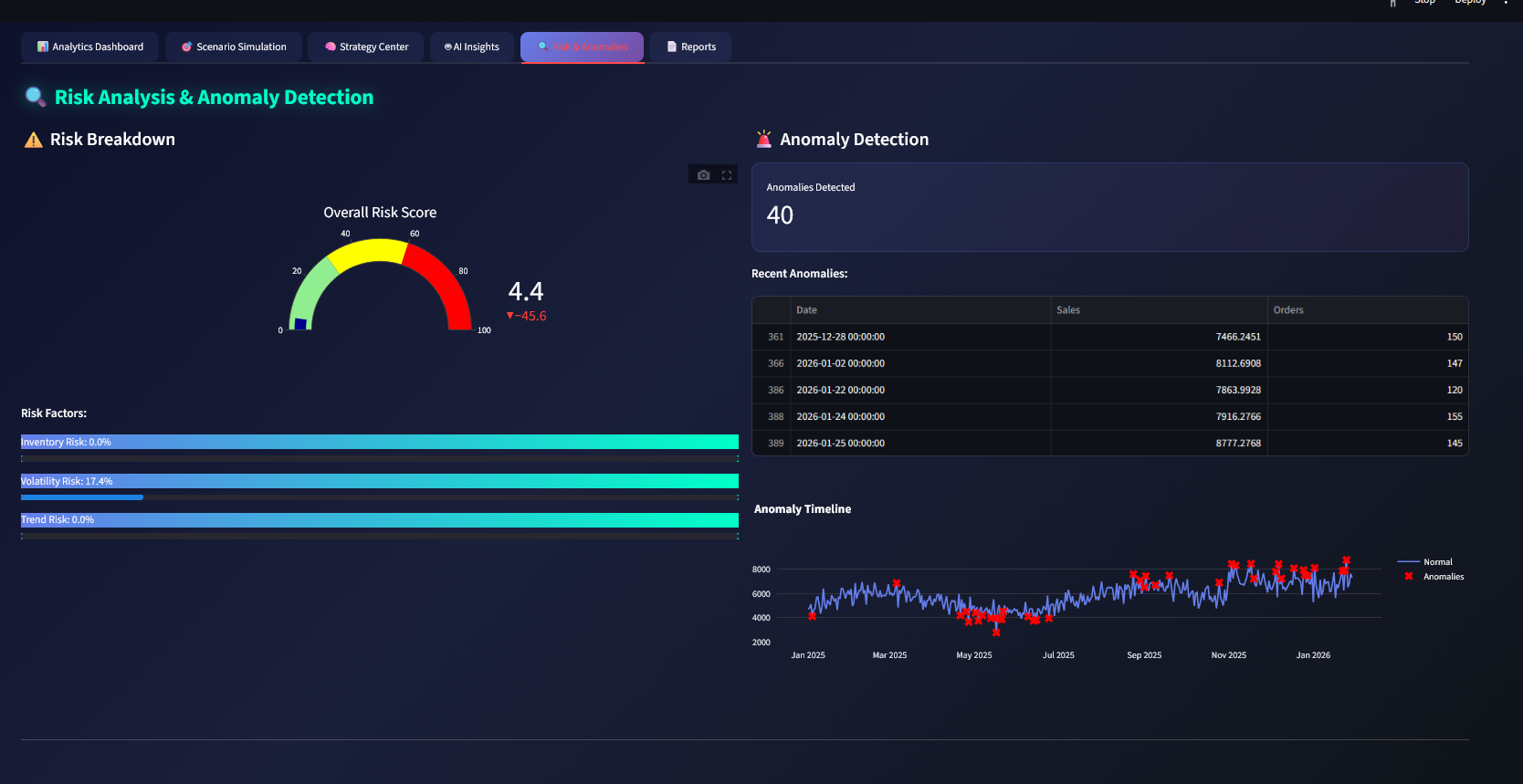
Risk Analysis & Anomaly Detection Dashboard
-
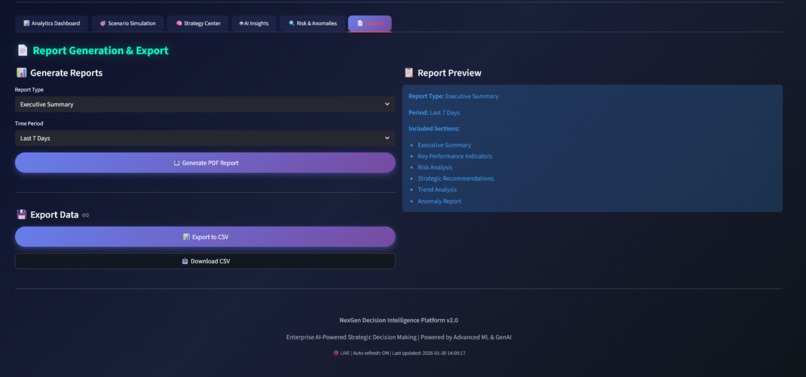
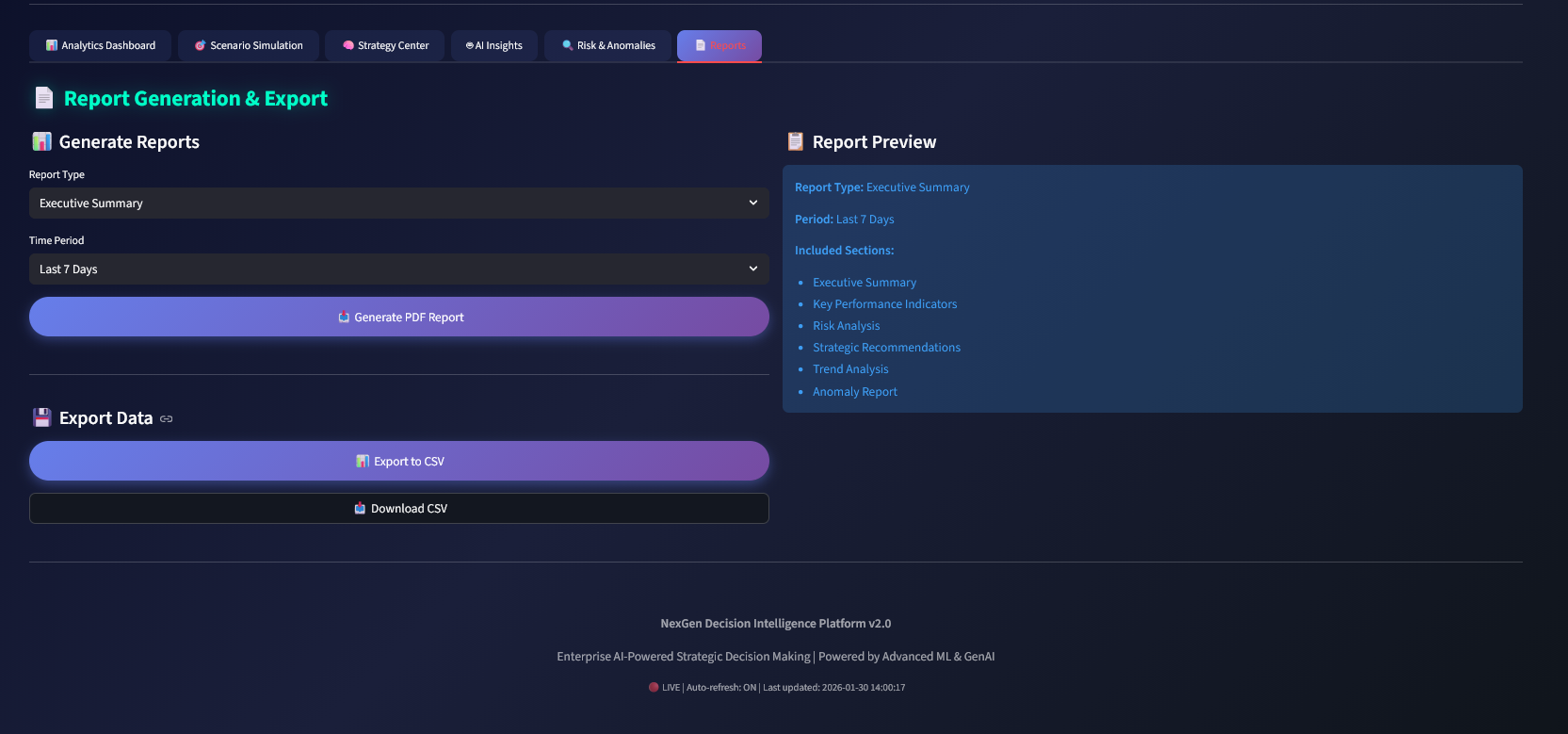
Automated Report Generation & Export Module
-
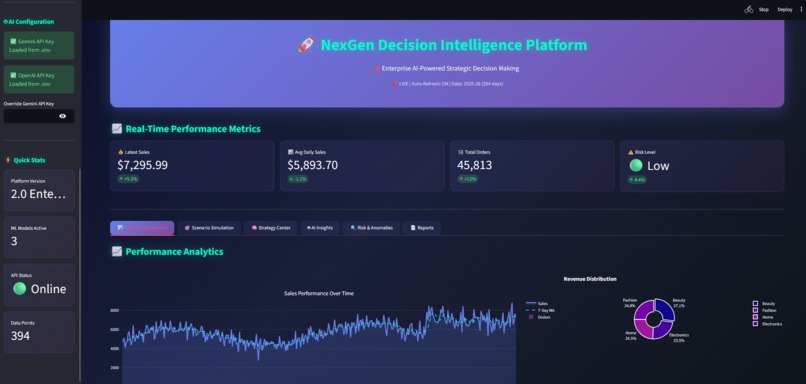
Each page is mapped to a decision-making stage — from monitoring and analysis to simulation, strategy, risk, and executive reporting.”
AI-Powered Decision Intelligence Platform — Project Story
Inspiration
The inspiration for this project came from observing a common gap in most data analytics solutions: they focus heavily on what happened but rarely address why it happened or what should be done next. During my learning journey in data analytics and machine learning, I noticed that dashboards and visualizations often stop at trends and KPIs, leaving decision-makers to interpret insights on their own. This motivated me to build a system that goes beyond reporting and actively supports business decision-making. I wanted to simulate how real-world organizations use data, analytics, and AI together to drive strategic actions rather than static insights.
What I Learned
Through this project, I gained a deep understanding of how data, analytics, and AI intersect to create real business value. I learned how feature engineering plays a crucial role in making raw data decision-ready, such as calculating metrics like monthly sales, profit margins, customer purchase frequency, and average order value. I also learned how Large Language Models (LLMs) can be used not just for text generation, but as reasoning engines that translate analytical results into human-readable explanations and recommendations. Conceptually, this project strengthened my understanding of Decision Intelligence as a discipline that combines descriptive analytics, diagnostic reasoning, and prescriptive guidance. Mathematically, I also reinforced key metrics such as profit margin, defined as
[
\text{Profit Margin} = \frac{\text{Profit}}{\text{Sales}} \times 100
]
which became central to evaluating business performance.
How I Built the Project
I built the project in a structured, layered manner. First, I selected a real-world retail dataset (Superstore Sales and Customer Data) and performed data cleaning, handling missing values and converting date fields into proper time formats. Next, I carried out feature engineering to derive business-relevant metrics such as monthly sales trends, discount impact, customer segmentation, and repeat purchase behavior. Once the analytical layer was ready, I integrated an AI model using an API to interpret these analytics. Carefully designed prompts allowed the AI to analyze patterns, explain root causes, and generate actionable recommendations in natural language. Finally, I structured the output in a way that mimics a decision-support system, where insights are directly connected to suggested actions, making the project suitable for real business and interview scenarios.
Challenges Faced
One of the main challenges was bridging the gap between analytics and decision-making. While calculating metrics and trends was straightforward, converting them into meaningful, accurate recommendations required careful prompt design and validation. Another challenge was ensuring that AI-generated insights remained grounded in data rather than sounding generic. I addressed this by explicitly feeding computed metrics and constraints into the AI prompts. Handling noisy data and ensuring consistency across time-based features also required attention. Overall, these challenges taught me how critical it is to combine technical accuracy with business reasoning when building AI-driven systems.
Conclusion
This project represents my transition from traditional data analysis to AI-powered decision intelligence. It demonstrates not only my technical skills in data processing and AI integration, but also my ability to think from a business and decision-making perspective. By focusing on why outcomes occur and what actions should follow, this project reflects a real-world, impact-driven approach to analytics and artificial intelligence.
Built With
- and
- and-streamlit-for-analytics-and-ui
- aws.
- cloud
- csv/sql
- data
- deployable
- gcp
- integrated-with-llm-apis-(openai/gemini)-for-ai-driven-insights
- like
- numpy
- on
- or
- platforms
- python-based-platform-using-pandas
- sources
- using


Log in or sign up for Devpost to join the conversation.