Inspiration - Every time we tried using a new tool — whether it was a CRM, Shopify, or even a simple dashboard — we noticed the same pattern:
We didn’t struggle because the product was bad. We struggled because we didn’t know what to do next.
That led to constant context-switching: watching tutorials, switching tabs, missing steps, and repeating the process.
We realized this wasn’t just a small inconvenience — it’s a universal problem. Software keeps getting more powerful, but the learning curve keeps getting steeper.
So we asked a simple question: What if software could guide you while you’re using it, instead of forcing you to learn it beforehand?
What We Built
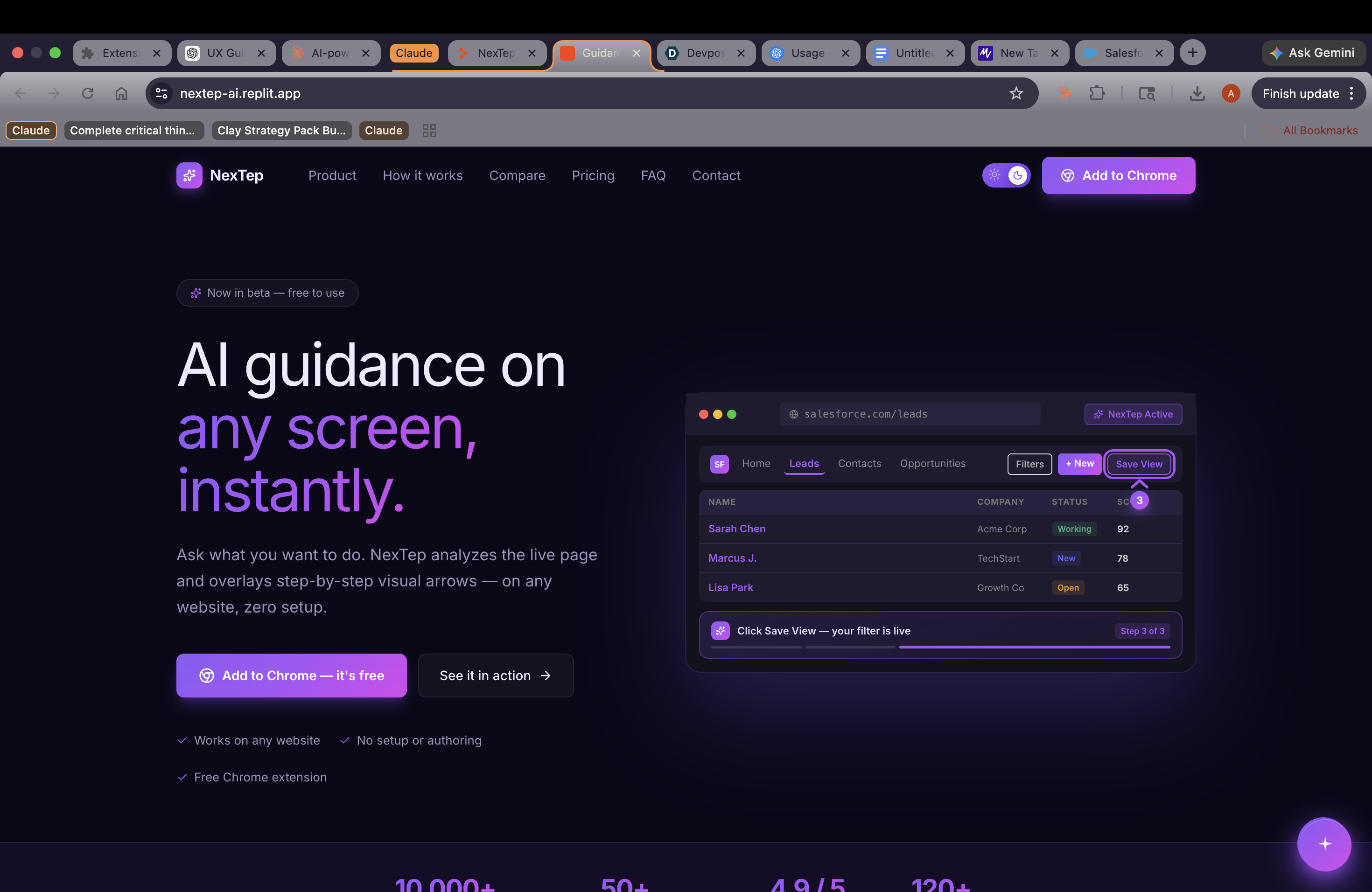
We built a live, real-time guidance system that sits on top of any website or software.
Instead of reading instructions or watching tutorials, users get:
- Visual overlays
- Step-by-step guidance
- Real-time feedback directly on the interface
It acts like a co-pilot — showing you exactly what to click and what to do next, as you do it.
The goal is simple: eliminate the gap between intention and execution inside software.
How We Built It
We built the project using a combination of:
- A browser-based layer to overlay guidance directly onto websites
- A web app (hosted on Replit) to control and trigger workflows
- Logic to detect elements on a page and guide users step-by-step
We focused on making the experience feel real-time and interactive, rather than static or pre-recorded.
For the hackathon, we scoped it down to demonstrate a complete guided workflow on a specific platform, showing how a user can go from zero to completing a task without external help.
Challenges We Faced
One of the biggest challenges was scoping.
The vision — a universal guidance layer for all software — is very large, so we had to narrow it down to a focused, demoable experience within a short timeframe.
Another challenge was reliability of UI detection. Websites are dynamic, and ensuring that overlays appear on the correct elements consistently required careful handling.
We also had to rethink our product positioning and pricing. Initially, we approached it as a usage-based tool, but we realized users care about outcomes — completing tasks — not the number of steps.
What We Learned
We learned that:
- The biggest opportunities often come from problems people have accepted as “normal”
- Simplicity in user experience is far more powerful than feature complexity
- Positioning matters as much as the product itself
Most importantly, we learned how to take a broad, ambitious idea and turn it into a focused, working prototype under time constraints.
What’s Next
We see this evolving into a universal UX layer that:
- Works across all major SaaS tools
- Learns from user behavior
- Helps teams onboard and operate faster
Our long-term vision is to make software intuitive by default — so instead of learning tools, users can simply use them.
Built With
- chatgpt
- claude
- replit


Log in or sign up for Devpost to join the conversation.