Inspiration
Moving to a new city is a monumental decision that necessitates the consideration of many different factors. Ranging from economic outcomes, educational access, social programs, healthcare and more, we believed that current city recommenders neglected an individuals demographic group that can play a key role in one’s decision-i.e. niche.com, USnews.com, Livability.com By developing a web application that incorporates indexes such as racial segregation score, minority population, and gender-specific statistics into our app’s models and algorithms, we sought to deliver the most informed recommendation that captures the needs of a more diverse audience
What it does
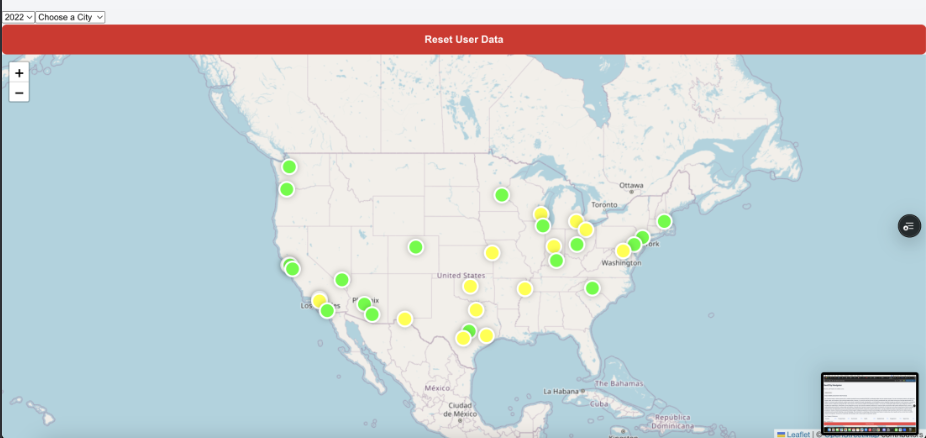
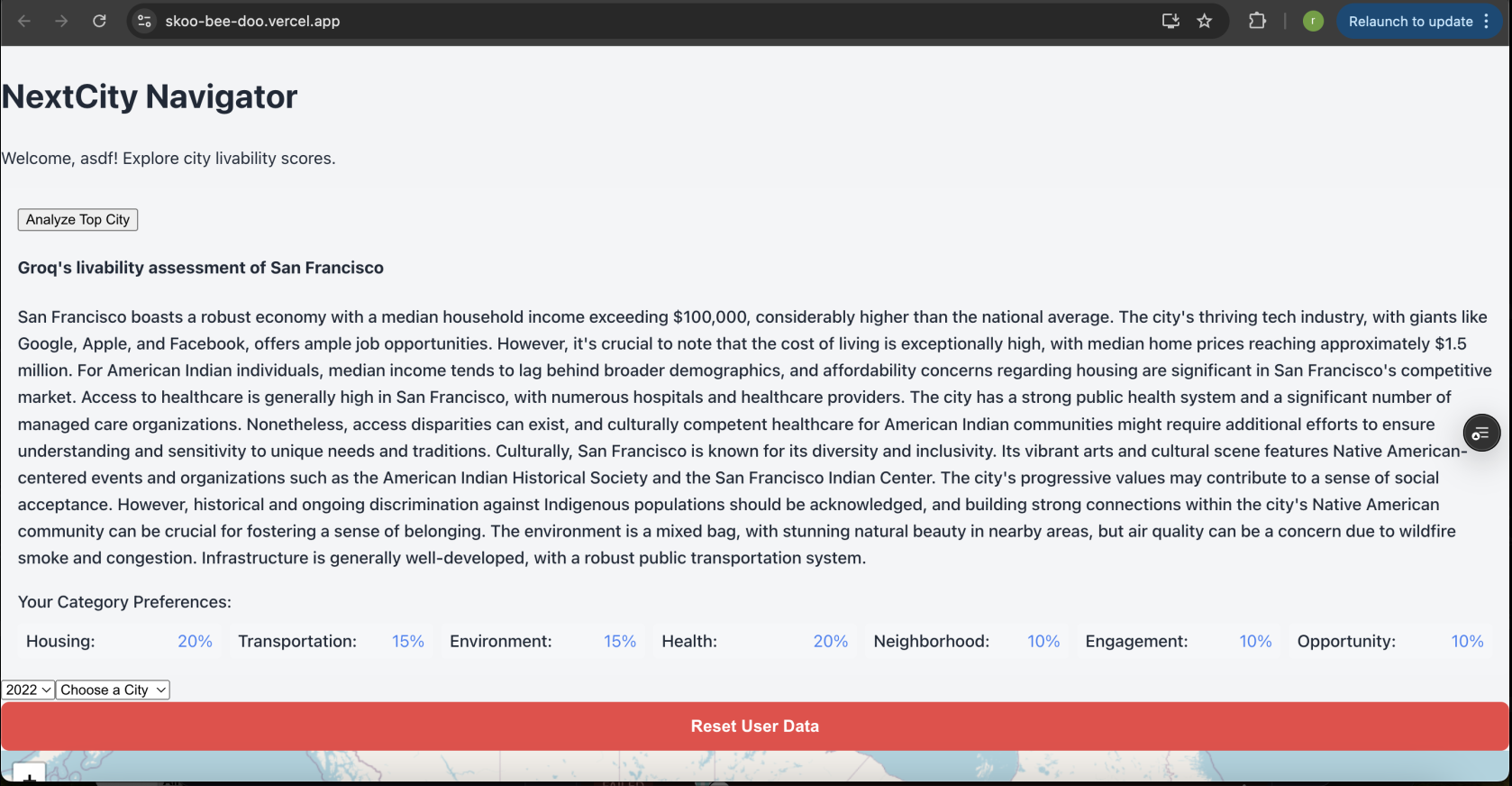
Our website takes in user demographics as well as how much they value certain livability aspects of a city. It then provides the user with livability scores and predicts future scores, along with providing a detailed explanation on why the city with the highest score is a good fit.
How we built it
We first gathered the data and tidied it up into a usable format for us to calculate livability subscores. We then found default weights of the subcategories to create livability scores that were then compared to the AARP livability index. After analyzing trends on how the livability scores varied based on different demographics we then forecasted the future livability scores so the user can see how each city will progress.
Challenges we ran into
One of the biggest challenges we faced was integrating our frontend with our backend models. Ensuring smooth communication between the user interface and our machine learning algorithms required careful API design and data handling. Additionally, adjusting and optimizing our data to fit the models was a complex process. Cleaning and normalizing the dataset while preserving meaningful patterns took multiple iterations, especially when dealing with missing values and inconsistent data formats. Finding the right balance between computational efficiency and model accuracy was another hurdle we had to overcome.
Accomplishments that we're proud of
We’re proud of successfully building a functional, end-to-end product that transforms raw data into personalized city recommendations. From data collection and preprocessing to model development and frontend implementation, we created a system that delivers valuable insights in an intuitive way. Our ability to optimize and categorize 67 variables into 7 key livability factors allowed us to generate meaningful scores, making our model both scalable and user-friendly. Additionally, incorporating future livability predictions adds a unique element to our platform, giving users a forward-looking perspective when choosing a city.
What's next for NextCity Navigator
The NextCity Navigator has significant potential for further improvement and optimization. We plan to expand our database by incorporating more cities and additional features, such as a budgeting tool to help users find affordable locations. Additionally, we aim to enhance user interaction by integrating Groq more effectively, developing a conversational chatbot for personalized recommendations. These are just a few of the many enhancements we envision to make the platform even more insightful and user-friendly.

Log in or sign up for Devpost to join the conversation.