-
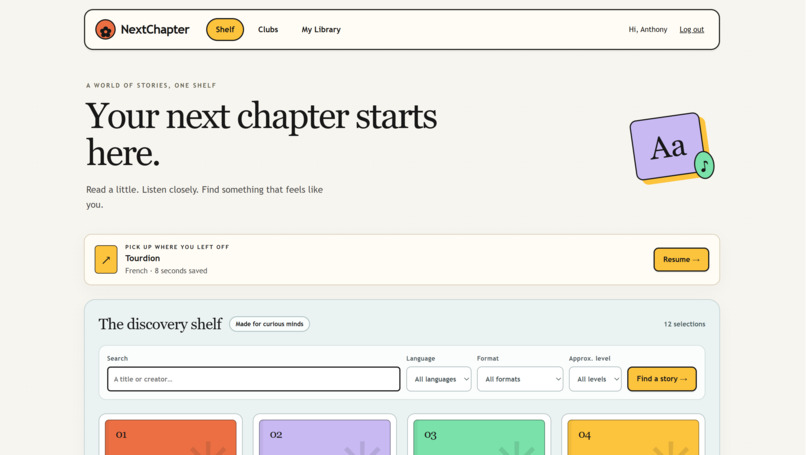
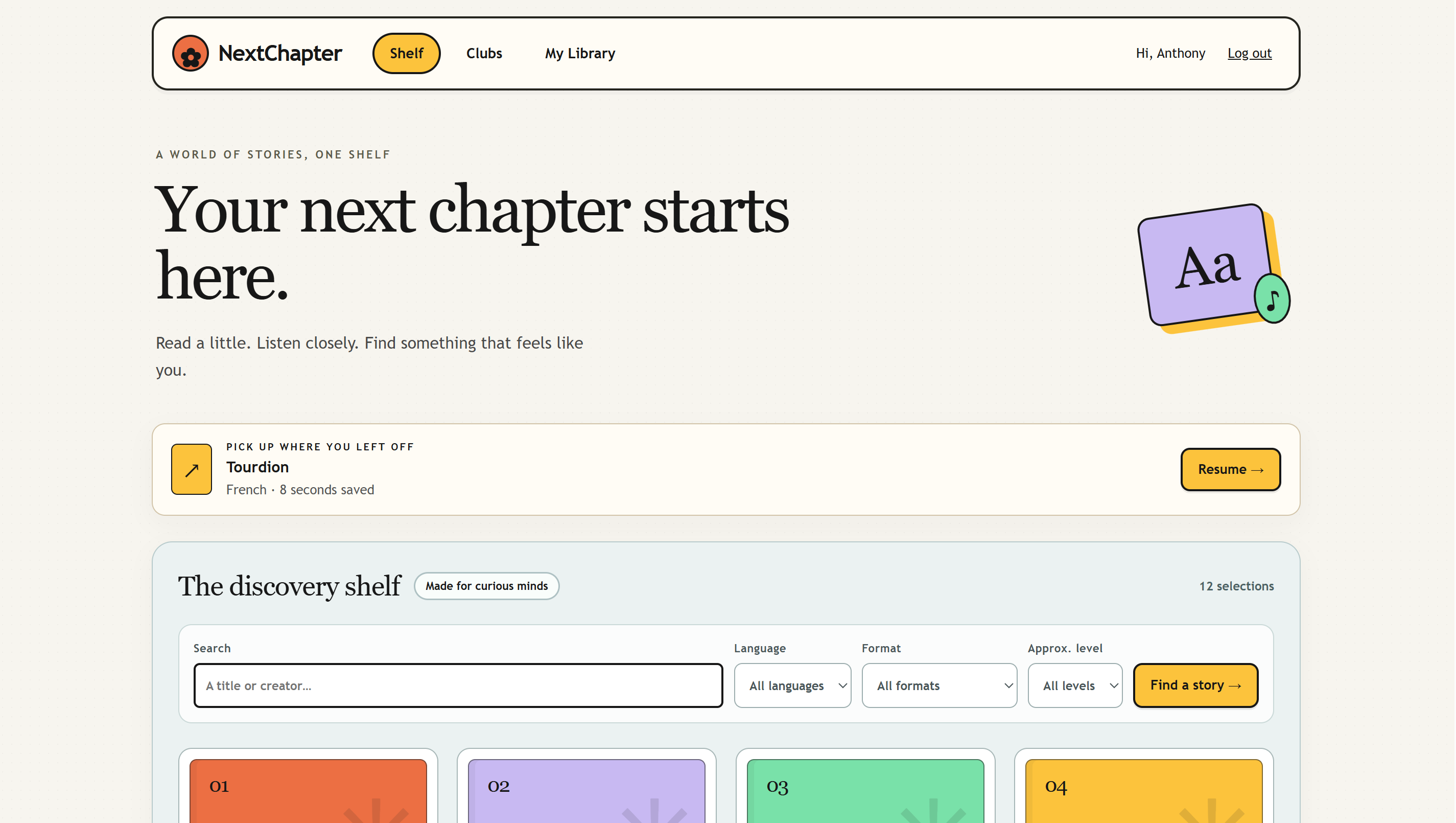
Landing Page And Dashboard
-
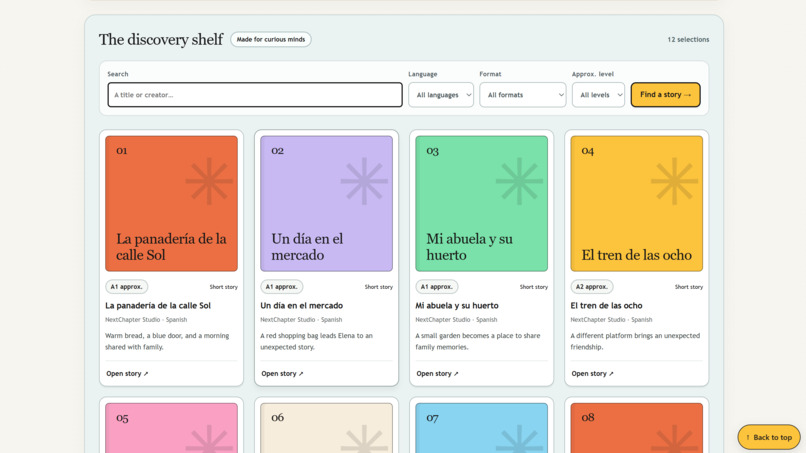
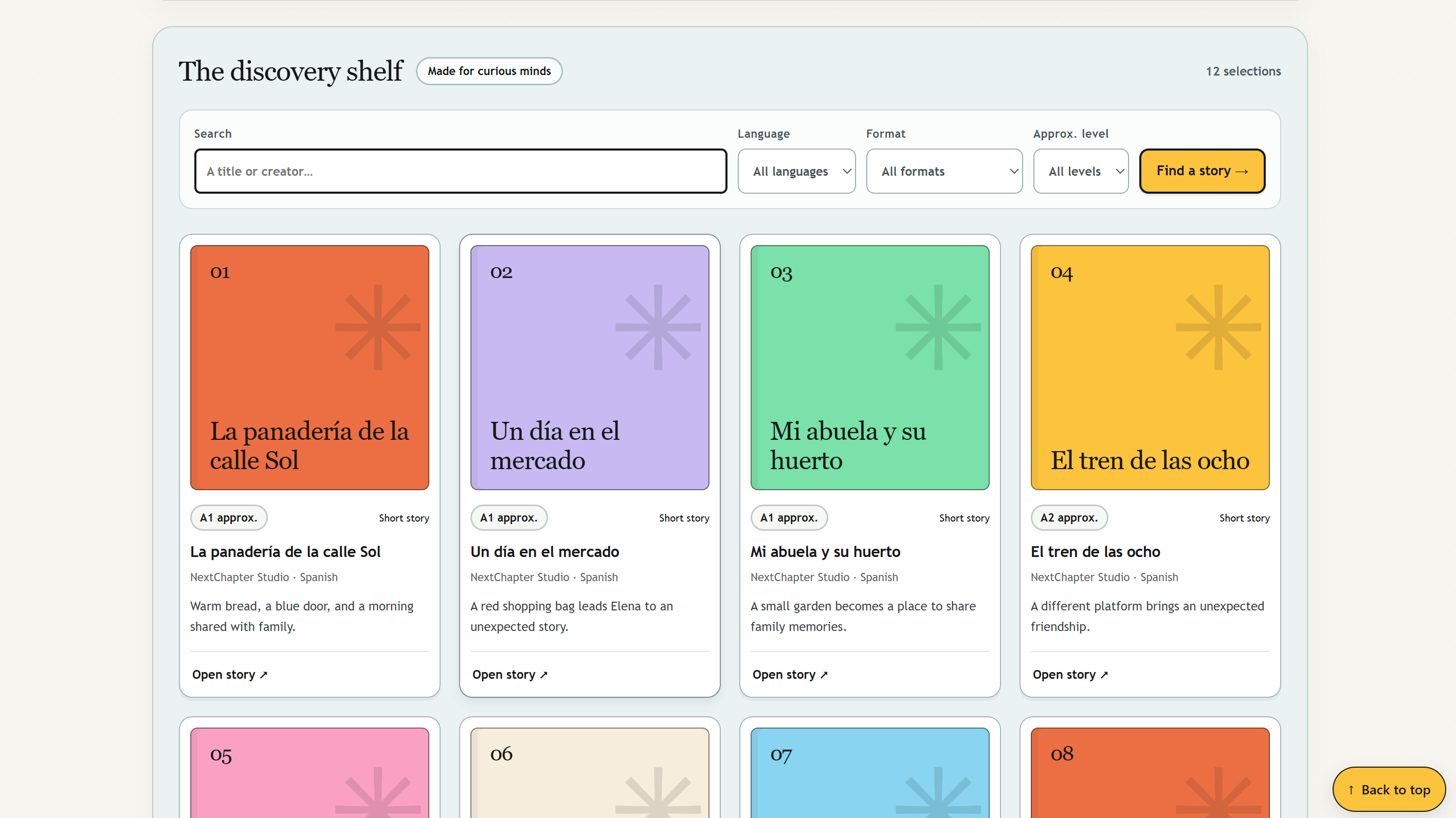
Books/Audiobooks/Songs Library
-
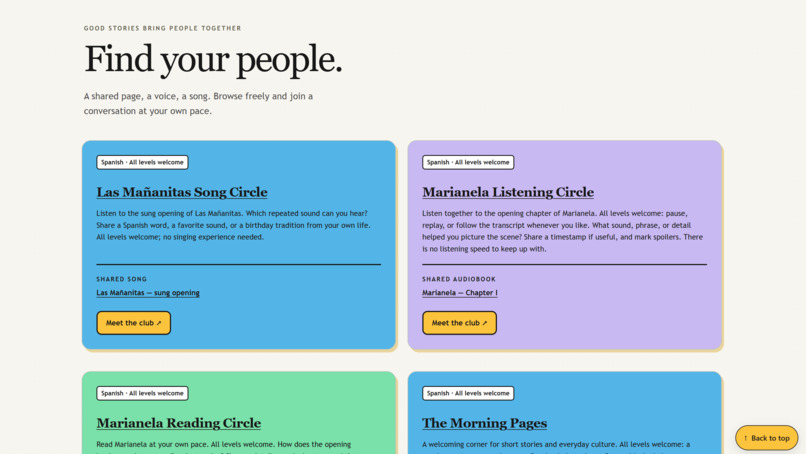
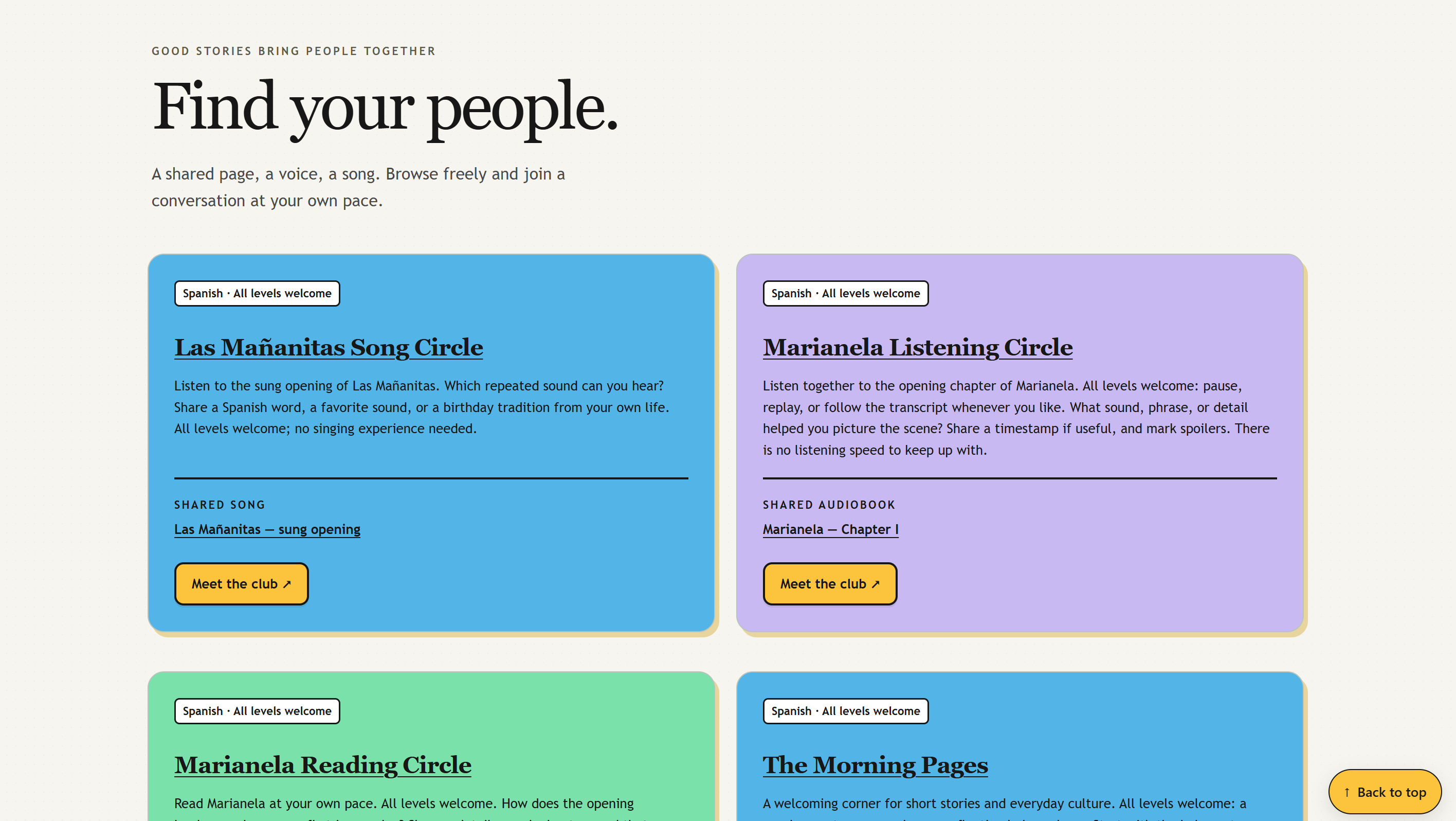
Clubs Page
-
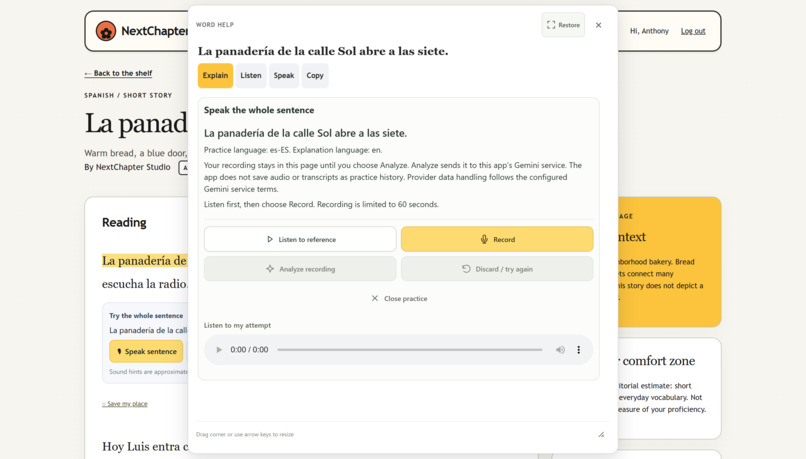
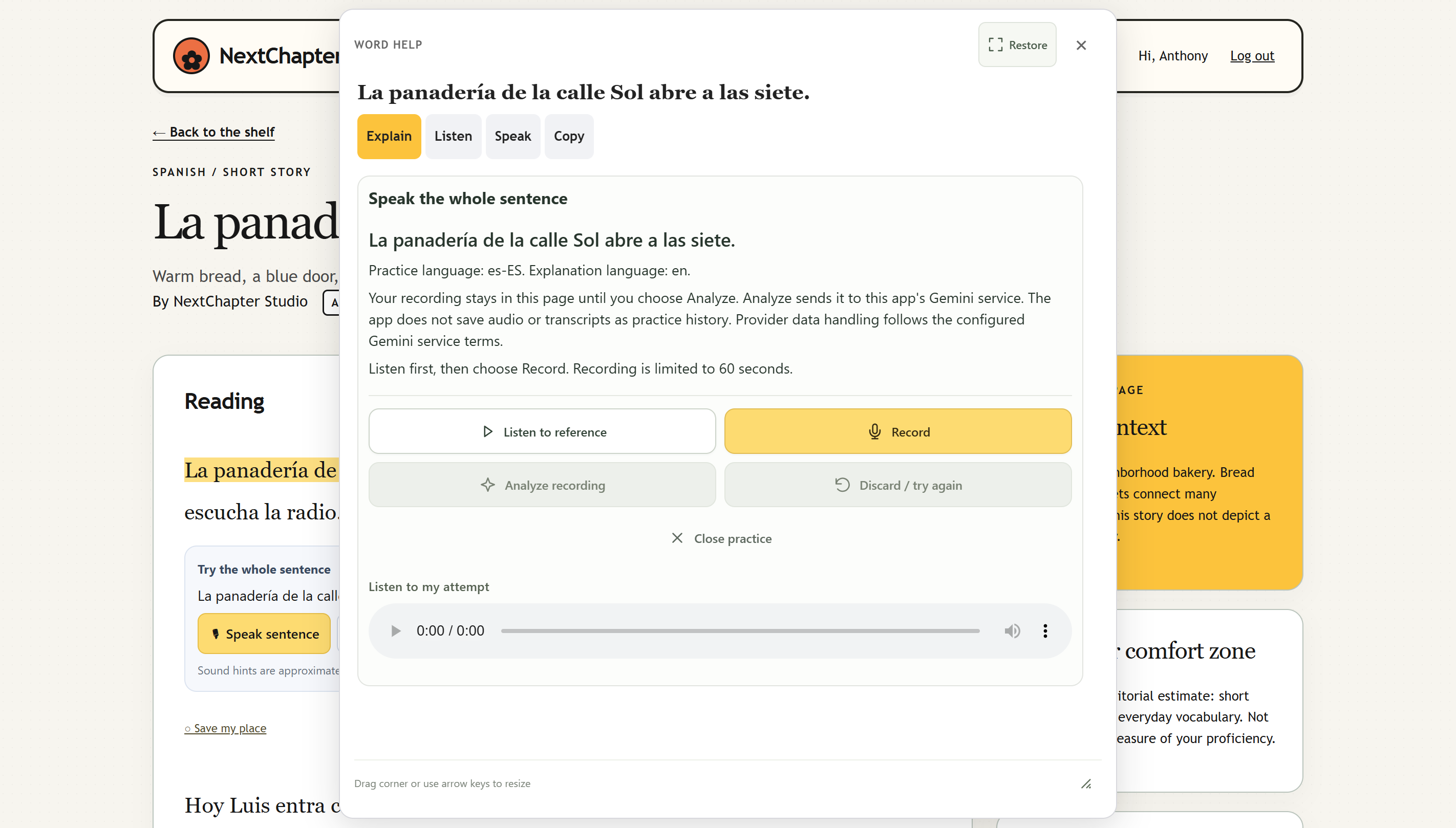
Practice Modal
-
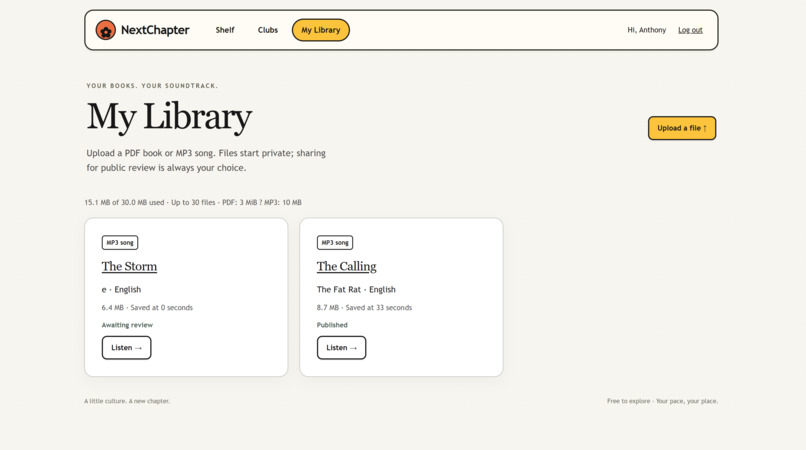
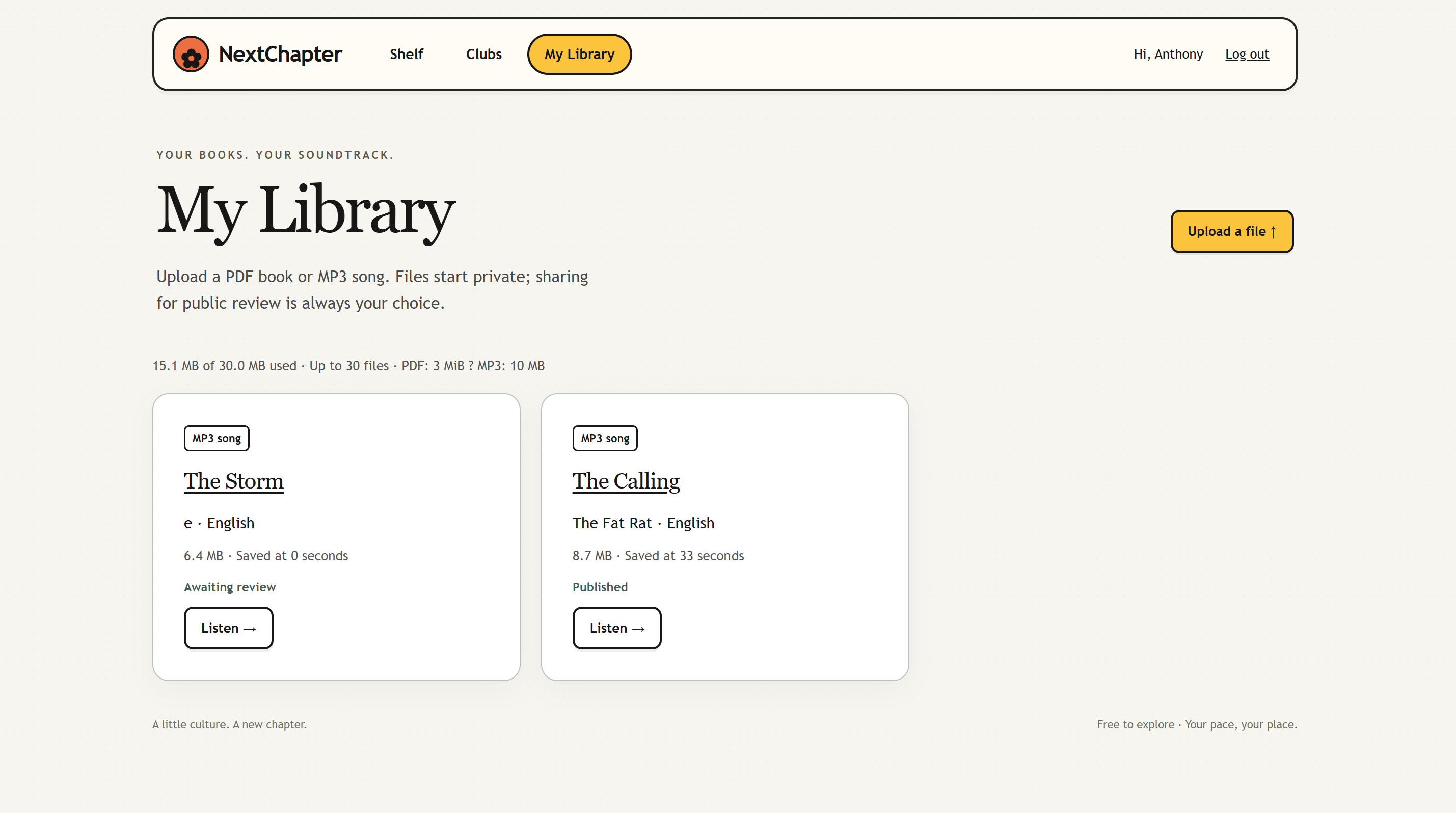
Personal Media Library
-
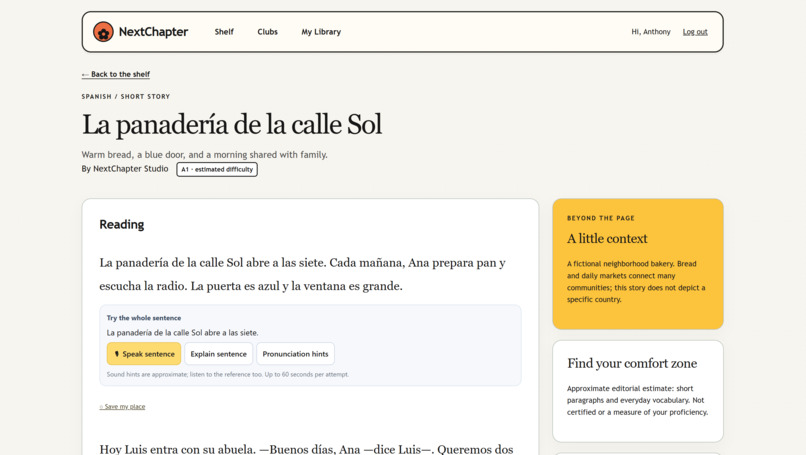
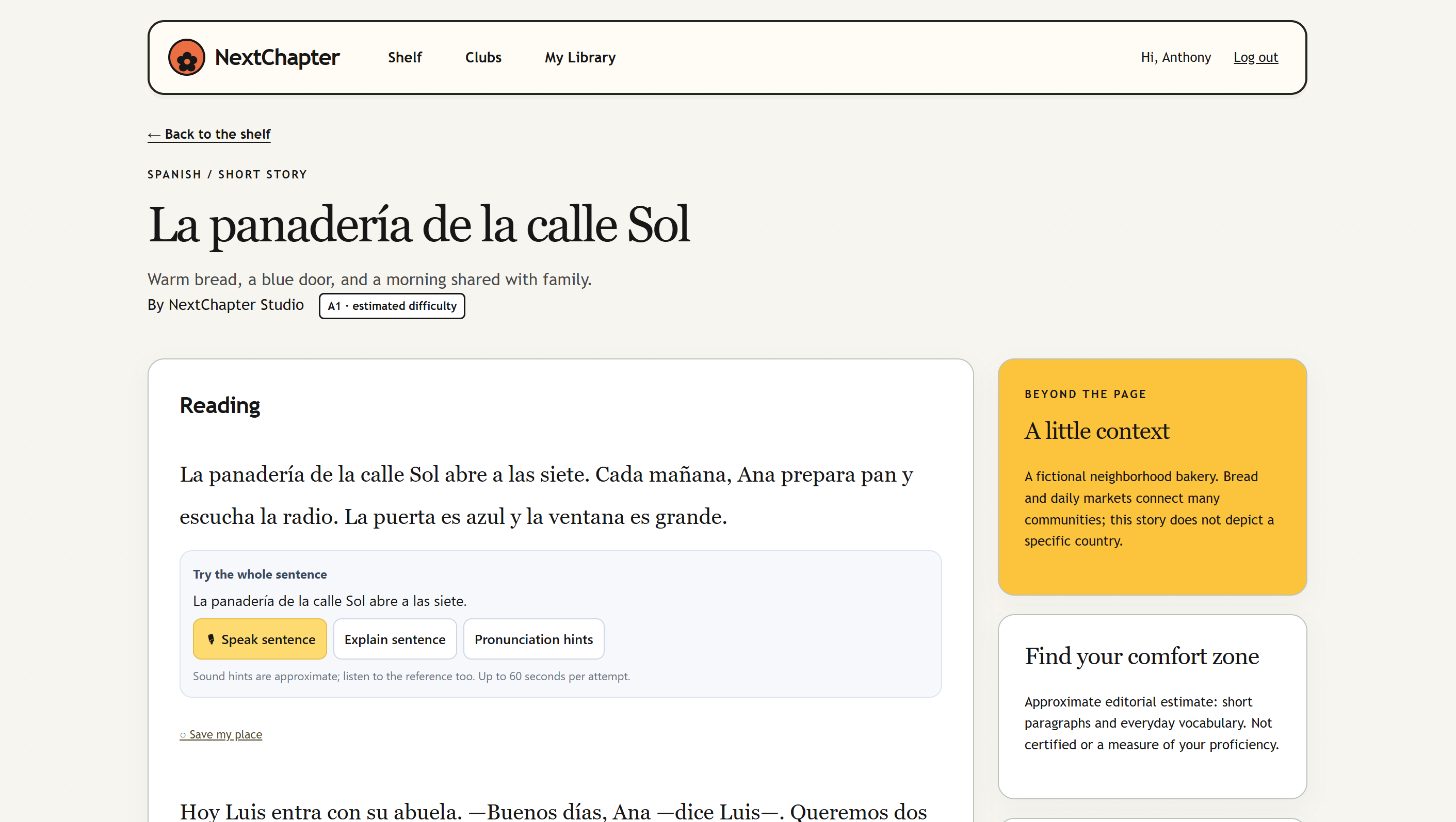
Short Story Page
-
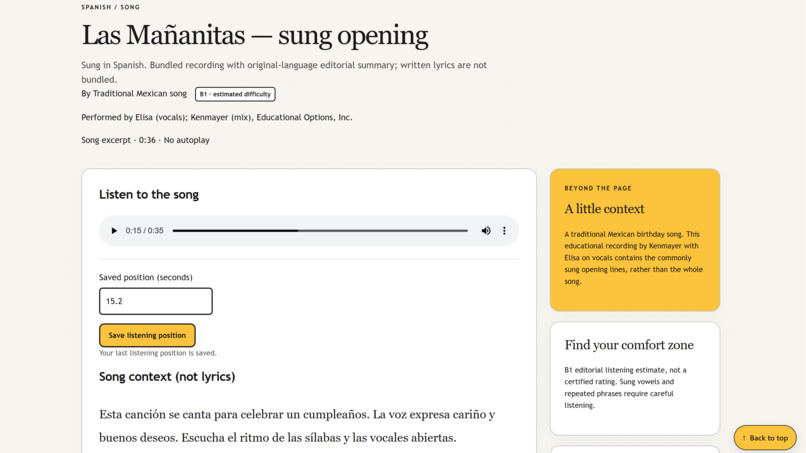
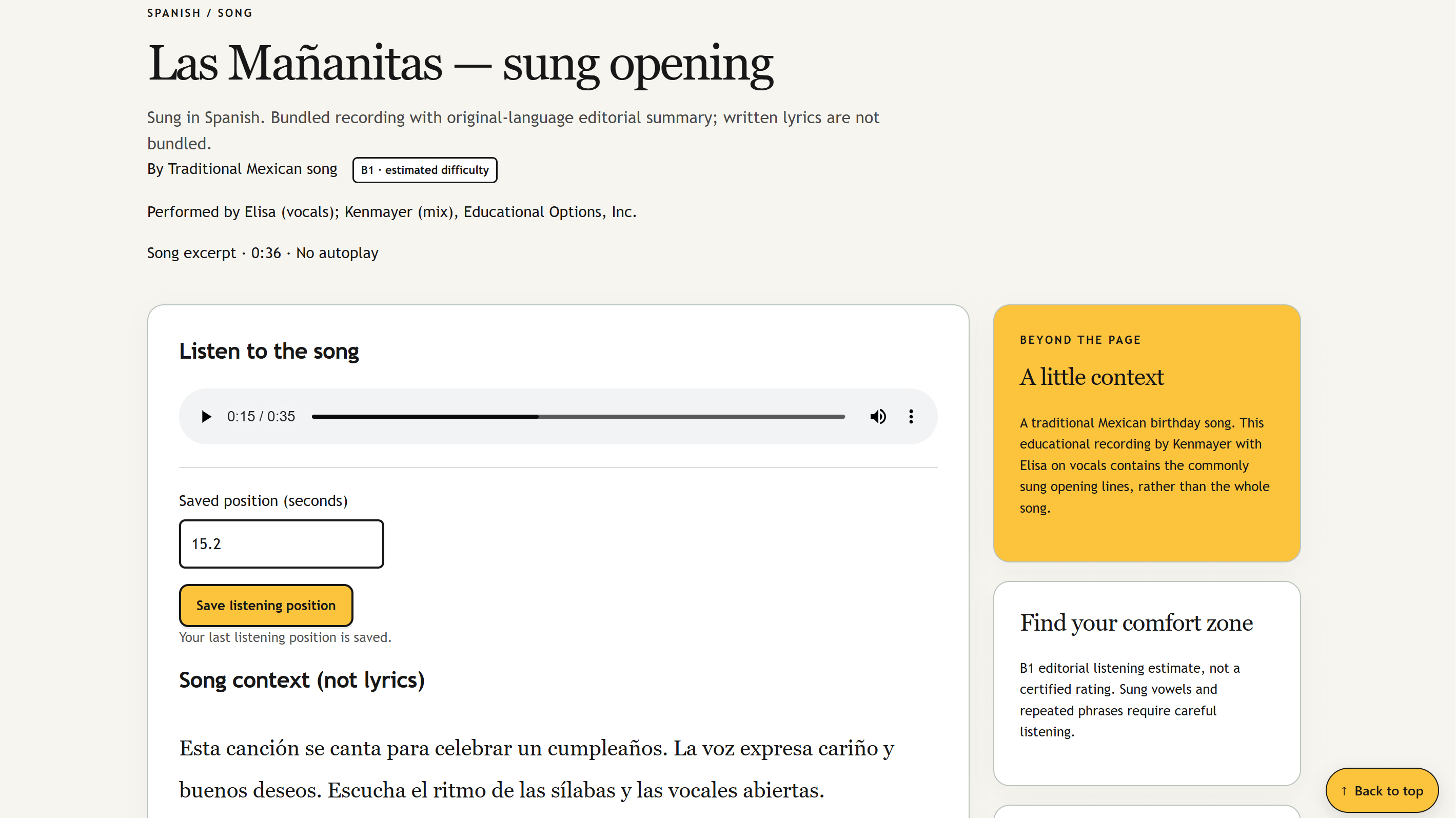
Audio Page
Inspiration
Learning a language becomes more meaningful when it connects us to stories, music, culture, and other people. We wanted to create a place where learners could explore different cultures at their own pace, ask questions without embarrassment, and enjoy content without being placed into a rigid course.
So much of learning starts with understanding what you are learning. What better way to do that than to get immersed in a culture? Being around people who speak your target language exposes you to conversational cues, expressions, and cultural references that can be difficult to pick up from a textbook alone.
But not everyone can travel abroad or find that community nearby. We created NextChapter to help people connect through stories, music, and conversations. By reading, listening, and discussing together, members can explore a language alongside the people and cultures that give it meaning.
What it does
NextChapter brings reading, listening, and community into one app. Users can browse books, short stories, audiobooks, and songs by language, format, and approximate difficulty.
Gemini empowers users to be able to click a word for contextual meaning and pronunciation help, explore a sentence, hear reference audio, and practice speaking the whole sentence. Gemini also powers on-demand translations of club comments, helping people participate across languages.
Users can save their reading or listening position, join clubs, discuss media, and try optional comprehension quizzes after the seeded books. They can even upload their own media to help make the community better!
How we built it
We built NextChapter with Python and Django, using server-rendered HTML, CSS, and JavaScript. Django manages the catalog, accounts, memberships, comments, saved progress, and reporting.
We integrated Gemini through backend API endpoints and used shorter responses and caching to make word lookups faster. Native browser audio controls handle listening, while browser microphone capture supports voluntary speech practice.
A database command creates a usable catalog and clubs from bundled resources. We used Doppler for secrets management (API Keys, tokens, etc.), GitHub Projects for coordination, automated tests, and locally bundled Motion animations for spring interactions and transitions.
Challenges we ran into
Finding usable media required checking recording rights, attribution, language, and whether files actually played. We also had to make repeated database seeding preserve existing accounts and activity.
Gemini AI response time was another challenge. Requesting a long explanation for every word felt slow, so we introduced a concise lookup path and cached repeated requests.
We also redesigned language help around compact, anchored popups so users could stay focused on the text.
Accomplishments that we're proud of
We connected personal exploration with community participation: discover a story or song, read or listen, get language help, and bring your questions and perspectives into a club conversation.
The catalog includes complete books and bundled French and Spanish recordings. Our latest testing suite contains over 100 tests, alongside browser checks for keyboard interaction, playback, recording, and reduced-motion behavior.
What we learned
Reliable foundations matter as much as visible features. Repeatable setup, validated media, clear API contracts, and careful testing made integration easier.
What's next for NextChapter
Our next feature is saved language profiles, including interests and separate reading and listening preferences. We also want to expand the credited multilingual catalog, add private notes and highlights, and introduce listening queues while continuing to refine the reading experience
How we used AI build this project to its fullest
Gemini - really blew my mind alway with its audio capabilities, both reviewing audio and making them. We used this for our app's API, to fulfill one of the prize categories. OpenAI - ChatGPT is my model of choice, since I already pay for it. Great at working on single issues at a time, which is what I used to build the app. Basically you add issues (and have ChatGPT take a crack at it too) to GitHub projects, and then you get ChatGPT to review them and code based on the issues (tasks) you have provided. Anthropic - Claude is the model of choice for Kevin (the other guy working on this project). It's probably better than ChatGPT, and certainly better at UI design. Was primarily used as an orchestrator, for better agentic coding experience. Basically, you give it the some issues (tasks) on the GitHub projects board, and it will spawn sub-agents to do the work in parallel, while acting as the final boss and ensuring that everything is perfect at the end.
