-

Taste Agent app logo.
-
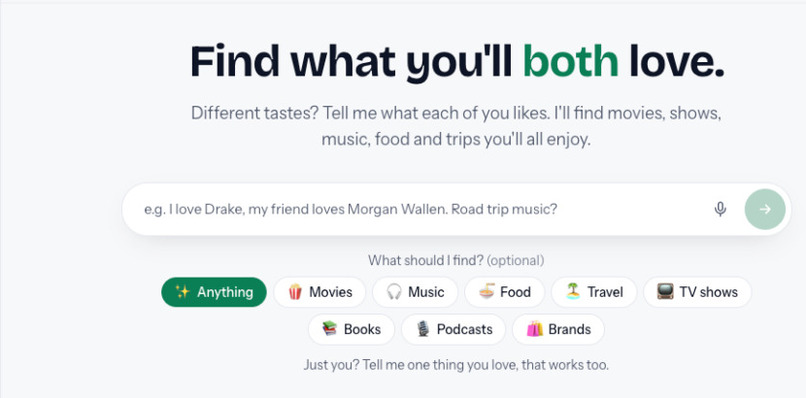
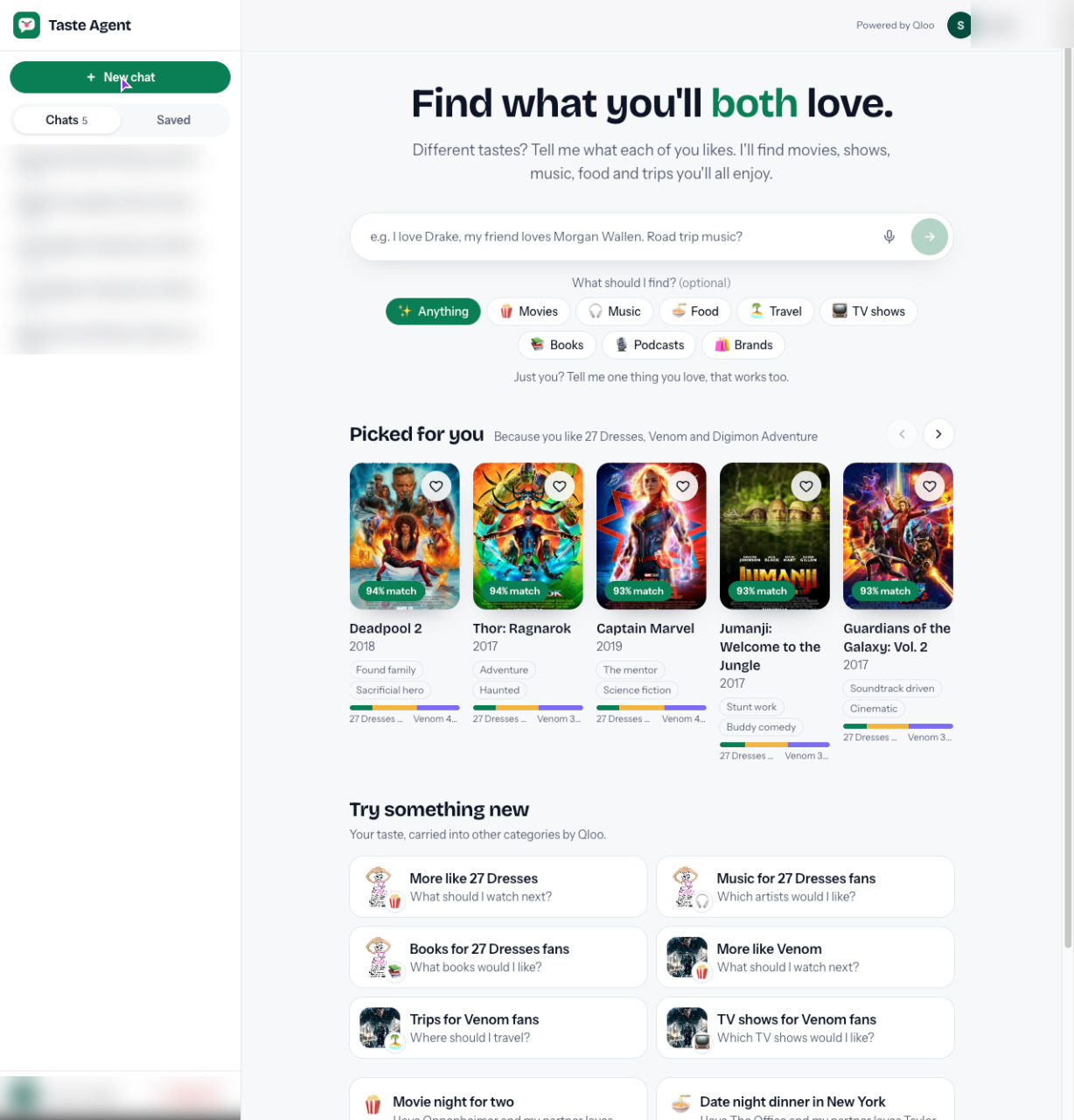
Start with a familiar prompt, then choose a category such as movies, music, food, travel, books, podcasts, or brands.
-
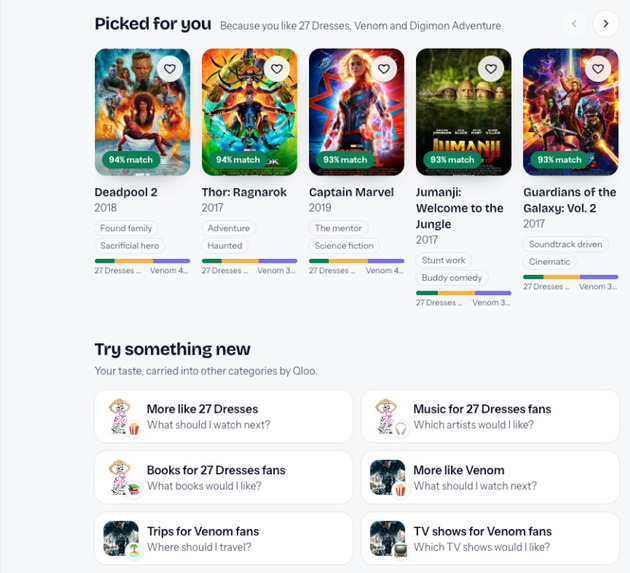
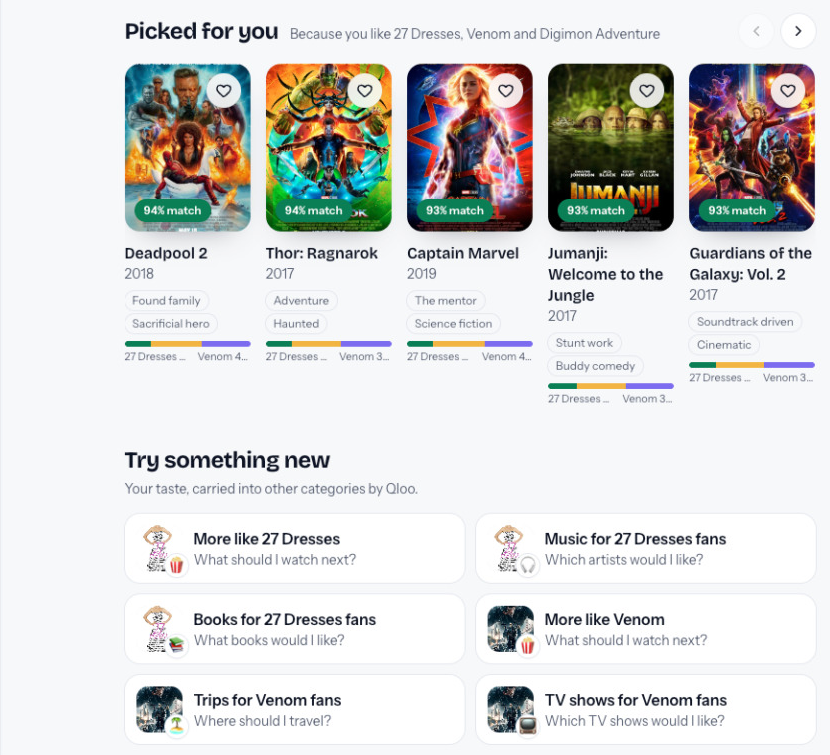
Recommendations show how multiple favorites relate to each Qloo-backed pick.
-
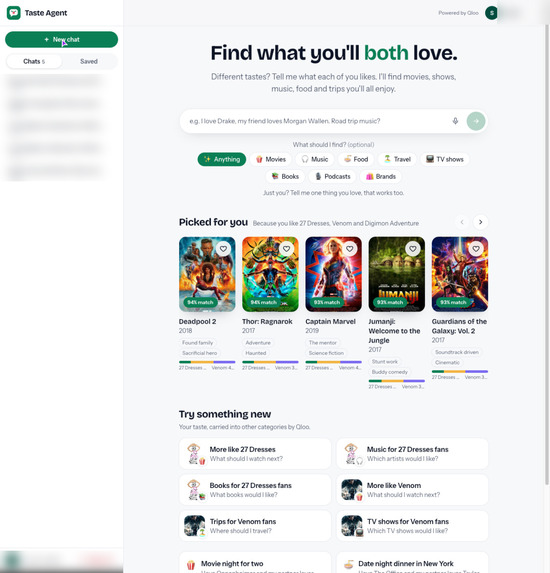
Signed-in chat history is in the sidebar; “For you” suggestions use favorites and past-chat seeds. Chat titles are obscured here.

Inspiration
“What do you want to eat?” can turn a simple night out into a long round of suggestions. The same thing happens when friends choose a movie, music for a road trip, or somewhere to travel: everyone has different tastes, and the group has to work out what might suit them all. We built Taste Agent to make that choice easier and more informed. Qloo’s cultural taste data connects interests across entertainment, places, and brands, so a favorite in one area can help uncover something promising in another. Emotions are now translated!
What it does
Taste Agent helps couples, friends, and families discover recommendations that take more than one person’s preferences into account. Tell it what each person likes and what you are looking for, then explore ranked picks across movies, TV, music, food, travel, books, podcasts, and brands. Each result includes an explanation of how it relates to the tastes in the request. You can narrow a search by category, location, or popularity, and restaurant results can open at their location in Google Maps.
How we built it
The interface pairs a familiar prompt box with clear category choices and visual results, so a first-time visitor can start by describing what they want without learning a new workflow. Behind that simple start, a server-side Claude tool-use agent works with Qloo’s Search, Insights, and Compare capabilities. It resolves favorites to Qloo entities, retrieves relevant results, and uses those results to ground the recommendations and their explanations. The app is built with Next.js and TypeScript, and the public demo is hosted on Vercel.
Challenges and what we learned
The hard part was getting the connection between a person’s words, the right Qloo entities, and a useful recommendation to hold together. A fluent answer is not enough if it is only a generic guess; the agent needs to use Qloo’s results, keep their context when a conversation continues, and explain the match in a way people can judge. We also wanted the product to feel familiar at first glance while making its wider range of Qloo-backed discovery easy to notice. That meant keeping the entry point simple and making the available categories and refinements visible rather than hiding everything in a blank chat.
Restaurant requests bring another important distinction: someone can mention a preference such as vegetarian food or a dietary restriction, but cultural taste signals are not ingredient or allergen verification. Users should confirm dietary and allergy details with the restaurant before ordering.
What we learned
Good recommendations need both relevant data and a clear way for people to steer the result. The agent can help connect preferences and surface options; people still need to see why a pick appeared, refine the search, and make the final choice. That balance between useful discovery and user judgment is central to Taste Agent.
Built With
- anthropic-claude
- firebase
- next.js
- qloo-api
- react
- typescript
- vercel

Log in or sign up for Devpost to join the conversation.