-
-
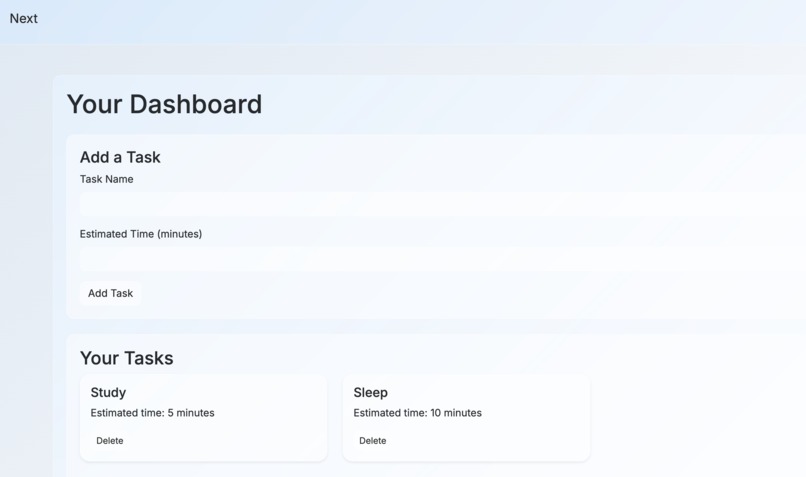
Dashboard
-
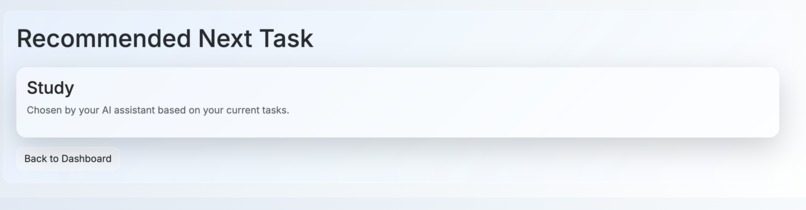
Results
-
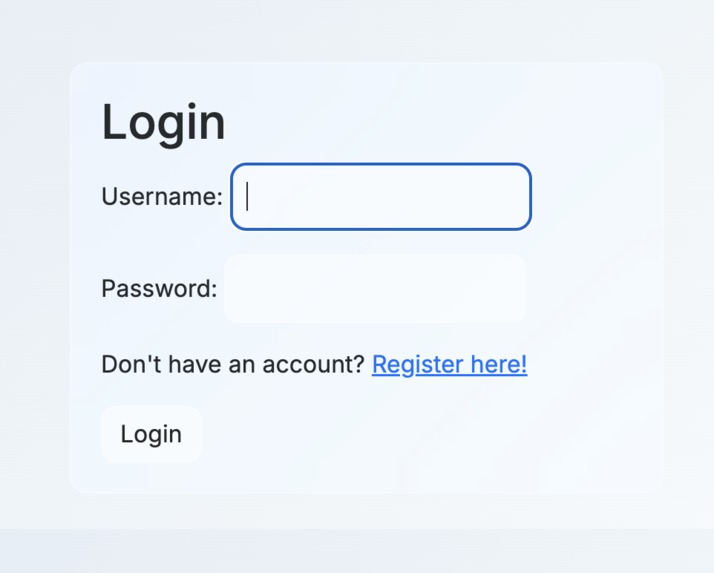
Login
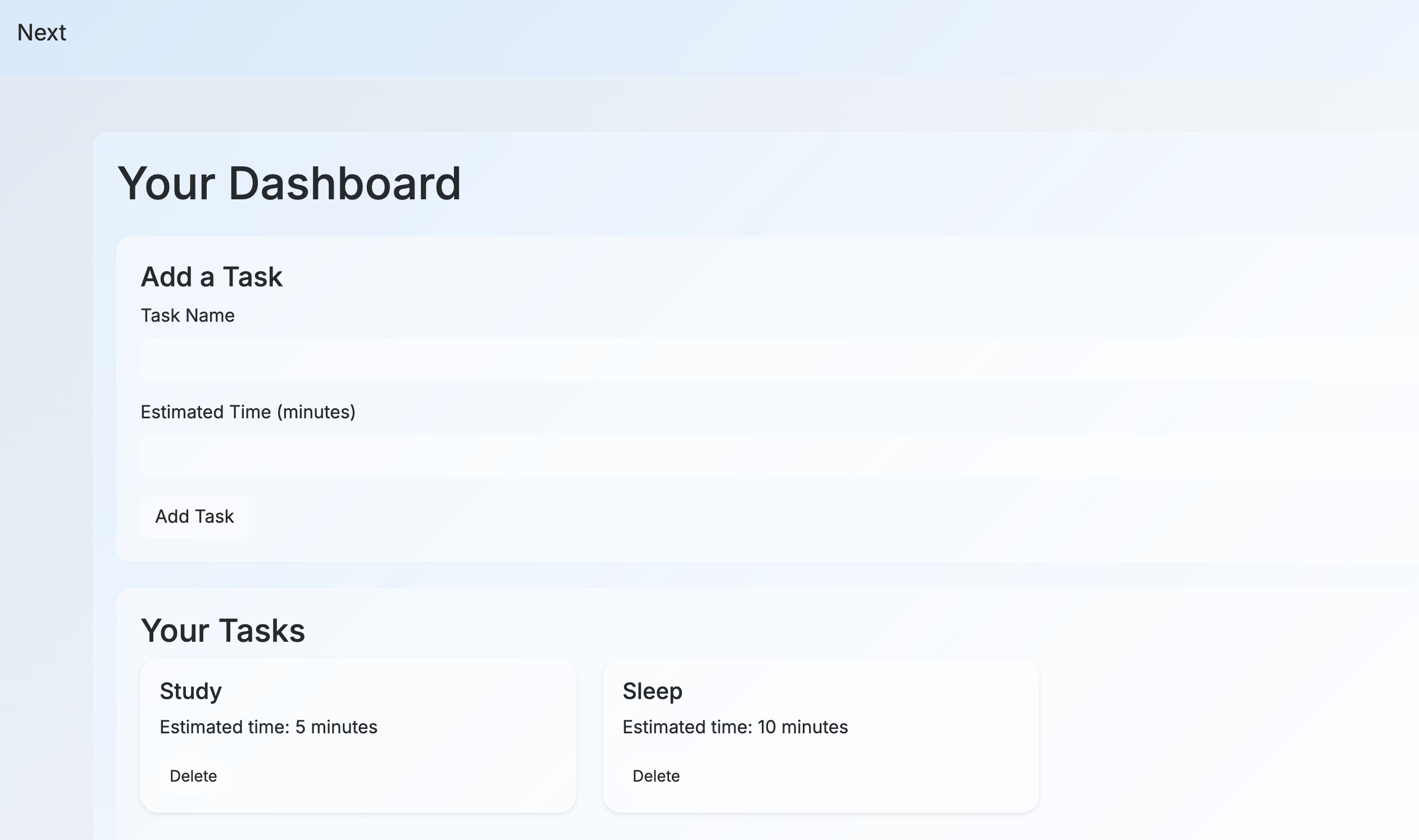
Next
Too much to do, too little time. Next cuts through the noise, weighs what matters, and tells students exactly what to do next.
Inspiration
Students have plenty of tools for managing tasks, calendars, to-do lists, reminders, and notes, but they still have to make the decision of what to actually work on right now.
We wanted to explore a simpler question: What if a tool could make that decision for you?
Next was built around that idea: instead of giving students another list to manage, give them one clear next action.
What it does
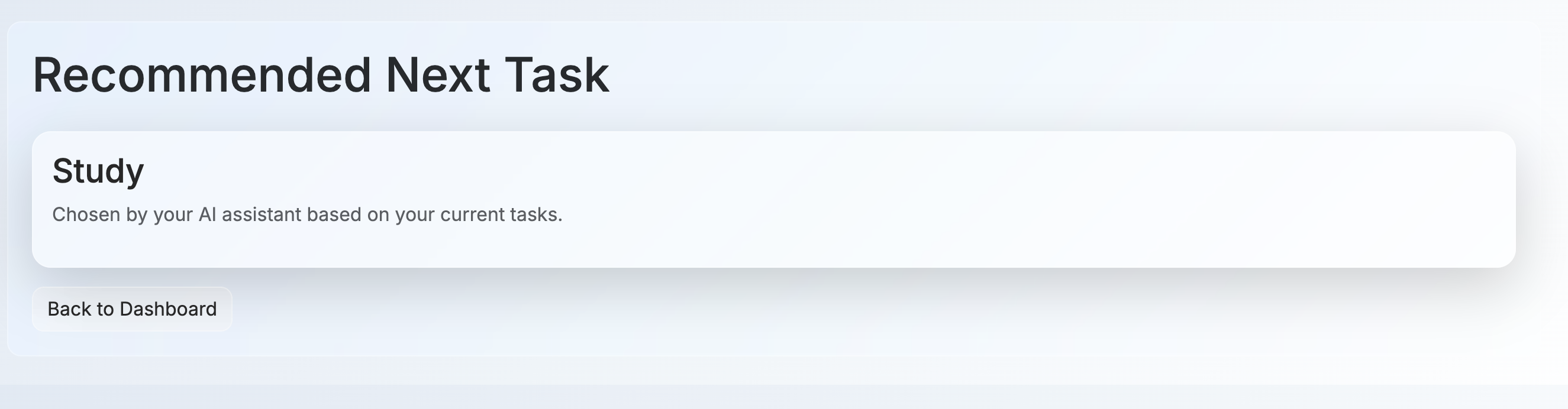
Next takes a set of tasks and their estimated completion times, then uses a large language model to determine which task should be tackled next.
The goal is to reduce decision fatigue and turn a collection of things that need to be done into one actionable recommendation.
How we built it
Next was built as a web application using:
- Python
- Django
- HTML
- CSS
- Bootstrap
- OpenRouter for LLM access
The Django backend handles the application logic and communication with the LLM, while the frontend provides a simple interface for entering tasks and displaying the recommendation.
GitHub Copilot was also used for debugging and development assistance.
Chatgpt 5.5 was used in developing the README.
Challenges we ran into
One of the main challenges was figuring out how to turn a relatively vague idea, "what should I do next?" into something concrete enough for an LLM to answer consistently.
We also had to work through issues connecting the web application to the LLM API and making the recommendation fit naturally into the user interface.
Because this was a hackathon prototype, we also had to balance building the core idea with the limited time available.
Accomplishments that we're proud of
We're proud that we turned a simple idea into a working prototype in a short amount of time.
Rather than trying to build an entire productivity platform, we focused on one specific problem and built a functional experience around it.
We're also proud of the final interface and how straightforward the core interaction is: provide your tasks, and Next gives you a clear recommendation.
What we learned
We learned that building an AI-powered application involves more than simply connecting an API to a prompt. The surrounding application has to provide the model with useful information and present its output in a way that actually helps the user.
We also learned the value of keeping a hackathon project focused. A smaller idea that actually works is more useful than a huge idea that never gets finished.
What's next for Next
The current version is intentionally a prototype. Future versions could incorporate more context into the decision, such as:
- Deadlines and due dates
- The "Why" behind the AI's decision
- Learning from schedules
- Task priority
- Available time
- Existing calendar commitments
- Longer-term goals
- Personal preferences
- Learning from previous decisions
The long-term goal would be to make Next better at understanding a student's situation and helping them make better decisions about how to use their limited time.

Log in or sign up for Devpost to join the conversation.