-
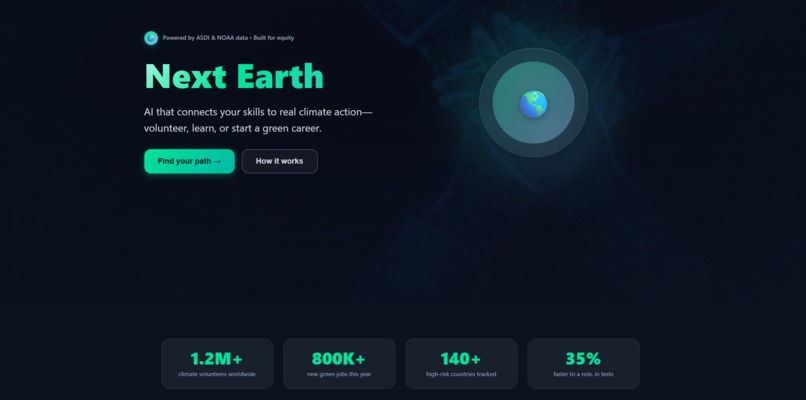
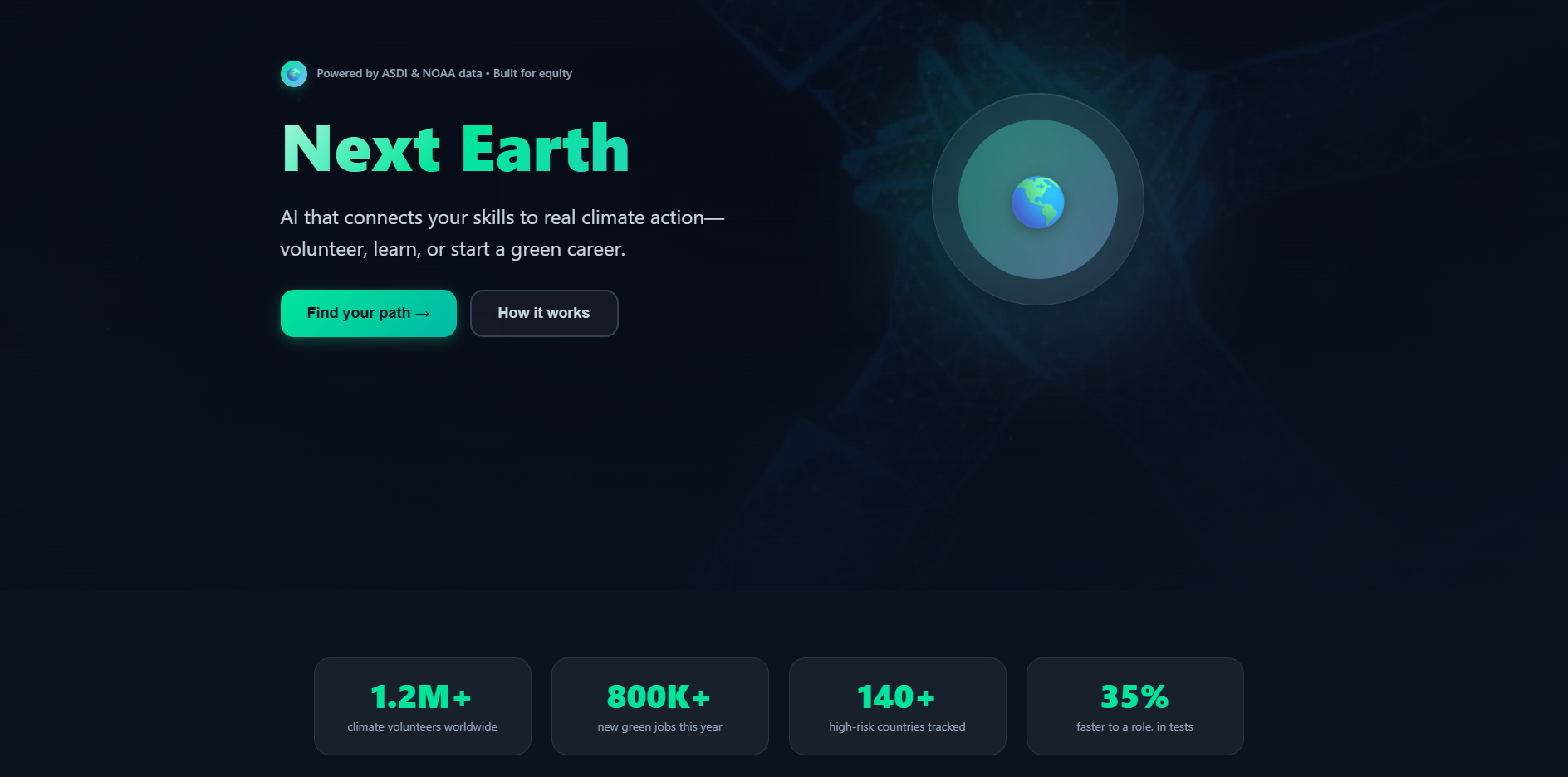
Landing Page: Inspires users to start their journey—AI connects personal skills to real climate action.
-

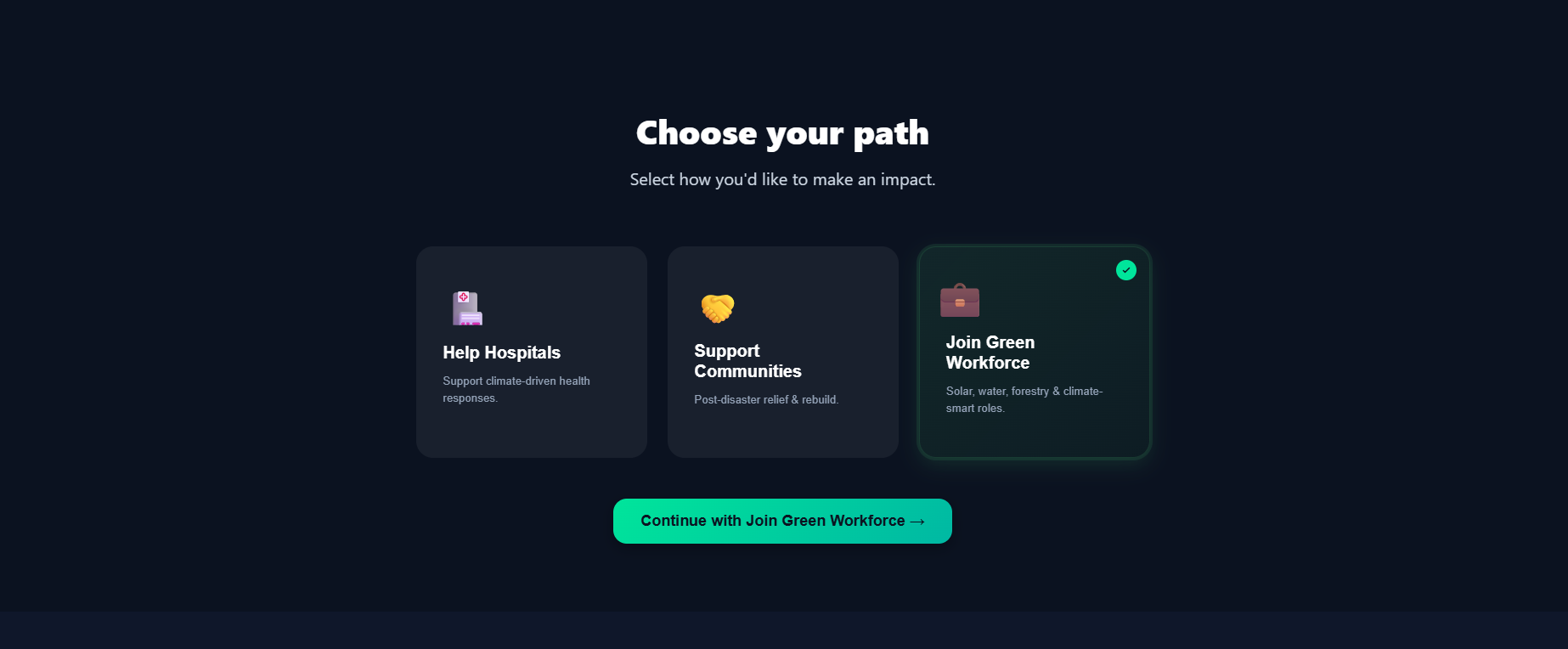
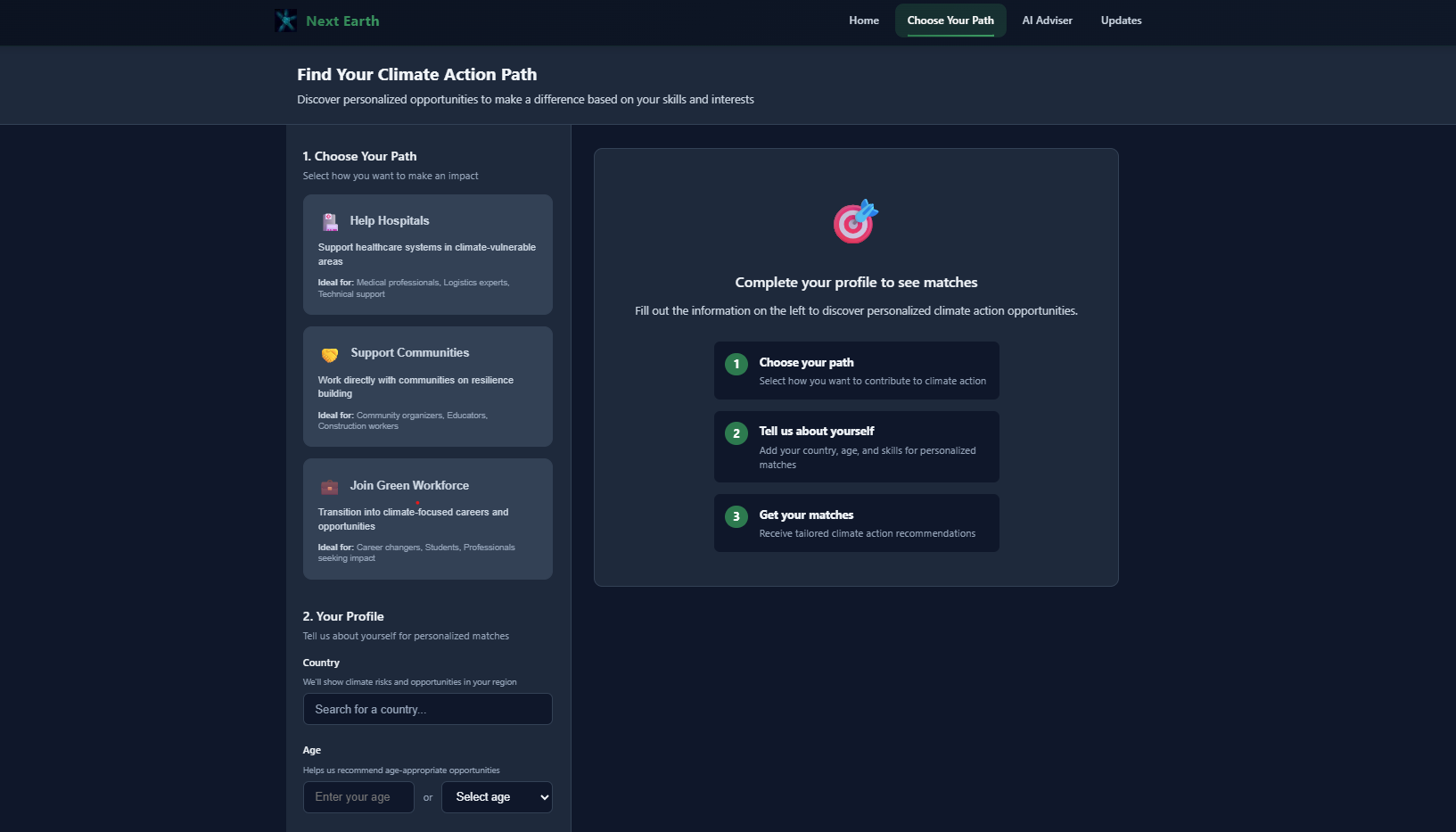
Choose Your Path: Select how you want to make an impact - health, community, or green workforce.
-
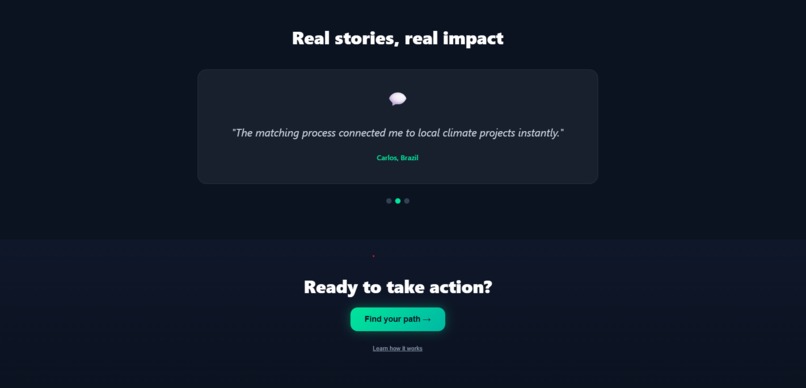
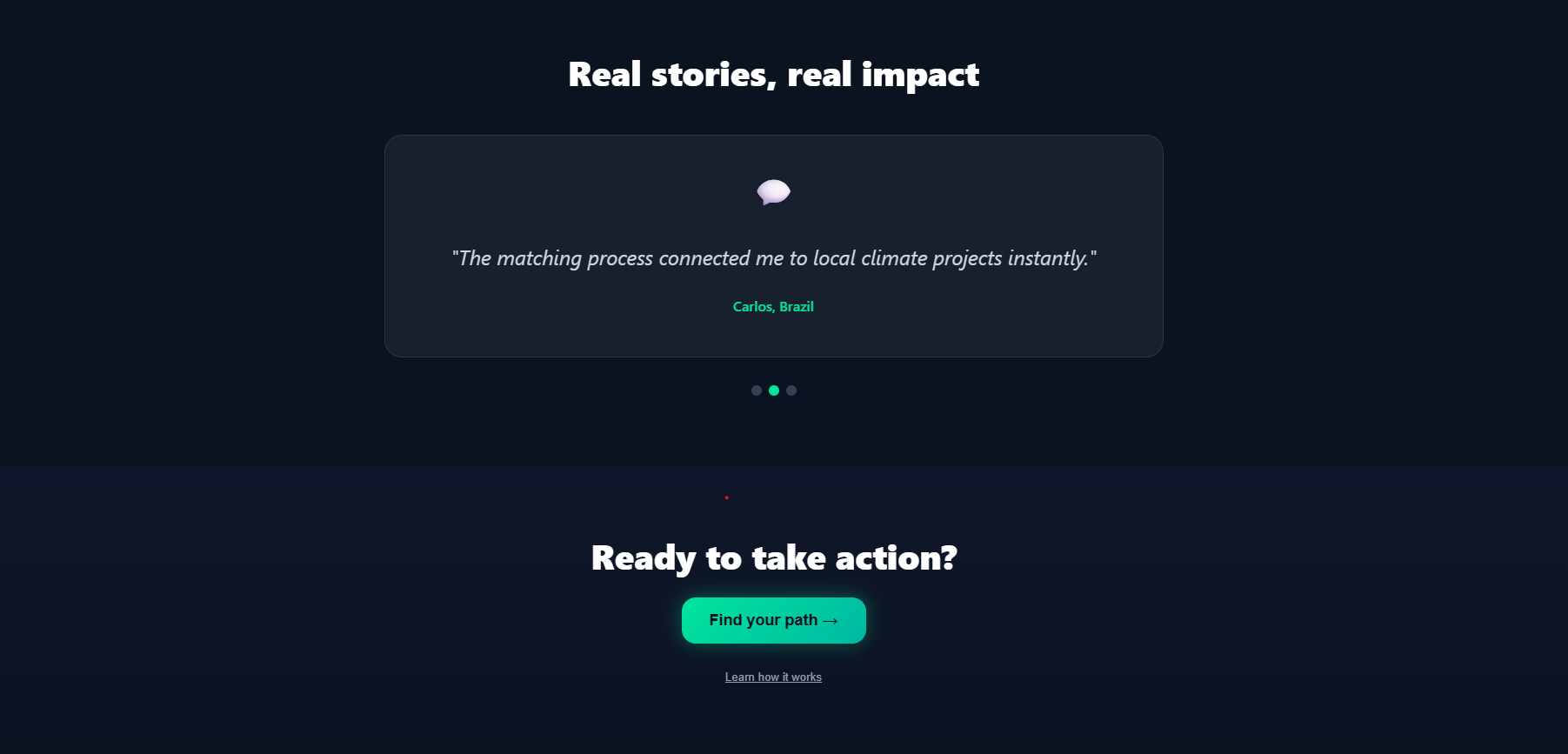
User Stories & Call to Action: Real testimonials and CTA encouraging users to begin their climate journey.
-
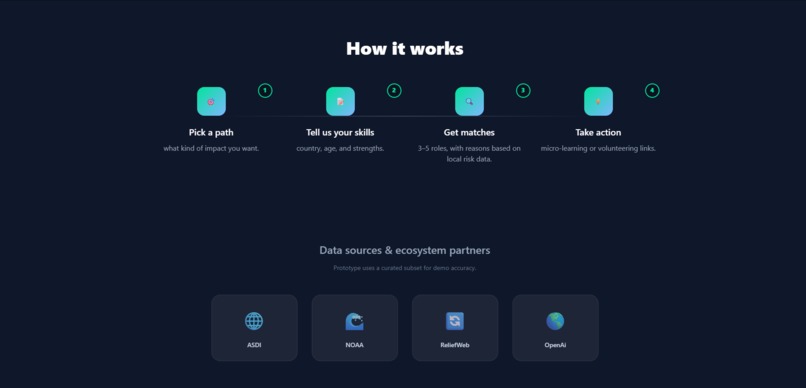
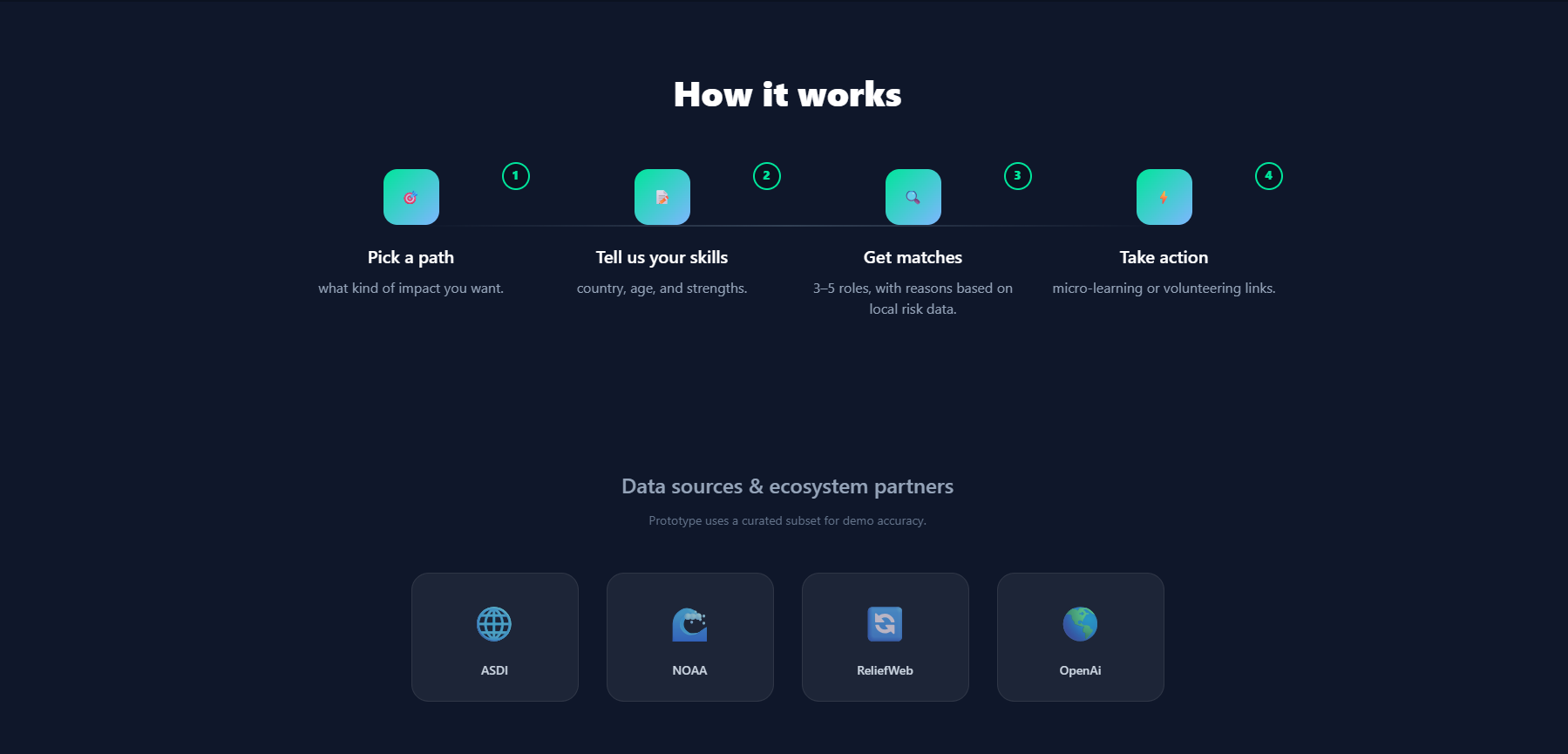
How It Works Overview: Step-by-step explanation of how users move from choosing a path to taking action.
-
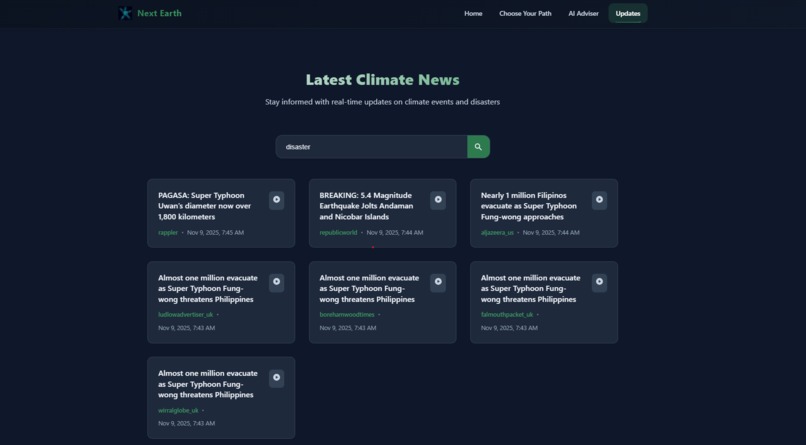
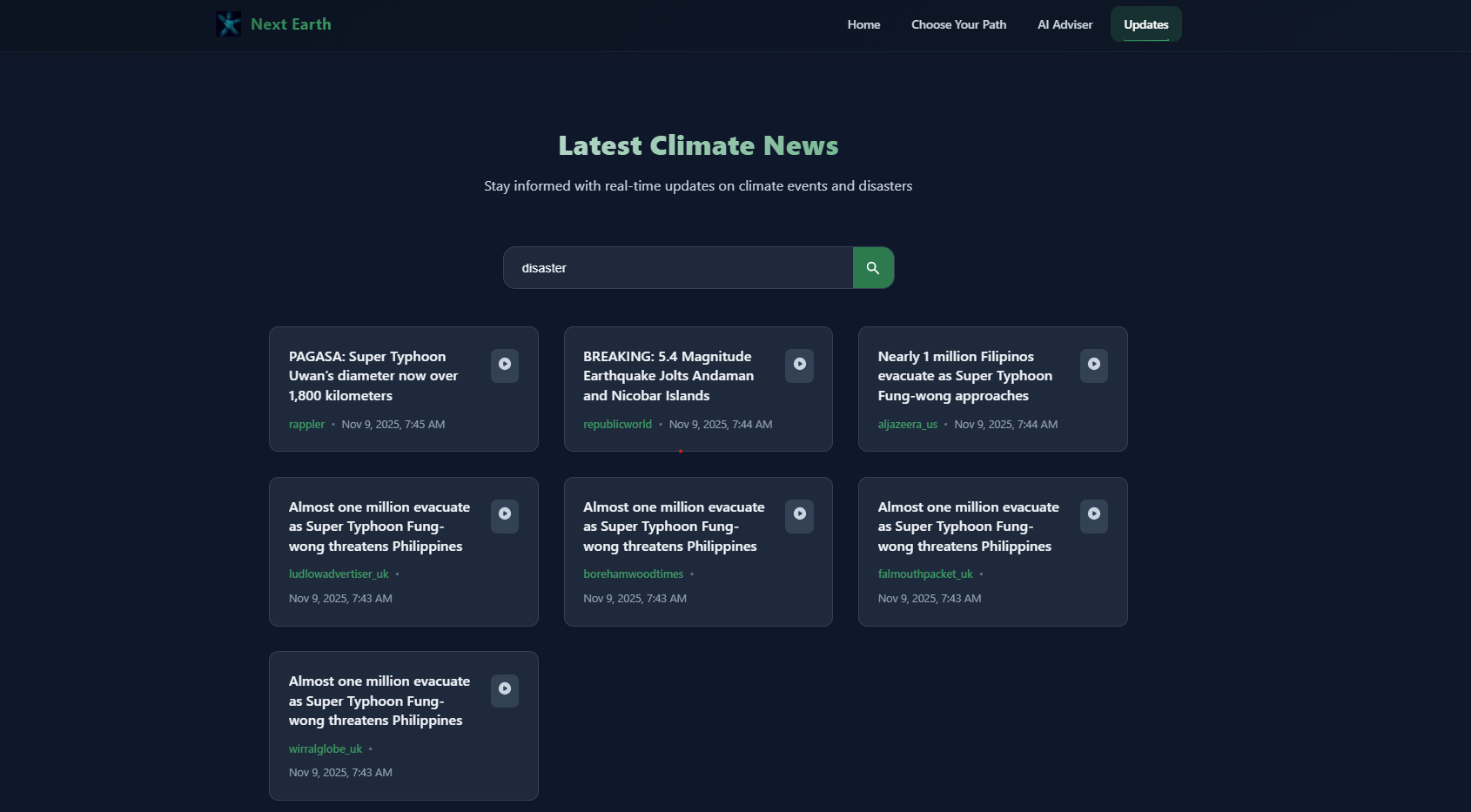
Latest Climate News: Real-time feed highlighting global disasters and environmental events.
-
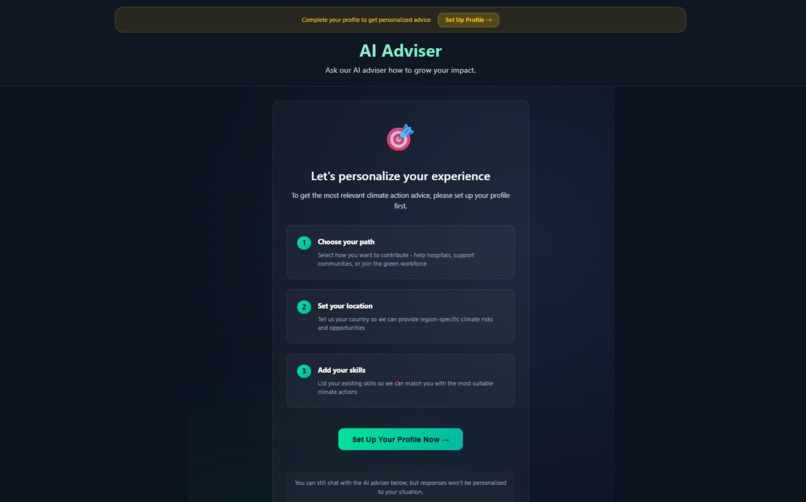
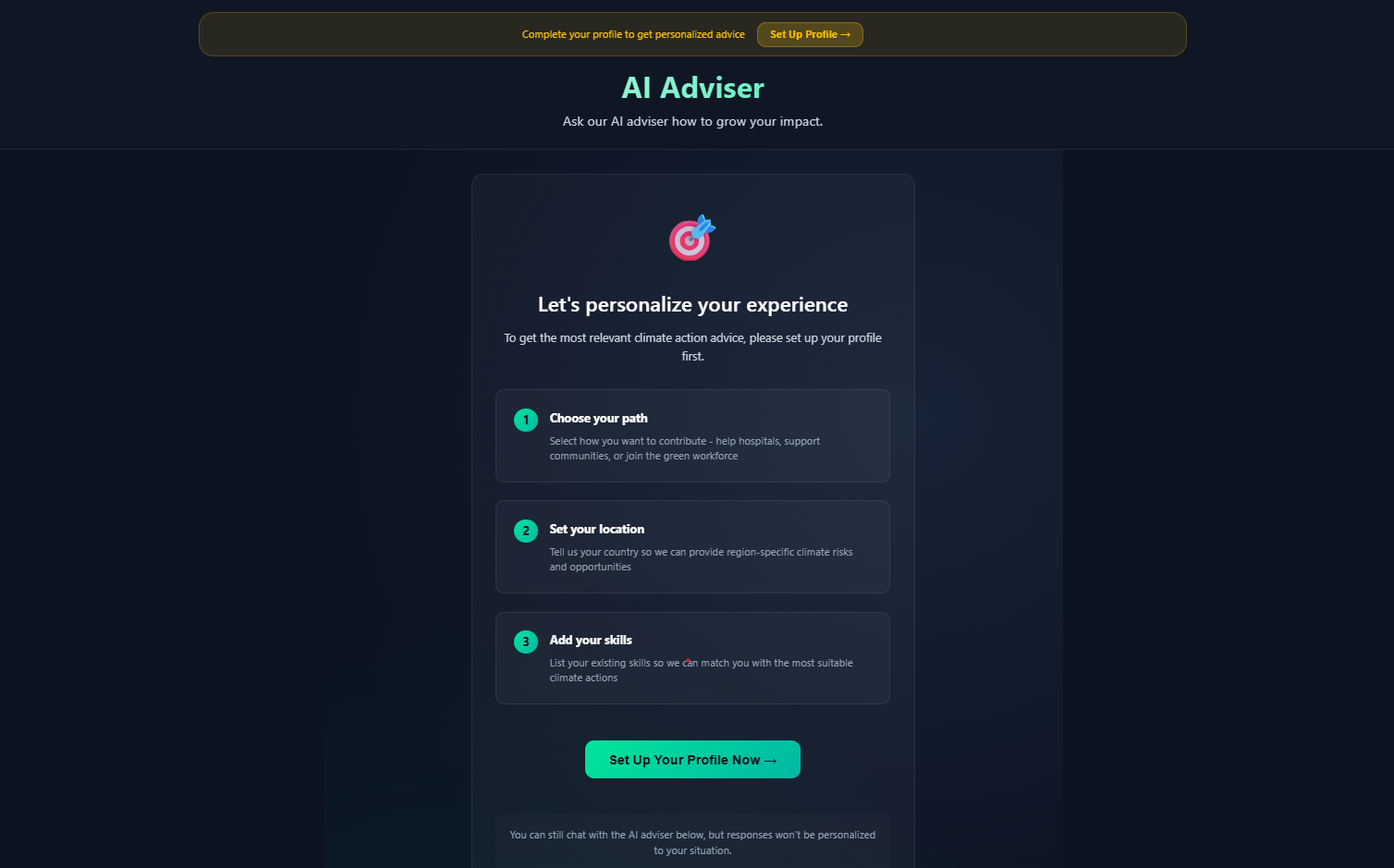
AI Adviser – Personalization: Guided setup prompts users to choose their path, country, and skills for tailored advice.
-
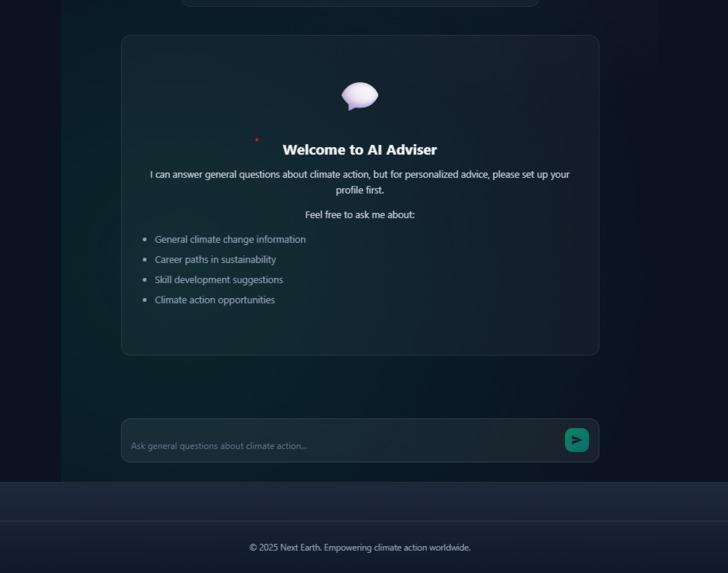
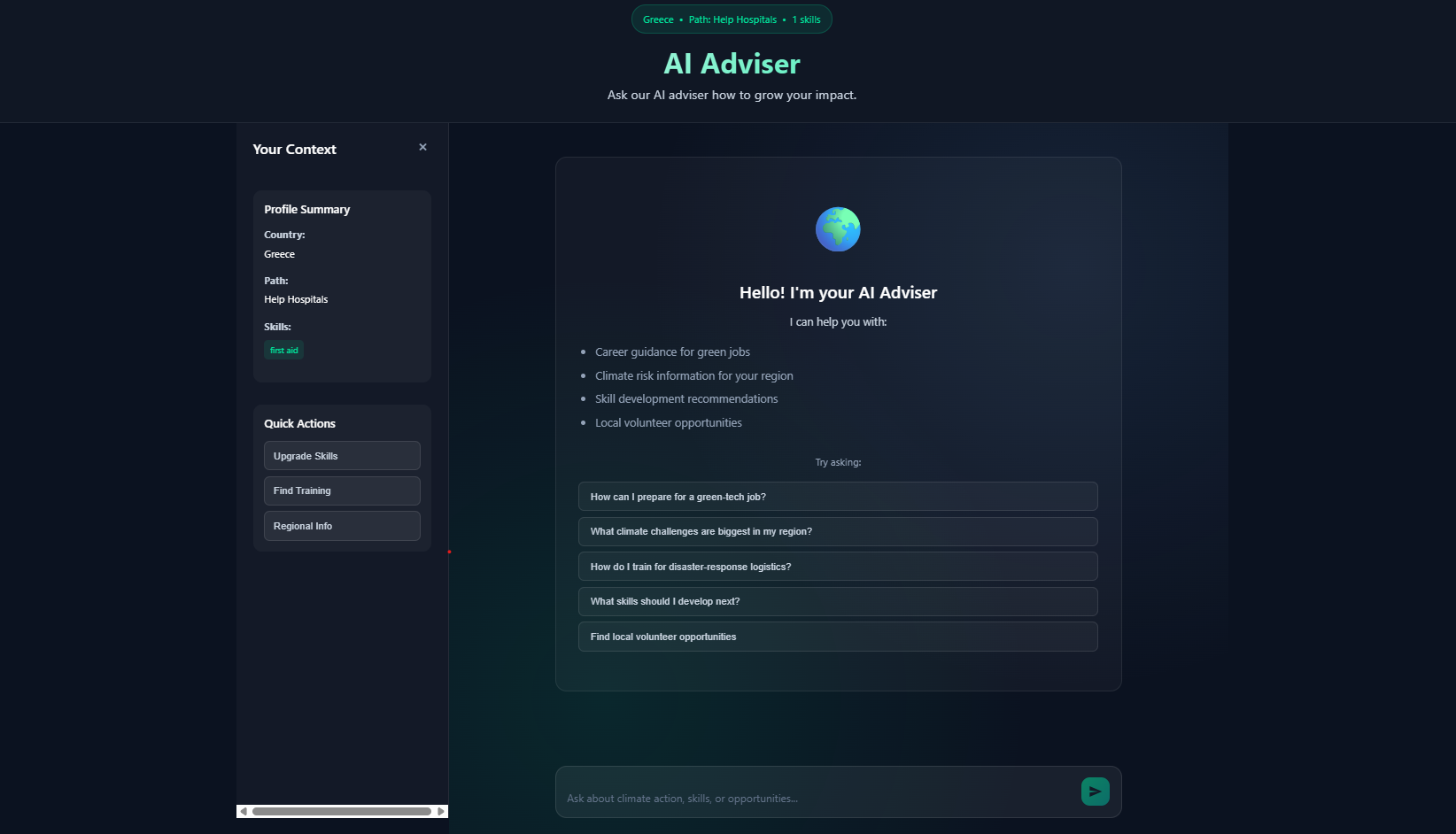
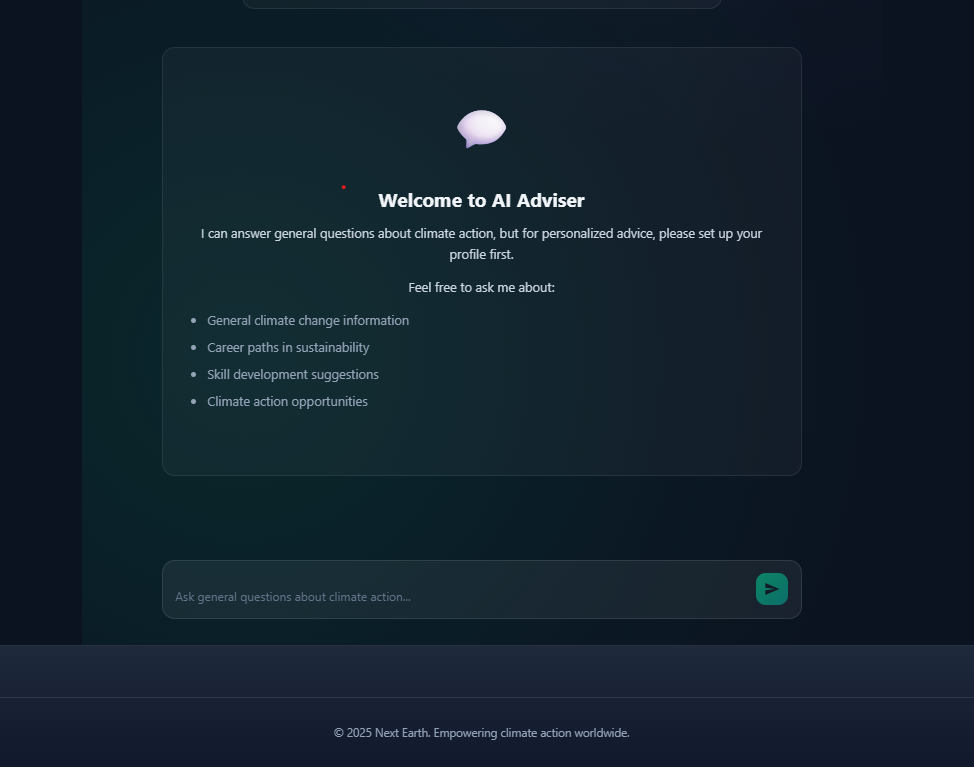
AI Adviser – Welcome Screen: Introduces users to general climate-action topics and guidance options.
-
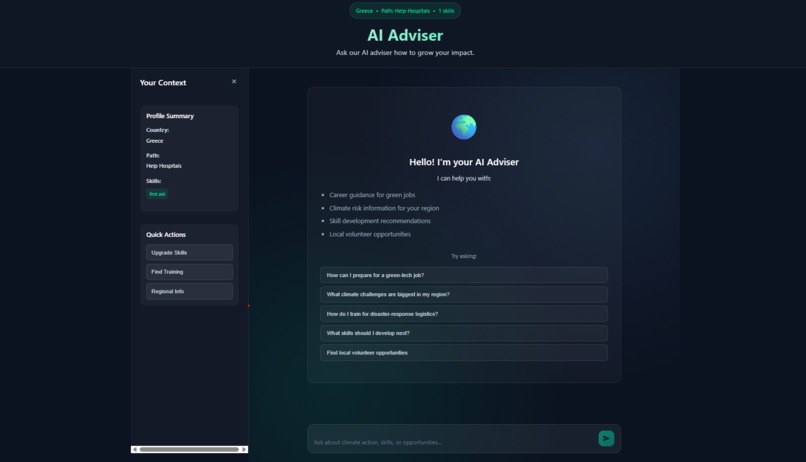
AI Adviser – Personalized Guidance: Shows contextual AI recommendations based on user profile and region.
-
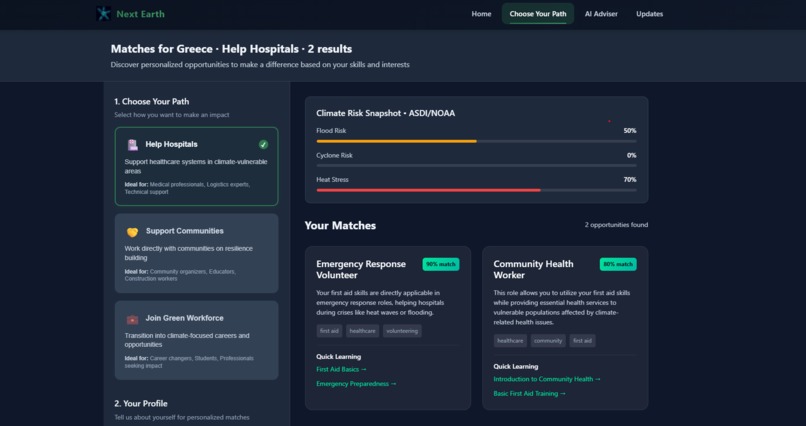
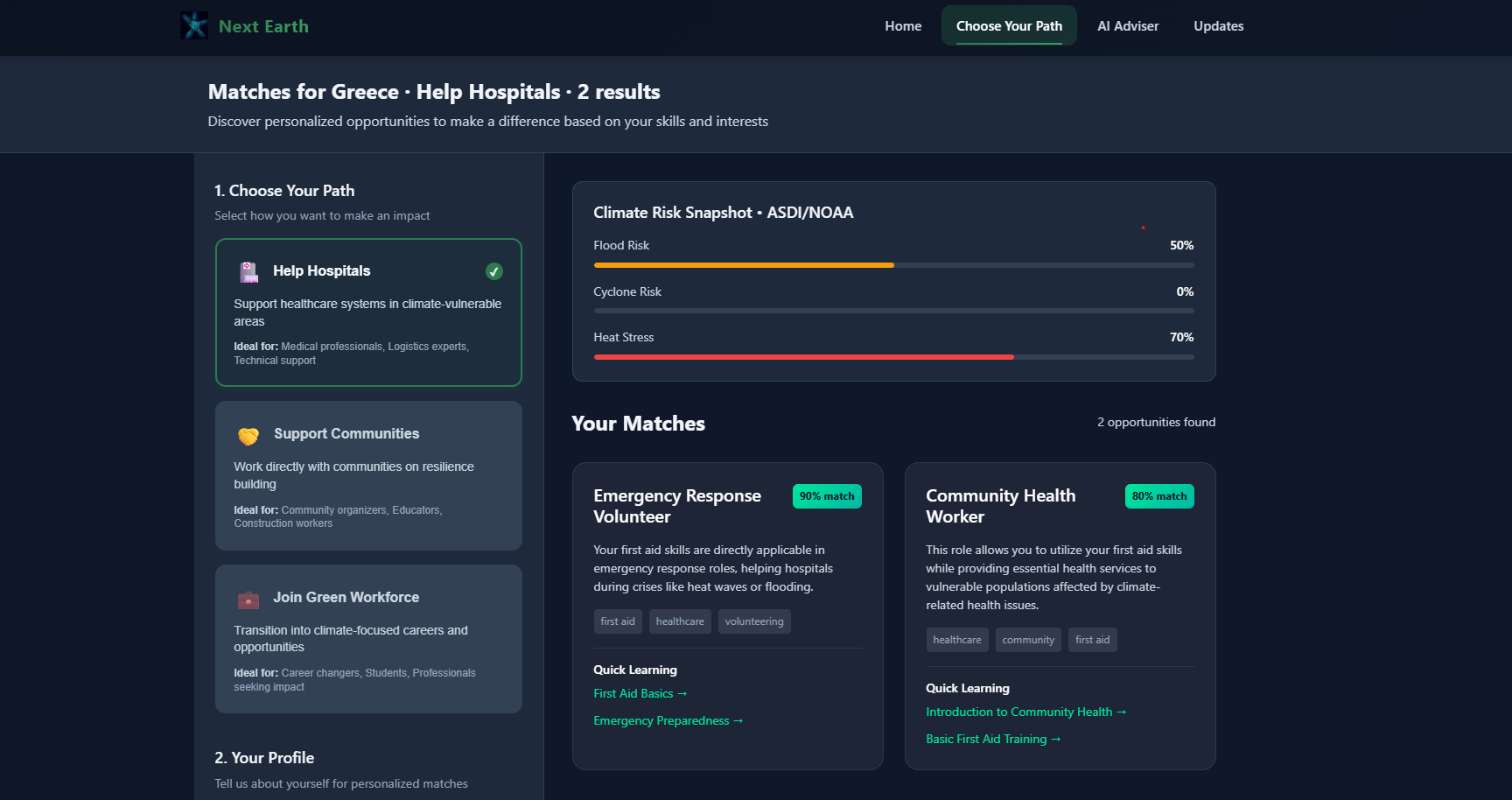
Matches Dashboard: Personalized climate-action roles shown with risk data from ASDI/NOAA.
-
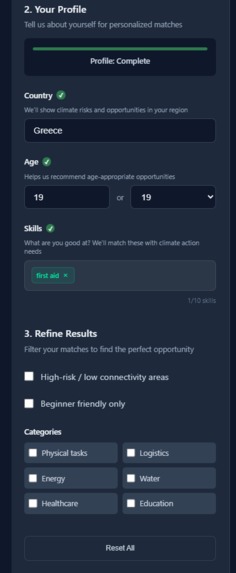
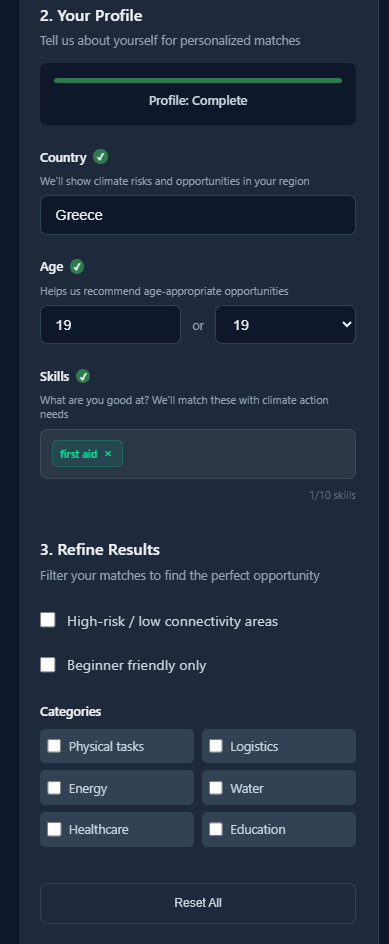
Profile Setup: Enter country, age, and skills to receive region-specific role recommendations.
-
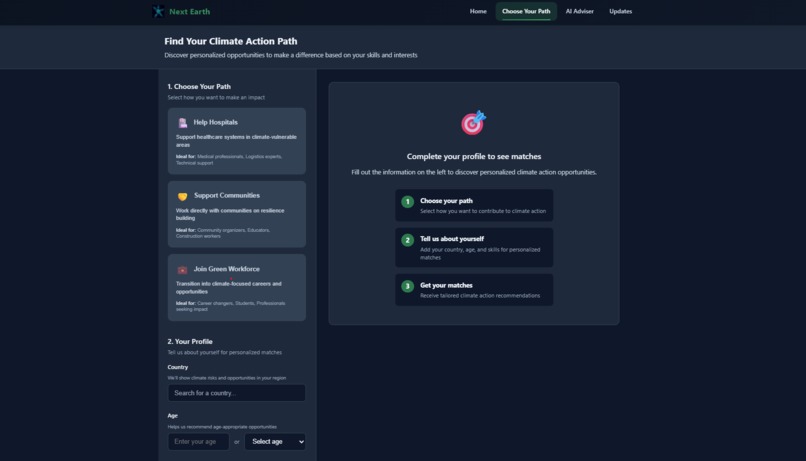
Guided Flow Overview: Step-by-step interface explaining how users find climate opportunities.
About the Project
Next Earth was inspired by the urgent need to make climate action accessible and equitable - especially for youth in regions most affected by floods, droughts, and heat risks. We wanted to answer one simple question:
“How can anyone, anywhere, turn their skills into meaningful climate impact?”
That question led us to build an AI-powered climate-action navigator that connects people’s skills and locations to real roles and learning opportunities, using open climate data such as ASDI and NOAA.
✨ What We Learned
Throughout the project, we learned how to:
Integrate AI reasoning into a real-world web app using OpenAI’s API.
Combine structured data (climate risk scores, skills) with unstructured user input to deliver meaningful recommendations.
Design for clarity and empathy - using soft UI, transparent explanations (“Why this fits”), and accessibility-friendly layouts.
Translate UN Sustainable Development Goals (SDG 10 & 13) into a tangible, user-driven solution.
🧩 How We Built It
We built Next Earth in three phases:
Frontend & UX: Using Next.js with TypeScript, Tailwind, and CSS Modules for a modern, responsive, and glassmorphic design.
Matching Engine: Custom logic that matches user skills and chosen “path” (health, community, green workforce) with curated roles and risk-weighted data.
AI Integration: The /api/adviser route connects to OpenAI’s GPT-4o-mini, giving contextual advice and micro-learning recommendations based on the user’s country and skills.
⚙️ Challenges We Faced
Time & integration pressure: Merging multiple screens (Profile + Suggestions) into a single, reactive “Matches” page under tight deadlines.
Model reliability: Handling fallbacks and response limits when OpenAI API throttled or failed.
Data realism: Simulating ASDI/NOAA-style datasets while keeping results grounded and explainable.
Team collaboration: Managing fast commits and avoiding overwrites during Git merges.
Built With
- api
- asdi
- css
- git
- github
- nextjs
- noaa
- node.js
- openai
- typescript
- vercel


Log in or sign up for Devpost to join the conversation.