-
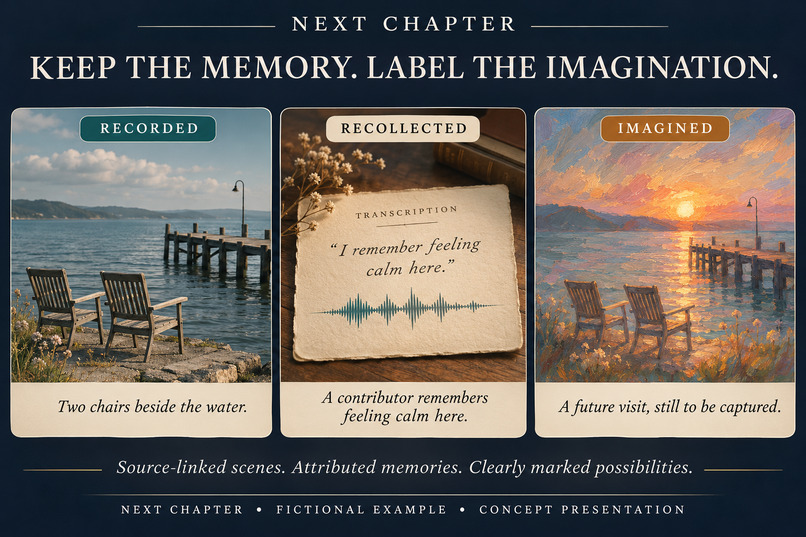
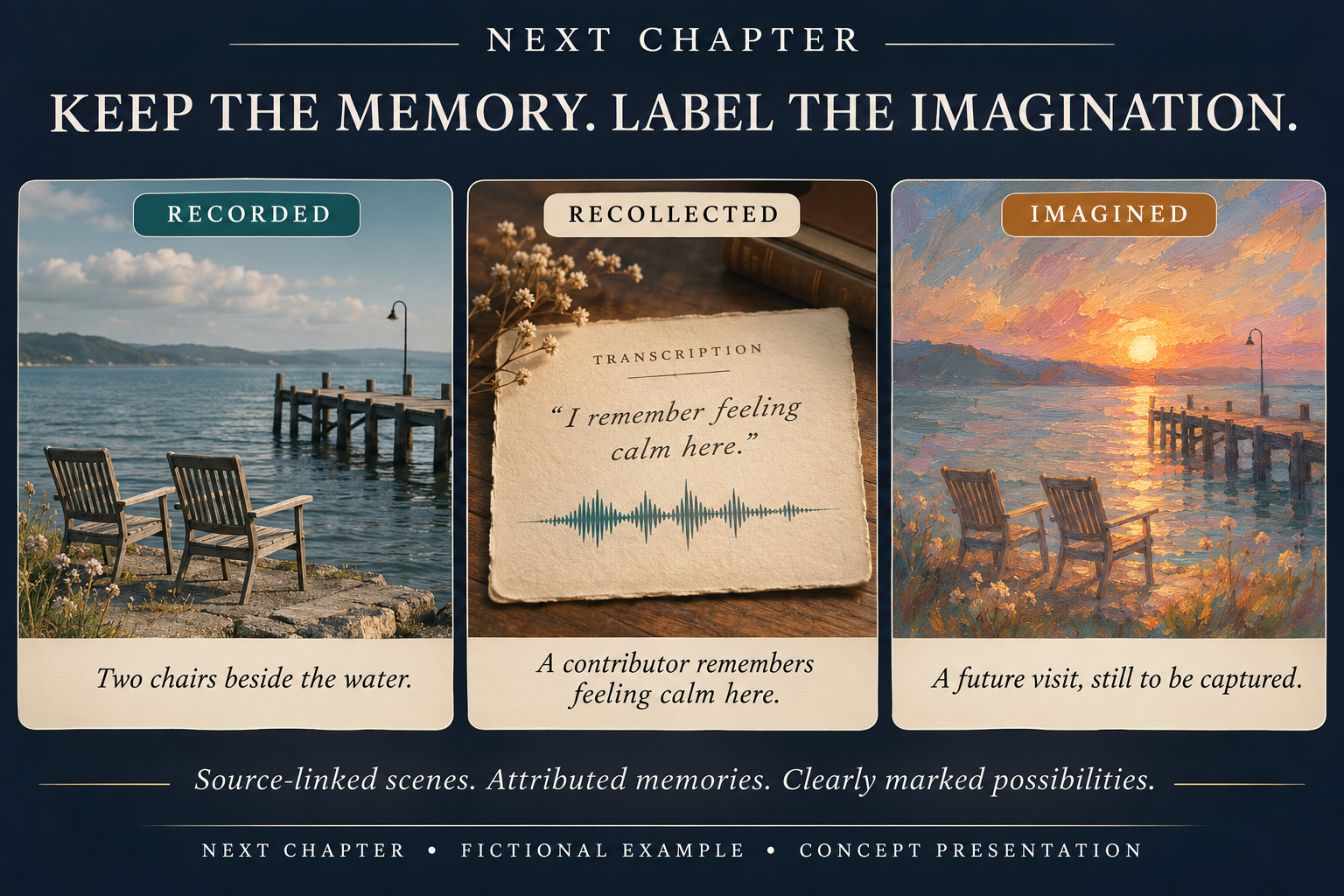
Recorded evidence, personal recollections and imagined scenes remain clearly distinguished.
-
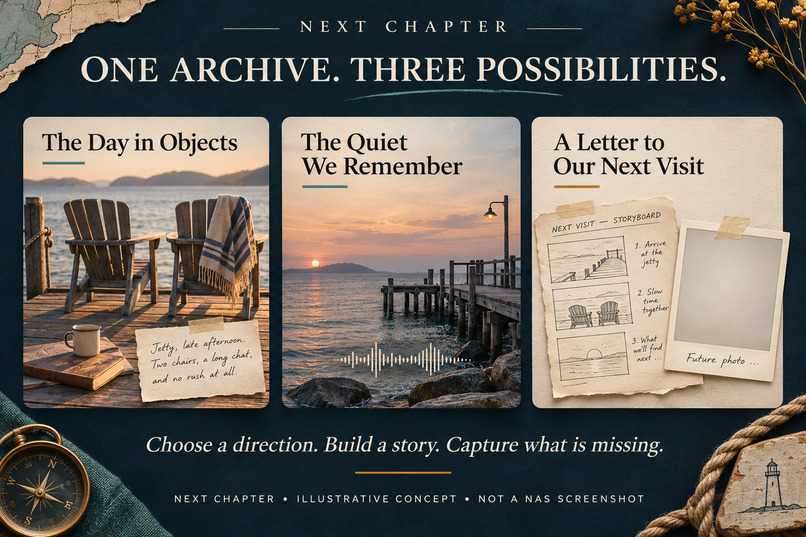
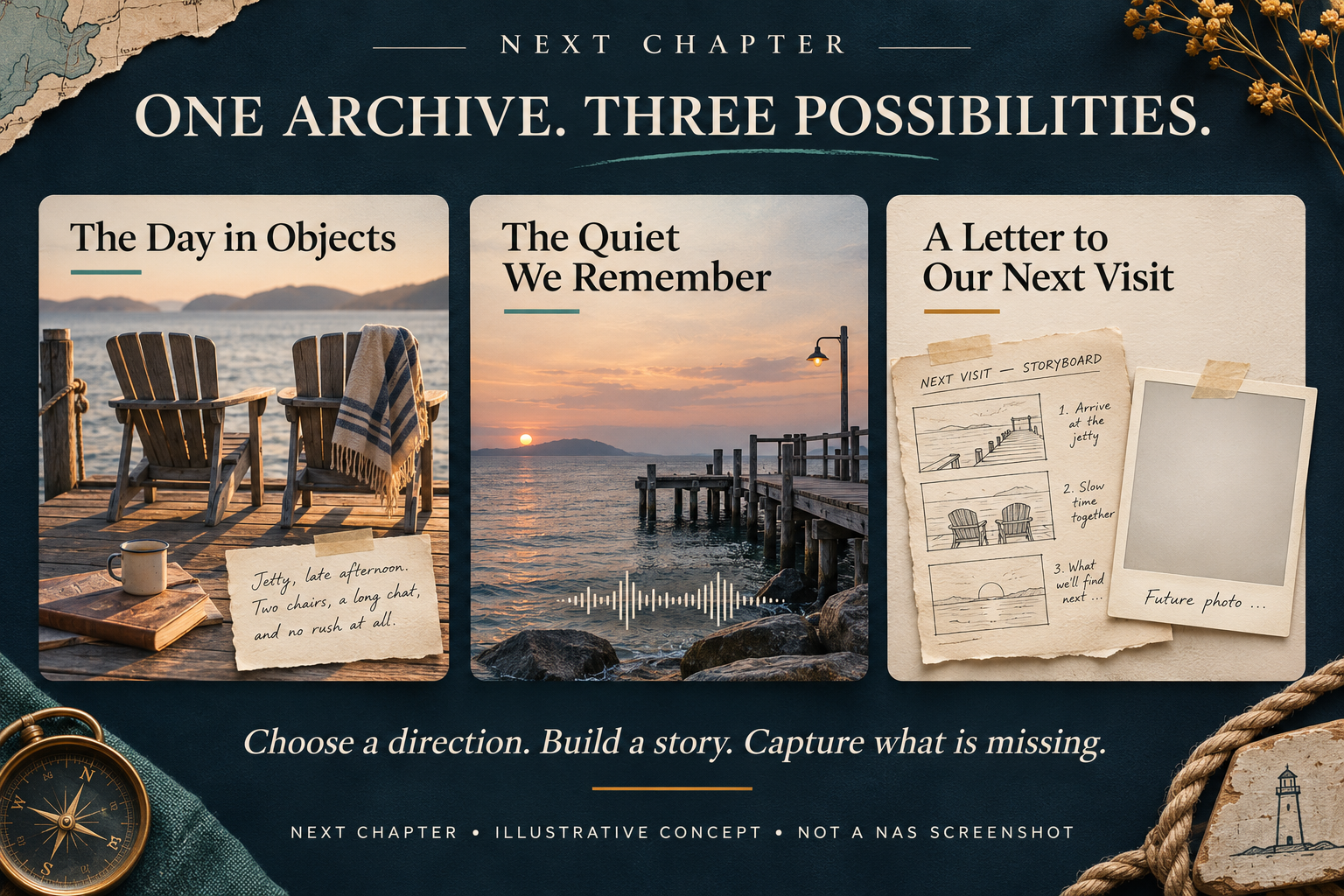
Three creative directions developed from an authorized memory collection.
Inspiration
We have years of photos, videos, voice recordings and notes sitting across folders and devices. We keep collecting them, but turning them into something meaningful takes time.
I wanted to start with a different question: given the material we already have, what could we create next?
A family holiday could become a short film. An old photograph and a new voice recording could become a parent's story. An unfinished travel plan could inspire a future adventure. Our NAS could keep these projects together with the original memories.
What it does
Next Chapter is an AI Skill designed for UGREEN AI NAS. Start with a wish and an authorized collection. It proposes three creative directions, then develops the selected idea into a six-scene brief with narration, source references and a missing-capture checklist.
The workflow distinguishes three kinds of material:
- Recorded: what the reviewed files actually show or contain.
- Recollected: someone's attributed memories or account.
- Imagined: proposed scenes, interpretations or future possibilities.
Add a new recording or note, and the Skill revises the relevant scenes while preserving the source history. Saving the brief requires approval.
The initial output is a creative brief. Video editing and immersive playback are future extensions.
How we built it
We used the official UGREEN Uliya Skill Creation Kit to author a Markdown Skill and five supporting references.
The workflow delegates authorized file discovery, photo inspection, document extraction, audio transcription and text saving to the registered NAS experts. It preserves actual returned source identities, exposes incomplete reads and stops affected processing when local model routing cannot be confirmed.
Separate Python development tools check source references, scene structure, provenance labels and revision consistency. OpenAI ChatGPT/Codex assisted with research, design, authoring, code and tests; this assistance is disclosed in the package.
Challenges we ran into
The main challenge was allowing creativity without quietly rewriting personal history. A photograph can show a place, but it cannot establish what someone felt there. A recorded recollection remains an account, even when accurately transcribed.
We also had to work within the supported Skill runtime and avoid assuming that general NAS features automatically permit custom rendering or application services.
Without finalist NAS access, real-media quality and runtime behavior remain unvalidated.
Accomplishments that we're proud of
We authored Next Chapter v0.1.1 and passed the official 0.7.7-en static checker with zero errors or warnings. All 17 local contract tests pass.
We also created a fictional revision example showing how a new recollection can update a scene without becoming proof of an unrelated event. These checks establish structural behavior, not actual NAS execution.
What we learned
A useful creative assistant should explain what material supports an idea, what remains uncertain and what to capture next.
Local storage gives the project a persistent home alongside its sources. Privacy still depends on verified processing routes and permissions, and reliable recovery requires independent backups.
What's next for Next Chapter
First, validate the complete workflow on the assigned NAS: source resolution, local processing, extraction quality, revisions and approved saving.
Then explore portable storyboards and optional immersive viewers. VR and Gaussian reconstruction remain future experiments, subject to supported interfaces, suitable source material and separate testing.
