-
-
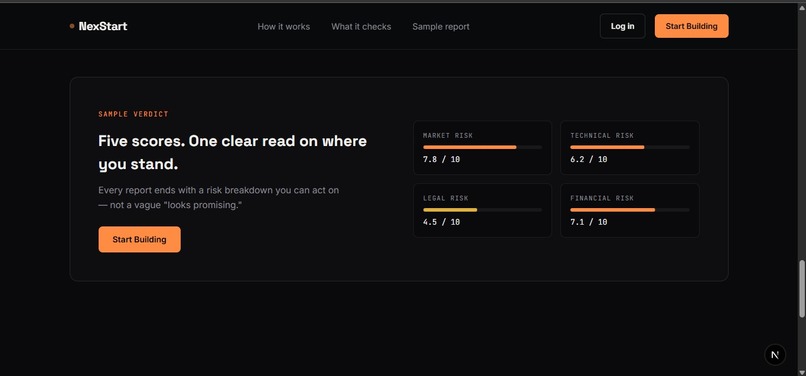
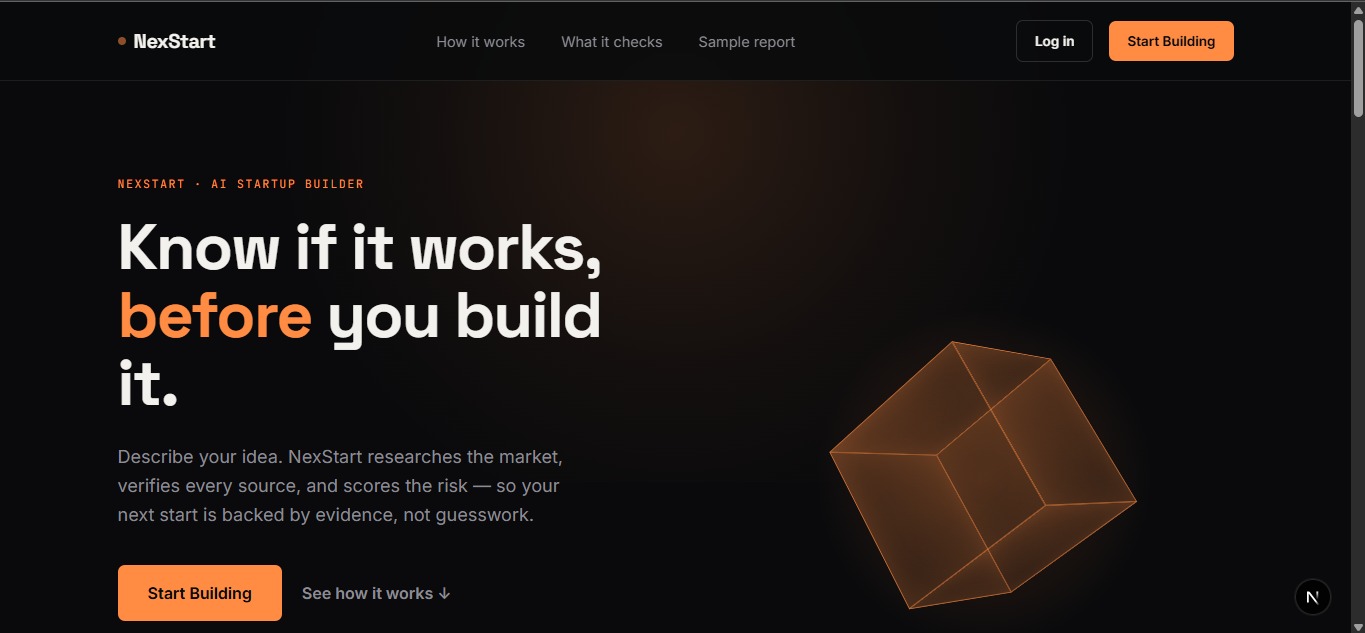
home interface
-
home interface
-
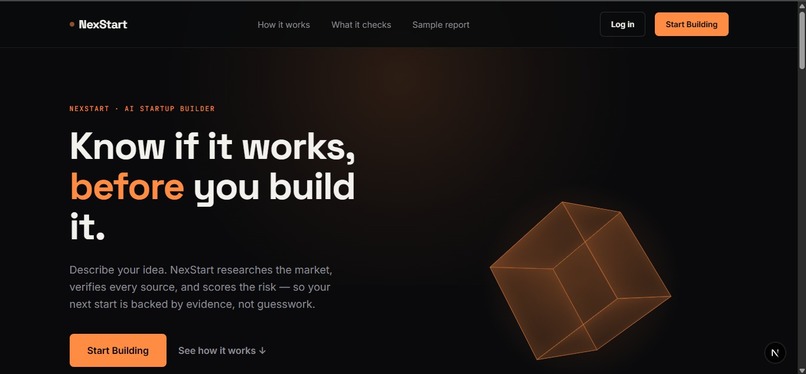
home interface
-
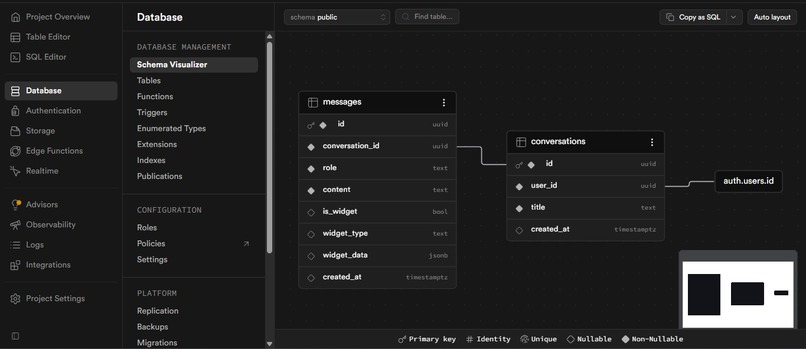
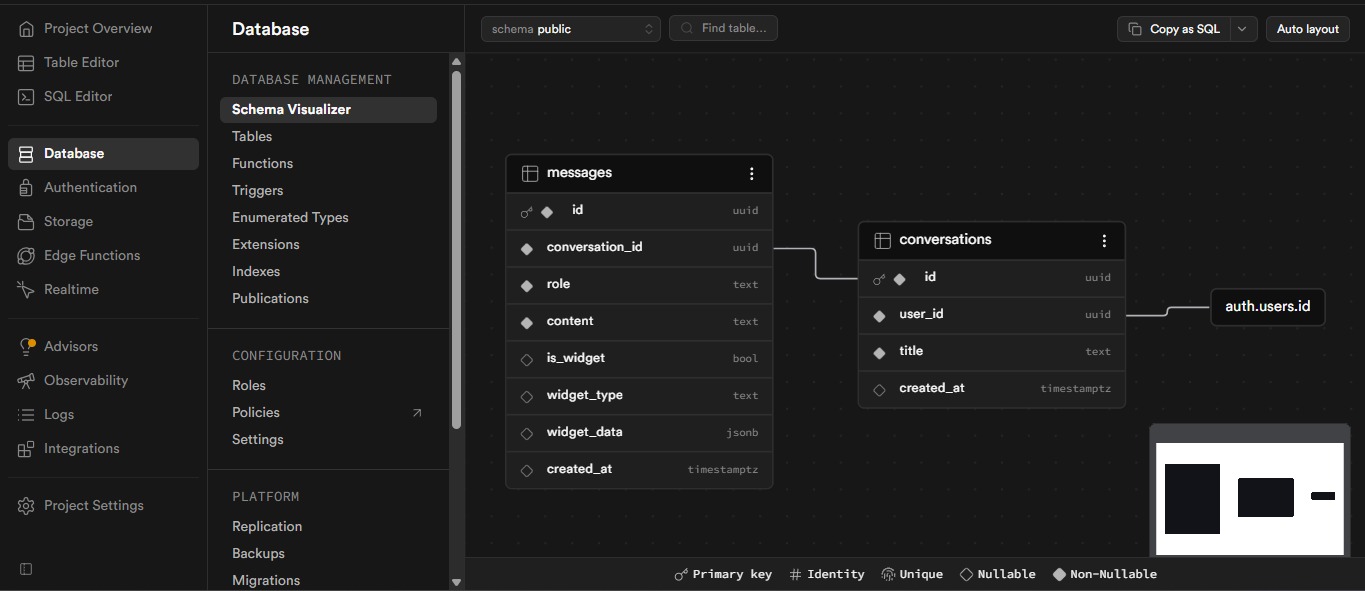
supabase (database)
-
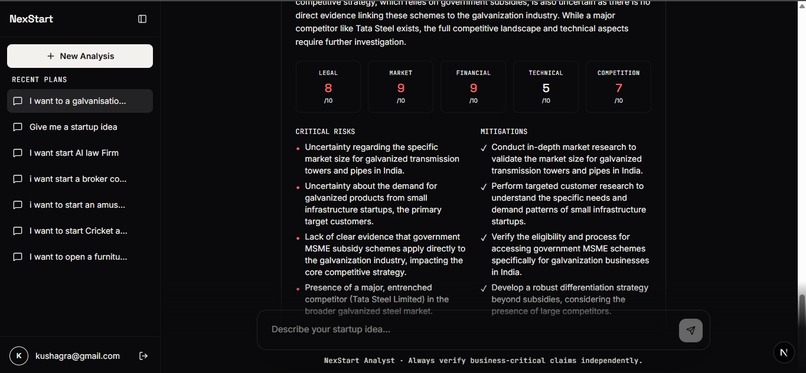
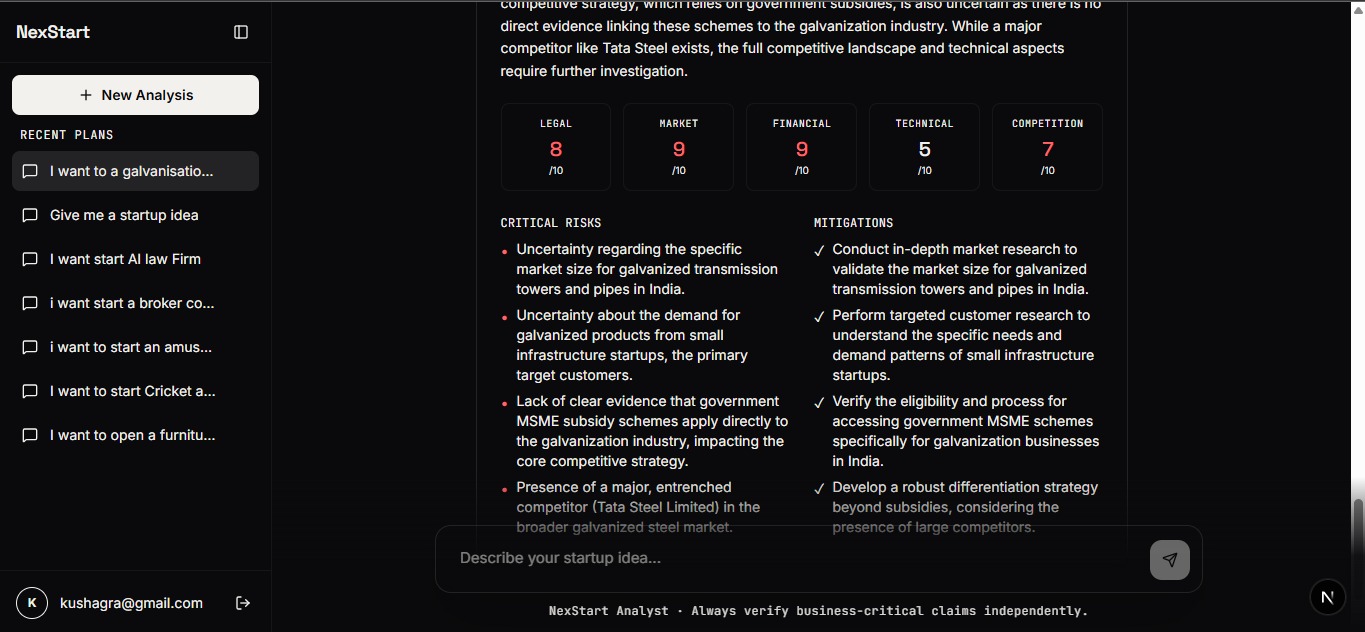
chat interface
-
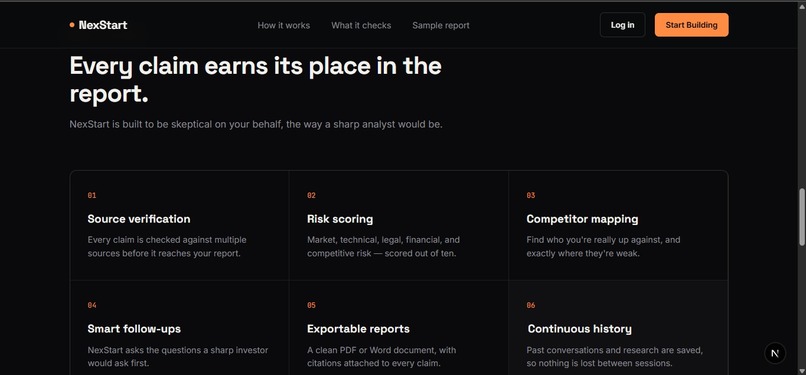
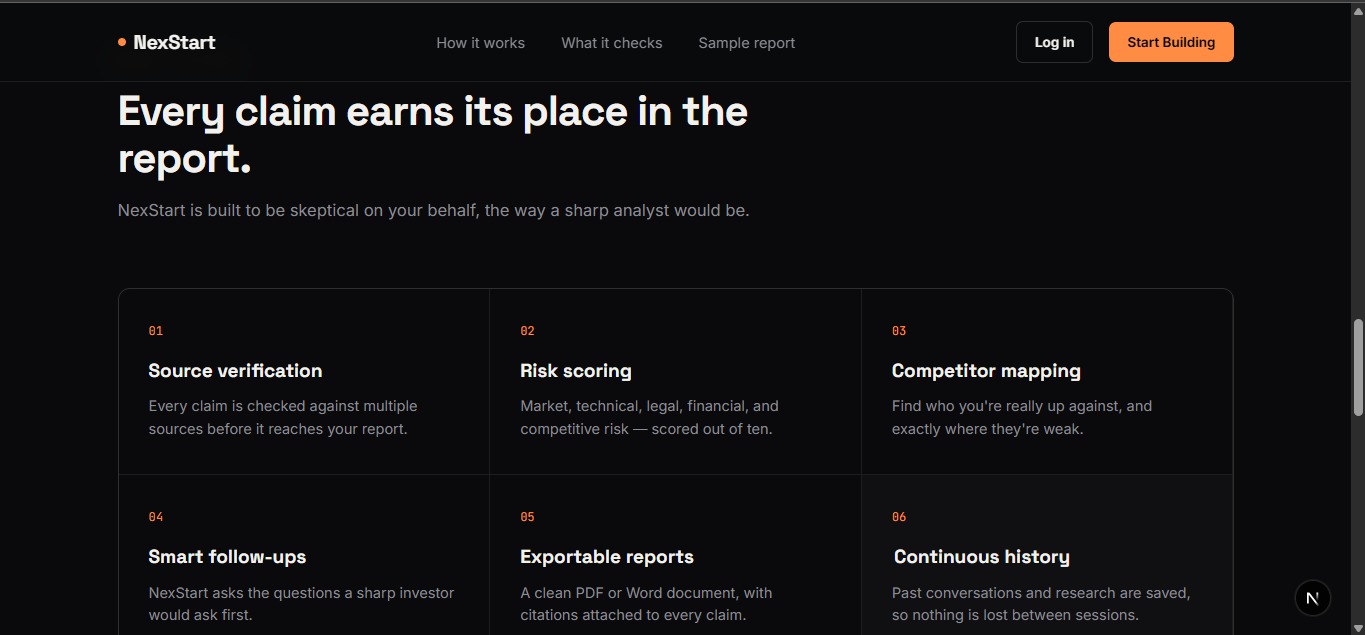
home interface
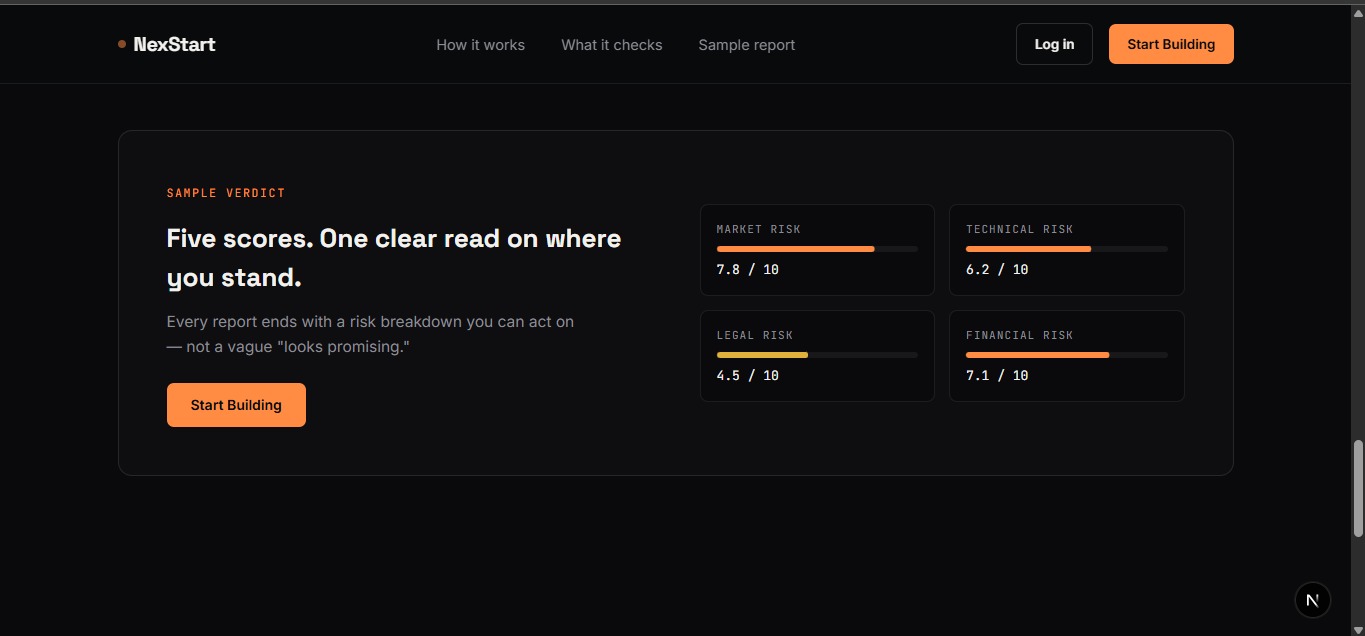
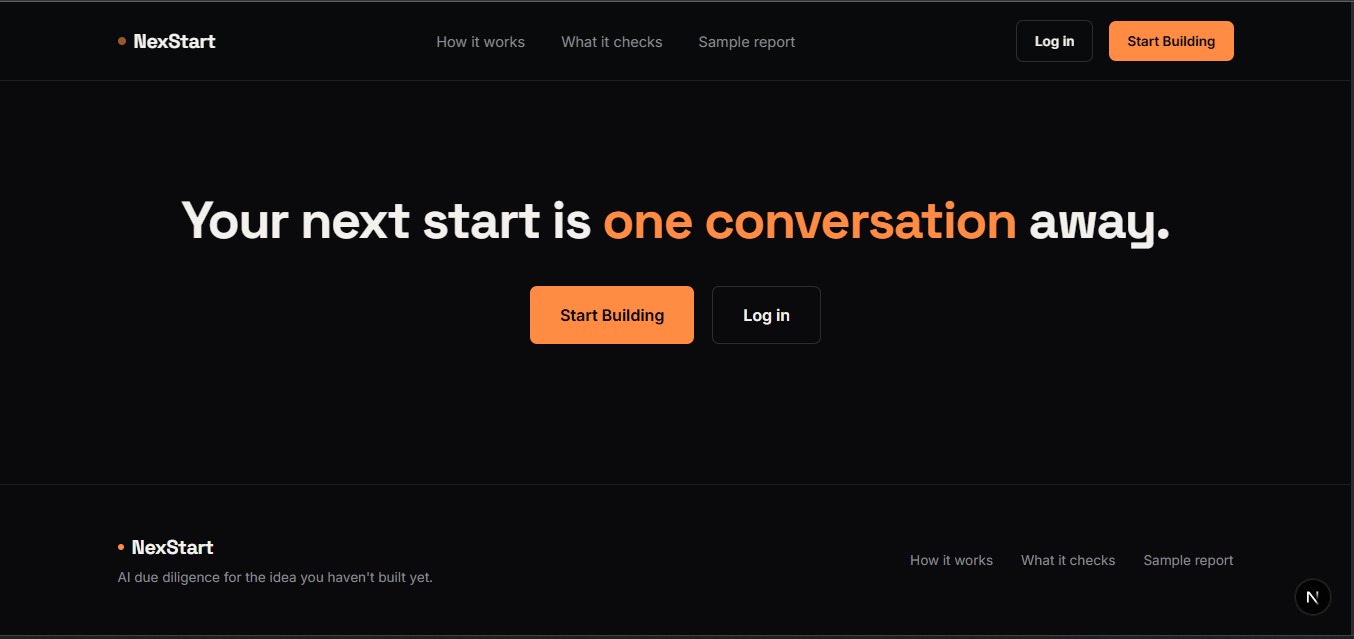
Inspiration
Many founders struggle to objectively evaluate their own startup ideas because they are too close to the problem. We wanted to build a tool that acts as an objective, experienced AI Co-Founder. NexStart was inspired by the need to help founders validate their ideas, identify real-world competitors, and assess potential risks before spending months building the wrong product.
What it does
NexStart is an AI Startup Analyst Multi-Agent System. It conducts an interactive discovery interview with the founder to understand their startup idea, extracting key facts along the way. Once it has enough context, it triggers specialized agents to research the market, find real-world competitors using Google Places, and evaluate potential risks. Finally, it provides the founder with a comprehensive, objective analysis of their idea.
How we built it
We architected NexStart as a Multi-Agent System with a frontend built in Next.js, React, TypeScript, and Tailwind CSS, and a backend powered by **Python and FastAPI.
- Multi-Agent Architecture: We split the workload across several specialized AI agents: a Questioning Agent, a Research Agent, a Risk Agent, and a Competitor Lookup Agent.
- AI Models: We used the **Gemini API as our core foundation model for dynamic decision-making and extracting structured data from the founder's free-form answers. We also integrated a custom, fine-tuned model (VentureMind) to handle intelligent routing and question selection.
- RAG Memory System: We built a custom RAG (Retrieval-Augmented Generation) memory system to maintain the state of the conversation, store extracted facts about the startup, and persist research findings and risk assessments across the entire session.
- Real-World Data Integration: We integrated the **Google Places API* into our Competitor Lookup Agent to dynamically find real, existing businesses based on the startup's domain and target country.
Challenges we ran into
One of the main challenges was orchestrating multiple AI agents to work together seamlessly without getting stuck in infinite loops. We solved this by implementing state management and hard caps on the questioning phase.
Another challenge was integrating a teammate's custom fine-tuned model hosted via an external Colab/ngrok setup. Network timeouts and offline models could crash the system, so we built a resilient fallback mechanism. If the custom VentureMind model is unavailable or fails to respond, the backend automatically falls back to Gemini to ensure the interview keeps moving smoothly.
Accomplishments that we're proud of
we got to learn about different types of datasets available and how can we utilise them.
What we learned
We learned a tremendous amount about AI orchestration. Managing the state between multiple specialized agents—passing extracted facts from the Questioning Agent to the Research and Risk Agents—showed us the power of a custom RAG memory architecture. We also refined our prompt engineering skills to consistently extract reliable, structured JSON data from unpredictable user inputs. Finally, we learned the importance of building resilient AI systems that degrade gracefully (like our Gemini fallback) when external services fail.
Built With
- chat-gpt
- claude-ai
- colab
- fastapi
- framer-motion
- gemini-api
- google-places
- hugging-face
- next.js
- ngrok
- python
- qwen
- rag
- react
- supabase
- tailwind-css
- tavily-api
- typescript


Log in or sign up for Devpost to join the conversation.